
15 Creative Toddler Ice Activities for Sensory Play
 By Speech Blubs Team•Feb 23, 2026•16 min.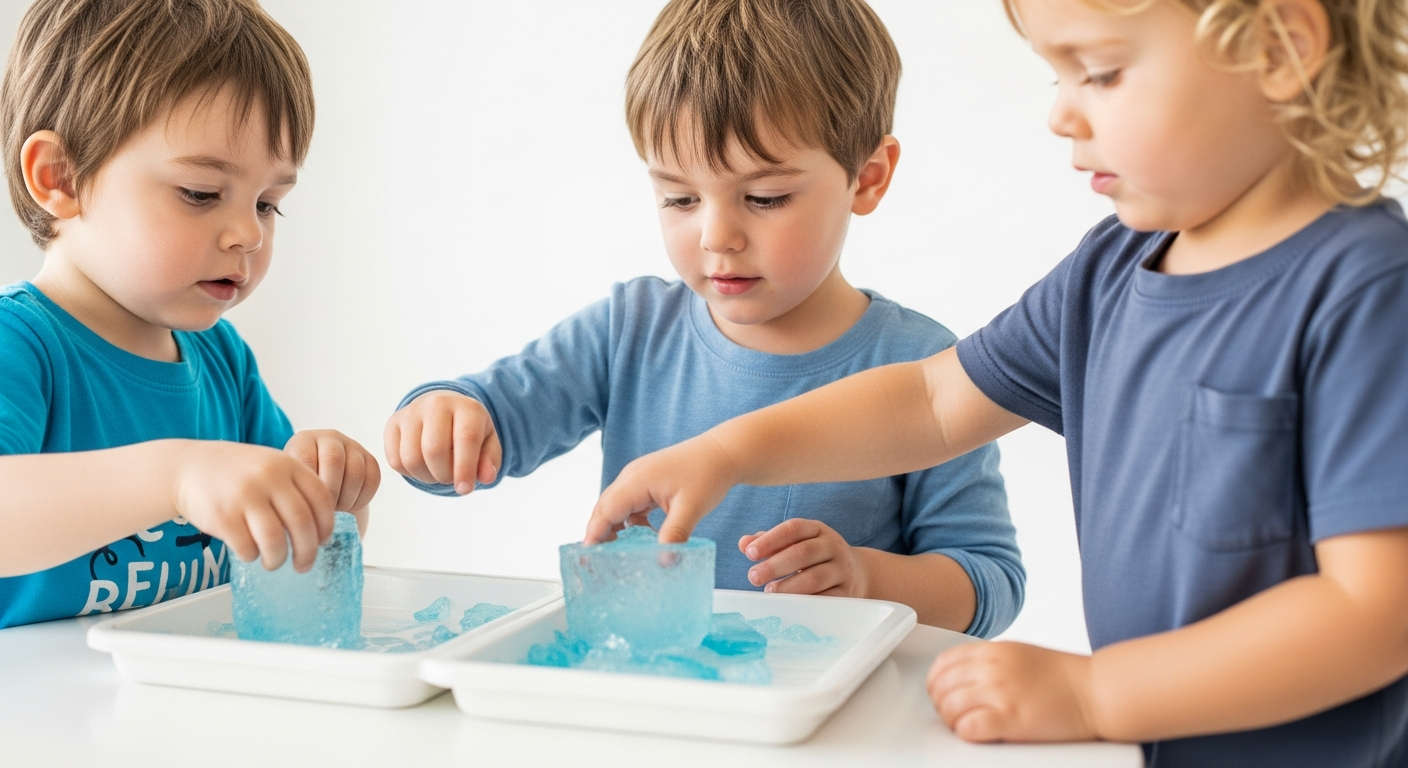
Table of Contents
- Introduction
- The Science of Why Ice Play Works
- 1. The Classic Ice Sensory Bin
- 2. Frozen Nature Art
- 3. Edible Sensory Ice Cubes
- 4. Multi-Shaped Building Blocks
- 5. Rainbow Ice Excavation
- 6. Scented Ice Exploration
- 7. The Ice Globe Surprise
- 8. Fake Snow Sensory Play
- 9. Fizzy Ice Science
- 10. Magnetic Ice Skating
- 11. Ice Cube Painting
- 12. "Save the Toys" Ice Excavation
- 13. Ice Fishing in a Tub
- 14. Salt and Ice Reaction Art
- 15. The Ice Igloo Build
- Setting Realistic Expectations
- Why Choose the Yearly Plan?
- Conclusion
- FAQs
Introduction
Did you know that something as simple as a frozen water cube can be the key to unlocking a world of language development and sensory exploration for your child? It sounds almost too simple to be true, but the most profound learning moments often happen when we strip away the bells and whistles and return to basic, tactile play. As parents and experts in child development, we at Speech Blubs have seen firsthand how sensory-rich environments act as a catalyst for communication. Whether your little one is just beginning to babble or is starting to string together their first sentences, the "cold," "slippery," and "wet" world of ice provides a perfect backdrop for learning.
In this blog post, we are going to explore 15 incredible toddler ice activities that you can set up in minutes using items you already have in your kitchen. We’ll cover everything from artistic ice painting to "fizzy" science experiments, and we’ll show you how to turn these moments into powerful opportunities for language growth. We’ll also discuss how these physical activities pair perfectly with our "smart screen time" approach at Speech Blubs, helping your child find their voice through play. Our mission is to empower children to speak their minds and hearts, and sometimes, that journey starts with a simple tray of ice.

By the end of this guide, you will have a full toolkit of ideas to keep your toddler engaged, curious, and communicating. We believe that every child deserves the chance to thrive, and through a combination of physical play and scientific methodology like video modeling, we can make that a reality together.
The Science of Why Ice Play Works
Before we dive into the activities, it is helpful to understand why ice is such a powerful tool for a growing brain. At Speech Blubs, we are deeply committed to a scientific approach to development. Our methodology is rooted in the concept of mirror neurons—the brain cells that fire both when a child performs an action and when they observe someone else doing it. While our app uses video modeling to help children learn speech by watching their peers, physical ice play offers a different kind of "real-world" modeling.
When a toddler touches ice, their brain is flooded with sensory information. They aren't just learning the word "cold"; they are experiencing the physical sensation of it. This multi-sensory experience creates stronger neural pathways, making it easier for them to retain new vocabulary and concepts. Ice is unique because it changes states—it starts as a solid and becomes a liquid. This transition is a foundational science lesson that introduces cause and effect, a key cognitive milestone.
If you are ever unsure where your child stands in their developmental journey, we invite you to take our quick 3-minute preliminary screener. It consists of 9 simple questions and provides a personalized assessment and next-steps plan to support your child’s unique needs.
1. The Classic Ice Sensory Bin
The simplest ideas are often the most effective. For a toddler, a bin full of ice is like a treasure chest of possibilities.
How to set it up: Take a large, shallow storage tub and dump the contents of your ice maker into it. Add a splash of water so the cubes can bob and slide around. Give your toddler a variety of tools: slotted spoons, ladles, small colanders, and measuring cups.

Communication Connection: As your child play, narrate their actions. If they pick up a cube, say "Cold! The ice is cold." If they drop it, say "Splash!" This is a great time to introduce opposites like "wet" and "dry" or "hard" and "soft." This kind of interactive play is a powerful tool for family connection, moving away from passive screen time toward active, shared learning.
2. Frozen Nature Art
This activity encourages fine motor skills and an appreciation for the natural world. It’s a wonderful way to bring the outdoors inside on a rainy day.
How to set it up: Go on a short "nature walk" in your backyard or a local park. Collect small leaves, blades of grass, or fallen flower petals. Place these items in an ice cube tray, fill with water, and freeze. Once frozen, pop the cubes out onto a tray and let your toddler "paint" with the melting ice, or simply explore the treasures trapped inside.
Speech Blubs Tip: For a child who is a "late talker" but loves the outdoors, this activity is gold. You can model words like "flower," "leaf," and "green." If you’re looking for more ways to build vocabulary through nature, our 'Animal Kingdom' section in the Speech Blubs app offers a fun, motivating way to practice sounds that correspond with the things they find in nature.
3. Edible Sensory Ice Cubes
Safety is always our top priority. For toddlers who are still in the "everything goes in the mouth" phase, edible sensory cubes are a perfect solution.
How to set it up: Instead of freezing toys, freeze small pieces of fruit like strawberries, blueberries, or even sprigs of mint and lemon slices. Use filtered water to ensure the cubes are completely safe to taste.
Why it works: This engages the sense of taste along with touch and sight. As the ice melts, your child gets a little "reward" of fruit. This helps build positive associations with exploration. You can see how other parents have used these types of sensory wins to encourage their children's progress on our testimonials page.
4. Multi-Shaped Building Blocks
Who says blocks have to be made of wood or plastic? Ice blocks offer a slippery challenge that builds hand-eye coordination.
How to set it up: Use recycled containers—yogurt pots, Tupperware, muffin tins—to create ice in various shapes and sizes. Once they are frozen, help your child stack them to build towers.
The Challenge: Because ice is slippery, the towers will eventually fall. This is a fantastic opportunity to teach resilience and the word "Oops!" or "Down!" Framing these moments with joy rather than frustration is a core part of our philosophy at Speech Blubs.
5. Rainbow Ice Excavation
Color recognition is a major milestone for toddlers, and rainbow ice makes the learning process vibrant and fun.
How to set it up: Fill several containers with water and add a few drops of different food coloring to each. Freeze them overnight. The next day, place the colorful blocks in a large bin. Give your child a small spray bottle filled with warm water or a dropper. They can "excavate" the colors as they melt.
Value Check: If you love these kinds of educational activities, you’ll find that our app offers a similar suite of comprehensive tools. While the monthly plan is $14.99, our Yearly Plan is just $59.99 per year (only $4.99/month). This plan is the best value as it includes a 7-day free trial, the Reading Blubs app, and early access to new updates.
6. Scented Ice Exploration
We often forget about the sense of smell when planning activities, but it is a powerful memory trigger.
How to set it up: Add a drop of vanilla extract, peppermint, or even a splash of fruit juice to your ice trays before freezing. As the ice melts in your child's hands, the scent is released.
Language Tip: Ask questions like, "What does it smell like?" or "Is it yummy?" Even if your child isn't answering with full words yet, you are modeling the structure of conversation and encouraging them to use their senses to process the world.
7. The Ice Globe Surprise
Balloons are not just for parties; they make excellent molds for giant "ice globes."
How to set it up: Fill a balloon with water (you can even slip a small plastic toy inside first), tie it off, and freeze it. Once frozen, carefully snip the balloon away to reveal a smooth, round ice orb.
Safety Note: Always supervise your child closely with balloons, as popped pieces can be a choking hazard. Once the balloon is removed, the ice globe itself is a wonderful tactile object for a toddler to roll and touch.
8. Fake Snow Sensory Play
If you live in a climate where it doesn't snow, you can bring the "winter" experience to your living room.
How to set it up: Blend ice cubes in a high-powered blender until they reach a snow-like consistency. Place the "snow" in a bin and add some cornflour. The flour makes the snow feel soft and fluffy and prevents it from being too biting-cold on little hands.
The "Oobleck" Bonus: As this mixture melts, it turns into a non-Newtonian fluid (like Oobleck), which acts as both a liquid and a solid. This transition provides minutes of quiet, concentrated play—giving you time to enjoy a warm cup of coffee while your toddler builds their brain!
9. Fizzy Ice Science
This is a "wow" activity that introduces basic chemistry in a safe, fun way.
How to set it up: Freeze ice cubes with a little bit of baking soda mixed into the water. Once frozen, give your child a small bowl of vinegar (you can color the vinegar with food coloring for extra fun). Use a medicine dropper to squeeze the vinegar onto the ice.
The Reaction: The ice will hiss and fizz as the vinegar reacts with the baking soda. This is a perfect moment to practice "active listening" and model words like "Listen!" "Pop!" and "Bubbles!"
10. Magnetic Ice Skating
This activity adds a layer of "magic" to ice play and helps develop fine motor control.
How to set it up: Freeze a small magnet inside an ice cube. Place the cube on a thin plastic tray or a piece of cardboard. Hold another magnet underneath the tray and move it around. The ice cube will "skate" across the surface!
Scientific Connection: At Speech Blubs, we focus on teaching complex communication skills through peer imitation. Just as your child watches the "skating" ice with wonder, they can watch other children in our app to learn how to form sounds. You can download Speech Blubs on the Google Play Store to see this methodology in action.
11. Ice Cube Painting
Turn ice cubes into "crayons" for a messy, artistic afternoon.
How to set it up: Fill an ice tray with water and heavy amounts of washable tempera paint or food coloring. Stick a popsicle stick into each slot as it starts to freeze to create a handle. Once solid, your child can grab the handle and "paint" on a large sheet of paper or even on the sidewalk.
Creative Expression: This activity fosters a love for creativity and reduces frustration by giving toddlers a tool that is easy to grip. It’s about the process, not the final product. We believe in creating joyful family learning moments, and ice painting is a mess worth making.
12. "Save the Toys" Ice Excavation
This is a fantastic activity for building problem-solving skills and persistence.
How to set it up: Freeze several of your child's favorite small plastic toys (like dinosaurs or action figures) in a large block of ice. Give your child "tools" like a wooden hammer, a spray bottle of warm water, and some salt.
The Lesson: Talk about how the salt makes the ice melt faster (though be careful with salt if you are playing near plants!). As they work to "save" their toys, celebrate their progress. "You did it! The dino is free!" This builds confidence and foundational cognitive skills.
13. Ice Fishing in a Tub
This is a great activity for developing hand-eye coordination and patience.
How to set it up: Fill a bin with water and add several ice cubes. Give your child a small net or a "fishing pole" (a stick with a string and a loop at the end). See if they can "catch" the slippery ice cubes and move them to a different bowl.
Communication Connection: Use this time to practice counting. "One fish, two fish!" or "You caught a big one!" Simple, repetitive language is key for toddlers who are building their vocabulary.
14. Salt and Ice Reaction Art
This is a more advanced version of ice play that creates beautiful, crystalline patterns.
How to set it up: Give your child a large block of ice and a shaker of salt. As they sprinkle the salt, it will create tunnels and crevices in the ice. You can then drop liquid watercolors into the crevices to see the patterns they make.
Scientific Methodology: This activity demonstrates the "Smart Screen Time" philosophy we champion. It’s an alternative to passive viewing—like watching cartoons—and instead invites the child to be the scientist, the artist, and the explorer.
15. The Ice Igloo Build
For older toddlers, building a structure out of ice is a wonderful engineering challenge.
How to set it up: Freeze dozens of standard ice cubes. Use a little bit of "snow" (crushed ice) or even a thick sugar-water mixture as "mortar" to stick the cubes together. See if you can build a small wall or a dome.
The Goal: The goal isn't to build a perfect igloo, but to explore the properties of the material. Does it stay up? Why did it fall? This builds spatial awareness and logical thinking.
Setting Realistic Expectations
As experts in child development, we want to remind you that every child progresses at their own pace. While these activities are designed to foster a love for communication and build confidence, they are not "magic wands." You won't see your child giving public speeches after one afternoon of ice play!
Instead, look for the small wins:
- A new sound they make while watching the ice fizz.
- The way they look to you for a reaction when the ice tower falls.
- The increased focus they show while excavating a toy.
These are the building blocks of communication. Speech Blubs is a powerful supplement to your child's overall development plan and, when necessary, professional therapy. We provide the tools for you to co-play and support your child, creating a bridge between the digital world and physical exploration.
Why Choose the Yearly Plan?
We want to make sure you have every resource available to support your child. Our Yearly Plan is designed for families who are committed to long-term growth. For $59.99 a year, you receive:
- A 7-day free trial to explore all our features risk-free.
- Access to our secondary app, Reading Blubs, which focuses on early literacy.
- Priority Support: A 24-hour response time for any questions you have.
- Early Access: Be the first to try our newest updates and activities.
The monthly plan ($14.99) does not include the free trial or the Reading Blubs app, making the yearly option the clear choice for families looking for the best value and the most comprehensive support.
Conclusion
Ice play is so much more than a way to stay cool on a summer day. It is a sensory gateway that invites curiosity, encourages problem-solving, and—most importantly—creates a rich environment for language to bloom. From the "fizz" of a baking soda reaction to the "splash" of a sensory bin, every moment is an opportunity for your child to find their voice.
At Speech Blubs, we are honored to be a part of your parenting journey. Our founders created this tool because they knew what it was like to struggle with speech, and they wanted to provide the joyful solution they wished they had. We hope these 15 toddler ice activities bring a sense of wonder and connection to your home.
Ready to take the next step in your child's communication journey? Download Speech Blubs on the App Store or Google Play today. Don’t forget to select the Yearly Plan during sign-up to unlock your 7-day free trial and the full suite of features. Let's help your child speak their mind and heart, one "splash" at a time.
FAQs
1. Is ice play safe for toddlers who still put things in their mouths? Yes, but with modifications! If your toddler is still mouthing objects, we recommend using "Edible Sensory Cubes." Freeze pieces of fruit, mint, or even a bit of fruit juice in filtered water. Always supervise your child closely during any ice activity to prevent choking on small cubes, and ensure any frozen toys are large enough to be safe.
2. How does ice play actually help with speech delay? Ice play provides a "high-sensory" environment. When a child experiences a strong physical sensation (like the cold or the "fizz" of baking soda), it naturally encourages vocalization. It gives you, the parent, a wealth of "action words" to model, such as "cold," "melt," "wet," and "vanish." This builds the foundational vocabulary and cognitive connections needed for speech.
3. What if my child doesn't like the cold sensation of the ice? Not every child enjoys the sensation of cold on their bare skin. If your child is hesitant, try adding cornflour to crushed ice to make "fake snow," which feels less biting. You can also provide tools like spoons, tongs, or gloves so they can explore the ice without touching it directly. The goal is joyful exploration, so always follow your child's lead!
4. Can I use the Speech Blubs app alongside these physical activities? Absolutely! In fact, we recommend it. You might use the app to practice animal sounds in the 'Animal Kingdom' section and then "act out" those sounds while playing with toy animals frozen in ice. This "blended learning" approach—combining our scientific video modeling with real-world tactile play—is the most effective way to foster "smart screen time" and deep learning.
About the author