
15 Creative Toddler Music Activities to Boost Development
 By Speech Blubs Team•Feb 23, 2026•14 min.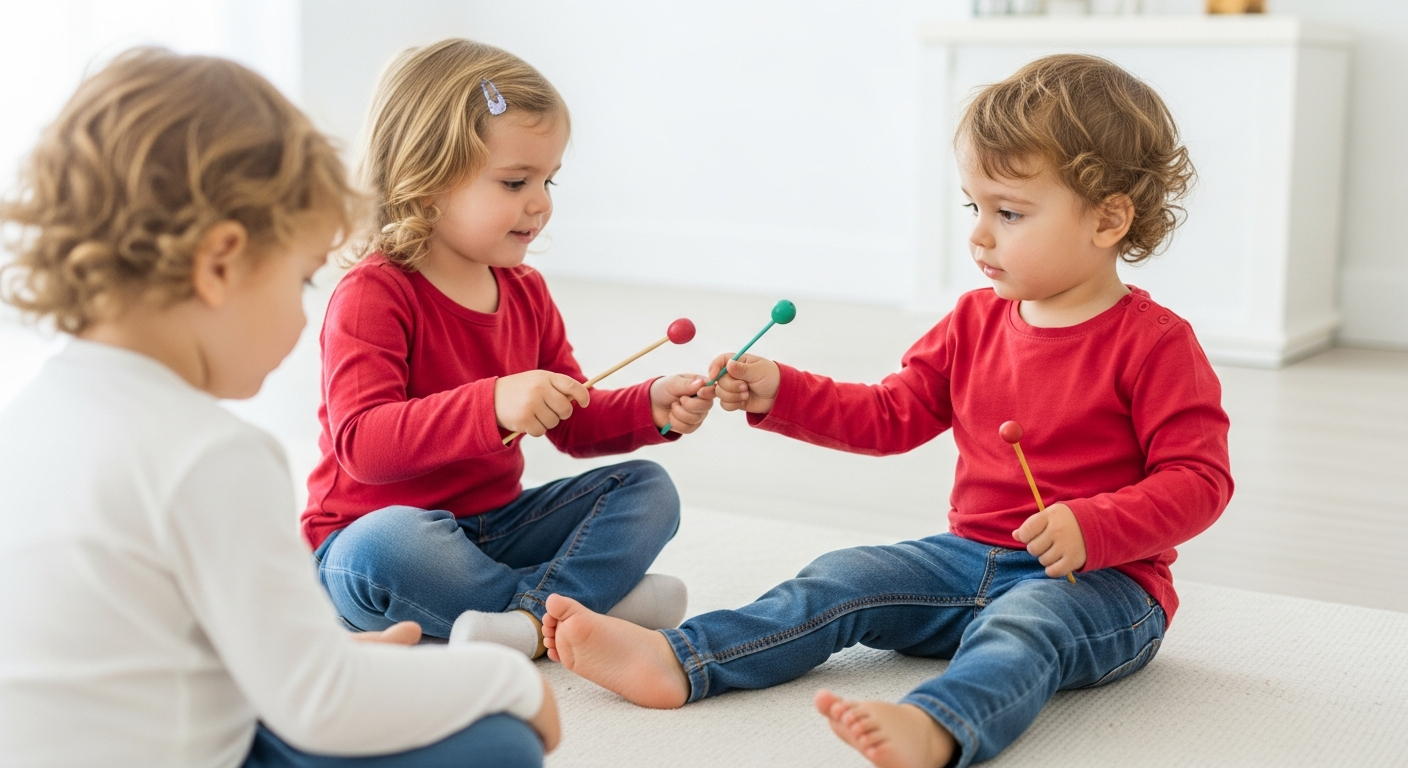
Table of Contents
- Introduction
- The Power of Rhythm and Melody in Early Childhood
- 15 Engaging Toddler Music Activities
- Why Video Modeling is a Game Changer
- Making Screen Time "Smart"
- Practical Advice for Parents
- Understanding the Value: Why Our Yearly Plan Makes Sense
- Real-World Scenarios: Music in Action
- Conclusion
- FAQs about Toddler Music Activities
Introduction
Did you know that a child’s brain is wired to respond to rhythm and melody even before they can utter their first word? It’s a remarkable phenomenon that many parents witness early on: a toddler bouncing to a catchy beat or a baby cooing along to a soft lullaby. Music isn't just a source of entertainment; it is a fundamental building block for cognitive, emotional, and linguistic development. At Speech Blubs, we believe that every "oom-pah-pah" and "la-la-la" is a step toward a child being able to fully "speak their minds and hearts."
In this post, we are going to dive deep into the world of toddler music activities. We will explore why music is so transformative for young minds, provide a curated list of activities you can do at home today, and show you how "smart screen time" can bridge the gap between play and meaningful communication. Whether you have a "late talker" or a budding Mozart, these activities are designed to create joyful family learning moments while building the foundational skills your child needs to thrive.

Our mission at Speech Blubs is rooted in personal experience. Our founders all grew up with speech challenges and created the tool they wished they had—a solution that blends scientific principles with the pure joy of play. By the end of this article, you’ll have a toolkit of musical strategies to support your child’s journey.
The Power of Rhythm and Melody in Early Childhood
Before we jump into the activities, it is important to understand why music works so well for child development. Scientific research shows that music activates nearly every part of the brain. When a toddler engages with music, they aren't just hearing a sound; they are processing tempo, pitch, and lyrics, which are the same building blocks used in spoken language.
For the 1 in 4 children who may need extra speech support, music offers a low-pressure way to practice vocalization. When a child sings, they are practicing the breath control, mouth movements, and vowel sounds required for speech, but without the frustration that sometimes comes with direct "practice." This is why we focus on "smart screen time"—moving away from passive cartoon-watching and toward interactive experiences that encourage children to mirror what they see and hear.
15 Engaging Toddler Music Activities
Here is a list of activities that combine movement, sound, and play to support your child’s growth.
1. The Classic "Freeze Dance"
This is a favorite in many households for a reason. Play a song your child loves and encourage them to dance as wildly as they want. When you pause the music, everyone must "freeze" in place.
- The Benefit: This activity builds "inhibitory control"—the ability to stop an action. It also hones listening skills, as the child must stay alert for the music to stop.
- Speech Connection: When the music stops, you can model a simple word like "Stop!" or "Wait!" to help them associate the action with the word.
2. DIY Egg Shakers
You don’t need to buy expensive instruments. Take some leftover plastic Easter eggs or small Tupperware containers, fill them with dry rice or beans, and tape them shut securely.

- The Benefit: Shakers help toddlers understand cause and effect. "If I move my hand, I hear a noise."
- Speech Connection: Use the shakers to emphasize the syllables in words. Shake once for "dog," and twice for "ap-ple."
3. Animal Sound Parade
Children are naturally drawn to animals. Put on some upbeat music and call out different animals. Encourage your child to walk like that animal and make its signature sound.
- The Benefit: This encourages gross motor movement and imaginative play.
- Speech Connection: For a parent whose 3-year-old "late talker" loves animals, the "Animal Kingdom" section of our app offers a fun, motivating way to practice "moo" and "baa" sounds. You can download Speech Blubs on the App Store to see how our peer-led video modeling helps children master these sounds.
4. Scarf Dancing to Classical Music
Classical music often has varying tempos—some parts are fast and light, while others are slow and heavy. Give your toddler a light silk scarf or a thin kitchen towel and show them how to move it to the music.
- The Benefit: This teaches "dynamics"—the concept of loud/soft and fast/slow.
- Speech Connection: Moving the scarf high while saying "High!" and low while saying "Low!" helps connect physical concepts with descriptive language.
5. The "Hokey Pokey" for Body Awareness
"You put your right hand in, you put your right hand out..." This song is a masterclass in following directions and learning body parts.
- The Benefit: It improves coordination and spatial awareness.
- Speech Connection: Labeling body parts is a key milestone. If you are unsure where your child stands with their milestones, you can take our quick 3-minute preliminary screener to get a simple assessment and a free 7-day trial.
6. Drumming on Pots and Pans
Turn your kitchen into a concert hall. Give your child a wooden spoon and a few plastic bowls or metal pots.
- The Benefit: This is a great sensory activity that allows children to explore different textures and sounds.
- Speech Connection: Encourage turn-taking. You bang once, then they bang once. This mimics the "back-and-forth" nature of human conversation.
7. Balloon Bop
Blow up a balloon and try to keep it in the air while music plays. Every time you hit the balloon, make a sound or say a word.
- The Benefit: This builds hand-eye coordination and focuses the child’s attention on a moving target.
- Speech Connection: Use "exclamatory" words like "Pop!", "Up!", or "Yay!" which are often the easiest first words for toddlers to grasp.
8. Follow the Musical Leader
March around the room to a steady beat. When the leader (you) jumps, the toddler jumps. When the leader whispers, the toddler whispers.
- The Benefit: This fosters social-emotional development and imitation skills.
- Speech Connection: Our methodology is built on "video modeling," where children learn by watching and imitating their peers. This activity is a real-world version of that scientific principle.
9. Ribbon Ring Twirling
Attach some colorful ribbons to a plastic shower curtain ring. Let your child swirl them around to their favorite tunes.
- The Benefit: The visual feedback of the moving ribbons helps children understand the rhythm of the music.
- Speech Connection: This is a perfect time to practice colors. "Look at the red ribbon! Look at the blue ribbon!"
10. Sing-Along Storytime
Take a book with a repetitive phrase (like Brown Bear, Brown Bear, What Do You See?) and "sing" the text instead of reading it.
- The Benefit: Singing slows down language, making it easier for children to hear the individual sounds in words.
- Speech Connection: By turning a book into a song, you increase engagement and help the child anticipate what comes next, which is vital for language processing.
11. The Tissue Box Guitar
Take an empty tissue box, stretch a few rubber bands across the opening, and let your child "pluck" the strings.
- The Benefit: This fine motor activity helps strengthen the fingers while providing immediate auditory feedback.
- Speech Connection: Use words like "Pull" and "Snap" to describe what the child is doing.
12. "Old MacDonald" with a Twist
Sing the classic song, but leave a "blank" for your child to fill in. "And on that farm he had a... (wait for it)... Cow!"
- The Benefit: This teaches "auditory closure"—the ability to complete a familiar sentence or song.
- Speech Connection: This reduces frustration by giving the child a clear role in the song. It’s one of the many joyful family learning moments we aim to foster.
13. Dancing with Props (Hats and Capes)
Fill a basket with hats, scarves, and old shirts. Put on music and tell your child to pick a "costume" for each song.
- The Benefit: Encourages creative expression and symbolic play, which is closely linked to language development.
- Speech Connection: Ask questions like, "Who are you now?" or "What does a king say?" to prompt verbal interaction.
14. Rhythm Stick Matching
Use two wooden spoons or even two sturdy sticks from the yard. Tap out a simple rhythm (tap-tap... tap) and ask your child to copy you.
- The Benefit: This builds memory and concentration.
- Speech Connection: Rhythm is the heartbeat of language. Children who can mirror rhythms often have an easier time with the cadence of speech.
15. The Bedtime Lullaby Routine
Music doesn't always have to be loud and energetic. Soft, melodic singing at the end of the day signals to the brain that it is time to rest.
- The Benefit: Creates a sense of security and routines.
- Speech Connection: Soft singing allows for a very intimate connection. Use this time to whisper and model quiet sounds.
Why Video Modeling is a Game Changer
You might notice that many of these toddler music activities rely on your child imitating you. This is because imitation is the primary way children learn. At Speech Blubs, we take this a step further through our unique video modeling approach. Instead of an adult instructor, children see other kids—their peers—performing the sounds and actions.
When a child sees another child succeed, it builds their confidence. They think, "If that kid can do it, I can too!" This reduces the "performance anxiety" that some children feel when they struggle with speech. We invite you to see what other parents are saying about how this peer-led approach has transformed their child’s communication skills.
Making Screen Time "Smart"
We know that many parents feel guilty about screen time. However, not all screens are created equal. Passive viewing—like watching a cartoon where characters talk at the child—doesn't require any response. Our app is a "smart screen time" experience designed to be a powerful tool for family connection.
We recommend "co-playing." Sit with your child, watch the videos together, and then do the activities in the "real world." If the app shows a child making a "vroom" sound with a car, grab a toy car and do it together! This bridge between the digital and physical worlds is where the magic happens. To begin this journey, you can get Speech Blubs on Google Play.
Practical Advice for Parents
It’s easy to feel overwhelmed by the idea of "teaching" your child. Here are a few things to keep in mind to keep the experience positive:
- Follow Their Lead: If your child is more interested in banging the shaker on the floor than shaking it to the beat, that’s okay! Explore the floor-banging sound with them.
- Keep it Short: Toddlers have short attention spans. Five minutes of focused musical play is better than thirty minutes of a child who is overstimulated.
- No Performance Required: Don't worry if your child isn't "performing" the activities perfectly. The goal is engagement and joy, not a perfect recital.
- Repetition is Key: Toddlers love doing the same thing over and over. Repetition is how their brains build new neural pathways.
Understanding the Value: Why Our Yearly Plan Makes Sense
We are committed to providing an immediate, effective, and joyful solution for families. To build long-term success, consistency is vital. That is why we offer different ways to access our full suite of tools.
Our Monthly Plan is $14.99 per month. It’s a great way to dip your toes in. However, for parents looking for the best possible start for their child, our Yearly Plan is the clear winner.
The Yearly Plan is priced at $59.99 per year, which breaks down to just $4.99 per month. That is a savings of 66% compared to the monthly option! But the value goes beyond just the price. When you choose the Yearly Plan, you also get:
- A 7-day free trial: Test everything out before you commit.
- The Reading Blubs app: An extra tool designed to transition children from speaking to reading.
- Priority Support: 24-hour response time from our team.
- Early Access: Be the first to try our newest updates and features.
The Monthly plan does not include these exclusive, high-value benefits. We encourage families to create an account and begin your 7-day free trial today by selecting the yearly option. It is the most comprehensive way to support your child’s development.
Real-World Scenarios: Music in Action
Imagine a parent whose toddler gets frustrated every time they can't express a want. This frustration often leads to tantrums. By incorporating music and rhythm, the parent can lower the stress level of the household.
For example, when it's time to clean up toys, instead of a stern command, the parent starts singing a simple "Clean Up" song. The rhythm gives the child a predictable structure. They know that as long as the song is playing, we are picking up toys. This predictability reduces anxiety and makes the child more likely to participate.
Or consider a child who is working on the "S" sound. Instead of repetitive drilling, the parent uses the "Snake" activity in Speech Blubs, then follows it up by "hissing" along to a fast-paced drum beat at home. The music makes the "work" feel like a game. This is how we foster a love for communication and build confidence in every child.
Conclusion
Music is a universal language, and for toddlers, it is a gateway to discovering the world. By integrating toddler music activities into your daily routine, you are doing so much more than just making noise. You are helping your child develop the cognitive, physical, and linguistic tools they need to navigate life.
At Speech Blubs, we don't suggest guaranteed outcomes like public speaking in a month. Instead, we focus on the beauty of the process: fostering a love for communication, reducing frustration, and creating those irreplaceable, joyful family learning moments. We are here to support you every step of the way with tools that are backed by science and created with heart.
Ready to see the difference for yourself? Download Speech Blubs on the App Store or Google Play to begin. We highly recommend choosing the Yearly Plan during your sign-up to unlock the 7-day free trial, the Reading Blubs app, and the best overall value for your family. Let’s help your little one start speaking their mind and heart today!
FAQs about Toddler Music Activities
1. What if my child doesn't seem interested in music?
Every child is different! Some children prefer rhythmic drumming, while others prefer soft singing or watching others dance. Try different genres and instruments. Often, once a child sees a peer doing an activity (like in the Speech Blubs app), their curiosity is piqued, and they become more willing to try.
2. Can music activities really help a "late talker"?
Yes! Music slows down language and emphasizes the rhythm and "melody" of speech. It provides a low-pressure environment for children to practice sounds. While it is a powerful supplement, we always recommend using our activities alongside professional therapy if you have concerns about your child's progress.
3. How much time should we spend on music activities each day?
Consistency is more important than duration. Even 5 to 10 minutes of "smart screen time" or active musical play can make a difference. The goal is to make it a joyful part of your routine, not a chore.
4. Do I need to be musical to help my child?
Not at all! Your child doesn't care if you're off-key or if you can't keep a perfect beat. They care about the connection and the fun you're having together. Your enthusiasm is the most important "instrument" in the room.
About the author