
15 Creative Toddler Valentine's Craft Ideas to Boost Skills
 By Speech Blubs Team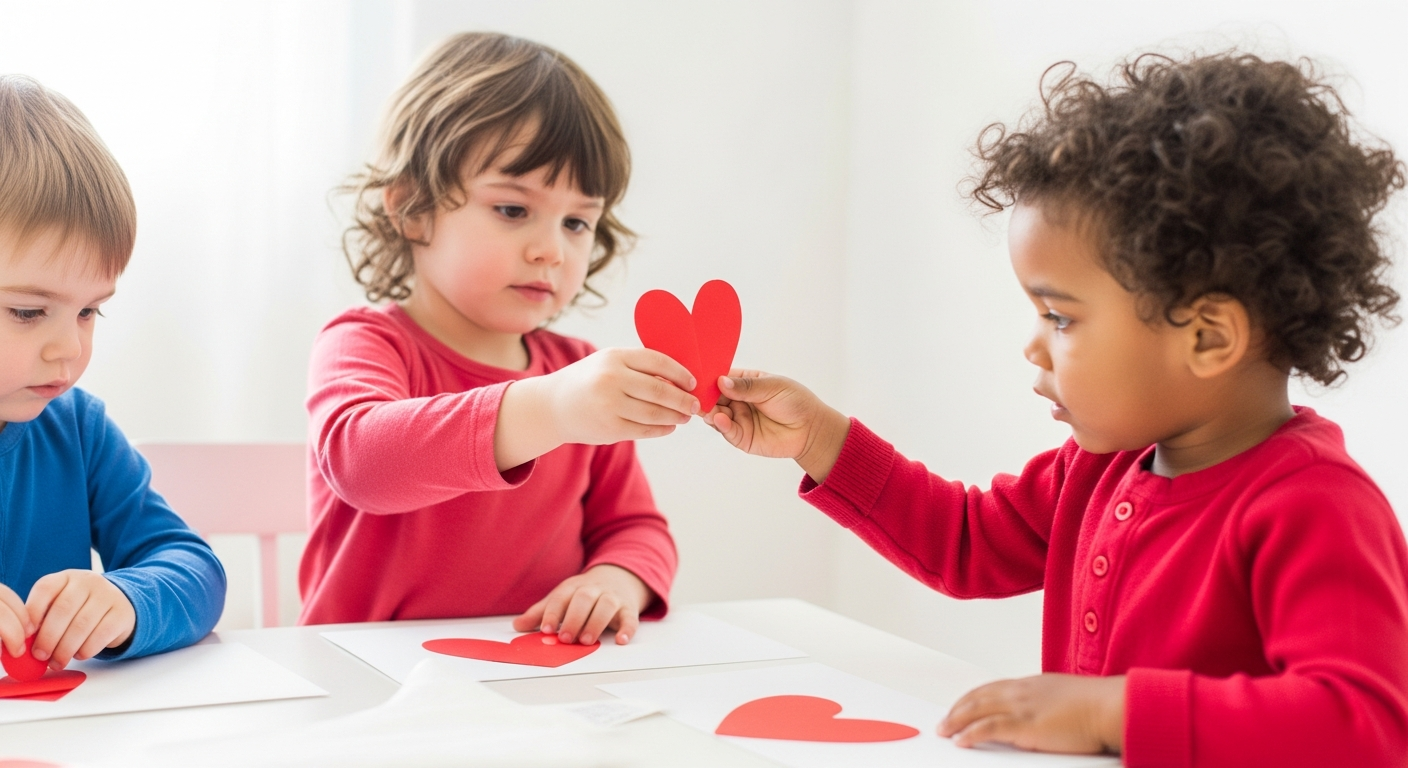
Table of Contents
- Introduction
- Why Crafting is a Secret Weapon for Speech Development
- 1. The Classic Heart Suncatcher (Low-Mess & High-Impact)
- 2. "Bee My Valentine" Paper Plate Craft
- 3. Yarn-Wrapped Cardboard Hearts
- 4. Coffee Filter Tie-Dye Hearts
- 5. Love Bug Pinecones
- 6. Celery Stamped Hearts
- 7. Valentine Sensory Bin
- 8. Shaving Cream Marbled Hearts
- 9. Fingerprint Family Tree
- 10. Sticky Heart Wall
- 11. Cardboard Tube Heart Stamps
- 12. "I Love You to Pieces" Collage
- 13. Heart-Shaped Bird Feeders
- 14. Handprint "LOVE" Canvas
- 15. Valentine's Day "Mailbox"
- From Physical Play to "Smart Screen Time"
- Why Speech Blubs is the Right Choice for Your Family
- Practical Tips for Stress-Free Crafting
- FAQs about Toddler Valentine's Crafts and Speech
- Conclusion
Introduction
Did you know that by the age of three, a child’s brain is twice as active as an adult’s? Every time your little one picks up a chunky crayon, squeezes a glue bottle, or tears a piece of pink tissue paper, they aren't just making a "toddler valentine's craft"—they are building the fundamental neural pathways required for complex communication and fine motor control. At Speech Blubs, we believe that every moment of play is an opportunity for a child to "speak their minds and hearts."

Valentine’s Day offers a unique, heart-filled window to engage your toddler in activities that foster connection, reduce frustration, and build confidence. Many parents feel overwhelmed by the "mess" of crafting or worry that their child isn't "artistic" enough. However, the goal of toddler crafting isn't a gallery-worthy masterpiece; it’s the process of exploration. In this article, we will explore 15 engaging and developmentally supportive Valentine's crafts, explain the science behind why these activities boost speech, and show you how to pair physical play with our unique "smart screen time" approach. By the end of this post, you'll have a toolkit of ideas to make this February a month of joyful family learning.
Why Crafting is a Secret Weapon for Speech Development
Before we dive into the glitter and glue, it’s important to understand why we, as child development experts, advocate so strongly for hands-on play. There is a fascinating neurological link between fine motor skills and speech. The part of the brain responsible for hand movements sits right next to the area responsible for speech production (Broca’s area). When toddlers engage their hands in a complex toddler valentine's craft, they are essentially "warming up" the brain's communication centers.

The Power of Joint Attention
When you sit on the floor with your child to make a heart-shaped card, you are engaging in "joint attention." This is a foundational communication skill where two people focus on the same object. For a "late talker," these moments are gold. You are providing a narrative for their actions: "You have the red paper," or "Look, the glue is sticky." This naturalistic language modeling is exactly what we mirror in our app. If you’re curious about where your child stands in their development, you can take our quick 3-minute preliminary screener to get a simple assessment and a next-steps plan.
1. The Classic Heart Suncatcher (Low-Mess & High-Impact)
This is a staple for a reason. It requires very little "precision," making it perfect for the 2-to-3-year-old crowd who may still be mastering their pincer grasp.
- Materials: Clear contact paper, red and pink tissue paper (torn into bits), and a construction paper heart frame.
- The Process: Tape a piece of contact paper (sticky side up) to the table. Let your toddler press the tissue paper bits onto the sticky surface. Once full, seal it with another piece of contact paper and trim it into a heart.
- Speech Boost: Focus on the concepts of "on" and "off." Say, "Put it on!" or "Take it off!" This helps toddlers understand prepositions in a physical, tangible way.
2. "Bee My Valentine" Paper Plate Craft
Toddlers love animals, and the "B" sound in "Bee" and "Buzz" is one of the earliest sounds children master. This craft is a wonderful way to practice bilabial sounds (sounds made with both lips).
- Materials: A paper plate, yellow and black paint (or markers), and white paper for handprint wings.
- The Process: Have your child color the plate yellow and black. Trace their hands on white paper, cut them out, and glue them to the sides as wings.
- Speech Integration: While your child "flies" their bee around, encourage them to make the "B-B-B" or "Z-Z-Z" sound. This mimics the activities in our Speech Blubs app, where children watch their peers make animal sounds through video modeling.
3. Yarn-Wrapped Cardboard Hearts
If your toddler is a "busy body" who needs to keep their hands moving, yarn wrapping is a fantastic way to build hand strength.
- Materials: Thick cardboard cut into heart shapes and red yarn.
- The Process: Cut small notches around the edge of the cardboard heart to help hold the yarn. Tape one end of the yarn to the back and let your toddler wrap, wrap, and wrap!
- The Goal: We aren't looking for a perfect pattern. We are looking for the "crossing the midline" movement, which is vital for brain development.
4. Coffee Filter Tie-Dye Hearts
This craft introduces the concept of cause and effect—a key cognitive milestone for communication.
- Materials: White coffee filters (cut into hearts), washable markers, and a spray bottle or dropper with water.
- The Process: Let your toddler scribble all over the coffee filter with markers. Then, use a dropper to add water. Watch the colors bleed and blend!
- Speech Tip: Use "active" verbs. "Look, it’s running!" or "The colors are mixing!" This expands their vocabulary beyond simple nouns.
5. Love Bug Pinecones
Nature-based crafting encourages sensory exploration, which is the foundation of all learning.
- Materials: Pinecones found on a walk, googly eyes, pipe cleaners, and some glue.
- The Process: Help your toddler glue googly eyes onto the pinecone. Wrap pipe cleaners around the "scales" to create legs or antennae.
- Real-World Scenario: For a parent whose 3-year-old 'late talker' loves nature, the process of finding the pinecone becomes a scavenger hunt. You can ask, "Where is the pinecone? Is it under the tree? Is it big or small?" This mirrors our mission at Speech Blubs to empower children to speak their minds and hearts through the things they already love.
6. Celery Stamped Hearts
Who knew a vegetable could be an art tool? This is a great "low-frustration" craft because the shape is already made for them.
- Materials: A bunch of celery (cut near the base), red paint, and paper.
- The Process: When you cut the base of a celery bunch, the stalks naturally look like a rose or a heart. Dip the end in paint and stamp it onto the paper.
- Observation: Your child will be surprised! Surprises are the best time to elicit speech. "What is that? A heart!"
7. Valentine Sensory Bin
While not a traditional "craft" you hang on the wall, a sensory bin is a "process craft" that provides hours of language-rich play.
- Materials: A plastic tub, dyed red rice or pink pasta, heart-shaped scoops, and hidden "treasures" like plastic rings or toy animals.
- Speech Prompt: Hide a toy cow in the red rice. When your child finds it, encourage them to say "Moo!" You can see how this technique is backed by extensive research on how play-based learning and imitation are the most effective ways for toddlers to learn.
8. Shaving Cream Marbled Hearts
This is for the sensory seekers! It’s messy, it’s tactile, and it’s visually stunning.
- Materials: Shaving cream, liquid food coloring (red/pink), a tray, and paper hearts.
- The Process: Spread a layer of shaving cream on a tray. Drop food coloring on top and swirl it with a stick. Press a paper heart into the cream, lift it, and scrape off the excess cream to reveal the marbled pattern.
- The Language of Texture: This is the perfect time to use descriptive words like "soft," "cold," "squishy," and "pretty."
9. Fingerprint Family Tree
This craft emphasizes the concept of "family" and "love," helping toddlers connect words to the people in their lives.
- Materials: A drawing of a tree trunk and branches, and red/pink ink pads or paint.
- The Process: Have your child use their thumbprints to create "leaves" on the branches. You can add your own prints too!
- Meaningful Connection: As you press your fingers down, name the family members. "This is Mommy’s heart. This is [Child’s Name]’s heart."
10. Sticky Heart Wall
Another low-mess option that gets toddlers standing up and moving—excellent for gross motor development.
- Materials: Contact paper (taped to the wall, sticky side out) and various "red" items: feathers, yarn, paper scraps, buttons.
- The Process: Let your child walk up to the wall and stick the items on.
- Benefit: Standing while crafting helps build core strength, which—believe it or not—helps with the breath control needed for speech.
11. Cardboard Tube Heart Stamps
Recycle those toilet paper rolls for some easy stamping fun!
- Materials: Cardboard tubes, tape, and paint.
- The Process: Bend the cardboard tube into a heart shape and secure it with tape. Now you have a DIY heart stamp.
- Speech Play: Every time they stamp, say "Pop!" or "Boom!" These "symbolic sounds" are often the bridge between silence and first words.
12. "I Love You to Pieces" Collage
Tearing paper is an excellent way to work on bilateral coordination (using both hands together).
- Materials: A large heart outline on paper, scraps of colored paper, and glue.
- The Process: Let your child tear the paper into "pieces" and glue them inside the heart.
- Narrative: "You are tearing the paper. Rip! Rip! Rip!"
13. Heart-Shaped Bird Feeders
Teach your toddler about caring for others (even the birds!) with this edible craft.
- Materials: Cheerios and heart-shaped pipe cleaners.
- The Process: Show your child how to thread the Cheerios onto the pipe cleaner. Once full, twist the ends to make a heart.
- Fine Motor: This is the "gold standard" for fine motor skills. It requires focus and steady hands.
14. Handprint "LOVE" Canvas
A classic keepsake that parents will treasure forever.
- Materials: A canvas or heavy paper and paint.
- The Process: Use the child’s handprint for the "V" and their footprints (placed at an angle) for the "O" or a heart.
- Bonding: The physical sensation of paint on their feet often leads to giggles—another great way to foster a love for communication and interaction.
15. Valentine's Day "Mailbox"
Create a dedicated spot for your toddler to receive "mail."
- Materials: A shoebox with a slit cut in the top, stickers, and markers.
- The Process: Let them decorate their mailbox.
- Social Skills: Practice saying "Thank you" or "For you" as you drop little notes or drawings into their box. This builds the social-pragmatic side of language.
From Physical Play to "Smart Screen Time"
As a parent, you know that you can't be on the floor crafting 24/7. There are times when you need a moment to breathe, cook dinner, or answer an email. This is where the concept of "smart screen time" comes in. At Speech Blubs, we’ve created a screen-free alternative to passive viewing. Instead of your child zoning out to cartoons, they can engage with a tool that encourages them to be active participants.
Our app is built on the scientific principle of video modeling. Children learn best by watching other children. In the app, your toddler will see kids their own age making sounds, saying words, and performing actions. This triggers "mirror neurons" in the brain, making them much more likely to try the sounds themselves. It’s a powerful supplement to the hands-on crafting you do together.
Many parents have found success by pairing these activities. For example, after making the "Bee My Valentine" craft, you might open the "Animal Kingdom" section of the app to practice the "B" sound with a digital peer. See what other parents are saying about how this combination has helped their children's confidence soar.
Why Speech Blubs is the Right Choice for Your Family
We know there are many options out there, but Speech Blubs was born from a place of deep personal understanding. Our founders all grew up with speech problems and created the tool they wished they had as children. We aren't just an app; we are a mission-driven community dedicated to helping 1 in 4 children who need speech support.
Our approach is joyful, not clinical. We don't want your child to feel like they are "working." We want them to feel like they are playing. This reduces the frustration often associated with speech delays and fosters a lifelong love for communication.
Choosing the Best Plan for Your Child’s Progress
To give your child the most consistent support, we offer two main plans. While we want to be transparent and help you choose what fits your budget, the Yearly plan is designed to provide the most comprehensive experience.
- Monthly Plan: $14.99 per month. This is a great way to test the waters if you're just getting started.
- Yearly Plan: $59.99 per year. This is our best value option, breaking down to just $4.99/month (a 66% savings!).
The Yearly Plan includes exclusive benefits you won't get with the monthly option:
- A 7-day free trial so you can explore everything risk-free.
- The extra Reading Blubs app, which helps transition speech skills into early literacy.
- Early access to new updates and features.
- 24-hour support response time from our dedicated team.
Ready to see the difference for yourself? You can sign up for your 7-day free trial on our website or download the app directly from the Apple App Store or Google Play Store.
Practical Tips for Stress-Free Crafting
We know that "toddler" and "crafting" can sometimes lead to "chaos." Here are a few expert tips to keep the experience joyful:
- Lower Your Expectations: The heart doesn't need to be symmetrical. The glue will get on the table. Focus on the smile on your child's face and the sounds they are making.
- Narrate Everything: Think of yourself as a sports commentator for your child's life. "You're picking up the red crayon. Wow! Look at that big line!"
- Keep it Short: A toddler’s attention span is typically 2–3 minutes per year of age. If they want to stop after five minutes, that’s okay!
- Co-Play is Key: These activities are designed for you to do with your child. Your engagement is the most important "material" in the craft.
FAQs about Toddler Valentine's Crafts and Speech
1. My toddler won't sit still for crafts. Is something wrong? Not at all! Many toddlers prefer "active" play. Try the "Sticky Heart Wall" mentioned above, which allows them to stand and move while they create. You can also use the Speech Blubs app for short, 5-minute bursts of "smart screen time" that match their natural attention span.
2. How do these crafts actually help my child talk? Crafting builds fine motor skills, which are linked to the speech centers of the brain. More importantly, it creates a "low-pressure" environment for language modeling. When you name colors, textures, and actions during a craft, your child absorbs that vocabulary without the pressure of a "repeat after me" demand.
3. What if my child just wants to eat the craft materials? This is very common! Stick to edible-safe options like the "Cheerio Bird Feeder" or use a sensory bin with dry pasta or rice. Always supervise your child closely during any activity involving small parts.
4. Can I use Speech Blubs if my child is already in professional speech therapy? Yes! We often frame our app as a powerful supplement to professional therapy. It’s a way to keep the momentum going at home in a fun, joyful way. Always consult with your Speech-Language Pathologist (SLP) about how to best integrate the app into your child's specific plan.
Conclusion
Valentine’s Day is more than just candy and cards; it’s an opportunity to celebrate the growing voice of your little one. Whether you are tearing paper for a collage, "buzzing" like a bee with a paper plate, or exploring the scientific methodology of video modeling in the Speech Blubs app, you are doing the important work of building your child’s confidence.
Remember, the goal is to foster a love for communication and create joyful family learning moments. By providing your child with a mix of hands-on "toddler valentine's craft" activities and high-quality "smart screen time," you are giving them the best of both worlds.
We invite you to join our family of over 5 million parents. Choose the path that’s right for you, but we highly recommend our Yearly plan to unlock the full suite of features, including the Reading Blubs app and a 7-day free trial. Let’s help your child speak their mind and heart this Valentine’s Day!
Ready to get started? Download Speech Blubs on the App Store or Google Play Store today and start your journey with our 7-day free trial. Don't forget to select the Yearly plan for the best value and exclusive updates!