
15 Engaging Toddler Cognitive Activities for Early Learning
 By Speech Blubs Team•Feb 23, 2026•14 min.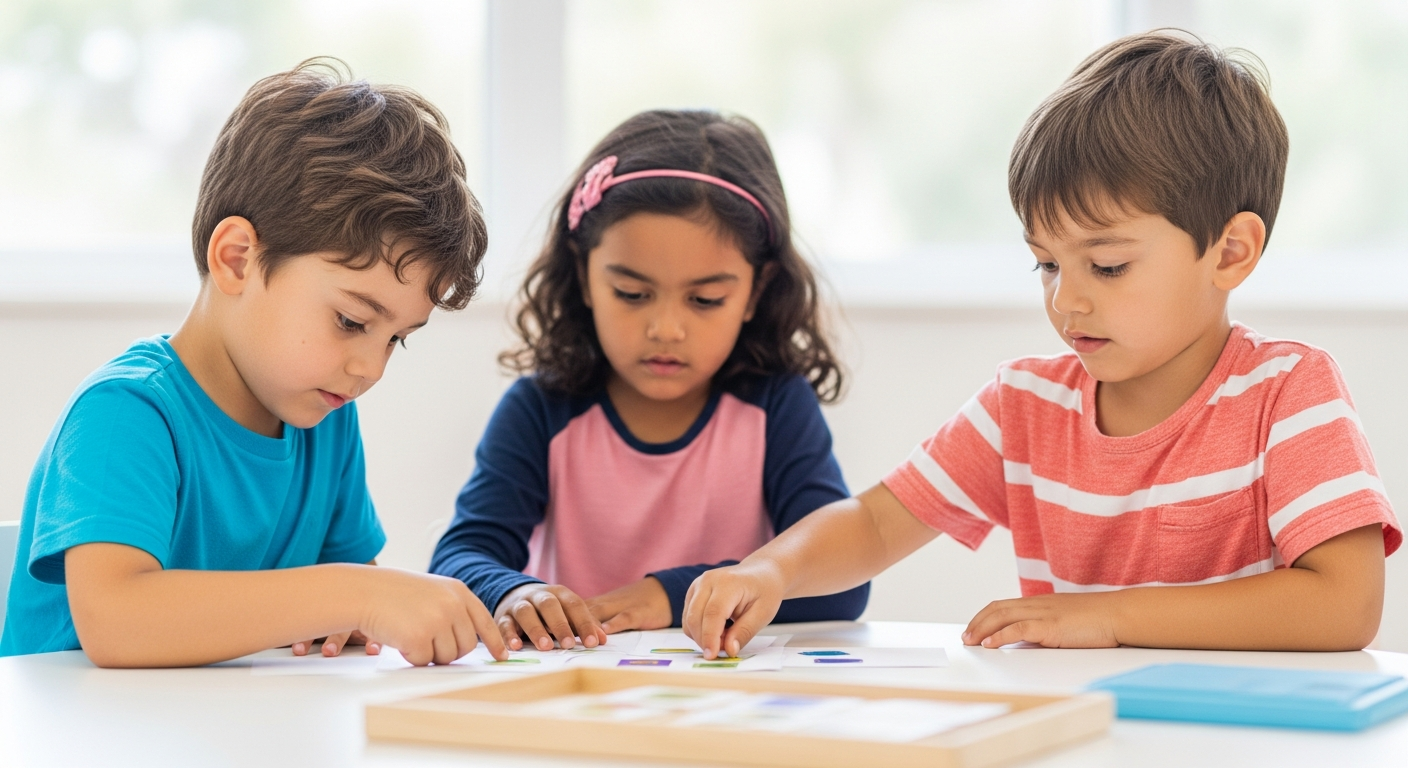
Table of Contents
- Introduction
- The Foundation of Toddler Cognitive Development
- Memory-Building Activities
- Logic and Problem-Solving Activities
- Enhancing Imagination and Creativity
- The Science of Video Modeling: A New Way to Learn
- Integrating Cognitive Skills into Daily Routines
- Screen Time: Making it "Smart" and Social
- Building Language through Cognitive Play
- Investing in Your Child’s Future
- When to Seek Professional Support
- Summary of Key Takeaways
- Conclusion
- Frequently Asked Questions
Introduction
Did you know that by the age of three, a child’s brain has already reached roughly 80% of its adult size? This staggering statistic highlights why the toddler years are often called the "golden window" for development. During this period, millions of neural connections are forming every single second, shaped by every song sung, every block stacked, and every word spoken. At Speech Blubs, we understand that this rapid growth can be both exhilarating and overwhelming for parents. We see firsthand how cognitive development—the way children think, explore, and figure things out—is the bedrock upon which language and social skills are built.
The purpose of this guide is to provide you with a comprehensive toolkit of toddler cognitive activities that are simple to implement at home. We will explore how memory, logic, and imagination work together to help your child understand their world. We will also dive into the science behind our unique approach to "smart screen time" and how it complements traditional play. Our mission is to empower children to speak their minds and hearts by turning everyday moments into joyful learning opportunities. By the end of this post, you will have a clear roadmap for fostering your child's foundational skills through the power of play.

The Foundation of Toddler Cognitive Development
Cognitive development isn’t just about "being smart." For a toddler, it’s about learning how to process information, organize thoughts, and solve the tiny mysteries of their daily life. Between the ages of two and three, children undergo a massive shift from simple reflexes to intentional, logical thinking. However, this transition isn't always smooth. You might notice that your child’s curiosity often outpaces their ability to express themselves, leading to the infamous "terrible twos" tantrums. These outbursts are frequently just a sign of a brain working hard to communicate complex ideas without the full vocabulary to do so yet.
Our founders at Speech Blubs understand this frustration deeply. They all grew up with speech problems and created the tool they wished they had as children—one that blends scientific principles with pure joy. We believe that the best way to support a child’s growing mind is to bridge the gap between their thoughts and their words through engaging, evidence-based activities.
Memory-Building Activities
Memory is the ability to retain and recall information, and it is crucial for everything from following multi-step directions to learning the names of family members.
1. The Classic Game of Hide and Seek (with Objects)
Instead of hiding yourself, try hiding a favorite toy under one of three identical cups or blankets. Shuffle them around and ask your toddler to find the "hidden treasure." This activity builds short-term visual memory and reinforces the concept of object permanence—the understanding that things still exist even when they can't be seen.
2. Narrative Song and Story Repetition
Repetition is the "secret sauce" of memory. When we sing nursery rhymes like "The Itsy Bitsy Spider" or read the same book for the tenth time, we are helping our toddlers recognize patterns and sequences. To level up this activity, pause before the last word of a familiar sentence and let your child fill it in. This builds long-term recall and boosts confidence.

3. Digital Memory Matching
In the Speech Blubs app, we use visual cues and repetitive sounds to help children memorize new concepts. If your child is struggling with focus, our "smart screen time" offers a focused environment where they can match sounds to peer faces. You can download Speech Blubs on the App Store to see how our memory-focused sections can help your little one.
Logic and Problem-Solving Activities
Logic is about understanding relationships—how things fit together, how they differ, and the concept of cause and effect.
4. Categorization with Household Items
Sorting is a fundamental mathematical skill. Give your toddler a basket of clean laundry and ask them to find all the "blue" socks or all the "small" shirts. You can do this with toy cars (sorting by color) or plastic kitchen containers (sorting by size).
5. Shape Puzzles and Spatial Reasoning
Puzzles require a child to visualize a goal and use trial and error to achieve it. Start with simple wooden "peg" puzzles and move toward 3- or 4-piece interlocking puzzles. For a parent whose 3-year-old "late talker" loves animals, the "Animal Kingdom" section of our app offers a fun, motivating way to practice "moo" and "baa" sounds while matching animals to their environments. This connects logical categorization with verbal expression.
6. Simple Cause-and-Effect Science
Fill a sink or a plastic bin with water and gather various objects: a metal spoon, a plastic duck, a rock, and a cork. Ask your child, "Will it sink or float?" before dropping each item in. This simple experiment encourages critical thinking and helps them form hypotheses about the physical world.
Enhancing Imagination and Creativity
A child’s imagination is more than just "playing make-believe." It is the beginning of abstract thinking—the ability to think about things that aren't right in front of them.
7. Creative Arts and Crafts
Provide a variety of textures: finger paints, crinkly paper, playdough, and smooth stones. As your child creates, they are practicing fine motor skills and sensory processing. Avoid telling them what to draw; instead, ask them to "tell me about your picture." This encourages them to translate their internal imagination into external language.
8. Role-Playing and "The Box" Challenge
A cardboard box can be a rocket ship, a cave, or a bakery. Pretend play helps toddlers practice social scenarios and empathy. If you’re looking for more inspiration, our research shows that when children observe others (like the peers in our videos), they are more likely to imitate those actions in their own creative play.
9. Outdoor Nature Scavenger Hunts
Take the learning outside. Ask your child to find "something crunchy," "something green," or "something round." The outdoors provides a rich, unstructured environment that fosters independent problem-solving and reduces the overstimulation often found in indoor environments.
The Science of Video Modeling: A New Way to Learn
At Speech Blubs, we don't just provide "games." Our methodology is rooted in a scientific concept called video modeling. This approach is based on the idea that children learn best by watching and imitating their peers. Have you ever noticed how your child suddenly wants to eat broccoli just because they saw their older cousin do it? That’s the power of peer influence!
How It Works
When a child watches a video of another child performing a task or saying a word, "mirror neurons" in their brain fire as if they were doing it themselves. This reduces the pressure and anxiety often associated with traditional therapy and turns learning into a joyful, social experience. Our app acts as a "smart screen" alternative to passive viewing (like cartoons), requiring active participation and imitation.
If you’re curious about how this could benefit your child, we recommend starting with our quick 3-minute preliminary screener. It involves 9 simple questions about your child's current milestones and provides an immediate assessment and a custom next-steps plan.
Integrating Cognitive Skills into Daily Routines
You don't need a classroom to boost your child's brainpower. In fact, some of the best cognitive development happens during the "mundane" parts of the day.
10. The Power of Choice
Give your toddler a sense of agency by offering two choices: "Do you want the red bowl or the blue bowl?" or "Should we read the book about trucks or the book about bears?" This builds decision-making skills and reduces the power struggles that lead to tantrums.
11. Narrative Play During Chores
When you are cooking, talk through your actions: "First, I wash the apple. Then, I cut the apple. Next, we eat the apple!" This helps toddlers understand the concept of time and sequencing (First, Next, Last).
12. "Stop and Go" Games
Games like "Red Light, Green Light" or "Freeze Dance" are excellent for developing executive function and impulse control. The ability to stop an action on command is a high-level cognitive skill that will serve them well as they enter preschool.
Screen Time: Making it "Smart" and Social
We know that many parents feel "screen guilt." However, not all screen time is created equal. Passive consumption of loud, fast-paced cartoons can sometimes lead to overstimulation and shorter attention spans. In contrast, "smart screen time" is designed to be a tool for family connection.
When you use Speech Blubs, we encourage you to sit with your child. Watch the peer models together, mimic the funny faces, and celebrate every attempt at a new sound. This co-play transforms the digital experience into a social one. You can get Speech Blubs on Google Play to start this journey together.
Our users often tell us that this shared experience is what makes the difference. One parent shared, "My son wouldn't even try to say 'dog,' but after seeing a boy his age barking in the app, he started barking and then finally said the word!" You can read more stories like this on our testimonials page.
Building Language through Cognitive Play
It is impossible to separate cognitive growth from language development. As a child learns to categorize (logic), they learn the names of those categories (vocabulary). As they remember a sequence of events (memory), they learn to tell a story (narrative skills).
13. Letter and Number Familiarity
You don't need to drill flashcards. Instead, point out letters on cereal boxes or numbers on house doors. Use alphabet blocks to build towers, then name the letter on the block before knocking it down. This associates early literacy and numeracy with fun and physical activity.
14. Interactive Reading
When reading, don't just read the words on the page. Ask "Wh-" questions: "Where is the kitty hiding?" "Why is the boy sad?" "What do you think will happen when he opens the door?" This fosters critical thinking and encourages your child to use their growing vocabulary to express their thoughts.
15. Music and Rhythm
Pattern recognition is a precursor to math and reading. Clapping along to a beat or playing with simple shakers helps toddlers internalize rhythm. In our app, we use rhythmic sounds and songs to make the "work" of speech therapy feel like a celebration.
Investing in Your Child’s Future
At Speech Blubs, we are committed to providing an immediate, effective, and joyful solution for the 1 in 4 children who need speech and cognitive support. We want to be transparent about how you can access our full range of tools to support your child's journey.
We offer two main subscription plans to fit your family's needs:
- Monthly Plan: $14.99 per month. This is a great way to test the waters and see if your child enjoys the activities.
- Yearly Plan: $59.99 per year. This is our clear best-value choice, breaking down to just $4.99 per month—a savings of 66% compared to the monthly rate.
When you choose the Yearly Plan, you don't just save money; you also get access to exclusive, high-value features that are not included in the monthly plan:
- A 7-day free trial to explore everything risk-free.
- The Reading Blubs app, specifically designed to transition your child from speaking to early reading.
- Early access to all new updates and content.
- 24-hour support response time from our dedicated team.
Ready to see the difference for yourself? You can create your account and begin your 7-day free trial today.
When to Seek Professional Support
While these toddler cognitive activities are powerful, every child develops at their own pace. It is important to set realistic expectations. We aren't promising that your child will be reciting Shakespeare in a month; rather, we are here to foster a love for communication, build confidence, and reduce the frustration that comes with speech delays.
If you find that your child is not meeting major milestones—such as failing to follow simple instructions, having difficulty with eye contact, or showing a lack of interest in play—it is always best to consult with a professional. Our app is a powerful supplement to a child’s overall development plan and can work wonderfully alongside professional speech therapy.
Summary of Key Takeaways
Boosting your toddler's cognitive skills doesn't require expensive equipment or a PhD in education. It requires:
- Engagement: Being present and playing with your child.
- Variety: Mixing physical play, sensory exploration, and "smart" digital tools.
- Repetition: Singing that song one more time!
- Science-Backed Tools: Utilizing methods like video modeling to encourage imitation.
The goal is to create joyful family learning moments that build the foundation for a lifetime of curiosity and communication. By integrating these 15 activities into your daily life, you are giving your child the greatest gift possible: the ability to understand and interact with the world around them.
Conclusion
The journey of toddlerhood is a wild, wonderful, and sometimes challenging ride. From the first time they sort their blocks by color to the first time they successfully retell a story, every cognitive milestone is a victory worth celebrating. At Speech Blubs, we are honored to be a part of that journey with you. Our mission to help children "speak their minds and hearts" drives everything we do, from the peer-led videos in our app to the expert advice we share in our community.
Don't wait to start building those vital neural connections. Whether you are looking for a screen-free alternative to mindless cartoons or a tool to help a late talker find their voice, we are here to help.
Ready to get started? Download Speech Blubs on the App Store or Google Play to begin your journey. We highly recommend choosing the Yearly plan to unlock your 7-day free trial, the Reading Blubs app, and the best overall value for your family. Let’s make learning the most fun part of your child’s day!
Frequently Asked Questions
1. What are the best cognitive activities for a 2-year-old?
The best activities for 2-year-olds focus on sensory exploration and simple logic. Activities like sorting toys by color, playing with sensory bins (filled with rice or pasta), and simple "hide and seek" with objects are perfect. These activities help them understand categories and object permanence while keeping their busy hands engaged.
2. How does screen time affect toddler cognitive development?
Not all screen time is equal. "Passive" screen time, where a child just watches cartoons, can lead to overstimulation. However, "active" or "smart" screen time—like the video modeling used in Speech Blubs—encourages children to imitate, speak, and interact. When used as a tool for co-play between parent and child, it can actually support cognitive and language goals.
3. Can cognitive activities help with speech delays?
Yes! Cognition and language are deeply linked. Activities that improve memory, logic, and imitation help build the foundational skills necessary for speech. For example, learning to categorize animals (a cognitive skill) provides the framework for learning the names and sounds of those animals (a language skill).
4. How much time should my toddler spend on these activities?
Toddlers have short attention spans, so it’s best to keep activities brief and frequent. Even 10 to 15 minutes of focused play or "smart screen time" a day can make a significant impact. The most important factor is consistency and making sure the activities remain fun and pressure-free.
About the author