
15 Festive Toddler Reindeer Craft Ideas for Speech Fun
 By Speech Blubs Team•Feb 20, 2026•17 min.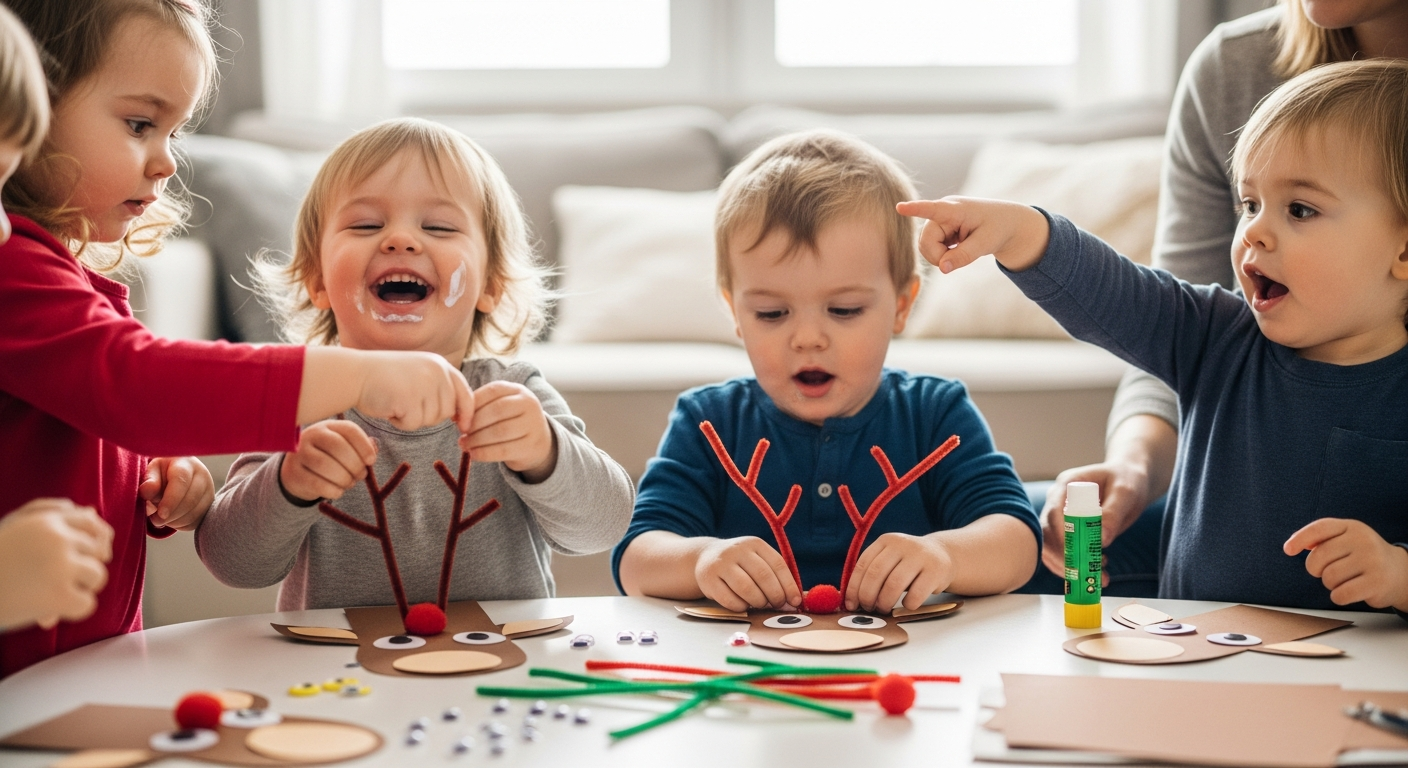
Table of Contents
- Introduction
- The Power of Play and Video Modeling
- 1. The Classic Paper Plate Reindeer Mask
- 2. Sensory Rice Reindeer Art
- 3. Handprint Reindeer Keepsake
- 4. Yarn-Wrapped Popsicle Stick Reindeer
- 5. Paper Bag Reindeer Puppet
- 6. Sponge-Painted Reindeer Forest
- 7. Toilet Paper Roll Reindeer Characters
- 8. Reindeer Footprint "Mistle-toes"
- 9. Candy Cane Reindeer
- 10. Paper Strip Circle Reindeer
- 11. Clothespin Reindeer Ornaments
- 12. Reindeer "Nature Hunt" Collage
- 13. Reindeer Headbands
- 14. Fingerprint Reindeer Christmas Lights
- 15. Reindeer Stick Puppets
- Making the Most of Your "Smart Screen Time"
- Integrating Crafts with Professional Therapy
- Summary of Key Takeaways
- FAQ
- Conclusion
Introduction
Did you know that according to child development experts, nearly 75% of a child’s brain growth happens during play? When the holiday season rolls around, the air is filled with more than just the scent of pine and cinnamon; it’s filled with opportunities for connection, laughter, and significant language milestones. As parents, we often look for ways to keep our little ones occupied during the winter break, but what if those activities did more than just pass the time? What if a simple toddler reindeer craft could be the key to unlocking new words, building confidence, and fostering a deep love for communication?

In this guide, we are going to explore a variety of engaging reindeer-themed crafts specifically designed for the smallest hands. We will go beyond the "how-to" and dive into the "why," explaining how each glue stick stroke and paint smudge contributes to your child’s developmental journey. We’ll also show you how to pair these tactile experiences with "smart screen time" to create a holistic learning environment. At Speech Blubs, our mission is to empower children to speak their minds and hearts, and we believe that the most effective learning happens when a child is having so much fun they don’t even realize they are practicing complex skills.
By the end of this article, you will have a toolkit of creative projects and evidence-based strategies to make this holiday season both merry and meaningful. Whether your child is already a chatterbox or is just beginning to find their voice, these activities are designed to meet them exactly where they are.
The Power of Play and Video Modeling
Before we dive into our first toddler reindeer craft, it’s essential to understand the science behind why these activities are so effective for speech development. At Speech Blubs, our approach is rooted in the concept of video modeling. This is a proven scientific method where children learn new behaviors and skills by watching their peers.
When your child sees another child on a screen—or right next to them—performing a task or making a sound, it triggers "mirror neurons" in their brain. These neurons fire both when an action is performed and when it is observed, making it easier for the child to imitate and learn. This is why our app features over 1,500 activities led by kids, for kids.
Combining these digital "smart screen time" experiences with physical crafts creates a powerful "double-loop" of learning. Your child watches a peer make a reindeer sound or name a body part in the app, and then they physically reinforce that concept by creating a reindeer mask or a handprint ornament with you. This transition from digital observation to physical creation is where the magic happens. Our scientific methodology ensures that we aren't just providing entertainment, but a structured path toward better communication.

1. The Classic Paper Plate Reindeer Mask
One of the most effective ways to encourage speech is through role-play. When a child puts on a mask, they step into a new character, which can often lower their inhibitions and make them more willing to experiment with new sounds.
Materials Needed:
- Paper plates
- Brown acrylic paint or crayons
- Brown construction paper
- Red pom-poms
- Large googly eyes
- Popsicle sticks and heavy-duty tape
Speech Building Steps:
- Painting: As your child paints the plate brown, narrate their actions. "Up and down, round and round." This builds vocabulary for directions and motions.
- Antler Tracing: Trace your child’s hands on brown paper to make antlers. While doing this, name each finger. "One, two, three, four, five!"
- Assembly: Ask your child where the nose goes. "On top? No, in the middle!" This practices spatial prepositions.
- The Reveal: Once the mask is dry and attached to a popsicle stick, it’s time to play. Encourage your child to make reindeer sounds. If they aren't sure what a reindeer sounds like, you can use the "Animal Kingdom" section of our app to find similar animal vocalizations to imitate.
2. Sensory Rice Reindeer Art
For many toddlers, sensory play is the gateway to engagement. This toddler reindeer craft uses colored rice to create a textured masterpiece, providing tactile stimulation that can be incredibly grounding for children who struggle with focus.
Materials Needed:
- Dry white rice
- Brown food coloring or acrylic paint
- A zip-lock bag
- Cardstock with a reindeer outline
- School glue
The Speech Connection:
While your child shakes the bag of rice to color it, use rhythmic language. "Shake, shake, shake the rice!" Rhythmic speech is a precursor to understanding the cadence of natural conversation. Once the rice is dry and they are sprinkling it onto the glue, focus on descriptive words like "crunchy," "bumpy," and "cold."
If you are unsure where your child stands in their development, you can take our quick 3-minute preliminary screener. It involves 9 simple questions and provides an assessment and a next-steps plan to help you tailor these activities to your child's specific needs.
3. Handprint Reindeer Keepsake
There is nothing quite like a handprint craft to capture a moment in time. This is also a fantastic way to practice "body part" vocabulary in a natural setting.
How to do it:
Paint your child's palm and fingers with brown washable paint. Press it firmly onto a piece of white cardstock or a canvas. The palm becomes the reindeer’s face, and the fingers become the antlers. Once dry, add a red "thumbprint" nose and googly eyes.
Practical Scenario:
For a parent whose 2-year-old is just starting to label objects, this craft is a goldmine. As you paint their hand, you can say, "I’m painting your fingers. Now I’m painting your palm." This helps the child associate the word with the physical sensation. You can then transition to the app and look at the "Face" or "Body" sections to reinforce these labels. Many parents have found this combination helps reduce frustration during the "terrible twos" because the child gains the tools to express what they are feeling. Don't just take our word for it; see what other parents are saying about their success.
4. Yarn-Wrapped Popsicle Stick Reindeer
This craft is excellent for developing fine motor skills, which are closely linked to the brain regions responsible for speech production.
Steps:
- Glue three popsicle sticks into a triangle shape.
- Tie a piece of brown yarn to one corner.
- Show your child how to wrap the yarn around the sticks until the middle is filled.
- Add pipe cleaner antlers to the top.
Why it works for speech:
The act of "wrapping" requires concentration and bilateral coordination. While they work, you can practice "turn-taking" language. "My turn to hold the stick, your turn to wrap the yarn." Turn-taking is the fundamental structure of all human communication. By practicing it here, you are building the social foundations for future conversations.
5. Paper Bag Reindeer Puppet
Puppets are perhaps the greatest tool in a speech therapist’s arsenal. A puppet can say things a child might be too shy to say themselves.
Materials:
- Brown lunch bags
- Construction paper scraps
- Glue sticks
- Markers
Activity:
Decorate the bottom flap of the bag as the reindeer's face. When the child puts their hand inside, the "mouth" opens and closes. Encourage the reindeer to "eat" pretend snacks or "say" hello to family members. This encourages functional communication—using speech to achieve a goal.
To get the most out of these interactive moments, we recommend having the app ready to go on your device. You can download Speech Blubs on the App Store or Google Play to begin.
6. Sponge-Painted Reindeer Forest
Sometimes, toddlers just want to make a mess! Sponge painting allows for broad movements and instant gratification.
How to:
Cut a kitchen sponge into a triangle. Let your child dip it in brown paint and "stamp" it across a large sheet of paper. Each triangle is a reindeer head. Once they have a whole "herd," they can use their fingers to dot on red noses.
Language Tip:
Focus on the concept of "more." "Do you want more paint?" "Should we make more reindeer?" Using the word "more" is a powerful way for toddlers to exercise control over their environment through language.
7. Toilet Paper Roll Reindeer Characters
Recycling household items into art is a great lesson in creativity. These little reindeer can stand up on their own, making them perfect for "small world" play.
Materials:
- Empty toilet paper rolls
- Brown paint
- Branch-shaped twigs from the yard
- Glue
The Activity:
After painting the rolls, help your child glue the twigs inside the top of the roll for "real" antlers. This introduces a nature-based element to the craft. Discuss where reindeer live (the cold North Pole) and what they eat. Expanding a child's knowledge of the world around them provides more "content" for them to talk about later.
8. Reindeer Footprint "Mistle-toes"
Similar to the handprint craft, but with a twist! The heel of the footprint becomes the top of the reindeer's head, and the toes become the chin area.
Development Focus:
This activity is great for sensory-seeking children who might enjoy the feeling of cold paint on their feet. It also allows you to talk about "big" vs. "little" if you make a footprint next to theirs. "Look at Daddy’s big foot! Look at your little foot!"
9. Candy Cane Reindeer
This is a classic holiday treat that doubles as a quick and easy toddler reindeer craft.
Materials:
- Candy canes
- Brown pipe cleaners
- Small googly eyes
- Tiny red pom-poms
Steps:
Wrap the pipe cleaner around the "hook" of the candy cane and twist to create antlers. Glue on the eyes and nose. This is a very short activity, which is perfect for toddlers with shorter attention spans. It’s also a great way to practice "requesting." "Can I have a red nose, please?"
10. Paper Strip Circle Reindeer
Building a reindeer out of circles is a wonderful way to introduce basic geometry and shapes.
How to:
Cut strips of brown paper. Glue the ends together to make loops. Connect the loops or glue them flat to a page to form a circular head. This project focuses on the concept of "round" and "circle."
If you're looking for more ways to incorporate shapes and colors into your child's routine, our app's "Colors and Shapes" section is a perfect supplement. You can create your account and begin your 7-day free trial today to explore these categories.
11. Clothespin Reindeer Ornaments
Using clothespins is an incredible workout for "pincer grasp" muscles, which are essential for eventually holding a pencil or a toothbrush.
Steps:
Paint three clothespins brown. Clip two to the bottom of a cardboard circle (for legs) and one to the top (for an antler/ear look).
Speech Strategy:
Use "action words" or verbs. "Clip it!" "Squeeze it!" "Open it!" Verbs are the engines of sentences, and the more verbs your child knows, the sooner they will start combining words into short phrases.
12. Reindeer "Nature Hunt" Collage
Take the crafting outside!
The Plan:
Go for a short walk and collect leaves, sticks, and pebbles. Back inside, glue a large brown circle on a page and use the nature finds to create the reindeer’s features. Sticks for antlers, a round red leaf for a nose, and pebbles for eyes.
Why it helps:
Nature walks are high-stimuli environments that naturally spark curiosity. "What’s that?" "A stick!" This "serve and return" interaction is the building block of brain architecture.
13. Reindeer Headbands
Perfect for a holiday party or just a Tuesday afternoon at home.
How to:
Cut a long strip of brown construction paper to fit around your child’s head. Let them decorate it with stickers, glitter, or markers. Attach paper antlers to the sides.
Practical Scenario:
When your child wears the headband, they become the "helper." Ask them to help you "find" things around the house. "Reindeer, can you find the red ball?" This practices receptive language—the ability to understand and follow instructions. For more following-direction fun, check out the "Simon Says" style activities in the Speech Blubs app. You can find the app on the Google Play Store.
14. Fingerprint Reindeer Christmas Lights
This craft creates a beautiful string of "lights" made from colorful fingerprints, with one brown fingerprint turned into a reindeer.
How to:
Draw a wavy black line across a piece of paper. Have your child dip their fingers in various colors and press them along the line. For the reindeer, use brown paint and add tiny antlers with a fine-tip marker.
Speech Focus:
Color naming! "Red light, blue light, yellow light." If your child is non-verbal or minimally verbal, they can point to the colors as you name them, building their receptive vocabulary.
15. Reindeer Stick Puppets
Simple, effective, and great for storytelling.
Steps:
Draw a simple reindeer head on cardstock, color it, cut it out, and tape it to a large popsicle stick or a clean twig.
The Play:
Use the puppet to "sing" holiday songs. Music and melody are processed in different parts of the brain than speech, which is why many children find it easier to sing words before they can say them. "Rudolph the Red-Nosed Reindeer" is a perfect choice here!
Making the Most of Your "Smart Screen Time"
As a team of founders who grew up with speech challenges ourselves, we know that screen time is often a source of "parent guilt." However, we believe there is a massive difference between passive viewing (like watching a cartoon) and active, educational engagement. We call this "smart screen time."
When you use Speech Blubs, you are providing your child with a tool that was designed by speech therapists and powered by the joy of peer-to-peer learning. It’s a screen-free alternative in spirit, because it encourages the child to look away from the screen, imitate a sound, and engage with the person sitting next to them. It’s a tool for family connection, not a replacement for it.
Transparent Value and Pricing
We want to be your long-term partner in your child's development. To make our resources as accessible as possible, we offer two simple plans:
- Monthly Subscription: $14.99 per month. This is great for a short-term boost or to try things out.
- Yearly Subscription: $59.99 per year.
Why the Yearly Plan is the Best Choice: The Yearly plan is our most popular option because it offers the best value—breaking down to just $4.99 per month (a 66% saving compared to the monthly rate). But the savings are only part of the story. The Yearly plan includes:
- A 7-day free trial so you can explore the full range of content risk-free.
- The Reading Blubs app: An additional tool designed to help your child transition from speaking to reading.
- Early Access: You’ll be the first to receive new updates and features.
- Priority Support: A 24-hour response time from our dedicated support team.
The Monthly plan does not include these additional features. We encourage parents to choose the Yearly plan to ensure their child has a consistent, long-term resource for growth.
Integrating Crafts with Professional Therapy
If your child is already seeing a Speech-Language Pathologist (SLP), these reindeer crafts are the perfect "homework." You can ask your SLP which specific sounds or concepts your child is working on and then tailor the craft to match. For example, if they are working on the "F" sound, you might focus on "Fur," "Feet," or "Forest."
Speech Blubs is designed to be a powerful supplement to professional therapy. While a therapist provides expert intervention, our app provides the daily, joyful practice that helps those skills stick. We don't promise overnight miracles; instead, we focus on fostering a love for communication, building confidence, and creating those tiny "aha!" moments that lead to big breakthroughs.
"Our mission is to help 1 in 4 children who need speech support find their voice through play."
Summary of Key Takeaways
- Play is Essential: Creative activities like a toddler reindeer craft are more than just fun; they are vital for brain development and speech.
- Video Modeling Works: Watching other children speak and play (like in the Speech Blubs app) triggers mirror neurons and encourages imitation.
- Sensory Integration: Using different textures (rice, yarn, paint) helps engage multiple parts of the brain simultaneously.
- Narrative is Key: Use craft time to narrate actions, name body parts, and practice "more" and "turn-taking."
- Smart Screen Time: Balance physical crafts with interactive digital tools to reinforce learning.
- Value Matters: The Yearly Speech Blubs plan provides the most comprehensive support for your child's journey at the best price point.
FAQ
1. My child isn't talking yet. Are these crafts still useful? Absolutely! Speech development starts with "receptive language"—the ability to understand what is being said. By narrating your actions during a craft, you are pouring language into your child's "mental bucket." Even if they aren't speaking yet, they are absorbing the sounds, rhythms, and meanings of words.
2. How long should we spend on a craft? For toddlers, 10 to 15 minutes is usually the sweet spot. The goal isn't to create a perfect piece of art, but to enjoy the process of creating. If your child loses interest, it's okay to stop and come back to it later, or simply move on to a different activity.
3. Is Speech Blubs a replacement for a speech therapist? No. Speech Blubs is a powerful tool designed to supplement professional therapy and provide parents with an effective way to support their child's development at home. If you have concerns about your child's speech, we always recommend consulting with a qualified SLP.
4. Can I use these crafts for older children too? Yes! You can easily adapt these projects for preschoolers or school-aged children by adding more complex steps, such as writing a story about their reindeer or using more intricate materials like needle and thread for the yarn-wrapping.
Conclusion
The holiday season is a whirlwind of activity, but amidst the busyness, there are countless small moments where you can nurture your child's growth. A simple toddler reindeer craft is more than just a piece of paper and glue; it's a bridge to a world of words. By combining these tactile experiences with the scientifically-backed methodology of Speech Blubs, you are giving your child the best possible gift: the confidence to "speak their minds and hearts."
We invite you to join our community of over 4 million parents who have seen the joy of communication come to life in their homes. Don't wait for the new year to start your child's development journey.
Download the Speech Blubs app on the Apple App Store or Google Play Store today. Remember to choose the Yearly Plan to unlock your 7-day free trial, the Reading Blubs app, and the full suite of exclusive features. Let’s make this season a time of joyful learning and beautiful new beginnings for your little one!
About the author