
15 Fun and Easy Turkey Activity Ideas for Toddlers
 By Speech Blubs Team•Feb 23, 2026•14 min.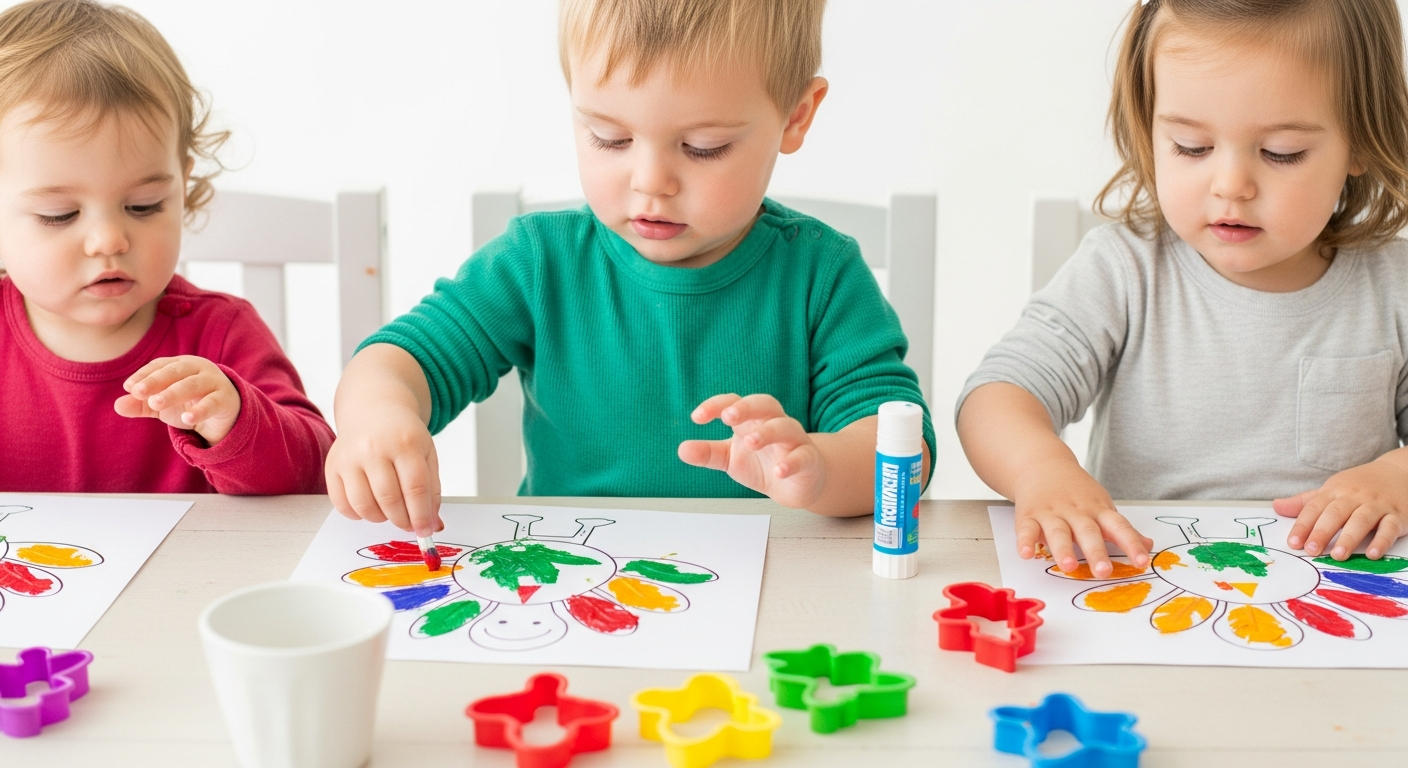
Table of Contents
- Introduction
- Why Turkey Activities Matter for Development
- Sensory Turkey Activities for Early Language
- Creative Arts and Crafts
- Active Games for "Turkey Trotting"
- Enhancing Play with Smart Screen Time
- Practical Strategies for Language Stimulation
- Integrating Speech Blubs into Your Holiday Routine
- Literacy-Based Turkey Fun
- Educational Math and Science Activities
- Realistic Expectations for Your Journey
- Conclusion
- FAQ
Introduction
Have you ever watched a toddler try to mimic the "gobble-gobble" of a turkey? It is one of those quintessential parenting moments that captures the pure joy of discovery. However, as the holiday season approaches, many parents find themselves caught in a whirlwind of meal prep and travel plans, often leaving little room for intentional play. We often hear from parents who feel guilty that their child is spending too much time watching passive cartoons while the "grown-ups" get ready for Thanksgiving. At Speech Blubs, we believe that every holiday moment—even the busy ones—is an opportunity to empower children to speak their minds and hearts.
The purpose of this blog post is to provide you with a comprehensive list of engaging turkey activity toddler ideas that are not just "time-fillers," but powerful tools for development. We will explore sensory play, fine motor crafts, and active games that encourage speech and language growth. We’ll also show you how to integrate "smart screen time" into your holiday routine to supplement these physical activities. By the end of this post, you will have a toolkit of realistic, fun, and educational ways to celebrate the season while fostering your child's confidence and communication skills. Our main message is simple: through playful interaction and the right tools, you can turn a simple turkey theme into a foundational learning experience for your little one.

Why Turkey Activities Matter for Development
When we think about a turkey activity toddler style, we aren't just looking for a cute refrigerator decoration. These activities are multi-sensory experiences. For a child, a turkey represents a wealth of new vocabulary: feathers, beak, wattle, gobble, brown, orange, and "thankful."
At Speech Blubs, our mission is rooted in the personal experiences of our founders, who grew up with speech challenges themselves. We know that the best learning happens when a child is joyful and engaged. A turkey-themed activity provides a high-interest focal point that can help a "late talker" find the motivation to attempt new sounds. For example, if a child is playing with colorful feathers, they are more likely to practice the "f" sound or the "p" in "pop" as they stick feathers into playdough.
These activities also build "joint attention," which is the shared focus of two individuals on an object. This is a critical milestone in communication. When you and your child look at a turkey craft together, you are creating a "communicative temptation"—a reason for them to tell you what they see or what they need next.
Sensory Turkey Activities for Early Language
Sensory play is the "work" of a toddler. It allows them to explore textures, weights, and temperatures, all of which provide a rich context for language.
1. The Sticky Turkey Wall
This is a favorite for busy parents because it requires minimal cleanup. Using clear contact paper (sticky side out) taped to a wall at your toddler’s height, draw a large turkey body in the center. Give your child a bowl of "feathers"—these can be real craft feathers, scraps of tissue paper, or even colorful ribbons.
As your child presses the items onto the sticky surface, you can narrate their actions: "Sticky! You put the red feather on. Push, push, push!" This type of parallel talk helps them map words to actions. If you notice your child is particularly engaged with the colors, this is a great time to use Speech Blubs to reinforce color names through our "Colorific" section.

2. Thanksgiving Sensory Bin: The Turkey Hunt
Fill a large plastic bin with dried corn kernels, dyed rice, or even shredded brown paper. Hide small turkey figurines or "feathers" (cut-out felt shapes) inside the bin. Provide scoops, cups, and a set of tongs.
As your child digs, they are building fine motor strength. Encourage them to find the "hidden" turkeys. This is a perfect scenario for practicing prepositions: "Is the turkey under the corn? Look, it’s in the cup!" For a parent whose 3-year-old loves animals but struggles with focus, the tactile nature of a sensory bin provides the grounding they need to stay engaged with the task and the conversation.
3. Turkey Baster Water Play
Toddlers are fascinated by cause and effect. Give them a bowl of water and a turkey baster. Show them how to squeeze the bulb to suck up the water and then squirt it out. This strengthens the hand muscles needed for later writing and helps them understand "full" and "empty."
Creative Arts and Crafts
Crafting with a toddler is less about the final product and more about the process. Here are three ideas that prioritize engagement over perfection.
4. The Handprint Keepsake
This is a classic for a reason. Painting a child’s palm brown and their fingers different colors to represent feathers is a sensory experience in itself. Many toddlers find the sensation of a paintbrush on their skin ticklish or strange.
Expert Tip: Use this moment to practice "body part" vocabulary. "First, we paint the thumb. Now, the pointer finger!" If your child is hesitant about the paint, don’t force it. You can achieve the same effect by tracing their hand on colored paper and cutting it out together.
5. Paper Plate Turkey Wreath
Give your child a paper plate with the center cut out. Let them paint the rim brown. Once dry, they can glue "feathers" (clothespins decorated with markers or glitter) around the edge. Using clothespins is an excellent fine motor turkey activity toddler hands need to develop the "pincer grasp."
6. Fork-Painted Feathers
Instead of a brush, give your child a plastic fork. Dip the back of the fork in orange, yellow, and red paint, and show them how to "scrape" the paint outward from a central point on a piece of paper to create a feathered texture. The repetitive motion is soothing and provides a great opportunity to practice the "k" sound in "fork" or "scrape."
Active Games for "Turkey Trotting"
Movement is often the key to unlocking language. When children are physically active, their brains are more primed for learning.
7. The Turkey Feather Hunt
Think of this as an indoor scavenger hunt. Hide "feathers" (colored paper cutouts) around the living room. Ask your child to "trot" like a turkey to find them. Each time they find a feather, they have to bring it back to a "nest" (a laundry basket) and say the color or make a turkey sound.
8. Shake Your Tailfeathers
Fill an empty tissue box with craft feathers and tie it around your child’s waist (like a belt) with the opening facing out. Put on some festive music and encourage them to dance and shake until all the feathers fall out. This activity is guaranteed to produce giggles, and laughter is a wonderful bridge to communication.
9. Turkey Says...
This is a simple variation of "Simon Says." Use a turkey puppet or just your hands to mimic a turkey. "Turkey says... touch your nose!" "Turkey says... gobble like a bird!" This helps with receptive language—the ability to understand and follow directions.
Enhancing Play with Smart Screen Time
At Speech Blubs, we advocate for "smart screen time." This isn't the passive consumption of cartoons that can lead to "zoning out." Instead, our app is designed to be a co-play tool. Our methodology is based on video modeling.
Research shows that children learn best by watching their peers. In the Speech Blubs app, your child sees other children making sounds and performing actions. This triggers "mirror neurons" in the brain, making the child more likely to imitate what they see. Our research page goes into more detail about how this scientific approach helps children build foundational communication skills.
Imagine this scenario: You’ve just finished making a handprint turkey. Your child is excited but struggling to say the word "turkey." You open Speech Blubs, find the bird section, and watch a video of a child saying "Turkey" and making the "gobble" sound. Your child sees the peer's mouth movements and feels empowered to try it themselves. This is how we bridge the gap between digital learning and physical play.
Practical Strategies for Language Stimulation
When engaging in any turkey activity toddler ideas, keep these three speech-language strategies in mind:
- Modeling, Not Correcting: If your child says "tukey," don't say "No, say turkey." Instead, validate them and model the correct word: "Yes, a big turkey! Look at the turkey's feathers."
- The Rule of Three: Repeat key words at least three times during an activity. "Look, a feather. This is a red feather. Do you want the feather?"
- Wait Time: After you ask a question or model a sound, wait at least 5-10 seconds. It feels like an eternity, but toddlers need that time to process the information and formulate a physical or verbal response.
Unsure if your child’s communication skills are on track? You can take our quick 3-minute preliminary screener to get a simple assessment consisting of 9 questions and a personalized next-steps plan.
Integrating Speech Blubs into Your Holiday Routine
We know that one of the biggest challenges for parents is finding a solution that is both effective and affordable. We want to be the tool you wish you had—an immediate, joyful solution for the 1 in 4 children who may need extra speech support.
To make this accessible, we offer two clear paths for our families:
- Monthly Plan: For $14.99 per month, you get full access to the Speech Blubs app and its vast library of video-modeling activities.
- Yearly Plan (The Best Value): For $59.99 per year, which breaks down to just $4.99 per month, you save 66% compared to the monthly rate.
Choosing the Yearly plan isn't just about saving money; it’s about giving your child a consistent, long-term tool for growth. The Yearly plan also includes:
- A 7-day free trial to explore everything we offer.
- The Reading Blubs app, which helps transition those speech skills into early literacy.
- Early access to new updates and a 24-hour support response time from our dedicated team.
Download Speech Blubs on the App Store or Google Play today to see the difference peer-led video modeling can make.
Literacy-Based Turkey Fun
Reading together is one of the most effective ways to build vocabulary.
10. The "Thankful" Book
Create a simple book using construction paper. On each page, glue a picture of something your child loves (a toy, a snack, a family member) and write "I am thankful for my [Object]." Reading this together helps them understand abstract concepts like gratitude while reinforcing familiar nouns.
11. Feather Letter Matching
Write uppercase and lowercase letters on paper feathers. Help your child match the "Big T" to the "little t." This is a foundational pre-reading skill. If your child is already showing interest in letters, our Reading Blubs app (included in the Yearly plan) is a perfect next step.
Educational Math and Science Activities
Even the simplest turkey activity toddler games can introduce basic STEM concepts.
12. Counting Feathers
As you create your turkey crafts, count the feathers out loud. "One, two, three! Three orange feathers." For older toddlers, you can introduce basic addition: "We have two feathers. If we add one more, how many do we have?"
13. Color Sorting
Create three paper turkeys: one red, one yellow, and one orange. Give your child a pile of mixed-color items (pom-poms, blocks, or scraps) and ask them to give each turkey the "food" that matches its color.
14. The Science of the "Gobble"
Talk about how turkeys make sounds. Use a cup and a piece of string to create a "turkey caller." Pulling a wet sponge down the string creates a vibration that sounds remarkably like a gobble. This is a fun way to talk about how sounds are made by vibrations—a concept that relates back to how we use our own vocal cords to speak.
15. Turkey Shape Recognition
Instead of a standard round turkey, make a "Square Turkey," a "Triangle Turkey," and a "Circle Turkey." This helps your toddler recognize shapes in a festive, memorable context.
Realistic Expectations for Your Journey
It’s important to remember that progress isn't always linear. Some days your child will be a "Gobble Master," and other days they might not want to participate at all. That is okay. Our goal at Speech Blubs isn't to promise that your child will be giving public speeches in a month. Instead, we focus on fostering a love for communication, building their confidence, and reducing the frustration that often comes with speech delays.
We want to create joyful family learning moments. Whether you are using our app during a long car ride to Grandma’s house or sitting on the floor doing a turkey craft together, you are doing the work that matters. You are providing the foundation for their future success. See what other parents are saying about how Speech Blubs has helped their children find their voices.
Conclusion
The holiday season is a beautiful time to slow down and connect with your child through play. From the "Sticky Turkey Wall" to the "Turkey Baster Water Play," each turkey activity toddler idea we’ve discussed is a stepping stone toward better communication and stronger fine motor skills. By combining these hands-on activities with the scientific power of Speech Blubs's video modeling, you are giving your child a comprehensive, joyful learning experience.
Remember, you don't have to do this alone. We are here to support you with tools that are backed by science and created by people who understand the journey. We encourage you to make this Thanksgiving a season of growth and connection.
Ready to get started? Create your account and begin your 7-day free trial today. We highly recommend choosing the Yearly plan to unlock the full suite of features, including Reading Blubs and early updates, all while saving 66%. Let's help your little one speak their mind and heart this holiday season!
FAQ
1. At what age can my child start doing these turkey activities? Most of the activities listed, like the Sticky Turkey Wall or sensory bins, are appropriate for children as young as 18 months with adult supervision. For crafts involving scissors or complex counting, these are better suited for toddlers aged 3 and up. Always tailor the activity to your child’s specific developmental stage rather than just their age.
2. My child has a very short attention span. Will these work? Yes! The key is to keep the activities short and high-interest. If your child only wants to play with the turkey baster for two minutes, that's okay. You can also use the Speech Blubs app for short, 5-10 minute bursts of "smart screen time," which is designed to keep toddlers engaged through peer interaction and fun rewards.
3. Do I need expensive craft supplies? Not at all. Most of these activities use household items like paper plates, plastic forks, tissue boxes, and water. The most important "supply" is your interaction and the language you provide while playing together.
4. How does the Speech Blubs free trial work? When you sign up for our Yearly plan, you receive a full 7-day free trial. This allows you to explore all the categories, from "Animal Kingdom" to "Colorific," and see how your child responds to the video modeling. You won't be charged until the trial period ends, and you can cancel at any time.
About the author