
15 Fun Frankenstein Toddler Craft Ideas for Language Growth
 By Speech Blubs Team•Feb 20, 2026•13 min.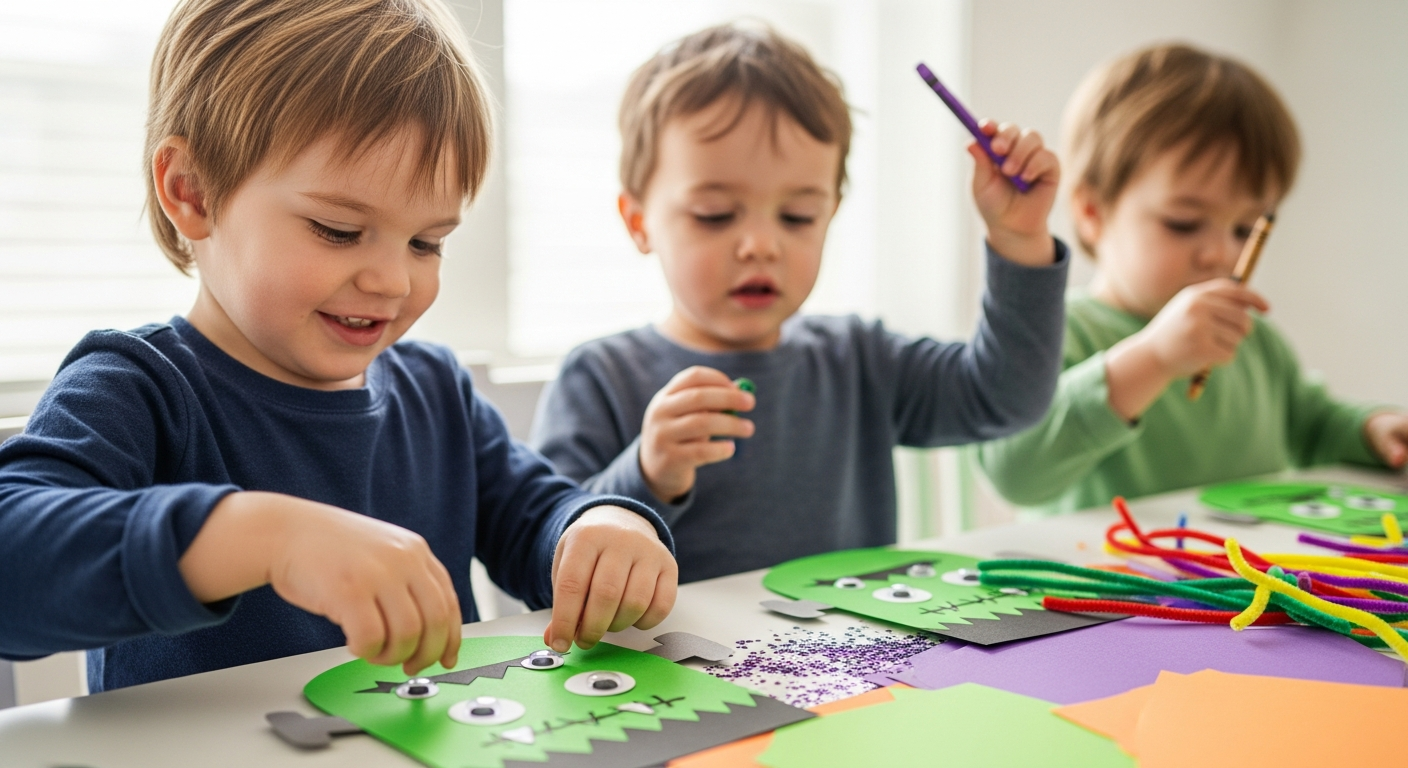
Table of Contents
- Introduction
- Why Crafting is a Language Powerhouse
- Our Approach to Learning: The Power of Peer Imitation
- 15 Creative Frankenstein Toddler Craft Ideas
- Transitioning from Crafting to Smart Screen Time
- How to Get the Most Out of Your Speech Blubs Experience
- Practical Tips for Adult Co-Play
- Strengthening Family Connections
- Creating a "Language Lab" at Home
- Conclusion
- FAQ
Introduction
Did you know that a simple green piece of construction paper and a pair of googly eyes can be the spark that ignites your toddler’s first sentences? While Halloween and Frankenstein Day (August 30th) are the most common times to bring out the "big green guy," crafting is a year-round opportunity for developmental breakthroughs. At Speech Blubs, we believe that every activity—whether it’s digital "smart screen time" or a messy hands-on project—should be a gateway to communication.
In this post, we are going to dive deep into the world of the frankenstein toddler craft. We’ll explore why these activities are so effective for speech development, provide you with over a dozen creative project ideas, and show you how to turn "craft time" into "talk time." Our mission is to empower children to speak their minds and hearts, and we know that starts with joyful, shared experiences between you and your little one. By the end of this guide, you’ll have a laboratory full of ideas to boost your child’s vocabulary, fine motor skills, and confidence.

Why Crafting is a Language Powerhouse
When we think of a Frankenstein toddler craft, we often focus on the end product: a cute, slightly lopsided monster to hang on the fridge. However, for a child’s developing brain, the process is where the magic happens.
Building Vocabulary Through Action
Think about all the words associated with making a Frankenstein: green, black, sticky, glue, hair, eyes, bolts, square, and "oops!" For a toddler who is just beginning to find their voice, these functional words are essential. By narrating what you are doing—"I am putting the green paint on the square paper"—you are providing a rich linguistic environment.
Following Directions and Receptive Language
Crafting is one of the best ways to practice following multi-step directions. "First, we glue the hair. Next, we add the eyes." This helps your child build their receptive language skills (their ability to understand what is being said to them). At Speech Blubs, we use a similar logic in our app by encouraging children to observe, listen, and then participate. If you’re curious about where your child stands in their development, you can take our quick 3-minute preliminary screener to get a simple assessment and a free 7-day trial of our tools.
Fine Motor and Speech Connection
There is a strong neurological link between fine motor skills (using the small muscles in the hands) and speech. The part of the brain responsible for complex hand movements is located right next to the area responsible for speech production. When your toddler works on a Frankenstein toddler craft—pinching googly eyes or squeezing a glue bottle—they are indirectly supporting the neural pathways needed for clear speech.
Our Approach to Learning: The Power of Peer Imitation
At Speech Blubs, we don’t just want children to watch a screen; we want them to interact with the world. Our company was born from the personal experiences of our founders, who all grew up with speech problems. They created the tool they wished they had: an immediate, effective, and joyful solution for the 1 in 4 children who need speech support.

We utilize a unique "video modeling" methodology. In our app, children learn by watching and imitating their peers. This is the same principle you use when you sit down to do a craft with your toddler. When they see you glue a bolt onto Frankenstein's neck, they want to imitate you. This imitation is the foundation of all communication. Our app provides a screen-free alternative to passive viewing (like cartoons) by turning screen time into an active, "smart" experience that fosters family connection.
15 Creative Frankenstein Toddler Craft Ideas
Here are 15 ways to bring your friendly monster to life while focusing on language development.
1. The Classic Paper Plate Frank
This is the gold standard for toddlers.
- What you need: A paper plate, green paint, black paper, and glue.
- Speech Strategy: Practice the "G" sound for "Green" and "Glue."
- Scenario: For a parent whose 3-year-old is a "late talker," use the glue as a motivator. Hold the glue bottle near your mouth and say "Glue?" Wait for your child to attempt the word or make a sound before handing it over.
2. Handprint Keepsake Monster
Toddlers love the sensory experience of paint on their hands.
- What you need: Green and black washable paint.
- Speech Strategy: Talk about "wet" and "cold" paint.
- The Look: Paint the palm green and the fingers black (for the hair). Press it onto paper to create a one-of-a-kind monster.
3. The Shape-Bot Frankenstein
Focus on early math and geometry vocabulary.
- What you need: Pre-cut green squares and black rectangles.
- Speech Strategy: Use the names of shapes. "Where does the square go?" This helps with spatial awareness and descriptive language.
4. Toilet Paper Roll "Frankie"
Upcycle your household items into 3D friends.
- What you need: Empty toilet paper rolls, green markers or paint.
- Speech Strategy: Practice "Up" and "Down" as you move the roll around.
5. Sticky Note Frankenstein
Perfect for a low-mess activity while you’re cooking dinner.
- What you need: A pack of green sticky notes and a black marker.
- The Activity: Have your toddler stick the notes on a door or wall to build a giant Frankenstein.
- Speech Strategy: Use action words like "Stick," "Pull," and "More."
6. Frankenstein Sensory Bin
Not all crafts have to be permanent!
- What you need: Green dyed rice or pasta, black buttons, and small plastic bolts.
- Speech Strategy: Focus on textures. "Hide" the bolts in the rice and ask your child to "Find" them.
7. The "Feeling" Frankenstein Paper Bag Puppet
Use a green paper bag to create a puppet.
- The Activity: Draw different expressions on different bags—a happy Frank, a sad Frank, and a surprised Frank.
- Speech Strategy: This is excellent for social-emotional learning. Ask, "Why is Frankenstein sad?" Use the puppet to model simple sentences like "I am happy."
8. Play-Doh Monster Lab
- What you need: Green play-doh, black pipe cleaners (for hair), and googly eyes.
- Speech Strategy: Use "Push," "Pull," and "Squeeze." If your child is using Speech Blubs, you can even find inspiration in our research-backed methods regarding tactile learning and mirror neurons.
9. Sponge-Painted Monster
- What you need: A kitchen sponge cut into a rectangle.
- Speech Strategy: The "P" sound in "Push" and "Paint." The repetitive motion of sponge painting is great for rhythmic speech practice.
10. Frankenstein Mask
- What you need: A paper plate with eye holes cut out and a popsicle stick.
- Speech Strategy: Peek-a-boo! Hide behind the mask and say "Boo!" or "I see you!" This builds foundational social communication.
11. Stamped Frankenstein (Potato Style)
- What you need: A potato cut in half.
- The Activity: Use the potato as a stamp. It’s the perfect size for a toddler’s hand.
- Speech Strategy: Count the monsters you make. "One monster, two monsters, three!"
12. "Bolt" Painting with Screws
- What you need: Large plastic toy bolts and green paint.
- The Activity: Dip the bolts in paint and "stamp" them onto paper.
- Speech Strategy: Talk about "Fast" and "Slow" as you stamp.
13. Frankenstein Leaf Art
- What you need: Large green leaves from the yard.
- The Activity: Paint a face on the leaf!
- Speech Strategy: Nature words like "Outside," "Tree," and "Leaf."
14. Puffy Paint Frankenstein
- What you need: Shaving cream and white glue mixed with green food coloring.
- Speech Strategy: This is a high-sensory activity. Use descriptive words like "Squishy," "Fluffy," and "Big."
15. The "Speaking" Frankenstein
- The Activity: Once your craft is done, record your toddler "talking" for their monster.
- Speech Strategy: Use this as a moment of "smart screen time" by recording a short video on your phone and playing it back. Children love seeing themselves and hearing their own voices, which builds immense confidence.
Transitioning from Crafting to Smart Screen Time
While we love a good messy Frankenstein toddler craft, we know that parents also need moments of peace. This is where the concept of "smart screen time" comes in. Instead of letting your child passively watch cartoons, which can often lead to "zoning out," we recommend using a tool designed for growth.
Speech Blubs is more than an app; it’s a powerful supplement to your child’s overall development plan. Many parents use it alongside professional therapy, while others use it to give their children a competitive edge in communication. We focus on building confidence and reducing frustration. When a child can't express what they want, they often turn to tantrums. By teaching them to "speak their minds and hearts," we are helping the whole family live more joyfully.
If you want to see the impact of our peer-modeling approach, you can read testimonials from other parents who have seen their children’s language skills flourish.
How to Get the Most Out of Your Speech Blubs Experience
If you’re ready to take the next step in your child’s language journey, choosing the right plan is key to unlocking the full suite of our developmental tools.
Transparent Pricing and Plans
We want to be upfront so you can make the best choice for your family.
- Monthly Plan: This is $14.99 per month. It gives you access to the core Speech Blubs experience.
- Yearly Plan: This is our most popular and highest-value option. It costs $59.99 per year, which breaks down to just $4.99 per month.
Why the Yearly Plan is the Best Choice
When you choose the Yearly plan, you aren't just saving 66%—you are getting a much more comprehensive toolset. The Yearly plan includes:
- A 7-day free trial: You can test everything out before you commit.
- The Reading Blubs App: This is a separate, high-value app included at no extra cost to help your child transition from speaking to reading.
- Early Access: You get our newest updates and features before anyone else.
- Priority Support: A 24-hour support response time to help you with any questions.
The Monthly plan does not include the free trial, the Reading Blubs app, or priority support. To give your little "monster" the best start, we highly recommend the Yearly plan. You can create your account and begin your 7-day free trial today.
Practical Tips for Adult Co-Play
Whether you are doing a Frankenstein toddler craft or using the Speech Blubs app, the most important ingredient is you. Here are a few ways to be the best "co-player" for your child:
- Be at eye level: Sit on the floor. It makes communication feel more like a partnership and less like a lesson.
- Follow their lead: If your child wants to give Frankenstein purple hair instead of black, let them! Celebrating their choices builds self-esteem.
- Wait for it: Give your child 5-10 seconds to respond after you ask a question. Toddlers need time to process language and formulate a response.
- Simplify your language: Use short, 2-3 word sentences. "Big green head." "Sticky black glue."
Strengthening Family Connections
At the end of the day, a Frankenstein toddler craft is a vehicle for connection. The laughter shared over a spilled bottle of paint or the pride on your child’s face when they show off their finished work is what truly matters. We believe that technology should serve these moments, not replace them.
Our app is designed to be used together. Sit with your child, mirror the sounds the "Blubbers" (the kids in the app) are making, and then bring those sounds back to your craft table. For example, if you are working on the "Early Sounds" section of the app, you can practice those same animal or object sounds while you build your Frankenstein. "Frankenstein says 'Mmm' for 'Monster'!"
Creating a "Language Lab" at Home
You don't need a professional studio or a classroom to help your child succeed. You can turn any corner of your home into a "Language Lab."
- The Craft Corner: Keep your Frankenstein toddler craft materials accessible.
- The Reading Nook: Use the Reading Blubs app (included in the Yearly plan) to explore stories together.
- The Mirror Station: Use a real mirror to show your child how their mouth moves when they make sounds. This is a core part of our scientific methodology, as it engages mirror neurons in the brain.
Our methodology is backed by science and has earned us a high rating on the MARS scale, placing us in the top tier of speech apps worldwide. You can dive deeper into the science and research behind Speech Blubs to understand exactly how we help children develop key foundational skills.
Conclusion
Creating a Frankenstein toddler craft is a wonderful way to celebrate curiosity, creativity, and communication. Whether you are painting paper plates green or using our app to practice new sounds, the goal is the same: to foster a love for learning and a confidence in speaking.
Remember, speech development is a journey, not a race. We aren’t promising that your child will be giving public speeches in a month, but we do promise a process that is joyful, effective, and built on love. By integrating hands-on crafts with our "smart screen time" tools, you are giving your child a well-rounded foundation for success.
Ready to see your child's communication skills come to life? Download Speech Blubs on the App Store or get it on Google Play to begin. For the best value, including the 7-day free trial and the Reading Blubs app, be sure to select the Yearly plan. Let’s help your little one speak their mind and heart today!
FAQ
1. Is the Frankenstein toddler craft safe for 2-year-olds?
Yes, as long as you use age-appropriate materials. Always opt for non-toxic, washable paints and glue. For children who still put things in their mouths, avoid small "bolts" or tiny googly eyes; instead, use large stickers or draw the features on with a marker. Adult supervision is always required for co-play.
2. My child has a speech delay. Will these crafts really help?
Crafting is a powerful supplement to speech therapy. It provides a natural, low-pressure environment for practicing vocabulary and following directions. When combined with a tool like Speech Blubs, which uses peer-modeling to encourage imitation, many parents report a reduction in frustration and an increase in their child's willingness to try new sounds.
3. How long should we spend on a Frankenstein toddler craft?
For a toddler, 10 to 15 minutes is often the sweet spot. Their attention spans are short, so it’s better to have a quick, successful experience than a long, frustrating one. You can always break the craft into steps—paint one day, and glue the features the next!
4. What is the best Speech Blubs plan for a family on a budget?
The Yearly plan at $59.99 is the most cost-effective choice. While the initial price is higher than the monthly option, it breaks down to only $4.99 per month (a 66% savings). Plus, it includes the Reading Blubs app and a 7-day free trial, ensuring you get the most developmental value for your investment.
About the author