
15 Fun Halloween Toddler Crafts for Creative Play
 By Speech Blubs Team•Feb 23, 2026•15 min.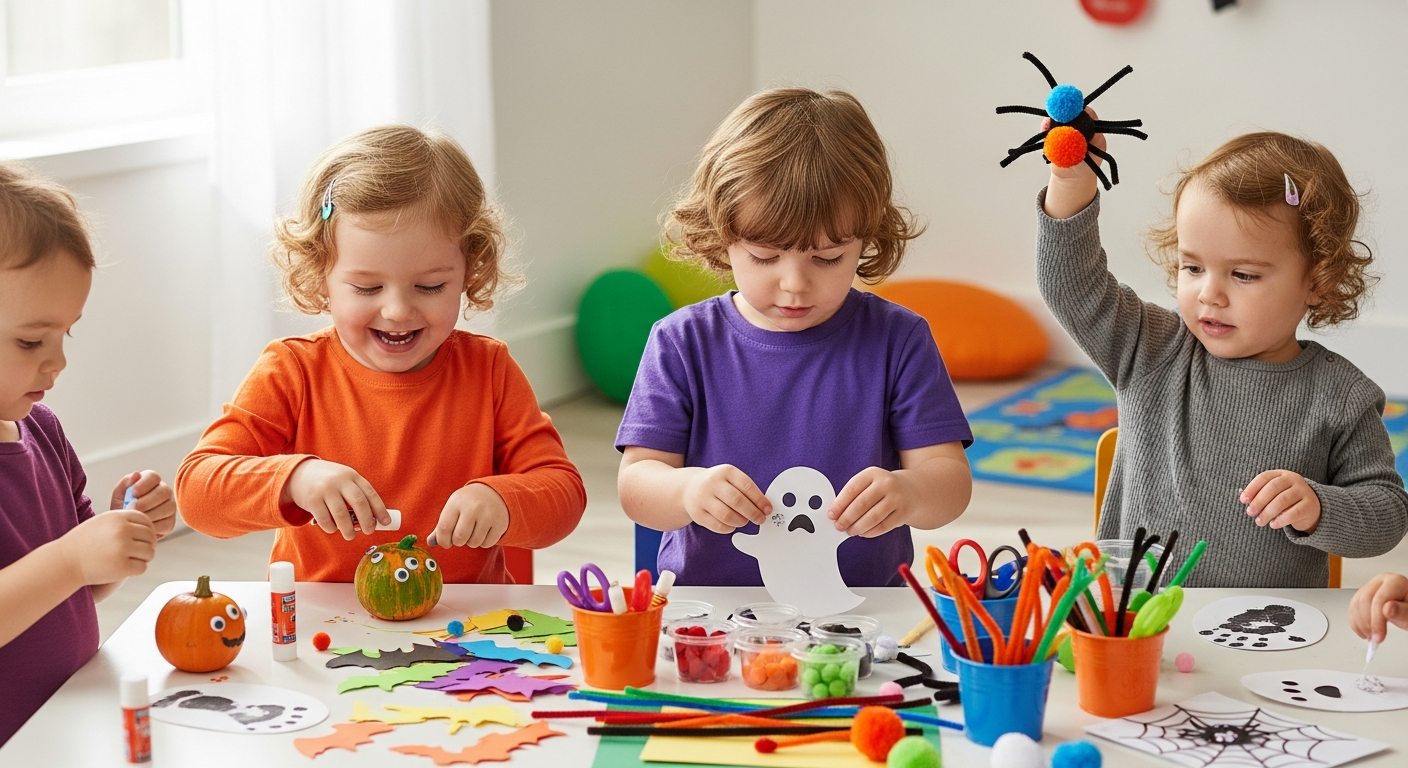
Table of Contents
- Introduction
- The Connection Between Crafting and Speech
- 1. The Sticky Sensory Ghost
- 2. Puffy Paint Pumpkins
- 3. Masking Tape Mummies
- 4. Paper Plate Monsters
- 5. Chalk Ghosts on the Driveway
- 6. Handprint Bats
- 7. Yarn-Wrapped Pumpkins
- 8. Spider Web Plate Threading
- 9. Potato Print Jack-o-Lanterns
- 10. Leaf Monsters
- 11. Egg Carton Bats
- 12. Cotton Ball Ghosts (The "Puffy" Version)
- 13. Fingerprint Spiders
- 14. Candy Corn Paper Collage
- 15. The Balancing Bat (Printable)
- Why "Smart Screen Time" Matters During the Holidays
- Choosing the Right Plan for Your Family
- Practical Tips for Stress-Free Crafting
- Integrating Speech Blubs into Your Routine
- Summary of Key Takeaways
- FAQs
Introduction
Did you know that the simple act of peeling a sticker or dipping a finger into orange paint can actually be a building block for your child’s first words? For many parents, the holiday season is a whirlwind of costumes and candy, but for those of us navigating the journey of speech development, every holiday is an opportunity for connection. At Speech Blubs, our mission is to empower children to "speak their minds and hearts," and we believe that play is the most powerful tool in a child's developmental toolkit.
Whether your little one is a "late talker," a social butterfly in training, or just beginning to explore the magic of sounds, these Halloween toddler crafts are designed to be more than just refrigerator art. They are sensory experiences that encourage imitation, fine motor control, and vocabulary building. We know that 1 in 4 children will need some form of speech support, and our goal is to provide a joyful, effective solution that turns "screen time" into "smart screen time."

In this post, we will explore 15 easy-to-implement Halloween crafts that you can do at home. We’ll also discuss how these activities pair perfectly with the scientific principles of video modeling used in the Speech Blubs app, helping your child transition from creating with their hands to communicating with their voice. By the end of this guide, you’ll have a toolbox full of spooky-fun activities and a clearer understanding of how to support your child's communication journey during this festive season.
The Connection Between Crafting and Speech
Before we dive into the glue and glitter, it is important to understand why crafting is so beneficial for toddlers. Speech is not an isolated skill; it is deeply connected to fine motor development and cognitive processing. When a toddler uses their pincer grasp to pick up a googly eye, they are strengthening the same neural pathways that will eventually help them control the tiny muscles in their tongue and lips.
Furthermore, crafting provides a "language-rich environment." As you work together, you are naturally using descriptive words (sticky, cold, bright, scary), action verbs (cut, pour, press, pull), and spatial concepts (on top, under, next to). This organic interaction is exactly what we advocate for at Speech Blubs. Our app was born from the personal experiences of our founders, who all grew up with speech challenges and wanted to create the tool they wished they had. We prioritize "smart screen time" that encourages active participation rather than passive viewing.
To see if your child is reaching their communication milestones while you enjoy these seasonal activities, you can take our quick 3-minute preliminary screener. It involves just 9 simple questions and provides an assessment and a next-steps plan to help you support your child’s growth.
1. The Sticky Sensory Ghost
Sensory play is a fantastic way to engage a toddler’s curiosity. For this craft, you don't even need glue, making it perfect for the youngest creators.

- Materials: White contact paper, cotton balls, black construction paper (for eyes), and tape.
- The Activity: Tape a piece of contact paper (sticky side out) to a wall or table. Cut the contact paper into a ghost shape beforehand. Let your toddler press cotton balls onto the sticky surface.
- Speech Connection: This is a great time to practice "S" sounds and descriptive adjectives. Use words like "soft," "sticky," and "smooth." For a child who is just beginning to vocalize, the repetitive action of "press, press, press" can be paired with the sound "p-p-p."
2. Puffy Paint Pumpkins
There is something undeniably satisfying about the texture of puffy paint. This activity is messy, but the sensory input is invaluable.
- Materials: Shaving cream, white school glue, orange food coloring or paint, and cardboard pumpkin cutouts.
- The Activity: Mix equal parts shaving cream and glue, then add the orange coloring. Let your child "paint" the pumpkin using their fingers or a large brush.
- Speech Connection: For a parent whose 3-year-old "late talker" loves sensory experiences, this is a prime opportunity to use the "Yummy Time" or "Color Rama" sections of our app to reinforce color recognition. You can download Speech Blubs on the App Store to find specific exercises that mirror the fun your child is having with the orange paint.
3. Masking Tape Mummies
This craft is excellent for practicing fine motor precision and can be done with items you already have in your junk drawer.
- Materials: Black cardstock, masking tape, and googly eyes.
- The Activity: Cut a simple person shape out of the black paper. Let your toddler tear strips of masking tape and "wrap" their mummy.
- Speech Connection: Tearing tape requires focus. Encourage your child to say "rip" or "wrap" as they work. This mimics our "video modeling" methodology, where children learn by watching and imitating. In the app, they see other children performing actions and making sounds; here, they are imitating your actions with the tape.
4. Paper Plate Monsters
Monsters don't have to be scary! They can be a wonderful way to explore emotions and body parts.
- Materials: Paper plates, paint, googly eyes (lots of them!), yarn, and glue.
- The Activity: Let your child paint the plate any color they wish. Once dry, add five eyes, a yarn mouth, and maybe some paper teeth.
- Speech Connection: Use this to teach counting and body parts. "Where is the monster's eye?" "How many eyes?" This builds foundational vocabulary in a joyful, low-pressure way.
5. Chalk Ghosts on the Driveway
If the weather permits, take the crafting outside. Chalk is a wonderful medium because it provides a different tactile resistance than markers or crayons.
- Materials: White sidewalk chalk and a dark driveway or sidewalk.
- The Activity: Draw large ghost outlines and let your toddler fill them in.
- Speech Connection: Practice the "O" mouth shape. As you draw the ghost’s mouth, say "Oooooo!" Encourage your child to look at your mouth and copy the shape. This is the essence of how we teach complex communication skills—through imitation and play.
6. Handprint Bats
Keepsake crafts are favorites for a reason. They capture a moment in time while allowing your child to explore the concept of "self."
- Materials: Black paint, white paper, and a silver marker.
- The Activity: Paint your child's hands black and press them onto the paper with the palms overlapping and fingers spread wide to look like wings.
- Speech Connection: Talk about "wings" and "flying." You can even use the "Animal Kingdom" section of our app to look at other animals that fly. To get started with these companion activities, you can sign up on our web page and start your 7-day free trial.
7. Yarn-Wrapped Pumpkins
This craft is a bit more advanced but great for toddlers working on their coordination.
- Materials: Cardboard circles (painted orange) or small pumpkins, and orange yarn.
- The Activity: Help your child wrap the yarn around the pumpkin or cardboard over and over again.
- Speech Connection: Focus on the word "around." This is a spatial concept that can be difficult for toddlers to grasp. Repeating the word as they perform the action helps lock in the meaning.
8. Spider Web Plate Threading
Fine motor skills get a workout with this "sewing" activity.
- Materials: Black paper plate with holes punched around the edges, and white yarn.
- The Activity: Tie the yarn to one hole and let your toddler thread it through the others to create a web.
- Speech Connection: Practice the "S" sound for "spider." If your child is struggling with specific sounds, our app uses peer-to-peer modeling to show them exactly how to form those sounds. Our research-backed method is designed to trigger mirror neurons, making imitation more natural.
9. Potato Print Jack-o-Lanterns
Stamping is a cause-and-effect activity that toddlers find fascinating.
- Materials: A potato cut in half, orange paint, and paper.
- The Activity: Carve a simple face into the flat side of the potato (adults only!), dip it in orange paint, and let the child stamp away.
- Speech Connection: "Push" and "Pull." These are great functional words to practice. Every time they stamp, say "Push!" then "Pull!"
10. Leaf Monsters
Combine a nature walk with crafting for a full morning of engagement.
- Materials: Dried leaves, paint, and googly eyes.
- The Activity: Collect leaves outside, paint them bright colors, and add eyes once they dry.
- Speech Connection: This is perfect for building "environment vocabulary." Talk about the "crunchy" leaves and the "trees."
11. Egg Carton Bats
Upcycling household items is a great way to teach children about creativity with what we have.
- Materials: Empty egg cartons, black paint, and googly eyes.
- The Activity: Cut out three sections of an egg carton. The middle one is the head, and the two on the sides are the wings. Paint it black and add eyes.
- Speech Connection: Use this to practice "up" and "down" as the bat "flies" through the air.
12. Cotton Ball Ghosts (The "Puffy" Version)
Similar to the sensory ghost, but this one uses a glue stick to build those specific hand muscles.
- Materials: Black construction paper, glue stick, and cotton balls.
- The Activity: Draw a ghost shape with the glue stick and let the child cover it with cotton.
- Speech Connection: This is a great time to practice the "G" sound for "ghost." If your child finds this sound tricky, you can see how other kids master it by checking out our parent testimonials and seeing the progress other families have made.
13. Fingerprint Spiders
Tiny fingers make the cutest spiders.
- Materials: Purple or black ink pad or paint, and paper.
- The Activity: Have the child make a fingerprint for the body and draw eight little lines for legs.
- Speech Connection: Count the legs! "One, two, three..." Counting is a rhythmic way to practice speech sounds.
14. Candy Corn Paper Collage
While we don't recommend giving toddlers actual candy corn for a craft (it usually ends up in the mouth!), a paper version is a great way to learn colors.
- Materials: Yellow, orange, and white paper torn into small pieces, and a triangle outline.
- The Activity: Glue the colors in the correct order to make a candy corn.
- Speech Connection: Color naming is a huge milestone. Focus on "yellow," "orange," and "white."
15. The Balancing Bat (Printable)
This is a fun "magic" trick that introduces basic physics.
- Materials: A bat cutout and pennies or heavy washers.
- The Activity: Tape pennies to the tips of the bat's wings. If balanced correctly, the bat will "sit" on your child's finger.
- Speech Connection: "Look!" and "Wow!" Use these exclamation words to build excitement and encourage your child to share their joy with you.
Why "Smart Screen Time" Matters During the Holidays
As much as we love crafting, we know that parents also need a moment to breathe—to finish the dishes, start the laundry, or simply have a cup of coffee. This is where the temptation for "passive screen time" (like putting on a mindless cartoon) is strongest. However, we advocate for a different approach.
At Speech Blubs, we’ve created a "smart screen time" experience that is the digital equivalent of these hands-on crafts. Instead of just watching a screen, your child is encouraged to interact, imitate, and vocalize. This is a screen-free alternative in spirit because it drives real-world action.
When you use Speech Blubs, you are using a tool developed by experts to foster a love for communication. We don’t promise that your child will be giving public speeches in a month; instead, we focus on building confidence, reducing the frustration that comes with being misunderstood, and creating joyful family learning moments. Whether you are using the Google Play Store version or the Apple version, the experience is designed to be a powerful supplement to your child's overall development plan.
Choosing the Right Plan for Your Family
We want to be transparent about how you can access these resources. We offer two main paths to joining the Speech Blubs family, and we always recommend the option that provides the most value for your child's progress.
The Monthly Plan
Our Monthly plan is $14.99 per month. This is a great option if you want to try the app for a short period, but it does not include many of our premium features.
The Yearly Plan (Best Value)
The Yearly plan is our most popular choice for a reason. At $59.99 per year, the cost breaks down to just $4.99 per month—a savings of 66% compared to the monthly rate.
More importantly, the Yearly plan includes:
- A 7-day free trial so you can explore everything before committing.
- The extra Reading Blubs app, which helps transition speech skills into early literacy.
- Early access to all new content updates.
- 24-hour support response time from our dedicated team.
By choosing the Yearly plan, you ensure that your child has a consistent, high-quality tool to help them "speak their minds and hearts" all year round.
Practical Tips for Stress-Free Crafting
As a child development expert, I often see parents get stressed when a craft doesn't look "Pinterest-perfect." Remember, the goal of Halloween toddler crafts isn't the final product; it's the process. Here are a few tips to keep the experience positive:
- Lower Your Expectations: If your child wants to paint the ghost purple instead of white, let them! Autonomy builds confidence.
- Narrate Everything: Become a "sports commentator" for your child’s actions. "Oh, you're picking up the red yarn! You're pulling it so long!"
- Co-Play is Key: These activities are designed for adult support. Your presence and engagement are what make the activity educational.
- Manage the Mess: Lay down an old shower curtain or newspaper beforehand. If you aren't worried about the carpet, you'll be more patient with your little artist.
Integrating Speech Blubs into Your Routine
A great way to use these crafts is to pair them with a session on the app. For example, after making your "Egg Carton Bats," you can open the "Animal Kingdom" section of Speech Blubs. Find the bat or other flying animals and let your child see their peers making the sounds and movements associated with them.
This creates a bridge between the physical world and digital learning. The "video modeling" methodology is particularly effective because children are naturally drawn to other children. When they see a peer on the screen successfully making a sound, their mirror neurons fire, making them much more likely to attempt the sound themselves. It turns a solitary screen moment into an interactive, vocal practice session.
Summary of Key Takeaways
Halloween is a magical time for toddlers, filled with new sights, sounds, and textures. By engaging in these 15 crafts, you are doing so much more than making decorations; you are:
- Fostering a love for communication by creating a language-rich environment.
- Building confidence through successful "all by myself" moments.
- Developing foundational skills like fine motor control and sound imitation.
- Creating joyful family memories that strengthen your bond.
Crafting is a powerful supplement to professional therapy or general developmental support. When paired with "smart screen time" like Speech Blubs, you are providing your child with a comprehensive, science-backed approach to learning how to speak.
FAQs
1. What if my toddler is a "late talker"? Can they still do these crafts?
Absolutely! In fact, these crafts are even more important for late talkers. They provide a low-pressure way to practice communication. Focus on the sensory experience and use simple, repetitive sounds. You can also use Speech Blubs to provide the peer modeling they might need to feel brave enough to try new sounds.
2. How much time should we spend on "smart screen time" each day?
We recommend short, focused sessions. About 10 to 15 minutes of Speech Blubs a day is often enough to see the benefits of video modeling without overstimulating your child. It should be a fun part of your routine, like reading a book together or doing one of these Halloween crafts.
3. Are these crafts safe for 2-year-olds?
Yes, but they require adult supervision. Always be mindful of small parts like googly eyes or pennies, which can be choking hazards. Choose non-toxic paints and glues, and always stay within arm's reach while your toddler is crafting.
4. Why should I choose the Yearly plan over the Monthly plan?
The Yearly plan is significantly more cost-effective ($4.99/month vs $14.99/month). It also includes the Reading Blubs app and a 7-day free trial, which are not available with the monthly option. It’s the best way to ensure your child has the tools they need for long-term progress.
Ready to help your child find their voice this Halloween? Download Speech Blubs on the App Store or Google Play Store today. Don't forget to choose the Yearly plan during sign-up to unlock your 7-day free trial, the Reading Blubs app, and the best overall value for your family! Let’s make this season one of growth, joy, and many new words.
About the author