
15+ Fun Hockey Games for Kids to Boost Skills & Confidence
 By Speech Blubs Team•Jan 19, 2026•21 min.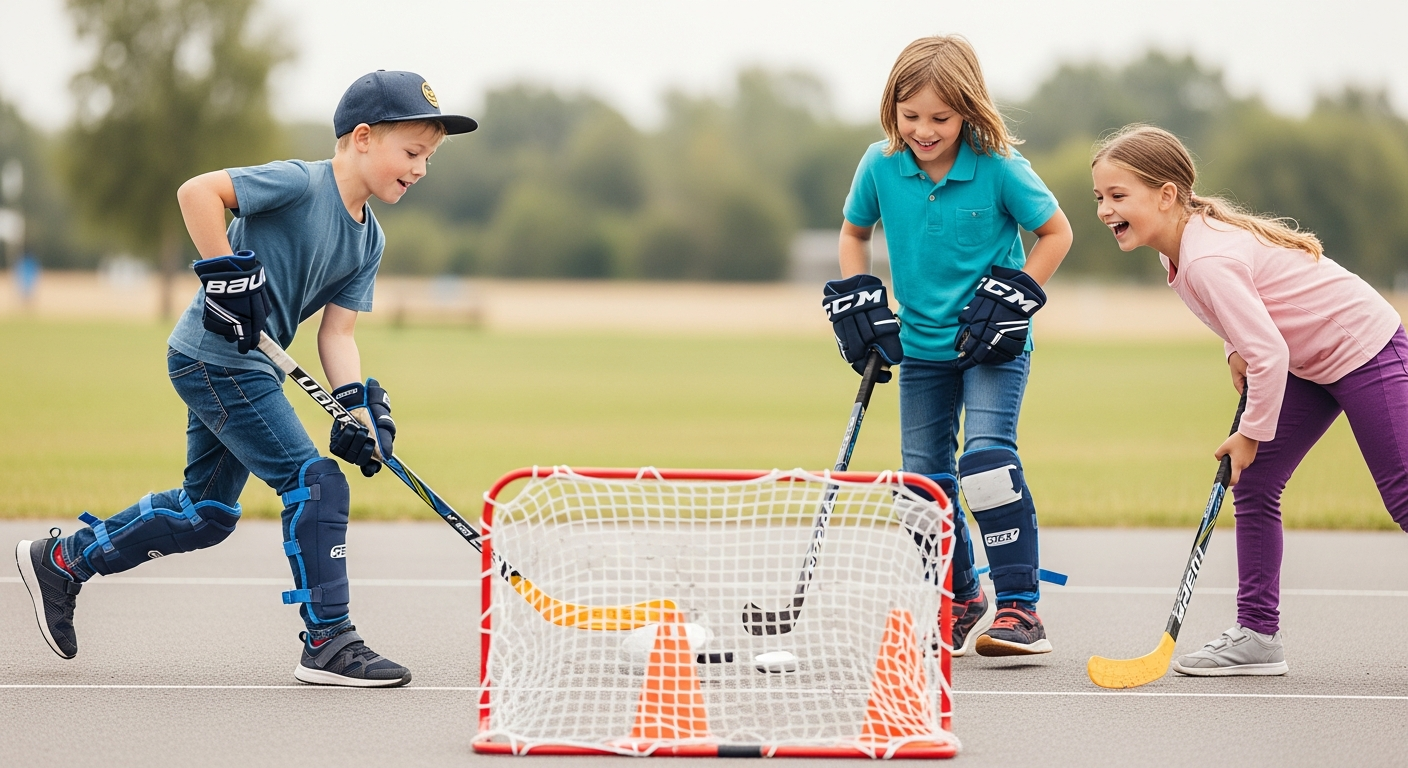
Table of Contents
- Introduction
- Why Fun is the Ultimate Coach
- When to Inject More Fun into Practices
- Engaging Small-Area Games for Skill Development
- High-Energy Races and Competitive Drills
- Games to Build Foundational Skills and Teamwork
- Creative & Team-Building Games
- Bringing it All Together: The Power of Play and Communication
- Conclusion
- Frequently Asked Questions
Introduction
Picture this: your child's eyes light up, a wide grin spreading across their face as they glide across the ice or dash around the rink, stick in hand. For many young athletes, hockey isn't just a sport; it's a world of excitement, teamwork, and growth. Yet, sometimes, practice can feel like a chore. As parents and caregivers, we understand the desire for our children to not only develop their skills but to genuinely fall in love with the game. This isn't just about mastering a slap shot; it's about fostering an environment where they can learn, laugh, and connect with others.
This post is dedicated to bringing that joy back to the rink (or even the driveway!). We'll dive into a treasure trove of engaging and dynamic hockey games and drills designed specifically for kids. Our aim is to help you transform practices into memorable experiences that build fundamental hockey skills, encourage communication, and cultivate a lifelong passion for the sport. From thrilling small-area games to invigorating races, we'll explore activities that keep young players engaged, happy, and eager for their next opportunity to play. And as we explore these exciting games, we’ll also highlight how strong communication skills—the very foundation we champion at Speech Blubs—are key to success both on and off the ice.

Why Fun is the Ultimate Coach
Before we lace up our skates (or sneakers for street hockey!), let’s talk about the profound impact of fun. When children enjoy an activity, they are more engaged, more willing to put in effort, and more receptive to learning. In the context of hockey, making practices enjoyable isn't just a nice-to-have; it's a strategic coaching philosophy that yields incredible benefits:
- Increased Engagement: Happy players listen better, try harder, and stay focused for longer periods.
- Skill Acceleration: When kids are having fun, they don't even realize how many repetitions they're getting. They naturally practice stickhandling, passing, and shooting without feeling pressured.
- Team Cohesion: Laughter and shared positive experiences build camaraderie, trust, and a strong team culture. These social connections are invaluable, helping children develop crucial interpersonal skills that extend far beyond the rink.
- Boosted Confidence: Success in a fun game, even a small one, builds self-esteem and encourages players to take risks and try new things. This confidence is a cornerstone of "speaking their minds and hearts," a mission we deeply believe in at Speech Blubs.
- Mental Well-being: Sports can be a fantastic outlet. A fun practice can help children de-stress, release energy, and foster a positive mindset, especially after a challenging day at school.
Integrating fun activities doesn't mean sacrificing skill development. On the contrary, it enhances it. It's about finding that sweet spot where learning feels like playing.
When to Inject More Fun into Practices
While every practice benefits from a dose of fun, there are specific times when prioritizing enjoyment can be particularly impactful:
- Start of the Season: Kick off the year with exciting, team-building games to help players get to know each other and establish a positive team culture.
- Mid-Season Monotony: Break up the routine during the "dog days" of the season when enthusiasm might wane. A fun practice can re-energize the entire team.
- End of Season: Conclude a long season with smiles and positive memories, ensuring players leave on a high note, eager to return next year.
- Practice Start: A lively game can immediately shift players' mental states, getting them smiling, communicating, and ready to work from the first whistle.
- Practice End: Finish on a positive note, especially after a demanding practice, leaving players feeling accomplished and happy.
- Anytime! The truth is, if coaches and players enjoy coming to practice, great things will unfold throughout the season.
Engaging Small-Area Games for Skill Development
Small-area games are a fantastic way to maximize puck touches, encourage quick decision-making, and create a fast-paced, exciting environment. These games often require players to constantly communicate, a skill that is paramount for success in hockey and life. At Speech Blubs, we know that clear communication is essential, whether it's calling for a pass on the ice or expressing a thought at home.

1. Ice Hockey with a Ball (or Street Hockey Handball)
How to Play: Introduce a different sport ball – a soccer ball, basketball, or even a tennis ball – instead of a puck. Players can play 3-on-3 or 4-on-4. The twist? Players might only be allowed to kick or throw the ball to teammates, or only hold it for a few seconds before passing. Goals are scored by getting the ball into the net (or a designated area).
Skills Used: Balance, edgework (for ice hockey), spatial awareness, quick reactions, and the concept of give-and-go passing. It also challenges hand-eye (or foot-eye) coordination in a new way.
Modifications:
- No Sticks: Play entirely with feet or hands for a unique challenge.
- With Sticks: Use a tennis ball or racquetball for unpredictable bounces, enhancing stickhandling and reaction time.
- Time Limits: Vary the time players can hold the ball to adjust intensity and promote faster passing.
Connection to Communication: This game inherently requires players to call for the ball, indicate where they're going, and communicate strategy to teammates. For a child who is developing their expressive language, the clear, simple calls needed ("Here!" "Pass!") can be highly motivating. These real-world communication opportunities are excellent complements to the structured learning children experience with Speech Blubs, where our unique video modeling helps children learn by imitating peers, building confidence in their verbal output. Ready to help your child find their voice? Download Speech Blubs on the App Store or Google Play.
2. Team Tournament (2v2, 3v3, or 4v4)
How to Play: Divide the ice or rink into smaller sections and organize a mini-tournament. If you have full ice, you can have multiple games running simultaneously in different zones. Players can rotate in and out, or play continuous small-sided games. Encourage specific skills, like only allowing one-timer goals for extra points.
Skills Used: Game sense, competitive spirit, offensive and defensive strategies, passing, shooting, and constant puck movement.
Modifications:
- No Goalies: Use small tires, cones, or gates as goals (e.g., "Gates of Buffalo" where players score by passing through a gate).
- Skill-Specific Scoring: Award bonus points for goals scored using a specific technique (e.g., backhand goal, deke).
- Trophy Award: Make it extra special by having a small trophy for the winning team at the end of practice – even pros enjoy battling for a trophy!
Connection to Communication: Tournaments amplify communication needs. Players must coordinate attacks, call for defensive assignments, and encourage teammates. This is also where children learn to manage emotions related to winning and losing, articulating their feelings and understanding others' perspectives. Speech Blubs, built on scientific principles, helps children develop the emotional vocabulary and social communication skills crucial for these interactions. Learn more about the research behind our methods.
3. Soccer Rondos / Keep Away Games
How to Play: Borrowing from soccer, rondos involve a small group of players (e.g., 4 players) trying to keep possession of a ball/puck from one or two defenders within a confined space. The goal is to make quick, accurate passes and maintain possession.
Skills Used: Puck control, passing accuracy, dynamic decision-making, spatial awareness, and quick reactions.
Modifications:
- Vary Player Ratios: From 3v1 to 4v2.
- Adding Goalies: Incorporate goalies for shooting opportunities once possession is maintained.
- One-Touch Passing: Challenge players to pass with a single touch.
4. Pin Down (Shooting Accuracy)
How to Play: Set up bowling pins, empty water bottles, or cones across the center of the playing area. Divide players into two teams, positioned on opposite sides. Each player gets a few tries to shoot and knock down a pin, earning a point for their team. The team with the most points wins.
Skills Used: Shooting accuracy, puck control, focus, and precision.
Modifications:
- Distance Variation: Adjust the shooting distance to challenge different age groups and skill levels.
- Moving Targets: Introduce targets that can be moved or swung gently to increase difficulty.
- Goalie Challenge: Have a goalie in place, and players try to shoot around them to hit a pin behind.
5. Treasure Island / Sharks and Minnows (Puck Possession & Evasion)
How to Play - Treasure Island: Use cones to mark "islands" (safe zones) in the corners of the rink. Most players have a puck and are "travelers." Two or three players are "pirates" (defenders) without pucks, trying to steal pucks from the travelers. Travelers must maintain possession and skate safely into an island. If their puck is stolen, they become a pirate. The last traveler remaining wins.
How to Play - Sharks and Minnows: All "minnows" (players with pucks) line up on one side of the rink. One or two "sharks" (defenders without pucks) start in the center. Minnows try to stickhandle their pucks to the other side without having their puck stolen. If a shark steals a puck, that minnow becomes a shark. Continue until only one minnow remains.
Skills Used: Stickhandling, puck possession, agility, evasive maneuvers, defensive pressure, and spatial awareness. These games also require quick thinking and decision-making under pressure.
Modifications:
- Number of Sharks/Pirates: Adjust based on the number of players to control difficulty.
- Safe Zones: Change the size or number of safe zones.
- Specific Stickhandling: Require players to use only forehand or backhand stickhandling.
High-Energy Races and Competitive Drills
Races bring out the natural competitive spirit in children, pushing them to work harder while having a blast. They're excellent for conditioning, skating technique, and puck handling under speed.
6. Individual & Team Races
How to Play:
- Stop & Start 1 vs 1 Race: Two players race for a puck, requiring quick stops and explosive starts.
- Defensive Pivot Races: Players race 1-on-1 for a puck, focusing on defensive pivots.
- Side by Side Skills Race: Players race through a cone course while performing a specific skill (e.g., tight turns, crossovers, stickhandling).
- Find Your Stick: At the start of practice, coaches scatter all sticks across the far side of the ice. On the whistle, players race to find their stick and skate back to the starting line. The goal is not to be the last one back!
Skills Used: Speed, agility, conditioning, specific skating techniques (pivots, stops, starts), and puck control under pressure.
Modifications:
- Obstacles: Add cones, mini-nets, or other obstacles to navigate.
- Puck Requirements: Some races can be purely skating, others require stickhandling a puck.
- Team Relays: Divide players into teams for relay races, fostering teamwork and encouragement.
Connection to Communication: Even in individual races, players will be cheering for friends, calling out encouragement, or discussing strategies. Team relays, in particular, emphasize verbal and non-verbal communication for hand-offs or tagging the next player. For children working on auditory processing, listening for the "Ready, Set, Go!" command or a teammate's call is invaluable. At Speech Blubs, we develop auditory skills through fun, interactive games, preparing children for these types of real-world scenarios. Want to empower your child's communication journey? Create your account and begin your 7-day free trial today.
7. Obstacle Course Races
How to Play: Design a creative obstacle course using cones, tires, nets, and even small ramps. Players, individually or in teams, must navigate the course while stickhandling, skating, and potentially shooting at targets.
Skills Used: Advanced stickhandling, agility, skating control, problem-solving, and endurance.
Modifications:
- Team vs. Individual: Make it a team relay or an individual timed event.
- Skill Focus: Design obstacles to target specific skills (e.g., tight turns, quick stops, shooting accuracy).
- No Pucks: Focus solely on skating agility as a warm-up or conditioning drill.
8. Tick-Tac-Toe Hockey
How to Play: A hockey twist on the classic game! Set up a large Tic-Tac-Toe grid using cones in the center ice. Divide players into two teams. One player from each team races from their side, stickhandles a puck to the grid, and places their "X" or "O" (e.g., a colored cone or beanbag) in a square. They race back, and the next player goes. The first team to get three in a row wins.
Skills Used: Speed, stickhandling, quick decision-making, and strategic thinking.
Modifications:
- Shooting for Squares: Instead of placing cones, players can shoot at small targets within each square.
- Defensive Element: Add a defender who tries to intercept players on their way to the grid.
9. Fill the Bucket!
How to Play: Divide players into two teams. Place a pile of pucks (or balls) at one end of the rink and two empty buckets (or designated areas) at the other. On the whistle, one player from each team races to the pile, grabs a puck, races back to their team's bucket, deposits the puck, and tags the next teammate. The first team to "fill their bucket" or retrieve all their allocated pucks wins.
Skills Used: Speed, endurance, puck carrying, and teamwork.
Modifications:
- Obstacles: Add cones for players to skate/dribble around on their way to and from the puck pile.
- Skill Requirement: Players must perform a specific skill (e.g., a spin move) before tagging the next teammate.
Games to Build Foundational Skills and Teamwork
These games focus on fundamental hockey skills in a fun, pressure-free environment, also enhancing crucial cognitive abilities like following instructions and problem-solving. These are exactly the types of skills we target at Speech Blubs, where our mission is to empower children to "speak their minds and hearts" by strengthening their communication from the ground up.
10. Finders Keepers
How to Play: Scatter pucks (one for every two players) in a designated area. On the whistle, players battle individually to gain and maintain possession of a puck until time runs out (e.g., 30-45 seconds). The player with a puck when the whistle blows gets a point.
Skills Used: Puck protection, aggressive stickhandling, battling for possession, and agility.
Modifications:
- More Pucks: Increase the puck-to-player ratio to make it easier or harder to find a puck.
- Zone Restrictions: Players must stay within a certain zone with their puck.
11. Gotcha! (Puck Tag)
How to Play: Mark off a grid. All players start with a puck except one, who is "it." "It" tries to dribble their puck and tag another player's puck (below the waist). When a player's puck is tagged, they become "it" and the previous "it" now has to avoid being tagged. If a player loses their ball outside the grid, they also become "it."
Skills Used: Puck control, evasive stickhandling, defensive pressure, and quick changes of direction.
Modifications:
- Two "Its": Start with two players who are "it" to increase the challenge.
- Specific Stickhandling: Players must use only forehand or backhand to tag/evade.
Connection to Communication: This game involves dynamic movements and reactive play. Children must listen carefully to understand who is "it" and react quickly. For a child who might be a "late talker" and enjoys physical activity, linking this type of active play with the structured, engaging activities in Speech Blubs can be incredibly effective. Our app provides screen-free alternatives to passive viewing, making learning an interactive, "smart screen time" experience. Unsure if your child could benefit? Take our quick 3-minute preliminary screener to get a simple assessment and a free 7-day trial.
12. Musical Chairs Hockey
How to Play: Place one less ball than the number of players in a center circle or around a goal. Players skate/run around an outer perimeter. When the whistle blows, players race to grab a ball and dribble to score on a designated net. The player without a ball is out. Remove one ball and continue until only one player remains.
Skills Used: Quick reactions, speed, puck retrieval, shooting, and decision-making under pressure.
Modifications:
- Add Defenders: Once players grasp the concept, add defenders to make it more challenging to score.
- Different Scoring: Instead of a goal, players might have to hit a target or perform a specific stickhandling move with the retrieved puck.
13. Red Light/Green Light Hockey
How to Play: Players with pucks line up at one end of the rink. A coach stands at the other end and calls "Green Light!" while turning their back. Players dribble their pucks towards the coach. When the coach yells "Red Light!" and turns around, players must immediately stop and place a foot on top of their puck. Any player whose puck is still moving must go back a certain distance (or to the start). The first player to reach the coach wins.
Skills Used: Puck control, quick stops, listening skills, and impulse control.
Modifications:
- Vary the Speed: Coaches can vary how long "Green Light" lasts to challenge players.
- Different Movement: Players might be asked to use only backhand stickhandling or skate backwards.
Connection to Communication: This classic game is fantastic for developing listening and auditory processing skills, which are fundamental to language development. Following multi-step directions, understanding rules, and responding to verbal cues are all critical components. These are precisely the kinds of skills that Speech Blubs helps children build through engaging, play-based learning. For parents seeking to complement their child's development, Speech Blubs provides immediate, effective, and joyful solutions.
14. 1v1 to Goal (or Endlines)
How to Play: Divide players into two teams. One player from each team comes to the middle to scrimmage 1-on-1. The goal is either to score on a net or to maintain possession and cross the opposing team's endline. After each round, two new players enter.
Skills Used: Individual puck control, offensive and defensive tactics, attacking, defending, and decision-making in a live game situation.
Modifications:
- No Shooting: Focus solely on attacking and defending to cross a line, emphasizing puck possession and evasion.
- Timed Rounds: Play short, intense rounds to keep energy high.
Creative & Team-Building Games
15. The Snake
How to Play: Players group into threes or fours. The first player is the "head" (no puck), leading the group. The second player has a puck and must follow the head, stickhandling wherever they go. The third player is the "rattle" (no puck), following the dribbler. On a whistle, players rotate roles: #2 becomes the head, #3 becomes the dribbler, and #1 becomes the rattle. Emphasize varying speeds and directions for the head.
Skills Used: Stickhandling, following instructions, spatial awareness, and teamwork.
16. Egg Hunt
How to Play: Scatter more pucks (the "eggs") than players across the playing area. Players line up at one end. At the other end, set up a goal (the "basket"). On the whistle, players race to find a puck and get it into the basket as quickly as possible. The entire team works together. Time them to see if they can beat their previous record.
Skills Used: Puck retrieval, speed, teamwork, and quick decision-making.
Modifications:
- Golden Egg: Designate one special colored puck worth bonus points.
- Obstacles: Players must navigate cones or obstacles on their way to the basket.
Bringing it All Together: The Power of Play and Communication
These fun hockey games offer a dynamic way for children to develop essential physical and cognitive skills. Beyond the stickhandling and skating, they learn the importance of teamwork, quick thinking, and, perhaps most importantly, effective communication. Whether it’s calling for a pass, cheering on a teammate, or understanding a coach's instructions, strong language skills are foundational to thriving in any team sport.
At Speech Blubs, we understand that every child deserves to find their voice and express themselves with confidence. Our company was born from the personal experiences of our founders, who all grew up with speech problems and created the tool they wished they had. We are committed to providing an immediate, effective, and joyful solution for the 1 in 4 children who need speech support, blending scientific principles with play into one-of-a-kind "smart screen time" experiences. We provide a screen-free alternative to passive viewing (like cartoons) and a powerful tool for family connection, helping children learn complex communication skills through our unique "video modeling" methodology, where children learn by watching and imitating their peers.
Just as these fun hockey games foster a love for the sport and build essential skills on the ice, Speech Blubs fosters a love for communication and builds crucial language skills off the ice. We focus on benefits like fostering a love for communication, building confidence, reducing frustration, developing key foundational skills, and creating joyful family learning moments. We are proud to be consistently recognized as one of the top speech apps globally, with a high MARS scale rating, a testament to our commitment to science-backed, effective therapy. See what other parents are saying about their child's success with Speech Blubs.
Conclusion
Creating an environment where children can thrive in hockey is about more than just drills; it's about igniting their passion through play. By incorporating these fun hockey games for kids into practices and casual play, you're not only enhancing their physical skills but also nurturing their love for the game, building their confidence, and strengthening their ability to communicate effectively. These are the building blocks for well-rounded individuals who can "speak their minds and hearts" both on and off the rink.
Ready to embark on a transformative journey for your child's communication skills? We invite you to experience the joy and effectiveness of Speech Blubs. Take the first step today by starting your 7-day free trial and unlock a world of engaging, interactive learning designed to empower your child's voice.
For the absolute best value and to access our full suite of premium features, we highly recommend choosing our Yearly Plan. At just $59.99 per year (breaking down to only $4.99/month), you save 66% compared to the Monthly Plan ($14.99/month). The Yearly Plan isn't just cheaper; it also includes:
- A 7-day free trial to explore everything we offer.
- The extra Reading Blubs app to further boost literacy.
- Early access to new updates and a dedicated 24-hour support response time.
The Monthly Plan, on the other hand, does not include these valuable benefits. Don't miss out on the full experience!
Download Speech Blubs on the App Store or Google Play Store to get started with your free trial and select the Yearly plan for the best experience! Alternatively, you can create your account on our website and choose the Yearly plan to unlock all features.
Frequently Asked Questions
Q1: How do fun hockey games help with skill development if they're not traditional drills?
A1: Fun hockey games are often "drills in disguise." By making learning enjoyable, children get many more repetitions without realizing it. For example, "Sharks and Minnows" practices intense stickhandling and puck protection in a dynamic, engaging way that feels like a game, not a repetitive chore. This increases engagement, effort, and ultimately, skill retention.
Q2: Can these games be adapted for street hockey or backyard play?
A2: Absolutely! Most of these games are highly adaptable. You can use cones instead of nets, substitute a tennis ball or street hockey ball for a puck, and adjust the playing area to fit your space. The core principles of movement, stickhandling, passing, and teamwork remain the same, making them perfect for street hockey, roller hockey, or even just a fun afternoon in the driveway.
Q3: How often should we incorporate fun games into a typical practice?
A3: The ideal frequency depends on the team's age, skill level, and goals for the season. However, a good rule of thumb is to incorporate at least one or two fun games into every practice. Many coaches find success by starting or ending practice with a high-energy game to boost morale, or using a fun small-area game to break up more technical drill segments during the middle of practice. The key is balance – ensuring both skill development and enjoyment.
Q4: My child struggles with communication, how can hockey games help, and how does Speech Blubs fit in?
A4: Hockey games are rich in natural communication opportunities: calling for the puck, encouraging teammates, understanding coach instructions, and expressing emotions. These real-world interactions can be highly motivating for children. Speech Blubs complements this by providing a structured, engaging, and science-backed approach to developing foundational speech and language skills. Our app uses video modeling to help children learn to imitate sounds and words, building confidence and reducing frustration, so they can better participate and "speak their minds and hearts" both on the ice and in everyday life.
About the author