
16 Creative Toddler New Year Craft Ideas for 2025
 By Speech Blubs Team•Feb 20, 2026•15 min.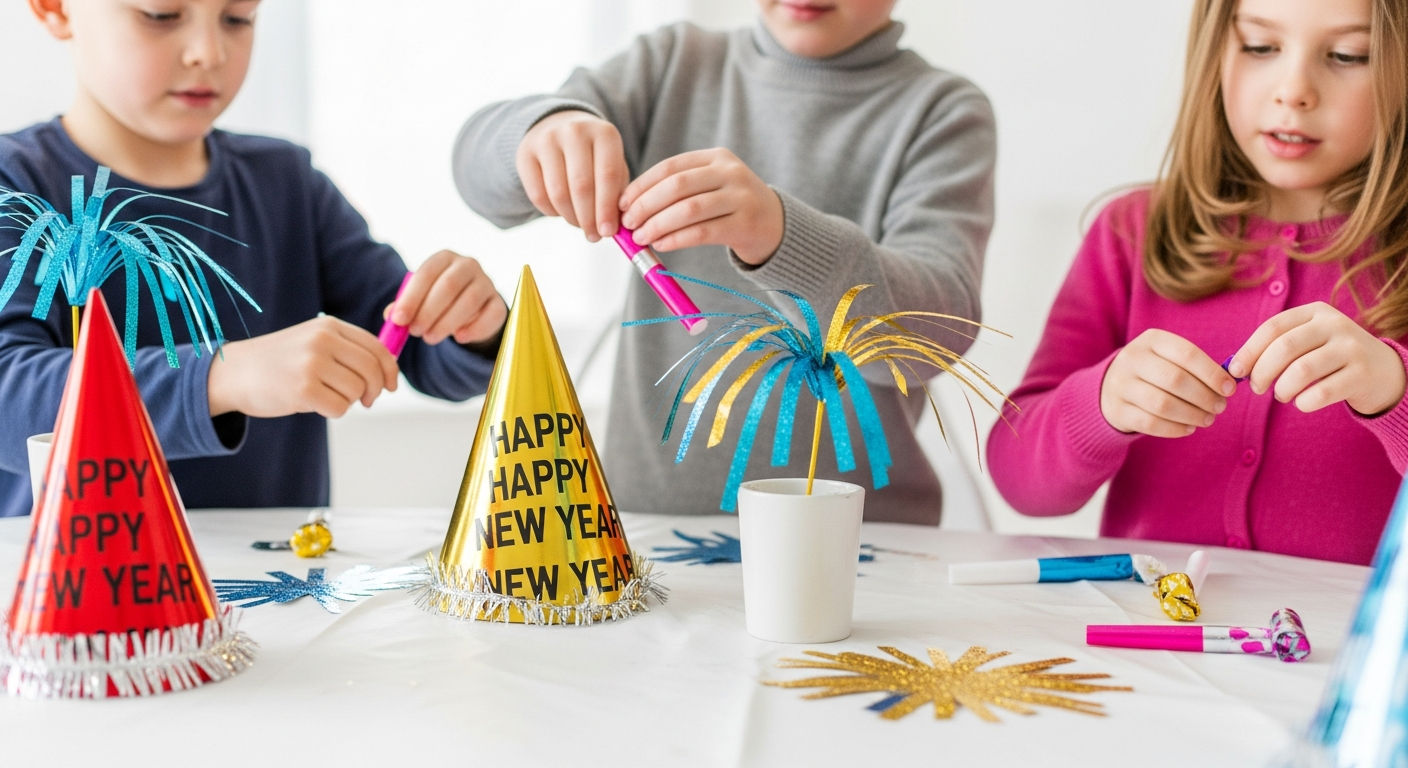
Table of Contents
- Introduction
- Why Crafting is a Language Powerhouse
- 1. The Classic Paper Plate Noisemaker
- 2. Toilet Roll Firework Stamps
- 3. Shimmering Salt Painted Fireworks
- 4. Personalized New Year Party Hats
- 5. DIY Confetti Poppers
- 6. The Midnight Countdown Clock
- 7. Magical Wishing Wands
- 8. Pipe Cleaner Glitter Rings
- 9. Bubble Wands for "Bubbly" Fun
- 10. Sparkly New Year Slime
- 11. Firework Blower Windsocks
- 12. Traditional Chinese Lanterns
- 13. Fingerprint Silhouette Art
- 14. Accordion Star Banners
- 15. Nature Wands for a "Green" New Year
- 16. The Cardboard Disco Ball
- Strengthening Communication Through Play
- Making the Best Choice for Your Family
- Practical Scenarios: Bringing Crafts to Life
- Conclusion
- Frequently Asked Questions
Introduction
Have you ever watched a toddler’s eyes light up when they realize they’ve created something all by themselves? That spark of pride is more than just a cute moment; it’s a foundational building block for their confidence and communication skills. As we approach the end of the year, parents often find themselves looking for ways to involve their little ones in the festivities. While New Year’s Eve might traditionally be a holiday for late-night parties and fireworks, for a family with young children, it is a golden opportunity to start new traditions centered around "smart play."

At Speech Blubs, we believe that every interaction is a chance for a child to find their voice. Our mission is to empower children to "speak their minds and hearts," a goal born from the personal experiences of our founders who all navigated speech challenges in their own childhoods. They created the very tool they wished they had—a bridge between technology and developmental growth. Today, with 1 in 4 children needing some form of speech support, we are dedicated to turning screen time into an active, joyful, and educational experience.
This blog post will guide you through 16 engaging toddler new year craft ideas that are designed to do more than just pass the time. We will explore how these activities foster fine motor skills, encourage descriptive language, and build the social-emotional foundations your child needs to thrive. From sparkly noisemakers to sensory "fireworks," we are here to help you ring in the new year with purpose and play. Our goal is to provide a powerful tool for family connection that serves as a screen-free alternative to passive viewing, while also highlighting how our unique digital resources can supplement your child’s journey.
Why Crafting is a Language Powerhouse
Before we dive into the glitter and glue, it’s important to understand why a toddler new year craft is such a valuable tool for development. When a child engages in a craft, they aren't just making an object; they are navigating a world of concepts. They learn about colors (bright gold, silver, blue), textures (sticky glue, rough cardboard, soft pompoms), and sequences (first we cut, then we stick).
For a parent whose 3-year-old "late talker" loves animals, the "Animal Kingdom" section of our app offers a fun, motivating way to practice "moo" and "baa" sounds. Similarly, a craft like making a "Lion Noisemaker" bridges that digital learning with physical play. This holistic approach is what we call "smart screen time." If you are curious about where your child stands in their communication journey, you can take our quick 3-minute preliminary screener. It consists of 9 simple questions and provides an assessment and next-steps plan to help you support your little one.

1. The Classic Paper Plate Noisemaker
Nothing says New Year’s Eve like a bit of celebratory noise! This craft is perfect for developing a child’s sense of rhythm and auditory processing.
- Materials: Two paper plates, dried beans or pasta, staples or tape, markers, and stickers.
- The Process: Have your toddler decorate the back of two paper plates. Fill one with a handful of beans, place the other plate on top, and secure the edges.
- Speech Connection: Use this time to practice "stop" and "go" games. Shake the noisemaker and say "Go!" then suddenly stop and say "Stop!" This helps with impulse control and following verbal directions.
2. Toilet Roll Firework Stamps
Traditional fireworks can be loud and scary for toddlers. These paint-based fireworks are much more approachable and allow for creative expression.
- Materials: Empty toilet paper rolls, scissors, bright paint, and black construction paper.
- The Process: Cut slits halfway up a toilet paper roll and fan them out. Have your child dip the "fringe" into paint and stamp it onto the black paper to create a firework explosion.
- Speech Connection: This activity is great for learning color names. Our research-backed methodology emphasizes video modeling, where children learn by watching peers. You can mirror this at home by showing your child how to stamp the paper first, encouraging them to imitate your actions.
3. Shimmering Salt Painted Fireworks
This is a fantastic sensory craft that introduces basic science concepts while working on fine motor precision.
- Materials: White glue, table salt, watercolor paints, and cardstock.
- The Process: Use the glue to draw firework shapes on the paper. Have your toddler pour salt over the glue until it's covered. Once dry, use a paintbrush to drop watercolors onto the salt and watch the color "travel."
- Speech Connection: Use descriptive words like "wet," "salty," "runny," and "bumpy." Expanding your child's vocabulary through sensory play is a key pillar of the Speech Blubs homepage philosophy.
4. Personalized New Year Party Hats
Making a wearable craft gives a toddler a sense of identity and participation in the "grown-up" holiday.
- Materials: Cardstock or a pre-made plain hat, elastic string, glitter, and pompoms.
- The Process: Roll the cardstock into a cone shape. Let your child go wild with stickers and glitter.
- Value of the Process: Focus on the joy of creation rather than a perfect end product. This builds confidence and reduces the frustration often associated with learning new skills.
5. DIY Confetti Poppers
This craft uses recycled materials to create a safe "pop" that toddlers find endlessly entertaining.
- Materials: Toilet paper roll, a balloon, tape, and shredded paper (confetti).
- The Process: Knot the end of a balloon and cut off the top. Stretch it over one end of the tube and secure it with tape. Fill with confetti, pull the knot, and let go!
- Speech Connection: Practice the "P" sound by saying "Pop! Pop! Pop!" every time the confetti flies. For more interactive sound practice, download Speech Blubs on the App Store to explore our "Early Sounds" section.
6. The Midnight Countdown Clock
Even if your toddler is in bed by 8:00 PM, they can still learn about the concept of time and numbers.
- Materials: Paper plate, construction paper "hands," and a brass fastener.
- The Process: Help your child write numbers 1 through 12 around the plate. Attach the hands in the center.
- Educational Tip: Use this to practice counting. Counting is a foundational skill for sequencing language later on.
7. Magical Wishing Wands
New Year’s is about looking forward. Even toddlers can have "wishes," like "I want to go to the park more" or "I want to eat more strawberries."
- Materials: A stick (from the yard or a dowel), cardboard star, ribbons, and silver paint.
- The Process: Glue the star to the stick and let your child paint it. Tie ribbons to the base of the star.
- Speech Connection: Ask your child, "What do you wish for?" This encourages abstract thinking and sentence formation.
8. Pipe Cleaner Glitter Rings
This simple toddler new year craft is excellent for developing the pincer grasp, which is essential for future writing skills.
- Materials: Sparkly pipe cleaners.
- The Process: Twist the pipe cleaner into a ring shape with a small "burst" on top to look like a tiny firework for their finger.
- Social Play: Encourage your child to make one for a friend or family member, fostering the social-emotional skill of "giving."
9. Bubble Wands for "Bubbly" Fun
Instead of "bubbly" drinks, toddlers can have "bubbly" wands!
- Materials: Wire or pipe cleaners and beads.
- The Process: Shape the wire into a circle or star and have your child thread beads onto the handle.
- Oral Motor Skill: Blowing bubbles is a classic speech therapy technique used to strengthen the muscles of the mouth and improve breath control. If you're ready to dive deeper into these types of exercises, get Speech Blubs on Google Play and start your journey today.
10. Sparkly New Year Slime
Slime is a favorite for a reason—it’s a tactile wonderland.
- Materials: Clear glue, baking soda, contact lens solution, and lots of silver and gold glitter.
- The Process: Mix the ingredients until the slime reaches the desired consistency.
- Descriptive Language: Ask your child, "Is it stretchy? Is it cold? Is it shiny?" These adjectives are vital for language expansion.
11. Firework Blower Windsocks
This craft combines visual tracking with physical activity.
- Materials: Toilet paper roll, crepe paper or ribbons, and string.
- The Process: Decorate the tube and glue long strips of ribbon to the bottom. Hang it outside or carry it while running to watch the "fireworks" fly.
- Movement and Language: Physical activity actually helps stimulate brain regions responsible for language. Pair the running with words like "fast" and "slow."
12. Traditional Chinese Lanterns
New Year celebrations are global! Introducing your child to different cultures through crafts builds empathy and world awareness.
- Materials: Brightly colored paper and scissors.
- The Process: Fold the paper in half and cut slits, then roll it into a cylinder and staple.
- Fine Motor Focus: The act of cutting (with safety scissors and supervision) is one of the best ways to build hand strength.
13. Fingerprint Silhouette Art
This is a messier craft, but the results are a beautiful keepsake of how small your child’s hands once were.
- Materials: Paint and paper.
- The Process: Use tape to mark out the numbers "2025." Have your child use their fingers to paint all around the tape. Once dry, peel the tape off to reveal the silhouette.
- Personalization: This craft highlights the unique journey of every child, much like the success stories from our community.
14. Accordion Star Banners
Folding paper into accordions is a great way to practice sequencing and hand-eye coordination.
- Materials: Long strips of paper and star cutouts.
- The Process: Fold the paper back and forth and glue stars to the peaks.
- Family Connection: String several together to decorate the living room, showing your child that their work is valued and celebrated by the whole family.
15. Nature Wands for a "Green" New Year
If you want to avoid too much plastic and glitter, a nature wand is a perfect alternative.
- Materials: A sturdy stick, twine, and found items like evergreen sprigs or dried leaves.
- The Process: Tie the nature items to the top of the stick.
- Conversation Starter: Talk about the seasons. "The leaves are brown because it is winter. Soon, in the new year, they will be green again!"
16. The Cardboard Disco Ball
You don't need a real disco ball to have a dance party.
- Materials: A large cardboard circle and aluminum foil.
- The Process: Have your child tear pieces of aluminum foil and glue them onto the cardboard. Hang it up and shine a flashlight on it.
- Rhythmic Expression: Put on some music and dance! Dancing helps children understand the rhythm of speech, which is essential for fluency.
Strengthening Communication Through Play
At Speech Blubs, we understand that "screen time" often gets a bad reputation. However, we believe in "smart screen time"—the kind that encourages your child to get off the couch and interact with the world. Our video modeling methodology is based on the scientific principle of mirror neurons. When a child sees another child on a screen making a sound or performing an action, their brain reacts as if they are doing it themselves. This makes them much more likely to try it out in real life.
Whether you are doing a toddler new year craft or using our app, the key is co-play. Sit with your child, talk about what you are seeing, and celebrate every small victory. We aren't looking for overnight perfection; we are looking for progress, confidence, and joy. Our app is a powerful supplement to your child’s overall development plan and can be a wonderful companion to professional therapy.
Making the Best Choice for Your Family
We want to be transparent about how you can access our full suite of tools. We offer two main plans to fit your family’s needs:
- Monthly Plan: For $14.99 per month, you get full access to the Speech Blubs app.
- Yearly Plan: For $59.99 per year (which breaks down to just $4.99/month), you get the absolute best value.
The Yearly plan is designed for families committed to long-term growth. It includes:
- A 7-day free trial so you can explore the content risk-free.
- The extra Reading Blubs app, which focuses on early literacy and phonics.
- Early access to new updates and 24-hour support response time.
Choosing the Yearly plan ensures that your child has a consistent, high-quality resource throughout their developmental journey. Create your account and begin your 7-day free trial today to see the difference smart play can make.
Practical Scenarios: Bringing Crafts to Life
Imagine a parent, Sarah, whose son Leo is just beginning to use two-word phrases. On New Year’s Eve, they decide to make the Toilet Roll Firework Stamps. As Leo dips the roll in blue paint, Sarah says, "Blue paint." Leo repeats, "Blue paint." When they stamp it, Sarah says, "Big pop!" Leo laughs and says, "Big pop!"
This is the magic of crafting. It provides a natural, low-pressure environment for language to emerge. It’s not a drill; it’s a celebration. By the time they finish their craft, Leo hasn't just made a painting; he's practiced vocabulary, imitation, and social turn-taking.
Later that evening, they might spend 10 minutes on Speech Blubs, looking at the "Celebration" section. Leo sees a child on the screen wearing a party hat similar to the one he just made. He points to the screen and then to his own head. This connection between the digital world and the physical world is where the most profound learning happens.
Conclusion
As we look toward 2025, we invite you to embrace the power of play. These 16 toddler new year craft ideas are more than just ways to fill a rainy afternoon; they are opportunities to connect, learn, and grow. By focusing on the process rather than the result, you are fostering a love for communication that will last a lifetime.
Remember, our mission at Speech Blubs is to help your child find their voice. Whether through our scientifically-backed app or a simple paper plate noisemaker, every step forward is worth celebrating. We encourage you to be a partner in your child’s learning, providing the support and encouragement they need to "speak their minds and hearts."
Ready to start the new year with a boost in your child's communication skills? Download Speech Blubs on the App Store or Google Play today. We highly recommend selecting our Yearly plan to take advantage of the 7-day free trial and the exclusive Reading Blubs app. Let’s make this year the most communicative one yet!
Frequently Asked Questions
1. How do crafts specifically help with speech development?
Crafting encourages "joint attention," where both you and your child focus on the same object. This is a prerequisite for language. Additionally, crafts provide a natural context for using "functional language"—words like more, open, help, stick, and all gone. By narrating what you are doing, you are providing a rich linguistic environment for your child to soak up.
2. My toddler has a very short attention span. Can we still do these crafts?
Absolutely! The key is to keep it "short and sweet," as we often say. You don't have to finish a craft in one sitting. If your child loses interest after five minutes, that’s okay. Focus on the engagement they did have. Choose crafts with fewer steps, like the Pipe Cleaner Rings or the Fingerprint Art, which offer immediate results.
3. Is the Speech Blubs app safe for my toddler to use alone?
While our app is designed to be kid-friendly and "smart screen time," we always advocate for adult co-play. The best results come when a parent is there to mirror the sounds and encourage the child. Our app is a tool for connection, not a digital babysitter. Using it together reinforces the lessons and makes the experience much more joyful.
4. What should I do if my child is frustrated because their craft doesn't look "right"?
Focus on "process art" rather than "product art." Remind your child (and yourself!) that there is no wrong way to be creative. Use encouraging phrases like, "I love the colors you chose!" or "You worked so hard on that glue!" Building confidence is just as important as building vocabulary. Reducing frustration helps keep the lines of communication open and positive.
About the author