
17+ Fun Toddler Social Skills Activities for Early Success
 By Speech Blubs Team•Feb 23, 2026•13 min.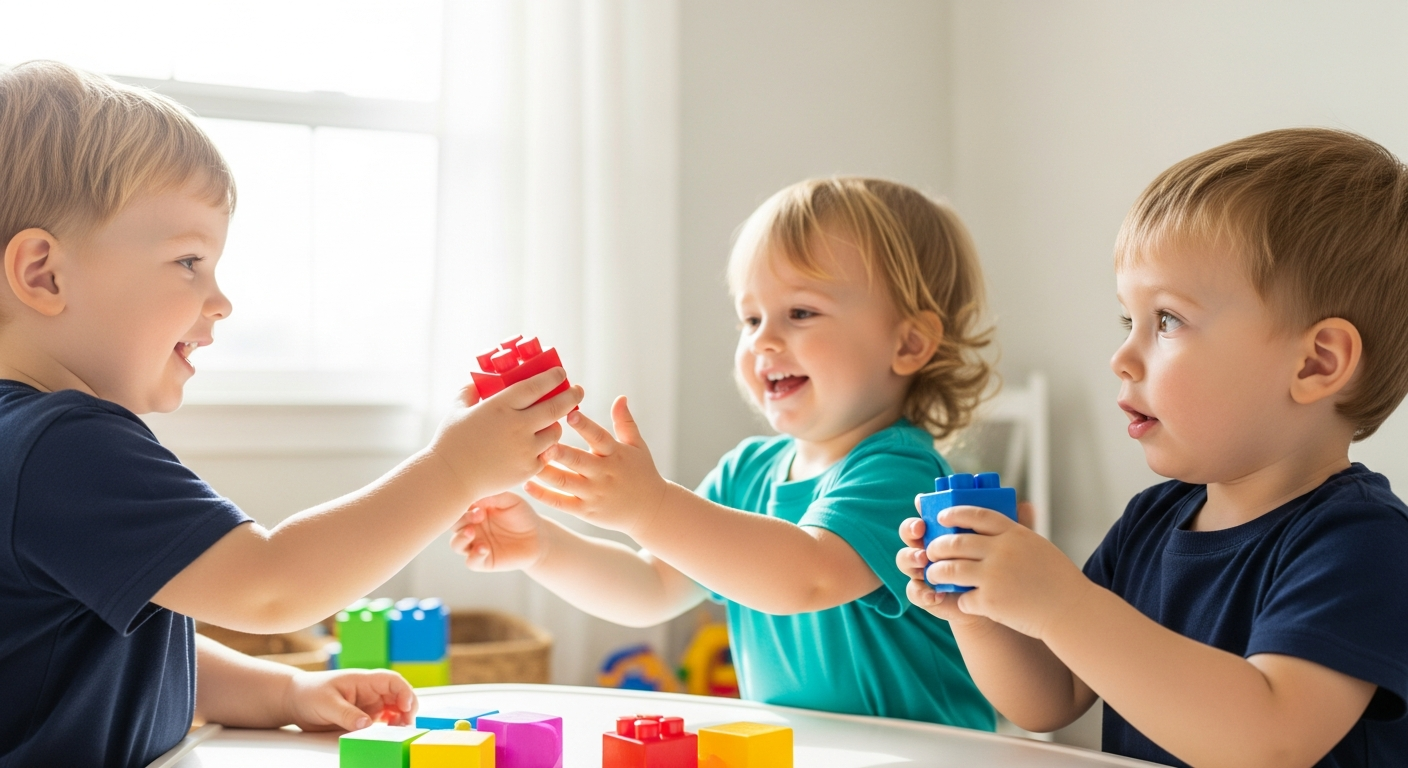
Table of Contents
- Introduction
- Why Toddler Social Skills Activities Matter
- Understanding Your Toddler’s Social Milestones
- The Speech Blubs Approach: Smart Screen Time
- 17+ Fun and Easy Toddler Social Skills Activities
- Overcoming Challenges: When Socializing Feels Hard
- Building a Support System: The Value of Yearly Membership
- Conclusion
- Frequently Asked Questions (FAQs)
Introduction
Did you know that according to recent studies, social skills are often a better predictor of adult success than IQ scores? It is a startling thought for many parents, but it highlights a fundamental truth in child development: the ability to communicate, empathize, and cooperate is the bedrock of a happy, fulfilling life. For a toddler, the world is a giant classroom where every "hello," every shared toy, and every "your turn" is a monumental lesson in human connection.
The purpose of this blog post is to provide you with a comprehensive toolkit of toddler social skills activities that are not only easy to implement at home but also deeply rooted in developmental science. We will explore how these activities foster empathy, build confidence, and reduce the frustration that often leads to tantrums. We’ll also look at how "smart screen time" can be a powerful ally in this journey, particularly through the use of peer-to-peer video modeling.

At Speech Blubs, our mission is to empower children to speak their minds and hearts. We understand that social and language skills are two sides of the same coin. Whether your child is a "late talker" or simply a social butterfly in training, the goal is to create joyful family learning moments that build a strong foundation for the future.
Why Toddler Social Skills Activities Matter
Social skills are the tools we use to communicate, interact, and build relationships. For toddlers, these skills are just beginning to bloom. They are moving from a world centered entirely on themselves to one where they must navigate the needs and feelings of others. This transition isn’t always easy—as any parent who has witnessed a "toy tug-of-war" can attest—but it is essential.
When we engage in toddler social skills activities, we are helping our children develop:
- Empathy: The ability to understand and share the feelings of another person.
- Cooperation: Learning how to work with others toward a common goal.
- Conflict Resolution: Finding ways to solve problems without resorting to aggression.
- Self-Control: Managing impulses and waiting for a turn.
- Communication: Using both words and body language to express needs and ideas.
Developing these skills early on fosters resilience and mental well-being. It sets the stage for positive lifelong outcomes, from making friends on the playground to collaborating in a future workplace.
If you are ever unsure about where your child stands in their development, we recommend taking our quick 3-minute preliminary screener. It involves just 9 simple questions and provides a helpful assessment and a next-steps plan to guide you.
Understanding Your Toddler’s Social Milestones
Before diving into activities, it is helpful to understand what "socializing" looks like for a two- or three-year-old.
From Parallel Play to Cooperative Play
Around age two, you might notice your child engaging in "parallel play." This is when children play near each other but not necessarily with each other. They might both be playing with blocks, but they aren't building a tower together. As they approach age three and beyond, they begin to transition into "cooperative play," where they start to interact, share ideas, and work together on a pretend story.

The Explosion of Pretend Play
Pretend play is a critical aspect of social-emotional development. When a child pretends to be a doctor, a teacher, or a "mommy," they are practicing social roles and learning to see the world from another perspective. This is the birthplace of empathy.
The Challenge of "No!"
It is also perfectly normal for toddlers to struggle with sharing and to use the word "No!" frequently. They are discovering their own agency and independence. Our job as caregivers is to guide them through these big emotions with patience and structured play.
The Speech Blubs Approach: Smart Screen Time
At Speech Blubs, we were founded by a team who grew up with speech problems themselves. They created the tool they wished they had—one that blends scientific principles with the joy of play. We provide a powerful tool for family connection and a screen-free alternative to passive viewing like cartoons.
Our unique approach focuses on video modeling. This is a scientifically proven methodology where children learn by watching and imitating their peers. When a toddler sees another child on the screen making a sound or performing a social gesture, their "mirror neurons" fire, making them much more likely to try it themselves.
Our method is backed by science, placing us in the top tier of speech apps worldwide. For a parent whose 3-year-old "late talker" loves animals, the "Animal Kingdom" section of our app offers a fun, motivating way to practice "moo" and "baa" sounds while watching other children do the same.
17+ Fun and Easy Toddler Social Skills Activities
Here are some practical, engaging activities you can start today to boost your child’s social and emotional growth.
1. The Name Game
This is a simple but effective way to help toddlers recognize their peers. Sit in a circle and roll a ball to someone, but only after calling out their name. This teaches children to be attentive to others and acknowledges the importance of identity in social interactions.
2. Emotion Charades
Write down basic emotions (happy, sad, angry, surprised) or draw simple faces on cards. Take turns acting out the emotion using only facial expressions and body language. This helps toddlers learn to read non-verbal cues—a vital part of empathy.
3. Simon Says
A classic for a reason! Simon Says builds self-control, listening skills, and impulse control. It rewards children for paying close attention and following instructions, which are key components of behaving appropriately in a group setting.
4. Roll the Ball
For younger toddlers, simply rolling a ball back and forth is a masterclass in turn-taking. It requires cooperation to keep the game going and helps them understand the back-and-forth rhythm that will later become the foundation of conversation.
5. Staring Contest
Many children, especially those with social challenges, find eye contact difficult. A friendly staring contest turns this into a game. It allows them to focus solely on maintaining eye contact without the added pressure of having to speak at the same time. If this feels too intense, try putting a fun sticker on your forehead for them to look at first!
6. Peek-a-boo (with a Twist)
While we think of this as a baby game, for toddlers, it’s about anticipation and social routine. Use a blanket and say "Boo!" specifically. This simple, repetitive word is often easier for a child to imitate than "Peek-a-boo," encouraging their first steps into verbal social interaction.
7. Virtual Playtime
In our modern world, social distancing or living far from family is common. Use video chats to help your child practice social skills in a different setting. Encourage them to show a toy to the person on the screen or wave hello. This helps them adapt to new communication platforms.
8. Expression Mimicking
Sit in front of a mirror with your child. Make a silly face, a sad face, or a surprised face and ask them to copy you. This helps them connect the feeling in their own muscles to the emotion they see on your face.
9. The Topic Game
Choose a category, like "Animals" or "Fruits." Take turns naming something that fits. This teaches kids to stick to a subject and follow the "rules" of a conversation. It’s also a great way to build vocabulary!
10. Improvisational Storytelling
Start a story with one sentence: "Once there was a tiny blue bird..." and have your child add the next part. This requires them to listen to your contribution and build upon it, which is the essence of collaboration.
11. Rhythm Games and Joint Music-Making
Research shows that making music together promotes helpfulness and social bonding. Use pots and pans as drums or simple shakers. Try to keep a beat together. When children synchronize their movements and sounds, they feel a stronger sense of connection to their "bandmates."
12. Playing with Characters
Use stuffed animals or dolls to act out social scenarios. Maybe the teddy bear is sad because he has to share his honey. Ask your child, "What should we do to help Teddy?" This allows them to practice social problem-solving in a low-risk, imaginary environment.
13. Play Pretend: The "Shopkeeper"
Set up a small "store" with household items. One person is the customer, and the other is the cashier. This activity introduces the concept of social roles, polite greetings ("Hello, how are you?"), and the transactional nature of many human interactions.
14. Token Stacking for Conversations
During a snack or meal, give your child a small block or token every time they respond appropriately to a question or wait for you to finish speaking. The goal is to see how high they can build their "conversation tower." It makes the abstract concept of "good listening" very concrete.
15. Collaborative Building
Give your child and a playmate a pile of blocks with the goal of building one single tower together. They will have to communicate where the blocks go and learn to handle the frustration if the tower topples.
16. Community Gardening
If you have a yard or even a window box, gardening together is a wonderful way to teach responsibility and nurturing. Caring for a living thing helps children understand that their actions have a direct impact on the well-being of others.
17. The "Thank You" Circle
End the day by sharing one thing you are thankful for. This fosters a positive social atmosphere and teaches children to recognize and appreciate the kind actions of people around them.
Overcoming Challenges: When Socializing Feels Hard
It is important to remember that every child develops at their own pace. Some children are naturally more introverted, while others may experience significant speech or social delays.
If your child seems overwhelmed in social settings, don't force it. Instead, focus on building their confidence in a 1-on-1 setting first. Use tools that make learning feel like play. This is where Speech Blubs can be a lifesaver. By using our app, children can practice social gestures and speech sounds in the safety of their own home, watching other children do the same. This builds the foundational skills they need to feel confident when they eventually step onto the playground.
See what other parents are saying about how their children have blossomed after using our peer-based video modeling approach. Many parents report that their children not only start speaking more but also become more engaged and less frustrated in social situations.
Building a Support System: The Value of Yearly Membership
We believe that every child deserves the best start in life, and consistency is the key to progress. While we offer a monthly plan, the Yearly plan is designed to provide the most comprehensive support for your family’s journey.
Why Choose the Yearly Plan?
Our Yearly plan is the clear choice for families committed to their child's development. Here is how the value breaks down:
- Monthly Plan: $14.99 per month.
- Yearly Plan: $59.99 per year.
By choosing the Yearly plan, you save 66%, which brings the cost down to just $4.99 per month. But the savings aren't the only benefit. The Yearly plan includes exclusive features that the monthly plan does not:
- 7-Day Free Trial: You can explore the full range of activities and see the impact on your child before committing.
- Reading Blubs App: Access to our specialized reading app to help your child transition from speaking to reading.
- Early Access: Be the first to try new updates and activities.
- Priority Support: Enjoy a 24-hour response time from our dedicated support team.
We invite you to join our community and give your child the tools they need to "speak their minds and hearts." You can download Speech Blubs on the App Store or get it on Google Play to begin your journey today.
Conclusion
The journey of developing toddler social skills is one of the most rewarding experiences a parent can have. From that first shared smile to the first time they comfort a crying friend, these moments are the building blocks of a compassionate and capable human being.
By incorporating simple, fun activities into your daily routine—like Simon Says, Emotion Charades, or collaborative building—you are giving your child the gift of connection. Remember to be patient, celebrate the small wins, and provide a supportive environment where they feel safe to explore their world.
At Speech Blubs, we are honored to be a part of your family’s story. We provide an immediate, effective, and joyful solution for the 1 in 4 children who need extra support, blending the best of science with the pure magic of play.
Ready to get started? Create your account and begin your 7-day free trial today. We highly recommend selecting the Yearly plan to access the full suite of features, including Reading Blubs and priority support, for the best possible value. Let’s help your child speak their mind and heart, one joyful moment at a time!
Frequently Asked Questions (FAQs)
1. At what age should I start focusing on social skills activities?
It is never too early! While infants mostly interact with their primary caregivers, you can start simple social games like Peek-a-boo and "So Big" as early as 6 months. By the time they are toddlers (ages 1-3), activities that involve turn-taking and recognizing emotions become increasingly important and effective.
2. My child prefers to play alone. Is this a problem?
Not necessarily. Around age two, children typically engage in "parallel play," where they play near others but not with them. This is a normal developmental stage. However, if your child consistently avoids any form of social interaction or eye contact as they get older, it may be helpful to use tools like our preliminary screener to see if extra support might be beneficial.
3. How does Speech Blubs help with social skills?
Our app uses "video modeling," where children watch other children perform social gestures, say words, and express emotions. This peer-to-peer interaction is highly motivating and uses the brain's natural "mirror neuron" system to encourage imitation. It helps build the confidence and vocabulary necessary for real-world social interactions.
4. Can social skills activities really reduce tantrums?
Yes! Many tantrums are caused by "communication frustration"—the child has a need or a feeling but doesn't have the tools to express it or the emotional regulation to handle it. By teaching them to recognize emotions and use their words through play, you give them a "safety valve" for those big feelings, leading to fewer outbursts and more cooperation.
About the author