
2 Year Old Drooling Speech Delay: Causes and Helpful Tips
 By Speech Blubs Team•Mar 23, 2026•13 min.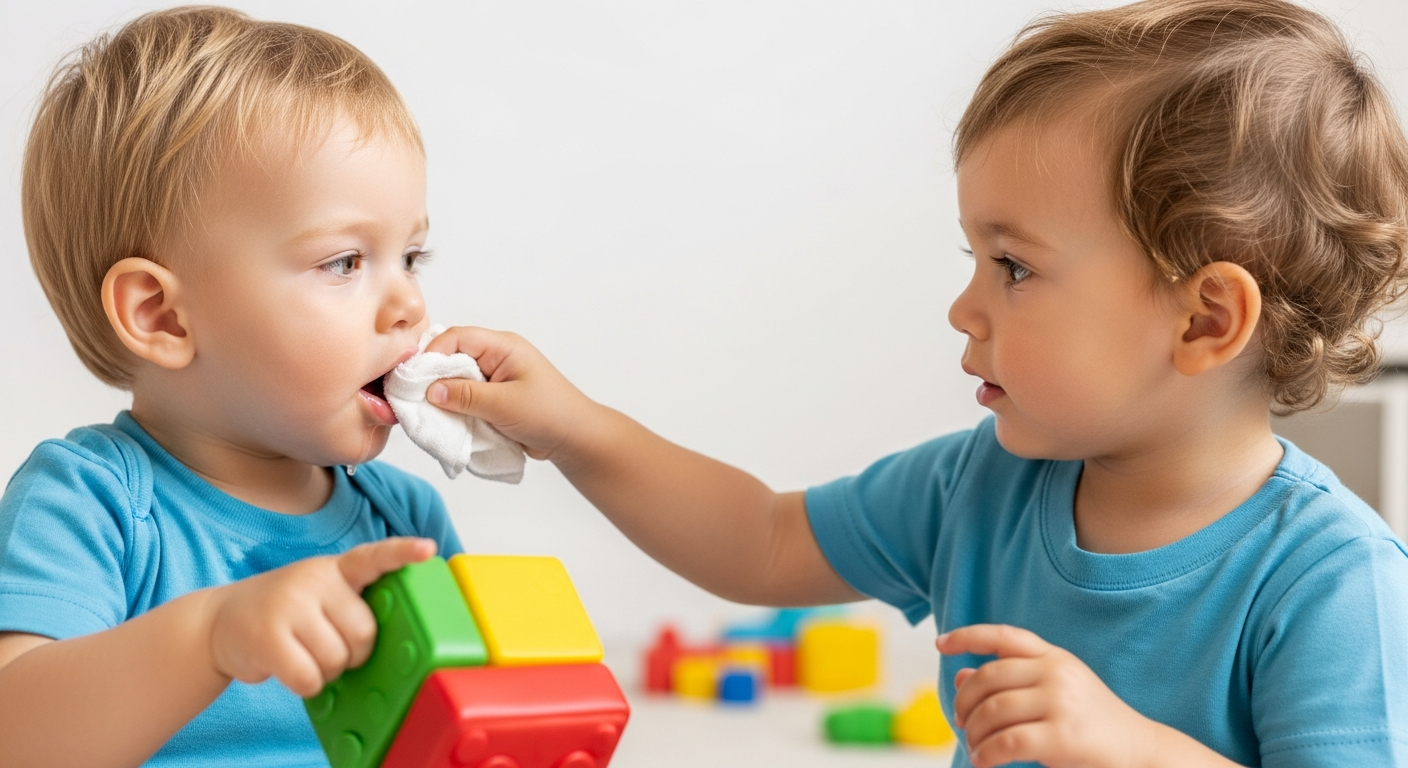
Table of Contents
- Introduction
- Why is My 2-Year-Old Still Drooling?
- Understanding Sialorrhea and Hypersalivation
- The Connection: 2 Year Old Drooling Speech Delay
- Common Causes of Excessive Drooling
- When Should Parents Be Concerned?
- How Speech Therapy Helps with Drooling
- Practical Strategies for Home
- Making Learning Fun with Speech Blubs
- The Importance of Early Intervention
- Choosing the Right Plan for Your Child
- Conclusion
- Frequently Asked Questions (FAQ)
Introduction
Have you found yourself perpetually reaching for a fresh bib or wiping your little one's chin, even though they are well past the infant stage? While a soggy shirt is par for the course with a six-month-old, seeing a 2 year old drooling speech delay combination can leave parents feeling a mix of confusion and concern. Is it just late teething, or is there something deeper going on with their oral motor development? It’s a question many of us at Speech Blubs have faced, both as experts and as parents ourselves.
The purpose of this post is to dive deep into the relationship between excessive drooling and communication milestones. We will explore why some toddlers continue to drool past the typical age, how this relates to their ability to form words, and what practical steps you can take to support your child’s development. We believe that every child deserves the chance to speak their minds and hearts, and often, addressing the physical "mechanics" of the mouth is the first step toward that goal. By the end of this article, you will have a clearer understanding of when to seek help and how to turn daily routines into joyful learning moments.

Why is My 2-Year-Old Still Drooling?
In the first year of life, drooling is nearly universal. Infants are learning to manage their saliva while simultaneously dealing with the arrival of new teeth. However, most child development experts agree that by the age of 24 months, children should have a significant amount of control over their oral secretions. While some "typically developing" children might have occasional dampness until age four, a persistent, heavy flow usually signals that the child hasn't quite mastered the coordination required to swallow frequently and keep their mouth closed.
When we talk about a 2 year old drooling speech delay, we are often looking at a delay in "oral motor" skills. This refers to the strength, coordination, and awareness of the muscles in the lips, tongue, cheeks, and jaw. If these muscles are a bit "sleepy" or weak, the saliva that naturally pools in the mouth simply escapes before the brain sends the signal to swallow it. At Speech Blubs, we view these muscles as the foundation for communication. Just as a runner needs strong legs, a "talker" needs a strong and coordinated mouth.
Understanding Sialorrhea and Hypersalivation
In the medical world, excessive drooling is known as sialorrhea or hypersalivation. While these terms might sound intimidating, they simply describe a situation where there is either too much saliva being produced or a decreased ability to clear it from the mouth.
There are generally two types of sialorrhea to be aware of:
- Anterior Sialorrhea: This is the most visible type, where saliva flows out of the front of the mouth. This leads to wet clothes, skin rashes around the chin, and sometimes social self-consciousness as the child gets older.
- Posterior Sialorrhea: This is less visible but more concerning. It occurs when saliva spills back toward the airway instead of down the esophagus. If you notice your child coughing, gagging, or frequently sounding "congested" without being sick, this might be the cause.
Understanding which type your child is experiencing can help you provide better information to your pediatrician or a speech-language pathologist (SLP). If you are feeling unsure about where your child stands, we recommend taking our quick 3-minute preliminary screener. It involves 9 simple questions and provides you with a personalized assessment and a next-steps plan to help you navigate these early stages of development.

The Connection: 2 Year Old Drooling Speech Delay
So, why do drooling and speech delay often go hand-in-hand? To put it simply: the same muscles used for keeping saliva in the mouth are the ones used for speaking.
Speech is an incredibly complex motor task. To say a simple word like "Mama," a child has to coordinate their breath, vibrate their vocal cords, and then precisely close their lips. If a child has low muscle tone in their lips (making it hard to keep the mouth closed and saliva in), they will likely struggle with "bilabial" sounds like /p/, /b/, and /m/.
When a 2 year old drooling speech delay occurs, it often manifests as "poor articulation." This means the child’s speech might sound "slushy" or indistinct because their tongue and lips aren't moving with the precision needed to crisp up those consonant sounds. By addressing the drooling through oral motor exercises, we are often simultaneously "prepping" the mouth for clearer speech. Our goal at Speech Blubs is to provide a joyful solution for the 1 in 4 children who need this extra support, blending scientific principles with the power of play.
Common Causes of Excessive Drooling
If your toddler is still soaking through bibs, it’s rarely just "laziness." Usually, there is an underlying physical or sensory reason. Here are the most common factors:
1. Low Muscle Tone (Hypotonia)
Some children are born with slightly lower muscle tone in their face. This isn't about "strength" in the way we think of lifting weights, but rather the "resting tension" of the muscles. If the jaw and lips tend to hang open at rest, saliva will naturally escape.
2. Anatomical Differences
Sometimes the physical structure of the mouth makes swallowing difficult. This could include:
- Enlarged Tonsils or Adenoids: These can block the nasal passage, forcing the child to breathe through their mouth. An open mouth is a drooling mouth.
- Large Tongue (Macroglossia): If the tongue takes up too much space, it’s harder to coordinate a swallow.
- Dental Issues: Malocclusions or an "open bite" (where front teeth don't meet) can prevent the lips from sealing properly.
3. Sensory Awareness Issues
Some children simply don't "feel" the saliva on their chin. Their brain doesn't register the "wetness" signal as quickly as others, so they don't think to swallow or wipe it away. Improving this "sensory feedback" is a key part of most speech therapy plans.
When Should Parents Be Concerned?
While we always advocate for a "wait and see" approach to be replaced with "proactive support," there are specific signs that suggest it's time to consult a professional. You should consider an evaluation if:
- Your child is over age 2 and drooling is constant, not just during teething or illness.
- The drooling is accompanied by a significant speech delay (fewer than 50 words at age 2).
- Your child frequently chokes or gags on their own saliva.
- There is a persistent rash or skin breakdown around the mouth.
- Your child is a chronic mouth-breather.
Early intervention is powerful. It doesn't mean something is "wrong" with your child; it simply means they might need a different set of tools to master these skills. Many parents find that even a few weeks of targeted play-based exercises can make a world of difference. To see how other families have navigated these challenges, you can read our parent testimonials to see the progress kids are making every day.
How Speech Therapy Helps with Drooling
When you visit a speech-language pathologist for a 2 year old drooling speech delay, they will perform what’s called an "Oral Motor Examination." They will look at how your child moves their tongue, whether they can pucker their lips, and how they handle different textures of food.
The therapy isn't just about "stopping the spit." It’s about building the foundational skills for communication. A therapist might work on:
- Muscle Strengthening: Exercises to help the lips stay closed.
- Swallowing Coordination: Teaching the child to consciously move saliva to the back of the throat.
- Positioning: Ensuring the child has good "trunk support" (sitting up straight), which actually makes swallowing easier.
At Speech Blubs, we’ve taken these clinical principles and turned them into "smart screen time." Instead of passive watching, children use our app to engage in "video modeling," where they watch their peers perform mouth exercises and then imitate them. You can download Speech Blubs on the App Store or Google Play Store to see this methodology in action.
Practical Strategies for Home
You don't need a medical degree to start helping your child today. In fact, some of the most effective interventions happen right in your kitchen or playroom.
Ditch the Sippy Cup
This is one of the easiest changes you can make. Traditional hard-spout sippy cups encourage a "baby-like" swallow where the tongue stays forward and flat. This can actually contribute to drooling and speech delays. Instead, transition to a straw cup or an open cup. Drinking from a straw requires the lips to pucker and the tongue to retract, which are exactly the skills needed to control drooling.
Awareness Training: "Wet vs. Dry"
If your child has low sensory awareness, help them learn the difference. Use a soft cloth and say, "Oh, look, your chin is wet! Let's make it dry." Have them look in a mirror so they can see the "shiny" saliva and then see the "dry" skin after wiping. Making it a game rather than a chore reduces frustration and builds confidence.
The Power of Blowing Bubbles
Activities like blowing bubbles or using a whistle are fantastic for "lip rounding." For a parent whose toddler struggles with lip closure, the "Mouth Gym" section in the Speech Blubs app offers a fun, motivating way to practice these exact movements by imitating other kids. It turns a "therapy exercise" into a "cool game" they want to play with you.
Making Learning Fun with Speech Blubs
We believe that the best way for a child to learn is through the "joy of discovery." Our app was born from the personal experiences of our founders, who all grew up with speech problems and created the tool they wished they had. We use a unique "video modeling" methodology, which is backed by science and high MARS scale ratings.
Unlike cartoons that encourage passive "zoning out," Speech Blubs is a co-play tool. It’s designed for you to sit with your child, watch the "Blubers" (the kids in the videos), and try the sounds together. For a child with a 2 year old drooling speech delay, this peer-to-peer connection is incredibly motivating. When they see another child making a "fishy face" or popping their lips, they are much more likely to try it themselves than if an adult simply tells them to.
The Importance of Early Intervention
Waiting until a child "grows out of it" can sometimes lead to unnecessary frustration for both the parent and the toddler. When a child can't communicate their needs because of a speech delay, it often results in tantrums or withdrawal. By addressing drooling and oral motor skills early, you are giving them the physical tools they need to succeed.
Think of it as laying the tracks for a train. The "speech" is the train, but it can't run smoothly if the "tracks" (the muscles and coordination) aren't in place. Using tools like Speech Blubs as a supplement to your daily routine can help foster a love for communication and reduce the frustration of not being understood. We aren't here to promise overnight miracles, but we are here to support the journey of building foundational skills through joyful family learning moments.
Choosing the Right Plan for Your Child
We want to be transparent and helpful as you decide how to invest in your child’s progress. We offer two main ways to access the full Speech Blubs experience:
- Monthly Plan: $14.99 per month. This is a great way to test the waters and see how your child responds to the video modeling.
- Yearly Plan: $59.99 per year. This is our best value choice, breaking down to just $4.99 per month (a 66% savings compared to the monthly rate).
The Yearly Plan is designed to provide the most comprehensive support for your child's long-term development. When you choose the Yearly Plan, you receive:
- A 7-day free trial to explore all features risk-free.
- Full access to the Reading Blubs app, helping your child transition from speech to literacy.
- Early access to all new content updates.
- Priority 24-hour support response time from our team.
Please note that the Monthly plan does not include the free trial or the Reading Blubs app. To give your child the full suite of tools for their communication journey, we highly recommend signing up for the Yearly plan today.
Conclusion
A 2 year old drooling speech delay can feel like a heavy label, but remember that it is simply a snapshot of where your child is today. With the right combination of professional advice, home-based environmental changes (like switching to straw cups), and engaging tools like Speech Blubs, you can help your child find their voice. Our mission is to empower children to speak their minds and hearts, and we are honored to be a part of your family’s story.
Don't wait for the "perfect time" to start. Every "pop," "moo," and "pucker" is a step toward clearer communication and a more confident child.
Ready to get started? Download Speech Blubs on the App Store or Google Play to begin your journey. For the best value and access to all our specialized features, including Reading Blubs and our 7-day free trial, be sure to select the Yearly Plan. Let's turn screen time into "smart time" together!
Frequently Asked Questions (FAQ)
1. Is it normal for a 2-year-old to drool while concentrating?
Yes, it is common for toddlers to drool slightly when they are "hard at work" on a task, like building a tower or coloring. When the brain is intensely focused on fine motor skills, it sometimes "forgets" to send the automatic signal to swallow. However, if the drooling is constant even when they aren't concentrated, it may be worth investigating their oral motor strength.
2. Can enlarged tonsils really cause speech delays?
Indirectly, yes. Enlarged tonsils or adenoids often lead to "mouth breathing." When a child constantly breathes through their mouth, their tongue tends to rest low and forward, and their jaw stays open. This "open mouth posture" can make it difficult to develop the precise muscle movements needed for certain speech sounds, leading to a delay in clear articulation.
3. Will my child need surgery if they have sialorrhea?
In the vast majority of cases, no. Most toddlers with excessive drooling respond very well to non-invasive treatments like speech therapy, oral motor exercises, and environmental changes. Surgery (such as removing adenoids or redirecting salivary ducts) is typically reserved for severe cases where the child is at risk of respiratory issues or when other therapies have not been successful.
4. How long does it take to see progress with Speech Blubs?
Every child is unique, and progress happens at different speeds. Our goal isn't to rush the process, but to make it enjoyable. Many parents report seeing increased "vocal play" and attempts at imitation within the first few weeks of consistent use. By making the app a part of your daily "together time," you are building the confidence and muscle memory that lead to long-term communication success.
About the author