
20 Creative Camping Toddler Crafts for Outdoor Fun
 By Speech Blubs Team•Feb 20, 2026•13 min.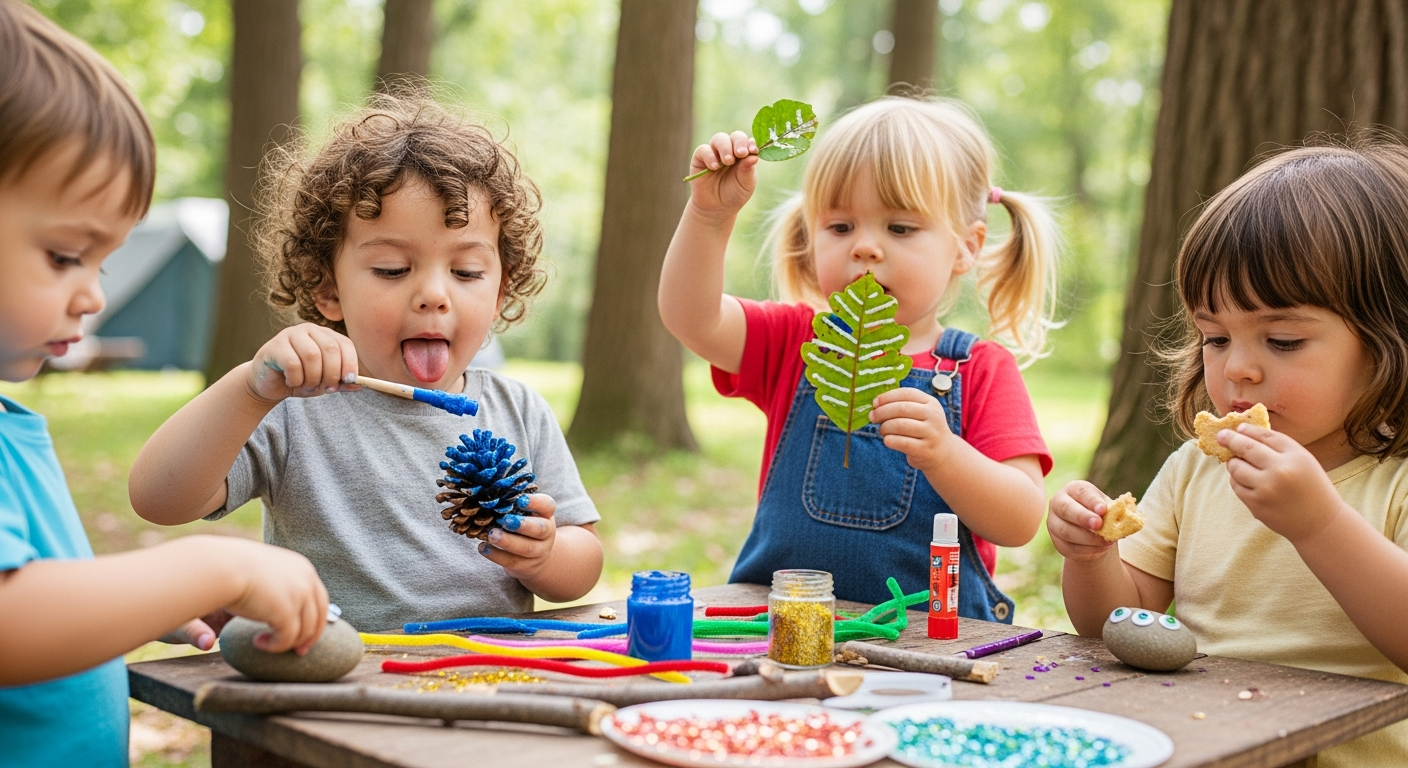
Table of Contents
- Introduction
- The Power of Play and Communication
- Classic Indoor Camping Crafts
- Nature-Based Camping Crafts
- Creative Light and Exploration Crafts
- Why Crafting is "Smart Screen Time"
- Supporting Your Child’s Journey
- Organizing Your Camping Craft Supplies
- Pricing and Value: Choosing the Right Path
- More Quick Camping Craft Ideas
- The Speech Blubs Difference
- Conclusion
- FAQs
Introduction
Have you ever seen the pure wonder in a toddler’s eyes when they spot their first campfire or touch the rough bark of a towering pine tree? For a little one, a camping trip isn’t just a vacation; it’s a sensory-rich expedition into a world of new sounds, textures, and words. At Speech Blubs, we believe that these moments of discovery are the perfect foundation for language development. Whether you are pitching a tent in the deep woods or setting up a "campsite" in your living room, camping toddler crafts are a fantastic way to bridge the gap between play and communication.
In this post, we’re going to explore a wide variety of engaging, nature-inspired crafts designed specifically for little hands. We’ll cover everything from mess-free nature rubbings to 3D popsicle stick tents, all while showing you how to turn these activities into "smart screen time" companions. Our goal is to help you foster a love for communication, build your child’s confidence, and create joyful family memories that last far longer than the campfire embers. We’ll also share how our unique video modeling methodology can support your child’s speech journey during these creative sessions.

By the end of this guide, you’ll have a backpack full of ideas to keep your toddler entertained, engaged, and talking. Our mission is to empower children to speak their minds and hearts, and we know that starts with the spark of imagination found in simple, hands-on play.
The Power of Play and Communication
At Speech Blubs, our company was born from the personal experiences of our founders. Every one of them grew up with speech challenges and eventually created the tool they wished they had as children. We understand that for the 1 in 4 children who need speech support, traditional methods can sometimes feel like "work." That’s why we blend scientific principles with the joy of play.
When you engage in camping toddler crafts, you aren’t just making "stuff." You are creating a low-pressure environment where your child feels safe to experiment with new sounds. For example, while gluing cotton balls onto a "s'more" craft, you can practice the "m" sound for "marshmallow" or the "s" sound for "sticky." This is exactly how our app works—by using video modeling, where children watch their peers perform activities and sounds, they are naturally motivated to imitate.
Before we dive into the crafts, if you’re ever unsure about your child’s speech milestones, you can take our quick 3-minute preliminary screener. It involves 9 simple questions and provides a professional assessment and a next-steps plan to help you feel confident in your child's progress.
Classic Indoor Camping Crafts
Sometimes the weather doesn't cooperate, or maybe you're just practicing for the real thing. These crafts bring the spirit of the Great Outdoors inside.
1. The Handprint Campfire
This is a tactile favorite that allows toddlers to get a little messy while learning color words.
- What you need: White cardstock, orange, red, and brown paint, and cotton balls.
- The Process: Paint your child’s hand orange and press it on the paper. Repeat with red paint in the center. Use brown paint to "draw" logs at the bottom using their fingers.
- Speech Connection: Practice words like "hot," "red," and "fire." For a child who loves bright colors, the "Colors" section of Speech Blubs on the App Store offers a great way to reinforce these concepts through peer imitation.
2. Sandpaper Smiley S’mores
Texture is key for sensory seekers. Using sandpaper for the "graham cracker" provides a unique tactile experience.

- What you need: Sandpaper, brown construction paper, cotton balls, and googly eyes.
- The Process: Cut squares of sandpaper and brown paper. Glue the brown "chocolate" to the sandpaper. Layer cotton ball "marshmallows" on top.
- Speech Connection: This is the perfect time to practice the "s" sound. "Sticky s'mores!"
3. Popsicle Stick Tents
Building a 3D structure helps with spatial awareness and fine motor skills.
- What you need: Popsicle sticks, glue, and patterned scrap paper.
- The Process: Glue sticks into two "A" frames and connect them with a center beam. Drape paper over the top to create the tent.
- Practical Scenario: For a parent whose 3-year-old "late talker" loves playing with figurines, these tents provide a home for their toy dinosaurs or bears. You can encourage the child to say "in" and "out" as the animals enter the tent.
Nature-Based Camping Crafts
If you are actually at a campsite, the world is your craft store! These activities utilize what you find on the ground.
4. Nature Crowns
Every toddler deserves to be the king or queen of the woods.
- What you need: A strip of cardboard or a flexible twig, and double-sided tape.
- The Process: Wrap the cardboard around your child's head to size it. Let them go on a "treasure hunt" to find leaves, small flowers, and feathers to stick onto the crown.
- Speech Connection: Use this as a scavenger hunt! Ask, "Can you find a yellow leaf?" or "Where is a tiny flower?"
5. Painted Kindness Rocks
This is a wonderful way to teach empathy and community.
- What you need: Smooth river rocks and washable acrylic paints.
- The Process: Paint bright colors or simple smiley faces on the rocks. Once dry, hide them around the campsite or a local park for others to find.
- Speech Connection: Discuss emotions. "Is the rock happy?" or "Let's make a blue rock." Our research-backed methodology shows that pairing physical actions with descriptive words helps solidify vocabulary. You can learn more about the science of our approach on our Research Page.
6. Leaf Animals
Turn a simple hike into a character-building session.
- What you need: Various leaves, glue, and paper.
- The Process: Arrange leaves to look like animals. A large oval leaf for a body, smaller ones for ears, and twigs for legs.
- Speech Connection: If your child creates a leaf lion, head over to the "Animal Kingdom" section of the app. Watching a peer roar like a lion can motivate your toddler to try the sound themselves!
Creative Light and Exploration Crafts
Camping is about seeing the world in a new light—literally!
7. Mini Tealight Lanterns
Toddlers love things that glow. This craft is functional and helps ease fears of the dark.
- What you need: A clear plastic cup or recycled plastic, permanent markers, and a battery-operated tealight.
- The Process: Let the toddler decorate the plastic with markers. Wrap it around the tealight and secure it.
- Speech Connection: Practice "on" and "off." This simple cause-and-effect language is a major milestone in early communication.
8. Toilet Paper Roll Binoculars
Every explorer needs a way to spot birds and "bigfoots."
- What you need: Two toilet paper rolls, string, and tape.
- The Process: Tape the two rolls together side-by-side. Attach a string so they can wear them around their neck.
- Speech Connection: Use the binoculars to play "I Spy." "I spy with my little eye... something GREEN!"
Why Crafting is "Smart Screen Time"
You might wonder why a speech app company is encouraging you to put down the phone and pick up a glue stick. At Speech Blubs, we don't believe in passive screen time. We provide a screen-free alternative to cartoons that just "numb" the brain. Instead, we see our app as a digital "coach" for both you and your child.
When you use the app together, you are engaging in co-play. You watch a video of a child saying "Bubbles," and then you go blow real bubbles at your campsite. The app provides the spark, and the real world provides the fire. This combination of digital learning and physical crafting creates a powerful tool for family connection.
Supporting Your Child’s Journey
We know that every child develops at their own pace. Our app is designed to be a joyful supplement to your child's overall development plan. While we don't suggest guaranteed outcomes—like your child giving public speeches in a month—we do see incredible benefits in fostering a love for communication and reducing the frustration that comes with being misunderstood.
See what other parents are saying about their child's success with our approach by visiting our Testimonials Page. You'll find stories of "late talkers" who found their voice through the power of play and peer imitation.
Organizing Your Camping Craft Supplies
To make camping toddler crafts successful, preparation is your best friend. Toddlers have short attention spans, so having everything ready to go is crucial.
- The "Go-Bag": Keep a dedicated caddy or bag with glue, safety scissors, and basic paints.
- Recycle: Save egg cartons, toilet paper rolls, and plastic lids. These are free "building blocks" for any campsite project.
- Drop Cloth: Whether inside or out, a cheap plastic tablecloth makes cleanup a breeze.
Pricing and Value: Choosing the Right Path
We want to be transparent about how you can access the full suite of Speech Blubs tools to support your crafting and learning adventures. We offer two main plans designed to fit different family needs:
- Monthly Plan: For $14.99 per month, you get full access to our library of over 1,500 activities and face filters.
- Yearly Plan: This is our best value option at $59.99 per year. When you break it down, that’s only $4.99 per month—a 66% saving compared to the monthly rate!
The Yearly Plan is the clear choice for families committed to long-term growth. Not only is it more budget-friendly, but it also includes exclusive features you won't get with the monthly plan:
- 7-Day Free Trial: Try everything before you commit.
- Reading Blubs App: Get our companion app for early literacy at no extra cost.
- Early Access: Be the first to try new updates and features.
- Priority Support: Enjoy a 24-hour response time from our support team.
Ready to start your journey? You can create your account and begin your 7-day free trial today on our web portal, or download the app directly from the Google Play Store.
More Quick Camping Craft Ideas
If you need a few more ideas for your next trip, try these simple activities:
9. Nature Mandalas
Find a flat spot on the ground and create circular patterns using rocks, petals, and pinecones. It’s a meditative way to practice "around" and "center."
10. Ash Painting
If you have a safe, cooled campfire, mix a little water with the ash to create a grey "paint." It's how the cavemen did it! Use sticks as brushes to paint on rocks or paper.
11. Fairy Houses
Use bark, moss, and twigs to build tiny homes at the base of trees. This sparks incredible imaginative play and storytelling.
12. Leaf Rubbings
Place a leaf under a piece of paper and gently rub a crayon over the top. Watch as the "bones" of the leaf appear!
13. Nature Necklaces
Use a hole punch on sturdy leaves and string them together with twine. It's great for practicing hand-eye coordination.
14. Pinecone Fireflies
Glue some "wings" made of leaves to a pinecone and add two small pebbles for eyes.
15. Mud Bricks
If it’s a rainy day, embrace the mud! Use small containers to make mud bricks and build a mini wall.
The Speech Blubs Difference
What sets us apart from other apps is our commitment to the "why." We don't just want your child to recognize a word; we want them to feel the joy of saying it. Our video modeling methodology is based on the concept of mirror neurons—when a child sees another child (their peer) performing an action or making a sound, their brain reacts as if they were doing it themselves.
This is why our app features real children, not just animations. It’s authentic, it’s relatable, and it works. When you pair this "smart screen time" with physical camping toddler crafts, you are creating a multi-sensory learning environment that supports every aspect of their development.
Conclusion
Camping with a toddler is an adventure in every sense of the word. It’s messy, it’s loud, and it’s occasionally exhausting—but it’s also where the most meaningful learning happens. By incorporating these camping toddler crafts into your next trip (or living room campout), you’re giving your child the tools they need to explore their world and express themselves.
At Speech Blubs, we are here to support you every step of the way. We want to help your child find the confidence to speak their mind and heart, one "s'more" and one handprint campfire at a time. Remember, the goal isn't a perfect craft; it's the conversation and the connection you build along the way.
Ready to boost your child’s communication skills while having fun? Download Speech Blubs on the App Store or Google Play Store to begin your journey. We highly recommend choosing the Yearly Plan to take advantage of the 7-day free trial, the bonus Reading Blubs app, and the best overall value for your family. Happy camping and happy crafting!
FAQs
1. Are these crafts safe for 2-year-olds?
Absolutely! However, adult supervision is always required. For younger toddlers, ensure that you use non-toxic, washable paints and avoid small items like googly eyes if your child is still in the "putting everything in their mouth" phase. You can always substitute googly eyes with dots of paint or markers.
2. We aren’t actually going camping; can we still do these?
Yes! "Living room camping" is a beloved tradition for many families. Set up a blanket fort, use a flashlight as your "campfire," and do these crafts right on the floor. It’s a great way to build excitement for a future outdoor trip and practice new vocabulary in a familiar setting.
3. My child gets frustrated when their craft doesn't look "right." What should I do?
The focus should always be on the process, not the product. If the handprint campfire looks like an orange blob, celebrate the "bright fire" they made! Use encouraging language like, "I love how much orange you used!" Building confidence is a key part of speech development.
4. How long should we spend on each craft?
Toddlers usually have an attention span of about 5 to 10 minutes for a structured activity. Don't feel like you need to finish a craft in one sitting. If they lose interest, let them go play and come back to it later. Forcing a craft can create negative associations with learning, so keep it light and joyful!
About the author