
20 Easy Science Crafts for Kids That Spark Curiosity & Communication
 By Speech Blubs Team•Jan 13, 2026•19 min.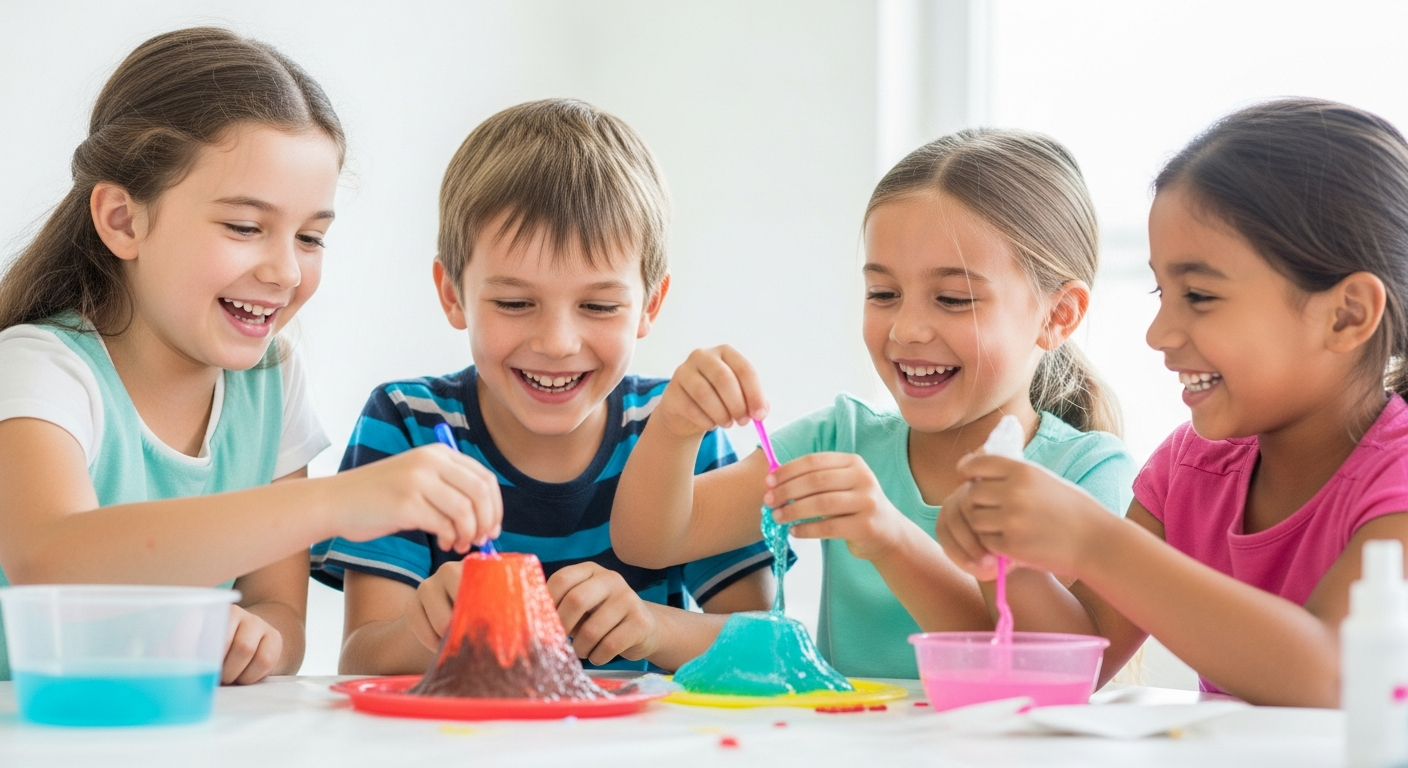
Table of Contents
- Introduction
- The Power of Play: Why Science Crafts Are a Developmental Goldmine
- Our Approach to Smart Screen Time and Learning
- Setting Up Your Little Scientist’s Lab: Essential Supplies
- Easy Science Crafts for Budding Biologists
- Wondrous Physics & Chemistry Creations
- Cosmic Crafts & Earth Science Explorations
- Making Every Craft a Language-Rich Experience
- When to Consider More Support for Speech Development
- The Speech Blubs Advantage: Smart Screen Time for Growing Minds
- Join the Speech Blubs Family: Your Child's Journey to Confident Communication
- Conclusion
- FAQ
Have you ever watched a child’s eyes light up with pure wonder as they discover something new? That moment of awe, curiosity, and burgeoning understanding is the foundation of lifelong learning. While formal lessons have their place, some of the most profound discoveries happen right at home, through play and hands-on exploration. This is especially true when it comes to science, and even more so when we weave in the magic of crafting. Far from being just a fun pastime, easy science crafts for kids are a powerful gateway to developing critical thinking, problem-solving skills, and, perhaps most importantly, language and communication. This post will delve into why blending science and crafting is a brilliant idea for your child's development, offer a treasure trove of simple yet impactful activities you can do today, and show you how to transform these moments into rich opportunities for confident communication.

Introduction
Imagine your child not just creating a beautiful piece of art, but also excitedly explaining why their paper flower changed color, or how their balloon rocket zoomed across the room. These are the moments when science and language truly intertwine, building confidence and a deeper understanding of the world. In a world increasingly driven by screens, finding engaging, hands-on activities that foster both cognitive and communicative growth is more important than ever. This article will guide you through a selection of accessible science crafts, focusing on how each activity can be a springboard for language development, new vocabulary acquisition, and rich conversations. We'll explore the simple materials you likely already have, the scientific principles at play, and practical tips for making every craft a language-rich experience. Our aim is to empower you to turn everyday items into extraordinary learning adventures, helping your child speak their minds and hearts with joy and confidence.
The Power of Play: Why Science Crafts Are a Developmental Goldmine
Science crafts are more than just a diversion; they are a multi-faceted tool for holistic child development. When children engage in these activities, they are not just passively observing; they are actively participating, experimenting, and discovering.
Fostering Curiosity and Problem-Solving
From a very young age, children possess an innate curiosity. Science crafts tap into this natural inclination, encouraging them to ask "why" and "how." Why did the ice melt? How does the light bend? When they’re actively involved in a project, they encounter challenges – perhaps the glue isn't sticking, or the balloon rocket isn’t going far enough. These mini-problems are opportunities to think critically, adjust their approach, and develop resilient problem-solving skills. It’s an iterative process of hypothesis, experiment, and refinement, all within a playful context.
Building Foundational Skills
The physical act of crafting itself is incredibly beneficial. Activities like cutting, gluing, mixing, pouring, and molding contribute significantly to the development of fine motor skills, hand-eye coordination, and dexterity. These are the muscles and coordination necessary for tasks like writing, dressing themselves, and even operating touchscreens with precision. Beyond the physical, science crafts engage cognitive skills such as sequencing (following steps), pattern recognition, cause and effect, and observation. Children learn to predict outcomes, test theories, and understand basic scientific principles in a tangible way.

Sparking Communication and Language Growth
This is where science crafts truly shine as a communication booster. Every step of a science craft offers a natural opportunity for language development:
- Vocabulary Expansion: Introducing new words like "density," "absorption," "hypothesis," "react," "dissolve," "solution," "solid," "liquid," "gas."
- Descriptive Language: Encouraging children to describe what they see, feel, smell, and hear. "The slime is gooey and stretchy." "The celery turned blue."
- Sequencing and Storytelling: Explaining the steps they took, or the order of events. "First, we put the water. Then, we added the oil. After that, we put the toy in."
- Questioning and Explaining: Posing open-ended questions like, "What do you think will happen next?" or "Why do you think it did that?" empowers children to articulate their thoughts and reasonings.
- Shared Experience: These activities create a perfect environment for back-and-forth communication, turn-taking, and active listening between children and caregivers. For a parent whose child is a 'late talker,' describing actions like "pour," "mix," and "stir" during a simple baking soda volcano can provide immediate, relevant vocabulary in a fun, low-pressure setting.
At Speech Blubs, we believe deeply in the power of play to unlock communication. Our mission is to empower children to speak their minds and hearts, and activities like science crafts perfectly complement this philosophy by making learning interactive, meaningful, and joyful.
Our Approach to Smart Screen Time and Learning
We understand that you, as parents, are always seeking the best tools to support your child's development. At Speech Blubs, we were born from the personal experiences of our founders, who all grew up with speech problems and created the tool they wished they had. We are committed to providing an immediate, effective, and joyful solution for the 1 in 4 children who need speech support, blending scientific principles with play into one-of-a-kind "smart screen time" experiences.
Our unique approach uses "video modeling" methodology, where children learn by watching and imitating their peers. This active engagement turns screen time into a powerful developmental tool, offering a screen-free alternative to passive viewing (like cartoons) and a strong catalyst for family connection. Just as children observe and imitate during science crafts, they do the same with Speech Blubs, building crucial communication skills in a fun and encouraging way. To explore how our approach can benefit your child, visit our main homepage.
Setting Up Your Little Scientist’s Lab: Essential Supplies
You don't need fancy equipment to do amazing science crafts. Many of the most impactful experiments can be done with items you already have around the house.
Kitchen & Pantry Staples: Your First Science Toolkit
- Baking soda & Vinegar/Lemon Juice: The classic fizzing reaction.
- Milk & Food Coloring & Dish Soap: Surface tension and chemical reactions.
- Cornstarch & Water: Oobleck magic!
- Salt & Sugar: Crystal growing, density experiments.
- Cooking Oil & Honey: Density layers.
- Various Liquids: (e.g., juice, soda, water) for density comparisons.
- Spices (e.g., pepper): Surface tension.
- Dry Pasta, Rice, Beans: Sensory bins, building materials.
- Food Scraps: Seeds for planting, fruit peels for compost observation.
Recycled Treasures & Crafting Basics
- Cardboard Boxes & Paper Tubes: Rockets, tunnels, structures.
- Plastic Bottles & Cups: Volcanoes, planters, density jars.
- Old CDs: Hovercraft bases.
- Cotton Balls/Swabs: Applying liquids, experimenting with absorption.
- Pipe Cleaners, Googly Eyes, Pom-poms: Adding personality to creations.
- Construction Paper, Markers, Crayons: Drawing, labeling, decorating.
- Scissors (child-safe), Glue, Tape: Essential crafting tools.
- Droppers/Pipettes: For precise liquid experiments, developing fine motor skills.
- Clear Jars/Glasses: For observation.
- Plates & Trays: Containing messes.
Safety First!
Always supervise children during science crafts. Ensure materials are non-toxic, especially if children are very young and prone to putting things in their mouths. Emphasize that while it’s science, these concoctions are not for tasting unless explicitly stated (like edible Oobleck variations).
Easy Science Crafts for Budding Biologists
Biology is all about living things, and these crafts are perfect for exploring the natural world around us.
Plant-Powered Discoveries
- Walking Water Celery or Flowers:
- The Science: Capillary action and transpiration. Plants "drink" water through tiny tubes.
- The Craft: Place stalks of celery with leaves, or white flowers (like carnations), into glasses of water mixed with different food colorings.
- Language Boost: "Absorb," "drink," "travel," "color change," "leaf," "stem," "root." Ask, "What color is the water?" "What do you think will happen to the celery?" "Look! The celery is drinking the water!"
- Speech Blubs Connection: For kids who love nature, describing the colors and changes observed in this craft can be reinforced by the "Colors" section in Speech Blubs, helping them vocalize and understand new color words.
- Seed in a Bag: A Mini Garden:
- The Science: Germination – what seeds need to grow (water, warmth, light).
- The Craft: Place a few damp cotton balls and a bean seed or pumpkin seed in a clear Ziploc bag. Tape it to a sunny window. Observe daily!
- Language Boost: "Seed," "grow," "root," "sprout," "sun," "water," "first," "then," "long," "tiny." Encourage descriptive observations: "The root is so tiny!" "It's getting longer every day!"
Animal Kingdom Creations
- DIY Bird Feeder:
- The Science: Understanding animal needs (food, shelter) and local ecosystems.
- The Craft: Spread peanut butter (or a seed butter alternative) on a pinecone, then roll it in birdseed. Hang it outside!
- Language Boost: "Bird," "seed," "eat," "fly," "hungry," "sticky." Use action words like "spread," "roll," "hang." Talk about the different birds you see visiting. The Animal Kingdom section in Speech Blubs (as a quick screener link) offers fantastic opportunities to practice animal sounds and names, which can be reinforced after seeing real birds at the feeder.
- Life Cycle Wheel (Butterfly or Frog):
- The Science: Metamorphosis and the stages of life.
- The Craft: Draw or print pictures of the different stages (egg, caterpillar, chrysalis, butterfly) on two paper plates. Cut a window in the top plate to reveal one stage at a time as you rotate it.
- Language Boost: "Egg," "caterpillar," "chrysalis," "butterfly," "change," "grow," "spin," "first," "next," "last." This activity is excellent for sequencing and using transition words.
Wondrous Physics & Chemistry Creations
These crafts bring out the mad scientist in every child, exploring how things move, mix, and react!
Density & Layers
- Rainbow in a Jar (Density Tower):
- The Science: Different liquids have different densities, causing them to layer.
- The Craft: Carefully pour various liquids (honey, dish soap, water, oil, rubbing alcohol) into a tall glass. Use food coloring for the water and alcohol to make them distinct.
- Language Boost: "Heavy," "light," "float," "sink," "layer," "top," "bottom," "pour," "slowly." Discussing why some liquids stay on top while others sink helps build complex reasoning and vocabulary. "Look, the oil is floating on top of the water because it's lighter."
Reactions & Explosions (Safe Ones!)
- Baking Soda & Lemonade Volcano:
- The Science: Acid-base reaction producing carbon dioxide gas.
- The Craft: Form a volcano shape with playdough or foil around a small cup. Pour in baking soda, then add lemonade (or lemon juice). Watch it fizz and erupt!
- Language Boost: "Fizz," "erupt," "pop," "bubble," "mix," "wow!" "Big," "small." This is a perfect activity for expressive exclamations and action verbs. For a parent whose 3-year-old 'late talker' loves exciting visuals, the 'Actions' section in Speech Blubs can help them vocalize words like "pop" and "go" in response to the volcano's eruption.
- Milk, Food Coloring & Dish Soap Swirls:
- The Science: Surface tension and how soap breaks it down, causing fat molecules in milk to move.
- The Craft: Pour milk into a shallow dish, add drops of different food coloring. Dip a cotton swab soaked in dish soap into the center.
- Language Boost: "Swirl," "spread," "mix," "colorful," "fast," "slow." Encourage observation: "The colors are dancing!" "It's making a beautiful pattern."
States of Matter & Absorption
- Oobleck: Solid or Liquid?
- The Science: Non-Newtonian fluid – acts as a solid when force is applied, but flows like a liquid when left alone.
- The Craft: Mix cornstarch and water (about 2 parts cornstarch to 1 part water) until you get the right consistency. Let kids squeeze it, punch it, and then let it drip.
- Language Boost: "Gooey," "slimy," "squishy," "hard," "soft," "drip," "squeeze," "fast," "slow." This is fantastic for sensory vocabulary. "When I squeeze it fast, it feels hard!"
- Diaper Jelly Absorption:
- The Science: Super-absorbent polymers (sodium polyacrylate) can hold many times their weight in liquid.
- The Craft: Cut open a clean diaper, extract the fluffy material and small crystals. Add water and watch the "jelly" grow!
- Language Boost: "Absorb," "grow," "swell," "jelly," "soft," "wet," "dry." "Look how much water the diaper drank up!"
Air & Pressure Play
- Balloon Rocket Racers:
- The Science: Newton's Third Law of Motion (for every action, there is an equal and opposite reaction) and propulsion.
- The Craft: Thread a string across a room. Attach a straw to an inflated balloon with tape. Slide the straw onto the string, then release the balloon!
- Language Boost: "Go," "fast," "zoom," "up," "down," "blow," "release." Count how many "pushes" it took to get the balloon across.
Cosmic Crafts & Earth Science Explorations
Explore the vastness of space and the wonders of our own planet with these engaging crafts.
Stargazing & Planetary Fun
- DIY Solar System Mobile:
- The Science: Learning the planets, their order, and relative sizes.
- The Craft: Paint Styrofoam balls or paper mache planets. Hang them from a hanger or stick in the correct order, with the sun at the center.
- Language Boost: "Sun," "planet," "star," "round," "big," "small," "orbit," "order." Naming planets and describing their appearance.
- Constellation Viewer:
- The Science: Recognizing constellations and understanding light transmission.
- The Craft: Poke holes in a paper cup to represent a constellation. Shine a flashlight through the cup onto a wall in a dark room.
- Language Boost: "Star," "pattern," "light," "dark," "bright," "poke," "shine." "Can you see the Big Dipper?"
Geological Wonders
- Salt Crystal Art:
- The Science: Supersaturated solutions and crystal formation (evaporation leaves behind salt crystals).
- The Craft: Dissolve a lot of salt in hot water to create a supersaturated solution. Submerge pipe cleaners bent into shapes, or string, into the solution and leave for several days.
- Language Boost: "Crystal," "grow," "sparkle," "dissolve," "evaporate," "rough," "shiny." "Look, the salt is growing on the pipe cleaner!"
- Rock Collection & Classification:
- The Science: Geology, identifying properties of rocks (texture, color, hardness).
- The Craft: Collect rocks from your yard or a nature walk. Wash them, then sort them by color, size, texture. You can even paint them or glue them onto a display board.
- Language Boost: "Rock," "stone," "smooth," "rough," "shiny," "dull," "big," "small," "sort," "classify." Use comparative language: "This one is smoother than that one."
Making Every Craft a Language-Rich Experience
The real magic of these science crafts lies not just in the "making" but in the "talking." Here's how to maximize the language learning potential:
Ask Open-Ended Questions
Instead of questions with a simple "yes" or "no" answer, encourage deeper thought and elaboration.
- "What do you think will happen if...?"
- "How does that feel/look/sound?"
- "Tell me about what you're doing."
- "What do we need to do next?"
- "Why do you think the colors are mixing?"
Narrate Actions and Introduce New Vocabulary
Be a constant narrator for your child. Describe what you're doing, what they're doing, and what's happening in the experiment.
- "I'm pouring the water slowly."
- "You're mixing the cornstarch and water, it's getting gooey!"
- "Watch the bubbles fizz!"
- "This is called capillary action."
- "We need to measure two cups of water."
Encourage Imitation and Echoing
For younger children or those working on specific sounds, model words and sounds for them to imitate.
- If they say "bah" for "bubble," gently repeat "Bubble! Big bubble!"
- If they point to the volcano, say "Volcano! Boom!" and encourage them to try the sounds.
- Speech Blubs' video modeling approach is built on this very principle – children learn best by watching and imitating their peers. Integrating this natural learning style into your craft time will amplify its impact.
Connect Actions to Words
Link what your child is doing directly to the words that describe it.
- As they squeeze the Oobleck: "Squeeze! You're squeezing it!"
- As they drip food coloring: "Drip, drip, drip!"
- As they glue: "Glue it down."
Create a "Science Journal"
For older children, encourage them to draw or write about their experiments. This reinforces sequencing, descriptive language, and even early literacy skills. They can draw "before" and "after" pictures, or write a sentence about what they observed.
When to Consider More Support for Speech Development
While science crafts are wonderful for boosting language, sometimes children need a little extra help. If you notice your child consistently struggling with certain sounds, not using a variety of words, or having difficulty understanding instructions for their age, it might be time to consider professional support.
At Speech Blubs, we're dedicated to helping you understand your child's developmental journey. If you're unsure whether your child could benefit from targeted speech exercises, we offer a valuable first step. Take our quick 3-minute preliminary screener to get a simple assessment and a personalized next-steps plan. It's a no-pressure way to gain insight and see how our tools can support your child.
The Speech Blubs Advantage: Smart Screen Time for Growing Minds
We know you want the best for your child, and that includes thoughtful use of technology. At Speech Blubs, we offer a powerful tool that complements hands-on learning by making screen time an active and engaging experience. Our app is designed to teach complex communication skills through our unique "video modeling" methodology, where children learn by watching and imitating their peers. This means children aren't passively watching cartoons; they're actively participating, mirroring faces, and practicing sounds and words.
This scientifically-backed approach turns moments of imitation into joyful learning, fostering a love for communication, building confidence, and reducing frustration for both children and parents. For example, after an exciting baking soda volcano experiment, a child can immediately practice words like "boom," "big," and "fizz" by watching and imitating kids their own age within the app. Our methodology has earned us a top-tier rating on the MARS scale for app quality, and you can learn more about the research behind our methods here. We provide a vibrant, interactive platform that supports your child's overall development plan and can be a powerful supplement to professional therapy, all within the context of family connection and fun. You can also read testimonials from other parents who have seen incredible progress with Speech Blubs.
Join the Speech Blubs Family: Your Child's Journey to Confident Communication
Ready to transform your child's communication journey with "smart screen time" that truly makes a difference? We invite you to experience the Speech Blubs difference. We offer flexible plans designed to fit your family's needs:
- Monthly Plan: Priced at $14.99 per month.
- Yearly Plan: Our best value at $59.99 per year, which breaks down to just $4.99 per month – that's a 66% savings!
The Yearly Plan isn't just more affordable; it's packed with exclusive benefits to maximize your child's learning and your peace of mind:
- A 7-day free trial so you can explore the full range of features risk-free.
- The extra Reading Blubs app, enhancing early literacy skills alongside speech development.
- Early access to new updates and a dedicated 24-hour support response time.
Please note that the Monthly plan does not include these additional benefits, making the Yearly plan the clear choice for comprehensive support and value.
Start your child's adventure towards confident communication today! Download Speech Blubs on the App Store or Google Play Store and choose the Yearly plan to unlock all features and the free trial. If you prefer to sign up on our website, create your account here and get started with the Yearly plan today!
Conclusion
Easy science crafts for kids are a powerful, joyful way to ignite a passion for discovery and build essential communication skills simultaneously. By simply engaging in these hands-on activities, you provide your child with invaluable opportunities to ask questions, explore new vocabulary, describe observations, and articulate their understanding of the world. Each fizz, swirl, and colorful creation isn't just a science experiment; it's a stepping stone to clearer, more confident speech. Paired with the active engagement and video modeling of Speech Blubs, these playful explorations become a holistic approach to nurturing your child's mind and voice.
Ready to embark on this exciting journey of discovery and communication with your child? Don't wait to foster their natural curiosity and give them the tools to speak their minds and hearts. Download Speech Blubs on the App Store or Google Play Store today! Be sure to select the Yearly plan to get your 7-day free trial, the bonus Reading Blubs app, and full access to all features for the best value. Start creating, learning, and communicating with joy!
FAQ
1. What age group are these easy science crafts suitable for? Most of these crafts are adaptable for toddlers (with heavy supervision and simplified steps) up to early elementary school children. The key is to adjust the complexity and level of adult involvement. For younger children, focus on sensory exploration and simple action words. For older children, delve deeper into the "why" behind the science and encourage independent problem-solving.
2. How can I make science crafts less messy? Mess is often part of the fun in science! However, you can minimize it by preparing your workspace. Use plastic tablecloths, old newspapers, or designated craft mats. Have damp cloths or paper towels ready for quick clean-ups. Consider doing "wet" experiments in a sink or outdoors. Using trays with edges can also help contain spills, making the experience more enjoyable for everyone.
3. My child gets frustrated easily. How can I keep them engaged with science crafts? The most important thing is to keep it fun and low-pressure. Don't worry about perfect outcomes. Focus on the process and the learning, not the final product. Let your child lead where possible, even if it means deviating from the "recipe." Break down complex crafts into smaller, manageable steps. Offer plenty of praise for effort and curiosity. If frustration sets in, take a break and revisit it later, or switch to a different, simpler activity. Remember, the goal is to foster a love for discovery, not to create stress.
4. How do science crafts specifically help with speech and language development? Science crafts naturally provide a rich, hands-on context for language. They introduce new vocabulary (e.g., "absorb," "fizz," "dense"), encourage descriptive language (e.g., "gooey," "sparkly," "rough"), and promote sequencing and narrative skills as children explain the steps or what they observed. They also create opportunities for asking and answering questions, engaging in back-and-forth conversations, and imitating sounds and words – all fundamental for strong communication skills. Activities like explaining what happened during a craft help children structure their thoughts and articulate them clearly.
About the author