
20+ Fun Games for Little Kids: Play, Learn, Grow
 By Speech Blubs Team•Jan 19, 2026•17 min.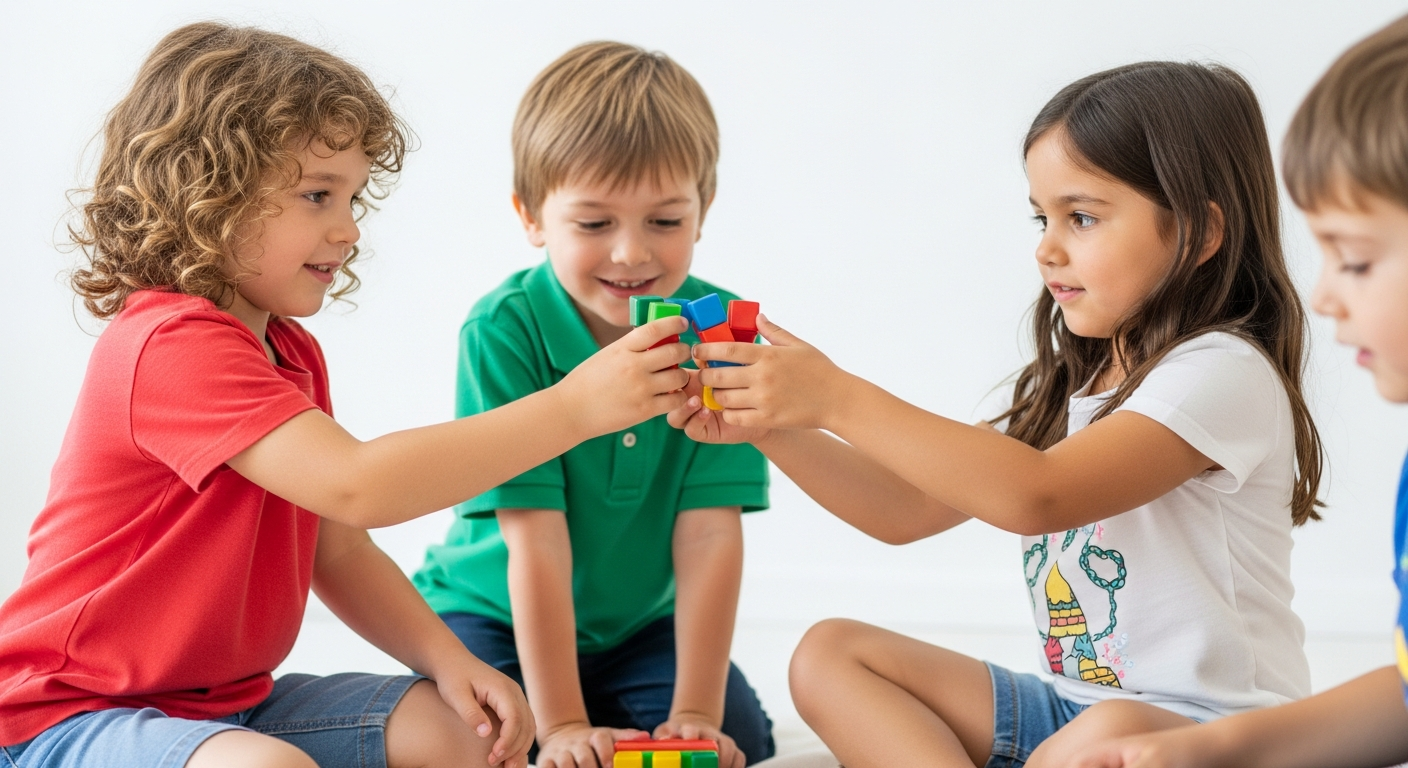
Table of Contents
- Introduction
- Why Play Matters: Beyond Just Fun
- Age-Appropriate Fun: Games for Every Little Learner
- The Speech Blubs Advantage: Smart Screen Time for Growing Minds
- Conclusion: Play, Connect, and Grow Together
- Frequently Asked Questions (FAQ)
Introduction
Have you ever watched a child lost in play, their imagination soaring, completely absorbed in the moment? It’s a magical sight, but it’s more than just fun; it’s the very engine of their development. For many parents, finding engaging activities that genuinely support growth – especially when it comes to communication skills – can feel like a quest. We understand the challenge of balancing entertainment with education, ensuring that precious childhood moments are spent building crucial foundations. This post will dive deep into the world of play, exploring how simple, fun games for little kids can become powerful tools for learning, connection, and developing essential communication abilities. We'll explore a variety of activities tailored for different age groups and developmental stages, offering practical tips to infuse everyday play with purpose. We'll also introduce you to how Speech Blubs enhances this journey, providing "smart screen time" that complements your efforts and helps your child truly speak their minds and hearts. Ready to spark joy and learning? Let’s explore together! You can start your journey with us right away by downloading our app on the Apple App Store or Google Play Store.

Why Play Matters: Beyond Just Fun
Play is often seen as mere recreation, but in the world of child development, it's serious business. It's how children explore their environment, experiment with social roles, test boundaries, and, most importantly, learn to communicate. When kids engage in play, they aren't just passing time; they're actively building the neural pathways that will serve them throughout their lives.
Fostering Foundational Skills
Through play, children develop a vast array of foundational skills. Think about a simple game of building blocks: a child is learning about spatial awareness, problem-solving, cause and effect, and even early math concepts. When they narrate their building process – "I'm making a tall tower!" – they are practicing language and storytelling. Games that involve movement, like "Simon Says" or an indoor obstacle course, refine gross motor skills, balance, and coordination. Manipulating small objects during imaginative play strengthens fine motor skills, which are crucial for later writing and self-care. Every giggle, every shared discovery, every made-up rule contributes to their cognitive, physical, social, and emotional growth.
Building Confidence and Connection
Beyond skill development, play is a cornerstone for emotional well-being. When children successfully complete a game or invent a new one, they experience a surge of self-esteem. This boosts their confidence, encouraging them to try new things and take healthy risks. Collaborative games teach them about turn-taking, sharing, empathy, and negotiation – vital social skills. Perhaps most importantly, playing together strengthens the bond between children and their caregivers. These shared moments of joy, laughter, and discovery create lasting memories and foster a secure, loving connection that underpins all other learning. It’s in these moments that children feel truly seen and understood, empowering them to eventually speak their minds and hearts.
Addressing Communication Needs: How Play Nurtures Speech and Language
For children, especially those who may be experiencing speech delays or communication challenges, play is an invaluable pathway to progress. Many parents come to us at Speech Blubs because they observe their child struggling with words, sounds, or expressing their needs. Play offers a low-pressure environment where children can experiment with sounds, mimic words, and practice language in a natural, engaging way. A child who might resist direct instruction may enthusiastically participate in a game that encourages vocalizations, storytelling, or following multi-step directions.

At Speech Blubs, we are deeply committed to providing an immediate, effective, and joyful solution for the 1 in 4 children who need speech support. Our company was born from the personal experiences of our founders, who all grew up with speech problems and created the tool they wished they had. We believe in blending scientific principles with play into one-of-a-kind "smart screen time" experiences. This is why our approach integrates seamlessly with the power of play, turning every interaction into an opportunity for growth.
Unsure if your child could benefit from a little extra support? Take our quick 3-minute preliminary screener to get a simple assessment and a personalized next-steps plan. It’s a great way to gain clarity and see how Speech Blubs can help.
Age-Appropriate Fun: Games for Every Little Learner
Understanding what kinds of games are best suited for your child's developmental stage can make all the difference. While every child develops at their own pace, these guidelines offer a framework for engaging play.
Games for Toddlers (Ages 1-3): First Words and Explorations
This is a period of immense growth, marked by first steps, first words, and a blossoming curiosity about the world. Games for toddlers should focus on sensory exploration, repetition, simple cause-and-effect, and encouraging early vocalizations. Adult involvement is key to modeling language and interaction.
- Shape Jumper: Cut out large, colorful shapes from construction paper and scatter them on the floor. Call out a shape or a color ("Jump on the blue circle!") and encourage your toddler to jump, hop, or step on it. This teaches shape and color recognition, follows directions, and builds gross motor skills. For a child learning their first words, explicitly say the names of the shapes and colors as they interact.
- What Goes Where (Sorting Fun): Turn everyday tasks into a game. While folding laundry, make a pile of all the socks and ask your child to match them. When cleaning up toys, create designated spots for different types of toys (e.g., "Trucks go on this shelf, blocks go here"). This helps with categorization, organization, and introduces early concepts of order. You can ask "Where does the blue truck go?" to encourage specific vocabulary.
- Find the Feeling (Muted TV Game): Mute a children's show or cartoon and watch with your toddler. Point to characters and ask, "How do you think they're feeling?" Use simple emotion words like "happy," "sad," "mad." Explain why you think they feel that way based on their facial expressions or body language. This builds emotional literacy and vocabulary. For a little one just beginning to babble, encourage them to mimic the sounds associated with emotions, like a "happy noise" or a "sad sigh."
- Animal Sounds Safari: Use toy animals or pictures of animals. Make the sound of an animal and have your child guess which one it is. Then, encourage them to make the sound back. "What does the cow say? Moo!" For a child working on specific sounds, focus on animals that require those sounds, like "baa" for a sheep or "roar" for a lion. This is an excellent way to practice articulation in a playful context.
- Simple Puzzles & Block Stacking: Introduce chunky puzzles with large knobs or simple block towers. These activities develop fine motor skills, hand-eye coordination, and problem-solving. Talk about the colors, shapes, and what they're building to integrate language. "Let's put the red block on top!"
Games for Preschoolers (Ages 3-5): Expanding Horizons
Preschoolers are developing more complex language, social skills, and imaginative play. Games can become more structured, involve simple rules, and encourage storytelling and creative expression.
- Weather Watch Chart: Create a simple chart for the month. Each day, observe the weather together and have your child draw a symbol (sun, cloud, raindrop) or place a sticker to represent it. At the end of the week, count how many sunny days there were. This teaches observation, counting, and weather vocabulary. "Is it sunny or cloudy today?"
- Big/Little, High/Low Hunt: Point to objects around the room and ask your child if they are "big" or "little," "high" or "low." Take turns. This reinforces comparative vocabulary and observation skills. You can expand it by asking, "Which one is bigger, the chair or the table?"
- Tell Me a Story: Instead of always reading to them, encourage your child to tell you a story. It can be about their day, a made-up adventure, or based on a picture. This fosters imagination, narrative skills, and confidence in expressing themselves verbally. Don't correct; just listen and encourage.
- I Spy (with a Twist): Play "I Spy" by giving hints about color, shape, or size. To introduce early phonics, try "I spy with my little eye something that starts with the 'b' sound!" This develops observation, vocabulary, and phonological awareness.
- Mirror, Mirror: Stand facing your child and have them copy your movements. Reach high, touch your toes, make a funny face. Then switch roles and let them lead. This improves body awareness, coordination, and imitation skills, which are crucial for speech development (mimicking mouth movements and sounds).
- Color Scavenger Hunt: Make a list of colors (or draw color swatches) and have your child find objects around the house or yard that match each hue. This reinforces color recognition and encourages exploration. For an extra challenge, ask them to describe the object they found.
- Simon Says: A classic for a reason! One person is "Simon" and gives commands, but players only follow if the command starts with "Simon says." This develops listening skills, impulse control, and the ability to follow multi-step directions. It’s also fantastic for practicing specific action verbs.
- Freeze Dance: Play music and dance freely. When the music stops, everyone "freezes" in a fun pose or with a funny face. This is excellent for burning energy, promoting body awareness, and encourages creative movement. Varying music styles can introduce new vocabulary (e.g., "fast," "slow," "bouncy").
- Play "Store": Set up a pretend store using household items. Take turns being the customer and the store owner. This is fantastic for social skills, turn-taking, counting, and practicing conversational language (asking for items, saying "please" and "thank you").
- Beat & Repeat: Create simple rhythmic patterns with claps, stomps, or taps. Have your child repeat the pattern. Gradually increase the complexity. This builds auditory processing skills, rhythm, and sequencing – all components that support speech and language development.
Games for Early School Age (Ages 5-6): Ready for More Complex Play
Children in this age group are often ready for games with more intricate rules, strategic thinking, and collaborative elements. Their language skills are more refined, and they can engage in longer conversations and storytelling.
- Put On A Play Or Make A Movie: Encourage your child to create a story, plan scenes, and make simple props or costumes. Perform it for the family or film it on a phone. This fosters creativity, collaboration, sequencing, and advanced narrative skills. It's a wonderful way to build confidence in public speaking, even for a small audience.
- Indoor Obstacle Course: Use pillows, blankets, tunnels, and furniture to create a safe indoor obstacle course. Children can crawl under chairs, balance on a line of tape, or jump over cushions. This is fantastic for gross motor skills, problem-solving, and following a sequence of instructions.
- Giant Game Board: Use masking tape to create a large game board on the floor. Draw squares, create start and finish lines, and use small toys as playing pieces. Make up your own rules or adapt a classic board game. This is highly customizable and encourages creativity, rule-following, and early math skills.
- Relay Races: Organize simple relay races using household items. Examples include balancing a beanbag on their head, walking backward, or "rowing" across the floor in a cardboard box using only their arms. These promote physical activity, teamwork, and following specific instructions.
- Tag Team Puzzles: For larger jigsaw puzzles, hide the pieces around the room. Children find one piece at a time, bring it back to the table, and then tag the next person to find a piece. This combines problem-solving, movement, and teamwork.
- Animal Walks (Advanced): Expand on animal walks by adding more complex scenarios. "Slither like a snake through the grass," "waddle like a penguin jumping over an iceberg (pillow)." This encourages imaginative play, develops coordination, and allows for descriptive language practice.
- Friendly Fitness Competitions: Involve the whole family in fun fitness challenges: push-ups, jumping jacks, long jumps (measure with tape), planks. Keep score and encourage personal bests. This promotes physical health, sportsmanship, and setting goals.
- Balloon Volleyball: Blow up a balloon and try to keep it off the ground, hitting it back and forth. You can use a string as a net or make paper plate paddles for an added challenge. This improves hand-eye coordination, reaction time, and teamwork.
- Action Storytime: When reading a book, pause and act out parts of the story. If a character is running, encourage your child to run in place. If they are climbing, climb stairs (safely) or pretend to climb. This brings stories to life, enhances comprehension, and encourages imaginative movement and expression.
The Speech Blubs Advantage: Smart Screen Time for Growing Minds
While hands-on play is undeniably crucial, we live in a digital age, and screen time is a reality for many families. At Speech Blubs, we believe in transforming passive screen viewing into active, engaging, and educational "smart screen time." Our app is designed to be a powerful tool that complements your play-based learning at home, providing targeted support for speech and language development.
Our Unique Approach: Video Modeling
What makes Speech Blubs stand out? Our core methodology is video modeling. Instead of learning from animated characters or adult therapists, children in Speech Blubs learn by watching and imitating their peers. This technique leverages the power of mirror neurons in the brain, making imitation natural and highly effective. Children are naturally drawn to watching other children, and seeing a peer make a sound or say a word can be incredibly motivating and easier to mimic than an adult. We offer thousands of fun, educational activities, from making animal sounds to learning new words and practicing full sentences, all through this engaging peer-to-peer interaction. This unique approach turns speech practice into a game, reducing frustration and building a love for communication.
Empowering Communication and Family Connection
Our mission at Speech Blubs is to empower children to speak their minds and hearts. We provide an immediate, effective, and joyful solution for children who need speech support. We hear from parents every day about the incredible breakthroughs their children experience – from uttering their first words to confidently expressing their thoughts and feelings. Our app is a screen-free alternative to passive viewing, encouraging active participation and interaction. It’s also a powerful tool for family connection, as many activities are designed for you to play alongside your child, fostering those precious moments of shared learning and discovery.
For instance, if your 3-year-old "late talker" loves animals, our "Animal Kingdom" section offers a fun, motivating way to practice "moo," "baa," and other animal sounds through video modeling. For a child learning to identify emotions, our "Talk About Feelings" section provides peer examples of different expressions, enhancing their emotional vocabulary and understanding.
Making the Most of Your Speech Blubs Journey
To truly see the benefits of Speech Blubs, consistent and engaged use is key. We encourage parents to:
- Play Together: Sit with your child, participate in the activities, mimic the sounds, and celebrate their efforts. Your enthusiasm is contagious!
- Integrate into Daily Routines: Use the app for short, focused sessions throughout the day, perhaps during quiet time or as a transition activity.
- Reinforce Learning Offline: If your child practiced animal sounds in the app, point out those animals and make the sounds together later when reading a book or visiting a farm.
- Set Realistic Expectations: Remember, Speech Blubs is a powerful supplement to your child's overall development plan and, when applicable, professional therapy. We focus on fostering a love for communication, building confidence, reducing frustration, developing key foundational skills, and creating joyful family learning moments. We never overpromise; we support the journey.
We are committed to helping your child thrive. Read what other parents are saying about their child's success with Speech Blubs on our testimonials page.
Conclusion: Play, Connect, and Grow Together
The world of fun games for little kids is rich with opportunities for growth, learning, and connection. From simple sorting games for toddlers to elaborate storytelling for preschoolers, every moment of play is an investment in your child's development. These activities build foundational skills, boost confidence, and create invaluable family memories.
At Speech Blubs, we are honored to be a part of this journey, offering a unique "smart screen time" solution that blends scientific principles with joyful play. Our video modeling methodology, featuring peer imitation, is designed to make speech and language development engaging and effective, empowering your child to express themselves fully.
Ready to embark on a playful and enriching adventure with your child? We invite you to experience the full potential of Speech Blubs. The best way to get started is with our Yearly plan, which offers incredible value. For just $59.99 per year (breaking down to an astonishing $4.99 per month), you save 66% compared to our Monthly plan ($14.99 per month). More importantly, the Yearly plan includes a generous 7-day free trial, our additional Reading Blubs app, early access to new updates, and a prompt 24-hour support response time. The Monthly plan does not include these fantastic benefits.
Don't wait to empower your child's communication journey. Download Speech Blubs today from the Apple App Store or Google Play Store, or create your account on our website. Choose the Yearly plan to unlock your free trial and access the full suite of features designed to help your little one thrive. Let’s play, connect, and grow together!
Frequently Asked Questions (FAQ)
Q1: How much screen time is appropriate for young children, and how does Speech Blubs fit in?
A1: Pediatric guidelines generally recommend limiting screen time for young children, but it's crucial to distinguish between passive viewing and active, educational screen time. Speech Blubs is designed for "smart screen time," meaning it encourages active participation, imitation, and interaction rather than passive consumption. We recommend using the app in short, focused sessions (e.g., 5-10 minutes) with adult co-play to maximize engagement and learning. It's a tool for specific learning outcomes, not a passive entertainment device.
Q2: Is Speech Blubs only for children with diagnosed speech delays?
A2: Not at all! While Speech Blubs is incredibly beneficial for children with diagnosed speech delays, it's also a fantastic resource for all young children to enhance their communication skills, expand their vocabulary, and improve articulation. Many parents use it to give their child a head start in language development, build confidence, and make learning fun, whether they have a formal diagnosis or are simply "late talkers."
Q3: How does Speech Blubs' video modeling methodology work, and is it scientifically backed?
A3: Our video modeling methodology involves children watching and imitating their peers who demonstrate sounds, words, and sentences. This approach is highly effective because children are naturally inclined to imitate other children, and it activates mirror neurons in the brain, facilitating learning through observation. This method is backed by extensive research in child development and speech therapy, proving its efficacy in promoting speech acquisition and articulation. You can learn more about the scientific basis of our approach on our research page.
Q4: What's the best way to get started with Speech Blubs, and what features are included?
A4: The best way to start your Speech Blubs journey is by choosing our Yearly plan. For just $59.99 per year, you save 66% compared to the Monthly plan. The Yearly plan also includes a 7-day free trial, access to our complementary Reading Blubs app, early access to new updates, and a dedicated 24-hour support response time. Simply download the app from the App Store or Google Play and select the Yearly subscription option to unlock all these benefits and begin your free trial!
About the author