
25 Best Indoor Activities for Toddler Development
 By Speech Blubs Team•Mar 25, 2026•16 min.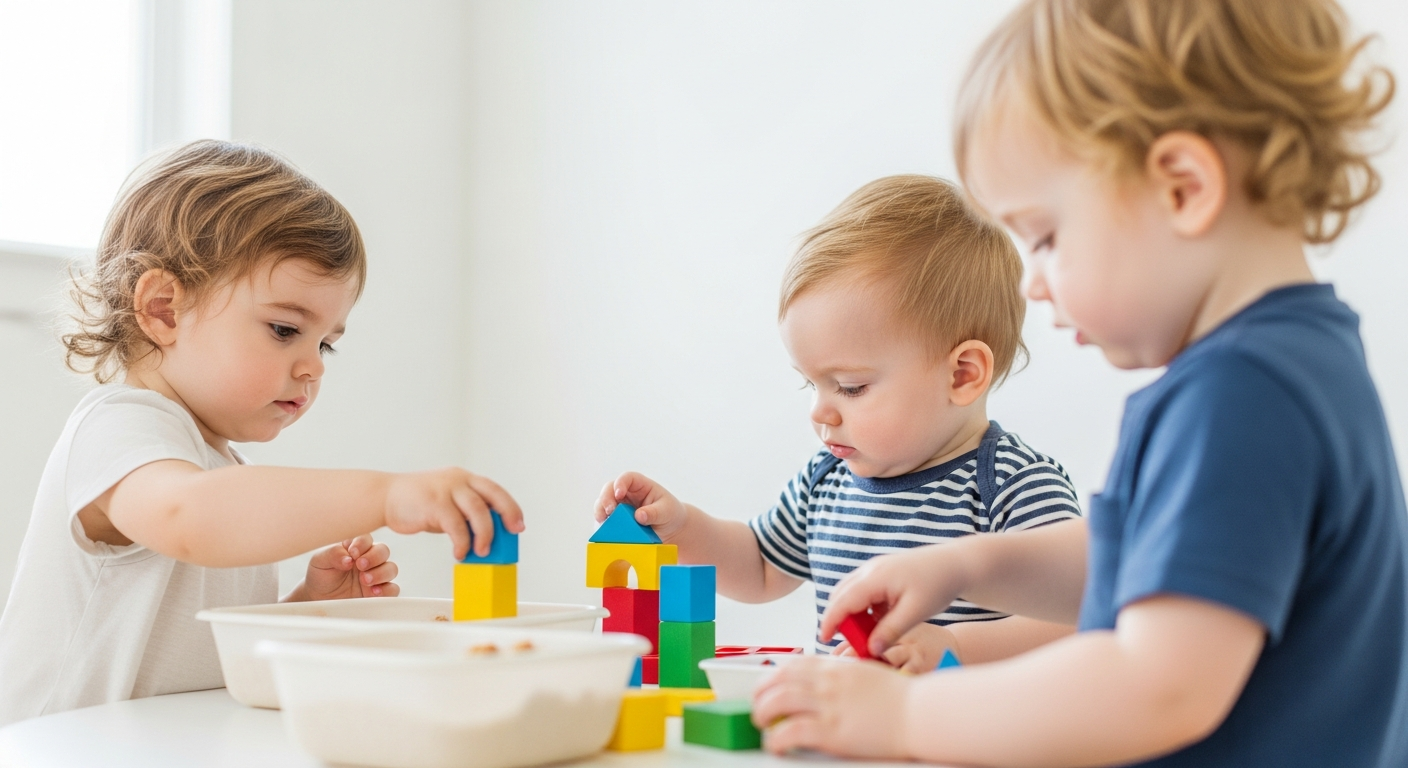
Table of Contents
- Introduction
- Why Indoor Play is Vital for Communication
- Sensory Exploration Activities
- Fine Motor Skill Builders
- Gross Motor and Active Play
- Creative and Imaginative Play
- Language-Rich Indoor Activities
- Making the Most of Indoor Time with Speech Blubs
- Tips for a Successful Indoor Day
- The Science of "Smart Screen Time"
- Summary Table: Quick Indoor Activity Guide
- FAQ
- Conclusion
Introduction
Did you know that approximately one in four children will experience some form of speech or language delay during their early years? As parents, we often find ourselves staring at a rainy window or a living room full of restless energy, wondering how to turn these "stuck inside" moments into opportunities for growth. At Speech Blubs, we understand this struggle intimately because our founders lived it. They grew up navigating their own speech challenges and created the very tool they wished they had—a way to transform screen time from a passive experience into a joyful, interactive learning journey.
The purpose of this blog post is to provide you with a comprehensive toolkit of indoor activities for toddlers that do more than just pass the time. We will explore 25 evidence-based, fun, and accessible activities designed to boost fine motor skills, encourage gross motor movement, and, most importantly, foster a deep love for communication. We’ll also show you how to seamlessly integrate "smart screen time" to support your child's developmental milestones.

The main message we want to share is that you don't need a fancy playroom or expensive equipment to help your child thrive; with a little creativity and the right support, your home can become a powerful environment for your child to find their voice and speak their heart.
Why Indoor Play is Vital for Communication
When we are confined to the indoors, it’s easy to feel like our world has shrunk. However, for a toddler, the home is a vast laboratory of sounds, textures, and social interactions. Indoor activities for toddlers provide a controlled environment where distractions are minimized, allowing for focused "joint attention"—the shared focus of two individuals on an object. This is a foundational skill for language development.
At Speech Blubs, our mission is to empower children to speak their minds and hearts. We believe that play is the primary language of childhood. When children engage in sensory play or imaginative games, they aren't just "playing"; they are practicing the building blocks of speech. If you are ever unsure where your child stands in their development, you can take our quick 3-minute preliminary screener to get a simple assessment and a personalized next-steps plan.
Sensory Exploration Activities
Sensory play is any activity that stimulates a child’s senses: touch, smell, taste, sight, and hearing. These activities facilitate exploration and naturally encourage children to use scientific processes while they play, create, investigate, and explore.
1. The Noodle Sensory Bin
A classic for a reason, a noodle bin is incredibly easy to set up. Simply fill a large plastic tub with dry pasta of various shapes—rotini, penne, and bowties work great. Add scoops, small bowls, and perhaps some hidden toy animals.
- Developmental Tip: As your child scoops and pours, narrate their actions. "You're pouring the pasta! Crunchy, crunchy!"
- Speech Blubs Integration: For a child who is a "late talker" and loves textures, you can pair this with our "Yummy Time" section in the app. After playing with dry noodles, watch the video models of peers eating or talking about food to encourage imitation of mouth movements.
2. Soapy Toy Car Wash
If your toddler has a collection of toy cars that have seen better days, turn cleaning into a game. Fill a basin with warm, soapy water and provide sponges and old toothbrushes.

- Developmental Tip: This is perfect for practicing "functional language." Use words like "wash," "scrub," "dirty," and "clean."
- Family Connection: This activity encourages co-play. Sit on the floor with them and "drive" the cars through the "bubbles."
3. Baking Soda and Vinegar Volcanoes
This activity never fails to elicit a "Wow!" Mix a little food coloring with vinegar in small cups. Give your child a tray with mounds of baking soda and a dropper.
- Developmental Tip: Use this to practice exclamation sounds and "building anticipation" language. "Ready... set... GO!"
- Science at Play: Our methodology at Speech Blubs is rooted in the same curiosity that drives scientific exploration. We use video modeling backed by research to tap into a child’s natural desire to imitate their peers.
4. The Cereal Snacking Bin
When you need a moment of peace to finish a chore, a "snack bin" is a lifesaver. Fill a tray with Cheerios or puff snacks and add small toys like construction trucks.
- Developmental Tip: This combines fine motor "pincer grasp" practice with oral motor skills as they chew.
5. Color-Mixing Water Station
Use ice cube trays and water dyed with primary food colors. Give your child a pipette or a small spoon to mix colors in the empty slots.
- Developmental Tip: This is an excellent way to teach color vocabulary and the concept of "more."
Fine Motor Skill Builders
Fine motor skills involve the use of the small muscles in the hands and wrists. These skills are essential for later tasks like writing and buttoning clothes, but they also correlate with the brain's ability to process complex movements—including those required for speech.
6. Pom Pom Push
Find an old plastic container (like a yogurt tub) and cut a small hole in the lid. Give your child a bowl of colorful pom poms to push through the hole.
- Make it harder: Draw colored circles around different holes to encourage color matching.
- Speech Blubs Scenario: If your toddler is working on their "P" sounds, use the "Pop" or "Push" motion. You can reinforce this by opening the Speech Blubs app on the App Store and navigating to the "Early Sounds" section to watch other children make the "P" sound.
7. Straw Threading
Cut plastic or paper straws into one-inch pieces. Have your child thread them onto pipe cleaners to create "snakes" or bracelets.
- Developmental Tip: This requires significant hand-eye coordination and concentration.
8. Sticker Wall
Tape a large piece of butcher paper or the back of wrapping paper to a wall at your child's eye level. Give them a sheet of stickers and let them decorate the "mural."
- Developmental Tip: Working on a vertical surface builds shoulder and wrist stability.
9. Card Slot Drop
Similar to the pom pom push, cut a narrow slot in a shoebox lid. Give your child a deck of old playing cards or index cards to "mail" into the box.
- Developmental Tip: This practices the "radial-digital" grasp, which is a key milestone in hand development.
10. Playdough Monsters
Provide playdough, googly eyes, pipe cleaners, and beads. Encourage your child to make a "monster" and give it a name.
- Developmental Tip: Creating characters is the beginning of narrative language. Ask them, "What does your monster say?"
Gross Motor and Active Play
Toddlers have an abundance of energy that needs a healthy outlet, even when stuck indoors. Physical activity helps with sensory regulation, which in turn helps a child stay calm and focused for learning activities.
11. Painter's Tape Roadway
Use painter's tape to create a complex network of roads across your carpet or hardwood floors. Add "parking spots" and "stop signs."
- Developmental Tip: This encourages your child to crawl or squat, building core strength.
- Speech Blubs Tip: Use this setup to practice vehicle sounds. "Vroom vroom!" and "Beep beep!" are wonderful early speech sounds.
12. Indoor Obstacle Course
Use couch cushions, laundry baskets, and hula hoops to create a path. Tell your child they have to crawl under the table, jump over the cushion, and sit in the basket.
- Developmental Tip: This is a fantastic way to teach "prepositions"—spatial words that are often difficult for toddlers to grasp.
13. Balloon Hockey
Give your child a fly swatter or a pool noodle and a blown-up balloon. The goal is to keep the balloon in the air or "shoot" it into a laundry basket goal.
- Developmental Tip: This builds gross motor coordination and timing.
14. Animal Charades
Call out an animal and have your child act it out. "Be a heavy elephant!" or "Be a tiny mouse!"
- Speech Blubs Integration: For a parent whose 3-year-old "late talker" loves animals, our "Animal Kingdom" section offers a fun, motivating way to practice "moo" and "baa" sounds. You can find out more about how our peer-led videos help by visiting our homepage.
15. The "Floor is Lava"
A classic game that never gets old. Place pillows and "islands" across the room. Your child must navigate the room without touching the floor.
- Developmental Tip: This encourages problem-solving and balance.
Creative and Imaginative Play
Imaginative play is where children process their emotions and practice social roles. It is highly language-intensive and helps build the foundation for complex communication.
16. Box Spaceship or House
Never throw away a large appliance box. With some markers and a little imagination, it becomes a rocket ship, a castle, or a cozy cottage.
- Developmental Tip: Creating an enclosed "safe space" can be very regulating for children who get overwhelmed easily.
17. Toilet Paper Binoculars
Tape two toilet paper rolls together and attach a string. Take your child on an "indoor safari" to find hidden toys around the house.
- Developmental Tip: This encourages "scanning," a visual skill necessary for reading.
18. DIY Treasure Hunt
Hide a favorite toy and give your child clues. For younger toddlers, use "hot" and "cold" or point in the general direction.
- Developmental Tip: This builds listening skills and the ability to follow multi-step directions.
19. Blanket Fort Reading Nook
Build a fort using blankets and chairs. Fill it with pillows and books.
- Value Addition: When you choose the Speech Blubs Yearly Plan, you also get access to the Reading Blubs app, which is perfect for cozying up in a fort and working on early literacy skills.
20. Toy Hospital
Gather "boo-boo" dolls or stuffed animals. Use Band-Aids, old scarves as slings, and a toy doctor kit to "heal" the patients.
- Developmental Tip: This fosters empathy and encourages "sequences" of play (e.g., checking the heartbeat, then giving a shot, then a Band-Aid).
Language-Rich Indoor Activities
While every activity on this list can support speech, these specifically focus on the rhythm, sounds, and structure of language.
21. ABC Scavenger Hunt
Pick a letter and have your child find something in the house that starts with that sound. "Can you find something that starts with 'B' like ball?"
- Developmental Tip: This builds phonological awareness—the understanding that words are made of sounds.
22. Sock Puppet Theater
Turn old socks into characters using markers or buttons. Have the puppets "talk" to each other.
- Peer-to-Peer Learning: Our methodology is based on the concept of "mirror neurons." When children see their peers (or even a puppet) talking, their brains are hardwired to want to copy them. You can read about the science here.
23. Mirror Play
Sit in front of a large mirror with your child. Practice making "silly faces" or exaggerated vowel sounds like "Ooooo" and "Aaaaa."
- Developmental Tip: Seeing their own mouth movements helps children understand how to physically produce sounds.
24. Sound Matching Game
Record common household sounds (a doorbell, a microwave beep, a dog barking) on your phone. Play the sound and have your child point to the object that made it.
- Developmental Tip: This improves auditory discrimination.
25. Interactive Storytelling with Speech Blubs
Traditional cartoons are passive; the child just sits and watches. We provide a powerful tool for family connection through "smart screen time." Instead of just letting your child watch, sit with them as they interact with the Speech Blubs app.
- How it Works: The app uses video modeling, where real children demonstrate sounds and words. Your child sees a peer doing something and feels empowered to try it themselves. You can see what other parents are saying about this unique approach.
Making the Most of Indoor Time with Speech Blubs
At Speech Blubs, we are committed to providing an immediate, effective, and joyful solution for the 1 in 4 children who need speech support. We blend scientific principles with play into one-of-a-kind experiences that foster a love for communication and build confidence.
While these indoor activities for toddlers are fantastic for general development, many parents find that they need a little extra structured support. That’s where our app comes in as a powerful supplement to your child's overall development plan. We don't promise that your child will be giving public speeches in a month; instead, we focus on the joyful process of discovery. We want to reduce your frustration and create more "Aha!" moments in your living room.
Transparent Pricing for Families
We believe in building trust through transparency. We offer two main ways to join the Speech Blubs family:
- Monthly Plan: For $14.99 per month, you get full access to the Speech Blubs app and its vast library of activities.
- Yearly Plan (Best Value): At $59.99 per year, this breaks down to just $4.99 per month.
Why the Yearly Plan is the clear best choice: The Yearly plan isn't just a 66% saving; it’s a comprehensive package for your child's development. When you choose the Yearly plan, you receive:
- A 7-day free trial to explore everything we offer with no risk.
- The Reading Blubs app included at no extra cost, helping your child transition from speech to reading.
- Early access to all new updates and features.
- Priority 24-hour support response time from our dedicated team.
The Monthly plan does not include the 7-day trial or the Reading Blubs app. To give your child the full suite of tools, we highly recommend the Yearly option. You can create your web account here to start your journey.
Tips for a Successful Indoor Day
Staying inside with a toddler requires a strategy. Here are a few tips to keep the peace and maximize the fun:
- Rotate Toys: Don't bring out every activity at once. Introduce one "station" at a time to keep interest high.
- Follow the Child's Lead: If they want to spend 45 minutes dropping cards into a slot and only 2 minutes on the obstacle course, that's okay! Deep focus is excellent for brain development.
- Narrate Everything: Become a "sports commentator" for your child’s life. "You're picking up the red block. Now you're putting it on top. Tall tower!"
- Prioritize Connection: The most important part of any activity is the time you spend together. Put your own phone away (unless you're using Speech Blubs together!) and engage in co-play.
- Set Realistic Expectations: Some days will be messy. Some activities will be a flop. The goal isn't perfection; it's creating joyful family learning moments.
The Science of "Smart Screen Time"
Many parents feel guilty about screen time, but not all digital experiences are created equal. Passive viewing, like watching cartoons, often results in "zoning out." At Speech Blubs, we’ve created "smart screen time."
Our methodology utilizes "mirror neurons." These are special cells in the brain that fire both when an individual performs an action and when they observe someone else performing that same action. By showing your child videos of other children (their peers) making sounds and speaking words, we trigger these neurons, making it much more likely that your toddler will try to imitate what they see. This is the core of our "video modeling" technique.
We are proud to have a high rating on the MARS (Mobile App Rating Scale) and to be a trusted resource for parents worldwide. Whether you use the Google Play Store or the App Store, you are bringing a scientifically-backed tool into your home.
Summary Table: Quick Indoor Activity Guide
Activity TypeExampleKey Skill Developed
Sensory
Noodle Bin
Texture exploration & narration
Fine Motor
Pom Pom Push
Hand-eye coordination & pincer grasp
Gross Motor
Obstacle Course
Spatial awareness & core strength
Language
ABC Scavenger Hunt
Phonological awareness
Imaginative
Box Spaceship
Narrative language & empathy
Digital
Speech Blubs App
Imitation, confidence & peer modeling
FAQ
1. How much screen time is appropriate for a toddler using Speech Blubs? We recommend keeping sessions short and interactive. 10 to 15 minutes of "smart screen time" per day, used as a co-play activity with an adult, is a great way to supplement physical indoor activities for toddlers. The goal is engagement, not passive watching.
2. My child doesn't seem interested in imitation. What should I do? Don't worry! Every child develops at their own pace. Focus on high-energy, sensory-rich activities first to get them engaged. Use the Speech Blubs app to show them other kids having fun; sometimes just seeing a peer's face is enough to spark interest over time.
3. Do I need to buy special toys for these indoor activities? Absolutely not! Most of the activities we've listed use common household items like painter's tape, cardboard boxes, pasta, and old socks. The most valuable "toy" your child has is your attention and interaction.
4. Can Speech Blubs replace traditional speech therapy? While Speech Blubs is a powerful tool based on scientific principles, it is designed to be a supplement to your child's development, not a replacement for professional medical advice or therapy. If you have concerns, always consult with a Speech-Language Pathologist (SLP). Our app is a wonderful way to practice at home between sessions.
Conclusion
Turning a rainy afternoon into a developmental win doesn't require a miracle—it just requires a few simple indoor activities for toddlers and a dash of creativity. From the sensory delight of a noodle bin to the high-energy fun of an indoor obstacle course, every moment is an opportunity for your child to build confidence and communication skills.
At Speech Blubs, we are here to support you every step of the way. Our founders’ personal experiences drive our passion to help every child speak their mind and heart. We invite you to join our community of over 5 million parents who are transforming how their children learn.
Ready to get started? Download Speech Blubs on the App Store or Google Play Store today. To get the absolute best value, choose the Yearly plan during signup. You’ll unlock a 7-day free trial, the Reading Blubs app, and early access to our latest updates—all for just $4.99 a month (billed annually at $59.99). Let's make learning a joyful, everyday adventure!
About the author