
25 Creative Easter Egg Toddler Craft Ideas for Spring
 By Speech Blubs Team•Feb 20, 2026•15 min.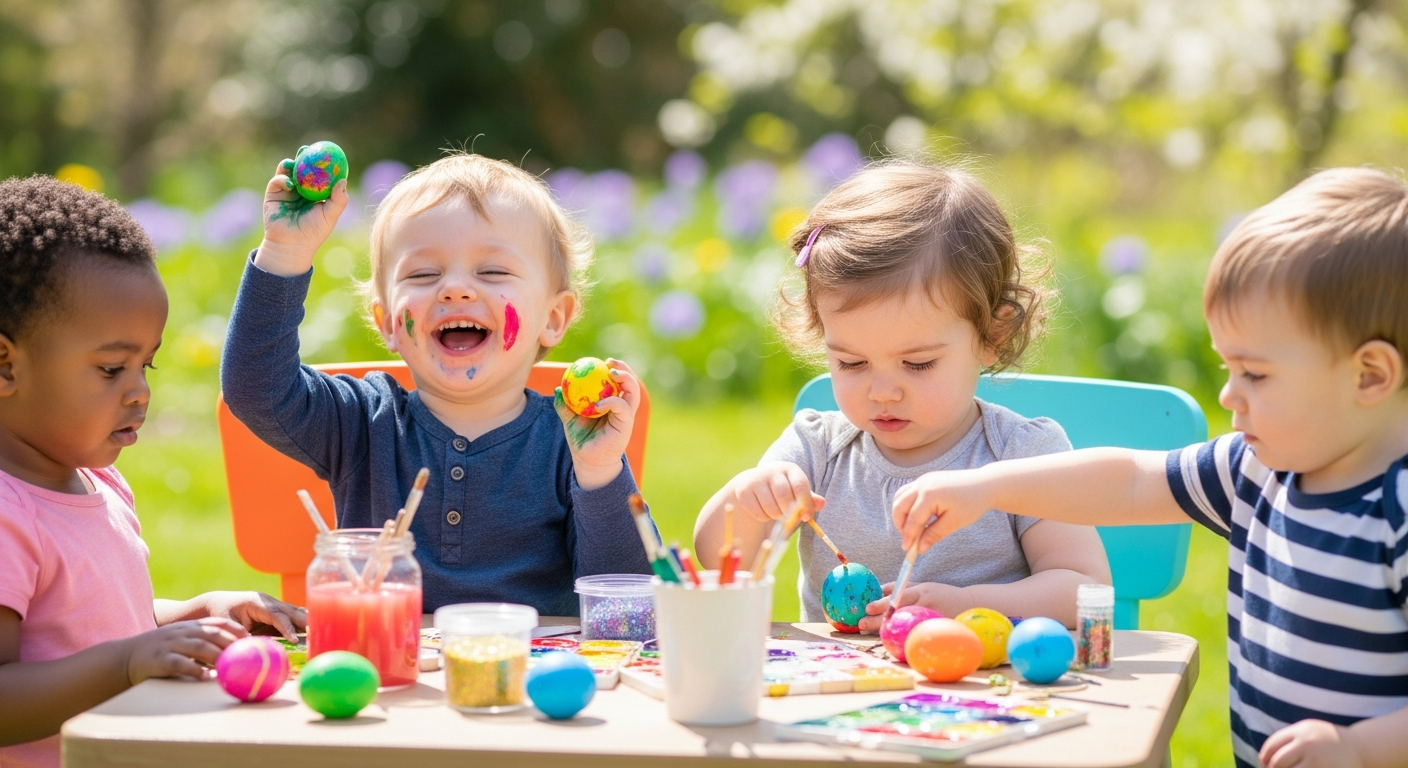
Table of Contents
- Introduction
- Why Crafting is a Speech and Language Powerhouse
- Classic Painting Easter Egg Toddler Craft Ideas
- Sensory and Texture-Based Crafts
- Nature and "Magic" Easter Egg Crafts
- Creative Uses for Plastic Easter Eggs
- Advanced (But Still Simple) Egg Crafts
- Making the Most of Craft Time with Speech Blubs
- Tips for a Stress-Free Crafting Session
- Connecting Crafting to Daily Life
- Conclusion
- Frequently Asked Questions
Introduction
Does anything capture the magic of spring quite like a toddler’s face when they see a bright, colorful Easter egg for the first time? There is something truly special about this season of renewal—the soft pastels, the budding flowers, and the inevitable "messy-hand" joy of holiday crafting. For many of us at Speech Blubs, these moments are about more than just a finished decoration; they are about the tiny, triumphant breakthroughs in communication that happen when a child points to a jar of glitter or exclaims "Egg!" for the very first time.
Our mission is to empower children to "speak their minds and hearts," and we believe that play is the most powerful tool for reaching that goal. Whether your little one is already a chatterbox or is one of the 1 in 4 children who need a little extra speech support, an easter egg toddler craft is a fantastic way to bond and build skills.

In this post, we’re going to dive deep into 25 engaging, sensory-rich, and simple craft ideas that you can do at home. We’ll cover everything from classic painting techniques to creative ways to reuse plastic eggs, all while focusing on how these activities support your child’s development. Most importantly, we’ll show you how to turn these crafting sessions into "smart" learning moments that foster a love for communication and connection.
Why Crafting is a Speech and Language Powerhouse
Before we roll up our sleeves and get the glue out, it’s worth looking at why we advocate for these activities. Crafting isn't just about the "stuff" you make; it’s a language-rich environment. When you sit down to work on an easter egg toddler craft, you are naturally using a high volume of "action words" (verbs) and "describing words" (adjectives).
For example, if your 3-year-old is a "late talker" who loves bright colors, an activity like sponge painting becomes a goldmine for practice. You can emphasize words like push, dab, wet, blue, and sticky. This is exactly how we approach learning in our app—by making it fun, interactive, and rooted in the joy of the moment. You can download Speech Blubs on the App Store or Google Play to see how we use these same principles of play to encourage imitation and sound production.
Setting Realistic Expectations
As a parent, it’s easy to look at a Pinterest-perfect craft and feel a bit of pressure. At Speech Blubs, we want to remind you that your toddler's attention span for a craft might only be five to ten minutes, and that is perfectly okay! The goal isn't a gallery-worthy egg; it’s the five minutes of eye contact, the attempt at a new word, and the confidence your child builds when they realize they can create something.
If you are ever unsure if your child’s communication development is on track during these play sessions, you can take our quick 3-minute preliminary screener. It involves 9 simple questions and provides you with a helpful assessment and next-steps plan.

Classic Painting Easter Egg Toddler Craft Ideas
Painting is a toddler favorite for a reason—it’s immediate and sensory. Here are some ways to keep it simple and fun.
1. Q-Tip Dotted Eggs
Instead of a bulky brush, give your toddler a handful of Q-tips. They are much easier for small hands to grip and provide a wonderful way to practice fine motor "pincer" movements.
- The Play: Cut an egg shape out of cardstock. Show them how to "dot, dot, dot" the paint.
- Language Tip: Say the word "dot" every time they touch the paper. This rhythmic repetition helps with sound mapping.
2. Sponge-Stamped Eggs
Kitchen sponges are great for textures. Cut them into small squares or even egg shapes themselves.
- The Play: Let your child dip the sponge into a tray of washable paint and press it onto paper.
- Language Tip: Use the word "push" to describe the action.
3. Scrape Painting Eggs
This is a "no-fail" art project. Place a few drops of different paint colors at the top of an egg cutout.
- The Play: Use an old credit card or a piece of stiff cardboard to scrape the paint down the egg. The colors will swirl together beautifully.
- Language Tip: Focus on "down" and "fast."
4. Bubble Wrap Printing
Save that shipping waste! Bubble wrap creates an amazing texture that toddlers find fascinating.
- The Play: Paint a piece of bubble wrap, then press an egg-shaped paper onto it.
- Language Tip: Talk about the "bubbles" and the "pop" sound they might make.
5. Rolling Egg Painting
This is a great high-energy activity.
- The Play: Place an egg cutout at the bottom of a plastic container. Add a few drops of paint and a couple of marbles or plastic eggs. Let your toddler shake and roll the container.
- Language Tip: Emphasize "shake, shake, shake!"
Sensory and Texture-Based Crafts
Toddlers learn about the world through their senses. Using different materials helps build neural connections and keeps them engaged longer.
6. Painted Pasta Eggs
This is a fantastic easter egg toddler craft that uses pantry staples.
- The Play: Put dry pasta (like penne or bowtie) into a Ziploc bag with a few drops of paint. Let your toddler shake the bag until the pasta is coated. Once dry, they can glue the colorful pasta onto a paper egg.
- Language Tip: This is great for practicing color names. "Where is the red pasta?"
7. Tissue Paper Collages
- The Play: Cut up small squares of colored tissue paper. Give your toddler a glue stick and let them stick the squares onto an egg cutout.
- Language Tip: Focus on "sticky" and "soft."
8. Yarn-Wrapped Cardboard Eggs
- The Play: Cut an egg shape out of a cereal box. Tape one end of a piece of colorful yarn to the back. Show your toddler how to wrap the yarn around the egg.
- Language Tip: Use the word "around" repeatedly as they move the yarn.
9. Tin Foil "Mirror" Eggs
- The Play: Wrap a piece of cardboard in tin foil. Let your child draw on it with permanent markers (with supervision) or washable markers.
- Language Tip: Talk about the "shiny" surface. This is a great time to talk about reflections—"I see you!"
10. Shaving Cream Marbled Eggs
- The Play: Fill a tray with shaving cream and drop food coloring on top. Swirl the colors with a toothpick. Press a paper egg onto the cream, then scrape off the excess cream to reveal a marbled design.
- Language Tip: The texture of shaving cream is a big hit. Use words like "cold," "fluffy," and "messy."
Expert Insight: At Speech Blubs, we believe in "smart screen time." While we love these hands-on crafts, we know that parents sometimes need a tool that works when they are on the go or need a focused learning session. Our app uses video modeling, a scientifically-backed method where children learn by watching their peers. It’s the digital version of "watching and doing," much like how they watch you wrap yarn around an egg. You can create your account and begin your 7-day free trial today.
Nature and "Magic" Easter Egg Crafts
Bringing a little bit of the outside world or a "magic" chemical reaction into crafting can spark incredible curiosity in a toddler.
11. Flower and Leaf Pressed Eggs
- The Play: Go on a nature walk and collect small petals and leaves. Use contact paper to "seal" these items into an egg shape.
- Language Tip: This is a perfect opportunity to use the "Animal Kingdom" or "Early Sounds" concepts from our app while you're outside. "Look, a bird! Tweet tweet!"
12. Tape Resist "Surprise" Eggs
- The Play: Place strips of painter's tape across a paper egg. Let your toddler paint over the whole thing. Once the paint is dry, peel the tape off to reveal white stripes.
- Language Tip: The "reveal" is the best part. Practice the word "Open" or "Wow!"
13. Coffee Filter Tie-Dye
- The Play: Cut coffee filters into egg shapes. Let your toddler draw on them with markers, then spray them with a little water using a spray bottle. Watch the colors bleed and blend.
- Language Tip: Use "wet" and "look!"
14. Salt and Glue Watercolor Eggs
- The Play: Draw a design with liquid glue on cardstock. Sprinkle salt over the wet glue. Once dry, let your toddler dab watercolor paint onto the salt and watch the color travel.
- Language Tip: Talk about the "crunchy" salt and how the paint "moves."
15. Chalk and Water Eggs
- The Play: Dip sidewalk chalk into water and draw on dark construction paper. The colors will be much more vibrant and have a creamy texture.
- Language Tip: Contrast "hard" chalk with "soft" wet chalk.
Creative Uses for Plastic Easter Eggs
Don't put those plastic eggs away after the hunt! They are incredibly versatile tools for learning and play.
16. Plastic Egg Stampers
- The Play: Dip the open end of a plastic egg half into paint and use it as a circle stamper.
- Language Tip: Focus on the shape "circle."
17. Alphabet Matching Eggs
- The Play: Write an uppercase letter on the top half and a lowercase letter on the bottom half. Have your child find the matches.
- Language Tip: This is a great pre-literacy skill. For more support with early reading, our Yearly Plan includes the Reading Blubs app, which is specifically designed to help toddlers transition from speech to reading.
18. Sound Shaker Eggs
- The Play: Fill plastic eggs with different items (beans, rice, coins) and tape them shut securely.
- Language Tip: Ask your child, "Is it loud or quiet?"
19. Egg Towers
- The Play: Challenge your toddler to stack the halves of the plastic eggs to see how high they can go.
- Language Tip: Use "up, up, up" and "boom!" when it falls.
20. Color Sorting Eggs
- The Play: Provide a bin of mixed plastic egg halves and ask your child to put the "blue with blue" and "red with red."
- Language Tip: This is a foundational cognitive skill. You can narrate the process: "You found the green one!"
Advanced (But Still Simple) Egg Crafts
For toddlers who are ready for a bit more of a project, these ideas involve a few more steps but offer great rewards.
21. Suncatcher Eggs
- The Play: Use contact paper and small bits of tissue paper or ribbon. Hang the finished egg in a sunny window.
- Language Tip: Talk about the "light" and "colors."
22. Washi Tape Eggs
- The Play: Give your child rolls of colorful Washi tape. They can tear pieces and stick them onto a paper egg. Tearing tape is excellent for hand strength.
- Language Tip: Use the word "rip" and "stick."
23. Doily Decorative Eggs
- The Play: Use paper doilies. Let the child paint the doily, and then glue it onto a contrasting colored paper egg. The patterns are beautiful.
- Language Tip: Use describing words like "pretty" and "pattern."
24. Fingerprint Family Eggs
- The Play: Let everyone in the family put a thumbprint on a large paper egg. Turn the thumbprints into little chicks or bunnies with a marker.
- Language Tip: Identify family members: "This is Mommy’s print, this is [Child’s Name]’s print."
25. Stickers Galore
- The Play: Sometimes, the simplest thing is the best. Give them a sheet of Easter-themed stickers and a paper egg.
- Language Tip: Ask them to "Put the bunny on the egg." This helps with following directions.
Making the Most of Craft Time with Speech Blubs
At Speech Blubs, we know that parenting is a journey filled with both joy and questions. Our founders created this tool because they lived the struggle of growing up with speech problems. They wanted to create the solution they wished they had. This is why our methodology is rooted in science and joy.
Our app is a powerful tool for family connection, designed to be used with your child. Just like when you are sitting on the floor making a easter egg toddler craft, Speech Blubs encourages you to interact, imitate, and celebrate every sound.
The Value of Our Yearly Plan
We want to be transparent about how you can get the best support for your child. While we offer a monthly subscription, our Yearly Plan is designed to provide the most comprehensive experience for your child's developmental journey.
- Monthly Plan: $14.99 per month.
- Yearly Plan: $59.99 per year (which is only $4.99/month—a 66% saving).
The Yearly Plan isn't just about the cost savings; it's about the exclusive features that help your child thrive:
- A 7-day free trial to ensure it's the right fit for your family.
- The Reading Blubs app, which helps your child take the next step into literacy.
- Early access to new updates and 24-hour support response time from our team.
By choosing the yearly option, you’re investing in a consistent, long-term tool that grows with your child, moving from basic sounds to complex sentences and reading. You can start your 7-day free trial on the Google Play Store today.
Tips for a Stress-Free Crafting Session
- Prepare the Space: Put down a cheap plastic tablecloth or old newspapers. Toddlers are messy, and you’ll enjoy the process more if you aren't worried about the carpet.
- Follow Their Lead: If they want to paint their hands instead of the egg, let them! Sensory exploration is still learning.
- Narrate Everything: Think of yourself as a sports commentator for your child’s life. "You're picking up the blue paint. Oh, look at that big circle!"
- Keep it Short: Don’t be offended if they walk away after five minutes. They might come back, or they might be done. Respecting their boundaries helps keep crafting a positive experience.
- Focus on the "Why": Remember our mission. We want them to "speak their minds and hearts." If they are smiling and engaging with you, the craft is a success.
Connecting Crafting to Daily Life
The beauty of an easter egg toddler craft is that it doesn't end when the paint dries. You can hide the paper eggs around the house for a "warm-up" egg hunt. You can mail them to grandparents to foster a sense of connection.
If you notice your child is particularly drawn to a certain theme—like the animals on their stickers—use that as a bridge. If they love the "chick" craft, head over to the "Animal Kingdom" section in Speech Blubs to practice the "cheep cheep" sounds. This kind of "smart screen time" reinforces what they learned during physical play. You can read more about how other parents have seen success with this approach on our testimonials page.
Conclusion
Easter crafting is a wonderful gateway to communication, confidence, and connection. From the simple joy of shaking a bag of pasta to the "magic" of a tape-resist reveal, every easter egg toddler craft you try is a building block for your child's development. At Speech Blubs, we are honored to be a part of that journey, providing you with the tools to make every moment a learning moment.
Whether you are looking to reduce frustration, build foundational skills, or simply create joyful family memories, we are here to support you. We encourage you to take the next step in your child's communication journey today.
Ready to see your child's confidence soar? Download Speech Blubs on the App Store and start your 7-day free trial. Remember to select the Yearly plan to unlock the full suite of features, including Reading Blubs and our priority support. Let's help your little one speak their mind and heart this spring!
Frequently Asked Questions
1. My toddler has a very short attention span. Is it even worth trying these crafts?
Absolutely! Most toddlers only stay focused for 5-10 minutes. The value is in the interaction and the sensory experience, not the final product. Even a few minutes of "shared attention" is a massive win for their development.
2. How can an easter egg toddler craft actually help with speech?
Crafting provides a natural reason to talk. By using action words (cut, stick, paint) and describing words (sticky, blue, round), you are providing a rich language environment. It also encourages "requesting"—your child has to find a way to tell you they want the "red" paint or "more" glue.
3. What if my child just wants to eat the materials?
This is very common! Always use non-toxic, washable materials. If your child is in a heavy "mouthing" phase, stick to edible-safe crafts, like painting with yogurt colored with food dye, or focus on activities like the "Egg Shakers" where the contents are securely taped inside.
4. Is Speech Blubs a replacement for hands-on crafting?
Not at all! We view our app as a "smart" supplement. While hands-on play is vital for tactile learning, Speech Blubs provides the video modeling and peer-to-peer interaction that can specifically target speech sounds and communication milestones. They work best when used together!
About the author