
25 Creative Toddler Activities With Pom Poms
 By Speech Blubs Team•Mar 25, 2026•16 min.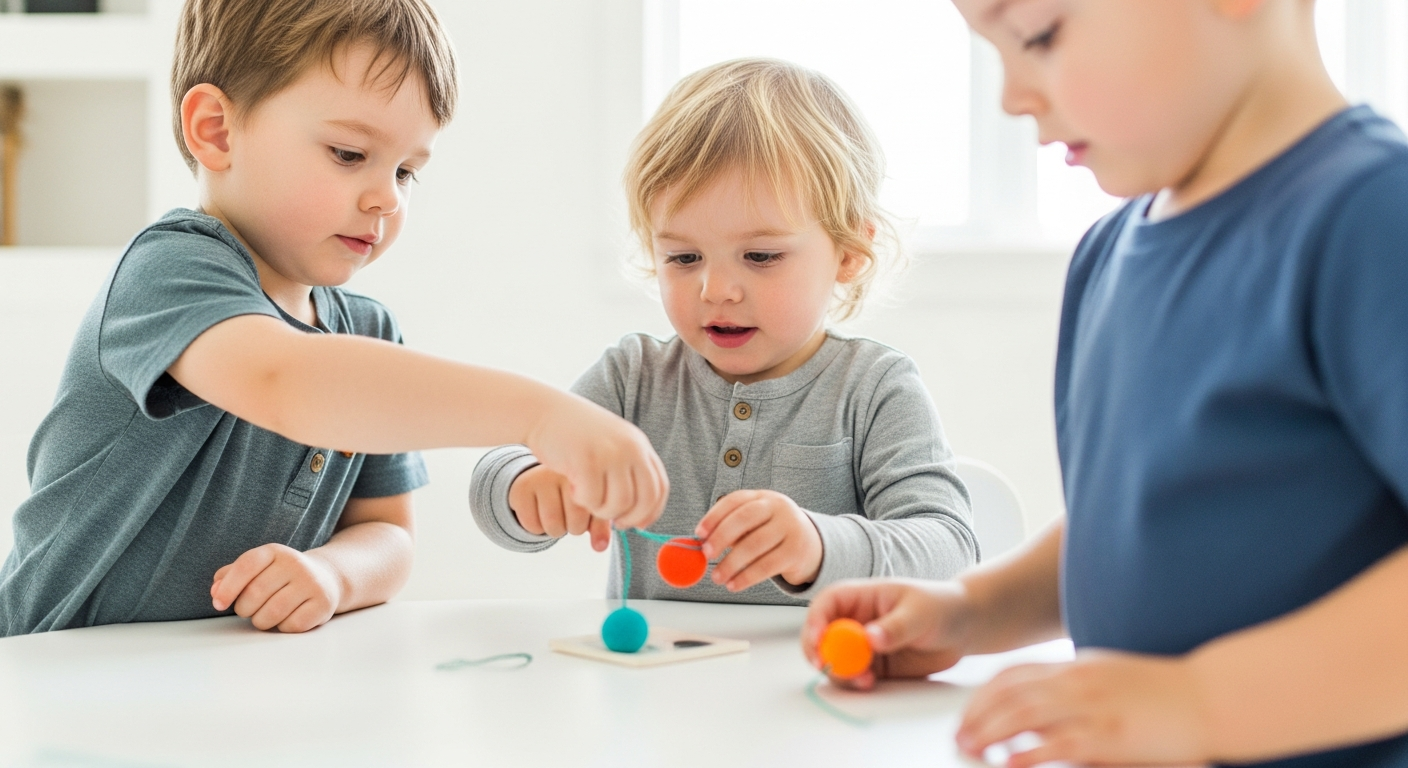
Table of Contents
- Introduction
- The Developmental Power of Pom Poms
- Fine Motor Skills: Pushing, Pulling, and Pinching
- Cognitive Skills: Sorting, Counting, and Patterns
- Sensory Play: Exploring Textures and Temperatures
- Language Development and Pretend Play
- Crafts and Creativity
- Why Choose Speech Blubs for Your Child?
- Understanding the Value of Our Plans
- Safety and Supervision
- Conclusion
- FAQs
Introduction
Have you ever noticed how the simplest things often capture a child's attention the longest? You buy a fancy, high-tech toy, but your toddler spends the entire afternoon playing with the cardboard box it came in. In the world of early childhood development, we call these "open-ended materials," and one of the absolute best examples is the humble pom pom. These soft, colorful, fuzzy little balls might look like simple craft supplies to us, but to a toddler, they are scoops of ice cream, tiny monsters, sorting tools, and sensory treasures.
At Speech Blubs, we are deeply committed to helping your child "speak their minds and hearts." Our founders started this journey because they grew up with speech challenges themselves and wanted to create the joyful, effective tool they wished they’d had. We understand that about 1 in 4 children will need some form of speech support, and our mission is to provide an immediate, playful solution. While our app provides a powerful "smart screen time" experience based on scientific video modeling, we also know that hands-on, physical play is a vital part of a child's growth.

In this post, we’re going to explore a massive list of toddler activities with pom poms that will help develop fine motor skills, cognitive abilities, and language. We’ll cover everything from sensory bins to color-matching games, and show you how these simple play sessions can actually mirror the developmental milestones we focus on in our app. By the end of this guide, you’ll have a toolbox full of ideas to keep your little one engaged, learning, and—most importantly—having fun.
The Developmental Power of Pom Poms
Before we dive into the list, let's talk about why we love toddler activities with pom poms so much from a developmental perspective. As experts in child communication, we see play as the "work" of childhood. When your child picks up a tiny pom pom with their thumb and forefinger, they aren't just playing; they are practicing the pincer grasp, which is essential for learning to hold a pencil or use a fork later on.
Furthermore, pom poms are a fantastic tool for language stimulation. Think about all the descriptive words you can use: soft, fuzzy, round, tiny, big, blue, red, squishy, and bouncy. When you play alongside your child, you are modeling these words, helping them build their vocabulary in a natural, stress-free environment. This is very similar to our scientific methodology at Speech Blubs. We use video modeling, where children watch their peers perform actions and say words. This triggers "mirror neurons" in the brain, making the child want to imitate what they see. When you play with pom poms, you are the live "video model" for your child!
Fine Motor Skills: Pushing, Pulling, and Pinching
Fine motor skills involve the coordination of small muscles in the hands and fingers. These activities are perfect for strengthening those muscles.
1. The Classic Pom Pom Drop
This is perhaps the easiest activity to set up. Take an old paper towel or toilet paper tube and tape it to the wall at your toddler’s eye level. Place a bowl of pom poms at their feet. Show them how to drop the pom pom into the top of the tube and watch it disappear and then reappear at the bottom. It’s like magic to a two-year-old! This helps with hand-eye coordination and introduces the concept of cause and effect.

2. The Whisk Rescue
Do you have a kitchen whisk? Grab a handful of pom poms and stuff them inside the wires of the whisk. Give it to your toddler and ask them to "rescue" the pom poms. They will have to use their little fingers to pinch and pull them out. This is a fantastic quiet-time activity that keeps them focused for a surprising amount of time.
3. Wipes Box Stuffing
Don’t throw away those empty plastic baby wipe containers! These are perfect for toddler activities with pom poms. The slit in the top of the container provides just enough resistance. Your child will love pushing the soft pom poms through the hole and then opening the lid to dump them all out and start over.
4. Tweezer or Tong Transfer
For older toddlers who are ready for a challenge, give them a pair of plastic kitchen tongs or large tweezers. Place two bowls side-by-side—one full of pom poms and one empty. Encourage them to move the pom poms from one bowl to the other using only the tool. This is excellent practice for finger strength and control.
5. Pom Pom Push Toy
Using a plastic container (like a yogurt or sour cream tub), cut a small hole in the lid. Encourage your child to "feed" the container by pushing the pom poms through. You can even draw a face on the container and pretend it’s a hungry monster! This kind of pretend play is something we encourage in the Speech Blubs app, where we use fun filters and characters to make speech practice feel like a game.
Cognitive Skills: Sorting, Counting, and Patterns
Pom poms are color-coded by nature, which makes them the perfect tool for early math and logic skills.
6. Muffin Tin Color Sort
Grab a muffin tin and place a piece of colored construction paper in the bottom of each cup (or use a marker to color a small circle). Give your child a big pile of mixed pom poms and help them match the blue poms to the blue cup, the red to the red, and so on. This builds visual discrimination skills.
7. Egg Carton Counting
Number the bottom of each cup in an egg carton from 1 to 12. Help your child place the correct number of pom poms into each cup. "One pom pom for number one! One, two pom poms for number two!" This introduces one-to-one correspondence, a foundational math skill.
8. Size Sorting
If you have a variety of pom pom sizes, practice sorting them by "big," "medium," and "small." Use three different-sized bowls to make it even more intuitive. Use these words frequently as you play to help your child understand the concept of scale.
9. Pattern Making
For preschoolers, you can start creating simple patterns. "Red, blue, red, blue. What comes next?" This helps children recognize sequences and predict what happens next, which is actually a key component of understanding how language is structured.
10. The Preliminary Screener Connection
Sometimes, as parents, we notice our child might be struggling with these types of sorting or cognitive tasks. If you're ever unsure about where your child stands developmentally, we recommend taking our quick 3-minute preliminary screener. It involves 9 simple questions and provides an assessment and a next-steps plan to help you support your child’s unique journey.
Sensory Play: Exploring Textures and Temperatures
Sensory play is essential for brain development. It helps children process information from their environment.
11. Pom Pom Water Soup
Many parents are surprised to learn that pom poms can go in the water! Fill a large plastic bin with water and throw in a bag of pom poms. Give your child spoons, ladles, and bowls. They can "cook" pom pom soup. The pom poms change texture when they get wet—they become heavy and squishy, which is a whole new sensory experience. Pro-Tip: To reuse them, just pop the wet pom poms in a pillowcase, tie it shut, and throw them in the dryer on a low setting!
12. Hidden Treasure Bin
Fill a bin with dried rice, beans, or even shredded paper. Hide 10–15 pom poms inside the bin. Ask your child to dig through the "dirt" to find the hidden treasures. This tactile experience is very grounding for many children and can help improve focus.
13. Sticky Wall Art
Tape a piece of contact paper (sticky side out) to the wall or a window. Give your child a bowl of pom poms and let them stick them onto the paper. They can create shapes, rainbows, or just a beautiful fuzzy mess. The resistance of pulling the pom pom off the sticky surface is great for sensory feedback.
14. Sensory Bags
For babies or toddlers who still put everything in their mouths, try a sensory bag. Fill a Ziploc bag with clear hair gel and a handful of pom poms. Tape the bag to a table or a window. Your child can push the pom poms through the gel without the risk of choking. It’s a mess-free way to explore movement and color.
15. The Bath Time Surprise
Throw a handful of pom poms into the bathtub! They float for a while before soaking up water and sinking. Your child can practice "fishing" for them with a net or a cup. It turns a standard routine into an extraordinary learning moment.
Language Development and Pretend Play
This is where the magic happens for speech development. Toddler activities with pom poms provide the perfect "script" for conversation.
16. The Ice Cream Shop
Roll up pieces of construction paper to make DIY cones. Use the pom poms as scoops of ice cream. "Would you like a scoop of strawberry or vanilla?" This encourages your child to use choice-making and expressive language. If your child is a "late talker," you might focus on simple words like "more," "please," or the names of colors. In our app, we have sections like "Yummy Time" that use similar food-related themes to encourage speech.
17. Feeding Stuffed Animals
Grab your child’s favorite stuffed bear or doll. Pretend the pom poms are different types of food. "Bear is hungry! Let's feed him a blue berry." Encourage your child to make eating sounds like "Mmm" or "Nom nom." These simple sounds are the building blocks of more complex speech.
18. Pom Pom Caterpillars
Line up pom poms in a row to make a caterpillar. You can even glue them to a craft stick. Walk the caterpillar across the floor and talk about where he is going. "The caterpillar is going up the chair. Now he is going under the table." Using prepositions in play helps children understand spatial relationships.
19. Oral Motor Blow Races
Place a few pom poms on a flat surface like a wooden floor or a table. Give your child a straw (or just have them use their mouth) and see who can blow their pom pom to the finish line first. This is an excellent "oral motor" activity. It strengthens the muscles in the mouth, lips, and cheeks, which are the very same muscles used for clear speech articulation.
20. Shopping Trip
Give your child a small basket or bag. Scatter pom poms around the room and tell them they are "going to the store" to buy specific items. "Can you find three yellow ones?" This helps with following multi-step directions, a crucial skill for toddlers heading into preschool.
Crafts and Creativity
Sometimes, the best activity is simply letting the child lead the way with some basic supplies.
21. Pom Pom Painting
Instead of a paintbrush, clip a pom pom into a clothespin. Dip the pom pom in paint and use it to "dab" or "dot" on paper. This creates a unique texture and is much easier for small hands to grip than a thin brush.
22. Threading for Fine Motor Control
If you have a large plastic needle and some yarn, you can show your child how to thread pom poms together to make a necklace or a garland. This requires a high level of concentration and bilateral coordination (using both hands together).
23. Nature Collages
Go for a walk and collect leaves or sticks. When you get home, use glue to add pom poms to your nature finds. It’s a great way to talk about the transition from the "outside world" to "art time."
24. Letter and Shape Outlines
Draw a large letter (like the first letter of your child’s name) or a shape on a piece of paper. Have your child place pom poms along the lines of the letter. This helps with "visual tracking" and familiarizes them with the shapes of letters before they ever pick up a pencil.
25. Process Art "Free Flow"
As much as we love structured activities, "process art"—where there is no specific end goal—is vital. Set out glue, paper, markers, and a big bowl of pom poms. Let your child create whatever they want. Join them! When you play together, you create joyful family learning moments that build confidence and reduce the frustration often associated with learning new skills.
Why Choose Speech Blubs for Your Child?
While toddler activities with pom poms are incredible for physical and cognitive development, many parents find they need a bit of extra support when it comes specifically to speech. That’s where we come in. Our app is designed to be a "smart" supplement to your child's daily routine. We don't believe in passive screen time where a child just stares at a cartoon. Instead, Speech Blubs is an interactive experience that requires the child to be an active participant.
Our method is backed by science and has earned us a high rating on the MARS scale, placing us among the top tier of educational apps globally. You can read more about our research to see why video modeling is so effective. But beyond the science, we are parents and educators who care. We want to see your child succeed just as much as you do.
If you’re ready to see the difference for yourself, you can download Speech Blubs on the App Store or find us on the Google Play Store. We offer a wealth of content designed to make speech therapy feel like the best part of your child's day.
Understanding the Value of Our Plans
We want to be completely transparent about our pricing because we value the trust you place in us. We offer two main paths for families:
- Monthly Plan: This is $14.99 per month. It’s a great way to test the waters and see how your child responds to the app.
- Yearly Plan: This is our most popular and high-value option. It costs $59.99 per year, which breaks down to just $4.99 per month. That is a 66% savings compared to the monthly plan.
When you choose the Yearly Plan, you don't just get a better price; you also unlock exclusive benefits:
- A 7-day free trial so you can explore everything risk-free.
- The Reading Blubs app, which helps transition those hard-earned speech skills into early literacy.
- Early access to all our new updates and features.
- Priority 24-hour support response time from our dedicated team.
The Monthly plan does not include the free trial or the extra Reading Blubs app. We highly encourage families to create a web account and sign up for the Yearly plan to get the full, comprehensive experience.
Safety and Supervision
While toddler activities with pom poms are wonderful, safety is our number one priority. Pom poms can be a choking hazard for young children.
- Always supervise: Never leave a toddler alone with pom poms.
- Size matters: If your child is still in the "mouthing" phase, use only the largest sized pom poms (the 2-inch variety) or use the sensory bag method mentioned above.
- Clean up: Do a quick sweep of the floor after play to make sure no "stray berries" were left behind for a curious toddler to find later.
By keeping these tips in mind, you can ensure that your learning time stays joyful and safe. For more stories from parents who have integrated these kinds of activities and our app into their lives, check out our testimonials page.
Conclusion
From the "Whisk Rescue" to "Pom Pom Soup," these toddler activities with pom poms are more than just a way to kill time on a rainy afternoon. They are powerful opportunities to build the foundational skills your child needs for a lifetime of successful communication. Whether it’s strengthening the muscles in their hands for writing or the muscles in their mouth for speaking, every "dot," "drop," and "push" counts.
At Speech Blubs, we are honored to be a part of your parenting journey. We know that raising a child—especially one who might need a little extra support—can feel overwhelming. But remember, you don't have to do it alone. By combining hands-on play with our scientific, video-modeling approach, you are giving your child the best possible start.
Ready to take the next step? Don’t wait to start fostering that love for communication. Choose the Yearly plan today to begin your 7-day free trial. You’ll get the best price, our bonus Reading Blubs app, and a front-row seat to your child’s progress. Sign up on our website or download the app on the App Store or Google Play to get started!
FAQs
1. Are pom poms safe for 1-year-olds?
Pom poms can be a choking hazard. For 1-year-olds, we recommend using only very large pom poms (at least 2 inches in diameter) and maintaining 100% adult supervision. Alternatively, place them inside a sealed sensory bag with gel so the child can move them around without touching them directly.
2. How can pom poms help with my child's speech delay?
Pom poms provide a visual and tactile "anchor" for new words. By using descriptive language (soft, red, big) and action words (push, drop, blow) during play, you are providing rich language input. Activities like blowing pom poms through a straw also help strengthen oral motor muscles used for speech.
3. What is the best way to clean and store pom poms?
If they get wet during water play, place them in a mesh laundry bag or a knotted pillowcase and dry them on low heat in the dryer. For storage, a simple clear plastic bin or a reusable silicone bag works best so your child can see the colors and be inspired to play.
4. Why should I use Speech Blubs along with these activities?
While pom poms are great for physical play, Speech Blubs provides a structured, scientifically-proven way to encourage vocalization through peer modeling. Using the app for 10–15 minutes a day as "smart screen time" can provide the motivation your child needs to start imitating sounds and words, which you can then reinforce during pom pom playtime!
About the author