
25 Creative Toddler Chalk Activities for Speech and Play
 By Speech Blubs Team•Feb 23, 2026•14 min.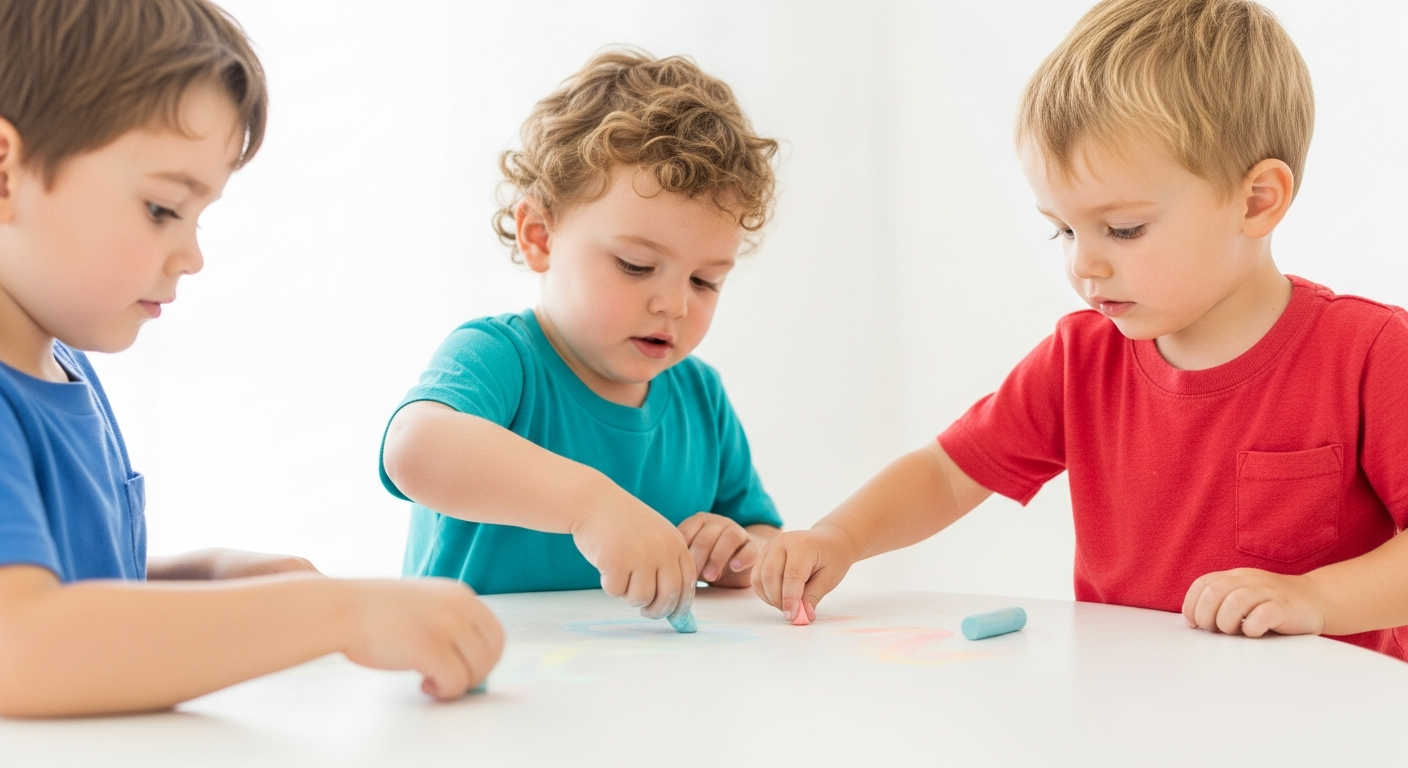
Table of Contents
- Introduction
- Why Toddler Chalk Activities are a Developmental Goldmine
- 25 Fun and Educational Toddler Chalk Activities
- Enhancing Play through Scientific Principles
- Making Screen Time "Smart"
- Choosing the Best Plan for Your Family
- Fostering a Love for Communication
- Conclusion
- Frequently Asked Questions
Introduction
Did you know that nearly 1 in 4 children will experience some form of speech or language delay during their early developmental years? As parents, we often find ourselves searching for the "magic" tool that will help our little ones find their voice, yet the answer is often waiting for us right outside our front door, sitting in a bucket on the porch. A simple stick of sidewalk chalk is more than just a tool for messy doodles; it is a gateway to communication, a builder of fine motor skills, and a catalyst for joyful family connection. At Speech Blubs, our mission is to empower every child to speak their minds and hearts, and we believe that the best learning happens when children are having so much fun they don’t even realize they are "working."
In this post, we are going to explore 25 incredible toddler chalk activities that go far beyond the traditional hopscotch grid. We will dive into sensory-rich experiences, movement-based learning, and creative play strategies designed to boost your child's vocabulary and confidence. Our goal is to provide you with a toolkit of activities that foster a love for communication while creating those precious, joyful learning moments that define childhood. Whether you are looking to supplement professional therapy or simply want to maximize your outdoor playtime, these activities are designed to turn your driveway into a vibrant classroom.

Why Toddler Chalk Activities are a Developmental Goldmine
Before we jump into the activities, it is important to understand why sidewalk chalk is such a powerful resource for early childhood development. When we watch our children play, we aren't just seeing art; we are seeing the brain in action.
Fine Motor Skills and the Pincer Grasp
Drawing with chalk requires a specific type of hand strength and coordination. Unlike a thin pen, a chunky piece of chalk encourages a toddler to experiment with different grips. Shorter pieces of chalk are actually better for development because they naturally force a child into a pincer grasp—the same grip they will eventually need for writing and buttoning clothes.
Language Development and Vocabulary Expansion
Every stroke of chalk is an opportunity for a "language moment." When you draw a "big, red, round circle," you are modeling adjectives and nouns in a contextual, visual way. For a child who is a "late talker," these physical representations of words are vital. By narrating your child’s play—"Look, you’re jumping on the yellow sun!"—you are providing the auditory input they need to eventually produce those words themselves.
Gross Motor Skills and Brain Integration
Many of the activities we recommend involve jumping, skipping, and running. There is a strong scientific link between gross motor movement and language acquisition. When a child moves their body while learning a new concept, they are engaging multiple areas of the brain, making the "stickiness" of that new information much stronger.
25 Fun and Educational Toddler Chalk Activities
Here is our curated list of toddler chalk activities that prioritize engagement, learning, and, most importantly, fun!
1. The Wet Chalk Wonder
Drawing with dry chalk can be a sensory challenge for some children who dislike the "dusty" feeling. To solve this, soak your chalk in a cup of water for about 10 minutes before play. The result is a vibrant, paint-like consistency that glides smoothly.
- Speech Tip: Use contrast words like "wet" vs. "dry" and "bright" vs. "light."
2. Floating Chalk Prints
This is a fantastic indoor/outdoor hybrid. Scrape different colors of chalk into a basin of water using a plastic knife or craft stick until the surface is covered in colorful dust. Gently lay a piece of cardstock on top, lift, and reveal a marbled masterpiece.

- Speech Tip: Practice "scraping" and "dipping" action words.
3. Body Tracing and Anatomy Labeling
Have your toddler lie down and trace their outline. Once they stand up, work together to draw in their eyes, nose, mouth, and clothes.
- Practical Scenario: For a parent whose toddler is learning to identify body parts, this activity provides a life-sized map. You can point to the drawing and say, "Where is your nose?" then have them draw a circle on the "chalk nose."
4. Animal Sound Parade
Draw a series of animals—a cow, a sheep, a pig—in a line down the sidewalk. Encourage your child to walk from animal to animal, making the corresponding sound at each stop.
- Speech Blubs Connection: This mimics our "Animal Kingdom" section, where children watch their peers make animal sounds. If your child loves this chalk game, they will likely adore the Speech Blubs app, which uses video modeling to encourage these foundational vocalizations.
5. Alphabet Hop
Write large letters in a random pattern. Call out a letter and have your child jump to it. For older toddlers, call out the sound the letter makes instead of the letter name.
6. The Color Match Scavenger Hunt
Draw several colored circles on the ground. Ask your child to run into the yard and find a natural object (a leaf, a flower, a rock) that matches each color and place it inside the circle.
7. Avoid the Shark!
Use blue chalk to draw "water" and sharks, leaving small "islands" or "beaches" of clear pavement. Your child must jump from island to island to stay safe.
- Speech Tip: This is great for practicing "Oops!" and "Yay!"
8. Chalk Roadways and Villages
Draw a winding road with intersections, houses, and even a "drive-thru." Grab some toy cars and narrate the journey. "The car goes UP the hill and STOPS at the sign."
- Value of Play: This builds narrative skills, which are the precursor to storytelling.
9. Bubble Hopscotch
Traditional squares can be hard for toddlers to draw. Instead, draw "bubbles" (circles) in a winding path. It’s faster to create and more forgiving for little feet.
10. Sidewalk Twister
Draw colored circles in a grid. Give instructions like "Put your hand on green!" or "Put your foot on blue!" This builds body awareness and following-direction skills.
11. Nature Tracing
Find interesting leaves or flat stones. Place them on the pavement and trace their shadows or their physical outlines. This encourages observation and focus.
12. Chalk and Water "Painting"
Give your child a cup of water and a paintbrush. Have them "paint" over their chalk drawings. The water makes the colors pop and eventually "erases" the art, which toddlers find fascinating.
13. Homemade Chalk Paint
Mix equal parts cornstarch and water with a few drops of food coloring. This "liquid chalk" allows for a different range of motion than sticks and is perfect for "painting" the fence or trees.
14. Target Bullseye
Draw a large target with concentric circles. Have your child throw a wet sponge or a beanbag at the center.
- Speech Tip: Practice counting the points or simply saying "Ready, set, go!"
15. The "Emotion" Faces
Draw several large circles and add different facial expressions to each—happy, sad, surprised, angry. Ask your child to stand on the "happy face" or make a face that matches the drawing.
- Social-Emotional Learning: This helps children identify and label feelings.
16. Constellation Creation
Use chalk to draw dots representing stars and have your child "connect the dots" with lines. You can even use real rocks to represent the stars for a 3D effect.
17. The Obstacle Course
Draw a line that includes "Spin 3 times," "Touch your toes," and "Hop like a bunny."
- Speech Tip: Action verbs are the stars of this activity.
18. Letter Recognition with "Markers"
Draw the alphabet and give your child a handful of pebbles. Call out a letter and have them "mark" it by placing a pebble on top.
19. Giant Snakes and Ladders
Draw a simple grid on the driveway with a few "snakes" and "ladders." Use your child as the game piece! Roll a giant die and have them move the corresponding number of spaces.
20. Chalk Weather Station
Each morning, draw the current weather—a sun, a cloud, or raindrops. This is a great daily ritual for building vocabulary related to the environment.
21. Driveway Checkers
Draw a large grid and use two different types of natural objects (like flat stones vs. pinecones) as the checkers.
22. Encouraging Words Walk
For toddlers who are starting to recognize sight words, write simple words like "HI," "LOVE," and "YOU" on the sidewalk for neighbors to see.
23. Shadow Drawing
Stand in one spot and have your child trace your shadow. Come back a few hours later and see how the shadow has "moved." This is a great introduction to the concept of time and the sun.
24. Sorting Station
Draw three boxes labeled "Small," "Medium," and "Large." Have your child sort their outdoor toys or found nature items into the correct boxes.
25. The "What’s Missing?" Game
Draw a simple face or a house but leave out one major part (like the door or the nose). Ask your child, "What’s missing?" and have them draw it in.
Enhancing Play through Scientific Principles
At Speech Blubs, we don't just create games; we build tools based on scientific methodology. Our approach is rooted in video modeling, a technique where children learn by observing their peers. Research shows that when a child sees another child performing an action or saying a word, "mirror neurons" in their brain fire, making them much more likely to imitate that behavior.
You can use this same principle with toddler chalk activities! If you want your child to learn how to draw a circle, don't just tell them—show them, and better yet, have an older sibling or a friend show them. This peer-to-peer connection is powerful. Our method is backed by science and has earned high ratings on the MARS scale, placing us in the top tier of educational apps worldwide. You can learn more about the science behind our method here.
"Our mission is to provide an immediate, effective, and joyful solution for the children who need speech support, blending scientific principles with play into one-of-a-kind 'smart screen time' experiences."
If you are unsure where your child stands in their development, we recommend taking our quick 3-minute preliminary screener. It consists of 9 simple questions and will provide you with an assessment and a next-steps plan to support your child’s unique journey.
Making Screen Time "Smart"
We know that modern parenting often involves a balance between outdoor play and digital engagement. While we advocate for plenty of "green time" and physical activities like these chalk games, we also recognize the value of high-quality digital tools.
Speech Blubs is designed to be a screen-free alternative to passive viewing. Instead of your child sitting silently while watching a cartoon, they are actively engaging, mimicking, and speaking back to the "Blubbers" (the kids in the app). It is a tool for family connection, intended to be used with an adult to facilitate co-play. For example, after practicing "Animal Sounds" in the app, you can head outside and draw those same animals with chalk, bridging the gap between the digital and physical worlds.
Choosing the Best Plan for Your Family
We are committed to being a transparent and reliable partner in your child's development. To provide the best possible experience, we offer two main subscription options:
- Monthly Plan: $14.99 per month.
- Yearly Plan: $59.99 per year.
While both plans offer access to our core library of speech-stimulating activities, the Yearly Plan is the clear best choice for families committed to long-term progress. Here is why the Yearly Plan stands out:
- Massive Savings: At just $4.99 per month, you save 66% compared to the monthly rate.
- 7-Day Free Trial: You can explore everything we have to offer risk-free for a full week.
- Reading Blubs Included: The yearly plan grants you access to our additional Reading Blubs app, which focuses on early literacy and phonics.
- Priority Support: Enjoy early access to new updates and a 24-hour response time from our support team.
The Monthly plan does not include the free trial or the Reading Blubs app, making the Yearly plan the most comprehensive and cost-effective way to support your child. You can see what other parents are saying about their success by visiting our testimonials page.
Fostering a Love for Communication
It is important to set realistic expectations. Every child develops at their own pace, and while these activities and our app are powerful tools, they are part of a broader journey. We don't promise that your child will be giving public speeches in a month; instead, we focus on the benefits of the process: fostering a love for communication, building confidence, reducing frustration, and creating joyful family learning moments.
Think of these toddler chalk activities as the "physical therapy" for the mouth and mind. By engaging in "smart screen time" through Speech Blubs and "smart outdoor time" with chalk, you are giving your child a well-rounded foundation for success.
Conclusion
Toddler chalk activities are a simple, inexpensive, and deeply effective way to support your child's speech, motor skills, and creative development. From the sensory delight of wet chalk to the cognitive challenge of a driveway maze, these games turn every inch of pavement into an opportunity for growth. Remember that your involvement is the most important ingredient—your voice, your encouragement, and your willingness to get a little chalk on your hands will make all the difference.
We invite you to take the next step in your child's communication journey. Our founders created Speech Blubs because they grew up with speech problems themselves and wanted to build the tool they wished they had. We want to help your child find their voice in the most joyful way possible.
Ready to get started? Download Speech Blubs on the App Store or Google Play today. We highly recommend choosing the Yearly Plan to take advantage of the 7-day free trial and the full suite of features, including Reading Blubs. You can also create your account on our website to begin your trial. Let’s make learning to speak an adventure!
Frequently Asked Questions
What are the main benefits of chalk play for toddlers?
Chalk play supports fine motor development (the pincer grasp), gross motor coordination (jumping and balance), and language skills. It provides a visual and tactile way to learn colors, letters, and numbers, and it encourages social interaction through cooperative games.
My child is a late talker; can chalk activities really help?
Yes! Chalk activities allow you to label actions and objects in real-time. By narrating what your child is doing ("You're drawing a red line!") or asking them to make animal sounds as they hop on chalk animals, you are providing the repetitive, low-pressure language input they need to build their vocabulary.
How do I clean up after these activities?
The best part about sidewalk chalk is that it is temporary! Most drawings will wash away with a simple garden hose or the next rain shower. For homemade chalk paint, a quick spray with water is usually enough to clear the driveway, fence, or sidewalk.
Is Speech Blubs a replacement for speech therapy?
Speech Blubs is a powerful supplement to professional speech therapy, not a replacement. It is designed to be a tool that parents can use at home to reinforce the skills learned in therapy sessions through fun, engaging video modeling and play-based activities. Always consult with a professional if you have serious concerns about your child's development.
About the author