
25 Creative Toddler Sensory Activity Ideas for Home
 By Speech Blubs Team•Feb 23, 2026•15 min.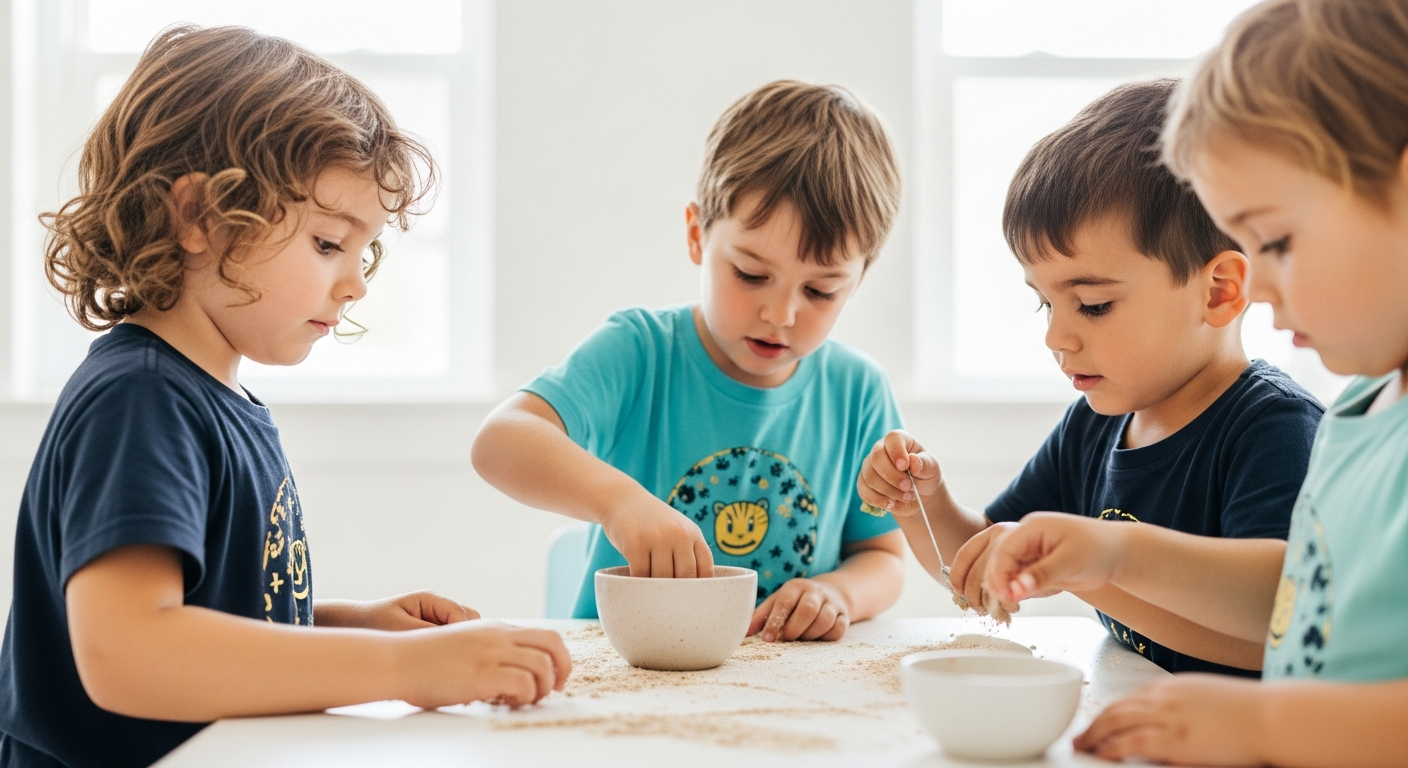
Table of Contents
- Introduction
- The Science Behind the Senses
- How Sensory Play Supports Speech Development
- Low-Mess Toddler Sensory Activity Ideas
- Edible-Safe Sensory Play for "Mouthers"
- Classic Sensory Bins: The Foundation of Play
- Outdoor and High-Energy Sensory Activities
- DIY Recipes for Continued Play
- The Speech Blubs Approach: Smart Screen Time
- Practical Scenarios: Connecting Play to Speech
- Tips for Success with Sensory Play
- Conclusion
- Frequently Asked Questions
Introduction
Did you know that before a child ever utters their first clear word, they are already "talking" to the world through their fingertips? Every time a toddler squishes a cold piece of watermelon, splashes in a lukewarm puddle, or runs their hands through a bin of dry rice, their brain is firing on all cylinders. This is the magic of the toddler sensory activity. It is not just "play" in the traditional sense; it is the fundamental way young children gather information, build neural pathways, and eventually, develop the complex communication skills they need to speak their minds and hearts.
At Speech Blubs, we understand that the journey to clear communication is a multi-sensory experience. Our founders, who all navigated their own speech challenges as children, created our platform because they knew that traditional methods often lacked the joy and engagement that kids crave. We believe in "smart screen time" that acts as a catalyst for real-world interaction. Our mission is to provide an immediate, joyful solution for the 1 in 4 children who need speech support, blending scientific principles with the power of play.

In this comprehensive guide, we will explore why sensory play is the bedrock of child development, provide a massive list of accessible activities you can do at home, and show you how to bridge the gap between physical exploration and digital learning. Whether you are worried about your child’s milestones or simply looking for ways to foster a love for learning, you are in the right place. Our goal is to help you build your child's confidence and reduce frustration through meaningful, shared experiences.
The Science Behind the Senses
Why do we place such a high value on a simple toddler sensory activity? The answer lies in the way a child’s brain is wired. From birth, children use their five senses—sight, smell, hearing, touch, and taste—plus their vestibular (balance) and proprioceptive (body awareness) systems to make sense of their environment.
When a toddler engages in sensory play, they are practicing "scientific inquiry" without even knowing it. They are testing hypotheses: What happens if I squeeze this? Does it make a sound when I drop it? Is it still there if I cover it with sand? These experiences strengthen the synapses in the brain’s learning centers.
At Speech Blubs, we lean heavily into the concept of video modeling, which is a scientifically proven method where children learn by watching their peers. This taps into the brain's "mirror neurons"—the same neurons that fire when a child watches another child squish playdough or mimic a "b" sound. Our research-backed methodology ensures that while your child is enjoying their "smart screen time," they are actually priming their brain for the physical and vocal imitation required for speech.
How Sensory Play Supports Speech Development
It might not seem like playing with bubbles has much to do with talking, but the connection is profound. Sensory activities help develop:
- Receptive Language: As you play alongside your child, you provide the "labels" for their experiences. When they touch ice, you say "cold." When they squeeze a sponge, you say "wet." This builds their internal dictionary.
- Expressive Language: The excitement of a sensory experience often provides the motivation a child needs to communicate. A "late talker" who loves animals might be prompted to make a "moo" or "baa" sound while playing in a "muddy" sensory bin of cocoa and flour.
- Fine Motor Skills: Many sensory tasks involve pinching, pouring, and scooping. These movements strengthen the same neural pathways that will eventually control the fine motor movements of the lips, tongue, and jaw.
If you are curious about where your child stands in their development, you can take our quick 3-minute preliminary screener. It involves 9 simple questions and provides an assessment and a next-steps plan to help you support your little one’s growth.

Low-Mess Toddler Sensory Activity Ideas
We know the biggest hurdle for many parents is the fear of the "big mess." The good news is that sensory play doesn't have to result in a ruined carpet. Here are some of our favorite contained and low-mess options.
1. Paint in a Bag
This is the ultimate "clean" finger painting. Squeeze a few dollops of washable paint into a gallon-sized zip-lock bag. Squeeze out the air and seal it tightly with duct tape. Tape the bag to a window or a high-chair tray. Your toddler can squish and move the paint around, observing how colors mix without getting a drop on their hands.
2. The Texture Hunt Basket
Gather a variety of safe household items with different textures: a fluffy microfiber cloth, a bumpy pinecone, a smooth river stone, and a crinkly piece of parchment paper. Place them in a basket and let your child explore. Use descriptive words as they touch each item. This is a great way to build vocabulary while keeping things tidy.
3. Sensory Bottles
Fill clear plastic bottles with different materials—glitter and water, dry rice and beans, or even pom-poms and bells. Secure the lids with hot glue. These "shakers" or "calm-down bottles" provide visual and auditory stimulation that is entirely self-contained.
4. Contact Paper "Stained Glass"
Tape a piece of clear contact paper to a window, sticky-side out. Give your toddler scraps of colorful tissue paper or bits of ribbon. They can stick and re-stick the items to the paper. The light shining through the colors creates a beautiful visual effect, and the "sticky" sensation is a unique tactile experience.
Edible-Safe Sensory Play for "Mouthers"
If your toddler is still in the phase where everything goes straight into their mouth, you need "taste-safe" options. These activities allow them to explore safely.
5. Yogurt Painting
Instead of traditional paint, use plain Greek yogurt. Divide it into small bowls and add a drop of food coloring to each. It has a wonderful, creamy texture and is perfectly safe if (or when) your child decides to take a lick.
6. Cocoa "Mud" Construction
Mix flour and cocoa powder to create a "dusty" landscape, or add a bit of water to make "mud." Give your toddler their favorite toy construction trucks and let them dig. For a child who loves vehicles, our "Wheels on the Bus" or "Big Machines" sections in the app can be a great way to reinforce the vocabulary they use during this play. You can download Speech Blubs on the App Store to see these themes in action.
7. Aquafaba Foam
This is a magic trick for parents. Take the liquid from a can of chickpeas (aquafaba) and whip it with a hand mixer and a bit of cream of tartar until it forms stiff, foamy peaks. Add a little food coloring, and you have a taste-safe, fluffy foam that is much safer than shaving cream for little ones who might eat it.
8. Crushing Baking Soda
Spread a layer of baking soda on a tray. Give your child a plastic toy hammer or a large spoon and let them crush the naturally occurring clumps into powder. This is incredibly satisfying for toddlers and provides great proprioceptive feedback.
Classic Sensory Bins: The Foundation of Play
A sensory bin is simply a container filled with a base material and "fillers" like toys or tools. The key to a successful bin is setting clear boundaries—the material stays in the bin.
9. The Rice Table
Dyed rice is a sensory staple. You can easily color rice by shaking it in a bag with a few drops of food coloring and a teaspoon of vinegar, then letting it dry. It flows through fingers like water but is easier to clean up. Add measuring cups and funnels to encourage pouring.
10. Water Play with a Twist
Water is the simplest toddler sensory activity. To make it more engaging, add a drop of blue food coloring and some "ocean" animals. Or, add a squirt of tear-free bubble bath and give your child a whisk to make "waves."
11. Kinetic Sand Safari
Kinetic sand is a parent's best friend because it sticks to itself, not to the floor. Fill a shallow bin with sand and hide small plastic animals inside. Ask your child, "Where is the lion?" or "Can you find the elephant?" This turns a tactile activity into a language-building game.
12. Oobleck (Non-Newtonian Fluid)
Mix two parts cornstarch to one part water. This substance is a solid when you squeeze it but turns back into a liquid when you let go. It is fascinating for children (and adults!) and offers a unique lesson in cause and effect.
Outdoor and High-Energy Sensory Activities
Sometimes, toddlers need to use their whole bodies to regulate their sensory systems. These activities are perfect for burning off energy while learning.
13. Ice Painting
On a warm day, freeze large blocks of ice (you can use plastic storage containers). Give your child liquid watercolors or food coloring and brushes. As the ice melts, the colors swirl and change. It’s a lesson in temperature, states of matter, and art all in one.
14. Shaving Cream "Slide"
If you have an outdoor plastic table, spray a thick layer of unscented shaving cream across the surface. Let your toddler draw shapes, letters, or "roads" for their cars in the foam. When they are done, you can simply hose down the table and the toddler!
15. Nature Texture Walk
Take a basket outside and go on a "texture hunt." Look for something "crunchy" (a dry leaf), something "rough" (bark), something "soft" (a flower petal), and something "hard" (a stone). This connects your child to the natural world and builds their descriptive vocabulary.
16. Bubble Wrap Stomp
Tape a large piece of bubble wrap to the floor (or the driveway). Let your child walk, jump, or run across it. The "pop" sound and the sensation under their feet provide intense sensory input that many children find exhilarating.
DIY Recipes for Continued Play
Creating the materials for a toddler sensory activity is half the fun. These recipes are staples for any household.
17. Scented Playdough
Making your own playdough allows you to control the ingredients. Add a few drops of vanilla extract, peppermint, or cinnamon to your favorite recipe. Engaging the sense of smell alongside touch creates a more robust memory in the brain.
18. Vinegar and Baking Soda "Explosions"
Cover a tray with baking soda. Give your child a small spray bottle or a dropper filled with vinegar (colored with food dye). When the vinegar hits the soda, it fizzes and bubbles. This "explosion" is a high-reward activity that encourages fine motor control.
19. Gelatin Treasure Hunt
Make a large batch of Jell-O or plain gelatin and hide plastic toys inside before it sets. Your toddler will have to "dig" through the squishy, cold gelatin to rescue the toys. It’s a messy, wiggly, and wonderful experience.
20. Salt Drawing Tray
Fill a shallow tray with a thin layer of salt. Show your child how to draw shapes or lines with their finger. It provides much more tactile feedback than drawing with a crayon on paper, making it an excellent precursor to writing.
The Speech Blubs Approach: Smart Screen Time
At Speech Blubs, we believe that technology should support—not replace—the physical world. We offer a screen-free alternative to passive viewing like cartoons. Instead of your child sitting idly, they are encouraged to interact, imitate, and participate.
Our app is designed to be a tool for family connection. We always frame our activities with the understanding of adult co-play. When your child uses Speech Blubs, we want you there with them, cheering them on and mimicking the sounds together. This "co-viewing" is what transforms a digital experience into a developmental milestone.
If you are ready to see the difference that "smart screen time" can make, we encourage you to start your 7-day free trial on our website. While we offer a monthly plan for $14.99, our Yearly Plan is the clear best choice for families committed to their child's progress.
Why Choose the Yearly Plan?
The Yearly Plan is just $59.99 (which breaks down to only $4.99/month). Choosing the yearly option doesn't just save you 66%—it also unlocks:
- A 7-day free trial to explore all features risk-free.
- The Reading Blubs app, a dedicated tool for early literacy.
- Early access to new updates and themes.
- 24-hour support response time from our dedicated team.
The monthly plan does not include these exclusive benefits, making the yearly plan the most effective and joyful way to support your child's journey.
Practical Scenarios: Connecting Play to Speech
Let's look at how a toddler sensory activity can solve real-world challenges.
Imagine a parent whose 3-year-old is a "late talker." This child loves animals but gets frustrated when they can't express which one they want to play with. By setting up a "farm" sensory bin with corn kernels and plastic animals, the parent can use the "Animal Kingdom" section of the Speech Blubs app to prime the child. As the child watches a peer in the app say "Duck!" and make a "Quack" sound, they see the mouth movements clearly. Then, in the physical bin, the parent holds up the toy duck. Because the child has seen the "video model," the barrier to imitation is lowered. They aren't just playing; they are practicing communication in a low-pressure, high-joy environment.
Check out our parent testimonials to see how thousands of other families have used this combination of sensory play and "smart screen time" to unlock their child's potential.
Tips for Success with Sensory Play
- Follow Their Lead: If your child doesn't want to touch a "slimly" texture, don't force it. They might prefer a "dry" bin first.
- Describe Everything: Use "Parentese"—the high-pitched, melodic way of speaking that babies love—to describe what is happening. "Wow, that's so squishy!"
- Keep it Simple: You don't need expensive toys. A bowl of water and some recycled plastic lids can provide 20 minutes of engagement.
- Set the Stage: Use an old sheet or a plastic tablecloth under your sensory area to make cleanup a breeze.
Conclusion
A toddler sensory activity is more than just a way to pass the time; it is a vital investment in your child’s cognitive and linguistic future. By engaging their senses, you are helping them build the confidence to explore their world and the skills to describe it. At Speech Blubs, we are honored to be a part of that journey. Our mission to help children "speak their minds and hearts" starts with these joyful, messy, and wonderful moments of play.
Whether you are crushing baking soda, painting with yogurt, or exploring the "Early Sounds" in our app, remember that every interaction is a building block. We are here to provide the tools, the science, and the encouragement you need to support your child’s unique path.
Ready to get started? Download Speech Blubs on Google Play or the App Store today. We highly recommend choosing the Yearly Plan to take advantage of the 7-day free trial, the bonus Reading Blubs app, and the best long-term value for your family. Let’s start making some noise together!
Frequently Asked Questions
1. My child is a very "neat" player and hates getting their hands dirty. Can they still do sensory play?
Absolutely! Many children have sensory sensitivities. Start with "dry" bins like rice, beans, or pasta. You can also use tools like spoons, tongs, or scoops so they don't have to touch the material directly. Over time, as they get comfortable, they may become more willing to try "wet" or "sticky" textures.
2. How often should we do a toddler sensory activity?
There is no right or wrong answer, but aim for a few times a week. Sensory play is excellent for "winding down" before a nap or for focused play when you need to get a few things done nearby. Even 10-15 minutes of engaged sensory play can provide significant developmental benefits.
3. Is Speech Blubs meant to replace professional speech therapy?
No. While Speech Blubs is a powerful tool based on scientific principles like video modeling, it is designed to be a supplement to, not a replacement for, professional therapy. If you have concerns about your child's speech, we always recommend consulting with a licensed Speech-Language Pathologist (SLP). Our app is an excellent way to practice the skills learned in therapy sessions at home.
4. What is the best age to start sensory bins?
Most children are ready for supervised sensory play around 12 to 18 months. Always ensure the materials are age-appropriate and "taste-safe" if your child is still putting items in their mouth. For younger toddlers, stick to larger items that aren't choking hazards, like large pom-poms or scarves.
About the author