
25 Creative Toddler Summer Crafts for Sunny Days
 By Speech Blubs Team•Feb 23, 2026•14 min.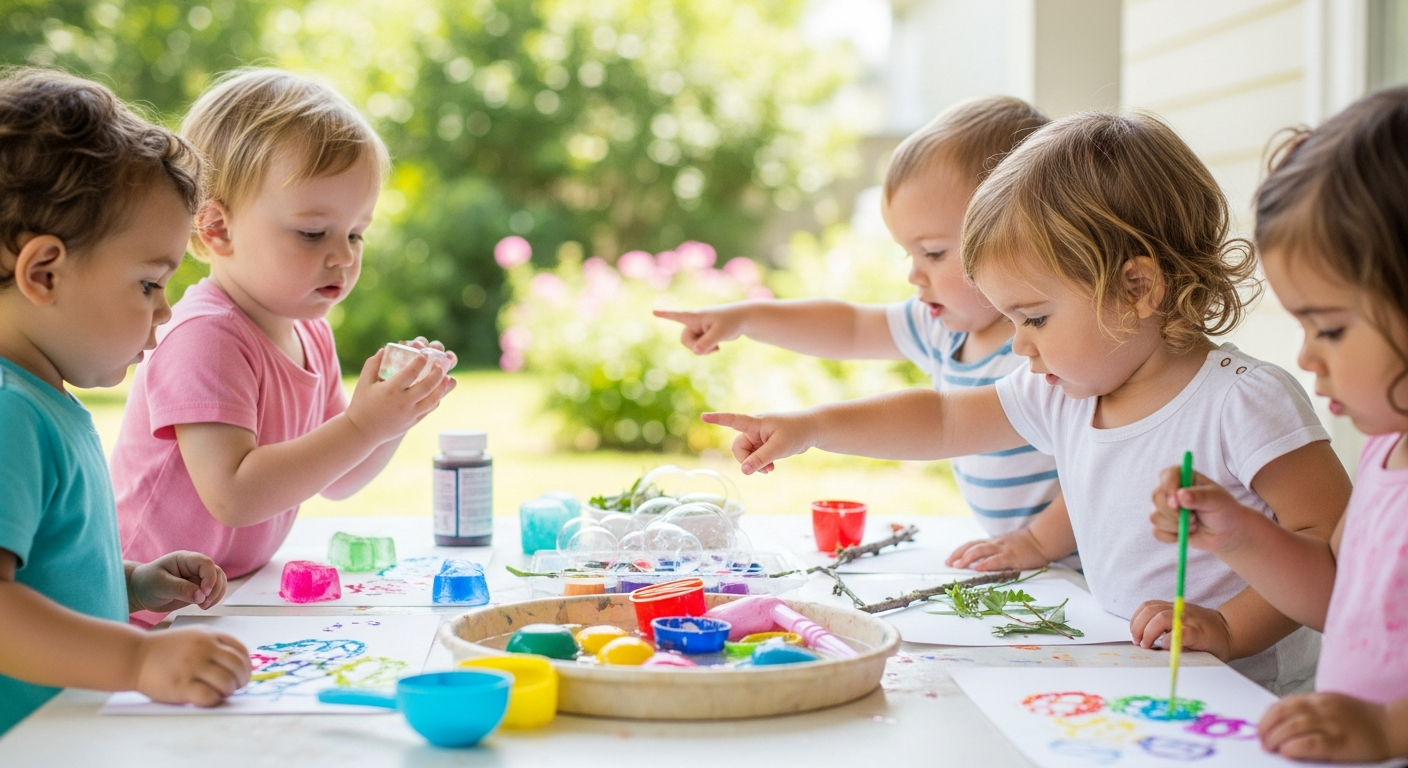
Table of Contents
- Introduction
- The Science of Play and Speech Development
- Messy and Sensory Art Projects
- Nature-Inspired Toddler Summer Crafts
- Upcycled and Recycled Creations
- Fine Motor Skills and "Smart Screen Time"
- Practical Scenarios: Connecting Crafts to Speech Blubs
- More Toddler Summer Crafts to Try
- Maximizing the Value of Your Learning Tools
- Setting Realistic Expectations
- Conclusion
- Frequently Asked Questions
Introduction
Did you know that by the age of three, a child’s brain has already reached 80% of its adult volume? This rapid period of growth is fueled by every squish of mud, every stroke of a paintbrush, and every conversation shared during play. Yet, for many families, communication doesn't always come easily. Approximately 1 in 4 children face speech and language challenges, a reality that our founders at Speech Blubs know personally. Having grown up with speech hurdles themselves, they created a tool that blends the joy of play with the rigor of scientific methodology.
As the sun begins to shine and the days stretch longer, parents often find themselves looking for ways to keep little hands busy and little minds growing. Toddler summer crafts are more than just a way to pass the time; they are vital opportunities for sensory exploration, fine motor development, and most importantly, language building. When your child describes the "blue" sky they are painting or asks for "more" glue, they are practicing the foundational skills of communication.

In this post, we will explore a wide variety of engaging, easy-to-implement summer crafts designed specifically for the developmental needs of toddlers. We’ll also show you how to pair these activities with "smart screen time" to create a holistic learning environment. Our goal is to help your child find the confidence to speak their minds and hearts through the power of joyful, creative play.
The Science of Play and Speech Development
Before we dive into our list of crafts, it is important to understand why these activities are so beneficial. At Speech Blubs, our approach is rooted in the "video modeling" methodology, where children learn by watching and imitating their peers. You can see this same principle in action during crafting. When you sit with your toddler and model how to dip a brush in paint, they are watching, processing, and eventually imitating your actions.
This imitation is the precursor to speech. To support this journey, we invite you to explore our research page to see how our method places us in the top tier of speech apps worldwide. By combining hands-on crafts with our "smart screen time," you provide a multi-sensory experience that reinforces new vocabulary and concepts.
For instance, if you are working on a craft involving animals, you might supplement that activity with the "Animal Kingdom" section of our app. This allows your child to see real peers making animal sounds, which they can then practice while they glue cotton balls onto a paper plate sheep. This connection between the physical craft and the digital model creates a powerful learning loop.
Messy and Sensory Art Projects
Sensory play is the "work" of a toddler. By engaging their senses, they are making sense of the world around them. Here are some of our favorite messy summer crafts that prioritize the process over the final product.
1. Cooling Ice Painting
This is a fantastic outdoor activity for those sweltering July afternoons. It’s simple, cooling, and offers a unique texture that toddlers find fascinating.

- How to do it: Freeze water mixed with a few drops of food coloring in an ice cube tray. Once frozen, give your child a large roll of brown paper and let them "paint" as the ice melts.
- Speech Tip: Use descriptive words like "cold," "wet," "melting," and "slippery." If your child is a "late talker," these sensory-heavy moments are perfect for encouraging first words.
2. Yogurt Finger Painting
For younger toddlers who still put everything in their mouths, edible paint is a must.
- How to do it: Mix plain Greek yogurt with natural food coloring or fruit purees (like smashed blueberries or strawberries). Let them go to town on a high-chair tray or a large piece of cardstock.
- Speech Tip: Focus on "yummy," "sticky," and color names.
3. Shaving Cream "Sea Foam"
If you’re looking for a craft that doubles as a sensory bin, shaving cream is your best friend.
- How to do it: Fill a shallow bin with shaving cream and add blue food coloring. Give your child plastic sea creatures and let them explore the "ocean."
- Speech Tip: Practice "splash," "under," and "hide." You can find many of these sea creatures in our app to help your child learn their names through peer imitation.
4. Bubble Art
Bubbles are a universal toddler favorite. Transforming them into art is pure magic.
- How to do it: Mix bubble solution with a little bit of washable paint. Have your child blow bubbles onto a piece of paper (or you blow them and let them "pop" on the paper).
- Speech Tip: This is great for oral motor skills! Squeezing the lips to blow is an important physical precursor to making certain speech sounds.
Takeaway: Don't fear the mess! Sensory experiences are direct pathways to brain development. Just keep a towel nearby and let the creativity flow.
Nature-Inspired Toddler Summer Crafts
Summer provides an abundance of free crafting materials right in your backyard. Utilizing nature helps toddlers connect with the environment while building their vocabulary.
5. Pet Cactus Rocks
This craft is perfect for building fine motor skills and encouraging imaginative play.
- How to do it: Go on a "rock hunt" in your garden or a local park. Once you find smooth, oval rocks, paint them green. Once dry, help your child add "spikes" with a white marker or add googly eyes.
- Speech Tip: Give the rocks names! Creating a "persona" for an object is a great way to practice social communication.
6. Clay Plant Imprints
- How to do it: Use air-dry clay or salt dough. Have your child press leaves, flowers, or twigs into the clay to create beautiful imprints.
- Speech Tip: Talk about the parts of the plant: "stem," "leaf," and "flower."
7. Sun-Catcher Nature Frames
- How to do it: Cut the center out of a paper plate and cover the hole with clear contact paper. Let your child stick flower petals and leaves onto the sticky surface.
- Speech Tip: Use the finished product to talk about the sun. "Bright," "yellow," and "sunny" are great words to practice.
If you are curious about how your child's communication skills are tracking alongside these developmental milestones, you can take our quick 3-minute preliminary screener. It involves 9 simple questions and provides an assessment and next-steps plan to help you support your little one.
Upcycled and Recycled Creations
Teaching toddlers about sustainability can start early with these "trash to treasure" projects.
8. Milk Carton Birdhouses
- How to do it: Clean out a juice or milk carton. Cut a hole in the side (adults only!) and let your child paint the exterior. Hang it in a tree and wait for feathered friends.
- Speech Tip: This is a perfect bridge to our "Animal Kingdom" section. When the birds arrive, you can practice the "tweet tweet" sounds your child saw in the app.
9. Egg Carton Caterpillars
- How to do it: Cut a strip of an egg carton. Let your child paint each "hump" a different color. Add pipe cleaner antennae.
- Speech Tip: Practice counting! "One, two, three segments!"
10. Cardboard Box Sailboats
- How to do it: A simple cardboard box can become a majestic ship. Let them paint the "hull" and use a stick and an old rag for a sail.
- Speech Tip: Use action words like "row," "sail," and "go!"
Fine Motor Skills and "Smart Screen Time"
As a child development expert, I often hear parents worry about screen time. At Speech Blubs, we advocate for a different kind of digital experience. Instead of passive viewing—like sitting silently in front of cartoons—we provide a "smart screen time" experience.
Our app is designed to be used with an adult. It encourages the child to engage, vocalize, and interact. This is the perfect supplement to physical crafts. For example, after spending an hour working on fine motor skills like threading beads, a short session with Speech Blubs can help transition your child into a space of vocal imitation and confidence.
11. Shoestring Straw Necklaces
- How to do it: Cut colorful plastic straws into small pieces. Give your child a shoestring with a large knot at the end and let them thread the straws.
- Speech Tip: This requires intense focus. When they finish, celebrate with "I did it!" or "Look, Mommy!"
12. Sticker Collage Art
- How to do it: Sometimes the simplest crafts are the best. Give your child a sheet of stickers and a piece of paper.
- Speech Tip: Ask them to place stickers "on top," "beside," or "under" other stickers to practice prepositions.
To see how other families have integrated these tools into their daily routines, you can read our parent testimonials. Many parents find that the combination of tactile play and our peer-modeling videos helps reduce frustration and fosters a genuine love for communication.
Practical Scenarios: Connecting Crafts to Speech Blubs
Let’s look at how this works in real life. Imagine you have a 3-year-old who is a "late talker" and is currently obsessed with anything that has wheels.
- The Craft: You set up "Truck Painting." You put a few dollops of paint on a tray and let your child drive their toy construction trucks through the paint and then across a large piece of paper.
- The Challenge: Your child is having fun but isn't using many words to describe the action.
- The Speech Blubs Solution: After the craft, you open the Speech Blubs app and navigate to the "Beep Beep" section. Your child sees a peer their own age making "vroom vroom" and "honk honk" sounds. Because they just spent thirty minutes doing those exact actions with their hands, the connection in their brain is much stronger. They are more likely to imitate the peer on the screen because the concept is fresh and relevant.
Ready to start your journey? You can download Speech Blubs on the App Store or get it on Google Play to begin today.
More Toddler Summer Crafts to Try
13. Paper Plate Watermelons
Paint a paper plate pink in the center and green on the rim. Once dry, let your toddler use their finger to dip in black paint and create "seeds."
14. Squirt Gun Painting
Fill squirt guns with water and liquid watercolors. Hang a sheet on a fence and let them fire away! This is excellent for hand strength.
15. Frozen Pom-Pom Excavation
Freeze pom-poms in a block of ice and give your child warm water and a dropper to "rescue" them.
16. DIY Pineapple Maracas
Fill plastic bottles with rice and let your child paint them yellow with green "leaves" at the top. Shake, shake, shake!
17. Coffee Filter Butterflies
Use markers to color coffee filters, spray with water to let the colors bleed, then pinch in the middle with a clothespin.
18. Fork-Painted Sunflowers
Use a plastic fork to dip in yellow paint and create "petals" around a brown circle.
19. Sticky Table Nature Art
Cover a small table with contact paper (sticky side up). Let your child press found nature items onto it.
20. Tin Foil Moon Painting
Painting on foil offers a slippery, shiny texture that is very different from paper.
21. Celery Stalk Roses
Cut the base off a head of celery and use it as a stamp to create rose-like shapes.
22. Handprint Flamingos
The classic summer bird! Use pink paint on their hand and turn it upside down to create the bird’s body.
23. Toilet Paper Roll Binoculars
Tape two rolls together and add a string. Go on a "speech safari" around the backyard!
24. Jellyfish Paper Plates
Paint a plate and staple long strips of ribbon or tissue paper to the bottom for tentacles.
25. Salt Dough Shells
If you can’t get to the beach, make your own shells out of salt dough and paint them with pearlescent colors.
Maximizing the Value of Your Learning Tools
We know that parenting is expensive, and you want to ensure that any tool you bring into your home is worth the investment. At Speech Blubs, we want to be as transparent as possible about our pricing and the value we provide.
We offer two main ways to join our family:
- Monthly Plan: $14.99 per month. This is a great way to test the waters if you're looking for a short-term boost.
- Yearly Plan: $59.99 per year. This is our best value option, breaking down to just $4.99 per month—the price of one fancy coffee!
When you choose the Yearly plan, you’re not just saving 66% compared to the monthly rate. You also get access to:
- A 7-day free trial so you can explore the app risk-free.
- The Reading Blubs app, which expands your child’s learning into the world of literacy.
- Early access to all new updates and features.
- Priority 24-hour support response time from our dedicated team.
The Monthly plan does not include the free trial or the Reading Blubs app, which is why we highly recommend the Yearly plan for families who want the full suite of developmental features. You can create your account and begin your 7-day free trial today to see the difference for yourself.
Setting Realistic Expectations
While we are incredibly proud of the impact Speech Blubs has had on millions of children, it is important to remember that every child's journey is unique. We don't promise that your child will be giving public speeches in a month. Instead, we focus on the building blocks: fostering a love for communication, building confidence, and reducing the frustration that often comes when a child can't make themselves understood.
Think of Speech Blubs as a powerful supplement to your child’s overall development plan. Whether you are working with a professional speech-language pathologist or simply looking to give your child a head start, our app provides joyful family learning moments that make the "work" of learning feel like play.
Conclusion
Summer is a season of discovery. Whether you are painting with ice, building a milk carton birdhouse, or exploring the "Animal Kingdom" on Speech Blubs, you are providing your child with the tools they need to succeed. These toddler summer crafts are more than just cute keepsakes; they are the stepping stones to a lifetime of confident communication.
We encourage you to embrace the mess, follow your child’s lead, and find joy in the small victories—the first time they say a new word, the way they focus on threading a bead, or the smile they give when they see a peer on a screen doing exactly what they just did.
Are you ready to empower your child to speak their mind and heart? Choose the Yearly plan to get the best value, including our 7-day free trial and the Reading Blubs app. Download Speech Blubs on the App Store or Google Play to begin your journey today.
Frequently Asked Questions
What is the best age to start doing summer crafts with my toddler?
Most toddlers can begin simple supervised crafts as soon as they have the fine motor control to grasp a large crayon or brush, typically around 12 to 18 months. At this age, focus entirely on the sensory experience (like yogurt painting) rather than a finished product.
My child is a late talker; how can I use crafts to help them?
Crafts are excellent for "narrating" life. As your child plays, describe what they are doing using simple sentences. "You are using blue." "The glue is sticky." This constant, relevant language input helps them build their internal vocabulary until they are ready to speak.
How do I manage the mess of toddler summer crafts?
The best strategy is to take the activities outside! Use a large drop cloth or old bedsheet on the grass. If you are indoors, a plastic "splat mat" under the high chair or table works wonders. Remember, washable materials are your best friend.
How does Speech Blubs differ from regular cartoons for my toddler?
Unlike cartoons, which are passive, Speech Blubs is interactive and based on "video modeling." Your child isn't just watching; they are being prompted to imitate, respond, and participate. It’s designed to be a "smart screen time" tool that supplements physical activities like crafting.
About the author