
25 Creative Winter Themed Toddler Activities for Home Play
 By Speech Blubs Team•Feb 23, 2026•15 min.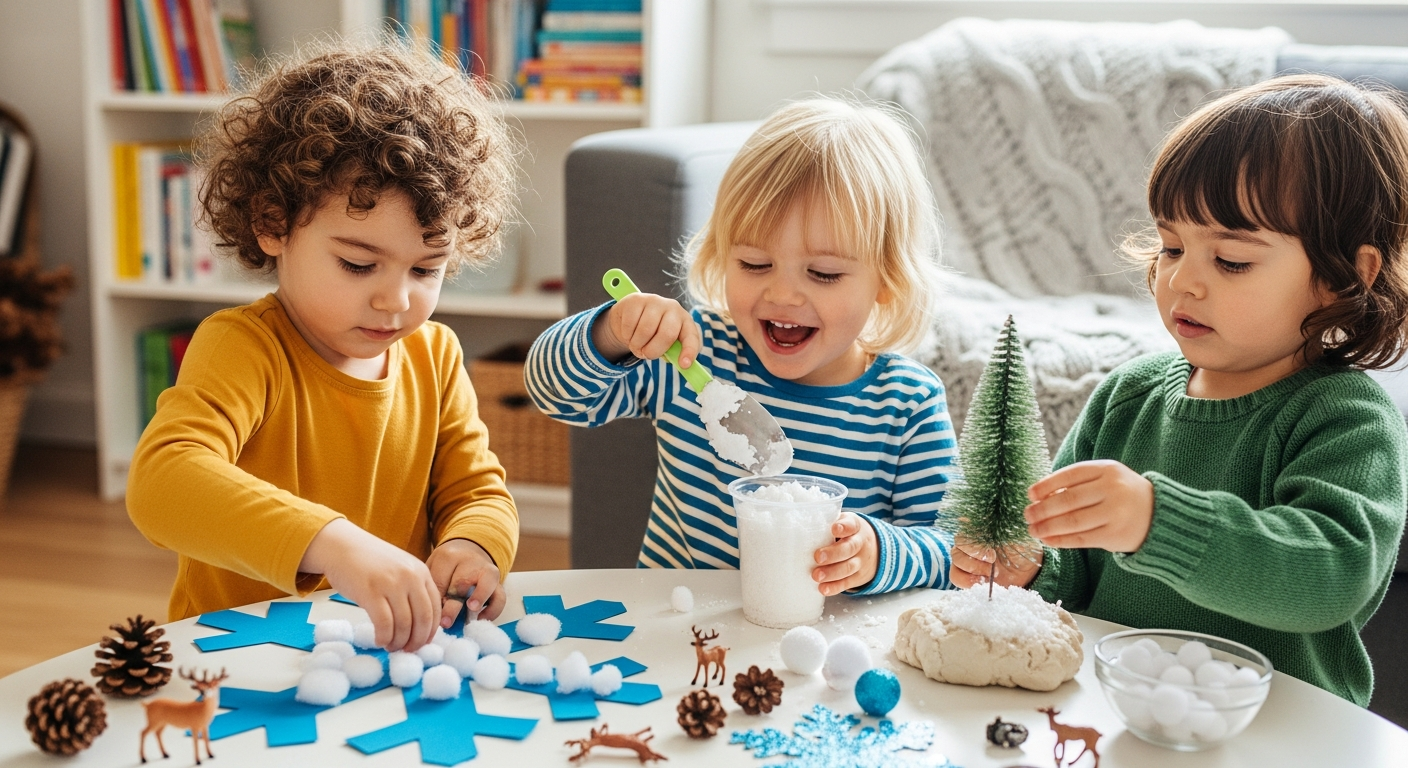
Table of Contents
- Introduction
- The Power of Sensory Winter Play
- Creative Arts for Chilly Afternoons
- Language-Boosting Winter Games
- Burning Off Energy: Active Indoor Winter Fun
- Exploring the Great Outdoors
- Why "Smart Screen Time" Matters in Winter
- The Speech Blubs Yearly Plan: The Best Value for Your Family
- Integrating Winter Themes into Daily Routines
- The Science of Play and Connection
- Conclusion
- Frequently Asked Questions
Introduction
When the first frost hits the windowpane and the morning air turns crisp, we often find ourselves retreating indoors, wondering how to keep our energetic little ones occupied. For parents of toddlers, winter can feel like a long stretch of "cooped up" energy, but at Speech Blubs, we see this season as a magical window for growth. Did you know that roughly 1 in 4 children will face some form of speech or language delay during their early years? These cold months provide the perfect opportunity to slow down, connect, and use play as a bridge to communication.
The purpose of this guide is to provide you with a treasure trove of winter themed toddler activities that go beyond mere "busy work." We have curated a list of sensory, creative, and physical activities designed to boost vocabulary, strengthen fine motor skills, and foster joyful family moments. We will cover everything from indoor "snow" play to language-rich crafts that encourage your child to find their voice.

Our mission is to empower every child to "speak their minds and hearts," a goal born from our founders’ own personal experiences growing up with speech challenges. By the end of this post, you will have a clear roadmap for navigating the winter season with activities that are not only fun but are also rooted in developmental science. Winter isn't just a time to wait for spring; it’s a season for your child to flourish through purposeful, "smart" play.
The Power of Sensory Winter Play
Sensory play is the foundation of early learning. When a toddler feels the coldness of ice or the squish of shaving foam "snow," their brain is forming vital neural connections. At Speech Blubs, we believe in a holistic approach to development, where tactile experiences support language acquisition.
1. Arctic Ice Rescue
This is a classic activity that never fails to captivate. Place small plastic animals—like penguins, polar bears, or whales—into a muffin tin or Tupperware container. Fill it with water and freeze it overnight. The next morning, place the ice block in a large bin and give your child a spray bottle of warm water and a small toy hammer or spoon.
As they work to "free" the animals, you can narrate the process. Use target words like cold, ice, hard, melt, and help. For a parent whose 3-year-old "late talker" loves animals, the "Animal Kingdom" section of our app offers a perfect way to reinforce this play. You can watch the peer models in the app make animal sounds, then try to mimic those sounds as each animal is rescued from the ice.
2. Indoor Snow Painting
If it’s too cold to spend more than five minutes outside, bring the snow to them! Fill a shallow storage bin with fresh snow from the yard. Give your child small cups of water tinted with food coloring and several eye-droppers or pipettes.
This activity is a powerhouse for fine motor development. Squeezing the pipette builds the hand strength needed for eventually holding a pencil or zipping up a winter coat. While they paint the snow, you can practice color names and descriptive words like bright, blue, wet, and disappearing.

3. DIY "Clean" Snow
If you live in a climate without actual snow, you can make your own using just two ingredients: baking soda and white hair conditioner (or shaving foam). Mix roughly three cups of baking soda with half a cup of conditioner until it reaches a moldable, snowy consistency.
This "snow" feels cold to the touch and smells wonderful. It’s a great way to encourage "imaginative play." Help your child build tiny snowmen and talk about the parts of the face. This mirrors our scientific methodology of video modeling, where children learn by observing others. You can even record your child playing and show it back to them, letting them be the "star" of their own learning video.
4. Frozen Pom-Pom Excavation
Similar to the ice rescue, freeze blue, white, and silver pom-poms in a block of ice. Once frozen, the pom-poms take on a heavy, slushy texture that is incredibly satisfying to touch. Provide your toddler with tongs to pick up the "defrosted" pom-poms. This helps with hand-eye coordination and provides a great opportunity to practice counting.
Creative Arts for Chilly Afternoons
Artistic expression is a vital way for toddlers to communicate before they have all their words. These winter themed toddler activities focus on the process of creation rather than the final product.
5. Puffy Paint Snowmen
Mix equal parts white school glue and shaving cream in a bowl. The result is a thick, "puffy" paint that dries with a 3D texture. Let your toddler use their hands or a thick brush to create a "melted snowman" on blue construction paper.
Before the paint dries, offer buttons, small sticks, and a paper orange "carrot" nose. As they press the items into the puffy paint, use directional words like on top, middle, bottom, and beside. This kind of "smart screen-free time" encourages focus and reduces the frustration that often comes with passive screen consumption.
6. Mitten Matching and Sorting
Cut out several pairs of mittens from different colors of felt or construction paper. Decorate them with simple patterns—stripes, dots, or zig-zags. Scatter them across the floor and ask your child to find the "friends" (the matching pairs).
This activity builds cognitive categorization skills. If your child is struggling with specific sounds, you can label the mittens with letters or pictures that start with their target sound. To see how your child is progressing with their milestones, you can take our quick 3-minute preliminary screener to get a personalized assessment and a next-steps plan.
7. Marshmallow Snowflake Structures
For older toddlers who no longer put everything in their mouths, mini marshmallows and toothpicks are a fantastic building tool. Show them how to poke the toothpick into the marshmallow to create "snowflakes."
This is a wonderful way to discuss shapes and symmetry. You can talk about "straight lines" and "points." If you're looking for more ways to engage your child's mind, download Speech Blubs on the App Store to explore our "Early Logics" section, which complements these types of spatial awareness activities.
Language-Boosting Winter Games
Games are a natural way to foster social communication, turn-taking, and listening skills.
8. Snowman Sequencing
Draw three pictures: one of a single large snowball, one of a snowman body, and one of a fully decorated snowman. Ask your child to put the pictures in the order of how you build a snowman.
Sequencing is a core component of storytelling and logic. By understanding "first, then, and last," children build the framework for complex sentence structures. Our app uses video modeling to show other children performing these sequences, which triggers mirror neurons in your child’s brain, making it easier for them to imitate and learn.
9. Winter Vocabulary Scavenger Hunt
Create a simple checklist with pictures of winter items: a hat, a scarf, a pinecone, a white toy, and a blue blanket. Hide these items around the living room and have your child find them.
Each time they find an item, encourage them to say the name. If they are just beginning to speak, you can focus on the initial sound (e.g., "Sss" for scarf). This turns a simple game into a powerful speech therapy tool. Many parents have found that these simple, joyful moments lead to major breakthroughs. You can read some of their success stories and testimonials to see how play-based learning makes a difference.
10. The "Sneezy" Game
Inspired by the popular children’s book Sneezy the Snowman, this game involves pretending to be a snowman who keeps "melting" and needs to be "rebuilt." You can use a white sheet or towel to cover your child, then say "Oh no, he’s melting!" as they slowly sink to the floor. Then, "build" them back up by pulling the sheet up and adding a hat.
This game is excellent for teaching verbs and body parts. It’s also a high-energy way to practice "anticipatory waiting"—where you pause before the "melt" to see if your child will use a word or gesture to prompt you to continue.
Burning Off Energy: Active Indoor Winter Fun
When the weather prevents outdoor play, toddlers still need to move their bodies to stay regulated and focused.
11. Tape "Ice" Skating
Use painter’s tape to create "lanes" or "rinks" on your carpet or hardwood floor. Give your child two pieces of wax paper or two small microfiber cloths to stand on. Show them how to "skate" across the floor by sliding their feet.
Gross motor play like this is actually linked to language development. Moving the large muscles of the body helps stimulate the brain areas responsible for coordination, including the coordination needed for speech. To get started with a routine that blends movement and learning, sign up and begin your 7-day free trial today.
12. Indoor Sock "Snowball" Fight
Roll up pairs of white socks to create soft, safe snowballs. Clear a space in the living room and have a gentle "fight." This is a great way to practice social cues, like saying "Stop" or "My turn," in a safe, fun environment.
13. Snowy Obstacle Course
Use pillows as "snowdrifts," a blue rug as a "frozen lake," and chairs as "mountains." Give your child instructions on how to navigate the course: "Crawl over the snowdrift," "Jump over the lake," or "Twirl like a snowflake." This follows our philosophy of making learning a "joyful solution" rather than a chore.
Exploring the Great Outdoors
Even in winter, a few minutes of fresh air can do wonders for a toddler’s mood and sensory processing.
14. Bird Feeder Observation
Coat a pinecone in sunflower butter (a great nut-free alternative) and roll it in birdseed. Hang it near a window where your child can watch the birds come to eat.
This provides a calm, "screen-free" observation period. Talk about the colors of the birds and the sounds they make. You can find more bird-related activities in the "Animal Kingdom" section of the Speech Blubs app on Google Play.
15. Snow Stomping and Letter Tracing
If you have snow on the ground, use it as a giant chalkboard. Use a stick to draw large shapes or letters and have your child "stomp" on them to trace the lines. This giant-sized learning helps solidify the concepts of letter formation in a way that sitting at a desk cannot.
Why "Smart Screen Time" Matters in Winter
As parents, we know the temptation to put on a cartoon when the winter days feel long. However, there is a big difference between passive viewing and the "smart screen time" we offer at Speech Blubs.
Our app is designed to be a tool for family connection, not a digital babysitter. We use peer-to-peer video modeling because children are naturally drawn to other children. When your toddler sees a peer on the screen making a "brrr" sound or saying "snowman," their brain is much more likely to attempt that sound themselves.
Setting Realistic Expectations
We want to be clear: every child’s journey is unique. We don't promise that your child will be giving public speeches in a month. Instead, our goal is to foster a love for communication, build confidence, and reduce the frustration that comes when a child can't express their needs. Our app is a powerful supplement to your child's overall development and works beautifully alongside professional therapy if your child is already enrolled.
The Speech Blubs Yearly Plan: The Best Value for Your Family
We believe that consistency is key to development. That’s why we offer two main ways to access our full suite of tools, which includes over 1,500 activities and new content added regularly.
- Monthly Plan: $14.99 per month. This is a great way to test the waters and see how your child responds to the video modeling method.
- Yearly Plan: $59.99 per year. This is our most popular option because it breaks down to just $4.99 per month—a 66% saving compared to the monthly plan.
The Yearly Plan is designed to provide the most comprehensive support for your child's journey. When you choose the Yearly plan, you receive:
- A 7-day free trial to explore everything with zero risk.
- The Reading Blubs app included at no extra cost, helping your child transition from speech to early literacy.
- Early access to all new updates and features.
- Priority 24-hour support response time from our dedicated team.
The Monthly plan does not include these additional benefits, making the Yearly plan the clear choice for families committed to long-term progress. Ready to get started? Create your account and begin your 7-day free trial today.
Integrating Winter Themes into Daily Routines
You don't always need a "planned" activity to make the most of the season. You can turn everyday moments into winter themed toddler activities.
16. The "Bundle Up" Song
When it's time to put on coats, hats, and mittens, turn it into a song. "First we put our arms in the coat, arms in the coat, arms in the coat..." This helps with sequencing and makes a potentially stressful transition (getting ready to leave) into a fun game.
17. Hot Cocoa Counting
After playing outside, enjoy a cup of warm (not hot!) cocoa. Let your toddler count out five marshmallows to put in their cup. This simple act combines math, fine motor control, and a tasty reward.
18. Window Fog Drawing
On very cold days, the windows often fog up. Show your child how to draw simple "smiley faces" or "snowflakes" in the condensation. This is a temporary, mess-free way to practice pre-writing strokes.
19. "Hibernation" Reading Nook
Create a cozy "den" using blankets and pillows. Bring in a few winter-themed books and spend 15 minutes reading together. Ask your child to point to the "cold" things or the "white" things in the pictures. This "joint attention" is a critical precursor to advanced language skills.
The Science of Play and Connection
At Speech Blubs, we are deeply committed to providing an effective and joyful solution for the millions of children who need speech support. Our approach is built on scientific principles, but it’s delivered through the lens of play. We know that a child who is having fun is a child who is ready to learn.
Our founders didn't just build an app; they built the tool they wished they had when they were struggling with their own speech problems. This personal connection drives our empathetic expertise. We understand the worry that comes with a speech delay, but we also know the incredible joy that comes with that first "Mama," "Dada," or "Look!"
By combining these winter themed toddler activities with the structured, science-backed path of Speech Blubs, you are giving your child a powerful foundation. You are moving from passive screen time to "smart" engagement that builds the complex communication skills they will use for the rest of their lives.
Conclusion
Winter doesn't have to be a season of "waiting." With a little creativity and the right tools, it can be a season of incredible breakthroughs. From the tactile thrill of an Arctic Ice Rescue to the language-rich environment of a Winter Scavenger Hunt, these activities are designed to meet your toddler right where they are.
Remember, our mission is to help your child "speak their minds and hearts." Whether you are working on initial sounds, building vocabulary, or just trying to reduce the frustration of a "late talker," we are here to support you every step of the way.
Don’t let another chilly day go by without turning it into a learning opportunity. We invite you to join our community of over 5 million parents who have seen the benefits of our video modeling methodology. Download Speech Blubs on the App Store or Google Play to begin your journey. For the best value and access to all our premium features, including the Reading Blubs app and a 7-day free trial, be sure to select our Yearly plan. Together, let's make this winter a season of joy, connection, and many new words!
Frequently Asked Questions
What are the best winter activities for a toddler with a speech delay?
The best activities are those that encourage "joint attention" and imitation. Sensory bins (like the Arctic Ice Rescue) and interactive games (like the "Sneezy" Game) are excellent because they provide natural opportunities for you to model simple words and for your child to mimic your sounds and gestures.
How much does Speech Blubs cost, and is there a free trial?
Speech Blubs offers two main plans: a Monthly plan for $14.99 and a Yearly plan for $59.99 (which is only $4.99/month). The Yearly plan is the best value as it includes a 7-day free trial, the Reading Blubs app, and priority support. You can start your trial on our sign-up page.
Can indoor activities really help with my child's language development?
Absolutely! Language development is closely tied to sensory experiences and motor skills. Activities that involve following directions, learning new vocabulary in context (like "melt," "freeze," or "slippery"), and practicing fine motor tasks all help build the neural pathways necessary for speech.
Is Speech Blubs considered "bad" screen time for my toddler?
No, Speech Blubs is "smart screen time." Unlike passive cartoons, our app is an interactive tool based on "video modeling." It encourages children to speak, move, and interact with their peers on screen. It is designed to be used as a co-play tool with an adult, fostering connection rather than isolation.
About the author