
25 Easy Kids Christmas Crafts to Spark Joy and Language
 By Speech Blubs Team•Dec 22, 2025•20 min.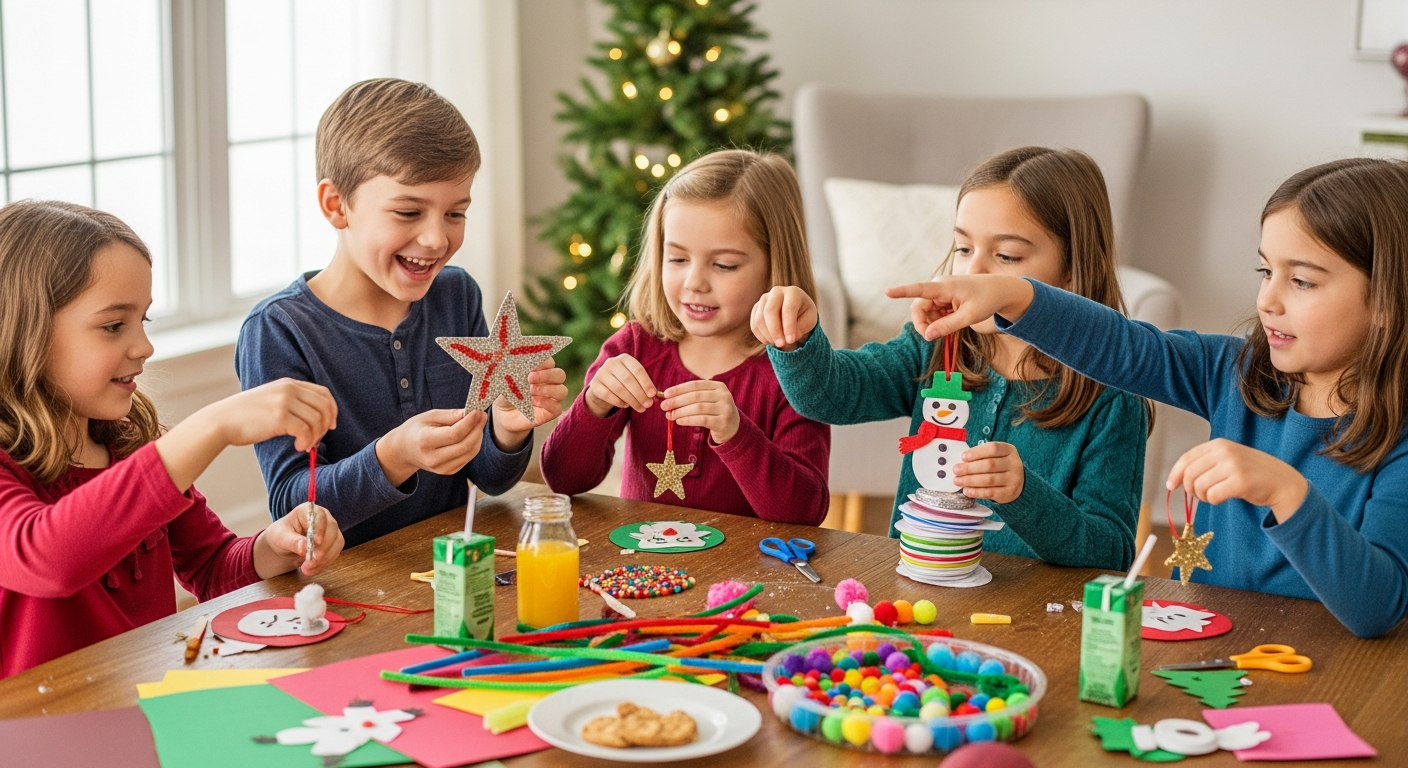
Table of Contents
- Introduction
- Why Crafts Are More Than Just Fun: A Developmental Boost
- The Magic of Christmas Crafts for Language Learning
- Super Easy Christmas Crafts for Toddlers & Preschoolers (Ages 1-4)
- Engaging Christmas Crafts for Early Elementary Kids (Ages 5-8)
- Beyond the Craft: Maximizing Speech & Language Opportunities
- Making Communication Joyful and Empowering: The Speech Blubs Approach
- Partnering with Speech Blubs for Year-Round Support
- Conclusion
- Frequently Asked Questions
Introduction
Do you ever wonder if the magic of Christmas could do more than just fill your home with cheer – if it could also spark a burst of communication in your child? It's a question many parents ponder, especially when seeing their little ones struggle to express themselves. The truth is, the holiday season, with its vibrant colors, unique textures, and endless possibilities for creation, offers a golden opportunity to weave speech and language development into everyday joy. Forget the overwhelming feeling of complex educational tools; sometimes, the simplest activities hold the most profound potential.
This blog post isn't just about glue and glitter; it's about harnessing the festive spirit to create meaningful connections and build essential communication skills. We'll explore a delightful array of easy kids Christmas crafts, perfect for children of all ages, and reveal how each one can become a powerful platform for vocabulary expansion, expressive language, and social interaction. From the first snip of paper to the final sparkle, we’ll guide you through making the most of these heartwarming moments, showing you how to turn festive fun into a foundation for your child to confidently speak their minds and hearts.

Why Crafts Are More Than Just Fun: A Developmental Boost
Crafts are often seen as a delightful pastime, a way to keep little hands busy. But for growing children, especially those developing their communication skills, they are so much more. Engaging in creative activities offers a holistic developmental workout, touching upon several key areas that indirectly, yet powerfully, support speech and language acquisition.
Fine Motor Skills and Pre-Writing Foundations
Think about the precise movements involved in threading a bead, cutting along a line, or even gripping a paintbrush. These actions strengthen the small muscles in the hands and fingers, building dexterity and control. This "fine motor gym" is crucial because the same muscles and coordination used in manipulating craft materials are foundational for pre-writing skills and, surprisingly, for the oral motor control needed for clear articulation. When fingers gain precision, it helps the tongue and lips to follow suit, improving muscle memory and control for speech sounds.
Cognitive Development: Problem-Solving and Sequencing
Every craft project, no matter how simple, presents a series of steps and choices. Which color paper to use? How to attach the googly eyes? Where does the ribbon go? These seemingly small decisions engage a child's problem-solving abilities, encouraging them to think critically and plan their actions. Following a sequence of instructions – "first we cut, then we glue, then we decorate" – is a vital cognitive skill that translates directly into understanding narratives, processing complex sentences, and organizing thoughts for coherent speech.
Sensory Exploration and Engagement
Christmas crafts are a feast for the senses. The sticky texture of glue, the crinkle of tissue paper, the scent of cinnamon or pine, the visual delight of bright colors and glitter – all these sensory inputs create rich learning experiences. When children engage multiple senses, their brains create stronger connections, making it easier to recall new vocabulary and concepts. Describing these sensory experiences ("It's rough! This glitter is sparkly!") provides natural opportunities for expressive language practice.

Emotional Expression and Creativity
Crafts offer a safe and open-ended avenue for children to express their feelings, ideas, and unique perspectives. There's no right or wrong way to make a snowman out of cotton balls; the emphasis is on the creative process and the joy of personal accomplishment. This freedom fosters self-esteem and confidence, which are critical for children to feel comfortable and motivated to communicate. A child who feels proud of their creation is often more eager to share it and talk about it.
The Magic of Christmas Crafts for Language Learning
Beyond the general developmental benefits, Christmas crafts are uniquely positioned to be language powerhouses. The festive themes inherently introduce a rich vocabulary, and the hands-on nature of crafting creates countless opportunities for communication in a fun, pressure-free environment.
Vocabulary Building: A Festive Lexicon
The sheer volume of new words associated with Christmas is incredible! From ornaments, tinsel, and garlands to reindeer, elves, and Santa Claus, crafts provide tangible objects and actions for these terms. As you work together, you can introduce and reinforce words related to:
- Colors: Red, green, gold, silver, white
- Shapes: Circle, star, rectangle, triangle (for trees)
- Textures: Rough, smooth, bumpy, soft, sticky, sparkly
- Actions: Cut, glue, paste, draw, paint, decorate, hang, wrap
- Christmas-specific items: Bell, bow, gift, stocking, snowflake
Following Directions: Receptive Language in Action
Craft projects naturally involve a sequence of instructions. "First, get the paper. Next, cut a circle. Then, glue it here." This gives children practical experience with following multi-step directions, using temporal concepts (first, next, last), and understanding prepositions (on, under, beside). This strengthens their receptive language skills, which are crucial for comprehending instructions in school and daily life.
Describing and Expressing: Boosting Expressive Language
"Tell me about your reindeer!" "What color did you use for Santa's hat?" "How does the glitter feel?" These prompts encourage children to use descriptive language, articulate their choices, and narrate the steps of their creation. They learn to combine words into sentences, expanding their expressive vocabulary and sentence structure.
Storytelling and Narrative Skills
Each finished craft has a story. "This is a snowflake. It lives high in the sky and falls gently. I made it special with blue glitter." Encouraging your child to talk about their craft – what it is, how they made it, where it will go – helps them develop narrative skills, the ability to sequence events, and share ideas cohesively.
Social Interaction and Connection
Crafting together is inherently social. It involves turn-taking ("My turn for the glue!"), asking for help ("Can you open this?"), sharing materials, and discussing ideas. These interactions strengthen social communication skills, fostering cooperation and a sense of shared accomplishment. This shared experience is also incredibly valuable for family bonding, creating memories that last a lifetime.
At Speech Blubs, we believe that empowering children to "speak their minds and hearts" starts with making communication enjoyable and accessible. Our app was born from the personal experiences of our founders, who all grew up with speech problems and created the tool they wished they had. We are committed to providing an immediate, effective, and joyful solution for the 1 in 4 children who need speech support, blending scientific principles with play into one-of-a-kind "smart screen time" experiences. Just as these crafts create natural language opportunities, Speech Blubs provides a structured, engaging environment for learning. We’re proud that our method is backed by science, placing us in the top tier of speech apps worldwide, as you can explore on our Research page.
Super Easy Christmas Crafts for Toddlers & Preschoolers (Ages 1-4)
For our youngest crafters, the focus is on simplicity, sensory exploration, and repeating basic sounds and words. These crafts are perfect for introducing new vocabulary and practicing early speech sounds.
1. Handprint/Footprint Ornaments
- Materials: Salt dough or non-toxic paint, glitter (optional), ribbon.
- How it helps speech: Talk about "hand," "foot," "press," "squish." Describe the feeling: "It's soft," "It's sticky." Use action words: "Press hard," "Lift up." You can also make sounds like "smoosh!"
- Speech Blubs Connection: Just like we use video modeling in Speech Blubs to encourage imitation, these crafts offer natural opportunities for little ones to imitate words and sounds related to actions and body parts.
- Scenario: For a parent whose 2-year-old is just starting to imitate sounds, making a handprint ornament offers a chance to say "hand" and "press," while physically demonstrating the action. Speech Blubs’ "Wild Animals" section could then reinforce animal sounds and names through imitation, mirroring the hands-on learning.
2. Cotton Ball Snowmen
- Materials: Blue or black paper, cotton balls, glue, googly eyes, orange paper scraps for nose, twigs for arms.
- How it helps speech: Focus on "round," "white," "fluffy," "sticky." Count the cotton balls: "One, two, three snowmen." Name body parts: "eyes," "nose," "arms."
- Speech Blubs Connection: This craft emphasizes descriptive words and counting, skills also reinforced in Speech Blubs’ various categories, like "Early Sounds" or "Numbers," where children watch and imitate peers to learn.
3. Paper Plate Santas/Reindeer
- Materials: Paper plates, red/brown construction paper, cotton balls, googly eyes, glue.
- How it helps speech: Introduce "red," "white," "brown." Make animal sounds: "Ho-ho-ho!" for Santa, "Neigh" or "Click-clack" for reindeer. Discuss facial features: "beard," "nose," "eyes."
- Speech Blubs Connection: Our app's "People" or "Sounds" sections can perfectly complement this, with children learning to articulate facial features or fun character sounds by imitating the children on screen.
4. Pipe Cleaner Candy Canes
- Materials: Red and white pipe cleaners.
- How it helps speech: Talk about "red," "white," "twist," "bend," "stripe." Make a "mmm!" sound for delicious. "Look, a candy cane!"
- Speech Blubs Connection: This simple craft focuses on actions and colors, similar to how Speech Blubs introduces basic concepts through engaging, interactive activities, building fundamental vocabulary and motor skills required for speech.
5. Tissue Paper Wreaths
- Materials: Paper plate (center cut out), green and red tissue paper squares, glue.
- How it helps speech: Focus on "green," "red," "crinkle," "glue." Talk about "round" and "sticky." "Crinkle, crinkle, stick!"
- Speech Blubs Connection: The repetitive actions and descriptive words in this craft are excellent for pre-speech development, much like the repetitive modeling in Speech Blubs helps children master new words and sounds.
6. Cardboard Roll Reindeer/Elves
- Materials: Empty toilet paper/paper towel rolls, brown/green paint, googly eyes, pipe cleaners, small pom-poms.
- How it helps speech: Introduce "roll," "paint," "brown," "green." Name animal parts: "antlers," "nose." Make character sounds.
- Speech Blubs Connection: Children learn by watching and imitating, both with their peers in Speech Blubs and with you during craft time. This craft encourages imagination and character voices.
Engaging Christmas Crafts for Early Elementary Kids (Ages 5-8)
For school-aged children, crafts can involve more steps, finer details, and opportunities for more complex language use, such as sequencing, describing processes, and telling stories.
7. Popsicle Stick Ornaments (Reindeer, Snowflakes, Stars)
- Materials: Popsicle sticks, glue, paint, glitter, buttons, small bells.
- How it helps speech: Encourage sequencing: "First, glue the sticks. Next, paint them. Then, add glitter." Describe shapes ("star," "triangle") and patterns. Discuss what they're making and why.
- Speech Blubs Connection: As children grow, their communication needs evolve. Speech Blubs offers diverse activities to build more complex sentences and narratives, similar to how these crafts encourage describing materials and steps and telling about their finished piece.
8. DIY Gift Tags
- Materials: Cardstock, markers, stamps, stickers, glitter, hole punch, ribbon.
- How it helps speech: Practice writing names, using descriptive words for gifts ("This is for Grandpa, it's a lovely tag!"), and discussing who the gifts are for. "What message will you write?"
- Speech Blubs Connection: This craft reinforces literacy alongside speech, a combination we embrace with our companion app. The Yearly plan of Speech Blubs includes the extra Reading Blubs app, offering a powerful duo for holistic language development.
9. Paper Chain Garlands
- Materials: Construction paper strips (various colors), glue or stapler.
- How it helps speech: Great for practicing patterns ("red, green, red, green"), counting links, and discussing length ("Is it long enough?"). Use action words: "fold," "staple," "link."
- Speech Blubs Connection: Repetition and sequencing are key here, mirroring how Speech Blubs uses structured activities to build confidence and fluency in speech patterns.
10. Salt Dough Ornaments
- Materials: Flour, salt, water, cookie cutters, paint, glitter, string.
- How it helps speech: This multi-step craft is fantastic for following and giving instructions. Discuss ingredients ("flour," "salt"), actions ("mix," "knead," "roll," "cut," "bake," "paint"). Describe textures before and after baking.
- Speech Blubs Connection: This craft offers a perfect opportunity to use descriptive words and action verbs. For a parent whose 3-year-old "late talker" loves animals, the "Animal Kingdom" section of Speech Blubs offers a fun, motivating way to practice animal sounds and names, which can be extended to describing animal cookie cutters in salt dough crafts. Our video modeling methodology, where children learn by watching and imitating their peers, makes these words stick.
11. Clothespin Reindeer
- Materials: Wooden clothespins, brown paint, googly eyes, red pom-poms for noses, small pipe cleaners for antlers.
- How it helps speech: Name body parts, colors. Practice "clip," "stand up." Imagine the reindeer flying. "What sound does a reindeer make?"
- Speech Blubs Connection: This craft encourages imaginative play and character development, which can be further explored in Speech Blubs’ "Wonder Stories" or "Who Am I" sections, promoting narrative and descriptive language.
12. "Stained Glass" Ornaments (Contact Paper & Tissue Paper)
- Materials: Contact paper, colorful tissue paper squares, scissors.
- How it helps speech: Describe colors and shapes. Talk about "sticky" and "see-through." "Watch the light shine through!" Practice "stick," "peel," "cut."
- Speech Blubs Connection: This visually stimulating craft helps children describe what they see. Speech Blubs also uses visual cues and engaging graphics to capture attention and facilitate learning.
13. Pinecone Animals/Ornaments
- Materials: Pinecones, googly eyes, felt scraps, pom-poms, glue, string.
- How it helps speech: Explore natural textures ("bumpy," "prickly"). Name the animal parts. Discuss where pinecones come from. "What does an owl say?"
- Speech Blubs Connection: Connecting to nature and animal sounds is a core part of early language development. Speech Blubs offers extensive content in its "Animal Kingdom" section to build this vocabulary.
14. DIY Snow Globes
- Materials: Small jar, waterproof glue, small plastic Christmas figures, glitter, distilled water, glycerin (optional).
- How it helps speech: Sequence instructions carefully. Describe "shimmer," "shake," "float." Talk about winter scenes. "Look at the snow falling!"
- Speech Blubs Connection: This craft is fantastic for multi-step instructions and descriptive language, skills that Speech Blubs also targets through structured lessons and engaging narratives.
15. Yarn-Wrapped Stars/Trees
- Materials: Cardboard cut-outs (stars, trees), yarn (various colors), glue.
- How it helps speech: Practice "wrap," "wind," "tie." Describe "soft" yarn, "rough" cardboard. Talk about patterns and colors.
- Speech Blubs Connection: The repetitive motion and verbalization make this a calm, focused activity that encourages descriptive language, much like the gentle rhythm of learning with our app.
Beyond the Craft: Maximizing Speech & Language Opportunities
Creating the craft is just the beginning. The real magic for language development happens through interaction, conversation, and play surrounding the activity.
Before the Craft: Setting the Stage for Success
- Introduce Vocabulary: Before you even get started, show your child the materials. "This is red paper. This is sparkly glitter. We're going to use glue."
- Discuss the Plan: "Today, we're going to make a snowman ornament! First, we'll get the cotton balls..." This helps with anticipation and receptive language.
- Give Choices: "Do you want red ribbon or green ribbon?" Giving choices empowers your child and encourages them to use words.
During the Craft: Interactive Language Immersion
- Describe Actions: Narrate what you are doing and what your child is doing: "You're cutting the paper. I'm gluing the eyes."
- Ask Open-Ended Questions: Instead of yes/no questions, ask "What are you making next?" "How does that feel?" "What color will you choose?"
- Use Action Verbs: Cut, glue, stick, paint, draw, fold, squeeze, press, sprinkle, shake.
- Model and Expand: If your child says "star," you can expand: "Yes, it's a shiny, yellow star!"
- Practice Sounds: For younger children, make fun sounds related to the actions: "Snip, snip, snip!" "Squeeze, squeeze, glue!"
- Turn-Taking: "My turn to glue, then your turn to add the glitter." This teaches essential conversational skills.
- Problem-Solving Talk: If something goes wrong, talk through it. "Oh no, the glue spilled! How can we fix it?"
After the Craft: Celebrating and Storytelling
- Show and Tell: Encourage your child to show their creation to others and talk about it. "Tell Daddy what you made!"
- Storytelling: "What's your snowman's name? What adventures will it have?" This builds narrative skills and imaginative play.
- Display with Pride: Hang the craft where it can be seen and discussed, providing ongoing opportunities for language reinforcement.
At Speech Blubs, we know that family connection is at the heart of learning. Our app provides a screen-free alternative to passive viewing (like cartoons) and a powerful tool for family connection, turning "screen time" into "smart screen time." Just as you engage in co-play during crafts, we encourage parents to engage with their children during our app's activities, making it a shared learning experience. We believe in fostering joy and reducing frustration, providing a solution that our founders, who experienced speech challenges firsthand, wished they had.
Making Communication Joyful and Empowering: The Speech Blubs Approach
Our mission at Speech Blubs is deeply rooted in the belief that every child deserves the ability to "speak their minds and hearts." We understand the journey of speech development can sometimes feel overwhelming for parents, which is why we've poured our personal experiences and scientific expertise into creating a tool that is not only effective but also genuinely joyful.
We’re dedicated to providing an immediate, effective, and joyful solution for the 1 in 4 children who need speech support. Our unique approach blends scientific principles with play, creating one-of-a-kind "smart screen time" experiences. We stand apart by offering a screen-free alternative to passive viewing, transforming what could be isolated screen time into a powerful tool for family connection and interactive learning.
The core of our methodology is "video modeling," where children learn by watching and imitating their peers. This natural, engaging process leverages mirror neurons in the brain, making learning new sounds, words, and sentences intuitive and fun. It's like having a playdate that simultaneously builds essential communication skills, fostering a love for communication and building confidence step by step. We don't promise your child will be giving public speeches in a month, but we do promise a process that builds foundational skills, reduces frustration, and creates countless joyful family learning moments. You can explore what other parents are saying about their child's success with Speech Blubs on our Testimonials page.
Partnering with Speech Blubs for Year-Round Support
While festive crafts offer wonderful seasonal opportunities, consistent, engaging practice is key for lasting speech and language development. That’s where Speech Blubs comes in as your year-round partner. Our app offers thousands of expertly designed activities that cover a wide range of speech and language areas, from early sounds and words to more complex sentences and social skills.
We encourage you to take advantage of our offerings to supplement your child’s development. Unsure if your child could benefit? Take our quick 3-minute preliminary screener to get a simple assessment and a free 7-day trial. It involves just 9 simple questions and provides an assessment and next-steps plan.
We offer two convenient plans to suit your family’s needs:
- Monthly Plan: Priced at $14.99 per month. This plan provides access to the core Speech Blubs app.
- Yearly Plan: Our best value at $59.99 per year, which breaks down to just $4.99 per month. This plan allows you to save 66% compared to the monthly option and unlocks an entire suite of exclusive, high-value features:
- A 7-day free trial to experience the full app before committing.
- The extra Reading Blubs app for comprehensive early literacy support.
- Early access to new updates and features, keeping content fresh and engaging.
- 24-hour support response time for any questions you may have.
The Monthly plan does not include these fantastic benefits, making the Yearly plan the clear best choice for families committed to their child's long-term speech and language journey. For the full experience and incredible value, we highly recommend choosing the Yearly plan.
Ready to provide your child with immediate, effective, and joyful speech support? Download Speech Blubs on the Apple App Store or Google Play to begin your journey. Or, if you prefer to sign up from your desktop, you can create your account and begin your 7-day free trial today to unlock all the amazing features of the Yearly plan.
Conclusion
This holiday season, let's transform simple crafting into profound learning. Easy kids Christmas crafts are much more than just festive decorations; they are vibrant pathways to enhanced communication, fostering fine motor skills, cognitive development, and crucial speech and language growth. From the joyful chatter over glitter glue to the proud storytelling of a finished ornament, every creative moment is an opportunity for your child to explore, learn, and express themselves. These moments of connection and shared activity lay a beautiful foundation for confident communication, enriching not only their language skills but also the warmth and bond of your family.
As you embark on these festive projects, remember that consistent, joyful engagement is key. For year-round support that seamlessly integrates fun and learning, Speech Blubs is here to empower your child's voice. We invite you to experience the full potential of "smart screen time" by downloading our app. Ready to get started? Create your account and begin your 7-day free trial today. Remember to select the Yearly plan to unlock your free trial, the Reading Blubs app, early access to new updates, and 24-hour support, ensuring you get the very best value and comprehensive support for your child's communication journey. Let the magic of communication shine bright this Christmas and beyond! You can also find more information about our mission and approach on our homepage.
Frequently Asked Questions
Q1: What age group are these easy Christmas crafts best suited for?
A1: The crafts are generally adaptable, with specific suggestions provided for toddlers and preschoolers (ages 1-4) focusing on simpler tasks and basic vocabulary, and early elementary children (ages 5-8) for more detailed projects and complex language opportunities. Many crafts can be simplified or made more challenging depending on your child's skill level and your guidance.
Q2: How can I encourage a reluctant child to engage in Christmas crafts?
A2: Start with their interests! If they love animals, suggest making a reindeer. Keep materials easily accessible and messy play contained to a designated area. Focus on the process, not perfection. Most importantly, model enthusiasm yourself, and make it a shared, no-pressure activity. The goal is connection and communication, not a flawless final product.
Q3: How do these crafts specifically help with speech development beyond just general interaction?
A3: Crafts provide concrete contexts for vocabulary (colors, textures, Christmas items), action words (cut, glue, paste), and descriptive language (sparkly, soft, tall). They also create natural opportunities for practicing following multi-step directions (receptive language), expressing ideas and choices (expressive language), and sequencing events (narrative skills). The hands-on nature makes learning words and concepts tangible and memorable.
Q4: How does Speech Blubs integrate with these hands-on craft activities?
A4: Speech Blubs acts as a powerful supplement to real-world interactions like crafting. While crafts build foundational skills and create organic communication moments, Speech Blubs offers structured, engaging "smart screen time" using video modeling to reinforce specific sounds, words, and sentences. For instance, after making a "red star" ornament, your child can practice "red" and "star" with peers in the app, or learn more about related concepts in a fun, interactive way, consolidating their learning in both environments.
About the author