
25+ Engaging Valentine's Day Party Games for Kids
 By Speech Blubs Team•Jan 28, 2026•19 min.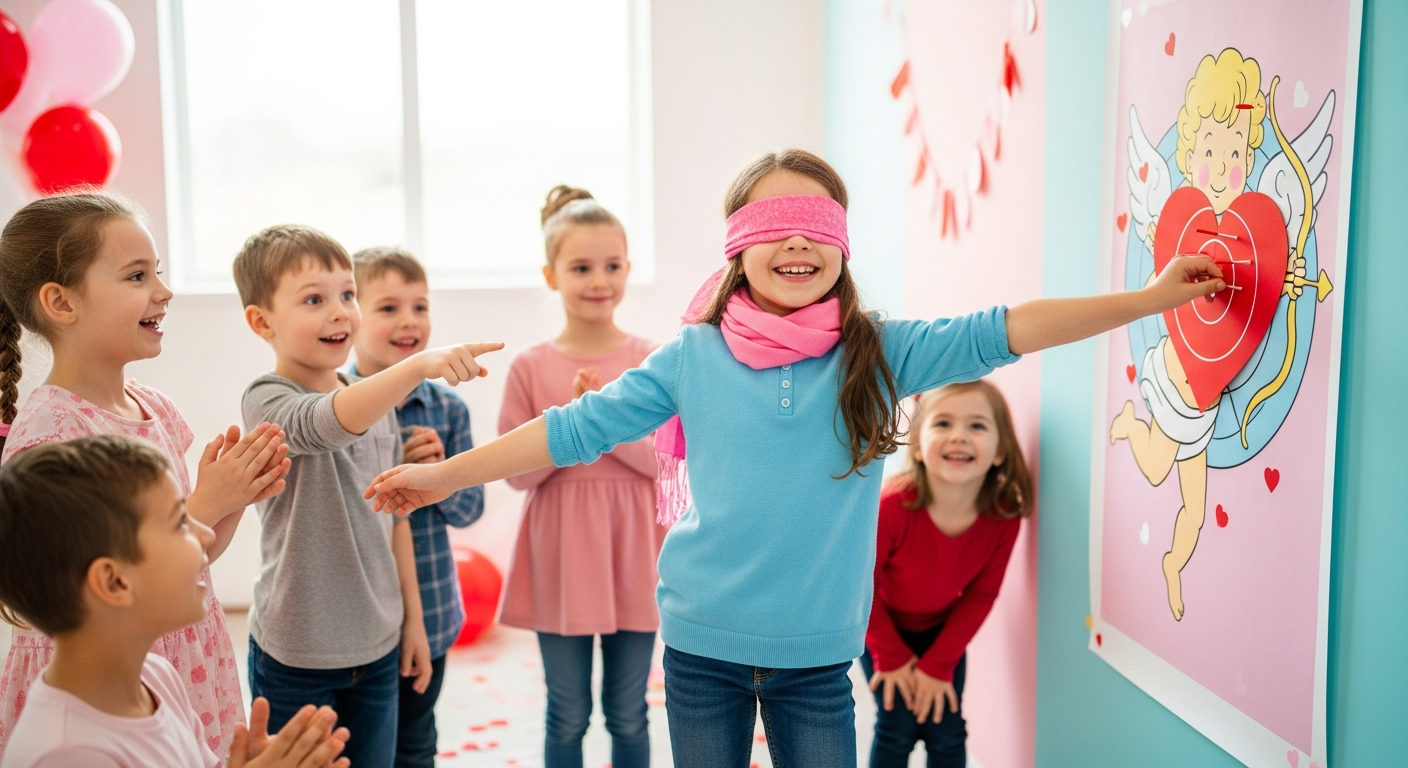
Table of Contents
- Introduction
- Why Valentine's Day Games Matter for Development
- Planning Your Perfect Valentine's Party
- Engaging Games for Little Hearts (Toddlers & Preschoolers)
- Fun-Filled Games for Growing Minds (Elementary Schoolers)
- Creative & Printable Games for All Ages (Family Fun)
- Incorporating Speech Blubs into Your Celebration
- Making Communication Fun & Accessible with Speech Blubs
- Conclusion
- FAQ
Do you ever feel a little overwhelmed trying to plan a Valentine's Day party that's genuinely fun and meaningful for your kids, not just a sugar rush? It's a common challenge! We all want to create those heartwarming memories, but sometimes the endless quest for "the perfect activity" leaves us scrambling. This Valentine's Day, let's transform those worries into joyful anticipation by exploring a treasure trove of engaging party games. This post isn't just about entertainment; it's about discovering games that spark laughter, foster connection, and subtly nurture crucial developmental skills, especially those vital for communication. We'll dive into a diverse collection of activities, from active romps to creative crafts, ensuring your celebration is filled with love, learning, and unforgettable moments for every child.
Introduction
Valentine's Day, with its charming hearts, sweet treats, and messages of affection, offers a wonderful opportunity to celebrate love and friendship. For children, it's more than just exchanging cards; it's a chance to engage in playful activities that build social bonds, encourage emotional expression, and develop essential cognitive and communication skills. Picture a room full of giggling children, collaborating on a scavenger hunt or excitedly guessing words, their faces alight with joy. These aren't just games; they're fertile ground for growth.

In this guide, we'll explore over 25 delightful Valentine's Day party games designed for kids of various ages and developmental stages. From high-energy challenges to quiet, creative endeavors, each game offers unique benefits for your child's holistic development. We’ll also share how to maximize the communication potential of these activities and introduce you to how Speech Blubs, a tool born from our founders' personal experiences with speech challenges, complements this journey by empowering children to truly "speak their minds and hearts" through engaging, scientific-backed smart screen time. Ready to make this Valentine's Day unforgettable? Let's dive in!
Why Valentine's Day Games Matter for Development
Beyond the sheer delight they bring, party games serve as powerful catalysts for child development. They're not just time-fillers; they're rich learning environments.
Fostering Social-Emotional Growth
- Turn-Taking and Sharing: Many games inherently require children to wait their turn, share materials, and cooperate, teaching invaluable lessons in patience and social etiquette.
- Empathy and Friendship: Group games often involve cheering for teammates, offering encouragement, and celebrating collective successes, strengthening bonds and fostering empathy.
- Emotional Regulation: Learning to win graciously and lose with resilience is a cornerstone of emotional intelligence. Games provide safe spaces to practice these vital life skills.
Boosting Cognitive Abilities
- Problem-Solving: From deciphering clues in a scavenger hunt to strategizing in a minute-to-win-it challenge, games engage critical thinking and problem-solving.
- Memory and Attention: Activities like "Valentine's Day Recall" or matching games sharpen memory skills and improve attention spans.
- Following Instructions: Understanding and executing multi-step directions is a foundational cognitive skill honed through structured play.
Laying the Foundation for Communication
- Vocabulary Expansion: Introducing new words related to love, colors, shapes, and actions during games naturally expands a child's lexicon.
- Expressive Language: Describing game actions, explaining rules, or articulating preferences ("I want the red heart!") encourages children to use their words effectively.
- Receptive Language: Listening carefully to instructions, understanding questions, and responding appropriately are all crucial receptive language skills reinforced during play.
- Non-Verbal Communication: Charades or games involving gestures teach children to convey messages beyond words, enhancing overall communication fluency.
At Speech Blubs, we understand that every playful interaction is an opportunity for a child to grow. Our mission is to provide an immediate, effective, and joyful solution for the 1 in 4 children who need speech support, blending scientific principles with play. We know that these foundational skills, nurtured through games, are precisely what contribute to a child's ability to communicate confidently.

Planning Your Perfect Valentine's Party
A successful party starts with thoughtful planning. Here’s how to set the stage for a memorable Valentine’s celebration:
Considering Age Groups
Tailoring games to the developmental stage of your guests is key.
- Toddlers & Preschoolers (Ages 2-5): Focus on simple rules, sensory experiences, movement, and short attention spans. Keep games cooperative rather than competitive.
- Elementary Schoolers (Ages 6-10): Introduce more complex rules, strategic thinking, and team-based challenges. They enjoy friendly competition.
- Mixed Age Groups: Choose adaptable games with varying levels of difficulty or pair older children with younger ones for mentorship.
Space and Materials
- Indoor vs. Outdoor: Most Valentine's Day parties are indoors, so consider space for movement. Clear an area for active games and have a dedicated spot for quieter activities.
- Budget-Friendly Materials: Many games require only common household items like construction paper, markers, dice, conversation hearts, balloons, and plastic cups.
- Pre-Preparation: Print any templates, gather supplies, and set up game stations beforehand to ensure a smooth flow.
Setting the Atmosphere
- Decorations: Red, pink, and white decorations create a festive mood. Heart-shaped balloons, streamers, and handmade valentines add charm.
- Music: A playlist of cheerful, family-friendly songs can enhance the party vibe and provide background for active games like "Musical Hearts."
- Snacks: Heart-shaped cookies, fruit platters, and pink lemonade are easy and festive treats.
For parents who might be wondering about their child’s communication development as they plan these fun activities, our quick 3-minute preliminary screener can offer valuable insights and a personalized next-steps plan.
Engaging Games for Little Hearts (Toddlers & Preschoolers)
These games are designed to captivate younger children with simple mechanics, sensory engagement, and plenty of opportunities for movement and early language practice.
1. Musical Hearts
How to Play: Cut out large paper hearts and scatter them on the floor. Play some upbeat music. Children dance around the hearts. When the music stops, everyone finds a heart to stand on. To add a challenge, remove one heart each round, similar to musical chairs, until only one winner remains. Developmental Benefits: Gross motor skills, listening comprehension, quick reactions, number recognition (counting hearts), and understanding spatial concepts like "on" and "off." Language Tip: Narrate the action: "Jump on the heart!" "Dance around the hearts!" "Can you find the pink heart?"
2. Heart Hopscotch
How to Play: Use chalk (indoors with masking tape or paper) to draw large hearts on the floor, numbered 1-10. Children take turns hopping through the hearts, calling out the numbers as they go. Developmental Benefits: Gross motor coordination, balance, number recognition, counting, and early literacy if you add letters or simple words to the hearts. Language Tip: Encourage children to use descriptive words: "I'm hopping fast!" "This heart is big!" "Can you say 'one'?"
3. Sensory Bin "Love Hunt"
How to Play: Fill a bin with dried pasta (dyed pink or red), rice, or shredded paper. Hide small heart-shaped toys, buttons, or conversation hearts within. Provide scoops, cups, and small bowls. Children can "dig" for treasures. Developmental Benefits: Fine motor skills, sensory exploration, object recognition, and early classification. Language Tip: Ask "What did you find?" "Is it soft or hard?" "Tell me about the red heart." This is a perfect activity for a child who loves exploring textures and shapes, offering a low-pressure way to encourage expressive vocabulary. For a parent whose 3-year-old "late talker" adores animals, finding toy animals in a sensory bin and making their sounds can be a delightful prelude to the Animal Kingdom section in Speech Blubs, where they can practice "moo" and "baa" with their peers using our video modeling.
4. Color-Sorting "Love Bugs"
How to Play: Provide a collection of small objects in red, pink, and white (e.g., pom-poms, buttons, construction paper hearts). Have different containers labeled with the corresponding colors. Children sort the "love bugs" into their color homes. Developmental Benefits: Color recognition, classification, fine motor skills (pincer grasp), and early math concepts. Language Tip: "Where does the red heart go?" "Can you find another pink one?" "We have many white ones!"
These simple, yet effective games are wonderful for laying the groundwork for more complex communication. They teach children to listen, respond, and engage, which are all skills we reinforce at Speech Blubs. Our app is designed to be a powerful tool for family connection, turning screen time into "smart screen time" that sparks joyful learning.
Fun-Filled Games for Growing Minds (Elementary Schoolers)
As children get older, they enjoy games with more structure, strategy, and a healthy dose of competition. These activities are perfect for elementary school children, offering robust opportunities for social interaction and language development.
1. Valentine's Day Bingo
How to Play: Create or print bingo cards featuring Valentine's Day-themed images (hearts, cupid, flowers, chocolates, specific colors). Call out the images, and players mark them on their cards. The first to get five in a row shouts "BINGO!" Developmental Benefits: Vocabulary reinforcement, listening skills, visual discrimination, and turn-taking. Language Tip: Describe the images: "I see a sparkly red heart!" "Can you find the smiling cupid?"
2. "Love Sucks" Marshmallow Challenge (Minute-to-Win-It)
How to Play: Each player gets a straw and two empty bowls. Place a pile of heart-shaped marshmallows (or conversation hearts) in one bowl. The goal is to use only the suction from the straw to transfer as many marshmallows as possible from one bowl to the other within one minute. Developmental Benefits: Fine motor control, hand-eye coordination, focus, and a fun way to explore physics (suction!). Language Tip: Encourage players to count their marshmallows, describe their strategy, or comment on the difficulty: "It's so tricky!" "I got ten!"
3. Conversation Heart Challenges (Minute-to-Win-It)
These quick, engaging games are fantastic for a lively party atmosphere:
- Heart Stack: Stack as many conversation hearts as possible into a tower in one minute.
- Color Sort: Sort a pile of mixed-color conversation hearts into separate colored cups in one minute.
- Blow Me a Kiss: Using only breath (no hands!), blow five conversation hearts off the edge of a table. Developmental Benefits: Fine motor precision, color recognition, counting, persistence, and problem-solving under pressure. Language Tip: Use action verbs: "Stack them high!" "Sort them fast!" "Blow with all your might!"
4. Valentine's Day Charades or Pictionary
How to Play: Write down Valentine's Day-related words or phrases (e.g., "cupid," "chocolate box," "sending a card," "hug," "heart") on slips of paper. Teams take turns drawing or acting out the words for their teammates to guess within a time limit. Developmental Benefits: Expressive language (both verbal and non-verbal), creative thinking, quick recall, and social collaboration. Language Tip: Encourage descriptive clues during Pictionary, and for charades, discuss the non-verbal cues. This is excellent for building foundational communication skills. For a child who struggles with expressing ideas, acting out or drawing can reduce the pressure of spoken words, a skill reinforced in Speech Blubs' "Action Verbs" or "Daily Activities" categories. Our app uses video modeling to show children how their peers express themselves, making complex communication skills accessible and engaging.
5. Cupid's Arrow Toss
How to Play: Set up a target (a poster with concentric heart circles, each assigned points, or simply buckets). Children take turns tossing beanbags, small stuffed animals, or even Q-tips (using a craft bow made of pipe cleaners) towards the target. Keep score. Developmental Benefits: Hand-eye coordination, aim, gross motor skills, counting, and simple addition. Language Tip: "Did you hit the red heart?" "How many points did you score?" "That was a great throw!"
6. "Wrapped with Love"
How to Play: Divide children into pairs. One child stands still, and the other rapidly wraps them head-to-toe with a long roll of pink or red streamer, securing it with tape. The fastest team wins! Developmental Benefits: Following multi-step instructions, fine motor skills (wrapping, taping), body awareness, and cooperative play. Language Tip: Provide clear instructions: "Start at their feet," "Wrap around their waist," "Don't forget their arms!" This game is perfect for a child learning to follow detailed commands. If your child finds multi-step directions challenging, our app’s guided activities offer practical opportunities to practice sequencing and understanding commands in a fun, interactive way. Download Speech Blubs on the App Store or Google Play to explore these features.
Creative & Printable Games for All Ages (Family Fun)
These games are highly adaptable, making them perfect for parties with mixed age groups or for a cozy family Valentine's Day at home. Many can be printed or require minimal setup.
1. Valentine's Day Scavenger Hunt
How to Play: Hide a series of heart-themed clues around the house or party area, with each clue leading to the next. The final clue reveals a small prize or a pile of valentines. Developmental Benefits: Problem-solving, reading comprehension (for older kids), object identification, directional language ("behind," "under," "next to"), and memory. Language Tip: Ask "What do you think the clue means?" "Where should we look first?" "Is it hot or cold?"
2. Love Song Guessing Game
How to Play: Play short snippets of popular love songs (kid-friendly versions, of course!). Children guess the song title or artist. Developmental Benefits: Auditory processing, memory recall, musical recognition, and vocabulary. Language Tip: "What words did you hear in that song?" "How did the music make you feel?"
3. Valentine's Day Trivia
How to Play: Prepare trivia questions about Valentine's Day history, symbols, or famous love stories (age-appropriate, of course!). Categories could include "Love in Animals," "Heart Facts," or "Valentine's Day Around the World." Developmental Benefits: General knowledge, memory, critical thinking, and turn-taking in a question-and-answer format. Language Tip: Encourage full sentence answers: "I think the answer is..." "My guess is..."
4. "Would You Rather" Valentine's Edition
How to Play: Present children with fun Valentine's Day themed "would you rather" questions (e.g., "Would you rather get a giant box of chocolates or a giant teddy bear?"). Encourage them to explain their choices. Developmental Benefits: Articulation (practicing different sounds in speech), reasoning skills, expressing preferences, and understanding different perspectives. Language Tip: Focus on explaining why: "I would rather have chocolate because..." "I choose the teddy bear since..." This game helps children articulate their thoughts and feelings, a core aspect of our mission at Speech Blubs to empower kids to speak their minds.
5. Valentine's Day Word Search or Crossword Puzzle
How to Play: Print out age-appropriate word searches or crossword puzzles with Valentine's Day vocabulary. Developmental Benefits: Vocabulary reinforcement, spelling, visual scanning, and phonological awareness. Language Tip: As children find words, have them say the word aloud or use it in a sentence.
6. DIY Valentine's Card Game
How to Play: Provide various craft supplies (paper, glitter, stickers, glue, markers). Children create their own unique Valentine's Day cards, then play a game where they "deliver" their cards to others in a fun way (e.g., placing them in decorated mailboxes, or a simple "pass the card" game). Developmental Benefits: Creative expression, fine motor skills, social interaction, and practicing giving and receiving. Language Tip: Encourage children to describe their creations: "My card has a sparkly heart!" "I wrote a sweet message."
Incorporating Speech Blubs into Your Celebration
While these games provide fantastic opportunities for communication development, we understand that some children need an extra boost. That's where Speech Blubs comes in, transforming screen time from passive viewing into an interactive, growth-filled experience.
Our app, co-founded by individuals who personally navigated speech challenges as children, was created to be the tool they wished they had. We are driven by the belief that every child deserves to find their voice and express themselves confidently.
Smart Screen Time: A Powerful Supplement
Unlike passive cartoons, Speech Blubs utilizes a unique "video modeling" methodology. Children learn by watching and imitating real children their age, engaging their mirror neurons and making the learning process incredibly effective and fun. This isn't just about mimicking sounds; it's about understanding and internalizing the mechanics of speech and social interaction.
- For the child who loves animals but struggles with sounds: Our "Animal Kingdom" section engages them with real children making animal sounds, making it a playful, less intimidating way to practice articulation, reinforcing the sounds they might have made in your Valentine's sensory bin.
- For the child developing their social skills: The app offers categories that model social cues, emotional expressions, and conversational turn-taking, skills that are then practiced during your party games.
We're proud that our method is backed by extensive research, placing us in the top tier of speech apps worldwide for our effectiveness and user engagement (reflected in our high MARS scale rating).
Speech Blubs is designed to be a powerful supplement to a child's overall development plan and, when applicable, professional therapy. It’s a tool that fosters a love for communication, builds confidence, and reduces frustration, creating joyful family learning moments that extend beyond party time. Many parents have shared their success stories; you can read testimonials from other parents on our website.
Making Communication Fun & Accessible with Speech Blubs
We believe in making high-quality speech and language support accessible to every family. That’s why we’ve structured our plans to offer incredible value, especially our Yearly plan.
Transparent Pricing, Exceptional Value
- Monthly Plan: For $14.99 per month, you get access to our core speech therapy exercises and activities.
- Yearly Plan: Our best value, priced at just $59.99 per year. This breaks down to an amazing $4.99 per month, allowing you to save 66% compared to the monthly plan!
The Yearly Plan Advantage: More Than Just Savings
Choosing the Yearly plan isn't just about the significant cost savings; it unlocks an enhanced suite of features designed to maximize your child's learning journey:
- 7-Day Free Trial: Experience the full power of Speech Blubs before committing. The Monthly plan does not include this trial.
- Reading Blubs App: Gain exclusive access to our companion app, Reading Blubs, designed to support early literacy skills, further enriching your child's developmental path.
- Early Access & Priority Support: Be among the first to explore new updates and receive a 24-hour response time for any support needs. The Monthly plan does not include these benefits.
We are committed to providing an immediate, effective, and joyful solution for children needing speech support. Our commitment to transparent pricing and delivering exceptional value reflects our desire to help every child speak their minds and hearts.
Ready to see the difference Speech Blubs can make? We encourage you to experience it firsthand. Start your 7-day free trial today by signing up for the Yearly plan.
Conclusion
Valentine's Day offers a beautiful canvas for creating cherished family memories, and by incorporating these engaging party games, you're doing much more than just having fun. You're actively nurturing your child's social, emotional, cognitive, and crucial communication skills. From the simplest heart hopscotch to the most intricate scavenger hunt, each activity provides a unique opportunity for growth, laughter, and connection.
Remember, the goal isn't just flawless speech, but fostering a love for communication, building confidence, reducing frustration, and creating joyful learning moments together. Whether your child is whispering sweet nothings or shouting with glee during a game, every interaction is a step forward. And for those moments when your child needs a little extra support, Speech Blubs is here, transforming "smart screen time" into an engaging, science-backed adventure that complements your family's journey.
This Valentine's Day, empower your child to speak their minds and hearts. Let the love, laughter, and learning begin! Ready to integrate this powerful tool into your child’s developmental journey? Download Speech Blubs on the App Store or Google Play Store today! Don't forget to select the Yearly plan to unlock your 7-day free trial and all the exclusive features, giving your child the best possible start.
FAQ
Q1: How can I adapt these Valentine's Day games for a child with special needs? A1: Adaptations are key! For children with special needs, focus on individual strengths and interests. Simplify rules, extend time limits, use visual aids (pictures for instructions), offer choices, and prioritize participation over competition. Many games, especially sensory bins or simple matching, can be calming and engaging. Always remember to narrate actions and encourage any form of communication, whether verbal, gestural, or through assistive devices.
Q2: What are some good, simple prizes for Valentine's Day party games that aren't candy? A2: There are many non-candy prize options! Consider small heart-shaped erasers, stickers, mini notebooks, pencils, temporary tattoos, bubbles, craft supplies, or small books. You could also create "coupons" for special privileges, like "choose dinner night" or "extra story time," which are highly motivating for kids and promote family bonding.
Q3: How can I encourage shy children to participate in party games? A3: For shy children, a gentle, no-pressure approach is best. Start with individual or small-group activities rather than large, competitive ones. Give them a "job" that helps with the game (e.g., "You can be the scorekeeper!" or "Help me hide the clues"). Acknowledge their presence and offer an invitation to join, but don't force it. Often, once they observe for a while and see others having fun, they'll feel more comfortable joining in. Pairing them with a familiar friend or an encouraging adult can also help.
Q4: Can these games genuinely help with a child's speech and language development? A4: Absolutely! While these games are not a substitute for professional speech therapy when needed, they provide a rich, natural environment for practicing and reinforcing various communication skills. Games encourage listening, following instructions, vocabulary expansion, expressive language, turn-taking, and social interaction—all foundational elements of strong speech and language. By engaging with your child, narrating actions, asking open-ended questions, and encouraging them to express themselves, you naturally create powerful learning opportunities. Tools like Speech Blubs can then supplement this play by providing targeted, engaging exercises to further strengthen these developing skills.
About the author