
25 Fun and Educational Christmas Crafts with Toddler
 By Speech Blubs Team•Feb 20, 2026•15 min.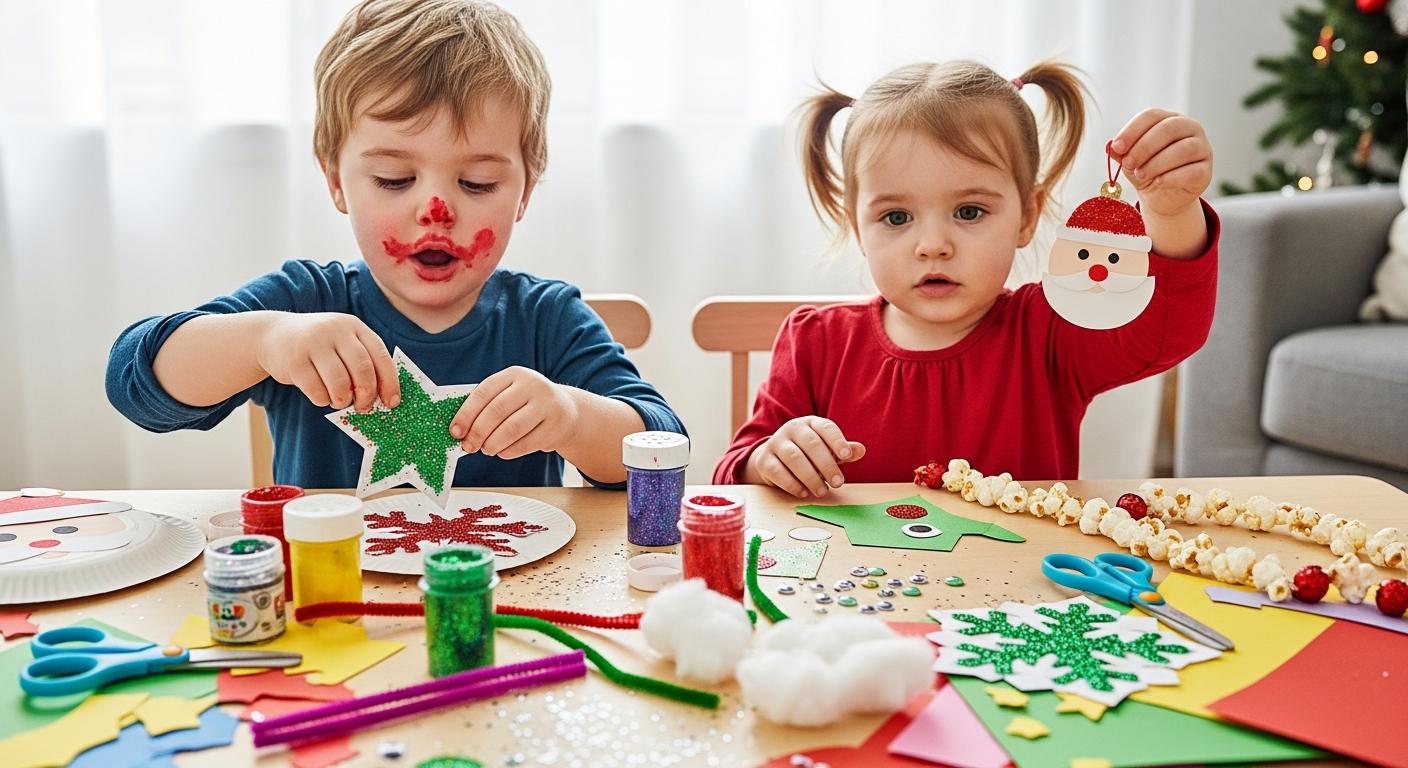
Table of Contents
- Introduction
- The Developmental Magic of Holiday Crafting
- Getting Started: The Speech-Rich Crafting Space
- 25 Joyful Christmas Crafts for Toddlers
- Integrating Speech Blubs into Your Holiday Routine
- Choosing the Right Plan for Your Family
- Realistic Expectations: The Gift of Progress
- Setting Up for Success: A Quick Checklist
- FAQ: Crafting and Speech Development
- Conclusion: Start Your Holiday Journey Today
Introduction
Do you remember the specific, magical scent of a fresh pine tree or the crinkle of metallic wrapping paper from your own childhood? For a toddler, the holiday season isn't just a date on the calendar; it is a massive, overwhelming, and wondrous sensory explosion. However, for many parents, the pressure to create "perfect" holiday memories can feel daunting, especially if your little one is struggling to find the words to express their excitement. At Speech Blubs, we understand that every "ho ho ho" and "look, Mommy!" is a milestone. Our mission is to empower children to speak their minds and hearts, a goal born from the personal experiences of our founders who grew up with speech challenges themselves.
In this guide, we aren't just looking at how to glue pom-poms onto paper. We are exploring how christmas crafts with toddler can become a powerful bridge to communication, confidence, and connection. We will cover over 25 craft ideas tailored for tiny hands, discuss the developmental benefits of "smart screen time" when paired with tactile play, and show you how to turn a messy afternoon into a language-rich learning opportunity. Our goal is to provide you with an immediate, effective, and joyful solution for the 1 in 4 children who need speech support, blending scientific principles with the simple magic of holiday play. By the end of this article, you will have a toolkit of activities that foster a love for communication and create lasting family memories.

The Developmental Magic of Holiday Crafting
Before we dive into the glitter and glue, it is essential to understand why crafting is more than just a way to kill time on a snowy afternoon. When a child engages in a craft, they aren't just making a decoration; they are building the foundational blocks of human development.
Fine Motor Skills and Speech
There is a fascinating neurological link between the fine motor skills used in crafting—like pinching a sequin or squeezing a glue bottle—and the motor movements required for speech. The same areas of the brain that control hand movements are closely situated to those that control the articulators of the mouth. By practicing "pincer grasps" while making a christmas crafts with toddler, your child is indirectly exercising the neural pathways that will eventually help them master complex speech sounds.
Sensory Integration
Toddlers learn through their senses. The coldness of fake snow, the stickiness of tape, and the rough texture of a pinecone all provide vital sensory input. For children with sensory processing sensitivities or speech delays, these tactile experiences can be grounding and provide a non-verbal way to explore their environment. At Speech Blubs, we leverage this through our scientific methodology, specifically "video modeling." By watching other children perform actions or make sounds, toddlers use their mirror neurons to learn and imitate. Crafting acts as the physical manifestation of this imitation.
Boosting Confidence and Reducing Frustration
Many speech delays lead to frustration because a child’s cognitive desire to communicate outpaces their physical ability to do so. Crafting provides an alternative "language." When a toddler shows you a handprint reindeer they made, they are communicating pride and accomplishment. This builds the confidence necessary to keep trying new words and sounds. We always encourage parents to see these activities as a supplement to overall development and, when necessary, professional therapy. If you are ever unsure where your child stands, you can take our quick 3-minute preliminary screener to get a simple assessment and a free 7-day trial.

Getting Started: The Speech-Rich Crafting Space
To make the most of your christmas crafts with toddler, you need a space that encourages both creativity and conversation.
- Level the Playing Field: Sit on the floor or at a toddler-sized table. Being at eye level with your child is crucial for "joint attention," a key precursor to speech.
- Limit Choices: Instead of dumping a whole box of markers, offer two choices: "Do you want the red marker or the green marker?" This encourages the child to make a choice and attempt a word or gesture.
- Narrate Everything: Become a "sports commentator" for your child’s actions. "You are squeezing the glue! Squeeze, squeeze, squeeze. Now, the blue button goes ON."
- Incorporate "Smart Screen Time": Before you start, you might open the Speech Blubs app on the App Store and look at the "Winter Wonderland" or "Holiday" sections. Let your child watch a peer say the word "Tree" or "Star," then transition that excitement directly into the craft.
25 Joyful Christmas Crafts for Toddlers
1. The Classic Paper Plate Wreath
This is a staple for a reason. It’s easy, cheap, and allows for a lot of "glue and stick" action.
- How to make it: Cut the center out of a paper plate. Let your toddler paint the rim green. Use pipsissewa leaves, tissue paper, or pom-poms to decorate.
- Speech Tip: Practice the "W" sound for wreath or "R" for round.
- Scenario: For a parent whose child is just starting to label colors, this craft is perfect. Focus on "Green leaf" and "Red berry" to reinforce basic vocabulary.
2. Salt Dough Handprint Ornaments
These are the ultimate keepsakes.
- How to make it: Mix 2 cups of flour, 1 cup of salt, and 1 cup of water. Knead, roll out, and press your toddler's hand into it. Bake at a low temp (200°F) for 2-3 hours.
- Speech Tip: Talk about the "O" in ornament or the "H" in hand.
- Research Connection: Our approach at Speech Blubs is backed by science, focusing on the way children learn by watching and imitating their peers. Just as they learn to press their hand into dough by watching you, they learn sounds by watching the kids in our app. You can learn more about our research-based methodology here.
3. Cotton Ball Snowman
Focusing on textures is great for sensory-seeking toddlers.
- How to make it: Cut three circles out of blue paper. Have your child glue cotton balls inside the circles.
- Speech Tip: "Soft," "White," "Cold," and "Belly."
- Scenario: If your 2-year-old loves animals, use the "Animal Kingdom" section of Speech Blubs to find a penguin or a polar bear to "visit" the snowman!
4. Pinecone Christmas Trees
A great excuse to get outside for a "nature walk" first.
- How to make it: Find large pinecones. Paint them green and "tip" the edges with white for snow. Glue small beads on as ornaments.
- Speech Tip: Practice the "P" sound for pinecone.
5. Fingerprint Christmas Lights
Simple and visually stunning for cards.
- How to make it: Draw a "string" on a piece of cardstock. Let your child dip their finger in different colored paints and press them along the string.
- Speech Tip: "Push," "Pop," and the names of the colors.
6. Cardboard Tube Reindeer
Save those toilet paper rolls!
- How to make it: Paint the tube brown. Glue on googly eyes and a red pom-pom for the nose. Trace your child’s hands on brown paper for the antlers.
- Speech Tip: "Reindeer," "Nose," and "Brown."
- Speech Blubs Integration: Before making this, watch the "Animal Kingdom" section to hear what a deer might sound like (or make up a funny reindeer sound together!).
7. Paper Chain Countdown
Great for teaching "patience" and "time" (concepts that are hard for toddlers!).
- How to make it: Cut strips of red and green paper. Loop them through each other and tape.
- Speech Tip: "Long," "Short," "One more."
8. Fork-Painted Christmas Tree
Using tools other than brushes is great for motor planning.
- How to make it: Dip the back of a plastic fork in green paint and press it onto paper in a triangle shape to create "needles."
- Speech Tip: "Poke," "Green," and "Pointy."
9. Suncatcher Ornaments
- How to make it: Use clear contact paper and bits of colored tissue paper. Cut them into stars or bauble shapes.
- Speech Tip: "Light," "Bright," "Pretty."
10. Pasta Noodle Snowflakes
- How to make it: Glue different shapes of pasta (bowties, penne) onto a circle of cardboard and paint them white or silver.
- Speech Tip: Practice the "S" sound for snowflake.
11. Handprint Christmas Tree
- How to make it: Paint your child's hand green and stamp it several times in a pyramid shape.
- Speech Tip: "Big," "Bigger," "Biggest."
12. Paper Plate Santa
- How to make it: Use cotton balls for the beard, red paper for the hat, and a pink circle for the face.
- Speech Tip: Practice the "H-H-H" sound for "Ho Ho Ho."
13. Ribbon Christmas Tree
- How to make it: Glue scraps of different textured ribbons onto a stick or a piece of cardboard.
- Speech Tip: "Soft," "Smooth," "Rough."
14. Cupcake Liner Angels
- How to make it: Flatten a cupcake liner for the dress, use a circle for the head, and doilies for the wings.
- Speech Tip: "Up," "Fly," "Angel."
15. Popsicle Stick Snowflakes
- How to make it: Glue three sticks together in a cross shape and decorate with glitter.
- Speech Tip: "Sparkle," "Shiny."
16. Felt Christmas Tree (No Sew)
- How to make it: Cut a large triangle out of green felt and small circles out of other colors. The circles will naturally "stick" to the felt tree.
- Speech Tip: "On," "Off," "Top," "Bottom."
17. Button Baubles
- How to make it: Glue old buttons onto a circle of cardstock.
- Speech Tip: "Circle," "Button," "Small."
18. Tissue Paper "Stained Glass"
- How to make it: Similar to the suncatcher, but use a black paper "frame" to make the colors pop.
- Speech Tip: Names of the colors.
19. Sponge-Painted Snowflakes
- How to make it: Cut sponges into star shapes and dip in white paint.
- Speech Tip: "Dab," "Dab," "Dab."
20. Footprint Mistletoe
- How to make it: Paint both feet green and stamp them with heels touching and toes pointing out. Add red thumbprint berries.
- Speech Tip: "Feet," "Toes," "Tickle."
21. Reindeer Headband
- How to make it: A strip of brown paper for the head and handprints for the antlers.
- Speech Tip: "Wear," "Hat," "Me."
22. Grinch Heart Craft
- How to make it: A large green heart with a tiny red heart inside.
- Speech Tip: "Happy," "Love," "Heart."
23. Sticky Wall Christmas Tree
- How to make it: Tape a piece of contact paper (sticky side out) to the wall in a tree shape. Let your toddler "stick" ornaments on it.
- Speech Tip: "Stick," "Stuck."
24. Paper Bag Puppets (Reindeer or Elf)
- How to make it: Use a brown lunch bag. The bottom flap is the face.
- Speech Tip: This is perfect for practicing peer-to-peer communication. Have the puppet "talk" to your child.
25. Gingerbread Man Decorating (Paper Version)
- How to make it: Cut a "Man" shape out of brown paper and provide "gumdrops" (pom-poms) and "icing" (white yarn).
- Speech Tip: "Run," "Fast," "Eat."
Integrating Speech Blubs into Your Holiday Routine
While crafting is a fantastic screen-free activity, we believe that "smart screen time" can be a powerful ally. Our app is a powerful tool for family connection, not a passive viewing experience like cartoons. We recommend using the Speech Blubs app on Google Play to prepare your child for the crafts you have planned.
For example, if you are planning to make the Paper Plate Santa, open the app and find the "Ho Ho Ho" video. Let your child watch the peer model say the sound. Encourage them to copy the facial movements. This "video modeling" method is what sets us apart—it creates an immediate, joyful connection to language. After they've practiced the sound on the screen, bring out the cotton balls and the glue. The screen time becomes a "warm-up" for the physical world.
Many parents have shared their success stories with us, noting how this combination of digital learning and physical play has helped their "late talkers" find their voice. You can read some of these heartwarming testimonials here.
Choosing the Right Plan for Your Family
We are committed to being transparent about our pricing because we want you to feel confident in your investment in your child's future. Whether you are using our app to help with a diagnosed delay or simply to boost your toddler's foundational skills, we have options to fit your needs.
- Monthly Plan: $14.99 per month. This is great for a short-term trial if you have a specific holiday goal.
- Yearly Plan (Best Value): $59.99 per year. This breaks down to just $4.99/month, which is a 66% savings over the monthly option.
Why choose the Yearly Plan? Beyond the significant cost savings, the Yearly plan is designed for long-term progress. It includes:
- A 7-day free trial to ensure it's the right fit.
- The Reading Blubs app, which helps transition speech skills into early literacy.
- Early access to all new updates and holiday themes.
- 24-hour support response time from our dedicated team.
The Monthly plan does not include the Reading Blubs app or the priority support. We highly recommend starting with the Free Trial and Sign-Up Page and selecting the Yearly plan to get the full suite of features and the best possible value for your family.
Realistic Expectations: The Gift of Progress
As a child development expert, it is my duty to remind you that every child follows their own timeline. Please do not expect your child to be giving public speeches in a month just because you made twenty reindeer crafts. Instead, look for the "small wins."
- Are they making more eye contact during the craft?
- Are they attempting a new sound, even if it isn't perfect?
- Is their frustration level decreasing because they have a fun way to interact with you?
- Are you experiencing more "joyful family learning moments"?
These are the true indicators of success. Speech Blubs is a powerful supplement to your child's development, but the real magic happens in the "co-play"—the moments where you and your toddler are laughing over a lopsided salt dough ornament. Our goal is to foster a love for communication that will last long after the Christmas tree is taken down.
Setting Up for Success: A Quick Checklist
To ensure your christmas crafts with toddler session goes smoothly, keep this checklist handy:
- Preparation: Have all materials pre-cut. Toddlers have short attention spans!
- Protection: Cover the table with an old newspaper or a plastic cloth.
- Pace: Follow the child's lead. If they want to glue fifty buttons on one ornament, let them!
- Praise: Use specific praise. Instead of "Good job," try "I love how you used the sparkly blue glitter!"
- Participation: Join in! Make your own craft alongside them to model the behavior.
FAQ: Crafting and Speech Development
1. My toddler won't sit still for crafts. Is this normal? Absolutely! Most toddlers have an attention span of about 3-5 minutes per year of age. If your 2-year-old only wants to glue one cotton ball and then run away, that’s okay. The goal is the interaction, not the finished product. Try "active crafting"—tape the paper to the wall so they can stand and move while they create.
2. How do I encourage my child to talk while we are crafting? Avoid "quizzing" them (e.g., "What color is this? Say red!"). Instead, use the "Wait and See" approach. Give them the glue but hold onto the glitter. Wait for them to gesture or make a sound to ask for it. This creates a "communication temptation."
3. Is "screen time" like Speech Blubs actually helpful for speech? Not all screen time is created equal. Passive viewing (cartoons) doesn't require interaction. Speech Blubs is "smart screen time" based on video modeling. It encourages active imitation and is designed to be used with a parent. When used as a supplement to activities like crafting, it can be a powerful tool for language development.
4. What if my toddler tries to eat the craft supplies? This is very common! Always use non-toxic, child-safe materials. If your child is in a "mouthing" phase, stick to edible-safe crafts, like decorating sugar cookies with icing or using yogurt-based "paints."
Conclusion: Start Your Holiday Journey Today
The holidays are a fleeting, beautiful time, and there is no better gift you can give your child than the confidence to "speak their minds and hearts." By engaging in christmas crafts with toddler, you are doing so much more than making decorations; you are building the neurological and emotional foundations for a lifetime of communication.
At Speech Blubs, we are honored to be a part of your family’s journey. Whether you are navigating a speech delay or simply want to provide your child with the best possible start, our "smart screen time" experiences are designed to bring joy and effectiveness to your daily routine.
Ready to make this holiday season truly special? Download Speech Blubs on the App Store or Google Play Store to begin. For the best experience and the most comprehensive tools, we encourage you to start your 7-day free trial on our Yearly plan. You’ll get the Reading Blubs app, priority support, and the peace of mind that comes with knowing you’re using a tool backed by science and created with love. Happy crafting, and happy holidays!
About the author