
25 Fun and Educational Indoor Toddler Activities
 By Speech Blubs Team•Mar 25, 2026•13 min.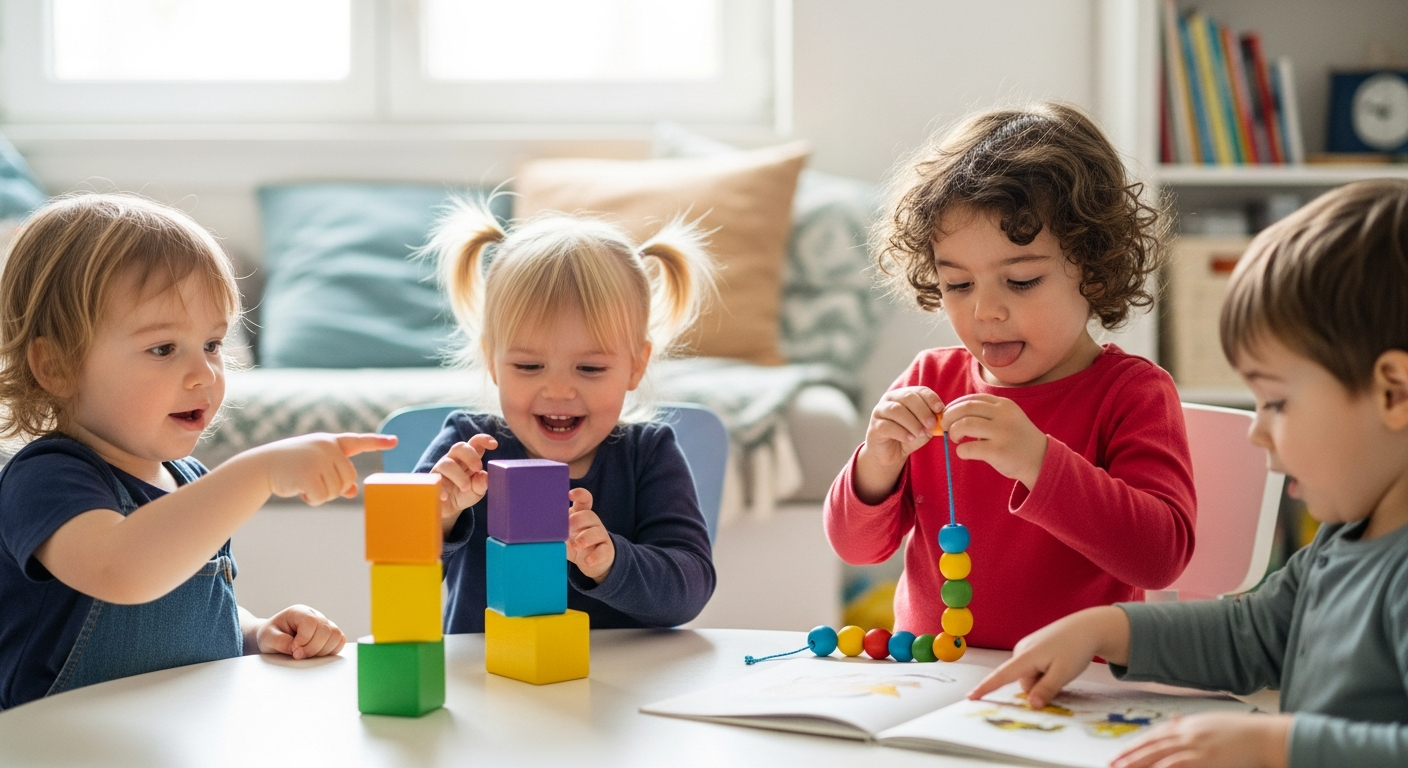
Table of Contents
- Introduction
- The Magic of Gross Motor Indoor Toddler Activities
- Fine Motor Skills: Quiet Focus for Busy Hands
- Sensory Play: Exploring the World Through Touch
- Creative and Dramatic Play: Building Imaginations
- Transforming Screen Time into "Smart Screen Time"
- Why the Yearly Plan is Your Best Option
- Setting Realistic Expectations for Indoor Learning
- Creating a Routine for Rainy Days
- The Importance of Independent Play (and Boredom!)
- Conclusion
- Frequently Asked Questions
Introduction
Have you ever looked at your toddler at 10:00 AM on a rainy Tuesday and realized you still have eight hours of "inside time" left to fill? It is a feeling every parent knows—the sudden realization that the living room has become the entire world, and your little explorer has enough energy to power a small city. We often feel the pressure to be a constant source of entertainment, but being stuck inside doesn’t have to mean endless hours of passive TV or a house that looks like a toy factory exploded.
The purpose of this post is to provide you with a toolkit of engaging, low-prep indoor toddler activities that do more than just pass the time. We will cover everything from high-energy gross motor games to quiet, concentration-boosting fine motor tasks and sensory play. More importantly, we’ll explore how these moments can be used to foster communication and confidence.

At Speech Blubs, our mission is to empower children to "speak their minds and hearts." We believe that every moment of play is an opportunity for a child to learn how the world works and how to express themselves within it. By the end of this article, you will have a comprehensive plan to turn a cooped-up day into a joyful journey of discovery, blending physical play with "smart screen time" that supports your child's developmental milestones.
The Magic of Gross Motor Indoor Toddler Activities
When toddlers are stuck inside, their "wiggles" can quickly turn into frustration. Gross motor activities—those that use the large muscles in the arms, legs, and torso—are essential for burning off energy and developing physical coordination.
1. Balloon Hockey
This is a household favorite because it’s high-energy but low-risk for your furniture. All you need are a few blown-up balloons and fly swatters (or even rolled-up newspapers).
- The Goal: Keep the balloon in the air or hit it toward a "goal" (like a laundry basket).
- Speech Connection: Practice action words like "hit," "up," "go," and "fast."
- Make it Harder: For older toddlers, see if they can keep two balloons in the air at once or use only their feet to "dribble" the balloon across the room.
2. Painter’s Tape Obstacle Course
Painter’s tape is a parent’s best friend. Use it to create lines on the floor that your child must follow.
- The Layout: Create zig-zags to walk on, "lava pits" to jump over, and squares to hop into.
- Developmental Benefit: This builds balance and spatial awareness.
- Speech Connection: Use prepositions like "over," "under," "through," and "beside" as you guide them through the course.
3. Indoor Bowling with Blocks
If your toddler is in a "destructive" phase, channel that energy into bowling.
- The Setup: Stack wooden blocks or empty plastic bottles as pins. Use a soft ball to knock them down.
- Practical Scenario: For a parent whose 2-year-old is struggling with "turn-taking," this game is a perfect practice ground. You can model the language by saying, "My turn to roll," and then, "Your turn to roll!" It turns a physical activity into a social lesson.
4. Animal Charades
Encourage your child to move like different animals. Slither like a snake, hop like a frog, or stomp like an elephant.

- Smart Screen Tip: If your child loves animals, the "Animal Kingdom" section in the Speech Blubs app offers a fun, motivating way to practice "moo" and "baa" sounds. Seeing other children make these sounds through our video modeling methodology encourages them to imitate and join in.
Fine Motor Skills: Quiet Focus for Busy Hands
Fine motor activities involve the small muscles in the hands and wrists. These are crucial for later skills like writing, buttoning clothes, and using utensils.
5. Pom Pom Push
This simple DIY activity can keep a toddler occupied for a surprisingly long time.
- How to do it: Take a plastic container with a lid (like a yogurt tub) and cut a small hole in the top. Give your child a bowl of colorful pom poms to push through the hole.
- Make it Harder: Use markers to color-code holes so they have to match the red pom pom to the red hole.
- Benefit: This builds the "pincer grasp" and hand-eye coordination.
6. Straw Threading
Cut plastic or paper straws into one-inch pieces and have your child thread them onto pipe cleaners.
- The Result: They can create "jewelry" or colorful snakes.
- Speech Tip: Discuss the colors and count the pieces as they go. This is a great way to introduce early math concepts naturally.
7. Card Slot Drop
Find an old deck of cards or even pieces of stiff construction paper. Cut a thin slot in the lid of a shoe box and let your toddler "mail" the cards.
- Practical Scenario: For a child who is a "late talker," this repetitive motion provides a rhythmic opportunity for speech. Each time they drop a card, you can say "in!" or "gone!" eventually waiting for them to attempt the word before they drop the next one.
Sensory Play: Exploring the World Through Touch
Sensory bins are a staple of early childhood education for a reason: they are incredibly calming and engage a child’s natural curiosity.
8. The Noodle Bin
Fill a large plastic tub with dry pasta shapes (rotini and penne work great). Add some scoops, funnels, and small toy animals.
- Why it works: The sound of the noodles hitting the plastic and the texture on their hands is highly stimulating.
- Safety First: Always supervise sensory play to ensure nothing ends up in the mouth that shouldn't be there.
9. Shaving Cream "Painting"
Spray a layer of shaving cream onto a plastic tray or directly onto a waterproof tablecloth. Let your child "draw" in it with their fingers.
- Cleanup Hack: This is actually a great way to clean a table! Once they are done, just wipe it away.
- Scientific Note: Sensory play like this helps build nerve connections in the brain’s pathways.
10. Water Toy Wash
Fill the kitchen sink or a bin with soapy water and gather their plastic cars, dinosaurs, or dolls. Give them a washcloth or a clean sponge and let them "scrub-a-dub-dub."
- The Connection: This is a fantastic "life skill" activity that toddlers find immensely rewarding. It also provides a great context for practicing body parts (e.g., "wash the doll's nose") or car parts (e.g., "wash the wheels").
Creative and Dramatic Play: Building Imaginations
At around age two, children begin to engage in symbolic play—using one object to represent another. This is a massive leap in cognitive development.
11. The Cardboard Spaceship
Never throw away a large appliance box! With some markers and a little imagination, a box becomes a spaceship, a house, or a grocery store.
- Our Mission in Action: At Speech Blubs, we want to help children "speak their minds and hearts." Creating a pretend world in a cardboard box gives them the "script" they need to practice new vocabulary in a low-pressure environment.
12. DIY Face Masks
Use paper plates or cardstock to create simple animal masks. Attach a popsicle stick so they can hold it up to their face.
- Role Play: Once the mask is on, they aren't just "Tommy" anymore; they are "Tommy the Tiger." This shift helps them explore different tones of voice and sounds.
13. Build a Mini Zoo
Gather all the stuffed animals and toy figures in the house. Use blocks or painter's tape to create "enclosures" for them.
- Interactive Play: Ask your toddler, "What does the lion need?" or "Where does the monkey sleep?" This encourages multi-word responses and logical thinking.
Transforming Screen Time into "Smart Screen Time"
In today's world, we can't always avoid screens, especially when we are stuck indoors and need a moment to breathe. However, there is a big difference between passive viewing (like watching a cartoon) and active, educational engagement.
At Speech Blubs, we provide a powerful tool for family connection. Our app was born from the personal experiences of our founders, who all grew up with speech challenges and created the tool they wished they had. We offer a "smart screen time" experience that is effective and joyful for the 1 in 4 children who need speech support.
The Power of Video Modeling
Our unique approach uses "video modeling," where children learn by watching and imitating their peers. Unlike cartoons, our app features real children. When your toddler sees another child making a sound or saying a word, it activates "mirror neurons" in their brain, making them much more likely to try it themselves.
"We don't just want kids to look at a screen; we want them to interact with the world. Our app is a bridge to better communication between you and your child."
If you aren't sure where your child stands developmentally, you can take our quick 3-minute preliminary screener. It involves 9 simple questions and provides you with a personalized assessment and a next-steps plan. Plus, completing it gives you a free 7-day trial to explore all our features.
Why the Yearly Plan is Your Best Option
We believe in transparency and providing the best value for families. Learning to communicate is a journey, not a sprint, and we want to support you every step of the way.
While we offer a Monthly plan at $14.99 per month, the Yearly plan at $59.99 per year is the clear best choice for most families. Here’s why:
- Massive Savings: It breaks down to just $4.99 per month, saving you 66% compared to the monthly rate.
- 7-Day Free Trial: You get a full week to explore the app with your child before committing.
- Reading Blubs Included: The Yearly plan includes our companion app, Reading Blubs, designed to help toddlers transition from speaking to early literacy.
- Priority Support: You get 24-hour support response times and early access to all new updates and features.
The Monthly plan does not include the free trial or the Reading Blubs app. To give your child the most comprehensive support, we highly recommend signing up for the Yearly plan on our website or through the app stores.
Setting Realistic Expectations for Indoor Learning
It is important to remember that every child develops at their own pace. While these indoor toddler activities and tools like Speech Blubs are designed to foster a love for communication and build foundational skills, they aren't "magic buttons."
We don't suggest guaranteed outcomes like your child giving public speeches in a month. Instead, focus on the small, joyful wins:
- A reduction in frustration because they can now point and name what they want.
- Increased confidence when they successfully imitate a new sound.
- The joy of a shared learning moment between you and your little one.
Our app is a powerful supplement to your child's overall development and can be used alongside professional speech therapy. We always frame our activities with the understanding that adult co-play is the "secret sauce" to success. For more inspiration, you can read testimonials from other parents who have seen these small victories turn into big milestones.
Creating a Routine for Rainy Days
Consistency is key for toddlers. When you are stuck inside, creating a "rhythm" for the day can prevent meltdowns.
TimeActivity TypeExample
Morning
High Energy
Balloon Hockey or Obstacle Course
Mid-Morning
Smart Screen Time
Lunchtime
Sensory Play
Noodle Bin or Water Wash
Afternoon
Fine Motor / Quiet
Pom Pom Push or Straw Threading
Late Afternoon
Dramatic Play
Cardboard Box Spaceship
By alternating between high-energy play and quiet, focused tasks, you help your child regulate their emotions and stay engaged throughout the day.
The Importance of Independent Play (and Boredom!)
While we’ve provided a long list of activities, it’s also okay (and even beneficial) for your toddler to be bored. Boredom is the precursor to creativity. If you are always providing the "spark," they never learn how to start their own fire.
Don't feel guilty if you aren't playing with them every second. Setting up a safe environment where they can explore their toys independently for 10-15 minutes is vital for building self-reliance. It also gives you the time you need to recharge, ensuring you can show up with empathy and patience when it’s time for co-play.
Conclusion
Indoor toddler activities are more than just a way to survive a rainy day; they are a gateway to development, connection, and joy. Whether you are building a skyscraper out of cardboard, "fishing" for pom poms in a sensory bin, or practicing new words together, you are laying the groundwork for your child’s future success.
Remember, you don't have to do it alone. We are here to provide the tools, the science, and the community to help your child speak their mind and heart. Our methodology is backed by research and designed to make learning feel like play.
Ready to turn screen time into a developmental win? Start your 7-day free trial today by downloading Speech Blubs on the Apple App Store or Google Play. For the best value and access to our full suite of features—including the Reading Blubs app—be sure to select the Yearly plan. Let’s make every indoor day a day of discovery!
Frequently Asked Questions
What are the best indoor activities for a 2-year-old with a lot of energy?
For high-energy toddlers, gross motor activities like "Balloon Hockey" or an "Indoor Obstacle Course" made with painter's tape are excellent. These activities allow them to move their large muscles and burn off steam in a safe, controlled way.
How can I make indoor play more educational?
You can make any activity educational by narrating what is happening. Use descriptive words (colors, sizes, shapes) and prepositions (on, under, inside). Incorporating "smart screen time" apps like Speech Blubs can also specifically target speech and language milestones through peer-led video modeling.
Is it okay for my toddler to have screen time when we are stuck inside?
Yes, in moderation. The key is choosing high-quality, interactive content rather than passive cartoons. Look for "smart screen time" that encourages your child to speak, move, or solve problems. Co-playing with your child while they use an app further enhances the educational value.
What should I do if my child gets frustrated with a fine motor activity?
If an activity like "Straw Threading" is too difficult, simplify it. Use larger items (like Cheerios on a pipe cleaner) or model the activity yourself first. The goal is to build confidence, so if they are getting upset, it’s perfectly okay to pivot to a simpler task and try again another day.
About the author