
25 Fun and Educational Toddler Fourth of July Activities
 By Speech Blubs Team•Feb 23, 2026•15 min.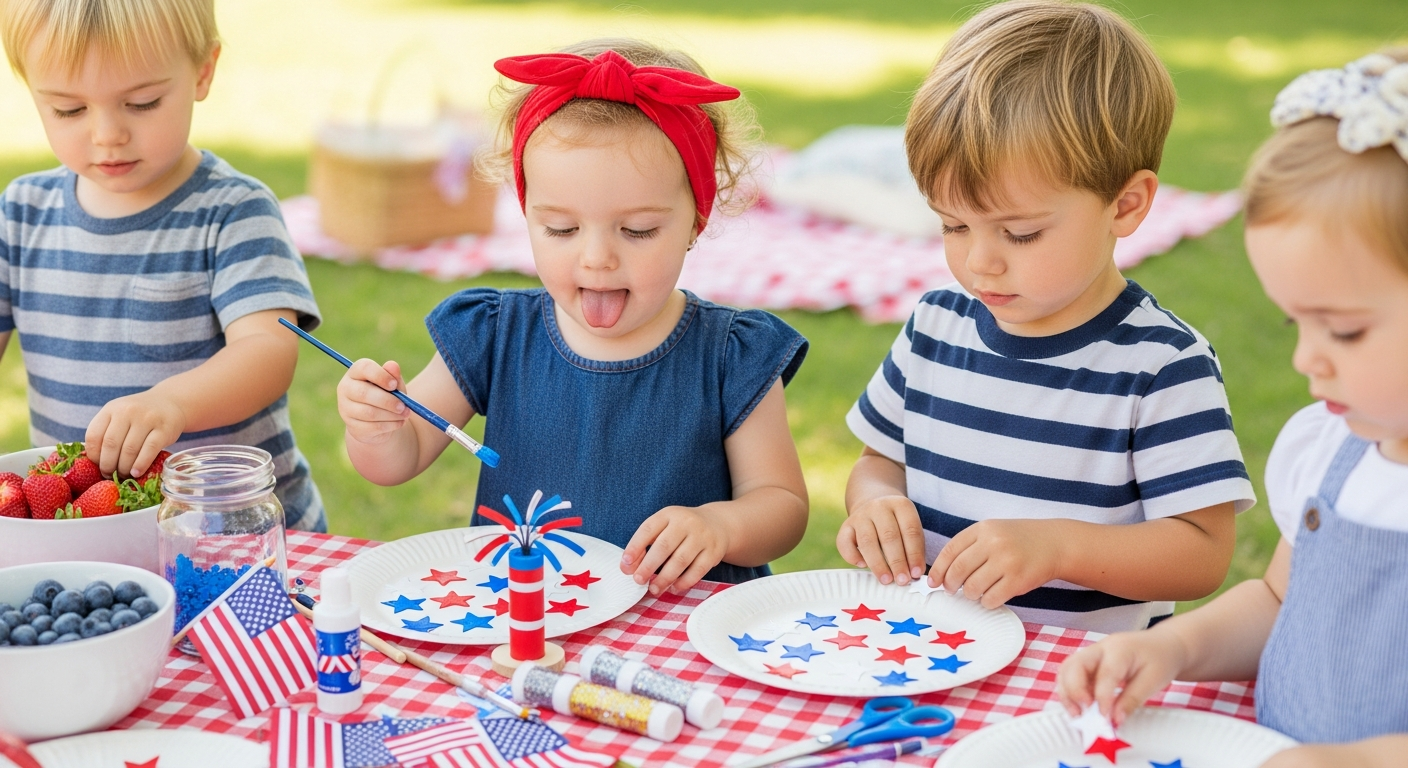
Table of Contents
- Introduction
- The Speech Blubs Mission: Why We Play
- Sensory Toddler Fourth of July Activities
- Fine Motor Toddler Fourth of July Activities
- Gross Motor and Outdoor Toddler Fourth of July Activities
- Educational and Science Toddler Fourth of July Activities
- Creative Kitchen Toddler Fourth of July Activities
- Connecting with Community and Gratitude
- Smart Screen Time: Why We Created Speech Blubs
- Choosing the Right Plan for Your Family
- Conclusion
- Frequently Asked Questions
Introduction
Do you remember the first time you saw a firework burst across the night sky, painting the darkness with sparks of crimson and gold? For a toddler, the Fourth of July is more than just a holiday; it is a sensory-rich explosion of new sights, sounds, and textures. While the "big booms" of professional displays can sometimes be overwhelming for little ears, the spirit of the holiday provides an incredible opportunity for developmental growth, language acquisition, and family bonding.
At Speech Blubs, we believe that every moment is a learning moment. Whether you are splashing in a red, white, and blue sensory bin or decorating a tricycle for a neighborhood parade, you are doing more than just passing the time. You are helping your child "speak their minds and hearts." This blog post will explore a wide variety of toddler fourth of July activities designed to spark curiosity, build fine and gross motor skills, and foster a love for communication. From messy sensory play to patriotic kitchen creations, we’ve gathered the best ways to celebrate America's birthday while supporting your child's milestones.

We will cover sensory-based play, fine motor crafts, outdoor movement games, and even "smart screen time" alternatives to keep your little one engaged all weekend long. Our goal is to provide you with realistic, joyful ways to connect with your child, regardless of where they are on their speech journey.
The Speech Blubs Mission: Why We Play
Our company was born from the personal experiences of our founders, who all grew up with speech problems and created the tool they wished they had. We know firsthand the frustration that comes when a child struggles to express themselves. That is why we are committed to providing an immediate, effective, and joyful solution for the 1 in 4 children who need speech support.
We blend scientific principles with play into one-of-a-kind "smart screen time" experiences. Unlike passive viewing—like watching cartoons—Speech Blubs is designed to be a powerful tool for family connection. We utilize a unique "video modeling" methodology, where children learn by watching and imitating their peers. This approach is rooted in the science of mirror neurons, which are the brain cells that fire both when an individual performs an action and when they observe that same action performed by another.
Our method is backed by research, placing us in the top tier of speech apps worldwide. As you engage in these toddler fourth of July activities, remember that imitation is the foundation of language. Whether they are imitating the "pop" of a pretend firework or the "shhh" of a sparkler, they are building the blocks of speech.
Sensory Toddler Fourth of July Activities
Sensory play is the foundation of early childhood learning. When toddlers touch, smell, and see new things, their brains build new neural pathways. These activities are especially helpful for children who are "late talkers" or those who need extra sensory input to stay regulated.
1. The Star-Spangled Sensory Bin
A sensory bin is one of the easiest ways to keep a toddler occupied for a long stretch of time. To make a patriotic version, start with a base of dried pasta or rice dyed red and blue.

- How to make it: Mix dried rice with a teaspoon of white vinegar and a few drops of food coloring in a sealed bag. Shake it up and let it dry on a baking sheet.
- What to add: Throw in some star-shaped cookie cutters, silver pom-poms (for "fireworks"), and small scoops or cups.
- Speech Benefit: Use this time to narrate what your child is doing. Use simple action words like "scoop," "pour," "hide," and "find."
- Speech Blubs Tie-In: In our "Colors" section, children can practice saying the words for the items they find in their bin. If your child finds a blue star, you can open the app and find the blue color to reinforce the concept through video modeling.
2. Patriotic Ice Melting Play
On a hot July afternoon, nothing beats playing with ice. This activity is a great way to talk about temperatures and transitions.
- What you'll need: Freeze water in ice cube trays with red and blue food coloring.
- The Activity: Place the colored cubes in a large plastic bin. Give your toddler a spray bottle of warm water or a small dropper.
- The Magic: As the ice melts, the colors swirl together, creating a beautiful purple hue. This is a fantastic "science" moment for a two-year-old.
- Speech Benefit: Focus on descriptive words like "cold," "wet," "melting," and names of colors.
3. Red, White, and Blue Shaving Cream
If you don't mind a little mess, shaving cream is a toddler's dream.
- The Setup: Spread a layer of white shaving cream on a tray. Add drops of red and blue liquid watercolor or food coloring.
- The Play: Let your child use their fingers or a popsicle stick to swirl the colors together.
- The Speech Connection: Encourage your child to "draw" fireworks in the cream. Every time they make a stroke, they can say "boom!" or "zoom!" This helps with oral motor planning and the production of "stop" sounds like /b/ and /p/.
Fine Motor Toddler Fourth of July Activities
Fine motor skills involve the small muscles in the hands and wrists. Developing these skills is crucial for later tasks like writing, zipping a coat, and using a fork.
4. DIY Firework Stamp Art
Who knew toilet paper rolls could be so festive? This is a classic craft that never gets old.
- How to do it: Take an empty toilet paper roll and cut slits about halfway up the roll, all the way around. Fan them out so it looks like a star or a sun.
- The Craft: Dip the "fringe" into red or blue paint and stamp it onto black construction paper.
- The Result: The prints look exactly like exploding fireworks!
- Speech Benefit: This activity is great for practicing the word "more." Ask your child, "Do you want more red?" or "More blue?" and wait for them to respond with a gesture or word before dipping the stamp.
5. Patriotic Beading and Threading
Threading is a high-level fine motor task that requires focus and hand-eye coordination.
- What you'll need: Red, white, and blue pipe cleaners and large plastic beads (or cut-up colorful straws).
- The Activity: Show your child how to slide the beads onto the pipe cleaner.
- Variation: You can twist the pipe cleaners into star shapes once they are full of beads.
- Scenario: For a parent whose 3-year-old struggles with focus, this task provides a clear "start" and "finish." You can cheer them on with "One more bead!" to keep them motivated.
6. Playdough "Firework" Trays
Playdough is a staple for a reason. It builds hand strength like nothing else.
- The Setup: Provide red, white, and blue playdough. Offer "invitations to play" like blue buttons, red pipe cleaners, and silver glitter.
- The Activity: Encourage your child to make "pancakes" and decorate them.
- Speech Benefit: Practice the "sh" sound while squishing the dough, or "pop" when poking holes in it. If your child is using our app, they might enjoy the "Toy Box" section, which mimics the joy of discovering new objects through play.
Gross Motor and Outdoor Toddler Fourth of July Activities
Getting outside is essential for burning off that toddler energy. Gross motor activities involve the large muscles of the body and help with balance and coordination.
7. The Neighborhood Patriotic Parade
Even if your town doesn't have a formal parade, you can have one on your sidewalk!
- The Setup: Decorate your child's tricycle, scooter, or wagon with red, white, and blue streamers. Use masking tape to attach little flags.
- The Activity: Put on some upbeat music and "parade" around the yard or down the block.
- Speech Benefit: This is a perfect time to practice "Stop" and "Go." Use a red piece of paper for stop and a green one for go. This helps with receptive language and following directions.
8. Star Balance and Hop
This is a low-prep game that gets kids moving.
- What you'll need: Use sidewalk chalk to draw large stars of different colors on your driveway.
- The Game: Call out a color: "Jump on the red star!" or "Hop to the blue star!"
- Speech Benefit: This reinforces color identification and helps children associate words with physical actions.
9. Red, White, and Blue Water Balloon Toss
If it's a scorcher, water balloons are the answer.
- The Setup: Fill up red and blue water balloons.
- The Play: For toddlers, "tossing" usually means dropping them on the ground to watch them pop. That's okay!
- Speech Benefit: Every "pop" is a chance to practice the /p/ sound. Model the word "Pop!" with a lot of enthusiasm. See what other parents are saying about how using these high-energy "exclamatory" words helped their children start vocalizing.
Educational and Science Toddler Fourth of July Activities
Toddlers are natural scientists. They are constantly testing how the world works. These activities introduce basic STEM concepts in a festive way.
10. Fizzy Sidewalk Fireworks
This is a "wow" activity that never fails to impress.
- The Recipe: Mix baking soda with a little bit of water to make a paste. Divide it into cups and add red and blue food coloring.
- The Art: Let your child "paint" firework shapes on the driveway with the colorful paste.
- The Fizz: Give your child a spray bottle or a squirt bottle filled with white vinegar. When they spray the "paint," it will fizz and bubble up.
- Speech Benefit: Talk about the reaction. "It’s bubbling!" "Look at the fizz!" These complex-sounding words are fun for toddlers to try to imitate.
11. Color-Changing Daisies
This is a slower science experiment that teaches children about how plants "drink" water.
- What you'll need: Two glasses of water and white daisies or carnations.
- The Setup: Put red food coloring in one glass and blue in the other. Place a white flower in each.
- The Wait: Over the next 24 hours, watch as the petals slowly turn red and blue.
- Speech Benefit: This is a great exercise in "waiting" and "predicting." Ask your child, "What will happen to the flower?"
Creative Kitchen Toddler Fourth of July Activities
Cooking with toddlers can be messy, but it is an incredible way to build vocabulary related to tastes, textures, and kitchen tools.
12. Patriotic Yogurt Bark
This is a healthy, cooling snack that toddlers can help assemble.
- How to do it: Spread Greek vanilla yogurt on a baking sheet lined with parchment paper.
- The Toppings: Let your toddler sprinkle blueberries and sliced strawberries on top.
- The Finish: Freeze for a few hours, then break into "shards."
- Speech Benefit: Use this as a time to talk about "sweet," "cold," and "crunchy."
13. Red, White, and Blue Fruit Skewers
For older toddlers, making skewers is a great way to practice patterns.
- The Ingredients: Watermelon chunks (red), bananas or marshmallows (white), and blueberries (blue).
- The Activity: Help your child slide the fruit onto a blunt-ended skewer or a straw.
- The Concept: Talk about the pattern: "Red, white, blue... what comes next?"
- Speech Connection: If your child loves snacks, the "Yummy Time" section of Speech Blubs is a great way to reinforce the names of fruits and vegetables.
Connecting with Community and Gratitude
The Fourth of July is also an opportunity to teach children about the community and those who serve.
14. Handprint Cards for Heroes
Teaching gratitude can start early.
- The Craft: Help your child make a red and blue handprint on a card.
- The Message: Write a simple "Thank You" inside.
- The Delivery: Send the cards to a local veterans' home or a family member serving overseas.
- Speech Benefit: This introduces the concept of "giving" and "helping."
Smart Screen Time: Why We Created Speech Blubs
We know that holidays often mean travel, long car rides, or busy afternoons in the kitchen. In these moments, screen time is often inevitable. However, not all screen time is created equal. At Speech Blubs, we provide a screen-free alternative to passive viewing. Our app is a "smart" experience designed to get your child off the screen and interacting with you.
By using peer-to-peer video modeling, we trigger the child's natural urge to imitate. When a child sees another child making a funny face, sticking out their tongue, or saying "Boom!", they are much more likely to try it themselves. This reduces the frustration of not being understood and builds the confidence they need to keep trying.
If you are unsure where your child stands developmentally, we offer a quick 3-minute preliminary screener. It involves 9 simple questions about your child's communication habits and provides you with an assessment and a next-steps plan. It’s a great way to get peace of mind during the holiday weekend.
Choosing the Right Plan for Your Family
We want to be transparent about our pricing so you can make the best choice for your family's needs. We offer two main paths to joining our community:
- The Monthly Plan: For $14.99 per month, you get full access to the Speech Blubs app and all its core features. This is a great option if you want to try it out for a short period.
- The Yearly Plan (Best Value): Our Yearly plan is the clear favorite for families committed to their child's progress. At $59.99 per year, it breaks down to just $4.99 per month—a savings of 66% compared to the monthly rate.
The Yearly Plan includes exclusive, high-value features that the Monthly plan does not:
- A 7-day free trial: Test the full suite of features before you commit.
- The Reading Blubs App: An additional app designed to help toddlers transition from speech to early literacy and reading.
- Priority Support: Enjoy a 24-hour support response time.
- Early Access: Be the first to try our new updates and features.
Ready to start your journey? Download Speech Blubs on the App Store or Google Play today. If you prefer to sign up via the web, you can create your account and start your free trial here.
Conclusion
The Fourth of July is a time for celebration, but for parents of toddlers, it's also a time for intentional play. Whether you are stamping paint fireworks, sorting blue and red rice, or jumping on chalk stars, you are giving your child the tools they need to explore their world and find their voice.
Remember, the goal of these toddler fourth of July activities isn't perfection; it's connection. It’s about the "joyful family learning moments" that happen when you get down on the floor and play together. Speech Blubs is here to support you in that journey, providing a scientifically-backed supplement to your child's overall development.
We encourage you to choose the Yearly plan to get the full suite of features, including Reading Blubs and your 7-day free trial. Let’s make this Independence Day the start of a brand-new chapter in your child’s communication journey.
Frequently Asked Questions
1. How do these holiday activities specifically help with speech delay? Activities that involve sensory input and fine motor work often encourage "joint attention"—the shared focus of two individuals on an object. This is a precursor to language. When you narrate your child’s actions (e.g., "You are squishing the blue playdough!"), you are providing them with the vocabulary they need to eventually describe those actions themselves.
2. My toddler is terrified of loud noises. How can we still celebrate? Many toddlers find the "booms" of fireworks scary. Focus on "quiet" toddler fourth of July activities like the sensory bins, painting, and kitchen crafts mentioned above. You can also watch "silent" fireworks (like the ones in our app or on a muted video) to help desensitize them to the visual aspect without the scary sound.
3. What is the best age to start these activities? Most of these activities are designed for children aged 18 months to 4 years. For younger toddlers, focus on the sensory bins (ensure items are not choking hazards). For older preschoolers, focus on the "science" aspects like the fizzy vinegar and the pattern-making skewers.
4. Can Speech Blubs replace traditional speech therapy? Speech Blubs is a powerful tool designed to supplement a child's overall development plan and, when applicable, professional therapy. It is an excellent way to practice skills at home in a fun, low-pressure environment, but it should be used in conjunction with professional advice if your child has a diagnosed delay.
About the author