
25+ Fun Christmas Activities for Kids: Boost Language & Joy
 By Speech Blubs Team•Dec 19, 2025•19 min.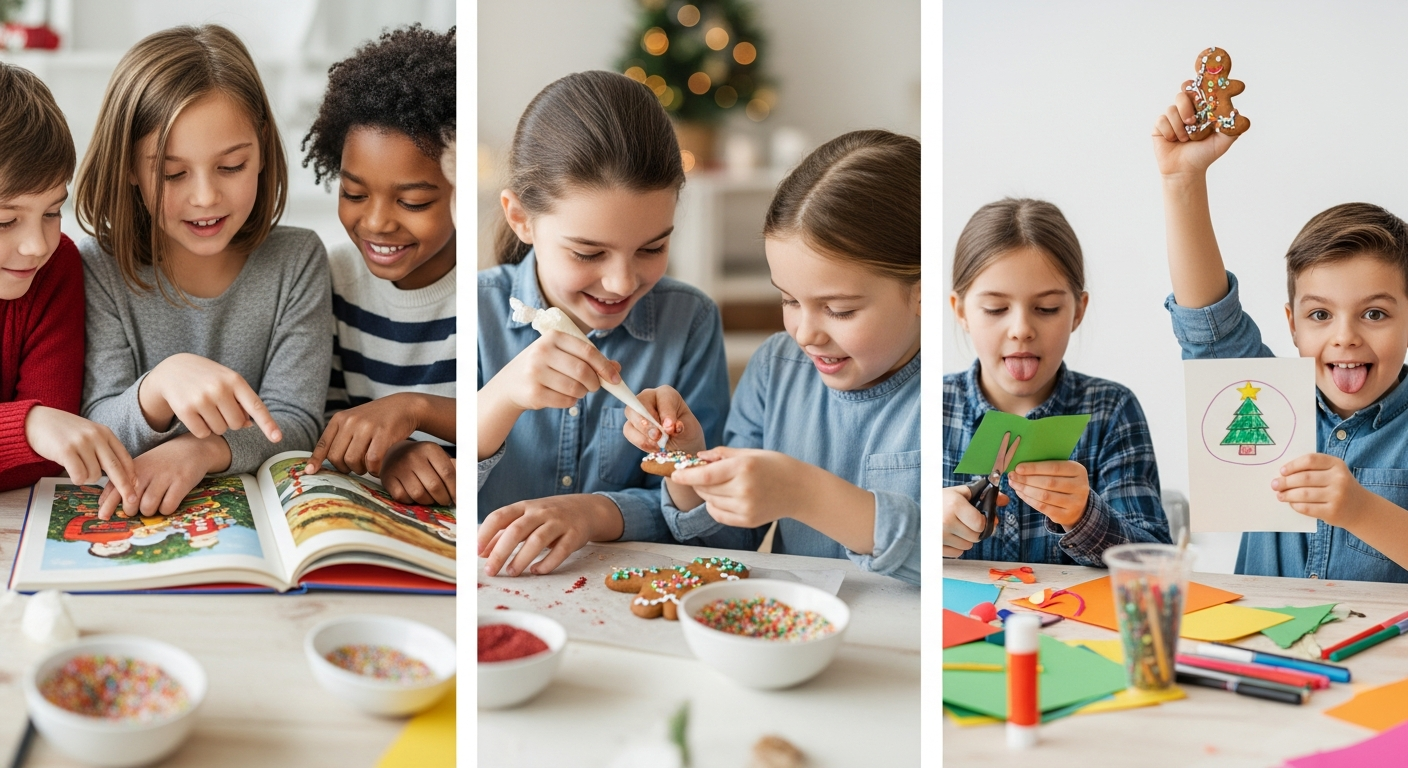
Table of Contents
- Introduction
- Sensory & Creative Delights: Hands-On Language Learning
- Literacy & Storytelling Wonders: Igniting Imagination
- Music & Movement Magic: Rhythmic Communication
- Outdoor & Exploratory Adventures: Engaging the Senses
- Games & Family Traditions: Connecting Through Play
- Making the Most of "Smart Screen Time" with Speech Blubs
- Choosing Your Speech Blubs Plan: Maximize the Magic
- Conclusion
- FAQ
Introduction
The holiday season twinkles with magic, laughter, and cherished family moments. For many parents, Christmas brings a wonderful opportunity to create lasting memories and delight in their children's excitement. But beyond the glitter and gifts, these festive weeks are also a powerful, natural environment for fostering a child’s language and communication skills. Sometimes, the hustle and bustle can overshadow the simpler, more profound moments of connection and learning.
At Speech Blubs, we believe every child deserves to "speak their minds and hearts," and the holidays offer an unparalleled chance to encourage that. Our mission was born from the personal experiences of our founders, who faced speech challenges themselves and envisioned a tool that could have transformed their own childhoods. This guide isn't just about fun; it’s about intentional, joyful engagement that nurtures your child's ability to communicate, connecting the magic of Christmas with meaningful developmental strides.

In this post, we'll dive into over 25 delightful Christmas activities, exploring how each one can naturally become a language-rich experience. We'll show you how to leverage everyday holiday fun to expand vocabulary, practice articulation, enhance narrative skills, and build confidence. We'll also highlight how Speech Blubs complements these activities, offering a unique "smart screen time" solution that blends scientific principles with play. By the end, you'll be equipped with a sleigh-full of ideas to make this Christmas not only memorable but also wonderfully developmental for your little one.
Sensory & Creative Delights: Hands-On Language Learning
The holiday season is a feast for the senses, offering countless opportunities for hands-on activities that naturally spark language development. These tactile experiences encourage children to explore, describe, and interact with the world around them, building a rich foundation for communication.
Baking & Decorating Festive Treats
There's nothing quite like the aroma of Christmas cookies filling the air! Baking is a multi-sensory activity that’s packed with language-learning potential.
- Language Boosters:
- Vocabulary: Introduce words like flour, sugar, mix, stir, bake, sweet, crunchy, sprinkles, frosting, gingerbread, star, tree.
- Sequencing: Practice "first, next, last" as you follow a recipe. "First, we add the flour. Next, we crack the egg."
- Following Directions: "Please get the red sprinkles," or "Put one cookie on the tray."
- Requesting: "More frosting, please!" or "Can I have a spoon?"
- Descriptive Words: Encourage words like sticky, gooey, warm, cold, yummy, delicious, sparkly.
- Activity Ideas:
- Cookie Decorating: Set out plain sugar cookies, various colored frostings, and an array of sprinkles. Discuss colors, shapes, and what they're creating.
- Gingerbread House Assembly: This is a fantastic exercise in planning, spatial reasoning, and collaborative language. Talk about walls, roof, windows, door, candy placement.
- Making Festive Snacks: From reindeer pretzels to fruit skewers, simple snacks offer similar language-rich interactions.
- Speech Blubs Connection: For a child developing early vocabulary, our "Food" section in the Speech Blubs app offers a fun way to practice naming ingredients and food items. The "Colors" section can reinforce the different hues of sprinkles and icing they’re using. Our video modeling approach, where children imitate real peers, can help them practice words related to baking, like "mix" or "eat," making it an active and engaging screen time experience.
DIY Ornament & Craft Making
Crafting not only yields beautiful holiday keepsakes but also provides a fantastic framework for language acquisition.

- Language Boosters:
- Naming Materials: Paper, glue, glitter, pipe cleaner, string, beads, paint, cotton balls.
- Action Verbs: Cut, glue, stick, paint, draw, string, tie, hang, fold.
- Spatial Concepts: On, under, next to, in front of, behind.
- Problem-Solving Language: "What should we do next?", "How can we fix this?"
- Activity Ideas:
- Salt Dough Ornaments: Mix flour, salt, and water, then cut out shapes. Talk about the dough, rolling pin, cookie cutters, and what shapes you're making.
- Paper Chains: Discuss colors and patterns as you link strips of paper. "Red, green, red, green."
- Handmade Cards: Encourage children to describe who the card is for and what they want to draw or write. This promotes expressive language and early literacy.
- Glitter Art: Use glue to draw pictures and then sprinkle glitter. Talk about the sparkle, shine, and the picture itself.
- Speech Blubs Connection: Our "Shapes" and "Colors" categories are perfect for reinforcing these concepts during crafting. For children working on action verbs, Speech Blubs' "Action Words" section can help them practice words like "cut," "glue," and "draw," translating directly to their hands-on craft time. It's a fantastic way to connect their physical play with targeted speech practice.
Sensory Bins & Playdough Fun
Sensory play is invaluable for stimulating development, including language, by engaging multiple senses simultaneously.
- Language Boosters:
- Texture Vocabulary: Soft, squishy, smooth, bumpy, rough, sticky, slimy.
- Imaginary Play Language: Encourages storytelling, role-playing, and using imaginative vocabulary.
- Requesting & Commenting: "I need more playdough," "Look at my snowman!"
- Comparison: "Yours is bigger than mine!"
- Activity Ideas:
- Christmas Sensory Bins: Fill a bin with festive items like red and green rice, mini ornaments, pinecones, cinnamon sticks, and small toys. Children can scoop, pour, and explore.
- Peppermint Playdough: Add peppermint extract or crushed candy canes to homemade playdough. Discuss the scent ("minty!"), color, and what they're creating.
- Speech Blubs Connection: Sensory play often leads to discussions about senses and feelings. Our "My Body" section can help children name body parts used for touch and smell, and the "Feelings" section can aid in expressing emotions when sharing or exploring new textures.
Literacy & Storytelling Wonders: Igniting Imagination
Christmas is a magical time for stories and narratives, providing a natural backdrop for developing strong literacy and imaginative language skills.
Reading Festive Books Aloud
Snuggling up with a holiday book is a cherished tradition that offers profound language benefits.
- Language Boosters:
- Vocabulary Expansion: Encounter new words and concepts related to Christmas.
- Comprehension: Ask "what," "who," "where," and "why" questions about the story.
- Narrative Skills: Discuss plot, characters, setting, and sequencing of events.
- Phonological Awareness: Point out rhyming words and alliteration in festive poems.
- Activity Ideas:
- Daily Christmas Book: Make it a tradition to read one holiday book each day leading up to Christmas.
- Library Visits: Explore your local library's collection of Christmas stories.
- Interactive Reading: Pause to ask questions, make predictions, and discuss illustrations.
- Speech Blubs Connection: While Speech Blubs is known for its "video modeling" speech practice, the foundational skills it builds are crucial for literacy. Our focus on clear articulation and expressive language lays the groundwork for confident reading and storytelling. If your child is a "late talker" and needs a boost in foundational speech sounds, our app can provide targeted practice that complements their growing love for books. For children ready for the next step, our Yearly plan even includes the extra Reading Blubs app for a comprehensive literacy experience.
Writing Letters to Santa & Christmas Lists
This activity connects desire with communication, fostering expressive language and early writing skills.
- Language Boosters:
- Expressive Language: Children verbalize their wishes and use descriptive words.
- Requesting: Practice polite ways to ask for things.
- Early Literacy: For older children, practicing writing, spelling, and sentence formation.
- Sequencing & Prioritizing: Deciding what to ask for first, second, etc.
- Activity Ideas:
- Dictating Letters: For younger children, they can dictate their letter to Santa, and you write it down. This gives them a voice and models the writing process.
- Drawing Wish Lists: Children can draw pictures of what they want, using language to describe each item.
- Visiting Santa: Role-play the visit beforehand to practice what they'll say and ask.
Holiday Storytelling & Charades
Engaging in imaginative play and performance is a fantastic way to develop flexible and creative communication.
- Language Boosters:
- Narrative Development: Creating their own stories with beginnings, middles, and ends.
- Sequencing: Ordering events in a logical flow.
- Non-Verbal Communication: Using gestures, facial expressions, and body language (especially in charades).
- Inferencing: Guessing what others are acting out.
- Activity Ideas:
- "What if?" Christmas Stories: Start a story with "What if Santa lost his reindeer?" and let your child complete it.
- Christmas Charades: Write down holiday-themed actions (e.g., "decorate a tree," "unwrap a gift," "sing a carol") and have family members act them out.
- Puppet Show: Use simple holiday puppets or dolls to act out a Christmas story.
Music & Movement Magic: Rhythmic Communication
Music and movement are universally appealing to children and offer a dynamic way to enhance speech and language development, particularly rhythm, listening, and expressive movement.
Singing Christmas Carols & Songs
Music helps children internalize language patterns, rhythm, and new vocabulary in a fun, repetitive way.
- Language Boosters:
- Rhyme & Rhythm: Develops phonological awareness, which is critical for reading readiness.
- Vocabulary: Introduces festive words and concepts through song lyrics.
- Memory & Recall: Memorizing lyrics strengthens auditory memory.
- Listening Skills: Paying attention to melodies and words.
- Activity Ideas:
- Family Caroling: Sing together in the car, at home, or even spread cheer to neighbors (if appropriate!).
- Karaoke Night: Use a karaoke machine or online videos for a fun sing-along.
- Homemade Instruments: Create shakers or drums to accompany the music, adding a sensory and motor component.
Festive Dance Parties & Movement Games
Movement activities connect words with actions, reinforcing understanding and expression.
- Language Boosters:
- Following Directions: "Jump like a reindeer," "Spin like a snowflake."
- Action Verbs: Reinforces verbs like jump, spin, walk, clap, stomp, wave.
- Body Awareness: Helps children learn about their own bodies and how they move.
- Activity Ideas:
- Christmas "Freeze Dance": Play holiday music and have everyone dance, then freeze when the music stops.
- "Santa Says": A holiday twist on "Simon Says" to practice following directions.
- Action Song Role-Play: Act out songs like "Rudolph the Red-Nosed Reindeer" or "Jingle Bells" with gestures and movements.
Outdoor & Exploratory Adventures: Engaging the Senses
Getting outdoors, even in chilly weather, provides unique opportunities for language development through observation and interaction with the environment.
Exploring Christmas Light Displays
A simple drive or walk through decorated neighborhoods can become a language-rich adventure.
- Language Boosters:
- Descriptive Language: Use words like bright, sparkling, colorful, blinking, big, small, tall, short.
- Asking & Answering Questions: "What colors do you see?", "Which light is your favorite?", "How many stars are there?"
- Comparing & Contrasting: "That house has more lights than ours," "The blue lights are next to the red ones."
- Vocabulary: Star, angel, Santa, reindeer, snowman, wreath, garland.
- Activity Ideas:
- Light Scavenger Hunt: Create a list of things to spot (e.g., "a Santa," "a blue light," "a reindeer").
- "I Spy" Christmas Edition: Play "I spy with my little eye something that is red and shiny."
- Storytelling: Make up stories about the people who live in the decorated houses.
Winter Wonderland Play (If Applicable)
If you live in a snowy region, embrace the cold for some invigorating language play.
- Language Boosters:
- Vocabulary: Snow, ice, cold, freezing, mittens, hat, scarf, shovel, sled, snowman.
- Action Verbs: Build, throw, roll, slide, crunch, shiver.
- Spatial Concepts: Up, down, in, on, under, behind, next to.
- Sensory Descriptions: Cold, wet, powdery, crunchy, slippery.
- Activity Ideas:
- Building a Snowman: Talk through each step: "First, we roll a small ball for the head. Next, we find buttons for the eyes."
- Sledding Fun: Describe the sensation: "Whee! We're going fast! Down the hill!"
- Snow Angel Creations: Talk about body parts and actions.
Games & Family Traditions: Connecting Through Play
Structured games and cherished family traditions provide excellent frameworks for practicing social language skills, following rules, and engaging in extended conversations.
Christmas-Themed Games
Games are fantastic for teaching turn-taking, problem-solving, and conversational skills.
- Language Boosters:
- Turn-Taking: "It's my turn, then your turn."
- Following Rules: Understanding and verbalizing game instructions.
- Problem-Solving: Strategizing and explaining choices.
- Requesting Clarification: "What do I do now?"
- Expressing Feelings: Learning to express excitement, frustration, or joy appropriately.
- Activity Ideas:
- Holiday Bingo: Create bingo cards with Christmas images or words. Call them out and have children mark their cards.
- Christmas Scavenger Hunt: Hide holiday-themed objects or pictures around the house and provide clues.
- Matching Games: Use pairs of Christmas images (e.g., Santa hats, reindeer, candy canes) to practice memory and naming.
Creating a "Giving Back" Calendar
The spirit of giving is central to Christmas, and integrating acts of kindness offers powerful lessons in empathy and social language.
- Language Boosters:
- Empathy & Social Language: Discussing how actions affect others, expressing gratitude.
- Explaining Actions: "We're making cookies for Mrs. Henderson because she's lonely."
- Sequencing: Planning a series of kind acts.
- Problem-Solving: Deciding what to do and how to do it.
- Activity Ideas:
- Acts of Kindness Calendar: Instead of treats, each day reveals a small act of kindness to perform (e.g., "Make a card for a grandparent," "Donate an old toy," "Help clear the table").
- Homemade Gifts: Making simple gifts for family members or friends, talking about why they chose that gift for that person.
The Power of Family Meals & Conversations
Amidst the excitement, don't underestimate the power of simple, unhurried meal times and conversations.
- Language Boosters:
- Conversational Turn-Taking: Practicing the back-and-forth of dialogue.
- Asking Open-Ended Questions: Encourage more than "yes/no" answers (e.g., "What was your favorite part of the day?", "What made you laugh today?").
- Expressing Gratitude: Discussing things they are thankful for.
- Narrative Sharing: Allowing children to recount their day or share stories.
- Activity Ideas:
- "Rose & Thorn" or "High & Low": During dinner, each person shares one "rose" (something good) and one "thorn" (something challenging) from their day.
- Holiday "Show & Tell": Encourage children to bring a special holiday item to the table and describe it.
Making the Most of "Smart Screen Time" with Speech Blubs
While hands-on activities are crucial, we understand that modern family life also includes screen time. At Speech Blubs, we've transformed traditional screen time into "smart screen time" – an active, engaging, and scientifically-backed tool to accelerate speech and language development.
Our company was born from the personal experiences of our founders, who all grew up with speech problems and created the tool they wished they had. We are committed to providing an immediate, effective, and joyful solution for the 1 in 4 children who need speech support. We believe that screen time can be a powerful catalyst for learning when designed thoughtfully.
Our unique approach uses "video modeling," where children learn by watching and imitating their peers. This technique leverages the power of mirror neurons, encouraging natural vocal imitation and engagement. It's a screen-free alternative to passive viewing (like cartoons) because it demands active participation and offers a powerful tool for family connection, often involving parents in the "play." Our method is backed by extensive research and has achieved top ratings globally.
Integrating Speech Blubs into Holiday Play
Speech Blubs isn't meant to replace the joyful hands-on activities discussed above, but rather to powerfully supplement them, offering targeted practice and reinforcement in an engaging format.
- Scenario 1: Boosting Festive Vocabulary.
- For a child who is struggling with expressive vocabulary around Christmas, our "What Is This?" or "Colors" sections can help them identify and label festive items seen in decorations. You might be decorating the tree and say, "Let's find all the red ornaments!" Then, later, open Speech Blubs to our "Colors" section to reinforce "red" and other colors, seeing real kids say the words.
- Scenario 2: Practicing Holiday Sounds.
- If your child loves animals and is working on early sounds, our "Animal Kingdom" section can reinforce animal noises (like 'reindeer' sounds or 'bear' hibernation sounds) in a fun, interactive way. While talking about Santa's reindeer, you can transition to the app to practice the 'R' sound or other relevant animal sounds.
- Scenario 3: Following Festive Directions.
- A child learning to follow simple directions could use our "Action Words" section to practice verbs related to holiday activities like "wrap," "decorate," "sing." After wrapping gifts, you can open the app and find videos of children performing "wrap" or "open" to reinforce the vocabulary and actions.
- Scenario 4: Reducing Frustration and Building Confidence.
- Sometimes, a child’s speech challenges can lead to frustration, especially during exciting times like Christmas. Speech Blubs provides a low-pressure, encouraging environment where children can practice speech sounds and words at their own pace, building confidence without the anxiety of feeling pressured. Witnessing other children succeed through video modeling can be incredibly motivating.
At Speech Blubs, we aim to foster a love for communication, build confidence, reduce frustration, develop key foundational skills, and create joyful family learning moments. We are proud to provide a powerful supplement to a child's overall development plan and, when applicable, professional therapy. Don't just take our word for it; you can see what other parents are saying about their child's success with Speech Blubs.
Choosing Your Speech Blubs Plan: Maximize the Magic
We want to make Speech Blubs as accessible and valuable as possible for your family. That's why we offer transparent pricing options designed to fit your needs.
When considering Speech Blubs, you have two primary options:
- Monthly Plan: This plan is available for $14.99 per month. It offers flexibility, allowing you to subscribe for a shorter period.
- Yearly Plan: Our most popular and highly recommended option, priced at $59.99 per year. This breaks down to an incredible just $4.99/month!
Why the Yearly Plan is the Best Value:
The Yearly plan is clearly the superior choice for several compelling reasons:
- Significant Savings: You'll save a whopping 66% compared to the monthly subscription, making quality speech support incredibly affordable over the long term.
- 7-Day Free Trial: The Yearly plan is the only way to unlock our 7-day free trial. This allows you and your child to explore the full app, experience our unique video modeling, and see the engagement firsthand before making a commitment.
- Exclusive Reading Blubs App: Only with the Yearly plan do you gain access to our additional Reading Blubs app. This provides an integrated approach to early literacy, perfectly complementing the speech development tools.
- Early Access to New Updates: Yearly subscribers get early access to new updates and features, ensuring you always have the latest and greatest content.
- Priority Support: You'll benefit from a 24-hour support response time, giving you peace of mind that help is always readily available.
The Monthly plan, while flexible, does not include these exclusive benefits, nor does it offer a free trial. We encourage you to choose the Yearly plan to get the best value, unlock the free trial, and access the full suite of features that will empower your child's communication journey.
Conclusion
The Christmas season is a precious gift, offering a unique blend of joy, tradition, and boundless opportunities for connection and growth. By intentionally weaving language-rich interactions into your holiday activities, you're not just creating magical memories; you're actively nurturing your child's ability to communicate, to express themselves, and to "speak their minds and hearts." From baking cookies and crafting ornaments to singing carols and exploring festive lights, every moment holds potential for expanding vocabulary, practicing sounds, and building confidence.
And when it's time for some focused, engaging learning, Speech Blubs is here to support you. Our "smart screen time" approach provides a playful yet powerful supplement, reinforcing speech skills through our unique video modeling methodology. It’s an immediate, effective, and joyful solution, designed by founders who understand the journey firsthand.
This Christmas, let's make every moment count. Ignite your child’s communication potential and fill your home with the sounds of joyful learning. Ready to empower your child's speech and language development today? Download Speech Blubs on the App Store or get it on the Google Play Store! Alternatively, you can create your account and begin your 7-day free trial on our website. Remember to choose the Yearly plan to unlock your free trial, the bonus Reading Blubs app, and all the exclusive benefits for the best value!
FAQ
Q1: How can I make these Christmas activities truly beneficial for my child's language development? A1: The key is active engagement! Talk constantly during activities, asking open-ended questions ("What do you think will happen next?"), describing what you're doing ("I'm mixing the sticky dough"), and labeling objects and actions. Encourage your child to participate in conversations, even if it's just through gestures or sounds initially. Follow their lead and expand on their interests.
Q2: Is Speech Blubs suitable for children with specific speech delays, or just for general language enrichment? A2: Speech Blubs is designed to benefit a wide range of children. Our app is particularly effective for children with speech delays, articulation issues, or those who are "late talkers," providing targeted practice for various speech sounds and language skills. However, it's also a fantastic tool for any child to enhance their vocabulary, expressive language, and communication confidence through engaging, interactive play. Our unique video modeling has been shown to be highly effective. If you're unsure if your child could benefit, you can take our quick 3-minute preliminary screener to get an assessment and a personalized next-steps plan.
Q3: What makes Speech Blubs different from other educational apps or passive screen time? A3: Unlike many apps that offer passive viewing, Speech Blubs uses "smart screen time" that requires active participation. Our "video modeling" method shows real children demonstrating speech sounds and words, encouraging your child to imitate and interact. This active engagement, based on scientific principles of learning through imitation, makes it a powerful and effective tool for building communication skills, fostering connection, and reducing the screen-time guilt associated with passive content.
Q4: What if my child already receives professional speech therapy? Can Speech Blubs still help? A4: Absolutely! Speech Blubs is an excellent supplementary tool that can reinforce the concepts and sounds learned in professional therapy sessions. It provides consistent, engaging practice at home, helping children generalize skills and build confidence between therapy appointments. Many speech-language pathologists recommend Speech Blubs as a home practice resource. Always discuss any supplemental tools with your child's therapist to ensure they align with their therapy goals.
About the author