
25 Fun Toddler Teaching Activities for Early Learning
 By Speech Blubs Team•Feb 23, 2026•15 min.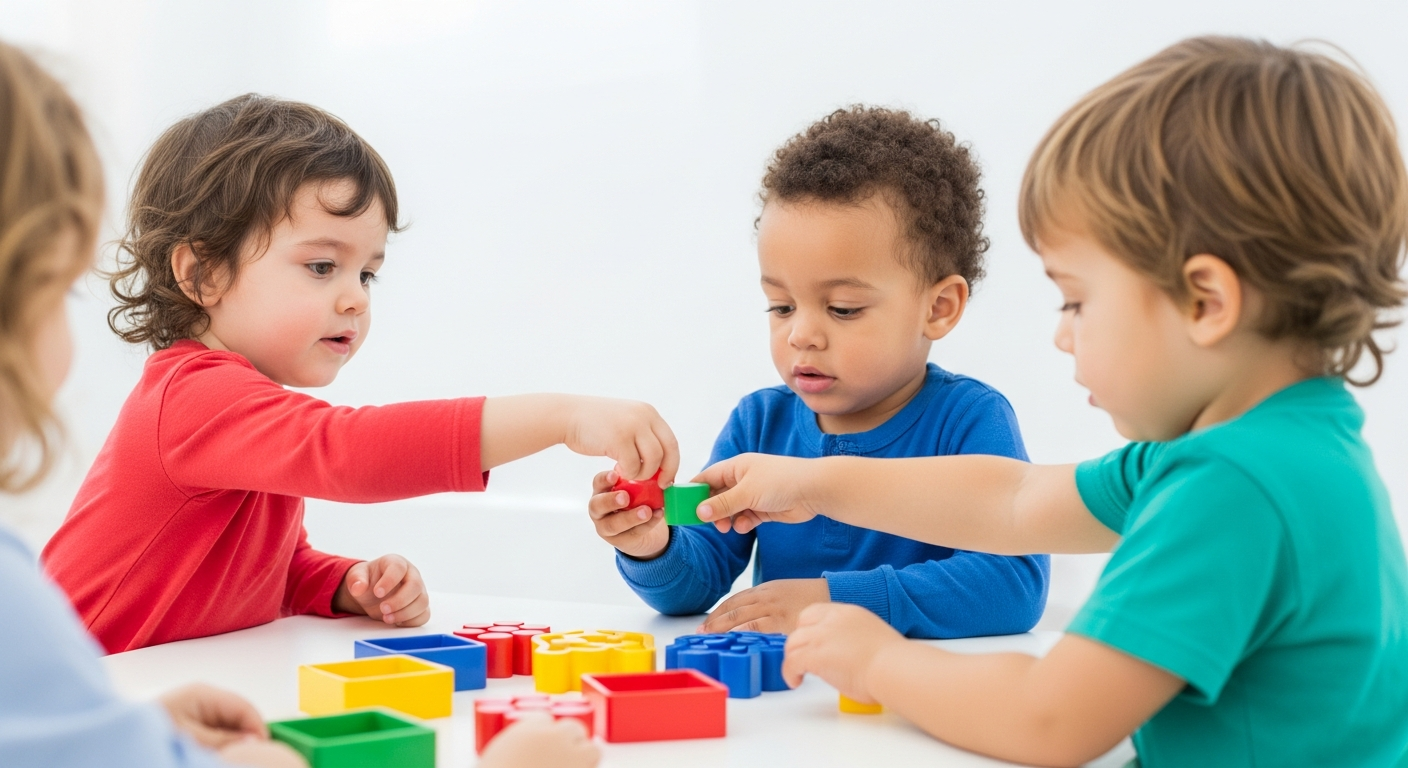
Table of Contents
- Introduction
- The Power of Play-Based Learning
- Sensory Toddler Teaching Activities
- Language and Literacy Activities
- Cognitive and Memory Activities
- Fine and Gross Motor Skill Activities
- Low-Prep "Home Classroom" Activities
- Integrating Speech Blubs into Your Routine
- Real-World Scenarios: Connecting Play to Speech
- Practical Tips for Success
- Summary of the Best Toddler Teaching Activities
- FAQ
- Conclusion
Introduction
Have you ever looked at your toddler and wondered how such a tiny person can possess the energy of a thousand suns and the curiosity of a world-class explorer? One moment they are trying to fit a square peg into a round hole, and the next, they are mimicking the exact way you say "banana." This period of life is truly magical because, between the ages of one and four, a child's brain is like a super-powered sponge, soaking up every sound, movement, and interaction.
At Speech Blubs, we believe this incredible window of development is the perfect time to introduce intentional toddler teaching activities that spark joy while building foundational skills. Our mission is to empower every child to "speak their minds and hearts," a goal born from the personal experiences of our founders who grew up with speech challenges themselves. We know that roughly 1 in 4 children will face speech or language delays, and our goal is to provide an immediate, effective, and joyful solution for families everywhere.

In this post, we will explore a wide variety of activities designed to stimulate your toddler’s senses, boost their cognitive development, and accelerate their language skills. We will cover everything from low-prep sensory bins to "smart screen time" strategies using the Speech Blubs app. By the end of this article, you will have a comprehensive toolkit of ways to turn everyday moments into powerful learning opportunities. Our core message is simple: learning shouldn't feel like "work" for a toddler. When we blend scientific principles with the spirit of play, we create an environment where children don't just learn—they thrive.
The Power of Play-Based Learning
Before we dive into the specific activities, it is helpful to understand why play is the "gold standard" for toddler education. For a two-year-old, a cardboard box isn't just a box; it’s a rocket ship, a cave, or a drum. This imaginative flexibility is the cornerstone of cognitive growth.
When we engage in toddler teaching activities, we aren't just teaching facts; we are building neural pathways. Research shows that children learn best when they are active, engaged, and socially interactive. This is why we focus so heavily on our "video modeling" methodology. By watching other children—their peers—perform actions or say words, toddlers are naturally motivated to imitate. This process taps into "mirror neurons" in the brain, which are essential for developing complex communication skills. You can read more about the science behind our approach on our dedicated research page.
Key Takeaway: The goal of early childhood activities isn't perfection; it’s participation. Focus on creating joyful family learning moments that reduce frustration and build your child's confidence.
Sensory Toddler Teaching Activities
Sensory play is any activity that stimulates a child’s senses: touch, smell, taste, sight, and hearing. These activities are vital because they help toddlers learn how to process sensory information from the world around them.

1. The "Animal Wash" Station
Toddlers love water, and they love animals. To set this up, grab a shallow plastic bin, a bit of tear-free soap, and some plastic animal figurines. Give your child an old toothbrush or a washcloth.
- Why it works: This builds fine motor skills and encourages descriptive language. You can ask, "Is the elephant wet or dry?" or "Can you scrub the giraffe’s long neck?"
- Speech Blubs Connection: For a parent whose child loves this activity, the "Animal Kingdom" section in our app is a perfect companion. After washing the toy lion, your child can watch a peer in the app make a "Roar!" sound, encouraging them to imitate.
2. Edible Finger Painting
If you’re worried about your toddler putting paint in their mouth, try using Greek yogurt tinted with a few drops of food coloring.
- Why it works: It allows for total sensory freedom. They can feel the cold texture, see the vibrant colors, and even taste their "art."
- Developmental Tip: Use this time to name colors. "Look, you made a blue circle!"
3. DIY Sound Shakers
Fill empty plastic eggs or small containers with different materials like dry rice, beans, or coins. Tape them shut securely.
- Why it works: This introduces the concept of cause and effect and helps with auditory discrimination. Ask your child which shaker is "loud" and which is "quiet."
4. Texture Scavenger Hunt
Go for a walk in your backyard or a local park. Ask your toddler to find something "bumpy" (like tree bark), something "soft" (like a leaf), and something "hard" (like a rock).
- Why it works: This activity builds vocabulary and observational skills. It connects abstract words to physical sensations.
Language and Literacy Activities
Language development is perhaps the most exciting part of the toddler years. This is when "babble" turns into "words," and words turn into "sentences."
5. Dialogic Reading
Instead of just reading a book cover-to-cover, make it a conversation. Point to pictures and ask, "What is the dog doing?" or "Where is the red ball?"
- Why it works: It moves the child from being a passive listener to an active storyteller.
- The Speech Blubs Boost: If you choose our Yearly plan, you also get access to the Reading Blubs app, which is specifically designed to bridge the gap between speaking and early literacy.
6. The Alphabet "Soup"
Put plastic magnetic letters into a large bowl of water or a container of dry rice. Give your toddler a slotted spoon to "fish" them out.
- Why it works: It makes letter recognition a tactile game. As they pull out a letter, name it and the sound it makes: "You found the letter B! B says /b/ /b/ /b/."
7. Peer-to-Peer Video Modeling
Traditional cartoons are often passive viewing. We provide a screen-free alternative to that "zombie mode" through active video modeling. In the app, toddlers watch other children—not cartoons—make sounds and say words.
- Why it works: Children are hardwired to learn from other children. Seeing a peer succeed gives them the confidence to try it themselves. You can download Speech Blubs on the App Store to see this in action.
8. Stop-and-Go Singing
Sing familiar nursery rhymes like "Twinkle Twinkle Little Star" or "The Wheels on the Bus." Occasionally, stop singing right before a key word and wait for your toddler to fill it in.
- Why it works: This builds anticipation and encourages the child to use their voice to complete the thought.
Cognitive and Memory Activities
Cognitive skills involve the ability to think, reason, and remember. These toddler teaching activities help children organize information in their minds.
9. Sorting by Category
Give your child a pile of mixed items—some blue blocks, some red spoons, and some yellow cars. Ask them to put all the "blue things" in one pile.
- Why it works: Sorting is a foundational math and logic skill. It helps children understand that objects can have multiple attributes (e.g., it is a "block" AND it is "blue").
10. The "Missing Object" Game
Place three familiar toys on a table. Have your child close their eyes, then remove one toy. Ask them, "Which one is gone?"
- Why it works: This is an excellent exercise for short-term memory and visual focus.
11. Household Object Matching
Collect five items from around the house (a shoe, a spoon, a hat, etc.). On a large piece of paper, trace the outline of each object. Ask your toddler to match the physical object to its outline.
- Why it works: This develops spatial awareness and visual-motor integration.
12. "Follow the Leader"
Perform a simple sequence of actions—clap your hands, touch your nose, and sit down. Ask your toddler to copy the sequence.
- Why it works: This builds "working memory," which is the ability to hold and use information over short periods.
Fine and Gross Motor Skill Activities
A child's ability to communicate is often linked to their physical development. For example, the fine motor skills used to pinch a cheerio are related to the muscle control needed for clear speech.
13. The Pipe Cleaner Colander
Give your toddler an upside-down kitchen colander and a pack of colorful pipe cleaners. Show them how to poke the pipe cleaners through the small holes.
- Why it works: This is one of the best toddler teaching activities for developing the "pincer grasp" and hand-eye coordination.
14. Painter’s Tape Peel
Stick several strips of painter's tape to a flat surface (like a table or a high-chair tray). Encourage your child to use their fingernails to peel the tape off.
- Why it works: It strengthens the tiny muscles in the fingers and provides a satisfying tactile "snap" when the tape releases.
15. Balloon Tennis
Blow up a balloon and give your toddler a fly swatter or just use your hands. The goal is to keep the balloon from touching the floor.
- Why it works: This encourages gross motor movement, balance, and "tracking" (following an object with their eyes).
16. The "Oatmeal" Card Drop
Cut a thin slit in the plastic lid of an empty oatmeal container. Give your child a deck of playing cards to drop through the slit.
- Why it works: It requires precision and focus. It’s also incredibly repetitive, which toddlers find soothing and rewarding.
Low-Prep "Home Classroom" Activities
You don't need a degree in education or a closet full of expensive toys to teach your toddler. Most of the best toddler teaching activities use things you already have in your pantry or junk drawer.
17. Sticky Note "Hide and Seek"
Write letters, numbers, or simple shapes on sticky notes and hide them around a room at your child's eye level. As they find them, have them bring the note to you and "name" what is on it.
- Practical Scenario: For a parent whose 3-year-old "late talker" is currently obsessed with vehicles, you can draw a car, a truck, and a plane on the notes. As they find the "truck," you can practice the "T" sound together.
18. Contact Paper Art
Tape a piece of contact paper (sticky side out) to a wall or window. Give your child scraps of tissue paper, feathers, or ribbon to stick onto it.
- Why it works: It’s a mess-free way to explore collage and vertical surface play, which is great for shoulder stability.
19. Kitchen "Music" Session
Bring out the pots, pans, and wooden spoons. Create different rhythms together.
- Why it works: Rhythm and speech are closely linked. Learning to follow a beat can actually help with the prosody (the rhythm and melody) of spoken language.
20. Stacking the Pantry
Let your toddler stack cans of soup or boxes of pasta.
- Why it works: This teaches balance and the concepts of "heavy" vs. "light." Just be sure to supervise to ensure no toes get stubbed!
Integrating Speech Blubs into Your Routine
While physical play is essential, we live in a digital world. The challenge for parents is finding "smart screen time" that isn't just passive consumption. We designed Speech Blubs to be a powerful supplement to your child's overall development plan.
Our approach is built on "co-play." We encourage parents to sit with their children while using the app. This turns the screen into a bridge for connection rather than a barrier.
Why Choose the Yearly Plan?
When you decide to join our community, we highly recommend the Yearly Plan. At just $59.99 per year, it breaks down to only $4.99 per month—a massive 66% savings compared to the Monthly plan ($14.99/month).
The Yearly Plan isn't just more affordable; it's a more comprehensive tool for your child's growth. It includes:
- A 7-day free trial so you can explore all the features risk-free.
- Access to the Reading Blubs app to help with early literacy.
- Early access to all new content updates.
- Priority 24-hour support response time.
If you are unsure where to start, we recommend taking our quick 3-minute preliminary screener. It consists of 9 simple questions and provides you with a personalized assessment and a next-steps plan for your child’s speech development.
Real-World Scenarios: Connecting Play to Speech
We often hear from parents who feel overwhelmed. "My child loves to play, but they just aren't talking yet." Here is how you can bridge that gap using the activities mentioned above.
- The Animal Lover: Imagine your toddler loves the "Animal Wash" activity. While they are scrubbing a toy cow, you can open Speech Blubs to the "Animal Kingdom" section. Your child sees a real boy on the screen saying "Moo!" and wearing fun digital cow ears. This combination of physical play and peer modeling creates a "spark" of recognition that often leads to the child's first imitation.
- The Active Explorer: For a child who can't sit still, use the "Balloon Tennis" activity. Every time they hit the balloon, encourage them to say a "power word" like "Up!" or "Go!" Then, use the Speech Blubs "Early Sounds" section to reinforce those vowel sounds in a fun, interactive way.
You can read more stories from parents who have seen their children build confidence and reduce frustration in our testimonial section.
Practical Tips for Success
As you implement these toddler teaching activities, keep these guidelines in mind:
- Follow Their Lead: If your child is more interested in the box the toy came in than the toy itself, play with the box! Engagement is more important than the specific activity.
- Narrate Everything: Become a "sportscaster" for your child’s life. "You are picking up the red block. Now you are putting it on top. Oh no! It fell down!"
- Minimize Distractions: Turn off the background TV. Constant background noise can make it harder for toddlers to distinguish the specific sounds of speech.
- Be Patient: Every child develops on their own timeline. These activities are tools to foster a love for communication, not a race to reach a finish line.
Summary of the Best Toddler Teaching Activities
CategoryActivity IdeaKey Skill Developed
Sensory
Animal Wash Station
Descriptive Vocabulary
Language
Dialogic Reading
Sentence Structure
Cognitive
Outline Matching
Spatial Awareness
Motor Skills
Pipe Cleaner Colander
Pincer Grasp
Smart Screen
Peer Imitation
FAQ
1. How much time should I spend on toddler teaching activities each day? There is no "perfect" amount of time, but short, frequent bursts are usually more effective than long sessions. Aim for 10-15 minutes of focused play a few times a day. Remember, the goal is to keep it joyful and stress-free for both you and your child.
2. Is screen time okay for toddlers if it's educational? At Speech Blubs, we advocate for "smart screen time." This means using technology as an interactive tool for learning and connection rather than passive viewing. Our app is designed for co-play, where you and your child interact with the content together, which is far more beneficial than letting a child watch cartoons alone.
3. What if my child refuses to participate in an activity? That’s perfectly normal! Toddlers have strong opinions. If they aren't interested in a sorting game, try a sensory activity instead. The goal of toddler teaching activities is to build a positive association with learning. If they are frustrated, it’s okay to stop and try something else later.
4. How do I know if my child needs professional speech therapy? While these activities and our app are powerful tools for development, they are supplements, not replacements, for professional medical advice. If you have concerns, we recommend taking our 3-minute preliminary screener and consulting with a pediatrician or a licensed speech-language pathologist.
Conclusion
The journey of toddlerhood is filled with "firsts"—first words, first steps, and first discoveries. By incorporating these toddler teaching activities into your daily routine, you are doing more than just keeping your little one busy; you are providing the building blocks for a lifetime of confident communication and curiosity.
Whether you are splashing in a soapy "animal wash" bin, peeling painter's tape off a table, or watching a peer make funny faces in the Speech Blubs app, you are creating meaningful learning moments. Our mission is to support you every step of the way, providing a "smart screen time" solution that helps your child speak their mind and heart.
Ready to see the difference for yourself? Create your account and begin your 7-day free trial today. We highly recommend choosing the Yearly Plan to unlock the best value, including the Reading Blubs app and early access to all our latest updates. Let's make learning the most joyful part of your child's day!
Don't wait—download Speech Blubs on Google Play or the App Store and start your journey toward better communication today.
About the author