
25 Fun Valentine Toddler Activities for Learning
 By Speech Blubs Team•Feb 23, 2026•15 min.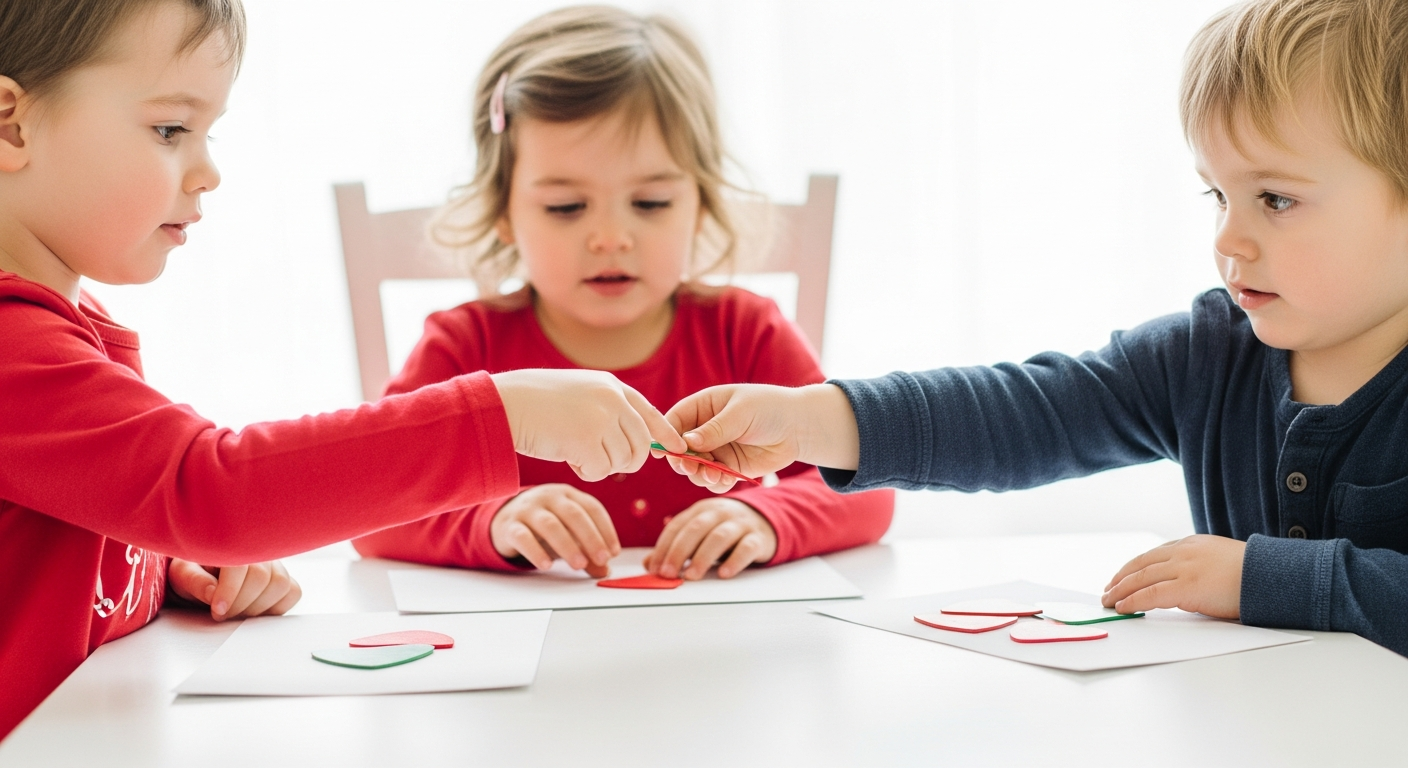
Table of Contents
- Introduction
- Why Valentine’s Day is Great for Development
- Sensory Valentine Toddler Activities
- Fine Motor Skills and Valentine Crafts
- Cognitive and Literacy Valentine Activities
- Gross Motor Valentine Toddler Activities
- The Speech Blubs Approach: Smart Screen Time
- Integrating Valentine Themes into Speech Blubs
- More Creative Valentine Toddler Activities
- Building Confidence and Reducing Frustration
- Setting Realistic Expectations
- Conclusion
- FAQs
Introduction
Did you know that approximately one in four children will experience some form of speech or language delay during their early development? For many parents, holidays like Valentine’s Day are more than just an excuse for heart-shaped cookies; they are vital opportunities to foster connection, build vocabulary, and encourage social-emotional growth. While the world outside might focus on romantic love, in the home of a toddler, this holiday is the perfect backdrop for exploring the "language of love"—learning to express needs, share feelings, and bond through play.
In this post, we are going to explore a wide variety of valentine toddler activities that go far beyond simple crafts. We will dive into sensory play, fine motor development, gross motor movement, and literacy-based games that turn February into a month of discovery. We will also discuss how to bridge the gap between physical play and digital learning using "smart screen time" to support your child’s communication journey. Our mission at Speech Blubs is to empower children to speak their minds and hearts, and these activities are designed to do exactly that. By combining hands-on play with our scientifically-backed video modeling approach, you can create a joyful environment where your toddler feels confident to explore new sounds and words.

Why Valentine’s Day is Great for Development
Valentine’s Day is inherently abstract for a two-year-old. Unlike Christmas with its bright lights and presents, or Halloween with its costumes, Valentine’s Day is about a feeling. To a toddler, "love" is a concept they experience every day, but putting words to that feeling is a major developmental milestone.
When we engage in valentine toddler activities, we are providing the context children need to understand these big ideas. Whether it is sorting hearts by color or practicing the "H" sound in "heart," every activity is a building block for communication. At Speech Blubs, we believe that learning should be a joyful experience. Our founders, who all grew up with speech challenges themselves, created the tool they wished they had—one that blends play with science to help children find their voices.
Sensory Valentine Toddler Activities
Sensory play is the foundation of early childhood learning. When children use their hands to explore different textures, they are building neural pathways in the brain. Here are some of our favorite sensory-focused valentine toddler activities.
1. The Classic Valentine Sensory Bin
Sensory bins are a staple in our household because they offer endless opportunities for vocabulary building. You can dye white rice red or pink using a little bit of food coloring and vinegar. Once it’s dry, toss in some heart-shaped trinkets, measuring cups, and spoons.
- Speech Tip: Use this time to practice "action words" like pour, scoop, hide, and find. If your child is using the Speech Blubs app, they might recognize these actions from our "Toy Box" or "Daily Routine" sections.
2. Candy Heart Oobleck
Oobleck is a fascinating non-Newtonian fluid made from cornstarch and water. It’s a solid when you squeeze it and a liquid when you let it go. Add some pink dye and conversation hearts to the mix. It’s messy, but it’s an incredible way to discuss opposites: hard and soft, wet and dry.
3. Love Potion Bubble Foam
Mix water, dish soap, and a drop of red food coloring in a blender to create thick, stiff foam. Pour it into a large tub and let your toddler "wash" plastic hearts. This is a great "clean" sensory activity that encourages imaginative play.

4. Scented Valentine Playdough
Homemade playdough is much softer than the store-bought version. Add a little strawberry extract or cocoa powder to give it a festive scent. Providing your child with heart-shaped cookie cutters helps them practice bilateral coordination (using both hands together).
- Real-World Scenario: For a parent whose 3-year-old "late talker" loves sweets, the "Yummy Time" section in Speech Blubs offers a fun, motivating way to practice food-related words while "baking" playdough cookies together.
Fine Motor Skills and Valentine Crafts
Fine motor skills involve the small muscles in the hands and fingers. These skills are essential for eventually learning to write and perform self-care tasks like zipping a jacket.
5. Heart Sticker Match
Draw several large hearts on a piece of paper and give your toddler a sheet of heart-themed dot stickers. Encourage them to place the stickers along the outline of the hearts. This requires focus and precision.
6. Paper Heart Threading
Punch holes around the edge of a large cardboard heart. Give your child some yarn or a shoelace to "sew" through the holes. This is an excellent way to build the "pincer grasp" needed for holding a pencil later in life.
7. Love Note Color Sort
Create several "mailboxes" (you can use old tissue boxes) in different colors. Cut out paper hearts in matching colors. Ask your toddler to "deliver the mail" to the correct box. This reinforces color recognition and sorting skills.
8. Heart Clothespin Clip
Squeezing a clothespin is one of the best ways to strengthen finger muscles. Draw small hearts on a piece of cardboard and have your child clip clothespins onto the matching hearts. If they are struggling with the squeeze, you can clip them on first and let your child pull them off—a great way to build confidence!
Cognitive and Literacy Valentine Activities
Valentine’s Day provides a wonderful theme for introducing letters, numbers, and logic puzzles.
9. Heart Letter Puzzles
Cut several large hearts out of construction paper. Draw a vertical line down the middle of each, write an uppercase letter on one side, and the corresponding lowercase letter on the other. Cut along the line (use zig-zags for an extra challenge) and let your child match them back together.
10. Counting Hearts Sticky Wall
Use clear contact paper taped to the wall (sticky side out). Draw numbered boxes at the bottom. Have your child stick the corresponding number of foam hearts above each box. Moving the activity to the wall adds a vertical dimension that helps with shoulder stability.
11. Valentine Mystery Picture
This is a fun "Find the..." game. Hide a picture of a favorite animal or family member behind several paper hearts. Every time your child identifies a color or makes a specific sound, they get to remove a heart to reveal part of the mystery picture.
- Learning Connection: Our scientific research shows that children learn best when they are actively engaged and motivated by a "reward" or a sense of discovery.
12. Sorting Hearts by Size
Cut out hearts in three distinct sizes: small, medium, and large. Use this as a chance to build vocabulary. Instead of just "big," try using words like "enormous," "tiny," or "middle-sized." If you aren't sure where your child's vocabulary stands, you can take our quick 3-minute preliminary screener to get a simple assessment and a free 7-day trial.
Gross Motor Valentine Toddler Activities
Winter months often mean more time indoors, so it’s important to find ways to get those big muscles moving!
13. Heart Hopscotch
Tape paper hearts to the floor in a hopscotch pattern. Instead of numbers, you can put different action words on the hearts, like "jump," "spin," or "clap." This keeps the body moving while the brain processes instructions.
14. Valentine’s Day Scavenger Hunt
Hide paper hearts around the living room and have your child find them. To make it more educational, tell them they are looking for a specific color or a heart with a specific letter on it.
15. The "Stair Walk" Color Match
If you have stairs, tape different colored hearts to each step. Give your child a basket of matching colored toys. As they walk up the stairs, they place the red toy on the red heart step, and so on. This builds coordination and balance.
The Speech Blubs Approach: Smart Screen Time
At Speech Blubs, we know that modern parenting often involves screens. However, there is a big difference between passive viewing (like watching cartoons) and "smart screen time." Our app is a screen-free alternative in the sense that it isn't a "sit back and watch" experience; it is an interactive tool designed for family connection and co-play.
Our unique methodology is based on video modeling. This is a scientifically-proven technique where children learn by watching and imitating their peers. When a toddler sees another child on the screen making a "pop" sound or saying "I love you," their mirror neurons fire, making them much more likely to try the sound themselves.
Why Choose the Yearly Plan?
If you are ready to take your child's communication to the next level, our Yearly plan is the best choice for your family. While our monthly subscription is $14.99, the Yearly plan is just $59.99—which breaks down to only $4.99 per month. That is a 66% saving!
The Yearly plan also includes exclusive features that you won't get with the monthly option:
- A 7-day free trial to explore all our content.
- The extra Reading Blubs app, which focuses on early literacy and phonics.
- Early access to all our new updates and themed content.
- 24-hour support response time from our dedicated team.
Create your account and begin your 7-day free trial today to see the difference for yourself.
Integrating Valentine Themes into Speech Blubs
You can easily pair these physical valentine toddler activities with sessions in the app. For example, if you are doing the "Candy Heart Smash" activity (where toddlers use a toy hammer to break candy hearts), you can open the "Early Sounds" section of Speech Blubs.
- Practical Scenario: If your child is working on the "B" sound, they can watch a peer in the app say "Bang!" or "Boom!" and then imitate that sound while they "smash" their candy hearts. This turns a simple motor activity into a powerful speech therapy moment.
We encourage parents to view the app as a supplement to their overall development plan. Whether your child is seeing a professional therapist or you are just looking for ways to boost their confidence, the goal is to create joyful family learning moments. You can read testimonials from other families to see how our approach has helped thousands of children find their voices.
More Creative Valentine Toddler Activities
16. Valentine’s Day "Soup"
This is a dyed water sensory bin. Fill a tub with water, add red food coloring, and toss in some plastic hearts, rose petals, and ladles. It’s a family favorite because it feels like a "mad scientist" lab but is totally safe for toddlers.
17. Love to Pieces Gluing
Draw a large heart and have your child tear up scraps of red, pink, and purple construction paper. Tearing paper is a great way to work on hand strength. Then, let them use a glue stick or a paintbrush with wet glue to fill in the heart.
18. Mailbox Fun
Target’s dollar spot often has small tin mailboxes. Give your child "stamps" (stickers) and "envelopes" (paper scraps). This encourages imaginative play and the understanding of social exchanges—giving and receiving.
19. Heart Stamp Playdough
If you don't have cookie cutters, you can use the bottom of a heart-shaped block or even cut a potato in half and carve a heart shape into it to make a DIY stamp. Stamping into playdough is very satisfying for little ones who are still mastering their motor control.
20. Dyed Chickpea Bin
If you want a sensory base that is less "flowy" than rice, try chickpeas. You can dye them the same way as rice (food coloring and vinegar). They make a wonderful sound when poured into metal tins, adding an auditory element to your valentine toddler activities.
21. Giant Heart Match
Draw several large, different colored hearts on a piece of poster board. Cut matching hearts out of construction paper. Tape the poster board to the floor and have your child "match" the paper hearts to the ones on the board by jumping from one to the next.
22. Heart-Themed Fine Motor Box
Take an old shoe box and cut a heart-shaped slit in the top. Give your child playing cards or large foam hearts to "post" into the slot. This helps with spatial awareness—learning how to turn the object so it fits through the hole.
23. Q-Tip Heart Painting
Instead of a large paintbrush, give your child a Q-tip. They can use it to make dots (pointillism) inside a heart outline. This requires a lot of control and is excellent for developing the fine muscles in the fingers.
24. Valentine’s Day Tea Time
Set up a small table with a tea set. This is a perfect opportunity for social-emotional learning. Practice saying "please," "thank you," "would you like some?" and "I love you."
- Speech Blubs Connection: Our "Social Skills" section can help prepare your child for these types of interactions by showing them peers who are modeling polite and kind behaviors.
25. Love Posters
Every day in February, write one thing you love about your child on a paper heart and tape it to their bedroom door. Read it to them every morning. This builds their self-esteem and provides a consistent, loving start to their day.
Building Confidence and Reducing Frustration
One of the biggest hurdles for toddlers with speech delays is frustration. When they can’t express what they want, it often leads to tantrums. Our mission at the Speech Blubs homepage is to give children the tools they need to "speak their minds and hearts," thereby reducing that frustration.
By engaging in these valentine toddler activities, you are creating a low-pressure environment. There are no "right" or "wrong" ways to play with a sensory bin or paint a heart. When the focus is on the process rather than the result, children feel safer to take risks—like trying out a new word or a complex sound.
Pairing these activities with the Google Play Store or Apple version of our app ensures that they are getting consistent, high-quality "smart screen time" that reinforces what they are learning during physical play.
Setting Realistic Expectations
It is important to remember that every child develops at their own pace. We don't promise that your child will be giving public speeches in a month. Instead, we focus on the foundational skills: fostering a love for communication, building confidence, and creating joyful family learning moments.
Our app is a powerful tool, but it is most effective when used as a supplement to your child’s overall development plan. If you have concerns about your child's progress, we always recommend consulting with a professional speech-language pathologist. In the meantime, these valentine toddler activities are a wonderful way to keep your child engaged and learning.
Conclusion
Valentine’s Day is a beautiful time to slow down and focus on the connection you have with your little one. Whether you are messy with oobleck, jumping across paper hearts, or sitting together and using Speech Blubs, you are providing your child with the building blocks of communication and confidence.
We invite you to join the Speech Blubs family and start your journey today. Our app is more than just an educational tool; it’s a way for you and your child to bond over "smart screen time" that actually produces results. Remember, the Yearly plan is the best value, offering you a 7-day free trial, the bonus Reading Blubs app, and significant savings compared to the monthly plan.
Ready to see your child speak their mind and heart? Download Speech Blubs on the App Store or Google Play to begin your journey. Don't forget to select the Yearly plan to unlock all the premium features and start your free trial!
FAQs
1. Are these activities suitable for children with speech delays? Yes, absolutely! All the activities listed are designed to be inclusive and can be adapted based on your child's current ability level. We focus on sensory and play-based learning, which is often the most effective way for children with speech delays to build new skills without feeling pressured.
2. How long should I spend on these activities each day? For toddlers, short bursts of 10 to 15 minutes are usually best. Their attention spans are short, and it's better to end the activity while they are still having fun rather than waiting until they get frustrated or bored.
3. Do I need to buy expensive supplies for these Valentine activities? Not at all! Most of these activities use common household items like rice, flour, construction paper, and empty boxes. We believe that the best learning happens through simple, everyday interactions rather than expensive toys.
4. How does the Speech Blubs app help with these physical activities? Speech Blubs provides the "video modeling" that shows your child how to make the sounds associated with the play. For example, if you are playing with "Love Potion Bubbles," you can use the app to practice the "B" and "P" sounds, which your child can then try to use while they play.
About the author