
25 Fun Water Toddler Activities for Home Learning
 By Speech Blubs Team•Feb 23, 2026•16 min.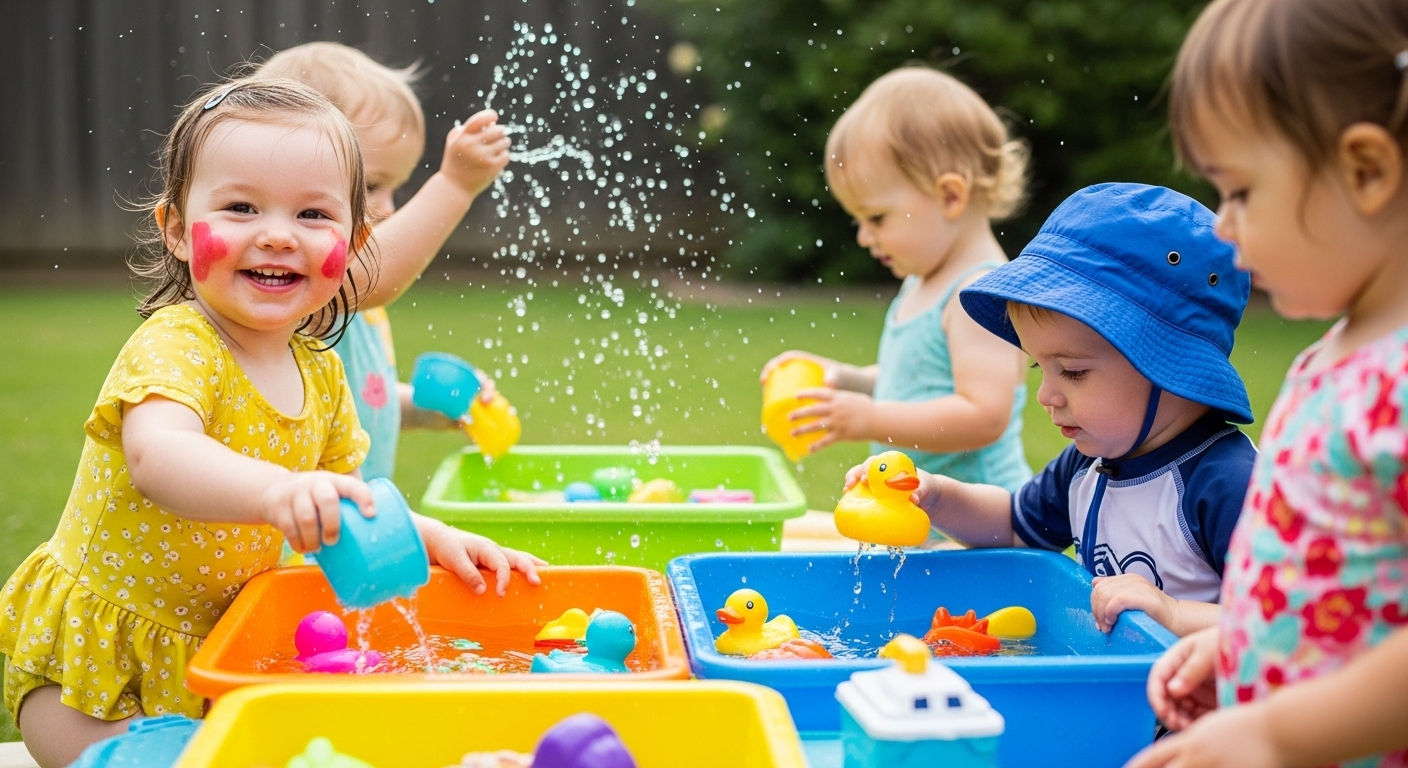
Table of Contents
- Introduction
- Why Water Play is a Developmental Superpower
- Setting Up for Success (and Minimal Mess)
- 25 Engaging Water Toddler Activities
- Connecting Water Play to Speech and Language
- Maximizing the Value of Your Learning Tools
- Frequently Asked Questions
- Conclusion
Introduction
Have you ever noticed how a toddler can be completely indifferent to a pile of expensive, flashing plastic toys, yet will spend forty-five minutes mesmerized by a single dripping faucet or a muddy puddle in the driveway? There is something almost magnetic about water for a young child. At Speech Blubs, we believe that these moments of pure, unfiltered curiosity are the greatest opportunities for learning. Whether it is the rhythmic "splish-splash" of a rubber duck or the focused concentration required to pour water from one cup to another, water play is more than just a way to cool down on a hot day—it is a foundational pillar of early childhood development.
The purpose of this guide is to provide you with a comprehensive list of water toddler activities that are easy to set up, highly engaging, and rich with developmental benefits. We will explore how simple household items can be transformed into tools for building motor skills, expanding vocabulary, and fostering scientific inquiry. We will also discuss how these sensory experiences complement the work we do here at Speech Blubs, where we use "smart screen time" to help children find their voices. By the end of this article, you will have a toolkit of ideas to turn your kitchen or backyard into a vibrant learning laboratory.

Our main message is simple: you don’t need an elaborate setup to support your child’s growth. By embracing the joy of water play and pairing it with evidence-based tools like Speech Blubs, you are giving your child the best possible start in their communication and developmental journey.
Why Water Play is a Developmental Superpower
Before we dive into the activities, it is important to understand what is happening in your toddler's brain when they get wet. Water play is a multi-sensory experience that engages almost every system in a child’s body. At Speech Blubs, our mission is to empower children to "speak their minds and hearts," and we know that communication begins with sensory exploration.
Fine and Gross Motor Skill Development
When a child squeezes a soaked sponge, they are strengthening the small muscles in their hands and wrists. This is the same "grip strength" they will eventually need to hold a pencil or use a fork. Pouring water from a heavy pitcher into a small cup requires hand-eye coordination and a steady hand—crucial gross motor skills. These repetitive motions are the building blocks of physical independence.
Cognitive and Scientific Exploration
Water is a natural laboratory. When a toddler drops a heavy rock and a light leaf into a bucket, they are practicing the scientific method. They are making observations about buoyancy (sink vs. float), volume (full vs. empty), and cause and effect. "If I tip this cup, the water goes down." This foundational logic is the precursor to math and physics.
Language and Vocabulary Growth
Water play provides a rich context for "descriptive talk." Think of all the adjectives associated with water: wet, cold, warm, splashy, bubbly, slippery, clear, and deep. As you play alongside your child, you are modeling these words in real-time. This is very similar to the "video modeling" methodology we use in our app, where children learn by watching and imitating their peers. If you are ever unsure about your child's current language milestones, you can take our quick 3-minute preliminary screener to get an assessment and a next-steps plan.

Emotional Regulation
There is a reason why many adults find a long bath or the sound of the ocean relaxing. Water has a naturally soothing effect. For a toddler who is feeling overwhelmed or overstimulated, the repetitive motion of scooping and pouring can be incredibly grounding. It helps them focus their attention and can turn a "meltdown afternoon" into a calm, productive one.
Setting Up for Success (and Minimal Mess)
The biggest hurdle for many parents when it comes to water toddler activities is the fear of a soaked carpet or a slippery kitchen floor. However, with a little bit of preparation, you can enjoy these activities indoors or out without the stress.
- The Towel Tarp: If you are playing indoors, lay down two or three large beach towels. Not only do they soak up spills, but they also define the "play zone" for your toddler.
- The Low-Volume Rule: You don't need a full tub of water. Often, just an inch or two of water in a shallow plastic bin is enough to keep a child occupied for thirty minutes.
- The "LACK" Hack: Many parents find that the inexpensive IKEA LACK tables are the perfect height for water bins. They are laminate, easy to wipe down, and if they get a little wet, it’s no big deal.
- Appropriate Clothing: Let them play in their diaper or a swimsuit. If you aren't worried about their clothes getting wet, you will be much more relaxed, and your child will feel that freedom to explore.
25 Engaging Water Toddler Activities
Here is a curated list of activities designed to spark joy and learning. We have categorized them to help you find the right fit for your child's current mood and developmental stage.
Sensory and Exploration Bins
1. The DIY Ocean Rescue
Fill a shallow bin with water and a drop of blue food coloring. Drop in plastic sea creatures—sharks, whales, and fish. Give your child a small kitchen strainer or a net and ask them to "rescue" the animals.
- Language Tip: Practice animal names and sounds. For a child who loves animals, this mirrors our "Animal Kingdom" section in Speech Blubs, where they can watch peers make animal sounds to encourage their own vocalization.
2. Nature Soup
Head to the backyard and collect "ingredients" like leaves, small rocks, flower petals, and twigs. Put them in a large pot of water with a big wooden spoon. Let your toddler stir their "soup." This encourages imaginative play and connects them with the natural world.
3. Lemon and Lime Sensory Squeeze
Slice up some lemons and limes and add them to a bowl of water with some ice cubes. The different textures of the rinds, the coldness of the ice, and the scent of the citrus provide a massive sensory "hit." It is also a safe way for toddlers to explore different tastes.
4. The Pom-Pom Scoop
Throw a handful of colorful craft pom-poms into a bin of water. They become heavy and squishy when wet, creating a totally different texture. Give your child a muffin tin and ask them to sort the wet pom-poms by color.
5. Ice Excavation
Freeze some small plastic toys (like LEGO figures or toy cars) in a large block of ice. Give your toddler a small spray bottle of warm water and a plastic spoon to "dig" the toys out. This is a fantastic lesson in temperature and state changes (solid to liquid).
Art and Creative Water Play
6. Painting the Sidewalk
This is the ultimate low-mess activity. Give your child a cup of water and a few different-sized paintbrushes. Let them "paint" the driveway or the fence. They will be fascinated as their "paintings" disappear as the sun dries the water.
7. Color Mixing Lab
Use three clear cups filled with water. Add red food coloring to one, blue to another, and yellow to the third. Give your child an eyedropper or a small spoon and let them mix the colors in a fourth cup. "Look! Red and blue made purple!"
8. Magic Paper Drawing
If you have "water reveal" mats or books, these are great. If not, construction paper changes color significantly when wet. Let your child use their fingers to "draw" on dark blue or red construction paper with water.
9. Bubble Foam Party
Mix two parts water with one part dish soap (or tear-free baby wash) and a little food coloring in a blender. Whip it up until it forms stiff peaks. Dump the foam into a bin. It’s colorful, tactile, and keeps its shape much longer than standard bubbles.
10. Shaving Cream Car Wash
Cover toy cars in shaving cream and set them on a "parking lot" (a tray). Give your child a bin of "rinse water" and an old toothbrush. They will love scrubbing the "mud" (shaving cream) off the cars until they are shiny and clean.
Active and Gross Motor Water Fun
11. The Sponge Walk
Line up several large, soaked sponges on the driveway. Encourage your child to walk across them. The feeling of water squishing out between their toes is a unique sensory experience that helps with balance and body awareness.
12. Squirt Bottle Target Practice
Draw "targets" on the fence or a tree using sidewalk chalk. Give your toddler a spray bottle filled with water and see if they can "blast" the targets away. This is excellent for strengthening the muscles needed for writing.
13. Colander Rain
Hold a kitchen colander over your child's hands or a bin of water. Pour water into the colander and watch the "rain" come out the bottom. This is a simple but effective way to demonstrate gravity and flow.
14. Water Balloon Squeeze
You don't have to throw water balloons. For a toddler, simply holding a filled balloon and feeling it wiggle is enough. Let them try to squeeze it (gently!) or poke it. It’s a lesson in "fragile" vs. "strong."
15. The Watering Can Garden
Toddlers love to be "helpers." Give them a small, light watering can and let them help you water the plants. This builds a sense of responsibility and helps them understand that plants need water to grow.
Cognitive and "Mini-Science" Activities
16. Sink or Float?
Gather a variety of household objects: a metal spoon, a plastic block, a cork, a coin, and a ball of foil. Ask your child, "Will it sink or float?" before dropping each one in. This is the simplest physics lesson you can give.
17. The Great Pouring Challenge
Give your child containers of all different shapes—tall and skinny, short and wide. Let them practice pouring from one to the other. They will be surprised to see that a "short" amount of water in one cup can fill a "tall" cup all the way to the top.
18. Alphabet Soup
If you have plastic refrigerator letters, toss them in a bin. Ask your child to find the "B" or the letter that "A"pple starts with. This combines physical play with early literacy.
19. Turkey Baster Droplets
A turkey baster is a fascinating tool for a toddler. Showing them how to squeeze the bulb to suck up water and then squeeze it again to release it is a great lesson in air pressure and suction—though they’ll just think it’s fun!
20. Muffin Tin Sorting
Fill a muffin tin with water and add a different color of food coloring to each hole. Give your child small objects (beads, buttons, or small toys) and ask them to drop the object into the matching color of water.
Role Play and Practical Life
21. Washing the Dishes
Set up a "station" at the kitchen table with a bin of soapy water and a bin of clear water. Give your child their plastic play dishes and a sponge. They will spend ages "scrubbing" and "rinsing."
22. Doll Bath Time
If your child has a plastic doll or action figure, let them give it a bath. Provide a small piece of cloth as a "towel" and a little bit of soap. This encourages empathy and helps them process their own bath time routines.
23. Cleaning the "Big" Things
Give your child a damp cloth or a spray bottle and ask them to "clean" the legs of the kitchen chairs or the bottom of the fridge. Toddlers find immense satisfaction in performing "grown-up" tasks.
24. Tea Party Pouring
Set up a tea party with water instead of tea. Focusing on pouring into small tea cups without spilling is a high-level skill for a two-year-old and requires significant focus.
25. The Frozen Kingdom
Create a "winter" scene with ice cubes, blue-tinted water, and any "arctic" toys you might have (or just white LEGO blocks). This allows for storytelling and narrative play, which is essential for language development.
Connecting Water Play to Speech and Language
At Speech Blubs, we know that play is the "work" of childhood. Every time your child splashes in a bin, they are gathering information about the world that they will eventually want to communicate to you. Our app is designed to be a "smart" companion to this physical play.
Our company was born from the personal experiences of our founders, who all grew up with speech problems. They created the tool they wished they had—one that blends scientific principles with pure, unadulterated joy. For the 1 in 4 children who need speech support, Speech Blubs provides a screen-free alternative to passive viewing. Unlike cartoons, where a child just watches, our app uses video modeling. Children watch other children—their peers—performing speech exercises, making sounds, and using new words. This triggers "mirror neurons" in the brain, encouraging the child to imitate what they see.
Think of it this way: water play provides the sensory input, and Speech Blubs provides the communication framework. When your child sees a peer in the app say "Splash!" and then they get to splash in their own water bin at home, the learning becomes cemented. You can read more about the science and research behind our methodology to see why we are rated so highly on the MARS scale for educational quality.
Takeaway: The best way to support a "late talker" or a child working on their speech is to provide a variety of experiences. Practical, hands-on water toddler activities combined with dedicated, peer-led practice via Speech Blubs creates a powerful environment for growth.
Maximizing the Value of Your Learning Tools
We understand that parents are looking for the most effective and affordable ways to support their children. That is why we are transparent about our pricing and committed to providing the best value.
If you are ready to take the next step in your child's development, we recommend our Yearly Plan. Here is why it is the clear choice for most families:
- Cost-Effective: At $59.99 per year, it breaks down to just $4.99 per month. This is a 66% savings compared to our Monthly Plan ($14.99/month).
- 7-Day Free Trial: The Yearly plan allows you to try all the features risk-free for a full week.
- Reading Blubs Included: You get access to our sister app, Reading Blubs, which focuses on early literacy and phonics—a perfect companion to speech practice.
- Priority Support: Yearly members get 24-hour support response times and early access to all new updates and features.
The Monthly plan does not include the free trial, the Reading Blubs app, or priority support. By choosing the yearly option, you are making a long-term investment in your child’s ability to "speak their minds and hearts."
Ready to get started? You can create your account and begin your 7-day free trial today.
Frequently Asked Questions
1. Is water play safe for toddlers who still put everything in their mouths?
Yes, but supervision is key. Use plain tap water and food-grade items (like lemons, ice, or large plastic spoons) rather than small beads or non-toxic but non-edible soaps if your child is in a "mouthing" phase. Always stay within arm's reach of a child playing with water, even if it is just a shallow bin.
2. My child is a "late talker." Can water play really help?
Absolutely. Late talkers often benefit from "low-pressure" environments where the focus is on fun rather than "correct" speech. Water play naturally encourages exclamations (Ooh! Ah! Splash! Wet!) which are the precursors to words. Pairing this with Speech Blubs on the App Store or Google Play Store allows them to see peers making those same sounds, which builds their confidence.
3. How often should we do these water activities?
There is no set rule, but many parents find that a daily "sensory break" works wonders. Even 15 minutes of water play can reset a child's mood. Consistency is also helpful when using Speech Blubs; we recommend 10–15 minutes of app time a few times a week for the best results.
4. What if I don't have a backyard or a water table?
You don't need one! A kitchen sink with a sturdy stool, a bathtub, or even a plastic storage bin on the kitchen floor works perfectly. The "water toddler activities" we've listed are designed to be adaptable to any living situation.
Conclusion
Water play is one of the simplest, most cost-effective, and most developmentally rich activities you can provide for your toddler. From the fine motor control required to squeeze a sponge to the complex cognitive processing involved in a "sink or float" experiment, every drop of water offers a lesson. These activities foster a love for communication and build the foundational skills your child needs to thrive.
At Speech Blubs, we are honored to be a part of your parenting toolkit. We don't promise that your child will be giving public speeches in a month, but we do promise a joyful, scientifically-backed experience that builds confidence and reduces the frustration that often comes with speech delays. Our founders know exactly what it feels like to struggle to be understood, and they have poured that empathy into every aspect of our app.
Don't just take our word for it—see what other parents are saying about their child's success with our platform.
Ready to transform your child's "screen time" into "growth time"? Download Speech Blubs on the App Store or Google Play to begin your journey. We highly recommend selecting our Yearly Plan to take advantage of the 7-day free trial, the Reading Blubs app, and the best overall value. Let's work together to help your little one speak their mind and heart, one splash at a time.
About the author