
25 Joyful Christmas Crafts for Toddlers to Make Today
 By Speech Blubs Team•Feb 20, 2026•14 min.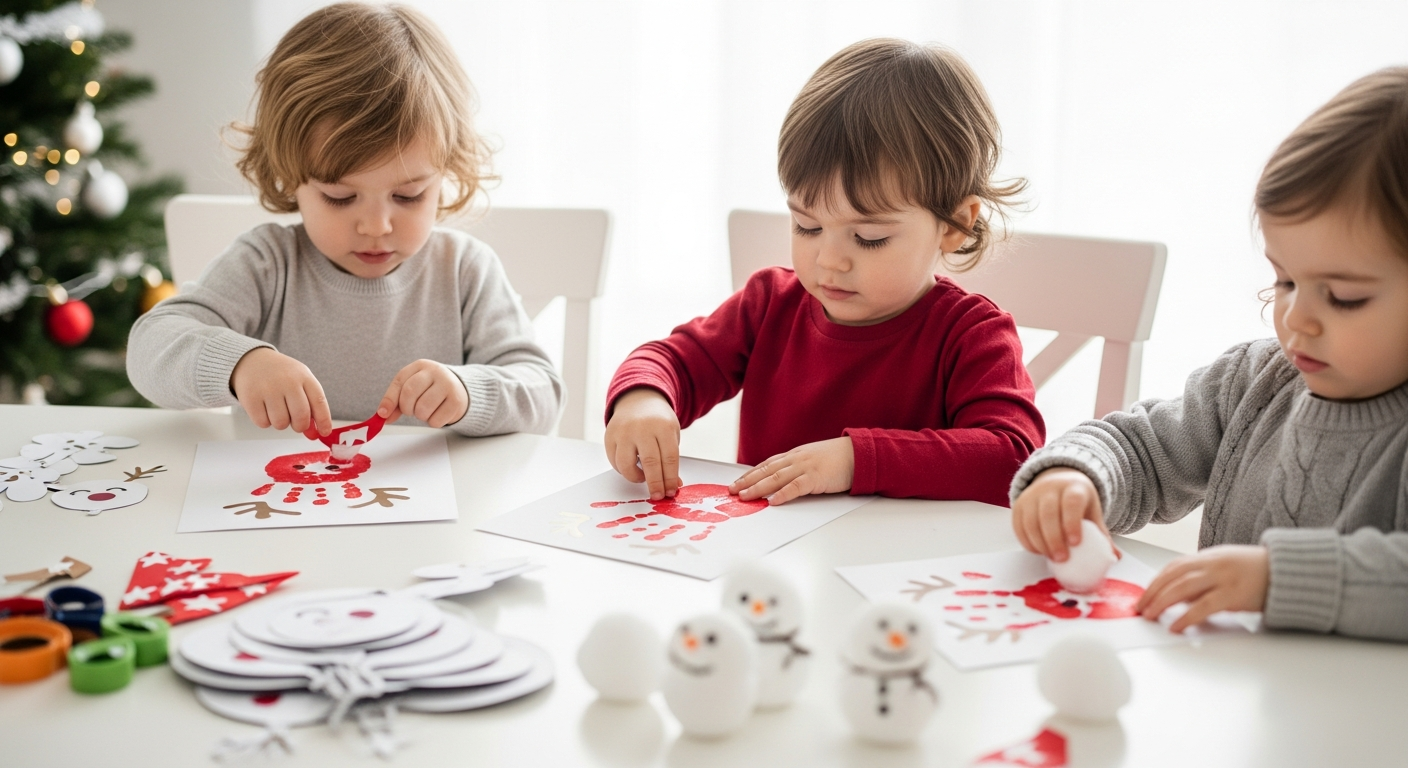
Table of Contents
- Introduction
- Why Crafting is Key for Language Development
- 25 Easy Christmas Crafts for Toddlers
- The Science of Play: Why Speech Blubs Works
- Setting Realistic Expectations
- Making the Best Choice for Your Family
- Practical Tips for Stress-Free Crafting
- Conclusion
- FAQs
Introduction
Do you remember the specific, magical scent of pine needles mixed with the slightly vinegary smell of school glue from your own childhood? For many of us, the holiday season is anchored by these sensory memories of creating something with our own two hands. As parents, we often feel a whirlwind of pressure during December to make everything "perfect," but when it comes to Christmas crafts for toddlers, perfection isn’t the goal—connection is. Whether your little one is just starting to mimic sounds or is already a chatterbox, crafting provides a unique, hands-on environment to foster language, build confidence, and create those "smart" moments of engagement we value so much.
At Speech Blubs, our mission is to empower children to speak their minds and hearts. Our founders started this journey because they grew up with speech challenges themselves and wanted to create the joyful, effective tool they wish they’d had. We believe that learning should never feel like a chore; it should feel like play. This blog post will explore 25 developmental Christmas crafts for toddlers that are designed to be simple, low-stress, and rich with opportunities for language growth. We will guide you through sensory-rich activities, fine motor exercises, and ways to turn your living room into a hub of "smart screen-free" time that complements your child’s overall developmental journey.

Our goal is to show you that you don't need a degree in art or a cupboard full of expensive supplies to make this season bright. By the end of this guide, you’ll have a toolkit of activities that foster a love for communication and create joyful family learning moments that last far beyond the holiday season.
Why Crafting is Key for Language Development
Before we dive into the glitter and glue, it’s helpful to understand why we advocate for these activities. For a child, a "Christmas craft" is actually a complex laboratory for learning. When your toddler reaches for a "red" pom-pom or asks for "more" glue, they are practicing functional communication in a high-interest environment.
At Speech Blubs, we focus on a "video modeling" methodology in our app, where children learn by watching and imitating their peers. Crafting with an adult follows a similar scientific principle. When you sit down together, you are the model. Your child watches your hands, listens to your descriptions, and imitates your actions. This peer-to-peer style of learning is incredibly powerful for building foundational speech skills.
If you are ever unsure if your child is hitting their communication milestones during these activities, you can take our quick 3-minute preliminary screener. It involves just 9 simple questions and provides an assessment and a next-steps plan to help you support your child's growth.
25 Easy Christmas Crafts for Toddlers
1. The Classic Fork-Painted Tree
This is a favorite because it uses a common household item to create a unique texture. Simply dip the back of a plastic fork into green paint and press it onto paper in a triangular shape.
- Language Opportunity: Use "stomp, stomp, stomp" as they press the fork down.
- Benefit: Builds the concept of repetitive patterns.
2. Tape Resist Winter Trees
Place painters' tape in the shape of a tree on a piece of cardstock. Let your toddler paint all over the paper (and the tape!). Once dry, peel the tape away to reveal a crisp, white tree.
- Language Opportunity: Practice "peel" and "look!"
- Benefit: Teaches the concept of "negative space."
3. Cotton Ball Snowmen
Glue three circles on a blue piece of paper and let your child fill them with fluffy white cotton balls.

- Language Opportunity: Focus on the "S" sound in "soft," "snow," and "sticky."
- Benefit: Sensory exploration of soft vs. sticky textures.
4. Paper Plate Wreaths
Cut the center out of a paper plate. Let your toddler decorate the remaining ring with green tissue paper, buttons, or even dried green pasta.
- Language Opportunity: Talk about "round" and "circle."
- Benefit: Fine motor practice through grasping small objects.
5. Cereal Candy Canes
Using a pipe cleaner, show your toddler how to thread red and white hoop-shaped cereal (like fruit loops or Cheerios) onto the wire. Bend the top to finish the shape.
- Language Opportunity: Practice "on," "through," and color identification.
- Benefit: Exceptional for developing the "pincer grasp."
6. Sponge-Painted Wreaths
Cut a kitchen sponge into a small square or circle. Dip it in green paint and "stamp" it in a circle on a piece of paper.
- Language Opportunity: "Push" and "pull."
- Benefit: Large motor movement for younger toddlers.
7. Handprint Reindeer
Trace your child’s hand on brown paper and cut it out. The fingers become the antlers! Add a red pom-pom for a nose.
- Language Opportunity: This is perfect for children who love animals. You can practice animal sounds or name body parts (eyes, nose, ears).
- Benefit: Creates a cherished keepsake of their hand size.
To see how other parents have used these types of creative play alongside our app to see progress, check out our parent testimonials.
8. Tissue Paper Bleed Art
Place squares of "bleeding" tissue paper on a canvas and spray with water. When the paper dries and falls off, the colors stay behind in a beautiful watercolor effect.
- Language Opportunity: "Wet" and "dry."
- Benefit: Teaches cause and effect.
9. Salt Painting Snowflakes
Draw a snowflake with white glue, cover it in salt, and then use a paintbrush to drop watercolor paint onto the salt. Watch the color climb!
- Language Opportunity: "Run, color, run!"
- Benefit: Visual tracking and fine motor control.
10. Q-Tip "Pointillism" Trees
Instead of a brush, give your toddler a Q-tip to make small "snow" dots or ornaments on a green paper tree.
- Language Opportunity: "Dot, dot, dot."
- Benefit: Refines precision and hand-eye coordination.
11. Pinecone Christmas Trees
Go for a nature walk to find pinecones. Back home, paint them green and "decorate" them with small beads or glitter.
- Language Opportunity: "Prickly" vs. "smooth."
- Benefit: Connects the outdoors with indoor creativity.
12. Toilet Paper Roll Gingerbread Men
Wrap an empty roll in brown paper. Let your toddler draw a face and glue on "buttons" (pom-poms or actual buttons).
- Language Opportunity: Practicing "body" words—eyes, mouth, tummy.
- Benefit: Recycling household items into toys.
13. Contact Paper Suncatchers
Cut a shape (like a star or tree) out of the center of a piece of construction paper. Place it on sticky contact paper. Let your child stick bits of colored tissue paper to the sticky surface.
- Language Opportunity: "Sticky" and "stuck."
- Benefit: Mess-free sensory play.
14. Shaving Cream Marbled Art
Fill a tray with shaving cream, drop in some food coloring, and swirl it. Press a paper tree cutout into the foam to create a marbled effect.
- Language Opportunity: "Messy," "bubbles," and "smell."
- Benefit: High-engagement sensory experience.
15. Nature Wreaths
Use cardboard to cut a ring and help your toddler glue small twigs and evergreen sprigs they found outside onto the ring.
- Language Opportunity: Naming nature items (stick, leaf, tree).
- Benefit: Encourages exploration of the natural world.
16. Potato Stamps
Carve a simple shape into a halved potato. Your toddler can dip it in paint and stamp it onto plain brown wrapping paper for DIY gift wrap.
- Language Opportunity: "Up" and "down."
- Benefit: Empowers the child to create something "useful" for the family.
17. Pasta Ornaments
Glue bow-tie pasta or rotini onto cardboard shapes. Once dry, paint them gold or silver.
- Language Opportunity: Naming shapes and colors.
- Benefit: Tactile feedback from different pasta shapes.
18. Sticker Trees
Sometimes the simplest ideas are the best. Draw a large tree on a piece of paper and give your toddler a sheet of colorful stickers to "decorate" it.
- Language Opportunity: "Peel" and "put."
- Benefit: Incredible for fine motor strength.
19. Salt Dough Handprints
Mix flour, salt, and water to make dough. Press your toddler's hand into it, bake it, and paint it.
- Language Opportunity: "Squeeze" and "push."
- Benefit: A permanent 3D memory of their childhood.
20. Felt Tree with Velcro Ornaments
Cut a large tree out of green felt and hang it on the wall. Cut "ornaments" out of other colors. The felt naturally sticks to itself, or you can add Velcro.
- Language Opportunity: "Where does the star go?" "On top!"
- Benefit: Quiet, repeatable play that builds spatial awareness.
21. Mistle-"toes"
Paint your toddler's feet green and press them onto paper with the heels touching and the toes pointing out. Add a red bow at the top to make them look like mistletoe.
- Language Opportunity: "Tickle, tickle!"
- Benefit: Sensory processing of paint on skin.
22. Paper Chain Countdowns
Help your child glue strips of paper into loops to create a chain. Each day, they can "rip" one off as you count down to Christmas.
- Language Opportunity: Numbers and "how many?"
- Benefit: Introduction to the concept of time and waiting.
23. Fillable Clear Baubles
Buy clear plastic ornaments and let your toddler "stuff" them with ribbons, sequins, or even small toys.
- Language Opportunity: "In" and "full."
- Benefit: Hand-eye coordination.
24. Tin Foil Painting
Tape a piece of tin foil to the table and let your child paint on it. The slippery surface provides a completely different tactile experience than paper.
- Language Opportunity: "Shiny" and "smooth."
- Benefit: Novelty keeps the child’s attention longer.
25. Marshmallow Igloos
Using "stale" mini marshmallows and a bit of glue (or frosting if you want it edible), help your toddler build a small mound on a blue paper base.
- Language Opportunity: "Cold" and "white."
- Benefit: 3D construction skills.
The Science of Play: Why Speech Blubs Works
While these Christmas crafts for toddlers are fantastic for physical and emotional development, we know that many parents are looking for structured support to help their children reach specific communication goals. This is where our unique approach comes in. Speech Blubs isn't just another app; it's a tool built on the scientific methodology of video modeling.
When children see other children performing an action or making a sound, their "mirror neurons" fire. This makes them much more likely to attempt the sound themselves. We call this "smart screen time" because it requires the child to be an active participant rather than a passive viewer.
For a parent whose 3-year-old is a "late talker" and loves animals, the "Animal Kingdom" section in our app offers a motivating way to practice "moo" and "baa" sounds. You can then bring that learning into the real world. For example, while making the Potato Stamps craft mentioned above, you could carve a cow shape and reinforce the sounds they just practiced in the app. This creates a powerful bridge between digital learning and physical play.
Setting Realistic Expectations
It’s important to remember that every child develops at their own pace. We never want to suggest that a few crafts or a week with an app will have your child giving public speeches. Instead, we focus on fostering a love for communication, building confidence, and reducing the frustration that often comes when a child can't express their "minds and hearts."
Crafting with toddlers is often messy, and the final product might not look like the picture on Pinterest. That is okay. The value is in the process: the giggles when the glue sticks to their fingers, the pride in showing Grandma their "tree," and the new words they pick up along the way. Our app is designed to be a supplement to this beautiful, messy reality of parenting—and, when applicable, a powerful partner to professional therapy.
Making the Best Choice for Your Family
We want to be transparent about how you can access the full suite of Speech Blubs tools to support your child this holiday season. We offer two main paths:
- Monthly Plan: At $14.99 per month, this is a great way to dip your toes in. However, please note that this plan does not include our 7-day free trial or our extra Reading Blubs app.
- Yearly Plan: This is our most popular and highest-value choice. At $59.99 per year, it breaks down to just $4.99 per month—a 66% savings compared to the monthly rate.
When you choose the Yearly plan, you also get:
- A 7-day free trial to explore everything we offer.
- Access to the Reading Blubs app, which focuses on early literacy.
- Early access to new updates and a 24-hour support response time.
We encourage families to start their journey with the Yearly plan to ensure they have the most comprehensive resources available during these critical early years.
Practical Tips for Stress-Free Crafting
To ensure your Christmas crafts for toddler sessions are joyful rather than stressful, keep these tips in mind:
- Prep in Advance: Toddlers have short attention spans. Have the paper cut and the paint poured before you invite them to the table.
- Embrace the Mess: Use a plastic tablecloth or an old shower curtain on the floor. If you aren't worried about the carpet, you'll be a much more fun "modeling" partner.
- Follow Their Lead: If they want to paint the "Christmas tree" purple, let them! This builds their sense of agency and confidence.
- Narrate Everything: "I am picking up the green brush. I am making a line. Wow, look at your big circle!" This constant stream of language is like a "brain bath" for your child.
Conclusion
The holiday season is a fleeting, precious time in your child's life. While the "stuff" of Christmas is fun, the greatest gift we can give our children is the ability to connect with the world around them. Through simple Christmas crafts for toddlers and intentional "smart screen time," we can help them develop the skills they need to share their thoughts, feelings, and dreams.
Whether you're making a cereal candy cane or practicing sounds with the peers in our app, remember that you are doing a great job. You are your child's first and most important teacher.
Ready to make this season one of growth and joy? Download Speech Blubs on the App Store or get it on Google Play today. We recommend choosing the Yearly plan to take advantage of the 7-day free trial and the full suite of features, including Reading Blubs. Let's help your little one speak their mind and heart this Christmas!
FAQs
1. What are the best Christmas crafts for a 2-year-old?
For 2-year-olds, focus on sensory and process-based art rather than a specific final product. Fork-painted trees, sticker trees, and cotton ball snowmen are excellent because they don't require precise motor skills. These activities allow them to explore textures and simple "doing" words.
2. How can I make crafting less messy with a toddler?
Preparation is key! Use "low-mess" options like contact paper suncatchers or sticker-based activities. If you are using paint, consider "painting" inside a large cardboard box to contain the splatters, or use washable tempera paints that come off skin and clothes easily.
3. Will these crafts really help my child's speech?
Yes, but indirectly. Crafting provides a "language-rich environment." By narrating the actions (e.g., "glue on," "red star," "more paint"), you are providing your child with the vocabulary they need. When paired with a tool like Speech Blubs, which uses video modeling to encourage imitation, you create a comprehensive support system for their development.
4. What supplies should I keep on hand for holiday crafting?
You don't need much! A "toddler craft kit" should include: washable paint, glue sticks, construction paper, paper plates, cotton balls, and painter's tape. Many of the best crafts—like the toilet paper roll gingerbread man or fork-painted tree—use items you already have in your kitchen or recycling bin.
About the author