
25 Joyful March Toddler Crafts to Spark Spring Creativity
 By Speech Blubs Team•Feb 23, 2026•15 min.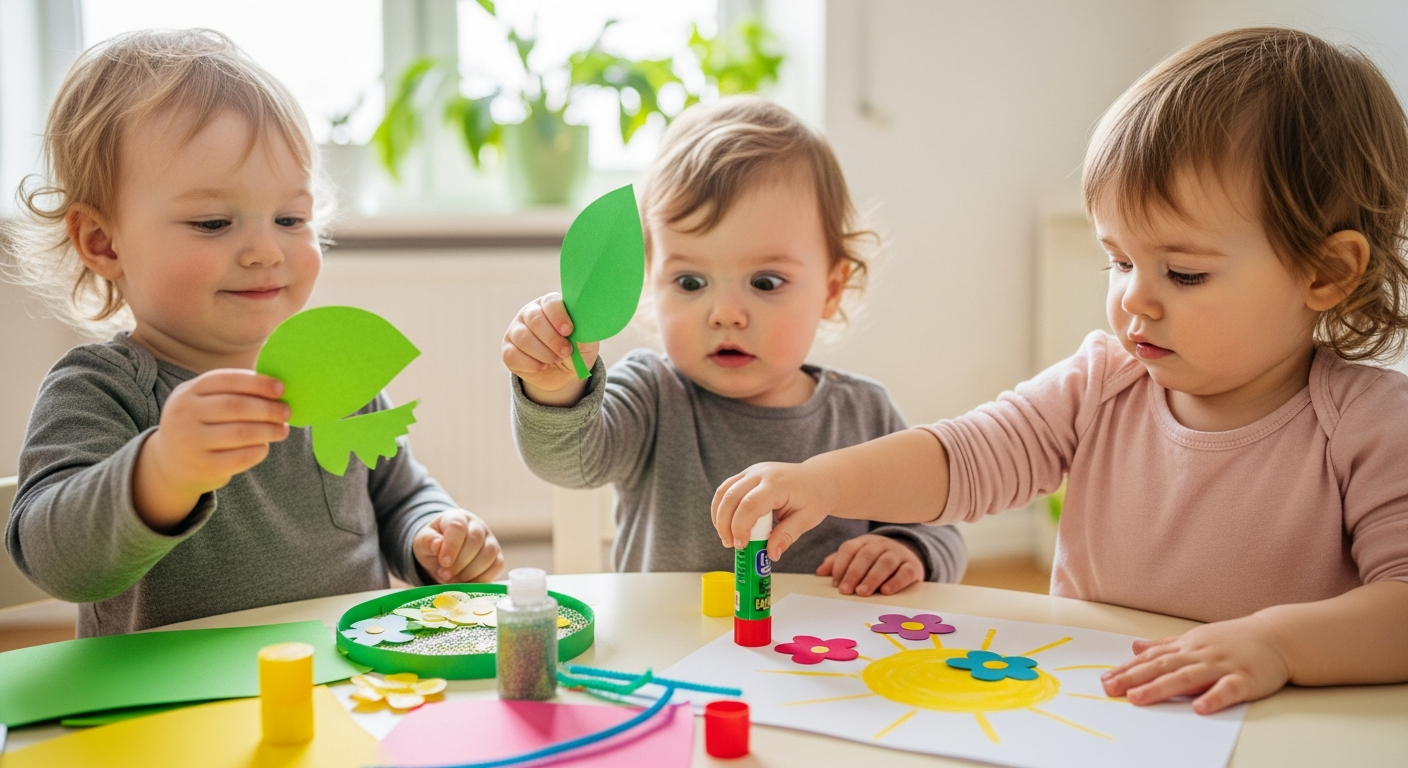
Table of Contents
- Introduction
- The Connection Between Crafting and Communication
- St. Patrick's Day Magic: Shamrocks, Rainbows, and Gold
- Welcoming Spring: Flowers and Butterflies
- Weather Wonders: Sun, Rain, and Clouds
- Farm Animal Fun: Chicks, Lambs, and Pigs
- Celebrating Literacy: Dr. Seuss and Storytelling
- Why "Smart Screen Time" Matters During Crafting
- Realistic Expectations and Joyful Moments
- Choosing the Best Support for Your Child
- Tips for a Stress-Free Crafting Session
- FAQ: March Toddler Crafts and Development
- Conclusion
Introduction
Did you know that the simple act of tearing a piece of green construction paper can actually be a building block for your child’s future reading and writing skills? It sounds like magic, but it’s actually developmental science in action. As the frost of February melts away and we welcome the vibrant colors of March, parents everywhere are looking for ways to shake off the winter blues and engage their little ones in meaningful play. Whether you are navigating the exciting world of a toddler’s first words or supporting a child who needs a bit of extra help finding their voice, March offers a literal garden of opportunities for growth.
In this post, we are going to explore a curated list of 25 March toddler crafts that are designed to do more than just decorate your refrigerator. We will cover themes ranging from the "luck of the Irish" on St. Patrick’s Day to the arrival of fuzzy farm animals and the colorful blossoms of early spring. Beyond the glue and glitter, we’ll discuss how these activities serve as a powerful bridge to communication, helping your child "speak their minds and hearts"—the very mission that drives everything we do here at Speech Blubs.

Our goal is to provide you with a comprehensive toolkit of low-prep, high-engagement activities that foster a love for learning. We believe that by blending scientific principles with the joy of play, we can create "smart screen-time" experiences and hands-on memories that last a lifetime. By the end of this guide, you’ll have a full month of creative ideas and a deeper understanding of how to support your child's developmental journey with confidence.
The Connection Between Crafting and Communication
Before we dive into the specific projects, it is essential to understand why we advocate for these activities. For the 1 in 4 children who may need extra speech support, traditional "learning time" can sometimes feel frustrating. Crafting changes the narrative. It moves the focus from the pressure to perform a sound to the joy of creating a shared masterpiece.
At Speech Blubs, our founders created the tool they wished they had when they were growing up with speech problems. This personal history informs our unique approach: we use video modeling, where children learn by watching and imitating their peers. Crafting follows a similar peer-led or parent-led modeling structure. When you sit down to make a "Paper Plate Sun," you are modeling language: "Look, I am painting it yellow. Can you say yellow? It feels sticky!"
This hands-on interaction reduces frustration and builds the foundational skills needed for complex communication. If you are ever unsure about where your child stands in their development, you can take our quick 3-minute preliminary screener. It involves just 9 simple questions and provides an assessment and a next-steps plan to help you feel empowered in your parenting journey.
St. Patrick's Day Magic: Shamrocks, Rainbows, and Gold
St. Patrick’s Day (March 17th) is a goldmine for toddler engagement. The bright greens and vivid rainbows are perfect for sensory seekers.
1. Torn Paper Shamrock
This is a classic for a reason. Tearing paper is one of the best ways to build the tiny muscles in a toddler’s hands (fine motor skills) which are eventually used for holding pencils and even forming certain speech sounds through better muscle control.

- The Activity: Provide your child with different shades of green paper. Let them rip it into small pieces and glue them onto a large shamrock template.
- Speech Opportunity: Practice the "G" sound in "green" and "glue."
2. Foil-Painted Clover
- The Activity: Instead of a brush, use a crumpled ball of aluminum foil. Let your child dip it in green paint and "stomp" it onto paper.
- Speech Opportunity: Use action words like "dip," "stomp," and "tap."
3. Fingerprint "Pot of Gold"
- The Activity: Draw a simple black cauldron. Let your child use yellow paint to make thumbprint "coins" spilling out of the top.
- Speech Opportunity: Count the coins! "One, two, three..." This builds early numeracy alongside language.
4. Mosaic Rainbows
- The Activity: Use scraps of construction paper in every color of the rainbow. Have your child glue them in arches to create a vibrant mosaic.
- The Connection: This is a great time to use the "Colors" section in the Speech Blubs app. You can find the app on the Apple App Store or Google Play Store. After making a red arch, watch a peer in the app say "Red!" to reinforce the learning.
5. Puffy Paint Leprechaun Beard
- The Activity: Mix equal parts shaving cream and white glue with a drop of orange food coloring. Let your child spread this "puffy" mixture onto a leprechaun face template to create a textured beard.
- Speech Opportunity: Describe the texture. Is it "squishy"? Is it "soft"?
Welcoming Spring: Flowers and Butterflies
March marks the official start of spring, a time for "new beginnings." We can use this theme to encourage new sounds and words.
6. Coffee Filter Flowers
- The Activity: Let your toddler color coffee filters with washable markers. Use a spray bottle to mist them with water and watch the colors bleed together. Once dry, pinch the center with a pipe cleaner to make a flower.
- The Science: This is a great example of cause-and-effect, a foundational cognitive skill for communication.
7. Spring Tree Blossom Craft
- The Activity: Use a brown paper bag or a template for a tree trunk. Have your child use pink pom-poms or even "popcorn" glued to the branches to represent spring blossoms.
- Speech Opportunity: Practice the "P" sound in "pink," "pop," and "pretty."
8. Butterfly Nature Art
- The Activity: Take a "speech walk" outside. Collect fallen petals or interesting leaves. Glue them onto a butterfly body template to create wings.
- The Connection: Our scientific methodology emphasizes that learning happens best when it’s joyful and connected to the real world. This outdoor craft is the perfect screen-free alternative to passive viewing.
9. Paper Bowl Mushrooms
- The Activity: Flip a paper bowl upside down and paint it red with white spots. Use a toilet paper roll as the "stem."
- Speech Opportunity: Hide a small toy under the "mushroom" and practice words like "under," "where?" and "found it!"
10. Sticky Wall Flower Garden
- The Activity: Tape a piece of contact paper (sticky side out) to the wall. Give your child silk flowers or paper cutouts to "plant" on the wall.
- Why it Works: Working on a vertical surface is excellent for shoulder stability and core strength, which indirectly supports the posture needed for clear speech production.
Weather Wonders: Sun, Rain, and Clouds
March weather is notoriously unpredictable—"in like a lion, out like a lamb." We can use this variety to teach opposites.
11. Paper Plate Sun
- The Activity: Paint a paper plate bright yellow. Glue yellow streamers or strips of paper around the edges for rays.
- Speech Opportunity: Talk about "hot" vs "cold."
12. Cotton Ball Rain Clouds
- The Activity: Glue fluffy cotton balls to a blue cloud shape. Use blue yarn or finger-painted drops to show the rain falling down.
- Speech Opportunity: Practice the "shhh" sound for rain or "pitter-patter."
13. Paint Splat Thunderclouds
- The Activity: Put a few drops of grey and purple paint on one half of a paper. Fold it in half, press, and open it up to see a "stormy" cloud.
- Speech Opportunity: "Boom!" "Crash!" Practice these loud, fun exclamations to build confidence in vocalizing.
14. Chalk Art Rainbows
- The Activity: If the weather permits, take the crafting to the sidewalk. Use large outdoor chalk to draw rainbows together.
- The Benefit: Co-play is the heart of our philosophy. By drawing alongside your child, you are providing a powerful model for them to imitate.
15. Windblown Kite Craft
- The Activity: Decorate a diamond shape with ribbons. Attach a string and let your child "fly" it around the living room.
- Speech Opportunity: Practice "Up!" and "Down!" and "Fast!"
Farm Animal Fun: Chicks, Lambs, and Pigs
Spring is the season of baby animals. This is a favorite topic for toddlers and a fantastic way to practice "Early Sounds."
16. Cotton Ball Lambs
- The Activity: Use a black paper cutout for the lamb’s body and have your child glue white cotton balls all over it.
- Speech Opportunity: For a parent whose toddler is a "late talker," the "Animal Kingdom" section of Speech Blubs is a perfect companion here. While you glue, you can practice the "Baa" sound together.
17. Fork-Painted Chicks
- The Activity: Dip a plastic fork in yellow paint and use it to create a "fuzzy" texture for a baby chick on paper. Add googly eyes and an orange beak.
- Speech Opportunity: "Cheep cheep!" High-pitched sounds are often easier for toddlers to imitate.
18. Paper Plate Pigs
- The Activity: Paint a plate pink. Use a smaller pink circle for the snout and add two black dots.
- Speech Opportunity: "Oink oink!" Practice the rounded lip shape needed for the "O" sound.
19. Shredded Paper Chickens
- The Activity: Use yellow shredded paper (from a gift bag or paper shredder) and glue it onto a chicken shape.
- Sensory Play: Let your child feel the "scratchy" paper vs the "smooth" glue.
20. Handprint Ducklings
- The Activity: Trace your child's hand on yellow paper. The fingers become the tail feathers and the thumb becomes the neck.
- Speech Opportunity: "Quack quack!" Use the Speech Blubs app to see a "real" duck and then mimic the sound.
Celebrating Literacy: Dr. Seuss and Storytelling
March 2nd is Dr. Seuss’s birthday (Read Across America Day). Combining crafts with books is a brilliant way to build vocabulary.
21. Paper Plate "Cat in the Hat"
- The Activity: Cut the center out of a paper plate to make a mask "brim," and glue a tall red-and-white striped paper hat to the top.
- The Goal: Encourage your child to wear the hat and "read" (or babble) to their stuffed animals. This fosters a love for communication and builds confidence.
22. Truffula Trees (from The Lorax)
- The Activity: Use colorful pom-poms or tufts of cotton candy-colored yarn glued to the top of striped straws.
- Speech Opportunity: Use descriptive words like "fuzzy," "tall," and "bright."
23. Thing 1 and Thing 2 Puppets
- The Activity: Use blue feathers or blue yarn for "hair" on top of a red popsicle stick or paper cutout.
- Speech Opportunity: "One" and "Two." Simple counting and naming of the characters.
24. "Put Me in the Zoo" Paper Plate
- The Activity: Based on the book, paint a plate yellow and let your child use multi-colored dot markers to give the creature its famous spots.
- Speech Opportunity: Ask, "Where does the blue spot go?" "Where does the red spot go?"
25. Handprint Lorax
- The Activity: Paint your child's hand orange (for the body) and use yellow paint for the famous "mustache" across the palm.
- Speech Opportunity: Talk about the trees. "I speak for the trees!" This is a great phrase for practicing the "S" and "T" sounds.
Why "Smart Screen Time" Matters During Crafting
You might wonder why a speech therapy app would be recommending glue sticks and paper plates. The truth is, we don't believe in replacing human interaction with a screen. Instead, we provide a powerful tool for family connection.
Think of Speech Blubs as the "digital coach" for your child’s speech journey. While you are doing these March toddler crafts, you might notice your child struggling with a specific sound, like the "L" in "Lamb" or the "S" in "Sun." That is exactly when you can open the app and find a video of a peer making that exact sound. Our research shows that children are far more likely to mimic another child than an adult.
This creates a "learning loop":
- Activity: You make a craft together.
- Observation: You notice a speech opportunity.
- Reinforcement: You use Speech Blubs to watch a peer model the sound.
- Practice: You go back to the craft and try the sound together.
Realistic Expectations and Joyful Moments
As you embark on these 25 crafts, we want to remind you to maintain realistic expectations. Your 2-year-old might not produce a perfect "Shamrock" on their first try, and they certainly won't be giving public speeches by the end of the month. That’s okay!
The benefit is in the process, not the finished product. We are focused on:
- Fostering a love for communication.
- Building the confidence to try new sounds.
- Reducing the frustration that often comes with speech delays.
- Developing key foundational skills like imitation and turn-taking.
If you’re seeing progress, even small "wins" like a new "Oink" or a "Yellow," celebrate them! Many parents in our community have shared how these small moments led to big breakthroughs. You can read some of their inspiring success stories and testimonials to see the impact of this joyful approach.
Choosing the Best Support for Your Child
We know that every dollar counts when you are raising a family. That’s why we are transparent about our commitment to value. While we offer a monthly plan at $14.99, our Yearly Plan is the clear best choice for families who want to see consistent growth.
At $59.99 per year, the cost breaks down to just $4.99 per month—a 66% saving over the monthly rate. More importantly, the Yearly Plan is designed to be a comprehensive developmental suite. It includes:
- A 7-day free trial so you can explore the content risk-free.
- Access to the Reading Blubs app, helping your child transition from speech to literacy.
- Early access to all new updates and content.
- 24-hour support response time from our dedicated team.
Ready to get started? Create your account and begin your 7-day free trial today. It’s the perfect way to supplement your March crafting fun with scientifically-backed learning.
Tips for a Stress-Free Crafting Session
- Embrace the Mess: Toddlers learn through their senses. If paint gets on their hands (or yours), use it as a language opportunity! "Oh no, messy hands! Let's wash them. Rub, rub, rub."
- Follow Their Lead: If your child wants to turn the "Pink Pig" into a "Blue Pig," let them! Creativity is a form of communication.
- Keep it Short: A toddler’s attention span is short. It’s better to do 5 minutes of joyful crafting than 20 minutes of forced activity.
- Use the App as a Reward: After a few minutes of "hard work" on a craft, let your child choose their favorite peer video in Speech Blubs. This keeps the motivation high.
FAQ: March Toddler Crafts and Development
1. My child is a very late talker. Are these crafts still useful? Absolutely. For late talkers, the goal of crafting is "joint attention"—you both looking at and engaging with the same object. This is the absolute foundation of all communication. Use the "Early Sounds" and "Animal Kingdom" sections of our app alongside these crafts to encourage any vocalization, even if it's just a grunt or a single vowel.
2. What if my child refuses to touch "messy" materials like glue or shaving cream? Some children have sensory sensitivities. You can put the paint or glue inside a sealed Ziploc bag and let them "squish" it from the outside. You can also use "dry" crafts like stickers or contact paper "sticky walls" to build the same fine motor skills without the mess.
3. How often should we use the Speech Blubs app alongside these activities? We recommend "smart screen time" in short, 10–15 minute bursts. It’s a powerful supplement to your overall development plan and professional therapy. Using it once a day as a companion to your "craft of the day" is a great way to create a consistent learning routine.
4. Can these crafts help with specific speech sounds? Yes! Crafting allows for "repetitive modeling." If you are making a "Sun," you can say the word "Sun" twenty times in five minutes. This repetition, combined with seeing a peer model the sound in the app, helps the brain map the sounds more effectively.
Conclusion
March is a month of transformation, making it the perfect time to focus on your child’s burgeoning communication skills. From the fine motor challenge of a "Torn Paper Shamrock" to the phonetic fun of a "Fork-Painted Chick," each of these 25 March toddler crafts is an opportunity to connect, laugh, and learn.
At Speech Blubs, we are honored to be a part of your family’s journey. Our mission to empower children to "speak their minds and hearts" is at the core of everything we do, from our peer-led video modeling to our commitment to "smart screen time." We invite you to make this month one of joyful learning and meaningful progress.
Don't wait for the flowers to bloom to start seeing growth in your child's speech. Download Speech Blubs on the App Store or Google Play Store today to begin your 7-day free trial. Remember to select our Yearly Plan to unlock the full suite of features, including Reading Blubs and priority support, all while saving 66%. Let's make this March a month of voices found and hearts shared!
About the author