
30+ Creative Kids Indoor Games Ideas for Speech & Fun
 By Speech Blubs Team•Jan 28, 2026•20 min.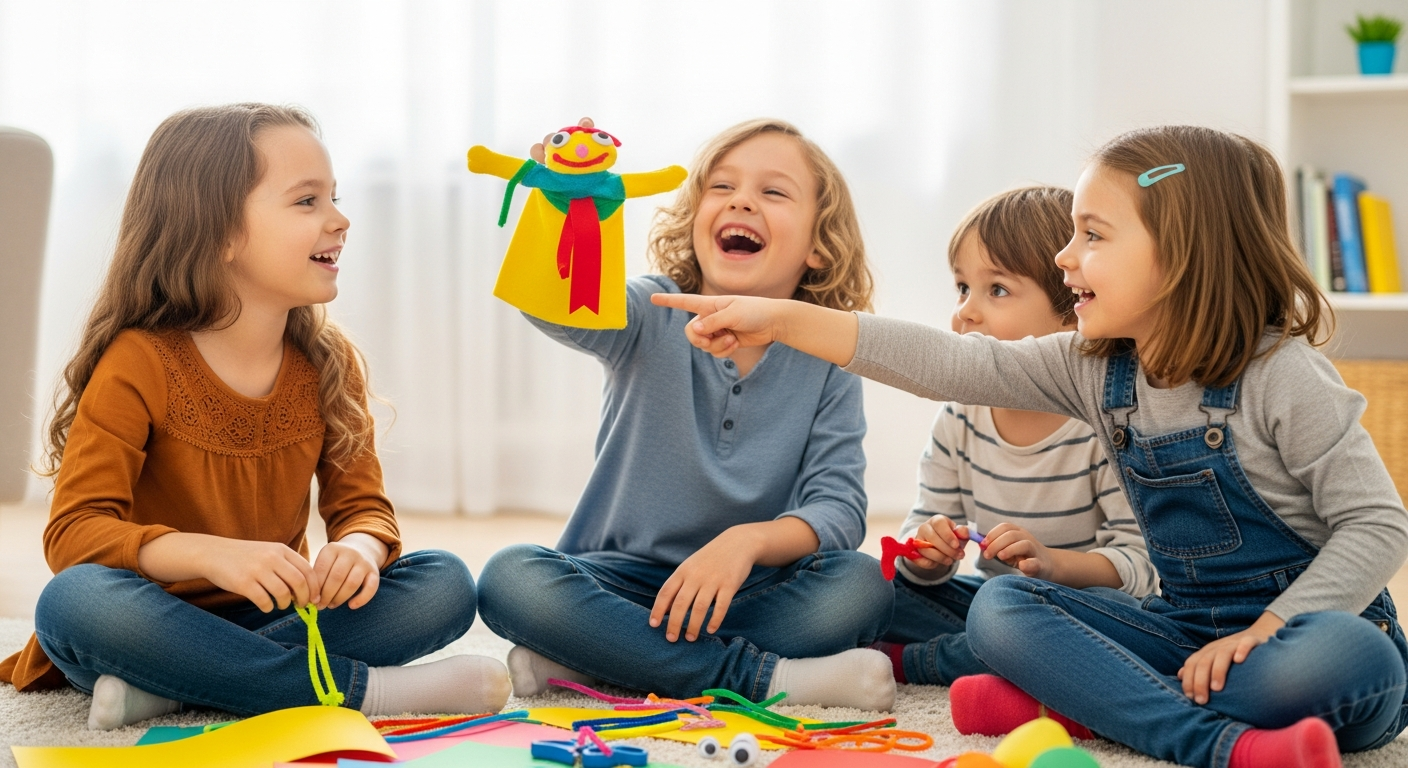
Table of Contents
- Introduction
- Why Indoor Play Matters for Growing Communicators
- Active & Energetic Indoor Games
- Creative & Imaginative Indoor Adventures
- Literacy & Learning-Focused Games
- Sensory & Fine Motor Skill Builders
- The Speech Blubs Advantage: Beyond the Games
- Unlocking Your Child's Full Potential with Speech Blubs: Choose Your Plan
- Conclusion
- Frequently Asked Questions About Kids Indoor Games and Speech Development
Ever found yourself gazing out the window at a dreary, rain-soaked day, or battling the sniffles and realizing another afternoon indoors looms large? The thought of keeping energetic little ones engaged and learning without succumbing to endless passive screen time can feel like a Herculean task. Yet, these indoor moments aren't just about passing the time; they're golden opportunities to nurture your child's development, especially their burgeoning communication skills.
This blog post isn't just a list of fun activities; it's a guide to transforming your living room into a vibrant hub for learning, connection, and, most importantly, speech and language growth. We’ll explore a diverse range of creative kids indoor games ideas that promise laughter and learning, all while building crucial communication foundations. From active adventures to quiet, imaginative play, we'll show you how everyday items can become powerful tools for expanding vocabulary, practicing sounds, following directions, and telling stories. These activities, combined with our unique approach at Speech Blubs, empower children to "speak their minds and hearts," fostering a lifelong love for communication.

Introduction
There's a unique challenge in parenting when the weather outside is frightful, or seasonal illnesses keep everyone cooped up. The easy default might be to turn on a cartoon or hand over a tablet, but we instinctively know our children deserve more. Indoor days, far from being a limitation, are rich canvases for creativity, learning, and connection. This guide is designed to equip you with a treasure trove of engaging indoor games that don't just banish boredom but actively supercharge your child's speech and language development.
In the coming sections, we'll dive into a diverse collection of activities, ranging from high-energy games that burn off steam to quiet, imaginative play that sparks storytelling. Each idea is crafted to seamlessly weave in opportunities for communication practice – from listening skills and following directions to expanding vocabulary and articulating new sounds. We understand the unique needs of developing communicators, and our mission at Speech Blubs, born from our founders' personal experiences with speech challenges, is to provide accessible, effective, and joyful solutions. We believe that blending scientific principles with play creates one-of-a-kind "smart screen time" experiences, offering a powerful alternative to passive viewing and strengthening family connection. Get ready to transform your indoor days into extraordinary adventures in communication and fun!
Why Indoor Play Matters for Growing Communicators
When we think of indoor play, the immediate benefits that come to mind might be burning off excess energy or simply keeping kids entertained. However, indoor activities offer a profound and often underestimated impact on a child's holistic development, especially when it comes to speech and language. Unlike the unpredictable outdoors, a controlled indoor environment allows for focused interactions, repetitive practice, and the creation of rich, language-infused scenarios.
Beyond just physical activity, indoor games provide crucial opportunities for:

- Cognitive Development: Problem-solving, critical thinking, memory, and attention are all honed through structured and unstructured play.
- Emotional Regulation: Learning to manage excitement, frustration, and anticipation, especially in games with rules or turns.
- Social Skills: Turn-taking, sharing, negotiation, and cooperation become central to many indoor activities, building the foundation for effective communication.
- Sensory Exploration: Manipulating objects, experiencing different textures, and engaging various senses directly supports brain development, which in turn aids language acquisition.
- Language Acquisition: This is where indoor play truly shines. Every game presents countless chances to practice articulation, expand vocabulary, understand complex instructions, and develop narrative skills. From naming colors in a scavenger hunt to describing actions in an obstacle course, language is at the heart of the play.
At Speech Blubs, we passionately believe in the power of play. Our approach is to offer a "screen-free alternative" to passive viewing experiences like cartoons by advocating for engaging, interactive play. However, we also recognize the value of "smart screen time" when it’s designed with purpose, like our app, which provides structured, engaging activities that complement these hands-on games. The goal is always active learning and meaningful interaction, ensuring that every moment contributes to your child’s growth.
Active & Energetic Indoor Games
When the energy levels are soaring, and outdoor play isn’t an option, bringing the playground indoors becomes essential. These active games don't just tire out little bodies; they create dynamic environments ripe for language learning, especially for children who thrive on movement.
The Mighty Obstacle Course
Transform your living room or hallway into an epic adventure zone! Use couch cushions for stepping stones, blankets draped over chairs for tunnels, a rolled-up yoga mat as a balance beam, or masking tape on the floor for zig-zag paths. Encourage your child to help design and build the course – often, the construction is half the fun!
- Speech & Language Benefits: Obstacle courses are a goldmine for understanding and using spatial concepts (over, under, through, around, between), sequencing instructions (first, next, then, finally), and action verbs (jump, crawl, climb, balance). As they navigate, encourage them to describe their movements or predict the next step.
- Relatable Scenario/Speech Blubs Integration: For a parent whose 3-year-old struggles with following two-step commands like "crawl under the blanket and then jump over the pillow," an obstacle course provides real-time, physical practice. This can be powerfully reinforced by the "Action Verbs" section in the Speech Blubs app, where children watch and imitate peers performing actions, helping them connect the verb to the physical movement.
Wild Animal Walks & Zany Relay Races
Let imagination run wild as your child mimics different animals across the room. From a crab walk to a bear crawl, a frog jump to a snake slither, encourage them to make the animal sounds too! For relay races, simple tasks like balancing a beanbag on their head, scooping pom-poms from one bowl to another with a spoon, or even a pillowcase sack race can be thrilling.
- Speech & Language Benefits: Animal walks boost articulation (practicing animal sounds), vocabulary (naming animals, describing their movements), and imitation skills. Relay races foster turn-taking, cooperation, and understanding simple rules and commands.
- Relatable Scenario/Speech Blubs Integration: If your child loves animal sounds but has trouble with specific phonemes, like the /s/ in "snake" or the /r/ in "roar," incorporating these sounds into animal walks provides natural practice. Our Speech Blubs app offers a dedicated "Animal Kingdom" section that utilizes our unique video modeling methodology, allowing children to clearly see and imitate their peers producing these sounds, making it a powerful supplement to their play.
Dance Party & Musical Freeze
Who doesn't love a good dance party? Put on your child's favorite tunes and let loose! When the music stops, everyone freezes in a fun pose. Vary the music tempo and style to encourage different movements and emotional expressions.
- Speech & Language Benefits: Dancing enhances listening skills (to start/stop with the music), emotional expression through movement, and rhythm, which is foundational to speech prosody. Encourage them to describe their favorite moves or the emotions the music evokes.
Balloon Volleyball & Paper Plate Skating
A simple balloon can provide endless fun. "Keep it up" volleyball, where the goal is to prevent the balloon from touching the floor, is fantastic. For a unique twist, place a paper plate under each foot on a smooth floor and let your child "skate" around!
- Speech & Language Benefits: These activities encourage turn-taking, simple action words (hit, kick, slide), spatial concepts (up, down, far, near), and descriptive vocabulary (light, floaty, slippery).
Creative & Imaginative Indoor Adventures
Imagination is the playground of the mind, and indoor settings are perfect for nurturing creativity. These games encourage storytelling, role-playing, and expressing ideas, all of which are vital for developing strong communication skills.
Build a Fort & Indoor Camping Trip
Gather blankets, pillows, couch cushions, and chairs to construct the ultimate fort. Once built, turn it into an indoor camping trip! Bring in flashlights, tell "spooky" stories, and even "cook" pretend s'mores.
- Speech & Language Benefits: Fort-building and camping stimulate planning skills, problem-solving, and rich narrative development as children create stories about their adventure. It's excellent for role-playing different scenarios and expanding descriptive language (cozy, dark, hidden).
Put On A Play Or Make A Movie
Kids are natural dramatists. Encourage them to create a story, assign roles, make simple costumes from scarves or old clothes, and put on a show. You can even record their "movie" on a phone to share with family!
- Speech & Language Benefits: This activity is a powerhouse for storytelling, character voice development, emotional vocabulary, sequencing events, and collaborative communication. It builds confidence in expressive language in a playful, low-pressure environment.
Giant Game Board & Indoor Track
Unroll some masking tape and transform your floor into a giant game board. Create hopscotch squares, a winding race track for toy cars, or even a life-sized chess board. Let your child help draw the paths and add "special spaces."
- Speech & Language Benefits: These games are fantastic for practicing numbers, colors, shapes, and directional words (forward, backward, left, right). They also reinforce rule-following and turn-taking, crucial aspects of social communication.
Arts & Crafts for Communication
From simple collages to puppet making, arts and crafts are not just about artistic expression; they're excellent catalysts for language. Provide various materials – paper, glue, fabric scraps, pipe cleaners – and let creativity flow.
- Speech & Language Benefits: Arts and crafts naturally encourage descriptive language (colors, textures, shapes), sequencing instructions (first cut, then glue), requesting items (Can I have the red paper?), and sharing ideas about their creations. Making puppets can lead directly into imaginative play and dialogue practice.
Literacy & Learning-Focused Games
Integrating literacy and learning into play provides a structured yet fun pathway to communication mastery. These games often involve focused attention, memory, and symbolic thinking – all skills that heavily support speech and language development.
Scavenger Hunts: Color, Alphabet, & Sound Editions
Scavenger hunts are infinitely customizable and perfect for indoor learning. Create a list of items based on a theme: "Find 5 red things," "Find something that starts with the 'B' sound," or "Find an object that makes a 'crinkly' sound."
- Speech & Language Benefits: These hunts are brilliant for vocabulary expansion, categorization skills, phonological awareness (identifying initial sounds), and asking/answering questions. It encourages children to articulate what they've found and describe its attributes.
- Relatable Scenario/Speech Blubs Integration: To practice initial sounds during an alphabet scavenger hunt, such as finding objects starting with the /k/ sound, consider using Speech Blubs' "Early Sounds" section. Here, children learn by imitating peers clearly articulating sounds, which can provide a confident boost before they try to produce the sound with a real object. Download Speech Blubs on the App Store or Google Play today to get started!
Action Storytime & Bookworm Workout
Take storytime to the next level! While reading a book, encourage your child to act out the actions described. If a character jumps, your child jumps. If a character cries, they make a sad face. For a "Bookworm Workout," choose a specific word in the book (e.g., "cat") and do a pre-assigned exercise (like a jumping jack) every time it appears.
- Speech & Language Benefits: These activities dramatically improve listening comprehension, active engagement with text, vocabulary acquisition (connecting words to actions), and re-telling skills. It makes stories tangible and interactive.
"Tell Me a Story" (Reverse Storytime)
Instead of always being the storyteller, invite your child to tell you a story. Provide prompts like, "Once upon a time, there was a tiny blue bird who lived in a giant green tree..." and let them take over. You can also give them a few random objects and ask them to weave a story around them.
- Speech & Language Benefits: This is a powerful exercise for developing narrative skills, sequencing events, fostering imagination, and practicing descriptive language. It gives children the power of verbal creation.
Sensory & Fine Motor Skill Builders
Many indoor games naturally engage a child's senses and fine motor skills, which are deeply intertwined with speech and language development. The ability to manipulate objects, coordinate movements, and interpret sensory information forms a crucial foundation for effective communication.
Marvelous Sensory Bins
A sensory bin is simply a container filled with materials chosen to stimulate the senses – dry rice, beans, pasta, water beads, shredded paper, or even sand, combined with small toys, scoops, and cups.
- Speech & Language Benefits: Sensory bins are perfect for expanding descriptive vocabulary (e.g., "bumpy," "smooth," "cold," "wet"), practicing requesting items ("More scoop, please!"), commenting on discoveries, and encouraging pretend play scenarios with the objects found within. It's a wonderful, low-pressure environment for conversation.
- Relatable Scenario/Speech Blubs Integration: For a child who is shy or non-verbal, a sensory bin can provide a safe space to explore and initiate communication. While they explore, you can model simple words like "dig," "pour," "full," or "empty." Our Preliminary Screener can help identify areas where additional support, perhaps through Speech Blubs' themed sections focused on early words, could be profoundly beneficial. It's a quick 3-minute assessment that provides valuable insights and next steps.
Playdough & Marshmallow Sculptures
Offer a variety of playdough colors and tools, or provide marshmallows and toothpicks for building edible structures. These activities are wonderfully tactile and open-ended.
- Speech & Language Benefits: These hands-on activities encourage requesting tools and colors, describing creations, sequencing steps in their building process, and engaging in rich imaginative play as they give life to their sculptures. It's also great for strengthening hand muscles, which supports fine motor control needed for writing.
Puzzles & Classic Board Games
Jigsaw puzzles, block puzzles, and classic board games like Candyland, Memory, or even a homemade game of "I Spy" are excellent indoor choices.
- Speech & Language Benefits: Puzzles foster problem-solving language ("Where does this piece go?"), spatial reasoning, and vocabulary related to shapes and colors. Board games teach crucial social communication skills such as turn-taking, negotiation, following rules, and expressing emotions related to winning or losing in a controlled environment.
The Speech Blubs Advantage: Beyond the Games
While hands-on play is undeniably crucial for development, we recognize that modern families also navigate the world of screen time. At Speech Blubs, we've transformed the concept of screen time into "smart screen time" – a powerful, engaging, and scientifically-backed tool that complements and enhances the very speech and language skills cultivated through the indoor games we’ve discussed.
Our company was born from a deeply personal place: our founders all grew up facing their own speech problems and created the tool they wished they had. This personal connection drives our mission to empower children to "speak their minds and hearts," providing an immediate, effective, and joyful solution for the 1 in 4 children who need speech support.
Here’s how Speech Blubs stands apart and supports your child’s communication journey:
- Scientific Methodology: Video Modeling: Our unique approach leverages the power of "video modeling." Children learn by watching and imitating their peers on screen, who are speaking real words, making real sounds, and demonstrating real mouth movements. This method taps into mirror neurons in the brain, making learning intuitive and highly effective. Learn more about our research and methodology which places us in the top tier of speech apps worldwide.
- Active vs. Passive Screen Time: We provide a vital screen-free alternative to passive viewing experiences like cartoons. Instead of merely consuming content, children actively participate, interact, and engage with the activities in Speech Blubs, turning screen time into a dynamic learning opportunity.
- Powerful Tool for Family Connection: Speech Blubs isn’t designed for independent, isolated play. It's a powerful tool for family connection, encouraging parents and caregivers to play with their child, modeling, encouraging, and celebrating every sound and word. This co-play reinforces learning and strengthens your bond.
- Comprehensive Skill Development: Our app addresses a wide range of communication skills, from early sounds and vocabulary building to sentence formation, social language, and storytelling, making it a robust supplement to your child's overall development plan and, when applicable, professional therapy.
- Joyful Learning: We blend scientific principles with play to ensure that every interaction is engaging and fun. We believe that when learning is joyful, children are more motivated to participate and more likely to retain what they learn.
Relatable Scenario/Speech Blubs Integration: If a child gets shy trying new words in a group setting, or struggles with the confidence to articulate sounds during a game, Speech Blubs offers a safe, fun space where they can imitate peers without pressure. This builds crucial confidence and articulatory practice before they try speaking in broader play, fostering both joy and reducing frustration. See what other parents are saying about their child's success with Speech Blubs. They share heartwarming stories of breakthroughs and newfound confidence, demonstrating the real-world impact of our smart screen time solution.
Unlocking Your Child's Full Potential with Speech Blubs: Choose Your Plan
Investing in your child's communication journey is one of the most impactful decisions you can make. At Speech Blubs, we've made it easy and affordable to access our award-winning app, designed to empower children to speak with confidence and joy.
We offer two straightforward plan options to fit your family's needs:
- Monthly Plan: For $14.99 per month, you gain access to our core features, allowing your child to explore and learn at their own pace.
- Yearly Plan: Our most popular and highly recommended option, priced at an incredible $59.99 per year. This breaks down to just $4.99 per month, meaning you save a remarkable 66% compared to the monthly plan!
Why the Yearly Plan is the Best Choice: Unbeatable Value and Exclusive Features
The Yearly plan isn't just significantly cheaper; it’s packed with exclusive, high-value features designed to give your child the most comprehensive and supportive learning experience:
- 7-Day Free Trial: Experience the full power of Speech Blubs with absolutely no commitment. This trial is only available with the Yearly plan, giving you a week to see the incredible impact it can have.
- The Extra Reading Blubs App: Unlock an entire second app, Reading Blubs, included exclusively with your Yearly subscription! This app extends the learning journey, focusing on foundational reading skills that complement speech development.
- Early Access to New Updates: Be among the first to explore new games, activities, and features as soon as they're released, keeping your child's learning experience fresh and exciting.
- 24-Hour Support Response Time: Get priority access to our dedicated support team, ensuring any questions or technical needs are addressed promptly, so your child's learning never misses a beat.
The Monthly plan does not include these invaluable benefits. For the ultimate value, the most complete suite of features, and the best opportunity to see sustained progress, the Yearly plan is the clear choice.
Ready to see the difference Speech Blubs can make? We encourage you to choose the Yearly plan to unlock your 7-day free trial and gain access to the full suite of features that will support your child's communication development every step of the way. Create your account and begin your 7-day free trial today – your child's confident voice awaits!
Conclusion
Embracing indoor days with creative and engaging activities is far more than just a way to pass the time; it's a profound investment in your child's holistic development, with a special emphasis on their speech and language skills. From the physical exhilaration of an obstacle course to the quiet concentration of a sensory bin, each of these 30+ kids indoor games ideas offers a unique opportunity to build vocabulary, practice sounds, follow directions, and foster the joy of communication. By transforming everyday spaces and objects into springboards for learning, you're not just entertaining your child – you're empowering them to become confident, expressive communicators.
At Speech Blubs, we are proud to be your partner in this incredible journey. We know the challenges parents face, and our app, born from personal experience and built on scientific principles, is designed to be a powerful, joyful complement to these hands-on activities. It provides "smart screen time" that actively engages children through video modeling, fostering family connection and helping millions of children "speak their minds and hearts."
Don't let another indoor day pass by without maximizing its potential for growth and connection. Take the first step towards unlocking your child's full communication potential. We invite you to explore the transformative power of Speech Blubs today. Choose our Yearly plan to secure your 7-day free trial and gain exclusive access to the Reading Blubs app, early updates, and priority support. Download Speech Blubs on the App Store or Google Play now to begin your child's joyful journey to clearer, more confident communication!
Frequently Asked Questions About Kids Indoor Games and Speech Development
Q1: How can I encourage my child to talk more during indoor games?
A1: The key is active participation and modeling. Narrate your actions, ask open-ended questions (e.g., "What should we do next?"), and provide choices (e.g., "Do you want the red or blue block?"). Repeat and expand on what your child says, and don't rush to fill silences. Celebrate every attempt at communication, no matter how small. Our Speech Blubs app also helps by providing clear video models for children to imitate, building confidence in a fun, pressure-free environment.
Q2: What if my child prefers passive screen time over interactive games?
A2: It's a common challenge! Start small by gradually introducing interactive elements. Instead of just watching a show, watch it together and talk about what's happening. Pair screen time with related hands-on activities. For instance, after an episode about animals, play an animal-themed indoor game. Speech Blubs offers a "smart screen time" alternative, transforming passive viewing into active learning, encouraging interaction and imitation, which can be a bridge to more hands-on play.
Q3: Are these games suitable for children of all ages, including toddlers and preschoolers?
A3: Absolutely! Many of these games are adaptable. For toddlers, simplify instructions, use larger pieces, and focus on basic concepts like naming, pointing, and simple actions. For preschoolers, you can introduce more complex rules, encourage storytelling, and focus on expanding vocabulary and early literacy skills. The beauty of open-ended play is that children naturally engage at their developmental level.
Q4: How do I know if my child needs professional speech therapy, or if these games are enough?
A4: While these games are fantastic for supporting development, they are not a substitute for professional therapy if there are significant concerns. If your child is significantly delayed in their speech milestones, struggles with understanding, or has persistent difficulty with specific sounds, it's always best to consult a pediatrician or a speech-language pathologist. As a helpful first step, consider taking our quick 3-minute preliminary screener. It involves 9 simple questions and provides an immediate assessment and next-steps plan, which can include guidance on whether professional support is recommended.
About the author