
30+ Easy Kids Crafts to Do at Home for Joyful Learning
 By Speech Blubs Team•Jan 13, 2026•22 min.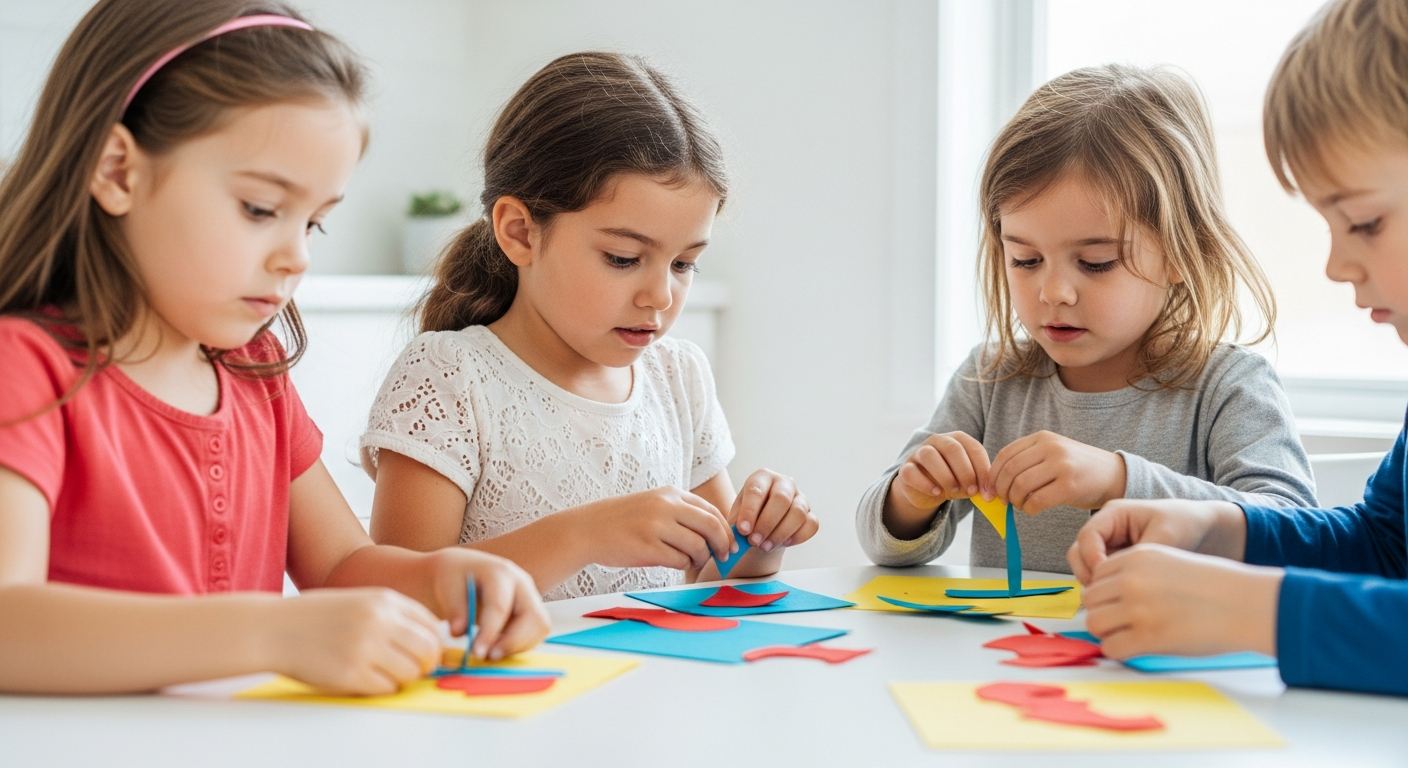
Table of Contents
- Introduction
- The Magic of Crafting: More Than Just Fun
- Essential Supplies for Your Crafting Stash (Mostly Household Items!)
- 30+ Easy Craft Ideas to Spark Creativity & Conversation
- Making Craft Time a Learning Opportunity
- When to Seek Extra Support: Recognizing Communication Milestones
- Speech Blubs: Your Partner in Joyful Communication
- Conclusion
- FAQ
Ever found yourself staring at a whirlwind of toys, hearing the familiar "I'm bored!" chime, and wishing for a magic activity that truly captivates your child? We've all been there. In a world brimming with digital distractions, fostering hands-on creativity can feel like a challenge. But what if we told you that the answer lies in simple, accessible, and incredibly fun crafts you can do right at home, often with supplies you already have?
This blog post is your ultimate guide to unlocking the power of easy kids crafts. We'll explore how these seemingly simple activities are far more than just time-fillers; they are potent tools for developing crucial cognitive, fine motor, and—most importantly—communication skills. Get ready to transform everyday materials into opportunities for imaginative play, problem-solving, and heartwarming family connection. Our main message is simple: engaging in crafts at home can significantly boost your child's development, all while creating cherished memories.

Introduction
As parents and caregivers, we constantly seek ways to nurture our children's growth, spark their imaginations, and encourage them to express themselves. While screen time often dominates, many of us yearn for activities that are both engaging and genuinely beneficial. This is where the magic of easy kids crafts comes in. Imagine transforming a humble paper plate into a roaring lion, or empty toilet paper rolls into a whole cast of characters, all while your child giggles, experiments, and most importantly, communicates.
This isn't just about keeping little hands busy; it's about building foundational skills that extend far beyond the craft table. From developing fine motor control to fostering problem-solving abilities and expanding vocabulary, crafting provides a rich, multi-sensory learning environment. Here at Speech Blubs, we believe deeply in empowering children to "speak their minds and hearts," and we've seen firsthand how interactive play, like crafting, lays a powerful groundwork for confident communication. This guide will walk you through a treasure trove of simple craft ideas, highlighting their developmental benefits, and showing you how to turn every snip, glue, and splash into a joyful learning moment.
The Magic of Crafting: More Than Just Fun
Crafting with children offers a delightful blend of entertainment and education, contributing significantly to their holistic development. It’s an activity that engages multiple senses and encourages various skills, laying vital groundwork for future learning.
Sensory Exploration and Fine Motor Skills
When children engage in crafts, they immerse themselves in a world of textures, colors, and shapes. The feel of squishy playdough, the vibrant hues of paint, the crinkle of paper—these sensory experiences are crucial for brain development. Simultaneously, tasks like cutting with scissors, gluing small pieces, drawing lines, or threading beads are powerful exercises for fine motor skills. These are the small, precise movements that strengthen the muscles in their hands and fingers, essential for activities like writing, dressing themselves, and even using utensils. For instance, shaping homemade clay into a dinosaur encourages delicate hand-eye coordination, while manipulating pipe cleaners for an animal craft refines pincer grasp. These seemingly simple actions are building blocks for greater independence and academic success.

Cognitive Development and Problem Solving
Every craft project, no matter how simple, presents a mini challenge. "How do I make this stick to that?" or "What color should I use for the sky?" These are genuine problem-solving moments. Children learn to think critically, plan their steps, and adapt when things don't go exactly as expected. They begin to understand cause and effect – "If I cut here, what happens?" or "What if I mix these two colors?" Crafting also nurtures creativity, allowing children to express themselves freely and uniquely. There’s no single "right" way to make a paper plate sun; each child's creation will be wonderfully different, fostering a sense of accomplishment and self-expression. This iterative process of imagining, creating, evaluating, and refining is a fundamental aspect of cognitive growth.
Language and Communication Boost
Perhaps one of the most exciting, yet often overlooked, benefits of crafting is its profound impact on language and communication development. Think about it: every step of a craft project is ripe with opportunities for conversation.
For a child who is a 'late talker' and loves animals, making a toilet paper roll lion can be a fantastic springboard for sound practice. As you work together, you can say "roar!" when adding the mane, "grrr" while painting, and "big, strong lion" as you admire the finished product. This natural, play-based interaction reduces pressure and makes practicing sounds and words feel organic and fun.
Crafting inherently encourages:
- Vocabulary Expansion: Naming colors, shapes, tools (scissors, glue), textures (bumpy, smooth), actions (cut, paste, draw), and the objects they are creating. "Can you hand me the red paper?" or "Let's glue this sparkly piece here."
- Following Instructions: "First, we cut the circle, then we put glue on the edges." This helps children understand sequential language and multi-step directions.
- Expressive Language: Children naturally want to talk about their creations. "Look at my beautiful butterfly!" or "My robot has shiny eyes!" This builds confidence in speaking and sharing ideas.
- Descriptive Language: Encouraging them to describe what they are making or what materials they are using helps them use adjectives and expand sentence structure. "This glue is sticky," or "My flower is tall and pink."
At Speech Blubs, our entire mission is built around empowering children to communicate effectively and joyfully. We know that real-world, interactive experiences like crafting are invaluable. Our unique "video modeling" methodology, where children learn by watching and imitating their peers, is a powerful parallel to how kids learn in a crafting setting—observing, imitating, and then creating their own variations. We provide a "smart screen time" alternative to passive viewing, transforming screen engagement into an active, communicative learning experience, much like guided crafting. We're committed to blending scientific principles with play, ensuring that every interaction, whether on our app or at the craft table, supports a child's journey to confident communication. To learn more about the scientific foundation behind our methods and how we rank in the top tier of speech apps globally, explore our research page.
Essential Supplies for Your Crafting Stash (Mostly Household Items!)
One of the best things about easy kids crafts is that you don't need to break the bank or visit a specialty store. Many fantastic projects can be made with items you already have lying around your home. This not only saves money but also teaches children about recycling and resourcefulness.
The Must-Haves (You Probably Already Own These!)
Before you dive into specific projects, consider gathering a basic collection of these everyday items. Having them readily available makes spontaneous crafting sessions a breeze:
- Paper: White printer paper, construction paper (various colors), old newspapers, magazines, cardboard from cereal boxes or Amazon deliveries.
- Drawing & Coloring Tools: Crayons, washable markers, colored pencils, sidewalk chalk.
- Adhesives: Kid-safe glue sticks, white school glue, masking tape or painter's tape.
- Cutting Tools: Kid-safe scissors (for smaller hands, ensure they're age-appropriate).
- Recycled Items: Toilet paper/paper towel rolls, paper plates, plastic bottles, egg cartons, old socks, fabric scraps from old clothes.
- Nature Finds: Leaves, small sticks, pebbles, flower petals (great for outdoor-inspired crafts and sensory bins).
Nice-to-Haves (Elevate the Fun!)
If you want to add a little extra sparkle or versatility to your craft box, consider these optional additions. Remember, none of these are strictly necessary, and creativity can often find substitutes!
- Paints: Washable tempera or watercolor paints.
- Embellishments: Googly eyes, pom-poms, pipe cleaners, yarn scraps, buttons, glitter (use sparingly and with caution!).
- Popsicle Sticks: Versatile for building and adding structure.
- Craft Foam: Easy to cut and comes in bright colors.
By having these basic supplies on hand, you'll be ready for any crafting whim, turning potential "I'm bored" moments into opportunities for creative expression and skill development. It's truly amazing what wonders can be created with a little imagination and a few simple items!
30+ Easy Craft Ideas to Spark Creativity & Conversation
Here’s a diverse collection of easy crafts, perfect for children of various ages, designed to be simple, engaging, and fantastic for encouraging communication. Remember to adapt these ideas to your child's age and skill level, focusing on the process rather than a perfect outcome.
Paper Plate Wonders
Paper plates are incredibly versatile and can be transformed into almost anything.
- Animal Masks: Cut out eye holes and let your child decorate a paper plate to look like their favorite animal.
- Communication Boost: Practice animal sounds ("moo," "oink," "roar"), describe the animal's features ("spotty," "fluffy"), and talk about where the animal lives. For a parent whose child struggles with initial consonant sounds, creating a "bear" mask offers a great opportunity to practice the 'b' sound repeatedly.
- Paper Plate Fish: Paint or color a plate, then cut out a triangle for the mouth (use the triangle as the tail!). Add googly eyes.
- Communication Boost: Discuss colors, numbers of fins, and actions like "swim" or "splash."
- Paper Plate Pizza: Draw slices on a plate. Use construction paper scraps for "toppings" (pepperoni, mushrooms, cheese).
- Communication Boost: Practice food vocabulary, counting toppings, and simple requests ("I want more cheese!").
- Paper Plate Sun/Rainbow: Paint a plate yellow for the sun, and add strips of colorful construction paper or yarn for rays or a rainbow.
- Communication Boost: Name colors, talk about the weather, and describe shapes ("round sun," "long rays").
Toilet Paper Roll Transformations
Never throw away those empty cardboard rolls! They are crafting gold. 5. Toilet Paper Roll Animals: Paint the roll, add paper ears, tails, and drawn faces to create anything from a bunny to a lion. * Communication Boost: Similar to paper plate masks, this is excellent for animal sounds, naming parts of the body, and descriptive words. 6. Cardboard Tube Telescope: Decorate a roll with paint or markers. Use it to "explore" the room or backyard. * Communication Boost: Encourage imaginative play ("I see a giant tree!"), practice prepositions ("look through the tube"), and descriptive adjectives ("long," "dark"). 7. Toilet Paper Roll Binoculars: Glue two rolls together, add a string, and decorate. * Communication Boost: Fantastic for imaginative role-playing, asking questions ("What do you see?"), and describing observations. 8. Toilet Paper Roll Ladybug: Paint red, add black spots, and draw a face. * Communication Boost: Count the spots, talk about colors, and movements like "crawl."
Homemade & Sensory Fun
These crafts engage multiple senses and are incredibly satisfying to make. 9. Homemade Clay/Dough: Mix flour, water, salt, and food coloring. Let kids mold and shape. * Communication Boost: Talk about textures ("squishy," "soft"), colors, actions ("roll," "squeeze," "pat"), and shapes ("ball," "snake"). 10. Homemade Finger Paint: Use cornstarch, sugar, water, and food coloring for a safe, non-toxic sensory experience. * Communication Boost: Describe colors, sensations ("wet," "cold"), and what they are drawing. 11. Ooey Gluey Suncatchers: Drip colored glue (glue mixed with food coloring) onto waxed paper to create abstract designs. * Communication Boost: Discuss color mixing, patterns, and light. 12. DIY Sidewalk Chalk/Paint: Mix cornstarch, water, and food coloring for temporary outdoor art. * Communication Boost: Great for large motor movements, naming colors, shapes, and drawing objects ("draw a big house").
Craft Stick Creations
Popsicle sticks are perfect for building and decorating. 13. Popsicle Stick Puppets: Glue a picture or drawing onto a stick. Use them for puppet shows. * Communication Boost: Encourages storytelling, character voices, and imaginative dialogue. 14. Popsicle Stick Animals/People: Glue sticks together, then add paper or fabric scraps to create figures. * Communication Boost: Name body parts, describe clothing, and create simple narratives. 15. Popsicle Stick House/Frame: Glue sticks into a square or rectangle shape to create a small structure or picture frame. * Communication Boost: Practice spatial concepts ("over," "under," "next to"), counting sticks, and describing their creation.
Paper Craft Perfection
Simple paper can lead to endless possibilities. 16. Paper Rainbow: Cut strips of colored paper and glue them onto a cloud shape. * Communication Boost: Name all the colors of the rainbow, discuss sequencing, and talk about weather. 17. Paper Flowers: Fold and cut construction paper, then attach to a pipe cleaner stem. * Communication Boost: Describe colors, sizes, and give the "flower" to someone as a gift, practicing social greetings. 18. Handprint Art: Dip hands in washable paint and press onto paper. Turn handprints into animals, trees, or flowers. * Communication Boost: Talk about body parts ("my hand"), colors, and the transformation ("It's a bear now!"). For a child struggling with action verbs, saying "press" or "stamp" as they make the print is a great reinforcement. 19. Colorful Butterflies: Fold paper in half, paint one side, then press the other side to create symmetrical patterns. * Communication Boost: Discuss symmetry, colors, and the life cycle of a butterfly. 20. Paper Chains: Cut strips of paper, make loops, and link them together. * Communication Boost: Practice counting, patterns, and following a sequence.
Recycled Material Masterpieces
Turn trash into treasure! 21. Cardboard Box Robots/Cars: Decorate old cardboard boxes with markers, foil, buttons, and other scraps. * Communication Boost: Encourages imaginative play, describing features ("My robot has shiny arms"), and making sound effects ("beep-boop!"). For a parent whose child is working on expanding sentence length, building a "fast car" from a box provides opportunities to combine adjectives and nouns. 22. Decorated Jars/Pill Bottles: Cover old jars or pill bottles with fabric scraps, paint, or paper to make organizers or vases. * Communication Boost: Discuss colors, patterns, and the purpose of the new item ("It holds my pencils!"). 23. DIY Tote Bag from a Tea Towel: With a little help, an old tea towel can become a simple tote bag (no-sew options available with fabric glue). * Communication Boost: Talk about patterns on the fabric, the bag's function, and what they might carry in it.
Nature-Inspired Creations
Bring the outdoors in! 24. Painted Rocks: Gather smooth rocks from outside and paint them with fun designs or messages. * Communication Boost: Describe colors, shapes of rocks, and what they are painting ("a happy face"). 25. Leaf Rubbings/Collages: Place leaves under paper and rub with crayons to reveal textures. Or glue leaves onto paper to create nature scenes. * Communication Boost: Name different types of leaves, describe textures ("bumpy," "smooth"), and discuss the colors of autumn. 26. Stick People/Animals: Use small sticks as bodies, adding yarn, leaves, or paper for features. * Communication Boost: Great for imaginative storytelling and naming body parts.
Quick & Creative Ideas
- Monster Puppets (from socks): Use old socks, googly eyes, yarn, and fabric scraps to create unique monster puppets.
- Communication Boost: Develop character voices, create stories, and express emotions through the puppet.
- DIY Spin Art Machine (with a salad spinner): Place a paper plate in a salad spinner, add drops of paint, and spin!
- Communication Boost: Talk about colors, motion ("spin, spin, spin!"), and the patterns created.
- Packing Tape Transfers: Transfer images from magazines onto tape for unique stickers or decorations.
- Communication Boost: Discuss the images, colors, and the process of transfer.
- Crepe Paper Flowers: Easily cut and shape crepe paper into beautiful flowers in minutes.
- Communication Boost: Name colors, describe the flower ("soft petals," "long stem"), and practice giving and receiving ("Here's a flower for you!").
Making Craft Time a Learning Opportunity
Crafting isn't just about the finished product; it's about the journey and the interactions along the way. To truly maximize the developmental benefits, particularly for communication, embrace these strategies during your crafting sessions:
Engage with Questions
Instead of directing every step, ask open-ended questions that encourage your child to think and respond.
- "What color should we use next?"
- "How do you think we can make this part stick?"
- "What do you want your robot to do?"
- "Tell me about your drawing."
Narrate the Process
Talk through what you're doing and what your child is doing, using clear, simple language.
- "I'm cutting the paper."
- "You are gluing the eyes on."
- "Look, the red paint is mixing with the yellow!"
Focus on Sounds & Words
Point out colors, shapes, textures, and actions. Emphasize target sounds or words your child might be learning.
- "Can you say 'snip, snip, snip' as you cut?"
- "This playdough is so soft and squishy."
- "Let's make a moo-ing cow!"
- For a child working on consonant blends, describing the "fluffy" cotton balls or the "sticky" glue can be very beneficial.
Follow Instructions
Crafts are natural opportunities to practice following one, two, or even three-step directions.
- "First, take the blue crayon, then draw a big circle."
- "Put the glue on the paper, then put the button on the glue."
Turn-Taking
Encourage taking turns, whether it's choosing a color, adding a piece, or talking about the project. This is a foundational skill for conversational dialogue.
- "My turn to glue, then your turn to decorate."
- "What do you want to do next?"
Celebrate Effort, Not Just the Outcome
Focus on the joy of creating and the effort your child puts in, rather than striving for perfection. This builds confidence and a love for learning. Praise their attempts, their choices, and their enthusiasm. "I love how you chose those bright colors!" or "You worked so hard on that!"
By intentionally integrating these practices, you transform a simple craft into a powerful learning experience that nurtures creativity, fine motor skills, and robust communication development.
When to Seek Extra Support: Recognizing Communication Milestones
Every child develops at their own unique pace, and that's perfectly normal! However, as parents, it's natural to wonder if your child is meeting typical communication milestones. Crafting can be a wonderful way to observe these skills in action, from following simple instructions to expressing ideas about their creations.
While we celebrate the diverse paths children take in their development, there are times when a little extra support can make a big difference. If you notice any of the following during play or daily interactions, it might be worth exploring further:
- Limited Vocabulary: If your child uses very few words for their age, or struggles to learn new words.
- Difficulty Following Instructions: If they consistently have trouble understanding simple commands or multi-step directions.
- Frustration with Communication: If they get easily upset when trying to express themselves or when others don't understand them.
- Speech Clarity Issues: If their speech is difficult for familiar adults to understand most of the time.
- Lack of Eye Contact or Interest in Interaction: If they rarely initiate communication or respond to yours.
We understand that parents are often the first to notice these signs but may be unsure of the next steps. That's why we created a simple, accessible tool to help. If you're wondering if your child could benefit from some speech and language support, we invite you to take our quick 3-minute preliminary screener. It involves just 9 simple questions and provides an immediate assessment, along with a personalized next-steps plan. It’s a valuable first step in understanding your child's communication journey and includes a free 7-day trial of our app.
Remember, early support can unlock incredible potential. Speech Blubs is designed to be a powerful, joyful supplement to your child's overall development plan and, when applicable, professional therapy. We're here to provide immediate, effective solutions through play, helping children build confidence and reduce communication frustrations.
Speech Blubs: Your Partner in Joyful Communication
At Speech Blubs, we are more than just an app; we are a community built on a shared mission: to empower children to "speak their minds and hearts." Our company was born from the personal experiences of our founders, all of whom grew up with speech problems and created the very tool they wished they had as children. This deep understanding fuels our commitment to providing an immediate, effective, and joyful solution for the 1 in 4 children who need speech support.
We know the frustrations and anxieties that can come with communication challenges. That's why we blend scientific principles with play, creating one-of-a-kind "smart screen time" experiences. Unlike passive viewing like cartoons, Speech Blubs is an active, engaging tool that promotes interaction and learning. Our unique approach utilizes "video modeling," where children learn by watching and imitating their peers, a method scientifically proven to be highly effective. This not only makes learning fun but also fosters family connection as parents and children play and learn together.
We are incredibly proud of the impact we've had on families worldwide. Don't just take our word for it; see what other parents are saying about their child's success with Speech Blubs. Their stories are a testament to the confidence, clarity, and joy our app brings to children's communication journeys.
When you choose Speech Blubs, you're investing in your child's future, their ability to connect, and their confidence. We offer two clear subscription plans to fit your family's needs:
- Monthly Plan: For $14.99 per month.
- Yearly Plan: For just $59.99 per year. This breaks down to an incredible value of only $4.99 per month!
We wholeheartedly recommend the Yearly plan as the superior choice for several reasons. Not only do you save a significant 66% compared to the monthly cost, but it also unlocks exclusive, high-value features designed to maximize your child's learning and your family's experience:
- 7-Day Free Trial: Start your journey risk-free and experience the full potential of Speech Blubs before committing.
- Extra Reading Blubs App: Gain access to our supplementary app designed to further enhance literacy skills.
- Early Access to New Updates: Be among the first to explore new features and content.
- 24-Hour Support Response Time: Enjoy priority customer service whenever you need assistance.
The Monthly plan, while flexible, does not include these invaluable benefits. By choosing the Yearly plan, you're not just getting a better price; you're securing a comprehensive suite of tools and support that will truly enrich your child's communication development.
Ready to see the difference Speech Blubs can make? We invite you to explore our app, witness its playful approach to learning, and join thousands of families who are already experiencing the joy of confident communication.
Conclusion
The journey of childhood is filled with discovery, and as we've explored, easy kids crafts to do at home are an often-underestimated powerhouse for fostering growth. From the simple act of cutting paper to creating imaginative worlds from recycled boxes, these activities are building blocks for essential fine motor skills, cognitive development, and, crucially, robust communication. By embracing crafting, you’re not just providing entertainment; you're creating rich environments for vocabulary expansion, instruction following, expressive language, and problem-solving, all while strengthening the bond between you and your child. These moments of shared creativity reduce frustration and build confidence, allowing children to truly "speak their minds and hearts."
Remember, the goal isn't perfection, but participation and joyful interaction. Every snip, every dab of glue, and every shared laugh is a step forward in your child's developmental journey. And for those times when you seek additional, scientifically-backed support to nurture your child's communication skills, Speech Blubs is here as your trusted partner. Our app complements these hands-on activities, transforming screen time into "smart screen time" that uses peer video modeling to inspire speech and language development.
Are you ready to embark on a journey of playful learning and confident communication? We invite you to experience the transformative power of Speech Blubs today. Download Speech Blubs on the App Store or get it on Google Play. To unlock the best value and access premium features like our 7-day free trial, the Reading Blubs app, and early updates, we encourage you to start your 7-day free trial today by choosing our Yearly plan. Empower your child's voice, one joyful activity at a time!
FAQ
Q1: What age group are these easy kids crafts suitable for?
A1: Many of these crafts are adaptable for a wide range of ages, generally from toddlers (with adult assistance for safety and fine motor tasks) to early elementary school children. Toddlers will benefit from sensory exploration and simple actions like tearing paper or dabbing paint, while older children can follow more complex instructions and add intricate details. Always supervise younger children, especially with scissors or small parts.
Q2: How can I make crafting more educational for my child?
A2: To enhance the educational value, focus on interaction and language during the activity. Ask open-ended questions ("What color is that?"), narrate your actions ("I'm putting the glue on the paper"), encourage descriptive language ("Tell me about your shiny robot"), and practice following multi-step instructions ("First, cut the circle, then glue the eyes"). These conversations naturally boost vocabulary, comprehension, and expressive language skills.
Q3: What if my child gets frustrated during a craft project?
A3: Frustration is a normal part of learning! When it happens, offer gentle assistance without taking over. Break down the task into smaller, manageable steps. Focus on the effort and the process, rather than the final product. You might say, "It's okay if it's tricky, let's try this together," or "Your idea is wonderful, let's see how we can make it work." The goal is to build resilience and a love for creativity, not perfection. Remember, the journey is more important than the destination.
Q4: How does Speech Blubs connect to the benefits of hands-on crafting?
A4: Both hands-on crafting and Speech Blubs emphasize active engagement and joyful learning as pathways to communication development. While crafts provide real-world, tactile experiences that encourage speech and fine motor skills, Speech Blubs complements this with a "smart screen time" approach using video modeling. Children learn by imitating peers in interactive app exercises, mirroring the way they learn through observation and practice in crafting. Both methods foster confidence, reduce frustration, and empower children to express themselves effectively. For an enhanced learning journey, consider our Yearly plan, which includes a 7-day free trial and additional features like the Reading Blubs app, accessible via our sign-up page.
About the author