
30+ Fun and Educational Toddler January Crafts
 By Speech Blubs Team•Feb 20, 2026•14 min.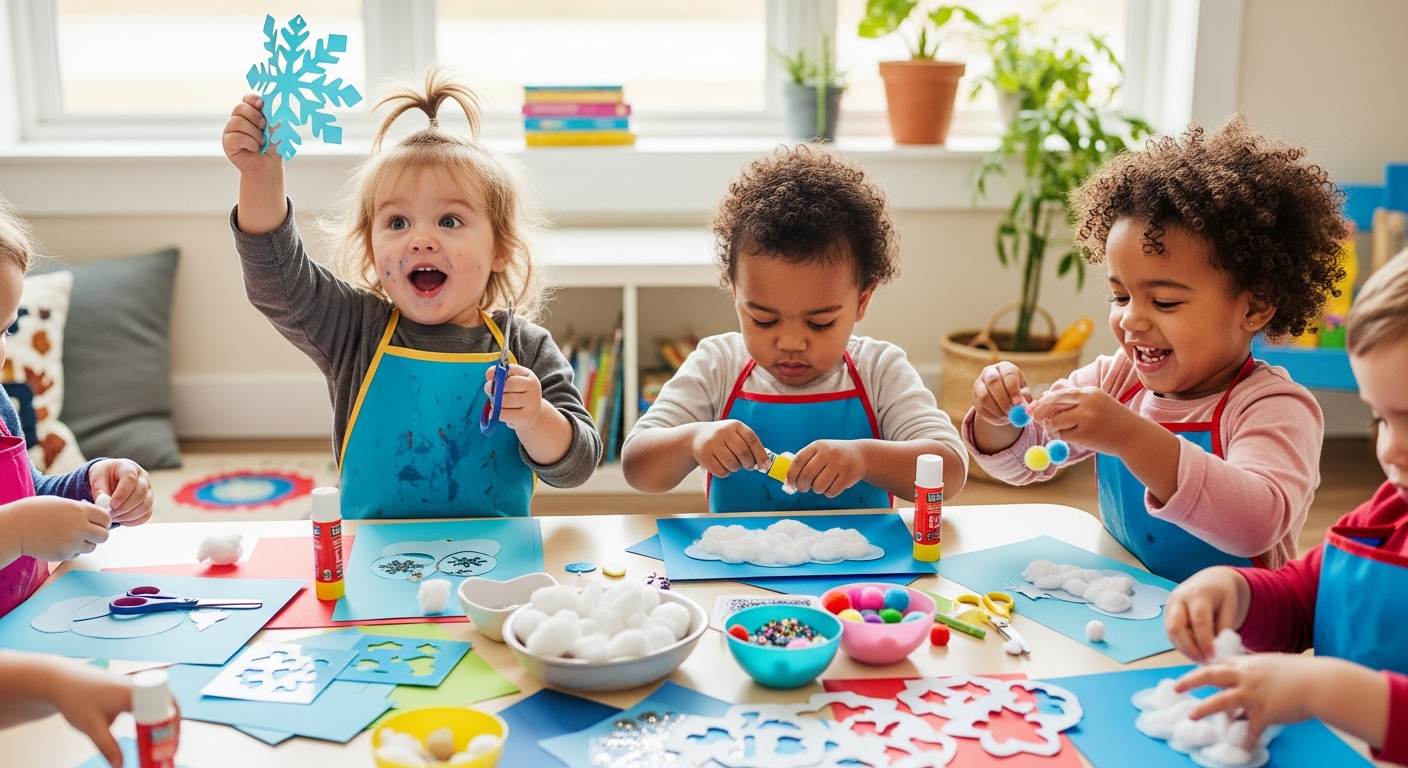
Table of Contents
- Introduction
- The Magic of Sensory Crafting for Speech
- Snowman Crafts: Exploring White, Round, and Cold
- Winter Trees and Nature-Based Art
- Arctic Animal Adventures: Bringing the "Animal Kingdom" to Life
- Cozy Winter Treats (That Are Also Crafts!)
- Maximizing the Value of Learning: Why We Recommend the Yearly Plan
- Practical Tips for Stress-Free Crafting
- More January Craft Ideas to Keep the Momentum Going
- Creating Joyful Family Learning Moments
- FAQ
- Conclusion
Introduction
Have you ever looked out the window on a grey January morning, watched the frost creep across the glass, and wondered how on earth you’re going to keep your energetic toddler entertained until naptime? You aren't alone. The "post-holiday slump" is a real phenomenon for parents. After the glitter of December fades, January can feel long, cold, and a bit quiet. But at Speech Blubs, we see this season differently. We see it as the perfect "blank canvas" for connection, creativity, and most importantly, communication.
In this guide, we are diving deep into the world of toddler january crafts. We aren’t just talking about making something pretty to stick on the fridge—though we love those, too! We are exploring how hands-on, sensory-rich winter activities can act as a powerful catalyst for your child's language development. From puffy paint melted snowmen to tape-resist birch forests, we will cover over 30 activities designed to spark joy and "smart screen time" alternatives.

Our mission at Speech Blubs is to empower children to speak their minds and hearts. We know that for the 1 in 4 children who face speech challenges, everyday moments are opportunities for growth. Whether you are using our app to watch peer-led video modeling or you’re sitting on the floor covered in cotton balls and glue, you are building the foundation for your child’s future. By the end of this post, you’ll have a full month of winter inspiration that turns a chilly January into a season of "Aha!" moments.
The Magic of Sensory Crafting for Speech
Before we roll up our sleeves and get messy, let’s talk about why toddler january crafts are such a secret weapon for language. At Speech Blubs, our founders created the tool they wished they had as kids growing up with speech problems. They understood that learning to speak isn't just about repeating words; it’s about the desire to communicate a feeling, a discovery, or a need.
When a toddler touches cold "snow" made of shaving cream or feels the rough texture of a pinecone, their brain is firing on all cylinders. This sensory input creates a "need" to describe. "Cold!" "Sticky!" "Rough!" These are the building blocks of vocabulary. Our unique approach at Speech Blubs utilizes video modeling, where children learn by watching and imitating their peers. You can mirror this at home during craft time. When you show your child how to rip paper and say "Rip!" you are modeling communication in the same joyful, pressure-free way our app does.
If you’re curious about where your child stands in their development, you can take our quick 3-minute preliminary screener. It involves 9 simple questions and provides an assessment and a next-steps plan to help you support your little one’s journey.
Snowman Crafts: Exploring White, Round, and Cold
The snowman is the undisputed king of January. For a toddler, a snowman represents a person—it has eyes, a nose, a mouth, and a belly. This makes it an incredible tool for teaching body parts and facial expressions.

1. The Puffy Paint Melted Snowman
This is a fan favorite because of the texture. Mix equal parts white glue and shaving cream in a bowl. Let your toddler "plop" the mixture onto a piece of blue construction paper.
- The Speech Connection: Use words like "Plop," "Squish," and "White."
- The Scenario: For a parent whose child is hesitant to touch new textures, this "messy play" is a bridge to sensory integration. If your child loves the "Mmm" sound, you can talk about the "Melted" snowman.
2. Loofah Stamped Snowmen
Instead of a paintbrush, give your toddler a round bath loofah. Dip it in white paint and stamp three circles on the paper.
- The Benefit: This focuses on the "Up and Down" motion, great for practicing those directional words.
3. Cotton Ball Collage
Simple, classic, and effective. Provide a pre-cut snowman shape and a bowl of cotton balls. Let your toddler practice their "pincer grasp" (great for fine motor skills) to pick up and glue the cotton.
- Scientific Insight: Research shows that fine motor skills and speech development are closely linked in the brain. Activities that strengthen the fingers often support the neural pathways used for speech. You can read more about the science behind our methods here.
4. Bubble Wrap Snowmen
Don’t throw away those holiday shipping leftovers! Paint a sheet of bubble wrap white and press it onto paper. The resulting texture looks exactly like falling snow.
5. Marshmallow Snowmen
Using mini marshmallows and a glue stick, your child can "build" a snowman on paper.
- Warning: Be prepared for a few marshmallows to end up in the tummy! Use this as a chance to practice "Eat," "Yum," and "More."
Winter Trees and Nature-Based Art
January isn't just about snow; it’s about the sleeping trees and the crisp air. Bringing nature indoors is a wonderful way to ground your toddler in the change of seasons.
6. Tape-Resist Birch Trees
Place strips of painter's tape vertically on a piece of paper. Let your toddler paint over the whole page with blue, purple, and grey. Once it's dry, peel back the tape to reveal white "birch trees."
- The "Aha!" Moment: The act of peeling the tape is incredibly satisfying and encourages the use of the word "Open" or "Wow!"
7. Frosty Pinecones
Take a walk outside to collect pinecones. Back inside, dip them in white paint or roll them in silver glitter (if you’re feeling brave!).
- Family Connection: This turns a simple walk into a scavenger hunt. Connection is at the heart of everything we do at Speech Blubs.
8. Fingerprint Winter Forest
Use your child’s arm as the tree trunk (trace it onto brown paper). Then, let them use their fingertips to add "snow" (white paint) to the branches. These keepsakes are perfect for the scrapbooks.
9. Salt Painting Snowflakes
Draw a snowflake with white glue on cardstock. Have your toddler pour salt over the wet glue. Then, using a dropper or a brush, dab watercolor paint onto the salt. Watch the color "travel" through the salt crystals.
- Vocabulary Focus: "Travel," "Fast," "Blue," "Wet."
Arctic Animal Adventures: Bringing the "Animal Kingdom" to Life
One of the most popular sections in the Speech Blubs app is the "Animal Kingdom." Children love imitating animal sounds, which are often the first "speech-like" sounds they master.
10. Paper Plate Polar Bears
Give your child a white paper plate and some cotton balls. Add two circles for ears and a black pom-pom for a nose.
- The Scenario: If your 3-year-old "late talker" loves animals, use this craft to practice the "Grrr" sound of the bear. You can find more animal-themed inspiration by downloading Speech Blubs on the App Store or Google Play.
11. Fork-Painted Snowy Owls
Use a plastic fork dipped in white paint to create the "feathers" of an owl on black paper.
- Sound Practice: Practice the "Hoo-Hoo" sound as you paint.
12. Handprint Arctic Foxes
Paint your child’s hand white and press it onto blue paper (fingers pointing down). The fingers become the legs and the thumb becomes the tail of a little fox!
13. Igloo Sugar Cube Construction
For older toddlers, using sugar cubes and a little "frosting" (glue) to build an igloo is a fantastic engineering challenge.
- The Lesson: This teaches patience and the concept of "Tall" and "Fall."
Cozy Winter Treats (That Are Also Crafts!)
In the middle of a cold January, nothing beats the "warm and fuzzies." These crafts focus on the concept of "Cozy."
14. The Hot Cocoa Name Craft
Cut a "mug" shape out of construction paper. Let your child decorate it. Then, give them paper "marshmallows" with the letters of their name on them. Help them glue the letters in order inside the mug.
15. Paper Strip Mittens
Trace your child’s hands to make mittens. Cut strips of colorful paper and let them glue the strips across the mittens to create patterns.
- Skill Build: This is great for practicing scissor skills (with safety scissors) or simply learning about "Left" and "Right."
16. Crispy Rice Snowballs
This is a "craft" you can eat! Make a standard batch of crispy rice treats, but before they set, have your child help roll them into "snowballs."
- Sensory Play: Feeling the sticky, warm mixture is a massive sensory experience. (Just make sure it's cooled enough to be safe!).
Maximizing the Value of Learning: Why We Recommend the Yearly Plan
We understand that parents are looking for the best tools to support their children without breaking the bank. That’s why we’ve designed our pricing to be transparent and value-driven. While we offer a Monthly plan at $14.99 per month, our Yearly plan is the clear best choice for families.
At just $59.99 per year, the cost breaks down to only $4.99 per month—a 66% savings compared to the monthly option. But the value goes beyond the price tag. The Yearly plan includes:
- A 7-day free trial so you can explore the app risk-free.
- The Reading Blubs app, which helps transition your child from speaking to reading.
- Early access to all new updates and features.
- Priority 24-hour support response time.
By choosing the yearly option, you are making a commitment to your child’s "smart screen time" journey, ensuring they have a joyful, peer-led environment to practice their communication skills every single day of the year. You can create your account and begin your 7-day free trial today.
Practical Tips for Stress-Free Crafting
As a child development expert, I often hear parents say, "I want to craft, but it’s just too messy!" Here is how to make toddler january crafts a joy rather than a chore:
- Embrace the Process, Not the Product: Your toddler’s snowman might have five eyes and a green nose. That’s okay! In fact, it’s wonderful. It shows they are exploring their own ideas.
- Set the Stage: Lay down an old shower curtain or a "messy mat" before you begin. This takes the stress out of spills.
- Narrate Everything: "I am picking up the blue paint. It is cold. Now I am putting it on the paper. Rub, rub, rub!" This constant stream of language is like a "brain bath" for your child.
- Use it as a Supplement: Crafting is a great "break" from digital learning. We recommend using Speech Blubs for 10-15 minutes of focused video modeling, then transitioning into a hands-on craft that mirrors what they saw in the app. If they watched the "Winter Fun" section, go make a cotton ball snowman!
More January Craft Ideas to Keep the Momentum Going
If you've finished the snowmen and the polar bears, don't stop there! Here are a few more quick-fire ideas for your toddler january crafts calendar:
- 17. Paper Plate Penguin: Black paint on the edges, white in the middle, and orange triangles for feet.
- 18. Coffee Filter Snowflakes: Fold and snip (with help) to create unique patterns.
- 19. Ice Painting: Freeze colored water in ice cube trays with popsicle sticks. Use the "ice brushes" to paint on paper as they melt.
- 20. Tissue Paper Stained Glass: Use contact paper and small bits of blue and white tissue paper to create a "winter window" hanging.
- 21. Cardboard Tube Gnomes: Use toilet paper rolls, felt scraps, and cotton ball beards.
- 22. Shaving Cream Marbling: Swirl blue paint into a tray of shaving cream, press paper onto it, and scrape off the excess for a marbled winter sky.
- 23. Mitten Stamping: Use a real mitten (an old one!) as a stamp in thick paint.
- 24. Handprint Trees: Similar to the fingerprint tree, but use the whole hand to create a "bushy" snow-covered evergreen.
- 25. Winter Lanterns: Glue tissue paper to a glass jar and place a battery-operated tea light inside.
- 26. Do-a-Dot Snowflakes: Use bingo markers to make dot-pattern snowflakes.
- 27. Paper Plate Ice Skates: Cut a plate in half, decorate, and "skate" them across the table.
- 28. Q-Tip Snowfall: Use Q-tips to make tiny "falling snow" dots all over a dark blue page.
- 29. Foil Painting: Painting on aluminum foil offers a shiny, slippery surface that toddlers find fascinating.
- 30. Sensory Snow Bin: If it’s too cold to go out, bring a bucket of real snow into the bathtub and let them play with sand toys inside.
Creating Joyful Family Learning Moments
At the end of the day, these crafts aren't about the final result. They are about the "togetherness." We know that children thrive when they feel seen and heard. By sitting down to create these toddler january crafts, you are telling your child that their creativity matters.
We’ve seen through thousands of parent testimonials how the combination of play-based activities and our video modeling technology can reduce frustration and build confidence. When a child finally says "Snow" after weeks of practicing with their "friends" in the app and playing with cotton balls at the table, that is a victory worth celebrating.
Remember, every child’s path is unique. We don’t promise that your child will be giving public speeches in a month, but we do promise to provide the most effective, joyful, and scientifically-backed tools to help them find their voice.
FAQ
1. My toddler won't sit still for crafts. Is this normal? Absolutely! Most toddlers have an attention span of about 3 to 5 minutes per year of age. If they only want to glue one cotton ball and then run away, that’s fine. Keep the craft out on the table and let them come back to it throughout the day.
2. How do these crafts help with speech delay? Crafts encourage "joint attention"—the ability for you and your child to focus on the same object at the same time. This is a foundational skill for communication. They also provide a low-pressure environment to practice "functional language" (words like more, help, open, and stop).
3. Are these activities safe for 2-year-olds? Yes, but always with adult supervision. Be mindful of small parts like buttons or googly eyes which can be choking hazards. For younger toddlers, stick to larger items like cotton balls, large paper strips, or edible options like marshmallow "snow."
4. Can Speech Blubs replace professional speech therapy? Speech Blubs is a powerful supplement to professional therapy, not a replacement. Many speech-language pathologists (SLPs) actually use our app in their sessions! It’s a great tool to keep the momentum going at home between professional appointments.
Conclusion
January doesn't have to be a month of cabin fever. With a little bit of glue, a few household items, and a whole lot of imagination, you can turn these toddler january crafts into the highlight of your child's winter. You are doing more than just passing the time; you are building the fine motor skills, sensory processing, and language foundations that will serve your child for a lifetime.
At Speech Blubs, we are here to support you every step of the way. From our scientific video modeling to our community of parents, we are dedicated to helping your child "speak their minds and hearts."
Ready to make this January a month of growth and joy? Download Speech Blubs on the App Store or Google Play to begin your journey. Don't forget to select the Yearly plan to unlock your 7-day free trial, the Reading Blubs app, and the best overall value. Let's start building those "smart screen time" moments together!
About the author