
30+ Fun Kid Birthday Party Games for Memorable Bashes
 By Speech Blubs Team•Jan 28, 2026•25 min.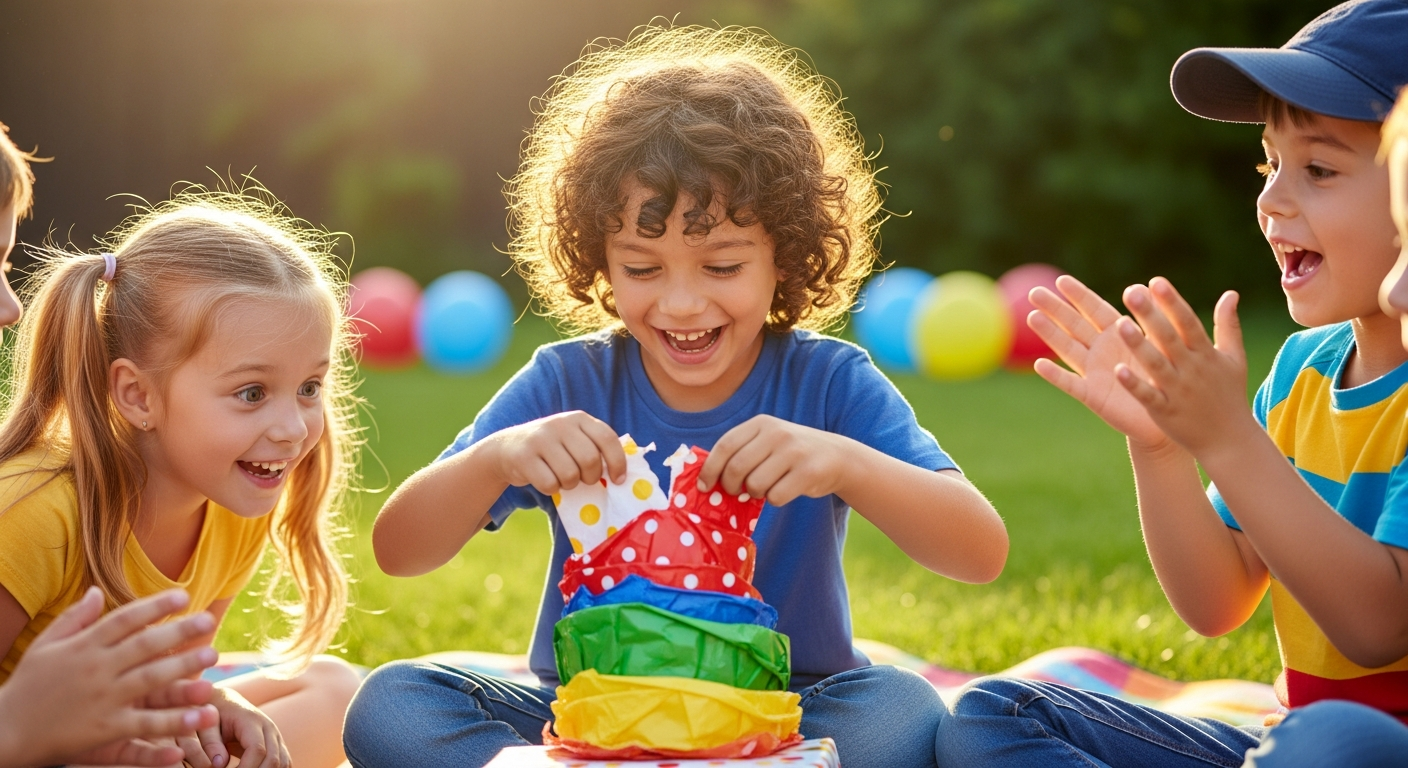
Table of Contents
- Why Games Are More Than Just Fun: The Developmental Benefits
- Planning the Perfect Party Game Lineup
- Energizing Games: Get Them Groovin' and Moving!
- Active & Adventure Games: On Your Mark, Set, Go! Run-Around Party Games
- Cooperative & Circle Games: Fun for Everyone!
- Creative & Sensory Games: Sparking Imagination
- Calmer Cool-Down Games: Winding Down the Fun
- Making Every Child Feel Included: Tips for Success
- Beyond the Party: Nurturing Communication Every Day
- Choosing Speech Blubs: An Investment in Your Child's Future
- Conclusion
- FAQ
The air crackles with excitement. Little eyes wide with anticipation, small voices buzzing with plans, and a palpable energy that only a child's birthday can bring. As parents, we pour our hearts into creating these magical moments, envisioning laughter, joy, and memories that will last a lifetime. But let's be honest, sometimes the thought of keeping a dozen (or more!) energetic kids engaged and happy for hours can feel a bit daunting. How do you transform that boundless energy into organized fun, ensuring every child feels included and has a blast?
The secret lies in the power of play – specifically, well-chosen kid birthday party games! More than just time fillers, these games are the heartbeat of any great celebration, sparking imagination, encouraging interaction, and building foundational skills without anyone even realizing it. They provide structure amidst the chaos, turn potential meltdowns into triumphant giggles, and give every child a chance to shine. This post is your ultimate guide to planning an unforgettable birthday bash, filled with games that cater to every age, energy level, and party theme. We'll dive into everything from high-energy races to creative calm-down activities, ensuring your child's special day is not just fun, but truly memorable and developmentally enriching.

Why Games Are More Than Just Fun: The Developmental Benefits
Before we jump into specific game ideas, it's worth understanding why these activities are so beneficial. Birthday party games, when thoughtfully selected and facilitated, offer a rich landscape for children to develop crucial skills. At Speech Blubs, we know that play is the most powerful learning tool, especially when it comes to communication. Our mission is to empower children to speak their minds and hearts, and games are a fantastic, natural extension of this belief.
Social Skills and Communication
Parties are a prime opportunity for social interaction. Games teach children invaluable lessons in:
- Turn-Taking: From waiting for their turn in Musical Chairs to passing the Hot Potato, children learn the rhythm of group activities. This is a fundamental building block for conversational turn-taking, a skill we deeply nurture within Speech Blubs through our interactive video modeling, where children learn by observing and imitating their peers.
- Negotiation and Compromise: Sometimes, kids want to bend the rules or choose the next game. Learning to negotiate respectfully and compromise helps them navigate social dynamics.
- Expressing Needs and Wants: Clearly articulating "my turn," "I want to try," or "I don't understand" are vital communication skills.
- Understanding and Using Non-Verbal Cues: Reading body language, facial expressions, and understanding the unspoken rules of play are critical for social success.
Motor Skills Development
From running and jumping to delicate balancing acts, games engage both gross and fine motor skills:
- Gross Motor Skills: Running relay races, dancing in Freeze Dance, or hopping in a sack race enhance coordination, balance, and strength.
- Fine Motor Skills: Activities like Pin the Tail on the Donkey (where precision is key) or a creative relay involving small objects develop dexterity.
Cognitive Development and Problem-Solving
Games are mental workouts in disguise! Children practice:
- Following Instructions: Listening carefully to rules and executing them. For a child who might struggle with understanding multi-step directions, games provide a fun, low-pressure environment to practice. This aligns with our approach at Speech Blubs, where our interactive activities break down complex instructions into manageable, engaging steps.
- Memory and Recall: Remembering game rules, clues in a scavenger hunt, or sequences of actions.
- Strategic Thinking: Deciding when to make a move, how to win a race, or how to hide a clue.
- Cause and Effect: Understanding that certain actions lead to specific outcomes.
Emotional Regulation and Resilience
Party games offer safe spaces to experience a range of emotions:

- Handling Wins and Losses: Learning to celebrate gracefully and cope with disappointment is a huge emotional lesson.
- Patience: Waiting for their turn, or for the music to stop, builds patience.
- Building Confidence: Successfully completing a challenge or contributing to a team win can significantly boost a child's self-esteem. For a child who is typically quiet or struggles with expressing themselves, even a small win in a party game can feel monumental. This confidence is what we strive to build in every child using Speech Blubs, helping them find their voice and believe in their ability to communicate.
These are the same foundational skills we focus on at Speech Blubs. Our app provides an immediate, effective, and joyful solution for the 1 in 4 children who need speech support, blending scientific principles with play into one-of-a-kind "smart screen time" experiences. We provide a screen-free alternative to passive viewing (like cartoons) and a powerful tool for family connection, using our unique "video modeling" methodology where children learn by watching and imitating their peers. Ready to explore how we can support your child’s development? Create your account and begin your 7-day free trial today!
Planning the Perfect Party Game Lineup
A fantastic party game lineup doesn't just happen; it's thoughtfully planned. Here’s how to set yourself up for success:
Consider Age and Developmental Stage
What’s fun for a 3-year-old might be boring for a 7-year-old, and vice-versa.
- Toddlers (1-3 years): Simple, short games focusing on sensory experience, imitation, and basic motor skills. Think bubbles, simple circle games, or open-ended play.
- Preschoolers (3-5 years): Games with clearer rules but still focused on participation over competition. Musical games, simple races, and scavenger hunts with visual clues work well.
- Early Elementary (5-8 years): More complex rules, team games, and challenges. Obstacle courses, relay races, and creative group activities are a hit.
- Older Kids (8+ years): Games that involve strategy, problem-solving, and more advanced physical challenges. Themed scavenger hunts, elaborate relays, or cooperative escape-room style games.
Party Theme Integration
Does your child have a superhero, princess, dinosaur, or space theme? Weave it into your games!
- A "Dinosaur Dig" scavenger hunt.
- A "Princess Parade" limbo contest.
- "Space Race" obstacle course. The possibilities are endless and make the games even more exciting.
Space & Resources Available
- Indoors vs. Outdoors: Ensure your chosen games fit your venue. Smaller spaces require calmer, less active games.
- Supplies: Check if you have all the necessary props. Simple items like balloons, scarves, balls, or even just music can create endless fun.
Involving the Birthday Child
Let your child help pick a few games! This gives them ownership and ensures they’re excited about the activities. It’s also a great way to practice expressing preferences and making choices – key communication skills that we foster every day at Speech Blubs.
Managing Group Size
- Smaller groups (under 8): Most games work well.
- Larger groups (8+): Opt for games that can involve many children simultaneously or easily be split into teams, minimizing waiting time.
Keeping It Flexible
Have a few backup games in mind, and don't be afraid to cut a game short if it's not working or the kids are ready for something new. The goal is fun, not rigid adherence to a schedule.
Energizing Games: Get Them Groovin' and Moving!
These classics are perfect for burning off energy and getting those giggles flowing. They are fantastic for developing auditory processing, motor planning, and the ability to follow directions – all skills that Speech Blubs helps refine.
Freeze Dance
- How to Play: Crank up a fun, kid-friendly playlist. Children dance freely when the music plays. When the music stops, they must freeze in whatever pose they’re in. Anyone who moves is out, or simply "wiggles their sillies out" and rejoins for pure participation fun.
- Skills Developed: Auditory processing, impulse control, gross motor skills, creativity.
- Pro Tip: Encourage silly poses! For a "smart screen time" twist, play some of the engaging songs from Speech Blubs that encourage movement and imitation. Our app is packed with activities that help kids develop rhythm and motor coordination, just like dancing!
- Relatable Scenario: For a child learning to follow simple commands, "freeze" is a clear directive. Playing this game helps them practice listening and responding to verbal cues, an essential skill reinforced by the clear, action-oriented instructions within Speech Blubs activities.
Musical Chairs
- How to Play: Arrange chairs in a circle, one less than the number of players. Play music as children walk around the chairs. When the music stops, everyone scrambles for a seat. The child left standing is out, and one chair is removed. Continue until one winner remains. For younger children, focus on participation by simply removing one chair each round, and the "out" children can become the cheerleaders or DJ helpers.
- Skills Developed: Auditory attention, quick reflexes, problem-solving, managing emotions (winning/losing).
- Pro Tip: Use upbeat, familiar tunes. Decorate the chairs to fit the party theme.
- Relatable Scenario: This game is excellent for turn-taking and understanding the concept of "more" and "less." For a child learning early math concepts or sequencing, the reduction of chairs each round provides a tangible experience.
Hula Hoop Challenge
- How to Play: Provide an assortment of hula hoops. Challenge kids to hula hoop for the longest time, or try creative tricks like spinning it on different body parts. You can also do a "Hoop-de-Loop" relay where teams pass a hoop from one player to another without breaking linked hands.
- Skills Developed: Gross motor skills, coordination, balance, perseverance, teamwork (for relays).
- Pro Tip: Play some energetic music while they hoop. Offer small prizes for creativity or endurance.
Limbo
- How to Play: Use a broomstick, pool noodle, or even a long scarf as your limbo bar. Two adults hold the bar, starting at shoulder height. Children take turns bending backward to go under the bar without touching it. After each round, lower the bar slightly.
- Skills Developed: Flexibility, balance, gross motor skills, body awareness.
- Pro Tip: Put on some fun, upbeat music, maybe even Caribbean-themed! Keep eliminated players engaged by having them cheer or help hold the bar.
Active & Adventure Games: On Your Mark, Set, Go! Run-Around Party Games
These games are fantastic for outdoor parties or larger indoor spaces, encouraging vigorous movement and team spirit. They also demand attentive listening and sequential processing, which are key communication skills.
Sack Race
- How to Play: Provide each child (or team) with a burlap sack or large pillowcase. Mark a clear starting and finish line. On "Go!", children hop in their sacks to the finish line.
- Skills Developed: Gross motor skills, balance, coordination, competition management.
- Pro Tip: Have extra sacks in case one tears. Consider different age groups having separate races to keep it fair. For a child working on following multi-step directions, like "Get in the sack, hop to the cone, then hop back," this game offers excellent practice in a fun context.
Scavenger Hunt
- How to Play: Hide a series of clues leading to a "treasure" (party favors, treats, or the next activity). Clues can be pictures for younger kids, simple rhymes, or riddles for older ones.
- Skills Developed: Problem-solving, critical thinking, teamwork, following directions, spatial awareness, vocabulary (if clues involve specific objects).
- Pro Tip: Match clues to your party theme. For a parent whose 3-year-old 'late talker' loves animals, the 'Animal Kingdom' section of Speech Blubs offers a fun, motivating way to practice "moo" and "baa" sounds, which can then be integrated into a scavenger hunt where clues lead to pictures of animals! Download Speech Blubs on the App Store or Google Play to begin building these skills today!
- Relatable Scenario: For a child who struggles with receptive language, visual clues or picture cards in a scavenger hunt are incredibly helpful. This mirrors the visual support and video modeling we use in Speech Blubs to aid comprehension and vocabulary acquisition.
Obstacle Course
- How to Play: Design a course using household items or outdoor play equipment. Kids might crawl under a blanket, jump over pillows, weave through cones, or balance on a line. Time them or have them complete it for fun.
- Skills Developed: Gross motor skills, agility, problem-solving, following a sequence of commands.
- Pro Tip: Keep it safe! Use soft materials and ensure stable structures. Turn it into a themed adventure: a "jungle journey" or a "superhero training course."
- Relatable Scenario: An obstacle course is fantastic for practicing positional words like "under," "over," "through," and "around." For a child learning spatial concepts, describing each step of the course verbally helps solidify their understanding, much like how Speech Blubs uses engaging video models to teach new vocabulary in context.
Egg and Spoon Race
- How to Play: Each child gets a spoon and an egg (hard-boiled, plastic, or even raw for older, daring kids!). They must race from a starting line to a finish line, balancing the egg on their spoon. If it drops, they go back to the start.
- Skills Developed: Balance, fine motor control, hand-eye coordination, patience.
- Pro Tip: Make it a relay race for teams. Add small obstacles they have to navigate.
Relay Races
- How to Play: Divide children into teams. Have them complete a series of tasks, passing a "baton" (or object) to the next teammate. Ideas:
- Three-Legged Race: Two kids tie one leg together and race.
- Wheelbarrow Race: One child holds another's legs as they "walk" on their hands.
- Water Relay: Teams transfer water using sponges or cups.
- Puzzle Pursuit: Teams race to collect puzzle pieces and assemble them.
- Skills Developed: Teamwork, cooperation, gross motor skills, communication within teams.
- Pro Tip: Ensure tasks are appropriate for the age group. The emphasis should be on fun and cooperation, not just winning.
Cooperative & Circle Games: Fun for Everyone!
These games are fantastic for fostering a sense of community, teaching turn-taking, and ensuring everyone feels included. They emphasize listening and reacting to cues.
Hot Potato
- How to Play: Children sit or stand in a circle. Play music as they quickly pass a "hot potato" (a beanbag, soft toy, or actual potato!). When the music stops, the child holding the potato is out (or can perform a silly dance to stay in).
- Skills Developed: Auditory processing, quick reflexes, turn-taking, anticipation.
- Pro Tip: Change up the music tempo. Use a themed "potato" (e.g., a "dragon egg" for a fantasy party).
- Relatable Scenario: For a child learning to pay attention to sound cues and react quickly, Hot Potato is ideal. This is directly relevant to auditory processing, a critical skill for speech development that Speech Blubs supports through engaging auditory activities.
Pass the Parcel
- How to Play: Wrap a small prize in multiple layers of wrapping paper. Between some layers, include small candies or stickers. Children sit in a circle and pass the parcel as music plays. When the music stops, the child holding the parcel unwraps one layer. The game continues until the final layer is unwrapped, revealing the main prize.
- Skills Developed: Turn-taking, patience, anticipation, fine motor skills (unwrapping).
- Pro Tip: Match the wrapping paper to your party theme for extra flair. Ensure there are enough layers for most kids to get a turn unwrapping.
Duck, Duck, Goose
- How to Play: Children sit in a circle. One child walks around the outside, tapping each child's head while saying "Duck, duck, duck..." When they choose a child and say "Goose!", that child stands up and chases the first child around the circle. If caught, they become the "It."
- Skills Developed: Auditory discrimination, quick reflexes, gross motor skills, social interaction.
- Pro Tip: Encourage gentle tapping. For younger children, you might skip the chase and just let the "Goose" take the next turn.
Simon Says
- How to Play: One person is "Simon." Simon gives commands, but children only follow them if they start with "Simon says." If a child follows a command that didn't start with "Simon says," they are out.
- Skills Developed: Listening comprehension, impulse control, following multi-step commands, auditory discrimination.
- Pro Tip: Simon can incorporate silly commands (e.g., "Simon says touch your nose with your elbow"). This game is a fantastic way to practice receptive language skills in a fun, interactive way. We use similar techniques in Speech Blubs to help children improve their understanding of instructions and concepts, and it's backed by science, placing us in the top tier of speech apps worldwide. You can learn more about our methodology on our research page.
Creative & Sensory Games: Sparking Imagination
These games tap into children's creativity, allowing them to express themselves and use their imaginations. They often encourage descriptive language and non-verbal communication.
Pin the Tail on the Donkey (or Themed Equivalent)
- How to Play: Blindfold each child, spin them around a few times, and have them try to pin the tail on the donkey (or a horn on a unicorn, an eye on a monster, etc.) while blindfolded. The closest one wins.
- Skills Developed: Spatial awareness, fine motor skills, body control, auditory cues (from friends cheering directions).
- Pro Tip: Have someone gently guide them to the general area of the poster before they start. Use tape instead of pins for safety.
Blindfolded Drawing Game
- How to Play: Give each child a piece of paper and a crayon or marker. Blindfold them and give a simple drawing prompt (e.g., "Draw a house," "Draw your favorite animal"). The results are often hilariously abstract!
- Skills Developed: Creativity, sensory awareness (other senses heighten when sight is removed), fine motor skills.
- Pro Tip: Use washable markers! This is a great cool-down activity.
Sensory Bin Exploration (for Younger Kids)
- How to Play: Fill a large bin with rice, pasta, water beads, sand, or shredded paper. Hide small toys or themed objects within. Provide scoops, cups, and small containers. Kids simply explore and discover.
- Skills Developed: Sensory exploration, fine motor skills, imaginative play, descriptive language (as they talk about what they find).
- Pro Tip: Choose items safe for the age group. For a child who might be hesitant to communicate verbally, the tactile experience of a sensory bin can provide a gentle entry point to conversation. As they pull out a toy, you can ask, "What did you find?" or "What color is it?" – mirroring the interactive prompts in Speech Blubs.
Charades/Pictionary (Kid-Friendly)
- How to Play: Write down simple, kid-friendly actions, animals, or objects on slips of paper. For charades, children act them out without speaking. For Pictionary, they draw them. Teams guess.
- Skills Developed: Non-verbal communication, expressive language, vocabulary, creativity, teamwork.
- Pro Tip: For younger kids, stick to very simple words or pictures. Make it a guessing game where everyone shouts out answers rather than strict teams.
Dress-Up Relay
- How to Play: Set up two stations with identical, silly dress-up clothes (oversized shirts, hats, feather boas, sunglasses). Teams race to put on all the items, run to a designated spot, take them off, and race back for the next teammate.
- Skills Developed: Fine motor skills (dressing), gross motor skills, teamwork, speed.
- Pro Tip: The funnier the clothes, the better!
Calmer Cool-Down Games: Winding Down the Fun
As the party winds down, it's good to transition to calmer activities that still engage but help regulate energy. These games are excellent for focusing on receptive language, storytelling, and imaginative play.
Interactive Story Time
- How to Play: Start telling a story, then pause and let each child add a sentence or suggestion. Or, use picture books and ask open-ended questions about what's happening or what might happen next.
- Skills Developed: Imagination, sequencing, expressive language, listening comprehension, turn-taking.
- Pro Tip: Have a few picture books ready. You can also use puppets or stuffed animals to help tell the story. This is very similar to how Speech Blubs engages children in narrative play and vocabulary building.
Building Blocks Challenge
- How to Play: Provide a large assortment of building blocks (LEGOs, Duplos, magnetic tiles). Give a simple challenge, like "Build the tallest tower," "Build a house for a tiny animal," or simply encourage free building.
- Skills Developed: Creativity, fine motor skills, problem-solving, spatial reasoning.
- Pro Tip: Have plenty of blocks available. For a child working on describing objects, ask them to talk about their creation – "Tell me about your tower! What color is this block?"
Memory Game
- How to Play: Use a store-bought memory game or create your own with themed cards. Lay all cards face down. Players take turns flipping two cards to find a match.
- Skills Developed: Memory, visual discrimination, turn-taking, focus.
- Pro Tip: Start with fewer pairs for younger children.
Bubbles
- How to Play: Simple, yet universally loved! Blow bubbles for children to chase, pop, or watch.
- Skills Developed: Visual tracking, gross motor skills (chasing/popping), language development (talking about "up," "down," "pop," "big," "small").
- Pro Tip: Use a bubble machine for continuous fun. Add a little food coloring to the bubble solution for colorful bubbles!
Making Every Child Feel Included: Tips for Success
A truly memorable party ensures every child feels valued and has a positive experience.
Adaptations for Different Abilities
- Modify Rules: Simplify rules for younger children or those with developmental differences. For example, in Musical Chairs, instead of being "out," a child can become the "DJ helper."
- Visual Aids: Use pictures for game instructions.
- Buddy System: Pair children if needed.
- Focus on Participation: Emphasize effort and participation over winning, especially for competitive games.
Incentives vs. Participation
Small, inexpensive party favors for all participants can be more inclusive than a single "winner" prize. Stickers, small toys, or even just high-fives and enthusiastic praise can make everyone feel special.
Managing Competition
While some friendly competition is fun, too much can lead to tears. If a game becomes too heated, switch to a cooperative game or adjust the rules to be less competitive. Remind children that the goal is to have fun together.
Keeping All Kids Engaged
- Minimize Waiting Time: Choose games that involve many children simultaneously or have quick turns.
- Assign Roles: If a child is "out" of a game, give them a special role like "scorekeeper," "cheerleader," or "music changer."
- Have Backup Activities: If one group finishes a game early, have a quiet activity ready (coloring, building blocks) to keep them occupied until everyone is ready for the next game.
Beyond the Party: Nurturing Communication Every Day
The joy and communication skills fostered during birthday party games don't have to end when the last guest leaves. These same principles of interactive play, turn-taking, and active listening are at the heart of daily communication development.
At Speech Blubs, we believe in empowering children to "speak their minds and hearts" every single day. Our company was born from the personal experiences of our founders, who all grew up with speech problems and created the tool they wished they had. We are committed to providing an immediate, effective, and joyful solution for the 1 in 4 children who need speech support, transforming screen time into "smart screen time."
Imagine a child who, during a party, struggles with expressing what they want, or feels overwhelmed by the noise of group play. Speech Blubs offers a safe, engaging space where they can build confidence at their own pace. Through our unique video modeling methodology, children learn by watching and imitating their peers. This means they're not just passively watching cartoons; they're actively engaging, responding, and learning complex communication skills in a way that feels like play. For example, a child who loved the animal sounds during a scavenger hunt at the party can continue exploring and practicing those sounds, and many more, with the interactive activities in Speech Blubs.
We understand that every child's journey is unique, and we're here to supplement their overall development plan. Our app is a powerful tool for family connection, encouraging parents to play alongside their children and celebrate every small victory. If you've ever wondered if your child could benefit from a little extra support, our quick 3-minute preliminary screener can provide a simple assessment and a personalized next-steps plan. It involves just 9 simple questions and can offer invaluable insights.
Choosing Speech Blubs: An Investment in Your Child's Future
We know you want the very best for your child, and choosing the right resources to support their growth is a significant decision. Speech Blubs is more than just an app; it's a partner in your child's communication journey, built on scientific methodology and a deep understanding of child development. Our commitment to empowering children is reflected in every activity and feature we offer. See what other parents are saying about their child's success with Speech Blubs by visiting our testimonials page.
When you're ready to unlock your child's full communication potential, we offer flexible subscription plans designed to fit your family's needs:
- Monthly Plan: For $14.99 per month, you get access to our core speech therapy activities.
- Yearly Plan: This is our most recommended and popular option, priced at $59.99 per year. This breaks down to just $4.99 per month, representing a 66% savings compared to the monthly plan.
The Yearly Plan isn't just about significant savings; it's about unlocking the full Speech Blubs experience and receiving unparalleled value:
- 7-Day Free Trial: Test drive the entire app before committing. The Monthly plan does not include this trial.
- Extra Reading Blubs App: Gain access to our companion app designed to support early literacy skills, helping your child build foundational reading abilities alongside their speech development.
- Early Access to New Updates: Be among the first to explore exciting new features and content.
- 24-Hour Support Response Time: Enjoy priority customer support whenever you need assistance.
We strongly encourage you to choose the Yearly Plan to get the most out of your Speech Blubs experience, including the free trial and all the exclusive benefits. It's a comprehensive, joyful, and effective way to nurture your child's communication skills and build lasting family connections. Ready to get started? Download Speech Blubs on the App Store or Google Play and select the Yearly Plan to begin your free trial today! You can also visit our main homepage to learn more.
Conclusion
Creating an unforgettable birthday party for your child is about more than just cake and presents; it's about crafting experiences that foster joy, connection, and growth. Thoughtfully chosen kid birthday party games are the heart of such a celebration, transforming boundless energy into structured fun and providing invaluable opportunities for children to develop social, motor, cognitive, and emotional skills. From the lively energy of Freeze Dance and obstacle courses to the cooperative spirit of Pass the Parcel and creative outlets like charades, there’s a game for every child and every party theme. By incorporating these activities, you're not just entertaining; you're actively contributing to your child's developmental journey and creating cherished memories.
And remember, the learning and development sparked by these games can continue long after the party ends. At Speech Blubs, we are dedicated to helping every child find their voice and build confidence through engaging, scientifically-backed play. Our app offers a powerful supplement to these real-world interactions, turning screen time into an opportunity for "smart screen time" that supports communication, literacy, and family connection.
Ready to give your child the gift of confident communication? We invite you to experience the transformative power of Speech Blubs. Create your account and begin your 7-day free trial today! Don't forget to select the Yearly Plan to unlock exclusive features, savings, and our Reading Blubs companion app. Download Speech Blubs on the Apple App Store or Google Play Store and start building a lifetime of confident communication.
FAQ
Q1: How do I choose the best games for my child's birthday party? A1: Start by considering your child's age and the age range of the guests. Active games are great for burning energy, while creative or cooperative games can offer a calmer pace. Also, think about your party theme and how games can tie into it, and whether you have enough space (indoors or outdoors) for the chosen activities. Don't forget to involve your child in the decision-making process!
Q2: What if some children are shy or don't want to participate in games? A2: It's perfectly normal for some children to be hesitant. Never force participation. Instead, offer them alternative roles, like being the "scorekeeper," "DJ," or "cheerleader." Having a few quiet activities on hand (like coloring pages or building blocks) for those who prefer less structured play can also be helpful. Often, once they see others having fun, they might feel more comfortable joining in.
Q3: How can I manage competition and ensure everyone has fun, even if they don't win? A3: Focus on participation over winning. Have small, inexpensive party favors for all participants rather than just one winner. For competitive games, emphasize effort, good sportsmanship, and teamwork. You can also modify rules to be less competitive, such as having "everyone wins" rounds or having kids perform a silly dance if they're "out" instead of leaving the game entirely.
Q4: How can party games help my child's speech and language development? A4: Party games are rich in communication opportunities. They encourage turn-taking, following instructions, listening comprehension, expressing needs and wants, and using descriptive language. Games like "Simon Says" directly target receptive language, while a themed scavenger hunt can expand vocabulary. These real-world interactions are fantastic for development, and resources like Speech Blubs complement this by providing structured, video-modeled practice for a wide range of speech and language skills.
About the author