
35 Fun November Craft Toddler Activities for Fall Fun
 By Speech Blubs Team•Feb 23, 2026•14 min.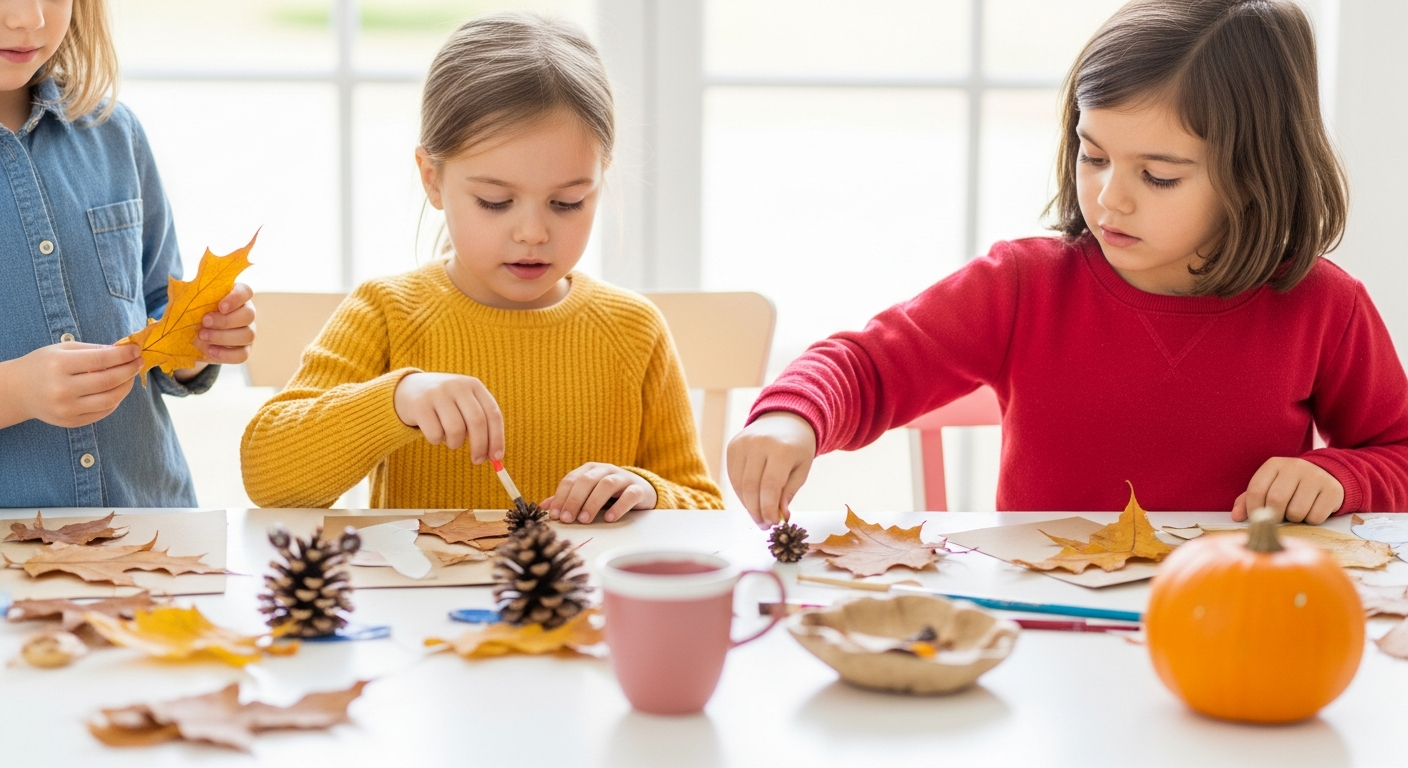
Table of Contents
- Introduction
- Why November Crafts are Great for Speech Development
- 35 Engaging November Crafts for Toddlers
- Smart Screen Time as a Powerful Supplement
- Making the Most of the Yearly Plan
- Practical Tips for Crafting with Toddlers
- Expanding the Conversation: Building a Love for Communication
- Integrating Nature into Your Routine
- Conclusion
- FAQs
Introduction
Did you know that by the time a child reaches age three, their brain is twice as active as an adult’s? This incredible window of development is filled with curiosity, growth, and an explosion of language. As the crisp air of late autumn settles in and the leaves turn vibrant shades of amber and gold, we have a unique opportunity to channel that energy into meaningful, creative play. Whether you are navigating a speech delay or simply looking for ways to boost your little one’s communication skills, November is the perfect month to huddle together for some cozy, educational fun.
In this post, we are going to dive deep into a world of November craft toddler activities that do more than just decorate your refrigerator. We will explore how simple materials like paper plates, fallen leaves, and pine cones can become powerful tools for building vocabulary, improving fine motor skills, and fostering a deep sense of connection within your family. From Thanksgiving-themed turkeys to sensory-rich leaf monsters, we will cover 35 engaging activities designed for little hands and growing minds.

At Speech Blubs, our mission is to empower children to "speak their minds and hearts." We believe that every child deserves the tools to communicate effectively, and we know that the best learning happens through joy and play. We will show you how to blend these physical crafts with our unique "smart screen time" to create a holistic learning environment. By the end of this article, you will have a full month of activities ready to go, along with a clear understanding of how to support your child’s speech journey during this beautiful season.
Why November Crafts are Great for Speech Development
November is a transition month. We move from the spooky excitement of October into a season of gratitude and preparation for winter. For a toddler, this shift offers a wealth of new "target words" and concepts. Think about the descriptive language available right now: crunchy leaves, bumpy pumpkins, soft feathers, and warm colors like orange, red, and brown.
Crafting is a multi-sensory experience. When your child feels the prickle of a pine cone or the sticky texture of glue, they are engaging their sensory system, which is foundational for cognitive development. As we work on these projects together, we are naturally engaging in "parallel talk"—describing what we are doing as we do it. This technique is a cornerstone of speech therapy because it provides a rich linguistic model for the child without the pressure of a direct question.
Furthermore, many of these November craft toddler activities involve fine motor skills, such as pinching clothespins or tearing paper. Research shows a strong link between fine motor development and speech. The same areas of the brain that control precise hand movements are often involved in the complex motor planning required for speech. By strengthening those little fingers, we are indirectly supporting the muscles used for talking.
Our methodology at Speech Blubs is built on the power of peer-to-peer learning. Our founders, who all grew up with speech problems, created the tool they wished they had. They focused on "video modeling," where children watch and imitate their peers. You can see this in action by visiting our research page to understand how mirror neurons play a role in imitation. When you pair a physical craft with a peer-modeled video in the app, you are reinforcing the skill through multiple channels.

35 Engaging November Crafts for Toddlers
1. The Classic Handprint Turkey
This is a staple for a reason! Tracing your child’s hand provides a wonderful opportunity to talk about body parts. "Here is your thumb! Here are your fingers!"
- Speech Connection: Practice the "T" sound for "Turkey."
- App Integration: After making the craft, head to the "Animal Kingdom" section of Speech Blubs to see how a real turkey looks and sounds.
2. Paper Plate Pumpkin Pie
Using orange paint and a cotton ball for "whipped cream," this craft is all about textures.
- Speech Connection: Use descriptive words like "sweet," "sticky," and "yum."
- Try This: For a parent whose 3-year-old "late talker" loves food, the "Yummy Time" section in the app offers a fun, motivating way to practice food-related vocabulary.
3. Crunchy Leaf Monsters
Go on a nature walk and collect the crunchiest leaves you can find. Glue on googly eyes to create monsters.
- Speech Connection: Practice the "K" sound in "Crunch" and "M" for "Monster."
4. Pine Cone Turkeys
Use colorful pipe cleaners as feathers and stick them into the scales of a pine cone.
- Speech Connection: This is great for "prepositions" practice. "Put the feather in the pine cone."
5. The "Thankful" Gratitude Chain
Cut strips of colored paper and write one thing your child is thankful for on each. Link them together.
- Social-Emotional Learning: This helps toddlers begin to understand abstract concepts like feelings and appreciation.
6. Coffee Filter Turkeys
Drop food coloring or markers onto a coffee filter and spray with water to see the colors bleed and blend.
- Speech Connection: Talk about colors. "Look at the blue! It’s moving!"
7. Paper Bag Scarecrow
A simple brown lunch bag becomes a puppet.
- Speech Connection: Puppetry is excellent for "role play," which reduces the pressure on a child to speak as themselves. If your child is hesitant, see what other parents are saying about how play-based learning reduced their child's frustration.
8. Corn Cob Painting
Dip a real ear of corn in paint and roll it across the paper. The texture is fascinating for toddlers.
- Speech Connection: Practice "Roll, roll, roll!"
9. Toilet Paper Roll Pilgrims
Recycle those rolls into little people.
- Speech Connection: Labeling facial features—eyes, nose, mouth.
10. Q-Tip Fall Trees
Use Q-tips to dab red, orange, and yellow "leaves" onto a brown trunk.
- Speech Connection: This requires "pincer grasp," which is excellent for motor development.
11. Masking Tape Leaf Rubbings
Place a leaf under paper and rub a crayon over it.
- Speech Connection: "Look, it’s a leaf! Hide and seek!"
12. Paper Plate Scarecrow
Similar to the turkey, but focus on the hat and the "straw" (yarn).
- Speech Connection: Practice the "S" blend in "Scarecrow."
13. Fingerprint Corn on the Cob
Yellow and orange fingerprints create the kernels.
- Speech Connection: Counting the kernels (1, 2, 3...).
14. Acorn Painting
Put an acorn in a box with some paint and paper, then shake it!
- Speech Connection: Use action words like "Shake," "Stop," and "Fast."
15. Handprint Acorns
Brown paint on the palm and a darker brown on the fingers.
- Speech Connection: "A" is for Acorn.
16. Paper Plate Sunflowers
Late autumn still has some sunflowers. Use real seeds in the middle for a sensory boost.
- Speech Connection: "Push" the seeds into the glue.
17. Feather Painting
Instead of a brush, use a large craft feather.
- Speech Connection: Use words like "soft" and "tickle."
18. Clothespin Turkeys
Clip colorful cardboard feathers onto a circle.
- Speech Connection: Great for the "P" sound in "Pinch."
19. Bubble Wrap Corn
Paint bubble wrap yellow and press it onto paper.
- Speech Connection: The "Pop!" sound is a favorite for early talkers.
20. Shape Turkeys
Build a turkey using only circles and triangles.
- Speech Connection: Learning basic geometry vocabulary.
21. Contact Paper Leaf Suncatchers
Sticky side up! Let the toddler press leaves onto the paper.
- Speech Connection: "Sticky! Oh no, my finger is stuck!"
22. Potato Masher Pumpkins
Dip a potato masher in orange paint for a unique pattern.
- Speech Connection: "Stamp! Stamp! Stamp!"
23. Yarn-Wrapped Pumpkins
Cardboard cutouts wrapped in orange yarn.
- Speech Connection: "Around and around."
24. Egg Carton Turkeys
Single cups from the carton make the perfect turkey body.
- Speech Connection: Practicing the "G" sound in "Egg."
25. Leaf Crown
A strip of paper and some glue turn your toddler into the King or Queen of Fall.
- Speech Connection: Perfect for imaginative play and "Who" questions.
26. Paper Plate Wreath
Cut the center out and glue on fall treasures found outside.
- Speech Connection: "I found a stick! I found a leaf!"
27. Sponge Painted Leaves
Cut sponges into leaf shapes.
- Speech Connection: "Squeeze" the sponge.
28. Hedgehog Paper Plate Craft
Use brown paint and fork tines to make the "spikes."
- Speech Connection: Practice the "H" sound for "Hedgehog."
29. Salt Dough Leaf Impressions
Press leaves into salt dough and bake.
- Speech Connection: Talk about "hot" and "cold" (after it cools!).
30. Paper Chain Fall Garland
Alternate orange, red, and yellow loops.
- Speech Connection: Pattern recognition and color naming.
31. Footprint Turkeys
If they'll sit still, a footprint makes a great turkey body!
- Speech Connection: "Tickle toes!"
32. Cereal Fall Tree
Use "O" shaped cereal for the leaves.
- Speech Connection: Practice the "O" mouth shape.
33. Tissue Paper Pumpkins
Crinkle up small squares of tissue paper and glue them down.
- Speech Connection: "Crinkle" is a great onomatopoeia word.
34. Pasta Turkeys
Dry pasta can be dyed and used as feathers.
- Speech Connection: "Crunchy pasta."
35. The "I Spy" Fall Jar
Fill a jar with dried corn and hide small autumn objects inside.
- Speech Connection: "I spy with my little eye..."
Smart Screen Time as a Powerful Supplement
While we love hands-on November craft toddler activities, we also recognize that we live in a digital world. At Speech Blubs, we don't advocate for passive screen time. Instead, we offer a joyful solution for the 1 in 4 children who need speech support through "smart screen time." Our app is designed to be a bridge between the digital and physical worlds.
For example, while you are working on the Hedgehog Paper Plate Craft, you can open Speech Blubs and find the hedgehog in our "Animal Kingdom" section. Your child can watch a peer make the "H" sound and imitate the movement. This "video modeling" is backed by science and helps build confidence and reduce the frustration often felt by late talkers.
If you are unsure where your child stands in their development, we recommend taking our quick 3-minute preliminary screener. It involves just 9 simple questions and provides you with a personalized assessment and a next-steps plan. It’s a great way to gain peace of mind before diving into your month of crafting.
Making the Most of the Yearly Plan
We want to be transparent about how you can best access our resources. To support your child's long-term progress, we offer two main paths:
- Monthly Plan: $14.99 per month. This is a great way to test the waters if you're looking for a short-term boost.
- Yearly Plan: $59.99 per year. This is our best value option, breaking down to just $4.99 per month.
Choosing the Yearly plan isn't just about saving 66%. It also unlocks a suite of exclusive features designed to accelerate your child’s learning:
- A 7-day free trial: You can explore the entire app with no upfront cost.
- Reading Blubs: Our secondary app focused on early literacy, included at no extra charge.
- Priority Support: Enjoy a 24-hour response time from our support team.
- Early Access: Be the first to try new updates and features.
The Monthly plan does not include the free trial or the Reading Blubs app, so we highly recommend the Yearly plan for families committed to seeing real developmental growth. You can create your account and begin your 7-day free trial today to see the difference for yourself.
Practical Tips for Crafting with Toddlers
Working with toddlers can sometimes feel like herding cats. To ensure these November craft toddler activities stay joyful and stress-free, keep these tips in mind:
Focus on the Process, Not the Product: Your toddler's turkey might not look like a turkey. It might look like a blob of brown paint with one googly eye in the corner. That is perfectly okay! The goal is the conversation you have while making it, not the final aesthetic.
Keep Sessions Short: A toddler’s attention span is typically 3–5 minutes per year of age. Don’t expect them to sit for 30 minutes. If they want to stop after gluing one leaf, let them. You can always come back to it later.
Adult Co-Play is Essential: These activities are designed for you to do with your child. Your engagement provides the linguistic model they need. Ask "What color should we use?" or say "I'm putting on the glue!"
Prepare Ahead of Time: Have all your materials cut and ready before you invite your child to the table. This prevents "idle time" where they might get frustrated or distracted.
Expanding the Conversation: Building a Love for Communication
Our goal isn't just to help your child say more words; it’s to help them foster a lifelong love for communication. When we craft together, we are building a foundation of confidence. When a child creates something and we label it—"You made a red leaf!"—they feel seen and heard.
This confidence carries over into their speech. Using tools like Speech Blubs on the App Store or Google Play provides a safe space for them to practice without the fear of being "wrong." They see other kids making mistakes and trying again, which is a powerful motivator.
Remember, every child develops at their own pace. We aren't looking for overnight miracles where your child is giving public speeches in a month. We are looking for those "small wins"—a new sound, a pointed finger, or a joyful "Look!" These are the building blocks of communication that we celebrate at Speech Blubs.
Integrating Nature into Your Routine
November is the best time for "outdoor crafting." Before you sit down with the glue, take your toddler outside. Nature is a giant, living speech therapy session.
- The Wind: "Whoosh! Can you make that sound?"
- The Sun: "It’s warm on my face."
- The Mud: "Squish, squish, squish!"
By bringing these natural elements indoors for your November craft toddler projects, you are connecting their real-world experiences with their creative expressions. This creates "contextual learning," which is much more effective than flashcards or rote memorization.
Conclusion
November is a season of warmth, reflection, and incredible growth. By engaging in these 35 November craft toddler activities, you are giving your child the gift of your time, your voice, and a rich sensory environment. Whether you are building a gratitude chain or stamping pumpkins with a potato masher, you are doing the vital work of supporting their development.
We invite you to make Speech Blubs a part of your family’s daily rhythm. Our app is more than just a game; it is a scientifically-backed tool designed to turn screen time into "smart time" that encourages real-world interaction. We provide a powerful supplement to professional therapy and a joyful way to connect as a family.
Ready to get started? Download Speech Blubs on the App Store or Google Play today. To get the best value, including the 7-day free trial and the Reading Blubs app, be sure to choose our Yearly plan. Let’s work together to help your child speak their mind and heart this holiday season!
FAQs
1. What are the best November crafts for 2-year-olds?
For 2-year-olds, focus on sensory-heavy activities that don't require perfect precision. Leaf rubbings, finger painting "corn," and contact paper suncatchers are ideal because they allow for exploration without a "right" or "wrong" way to do them.
2. How do crafts help with speech delay?
Crafts help by providing a low-pressure environment for "parallel talk." As you describe the textures, colors, and actions (glue, cut, rip), you are modeling vocabulary. Additionally, fine motor activities used in crafting are neurologically linked to the parts of the brain responsible for speech planning.
3. Can Speech Blubs be used alongside physical crafting?
Absolutely! We recommend using the app to "prime" the activity. For example, if you are making a turkey craft, watch the turkey videos in the "Animal Kingdom" section first. This helps the child understand the "peer model" for the sounds associated with the animal they are about to create.
4. What is the "video modeling" method mentioned in the app?
Video modeling is a teaching method where children learn by watching others perform a task. In Speech Blubs, we use videos of children (peers) making speech sounds and performing exercises. This triggers "mirror neurons" in the child's brain, making them much more likely to imitate and learn the sound naturally compared to watching an adult or a cartoon.
About the author