
45 Engaging Nature Toddler Activities for Development
 By Speech Blubs Team•Mar 23, 2026•16 min.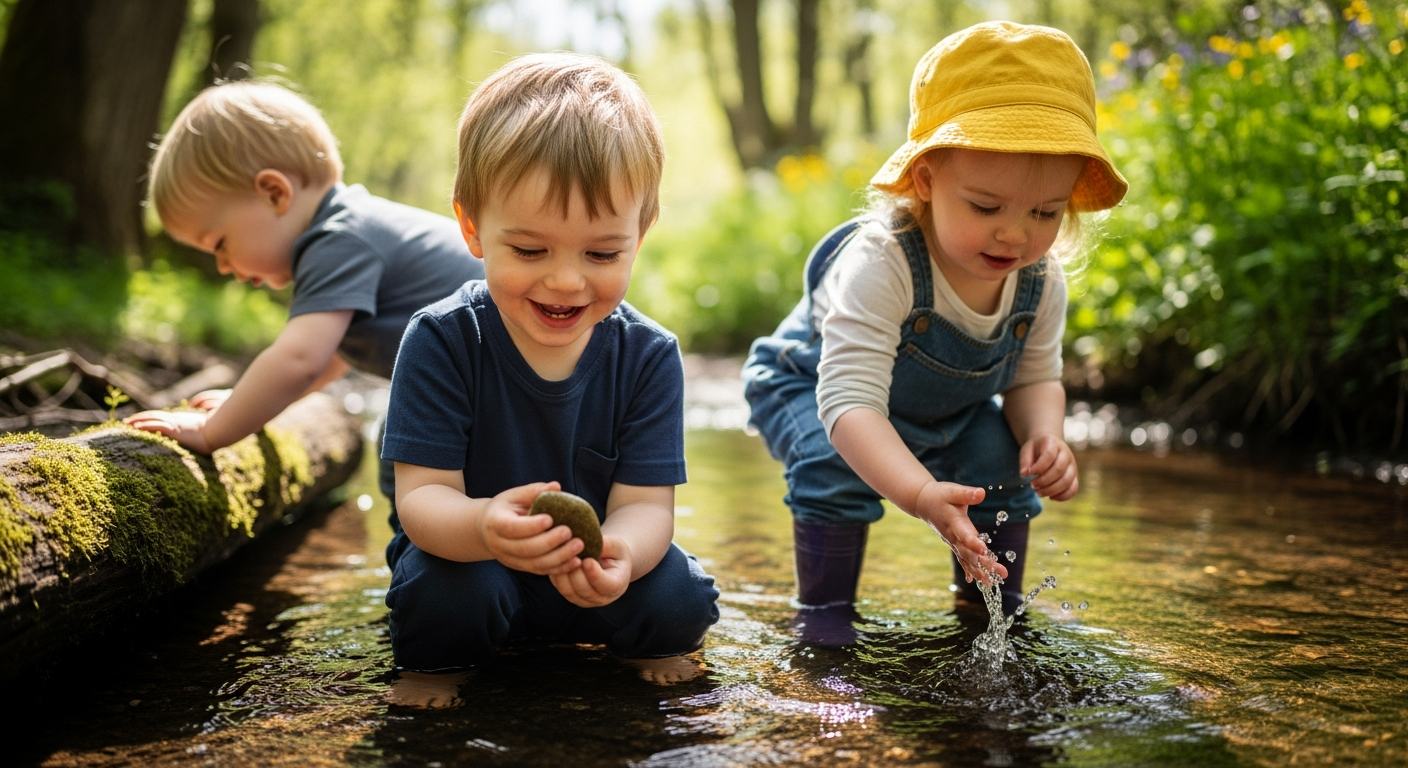
Table of Contents
- Introduction
- The Power of Nature for Early Development
- Creative Movement and Sensory Nature Toddler Activities
- Science and Discovery: Exploring the Natural World
- Creative Arts and Hands-On Nature Projects
- Language and Math Skills Through Nature Play
- Family Connection and Outdoor Fun
- Why Speech Blubs is Your Partner in Development
- How to Get the Most Out of Nature Play
- Conclusion
- Frequently Asked Questions
Introduction
Did you know that the simple act of a toddler squishing mud between their toes or watching a ladybug crawl across a leaf is actually a complex neurological workout? While it looks like simple play, these moments are foundational for cognitive, physical, and—most importantly—linguistic development. At Speech Blubs, we believe that the world is a toddler’s first and greatest classroom. Our mission is to empower children to "speak their minds and hearts," and often, that journey begins with the sights, sounds, and textures found right outside your front door.
In this post, we will explore 45 creative and educational nature toddler activities designed to spark curiosity and foster communication. We’ll cover everything from sensory-rich mud play to nature-based math and science experiments. We will also discuss why being outdoors is so beneficial for early development and how you can use these moments to build your child's vocabulary and confidence. Finally, we’ll show you how to supplement this "wild" learning with our expert-led "smart screen time" to create a well-rounded development plan for your little one.

Our goal is to provide you with a toolkit of activities that turn every walk in the park into a joyful learning experience. Whether you have a budding botanist or a child who just loves to get messy, nature offers endless opportunities to grow.
The Power of Nature for Early Development
Before we dive into the activities, it is essential to understand why nature is so transformative for toddlers. For the one in four children who may need speech support, the outdoors provides a low-pressure environment that naturally encourages vocalization.
Building the Habit of Attention
In a world of fast-paced cartoons and flashing lights, nature moves at a different speed. When a toddler stops to watch a snail move or waits for a flower to open in the morning sun, they are developing the "habit of attention." This ability to slow down and focus on details is a prerequisite for literacy and comprehension later in life.
Sensory Integration and Speech
Speech is a motor skill, but it is also deeply connected to sensory processing. Nature provides a rich tapestry of tactile, auditory, and visual input. Feeling the difference between rough bark and smooth stones helps children refine their sensory systems. This integration is crucial for children who may be struggling with the physical mechanics of making sounds. By engaging their bodies, they are better prepared to engage their voices.
Emotional Regulation and Calm
Nature has an inherent ability to soothe. The rustle of wind through trees or the sound of water can lower cortisol levels in both children and parents. A calm child is a child who is ready to learn. At Speech Blubs, we emphasize creating joyful, frustration-free learning moments, and the outdoors provides the perfect backdrop for this.
Creative Movement and Sensory Nature Toddler Activities
Movement is the language of the toddler. These activities focus on gross motor skills and sensory exploration, which are the building blocks for more complex skills.
1. The Classic Mud Kitchen
Mud play is perhaps the ultimate sensory experience. By setting up a simple "kitchen" with old pots, pans, and spoons, you allow your child to explore textures. Ask them, "Is the mud squishy or sticky?" This introduces descriptive adjectives into their vocabulary. For a parent whose 3-year-old "late talker" loves sensory play, describing the "ooey-gooey" mud is a great way to model new words.

2. Barefoot Sensory Path
Create a path using different natural materials: grass, sand, smooth pebbles, and dried leaves. Encourage your toddler to walk across it barefoot. This builds body awareness and gives you the chance to use sensory words like "crunchy," "soft," and "bumpy."
3. Leaf Pile Jumping
Raking leaves into a pile is great for coordination, but jumping into them is pure joy. The "crunch" sound is a fantastic "early sound" for toddlers to imitate.
4. Water Balloon Nature Toss
Fill balloons with water and try to hit natural targets like a specific tree trunk or a large rock. This builds hand-eye coordination and introduces concepts of "heavy" and "wet."
5. Nature Obstacle Course
Use logs to balance on, rocks to hop over, and bushes to crawl under. This mimics the "Nature Ninja" style of play that builds confidence and problem-solving skills.
6. Balancing on Fallen Logs
This activity is excellent for developing the vestibular system. As your child balances, they are learning about their center of gravity, which is essential for physical confidence.
7. Stick Mazes
Lay out long sticks on the grass to create a simple maze for your toddler to walk through. This helps with spatial awareness and following directions.
8. Puddle Jumping
Don't hide from the rain! Put on boots and find the biggest puddle. Use words like "splash," "plop," and "ripple" to describe the action.
9. Treasure Digging in Sand
Hide small natural treasures like large shells or "gold" rocks in a sandbox or a patch of dirt. Give your child a shovel and let them find the hidden gems.
10. Floating Leaf Boats
Find a small stream or even a puddle and see which leaves float the best. This is a gentle introduction to the concept of buoyancy.
Science and Discovery: Exploring the Natural World
Toddlers are natural scientists. They want to know how the world works, and these activities encourage that innate curiosity.
11. Bug Observation with a Magnifying Glass
Watching an ant carry a crumb or a beetle scurry across the dirt is fascinating for a toddler. Use this time to practice animal names and sounds. If you want to see how peer-led learning can help your child master these names, download Speech Blubs on the App Store or Google Play to see our "Animal Kingdom" section in action.
12. Shadow Tracing with Chalk
On a sunny day, have your toddler stand on the sidewalk and trace their shadow. Come back a few hours later and see how it moved. This introduces the concept of time and the movement of the sun.
13. Weather Watching
Each morning, go outside and look at the sky. Is it "cloudy," "sunny," or "windy"? This daily ritual builds a consistent vocabulary and helps children understand their environment.
14. Seed Planting and Tending
Whether it's a bean in a cup or a sunflower in the garden, watching a plant grow is magical. It teaches patience and the basic needs of living things (water, sun, soil).
15. Rock Sorting by Attribute
Gather a variety of rocks and help your child sort them. You can sort by size (big vs. small), color (grey vs. white), or texture (smooth vs. rough).
16. The "Senses" Hunt
Go on a walk specifically to find one thing for each sense. "What do we hear? What do we smell? What does this leaf feel like?"
17. Bird Watching and Mimicry
Listen for bird calls and try to mimic them with your child. This is a fun way to practice vocal control and pitch, similar to the exercises in our app.
18. Digging for Earthworms
Finding a worm is a highlight for many toddlers. Discuss how they move (wiggle) and where they live (underground).
19. Looking for Animal Tracks
After it rains or in sandy areas, look for prints left by dogs, birds, or squirrels. It’s like a nature mystery waiting to be solved!
20. Ice Melting Experiment
In the winter or using your freezer, freeze some leaves or flowers in a block of ice. Let your toddler watch it melt in the sun to "rescue" the nature treasures.
Creative Arts and Hands-On Nature Projects
Nature provides all the art supplies you could ever need. These activities foster creativity and fine motor skills.
21. Mud Painting
Who needs expensive paints when you have dirt and water? Use sticks or old brushes to "paint" on rocks, sidewalks, or pieces of cardboard.
22. Nature Collages
Collect fallen leaves, petals, and twigs. Use a piece of contact paper or some non-toxic glue to create a beautiful nature mural.
23. Leaf Rubbings
Place a leaf under a piece of paper and gently rub a crayon over the top. The "magic" of the leaf's veins appearing is always a hit.
24. Painting with Water
Give your toddler a bucket of water and a large paintbrush. Let them "paint" the fence or the side of the house. It’s mess-free and teaches them about evaporation as the water disappears.
25. DIY Nature Crowns
Use a strip of cardboard with double-sided tape or a simple headband. Have your child stick small leaves and flowers to it to become a "Nature King" or "Queen."
26. Rock Painting
Find smooth stones and use washable paints to turn them into ladybugs, cars, or colorful patterns.
27. Fairy Gardens
Use the base of a tree to build a tiny house using sticks, moss, and stones. This encourages imaginative, make-believe play.
28. Nature Weaving
Find a Y-shaped stick and wrap some twine around it. Encourage your child to tuck long leaves, tall grass, and flowers into the twine.
29. Stick Forts
Lean long branches against a tree to create a small hideout. This is a great space for outdoor storytime.
30. Leaf "Glitter"
Have your toddler tear up dry, crunchy leaves into tiny pieces. They can then throw them like confetti or glue them to a drawing.
Language and Math Skills Through Nature Play
You don't need a classroom to teach the basics of counting and communication. These nature toddler activities integrate core learning milestones into outdoor play.
31. The Nature Color Hunt
Bring a series of colored cards outside. Ask your toddler to find something in nature that matches each color. "Can you find something as yellow as this card?"
32. Counting Nature Treasures
As you walk, collect items and count them aloud. "One acorn, two acorns, three acorns!" This builds one-to-one correspondence skills.
33. Story Walks
While walking, narrate a story based on what you see. "Once upon a time, a little squirrel found a giant nut..." Encourage your child to add the next part.
34. Animal Sound Safari
Walk through a park and pretend to be different animals. When you see a dog, say "Woof!" When you see a bird, say "Tweet!" Mimicking peers and animals is the core of our scientific methodology.
35. Shape Hunting in the Wild
Look for shapes in nature. A round stone is a circle; a pine needle can be a straight line; a leaf might be a triangle.
36. Nature Naming Game
Point to everything you see and name it clearly. "That is an oak tree. These are red berries." Building a "naturalist vocabulary" expands a child's world.
37. Measuring with Sticks
Find a "long" stick and a "short" stick. Compare them. Find something that is "taller" than the toddler and something that is "shorter."
38. Echo Games
Find a spot where your voice might echo (like near a large wall or in a quiet wooded area). Say a fun word like "Banana!" and wait for the echo (or act as the echo yourself).
39. Sorting Seashells
If you are at the beach, sort shells by those that are "whole" and those that are "broken." This teaches categorization and attention to detail.
40. Pattern Making with Pinecones
Line up pinecones and stones in a pattern (pinecone, stone, pinecone, stone) and see if your child can help you place the next one.
Family Connection and Outdoor Fun
At its heart, nature play is about connecting with your child. These activities are designed for co-play and building lasting memories.
41. Outdoor Storytime
Bring your favorite board books outside. Reading under a tree provides a calm, sensory-rich environment that can improve focus.
42. Nature Scavenger Hunt
Create a simple visual list of things to find: a yellow leaf, a round rock, a feather. Checking items off a list provides a great sense of accomplishment.
43. Journey Sticks
Find a walking stick and use rubber bands to attach "treasures" you find along your walk. By the end, the stick tells the story of your journey.
44. Picnic Narrations
Have a snack outside and talk about the flavors and textures of the food compared to the nature around you. "The apple is crunchy like the leaves!"
45. Barefoot Grass Dancing
Put on some music or just hum a tune and dance barefoot in the grass. It’s a joyful way to build gross motor skills and bond.
Why Speech Blubs is Your Partner in Development
While these 45 nature toddler activities are incredible for development, we know that modern parenting requires a variety of tools. Sometimes you're stuck indoors, or you need a targeted way to work on specific speech sounds. That’s where we come in.
Our Story and Mission
Speech Blubs was born from the personal experiences of our founders. All of them grew up with speech problems and realized that the traditional tools available weren't always engaging for children. They created the tool they wished they had: one that blends scientific principles with the pure joy of play. Our mission is to help every child "speak their mind and heart" by providing an immediate, effective solution for the 25% of children who need extra support.
The Science of "Smart Screen Time"
We provide a powerful, screen-free alternative to passive viewing. Instead of your child zoning out to a cartoon, they are actively participating in "smart screen time." Our unique approach utilizes video modeling. Children learn best by watching other children. In our app, kids watch "Blubbers" (their peers) perform speech exercises. This triggers mirror neurons in the brain, making the child much more likely to imitate the sounds and words they see.
It’s important to remember that Speech Blubs is a supplement to your child's journey, not a magic wand. We don't promise that your child will be giving public speeches in a month. Instead, we focus on the real wins: building confidence, reducing the frustration of not being understood, and creating joyful learning moments that you can share together.
The Best Value for Your Family
We want to be transparent about our pricing so you can make the best choice for your family. We offer two main plans:
- Monthly Plan: $14.99 per month.
- Yearly Plan: $59.99 per year (which breaks down to just $4.99/month).
The Yearly Plan is the clear choice for families committed to their child's development. Not only do you save 66%, but you also get exclusive benefits that the monthly plan lacks:
- A 7-day free trial to explore everything we offer.
- The Reading Blubs app, which helps transition speech skills into early literacy.
- Early access to all new updates and features.
- Priority 24-hour support response time.
Ready to see how we can help? Ready to get started? Create your account and begin your 7-day free trial today.
How to Get the Most Out of Nature Play
To ensure these nature toddler activities are effective and safe, keep these tips in mind:
Key Takeaway: Always prioritize safety. Supervise your child closely, ensure they don't put unknown plants in their mouths, and check for ticks or insects after your outdoor adventures.
- Follow Their Lead: If your child is fascinated by a rock and doesn't want to move on to the "activity" you planned, let them stay with the rock. The goal is engagement, not completion.
- Model Language: You are your child's best teacher. Use "self-talk" (narrating what you are doing) and "parallel talk" (narrating what they are doing) to flood their environment with language.
- Keep it Short: Toddlers have short attention spans. Five minutes of focused nature play is better than thirty minutes of forced activity.
- Use the Right Tools: A simple magnifying glass, a sturdy bucket, and a few old kitchen spoons are often all the "toys" a toddler needs in nature.
If you are unsure where your child stands in their development, we invite you to use our tools. Take our quick 3-minute preliminary screener to get a simple assessment and a free 7-day trial. It’s a great way to see if your child could benefit from a little extra support.
Conclusion
Nature is a vast, open-ended playground that offers everything a toddler needs to thrive. From the physical challenge of climbing a small hill to the linguistic exercise of naming the colors of a sunset, nature toddler activities are essential for a well-rounded childhood. By integrating these outdoor moments with "smart screen time," you provide your child with a comprehensive foundation for communication.
At Speech Blubs, we are honored to be part of your family’s journey. Our method is backed by science and loved by parents worldwide. Don't just take our word for it—see what other parents are saying about their child's success with Speech Blubs.
Now is the perfect time to start. Whether you're heading to the backyard for mud pies or sitting down for a session with our "Animal Kingdom" exercises, every moment spent encouraging your child to communicate is a victory.
Start your journey today. Download Speech Blubs on the App Store or Google Play Store and choose the Yearly plan to unlock your 7-day free trial, the Reading Blubs app, and our full suite of features. Let's help your little one speak their mind and heart!
Frequently Asked Questions
1. What are the main benefits of nature play for a toddler's speech development?
Nature play provides a low-pressure, high-sensory environment that encourages "incidental learning." When children are engaged in tactile activities like mud play or bug hunting, they naturally want to describe their experiences. This builds vocabulary, improves sensory integration (which is linked to motor speech skills), and fosters a calm state of mind that is ideal for language acquisition.
2. We live in an urban area without a yard. How can we do these nature activities?
Nature is everywhere! A local park, a community garden, or even a sidewalk with weeds and cracks can be a classroom. You can bring nature indoors by collecting stones, leaves, and pinecones during walks and creating a "nature table" in your home for continued exploration.
3. Is mud play safe for toddlers who still put things in their mouths?
Safety is always the priority. While "clean" dirt is generally okay, you should avoid areas where pesticides, fertilizers, or animal waste might be present. Always supervise your child closely. If they are in a heavy "mouthing" phase, focus on larger objects like big smooth stones or sturdy sticks that aren't a choking hazard.
4. How does Speech Blubs complement these outdoor activities?
Speech Blubs bridges the gap between the physical world and vocalization. While nature provides the inspiration, Speech Blubs uses video modeling to give children the specific tools they need to articulate sounds and words. It’s a "smart screen time" solution that reinforces the names of the animals, colors, and objects your child discovers outdoors.
About the author