
50 Fun Outdoor Activity for Toddler Ideas for Development
 By Speech Blubs Team•Mar 23, 2026•15 min.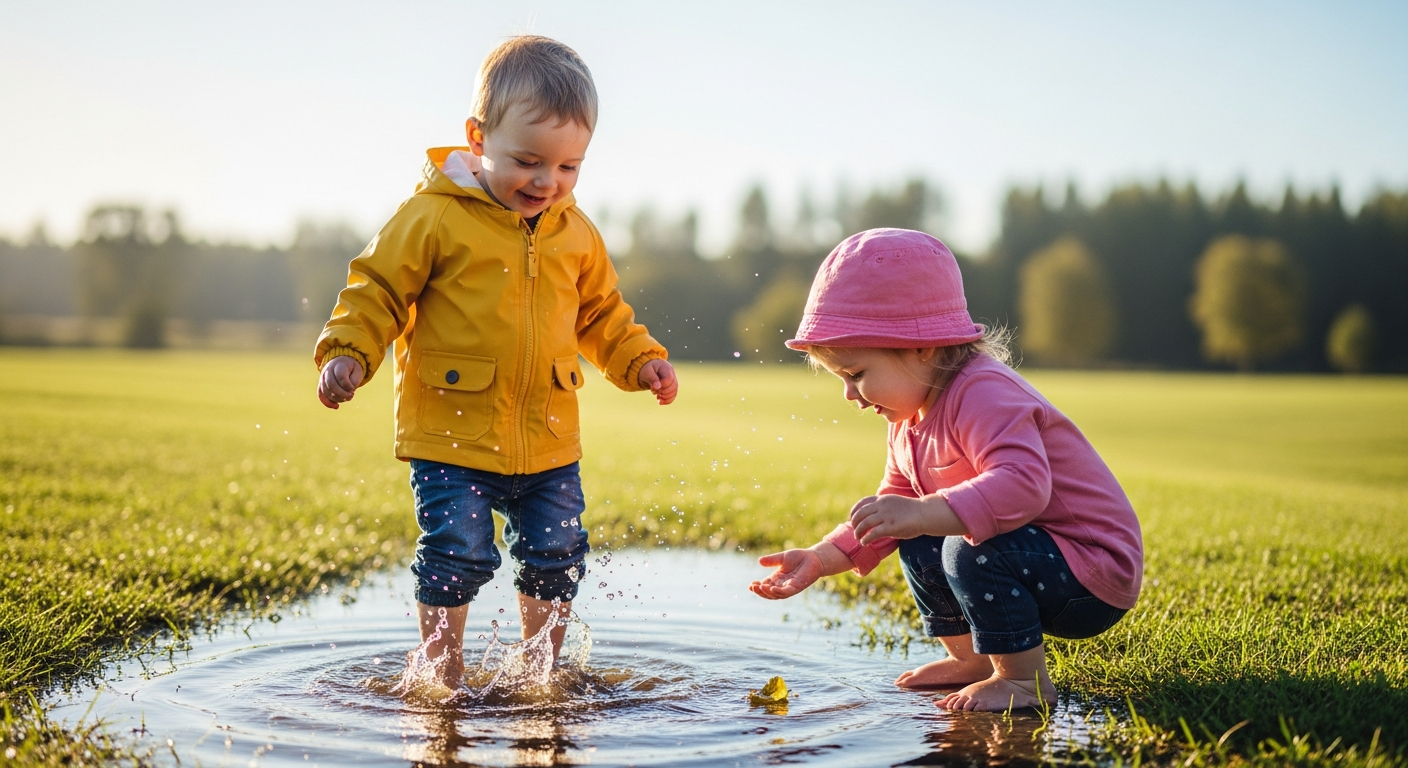
Table of Contents
- Introduction
- The Importance of Outdoor Play for Speech and Growth
- Active Movement: Developing Gross Motor Skills
- Sensory Exploration: Learning Through Touch and Sight
- Creative and Artistic Outdoor Play
- Communication and Social Games
- More Ways to Engage with Nature
- How Speech Blubs Enhances Your Outdoor Adventures
- Setting Realistic Expectations and Fostering Confidence
- Choosing the Best Plan for Your Family
- Practical Tips for Busy Parents
- Conclusion
- FAQs
Introduction
Did you know that the average toddler today spends less time playing outdoors than any generation before them? It is a startling statistic for those of us who remember long afternoons spent climbing trees or chasing butterflies until the sun went down. As parents and caregivers, we often feel the pull of convenience and the lure of passive screens, yet we know deep down that the fresh air and open space of the backyard or local park offer something irreplaceable.
At Speech Blubs, we believe that every moment is an opportunity for a child to "speak their minds and hearts." While we are pioneers in providing "smart screen time," we also recognize that holistic development happens when digital tools and physical exploration work hand in hand. The purpose of this post is to provide you with a comprehensive list of outdoor activity for toddler ideas that are not only fun but also purposefully designed to boost communication, physical coordination, and sensory processing.

Whether you are looking for a way to burn off some toddler energy or trying to find new ways to encourage your "late talker" to use their first words, we have you covered. From simple nature walks to creative sidewalk art, these activities are about creating joyful family learning moments. By the end of this article, you will have a toolkit of 50 activities that require minimal setup but offer maximum developmental rewards. Our main message is simple: outdoor play is not just "extra" time—it is an essential foundation for building a child’s confidence and love for learning.
The Importance of Outdoor Play for Speech and Growth
Before we dive into our list, it is important to understand why choosing an outdoor activity for toddler development is so effective. Nature is the ultimate sensory playground. Unlike the controlled environment of a living room, the outdoors is unpredictable. There are different textures (crunchy leaves, soft grass, cold water), varied sounds (birds chirping, wind whistling, cars humming), and a literal world of new vocabulary to discover.
For the 1 in 4 children who may experience a speech or language delay, these sensory experiences are vital. When a child feels the tickle of grass on their toes or the splash of a puddle, they are naturally motivated to communicate those feelings. This is where we see the most growth—when a child wants to share their world with you.
Our mission at Speech Blubs was born from this very need. Our founders all grew up with speech problems and created the tool they wished they had as children. We’ve combined the science of "video modeling"—where kids learn by watching and imitating their peers—with the joy of play. This same spirit of imitation and play is what makes outdoor activities so powerful. When you jump into a pile of leaves and say "Whoosh!", your child is likely to watch you and try to imitate that sound.
If you are unsure where your child stands in their development, you can take our quick 3-minute preliminary screener to get a simple assessment and a free 7-day trial of our app.

Active Movement: Developing Gross Motor Skills
Toddlers are like little sponges, but they are also like little engines. They need to move to learn. These activities focus on large muscle groups, which are foundational for physical confidence.
- Obstacle Course Fun: Use chalk to draw circles to jump into, lines to balance on, and arrows to follow. This helps with direction-following and coordination.
- Bubble Chasing: This is a classic for a reason. Blowing bubbles and having your toddler pop them encourages hand-eye coordination and visual tracking.
- Follow the Leader: Take turns being the leader. Walk like a penguin, hop like a frog, or stomp like a giant. This mimics our video modeling approach by encouraging your child to observe and imitate your movements.
- Kite Flying: Even if the kite doesn’t stay up long, the act of running and looking back helps with spatial awareness.
- Frisbee Toss: Using a soft, toddler-friendly frisbee can help develop those throwing and catching muscles.
- Bike or Scooter Races: Mark a "start" and "finish" line with chalk. This introduces the concept of friendly competition and improves balance.
- Leapfrog: A wonderful way to practice jumping and cooperation.
- Hula Hoop Challenge: Even if they can't spin it around their waist yet, they can use it as a target to jump into or a "steering wheel" for pretend play.
- Tree Climbing (Supervised): Safely exploring low branches builds strength and a sense of "I can do it!" confidence.
- Ball Kick-About: Simple soccer-style play helps with leg strength and coordination.
Sensory Exploration: Learning Through Touch and Sight
Sensory play is a major component of an effective outdoor activity for toddler learning. It helps the brain make connections between physical sensations and language.
- Mud Kitchen: Give them some old pots, pans, and water. Let them mix "soup" with dirt and sticks.
- Sandcastle Building: Whether at the beach or a backyard sandbox, scooping and molding sand builds fine motor skills.
- Ice Table: Fill a bin with water and large ice chunks. Watch them melt and feel the temperature change.
- Nature Scavenger Hunt: Create a list (with pictures!) of things to find: a red leaf, a smooth stone, a yellow flower.
- Water Balloon Toss: Feeling the weight and texture of the balloon before it pops is a fantastic sensory experience.
- Barefoot Grass Walking: Different textures on the feet help with sensory processing.
- Berry Picking: If you have a local farm, this is a great way to introduce healthy foods and different textures.
- Rock Collecting: Finding "treasures" in the dirt and sorting them by size or color.
- Garden Watering: Let them help with the watering can. It’s a great way to teach about growth and responsibility.
- Feather Finding: Looking for bird feathers and talking about how soft they are.
Creative and Artistic Outdoor Play
Who says art has to happen at a table? Moving the creative process outside reduces the stress of "mess" and opens up a larger canvas for your child.
- Sidewalk Chalk Murals: Let their imagination run wild on the driveway.
- Rock Painting: Gather smooth stones and use washable paints to turn them into "pet rocks" or ladybugs.
- Leaf Collages: Use glue and the leaves gathered during your scavenger hunt to create nature-inspired art.
- Flower Pot Decorating: Paint a terracotta pot and then plant a seed together.
- Nature Weaving: Use a piece of cardboard with rubber bands to "weave" in grass, flowers, and twigs.
- Sidewalk Paint: Mix cornstarch, water, and food coloring for a vibrant "paint" that washes away with rain.
- Shadow Drawing: On a sunny day, place a toy on the sidewalk and let your toddler trace its shadow.
- Pudding Painting: For a truly messy (and edible!) experience, let them "paint" on a large sheet of paper outside with chocolate pudding.
- Pinecone Bird Feeders: Spread peanut butter (or a nut-free alternative) on a pinecone and roll it in birdseed.
- Stick Wands: Find the perfect stick and decorate it with ribbons and leaves to create a "magic wand."
Communication and Social Games
These activities are specifically designed to get your toddler talking and interacting with you or other children.
- Picnic Time: Pack a meal and head to the park. Use this time to model "social" language like "Pass the apple, please" or "Mmmm, yummy!"
- I Spy: A classic game that builds vocabulary. "I spy with my little eye, something... GREEN!"
- Animal Adventure: Pretend to be animals found in the "Animal Kingdom" section of our app. Practice the "Roar" of a lion or the "Baa" of a sheep while moving like them.
- Treasure Hunt: Hide a favorite toy in the yard and give "hot" or "cold" clues to help them find it.
- Tent Camping: Set up a pop-up tent in the yard for a "secret base." This encourages imaginative storytelling.
- Puppet Show: Use old socks or even your hands to put on a show behind a bush or garden bench.
- Storytime Under a Tree: Bring their favorite books outside. The change in environment can make reading feel like a new adventure.
- Band Practice: Use sticks as drumsticks and buckets as drums. Make some noise!
- Cloud Watching: Lay on your backs and talk about what shapes you see in the clouds.
- Bug Observation: Use a magnifying glass to watch ants or beetles. Talk about what they are doing.
More Ways to Engage with Nature
- Puddle Jumping: Don’t let the rain stop you! Put on some boots and embrace the splash.
- Shell Sorting: If you live near water, sorting shells by shape is a calming, focused activity.
- Leaf Piles: Rake them up and jump in! This is great for gross motor and sensory input.
- Sprinkler Run: A summer staple that builds physical agility and confidence with water.
- Wind Chime Making: Hang some spoons or tin cans from a tree branch and listen to the music they make.
- Nature Journaling: Even if it’s just scribbles, let them "record" what they saw outside today.
- Snail Races: If you find some snails, watch them "race" across a leaf. It teaches patience and observation.
- Sun Catcher Making: Use contact paper and flower petals to make a "window" to hang in a tree.
- "Painting" with Water: Give them a bucket of water and a large paintbrush. Let them "paint" the side of the house or the fence. It’s magic as it disappears!
- Star Gazing: If they are up a little later, look at the moon and stars together.
How Speech Blubs Enhances Your Outdoor Adventures
While playing outside is essential, we know that many parents look for structured tools to help bridge the gap between play and communication milestones. At Speech Blubs, we don’t advocate for passive screen time. Instead, we offer a "smart screen time" experience designed to be used with a parent.
Our app uses peer-led video modeling. When your child sees another child making a sound or saying a word, their "mirror neurons" fire, making them much more likely to try and repeat that sound themselves. This is a scientific principle that we’ve baked into every part of our experience. You can read more about our research and methodology to see why we are rated so highly by experts.
Imagine this: You’ve just finished a nature walk where you looked for bugs. When you come inside, you open the "Insect" section of Speech Blubs. Your child sees a peer making a "Buzz" sound like a bee. Because they just saw a bee outside, the connection is reinforced. This is how we help children find their voices.
We are proud to provide a joyful solution for families. Don’t just take our word for it—read testimonials from other parents who have seen their children flourish using our tools alongside their daily routines.
"Our mission is to empower children to speak their minds and hearts. We provide an immediate, effective, and joyful solution for the 1 in 4 children who need speech support, blending scientific principles with play."
To get started on this journey, download Speech Blubs on the App Store or get it on Google Play.
Setting Realistic Expectations and Fostering Confidence
When engaging in any outdoor activity for toddler growth, it is important to remember that every child moves at their own pace. You might see a "late talker" start to use signs before words, or a child who was afraid of grass eventually running through it with joy.
Our goal is not to promise that your child will be giving public speeches in a month. Instead, we focus on the beauty of the process:
- Fostering a genuine love for communication.
- Building physical and emotional confidence.
- Reducing the frustration that often comes with speech delays.
- Creating joyful family learning moments that you will cherish.
Think of our app and these activities as a powerful supplement to your child's overall development plan. If your child is currently in professional therapy, Speech Blubs is a fantastic tool to use between sessions to keep the momentum going.
Choosing the Best Plan for Your Family
We want to be transparent about how you can access the full suite of Speech Blubs features. We believe in building trust through honesty, so here is a breakdown of our current pricing and the value each plan provides:
- Monthly Plan: $14.99 per month. This is a great way to test the waters and see how your child responds to the video modeling.
- Yearly Plan: $59.99 per year. This is our best value option, breaking down to just $4.99 per month (a 66% saving compared to the monthly plan).
Why we recommend the Yearly Plan: The Yearly plan is designed for families who are committed to seeing long-term progress. When you choose the yearly option, you receive several exclusive benefits that are not included in the monthly plan:
- 7-Day Free Trial: You can explore everything we have to offer risk-free for a full week.
- Reading Blubs App: You get access to our companion app designed to help toddlers transition from speaking to early reading skills.
- Early Access: Be the first to try our new updates and features.
- Priority Support: Enjoy a 24-hour support response time for any questions you might have.
Ready to see the difference for yourself? You can create your account and begin your 7-day free trial today by choosing the yearly plan on our website.
Practical Tips for Busy Parents
We know your time is precious. Here are a few ways to make outdoor play easier:
- Keep a "Go-Bag": Have a bag by the door with sunscreen, a towel, bubbles, and a few small toys. It makes getting out the door much faster.
- Embrace the Mess: Outdoor play is often messy. Keep some old clothes specifically for "mud play" so you don’t have to worry about stains.
- Follow Their Lead: Sometimes a toddler just wants to sit and watch ants for 20 minutes. That’s okay! Their curiosity is leading the way, and that is where the best learning happens.
- Co-Play is Key: These activities are most effective when you are right there with them. Your reactions and your voice are what give the activities meaning.
Conclusion
Finding the right outdoor activity for toddler development doesn't have to be complicated or expensive. As we’ve seen, the most impactful moments often come from the simplest things—a puddle, a piece of chalk, or a pile of leaves. By prioritizing outdoor play, you are giving your child the space to grow physically, emotionally, and linguistically.
At Speech Blubs, we are honored to be a part of your parenting journey. We are here to support you with tools that turn screen time into "smart time" and provide a bridge to the real-world experiences your child has every day. We invite you to join our community of over 5 million parents who are dedicated to helping their children speak their minds and hearts.
Start your journey today. Download Speech Blubs on the App Store or Google Play to begin. For the best experience and the most features, we highly recommend selecting our Yearly Plan, which includes a 7-day free trial and our exclusive Reading Blubs app. Let's make every day a joyful learning adventure!
FAQs
1. What if my toddler doesn't want to play outside?
It's common for some toddlers to be hesitant about new environments. Start small by just sitting on the porch or a blanket in the grass. Bring a familiar toy from inside to make the outdoors feel safer. Gradually introduce sensory elements like bubbles or water play to pique their curiosity.
2. Can outdoor play really help with my child's speech delay?
Yes! The outdoors provides a wealth of "natural reinforcers." When a child is excited by a bird or a ball, they are more motivated to use sounds or words to communicate that excitement. Combining these experiences with the video modeling found in Speech Blubs can create a powerful environment for language growth.
3. Do I need a lot of expensive toys for these activities?
Not at all. Most of the 50 activities we listed use items you likely already have at home (buckets, spoons, old clothes) or things found in nature (sticks, stones, leaves). The focus is on interaction and exploration rather than the toys themselves.
4. How long should my toddler play outside each day?
While every family's schedule is different, even 15 to 30 minutes of outdoor play can provide significant benefits. The key is consistency. Frequent, short bursts of outdoor activity are often more effective for a toddler’s attention span than one long outing.
About the author