
7 Creative Dandelion Toddler Craft Ideas to Boost Speech
 By Speech Blubs Team•Feb 20, 2026•14 min.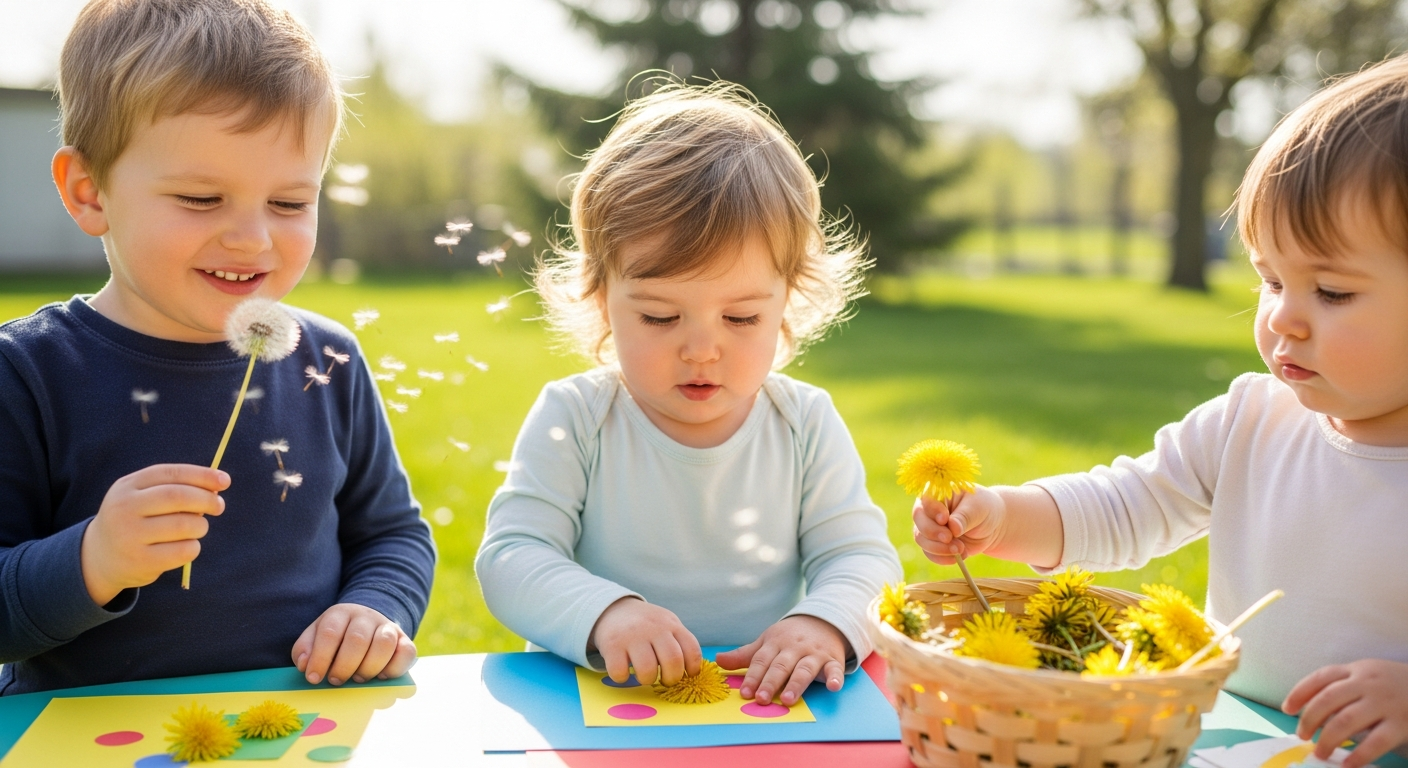
Table of Contents
- Introduction
- The Developmental Power of the Humble Dandelion
- 1. The Dandelion Fingerprint "Sun"
- 2. The "Dandelion Lion" Paper Plate Craft
- 3. Dandelion and Pasta "Puffballs"
- 4. Nature’s Paintbrushes: Dandelion Stamping
- 5. Sticky Nature "Crowns"
- 6. The Dandelion "Wish" Breath Control Activity
- 7. Dandelion Sensory Soup
- Why We Use Video Modeling at Speech Blubs
- Making the Most of Your Speech Journey: The Yearly Plan
- Practical Advice for Parents: Setting Realistic Expectations
- Summary of the Dandelion Experience
- Frequently Asked Questions
- Start Your Journey Today
Introduction
Did you know that the humble dandelion, often dismissed as a common garden weed, is actually a biological wonder that can predict the weather? These bright yellow blossoms open wide in the sunshine and tuck themselves away when rain is on the horizon. For a toddler, however, a dandelion isn't a "weed" or a "barometer"—it is a tiny sun captured in the grass, a treasure to be plucked, and eventually, a magical white "wish" to be blown into the wind. This natural fascination makes the dandelion the perfect centerpiece for a dandelion toddler craft that does more than just decorate the fridge; it builds foundational communication skills.
At Speech Blubs, our mission is to empower children to speak their minds and hearts. We know that roughly 1 in 4 children will face a speech or language challenge during their early years. This can be a stressful realization for parents, but we believe that the journey to communication should be filled with joy, not just clinical drills. Our founders started this journey because they grew up with speech problems themselves and wanted to create the tool they wished they’d had—a way to turn "screen time" into "smart time."

In this post, we are going to explore seven comprehensive dandelion-themed activities that combine sensory play, fine motor development, and speech-building opportunities. We will show you how to narrate your child’s play, use peer-modeling techniques, and bridge the gap between outdoor exploration and digital learning. Whether your child is a "late talker" or simply a curious explorer, these activities are designed to foster a love for communication and build the confidence they need to find their voice. To get the most out of these activities, we recommend you download Speech Blubs on the App Store to see how our "video modeling" method can complement your offline play.
The Developmental Power of the Humble Dandelion
Before we dive into the glue and paint, it is important to understand why we are using dandelions. In the world of child development, we often look for "open-ended" materials. Unlike a plastic toy with one button that makes one sound, a dandelion can be shredded, painted with, stuck in playdough, or blown.
Fine Motor and Speech: The Surprising Connection
There is a strong neurological link between fine motor skills (using the small muscles in the hands) and speech. The areas of the brain responsible for hand movements and mouth movements are located right next to each other. When we engage a toddler in a dandelion toddler craft that requires a "pincer grasp"—like picking a tiny petal or threading a stem—we are actually stimulating the brain in ways that support speech development.
Sensory Integration
Dandelions offer a rich sensory experience. They have a distinct yellow color, a slightly bitter scent, a milky sap, and a soft, fuzzy texture when they go to seed. For children with sensory processing needs, these natural textures provide a safe, low-pressure way to explore the world. When we pair these sensations with words—"sticky," "soft," "bright"—we are helping children build a robust vocabulary through lived experience.
1. The Dandelion Fingerprint "Sun"
This is perhaps the most accessible dandelion toddler craft. It requires minimal materials but offers maximum engagement.

What You’ll Need:
- Non-toxic yellow paint
- A piece of white paper or cardstock
- A brown or green marker
The Activity: Draw a simple circle in the center of the paper to represent the dandelion’s center. Have your child dip their index finger into the yellow paint and "dot" around the circle to create the petals.
Speech Building Strategy: As your child "dots," use the word "Pop!" or "Tap!" each time their finger hits the paper. This is a form of functional language. For a child who is just beginning to vocalize, these simple, repetitive sounds are much easier to imitate than complex sentences. In the Speech Blubs app, we use a similar principle called "video modeling," where children watch other kids making simple sounds and facial expressions. If your child loves this "pop" sound, they will likely enjoy the "Early Sounds" section of our app.
2. The "Dandelion Lion" Paper Plate Craft
Toddlers love animals, and the word "dandelion" literally comes from the French dent-de-lion, meaning "lion's tooth." This craft turns the flower into a roaring friend.
What You’ll Need:
- A paper plate
- Real yellow dandelions (with short stems)
- Glue or a hole punch
- Markers
The Activity: Draw a lion’s face in the middle of the paper plate. If you are feeling brave, use a hole punch to create a "mane" around the edge of the plate. Have your child "plant" the dandelions by sticking the stems through the holes.
Speech Building Strategy: This is the perfect time to practice animal sounds! Ask, "What does the lion say?" and encourage a big "ROAR!" For a parent whose 3-year-old loves animals, this mirrors our "Animal Kingdom" section in the app, where children learn to imitate "moo," "baa," and "roar" by watching their peers. If you want to see if your child is hitting their speech milestones while doing these activities, take our quick 3-minute preliminary screener to get an assessment and a free 7-day trial of our full feature set.
3. Dandelion and Pasta "Puffballs"
This craft focuses on the white, fluffy stage of the dandelion. It’s an excellent way to practice the pincer grasp and build hand strength.
What You’ll Need:
- A ball of playdough (brown or green)
- Uncooked spaghetti broken into small pieces
- Cotton balls
The Activity: Have your child stick the spaghetti pieces into the playdough ball in every direction so it looks like a starburst. Then, have them pull small bits of cotton off a cotton ball and stick them onto the ends of the spaghetti.
Speech Building Strategy: Focus on descriptive adjectives. "Hard" for the pasta, "soft" for the cotton, "squishy" for the playdough. Using contrasting words helps toddlers understand the nuances of language. If your child struggles with these concepts, you can find more "Smart Timer" activities in our app that focus on adjectives and attributes. You can find us on the Google Play Store to start practicing these concepts today.
4. Nature’s Paintbrushes: Dandelion Stamping
Why use a plastic brush when nature provides its own? Dandelions make wonderful stamps that create a beautiful, burst-like pattern.
What You’ll Need:
- Fresh dandelions with sturdy stems
- Various shades of paint (yellow, orange, white)
- Large paper
The Activity: Show your child how to hold the dandelion by the stem and dip the "head" of the flower into the paint. Then, "stamp" it onto the paper.
Speech Building Strategy: This activity is great for practicing "Turn Taking," a vital pre-verbal skill. Say, "My turn!" as you stamp, then "Your turn!" as you hand the flower to your child. This teaches the back-and-forth flow of conversation long before they are speaking in full sentences.
Expert Tip: Don't worry if the craft doesn't look like a masterpiece. The goal is the process, not the product. Focus on the joy of the mess!
5. Sticky Nature "Crowns"
This activity gets you outside and moving, which is essential for burning off toddler energy while building vocabulary.
What You’ll Need:
- A strip of cardboard or heavy paper
- Double-sided tape or a layer of contact paper (sticky side out)
The Activity: Wrap the cardboard strip around your child's head to fit, then tape it into a circle. Cover the outside with double-sided tape. Go for a "nature walk" in the yard and have your child pick dandelions and stick them directly onto their crown.
Speech Building Strategy: During the walk, use "action words." Walk, stop, pick, stick. Repeat these words frequently. "We are walking. Oh! Stop. Let's pick the yellow flower. Now stick it on!" This repetitive narration provides a linguistic map for your child's actions.
6. The Dandelion "Wish" Breath Control Activity
While this is less of a "craft" and more of a "functional activity," it is perhaps the most important for speech.
What You’ll Need:
- Dandelion seed heads (the white, fluffy ones)
The Activity: The classic! Hold the dandelion up and encourage your child to blow the seeds away.
Speech Building Strategy: Speech is essentially controlled breath. Children who have difficulty with certain sounds often need to strengthen their oral-motor control. Blowing on a dandelion requires a specific "pucker" of the lips (the same shape needed for the "oo" and "w" sounds).
How to level up:
- Ask them to blow "big" (a long, strong breath).
- Ask them to blow "small" (short, little puffs).
- Use the word "More?" to encourage them to ask for another dandelion.
7. Dandelion Sensory Soup
For toddlers who love water play, this is a "smart" alternative to just splashing in the tub.
What You’ll Need:
- A large plastic bin or bowl
- Water
- Dandelions (petals and whole flowers)
- Large spoons, whisks, and ladles
The Activity: Fill the bin with water and dump in a handful of dandelions. Let your child "cook" their dandelion soup.
Speech Building Strategy: This is a prime opportunity for "Parallel Talk." This is a technique where you describe what the child is doing as they do it, without asking them questions. "You are stirring the soup. Splashing the water. The yellow flower is floating!" This reduces the pressure on the child to "perform" and allows them to soak up the language naturally. Many parents find this technique reduces frustration in late talkers, a sentiment echoed in many of our user testimonials.
Why We Use Video Modeling at Speech Blubs
You might notice that in all these crafts, we suggest you model the behavior first. This is because children are biologically wired to learn through imitation. At the heart of our app is the "video modeling" methodology. Scientific studies, which you can read about on our research page, show that toddlers are much more likely to attempt a sound or a facial expression if they see another child doing it, rather than an adult.
Our "smart screen time" experiences aren't meant to replace your afternoon of picking dandelions. Instead, they are a powerful supplement. Think of it this way: the afternoon spent crafting builds the physical and sensory foundation, while Speech Blubs provides the linguistic and imitative practice.
Making the Most of Your Speech Journey: The Yearly Plan
We understand that every family's journey is different. Some children just need a little "nudge" to start talking, while others may benefit from a more structured approach alongside professional therapy. To provide the best possible support, we offer two main paths for our community:
- The Monthly Plan ($14.99 per month): A great way to test the waters and see how your child responds to our peer-modeling videos.
- The Yearly Plan ($59.99 per year): This is, without a doubt, the best value for families. It breaks down to just $4.99 per month—a 66% saving over the monthly rate.
The Yearly Plan includes exclusive benefits not found in the monthly subscription:
- A 7-day free trial: Let your child explore the app risk-free before you commit.
- The Reading Blubs App: A companion app specifically designed to bridge the gap from speaking to reading.
- Early Access: Be the first to try our new updates and features.
- Priority Support: A 24-hour response time from our dedicated support team.
We encourage parents to choose the Yearly plan to ensure they have a long-term tool for their child's development. Consistency is key in speech progress, and having a full year of "smart screen time" at your fingertips ensures your child has the support they need as they grow. To get started with the full suite of features and your free trial, you can create your account on our web sign-up page.
Practical Advice for Parents: Setting Realistic Expectations
As a content author and child development expert, I want to emphasize that every child moves at their own pace. Using a dandelion toddler craft or a speech app is not a "magic wand" that will have your child giving public speeches in a week. Instead, these tools are about:
- Fostering a love for communication: Making language fun rather than a chore.
- Building confidence: Giving them small "wins" (like successfully imitating a "roar").
- Reducing frustration: Providing them with enough "functional" words (like "more," "stop," "up") to express their basic needs.
- Creating joyful family moments: The connection you build while playing in the dirt or laughing at a silly video in the app is the true foundation of learning.
If you ever feel overwhelmed, remember our founders' stories. They were once where your child is now. They created Speech Blubs to be a joyful solution, a screen-free alternative to passive viewing (like cartoons), and a way for you to connect with your little one.
Summary of the Dandelion Experience
The next time you see a dandelion in your yard, don't see it as a chore. See it as a free, organic, and incredibly effective speech therapy tool. From the "pucker" of the lips used to blow seeds to the "pincer grasp" used to pick petals, every part of a dandelion toddler craft serves a purpose.
Key Takeaways:
- Imitation is everything: Use the app to show your child other kids speaking, and then model the same sounds while you craft.
- Narrate, don't interrogate: Instead of asking "What color is this?" say "Look at the bright yellow flower!"
- Focus on functional sounds: "Pop," "Ooo," and "Roar" are the building blocks of speech.
- Choose "Smart Screen Time": Replace passive videos with interactive, peer-led modeling.
Frequently Asked Questions
1. My toddler still puts everything in their mouth. Is a dandelion toddler craft safe?
Dandelions are technically edible, but they can be bitter and may have been treated with lawn chemicals. If your toddler is in a "mouthing" phase, stick to the fingerprint painting or the sensory bin where you can closely supervise them. Always ensure you are picking flowers from an area you know is free of pesticides.
2. How long should we spend on these activities?
A toddler’s attention span is typically 2-3 minutes per year of age. Don't be discouraged if they only want to "stamp" for five minutes before running off. Short, frequent bursts of "joyful learning" are much more effective than long, forced sessions.
3. Can I use these crafts if my child is already in speech therapy?
Absolutely! We frame Speech Blubs and these nature activities as powerful supplements to professional therapy. Many speech-language pathologists (SLPs) actually recommend our app to parents as a way to "homework" in a fun, low-pressure way.
4. What if my child isn't interested in the crafts at all?
That’s okay! Every child has different interests. If they don't like getting their hands messy with paint, they might prefer the "sticky" crown or just blowing the seeds. Follow your child's lead. The goal is engagement and connection, not the completion of a specific project.
Start Your Journey Today
The journey to "speaking their minds and hearts" begins with a single step—or perhaps, a single flower. We invite you to join our community of over 5 million parents who are transforming their children's lives through play and peer modeling.
Ready to see the difference for yourself? Download Speech Blubs on the Google Play Store or the Apple App Store today. Remember to select the Yearly plan during sign-up to unlock your 7-day free trial, the Reading Blubs app, and the best possible value for your family. Let’s make some wishes, blow some dandelions, and help your little one find their voice!
About the author