
Adorable and Easy Toddler Valentine Crafts to Try
 By Speech Blubs Team•Feb 23, 2026•15 min.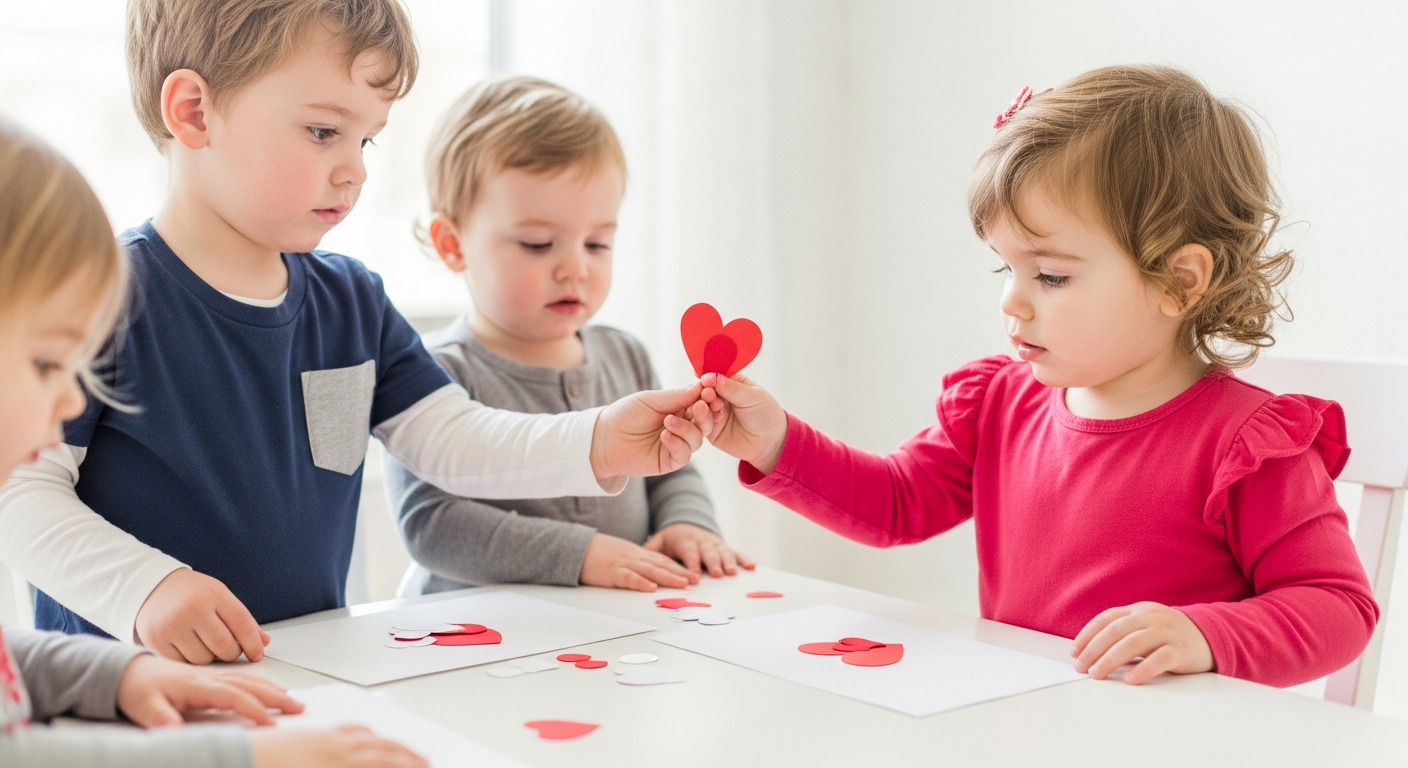
Table of Contents
- Introduction
- The Developmental Magic of Crafting
- 10 Creative Toddler Valentine Crafts
- Why "Smart Screen Time" Enhances Crafting
- Making the Most of Your Speech Blubs Experience
- Realistic Expectations and the Power of Praise
- Practical Tips for Stress-Free Crafting
- Integrating the App into Your Routine
- Summary: A Valentine’s Day to Remember
- FAQ
Introduction
Did you know that the simple act of squeezing a glue bottle or tearing a piece of red construction paper is actually a high-intensity workout for your toddler’s brain and hands? While we often view February 14th as a day for chocolate and cards, for a child between the ages of two and four, it is a goldmine for developmental milestones. At Speech Blubs, our mission is to empower children to speak their minds and hearts, and we believe that the journey to clear communication starts with these small, joyful moments of connection.
Valentine’s Day provides a unique opportunity to slow down and engage in "smart screen time" and hands-on play that builds the foundation for language. Whether your child is already a chatterbox or is one of the 1 in 4 children who may need a little extra speech support, crafting together creates a low-pressure environment where new words can bloom. In this guide, we aren't just giving you a list of things to make; we are providing a roadmap for boosting fine motor skills, expanding vocabulary, and fostering a deep love for communication.

We will explore a variety of toddler-friendly activities—from mess-free sensory painting to the ever-popular "Love Bugs"—and show you how to seamlessly integrate these with the Speech Blubs app to maximize your child's learning. By the end of this post, you'll have a heart full of ideas and the tools to make this Valentine’s Day a celebration of your child's growing voice.
The Developmental Magic of Crafting
Before we dive into the glitter and glue, it’s important to understand why we advocate for these activities. Crafting is more than just making something "cute" to hang on the fridge. It is a sensory-rich experience that engages multiple parts of the brain simultaneously.
Fine Motor Skills and Speech
There is a fascinating link between the fine motor skills used in crafting and the motor skills used for speech. Both require precise coordination and control. When your toddler picks up a small bead or navigates a pair of safety scissors, they are strengthening the same neural pathways that will eventually help them articulate complex sounds. We focus on these foundational skills because we know that a confident mover often becomes a confident speaker.
Language Expansion in Natural Settings
Think about the vocabulary involved in a simple heart-themed project: "sticky," "smooth," "red," "pink," "overlap," "squeeze," "press." By narrating these actions, you are providing your child with a rich linguistic environment. Our unique approach at Speech Blubs utilizes video modeling, where children watch their peers perform actions and make sounds. You can replicate this "peer teaching" energy during craft time by doing the activity alongside them, allowing them to imitate your movements and your words.
Building Confidence and Reducing Frustration
For many "late talkers," frustration stems from the inability to express a need or an emotion. Crafting offers a non-verbal outlet for creativity. When a child successfully completes a "Love Bug" or a "Heart Wreath," they feel a sense of pride. This boost in confidence carries over into their communication attempts. Our founders, who grew up with speech challenges themselves, created Speech Blubs to be the joyful, effective tool they wished they had—a tool that prioritizes the child’s sense of achievement.

10 Creative Toddler Valentine Crafts
1. The Classic Love Bugs
Love bugs are a staple of Valentine’s Day for a reason: they are endlessly customizable and allow toddlers to use a variety of materials.
- Materials: Cardboard tubes (toilet paper or paper towel rolls), construction paper, pipe cleaners, googly eyes, and stickers.
- The Process: Start by letting your toddler pick the color of the "bug." Wrap the tube in paper. Use a glue stick—this is a great way to practice the "twist" motion. Have them pick out two pipe cleaners for antennae.
- Speech Connection: This is the perfect time to practice "Where" questions. "Where is the bug’s nose?" "Where are the wings?" If your child loves animals, you can link this to the "Animal Kingdom" section of our app. Before you start, watch the videos of other kids making insect sounds or naming bugs. This builds excitement and prepares them to use those words during the craft.
2. Textured Heart Wreaths
This craft is excellent for sensory seekers who love the feeling of different materials.
- Materials: A cardboard base cut into a heart shape, tissue paper squares, and liquid glue.
- The Process: Spread glue over the cardboard heart. Show your toddler how to crinkle up the tissue paper before sticking it down. The "crinkling" sound and feel are highly engaging.
- Pro Tip: Use a small paintbrush to apply the glue. This helps keep the mess contained and encourages a "pencil grip" early on.
3. Coffee Filter Color-Bleed Hearts
This project blends art with a tiny bit of "science," making it mesmerizing for curious toddlers.
- Materials: Coffee filters cut into heart shapes, washable markers, and a dropper with water.
- The Process: Let your child scribble all over the coffee filter with markers. The darker the colors, the better! Then, use the dropper to add drops of water and watch the colors bleed together like tie-dye.
- Speech Connection: Use descriptive adjectives. "Look, it's wet!" "The red is moving!" If you are concerned about your child's progress with descriptive language, you can take our 3-minute preliminary screener to see where they stand and get a personalized plan.
4. "Bee" My Valentine Handprint Plate
Handprint crafts are wonderful keepsakes that allow you to look back and see how much your child has grown.
- Materials: Yellow paper plates, black markers, white paper, and scissors.
- The Process: Color the plate with black stripes to look like a bee. Trace your child’s hands on white paper and cut them out to serve as the wings.
- Relatable Scenario: For a parent whose 3-year-old "late talker" loves anything that flies, the "Bee" craft is a motivating way to practice the "B" sound. You can open the Google Play Store version of Speech Blubs, find the "buzz" sound in the app, and have your child imitate the peer on the screen while they "fly" their paper plate bee around the room.
5. Cotton Ball Heart Painting
This is a fantastic tactile activity that replaces traditional brushes with something softer and easier to grip.
- Materials: Clothespins, cotton balls, paint, and paper.
- The Process: Clip a cotton ball into a clothespin to create a "pom-pom" brush. Let your toddler dip it into pink or red paint and "dot" it inside a heart outline.
- Benefit: Using the clothespin builds hand strength, which is vital for later writing skills.
6. Mess-Free Heart Bag Painting
If you are worried about the cleanup, this is the craft for you!
- Materials: A gallon-sized Ziploc bag, cardstock cut into a heart, and a few squirts of paint.
- The Process: Place the heart inside the bag, add a few drops of paint, and seal the bag tightly. Let your toddler squish and push the paint around from the outside.
- Why we love it: It provides all the sensory input of finger painting without any of the mess. It's a great "wind-down" activity after a busy day.
7. Heart Tear Art
Tearing paper is one of the most underrated developmental activities for toddlers.
- Materials: Scraps of construction paper, glue, and a large heart template.
- The Process: Instead of using scissors, have your child rip the paper into small pieces. Then, they can glue the pieces onto the heart template to create a mosaic.
- Language Tip: Practice "big" and "small" pieces. "Can you rip a big piece? Now a tiny piece!"
8. Microwave Heart Crayons
This is a great way to recycle old, broken crayons while teaching your child about states of matter (solid to liquid!).
- Materials: Broken crayon bits and a silicone heart mold.
- The Process: Let your toddler peel the paper off the crayons (excellent for fine motor skills) and drop the bits into the mold. An adult can then melt them in the microwave or oven.
- The Result: Once they cool, your child has a brand-new, multi-colored crayon to use!
9. Valentine’s Sensory Bin with Dyed Rice
Sensory bins are a powerhouse for language development because they encourage open-ended play.
- Materials: A plastic bin, rice dyed with food coloring, scoops, and heart-shaped objects.
- The Process: Let your child dig, pour, and hide objects in the "pink" rice.
- Speech Tip: This is a great time to practice prepositions. "Put the heart in the rice." "Take the spoon out."
10. Sticker Heart Cards
Sometimes the simplest activities are the most effective.
- Materials: Blank cards and a sheet of Valentine’s stickers.
- The Process: Give your child a sheet of stickers and let them go to town on the card. Peeling stickers is a complex fine motor task that requires focus and precision.
- Social Connection: Talk about who the card is for. "This is for Grandma. Do we love Grandma?" This fosters an early understanding of social-emotional connections.
Why "Smart Screen Time" Enhances Crafting
At Speech Blubs, we advocate for "smart screen time." This isn't the passive viewing of cartoons that many parents worry about. Instead, it’s an interactive, co-playing experience. Our app is designed to be used with an adult, creating joyful family learning moments.
Our scientific methodology is rooted in the concept of mirror neurons. When your child sees another child on the screen successfully making a sound or completing a task, their brain fires as if they were doing it themselves. This makes them much more likely to try it in real life.
When you pair this with a craft, you are creating a multi-sensory learning loop. For example, if you are working on the "Bee My Valentine" craft, you can watch the "First Words" section of our app to see how peers use their mouths to create the "B" and "Z" sounds. This gives your child a clear, visual model to follow while they are engaged in the physical act of creating.
Making the Most of Your Speech Blubs Experience
We understand that every child’s journey is unique. Some children might take to crafting and speech exercises immediately, while others may need more time and repetition. Our goal isn't to turn your toddler into a public speaker overnight; it’s about building foundational skills and reducing the frustration that comes with a speech delay.
To get the most out of our tools, we recommend consistency and high-value engagement. This is why we encourage parents to look at our web account creation page and consider our long-term options.
Transparent Pricing for Families
We want to be clear about how you can access our full suite of tools:
- Monthly Plan: $14.99 per month. This is a great way to test the waters.
- Yearly Plan: $59.99 per year. This is our best value, breaking down to just $4.99 per month—a 66% saving compared to the monthly rate.
The Yearly Plan is the clear choice for families committed to their child's development. When you choose the Yearly plan, you receive:
- A 7-day free trial to explore everything we offer.
- The Reading Blubs app, which helps transition your child from speaking to early reading.
- Early access to all new content and updates.
- Priority 24-hour support response time.
Please note that the Monthly plan does not include the free trial, the Reading Blubs app, or priority support. By choosing the Yearly plan, you are giving your child the most comprehensive support system available.
Realistic Expectations and the Power of Praise
As a parent, it’s easy to get caught up in comparing your child to others. You might see a "Pinterest-perfect" craft online and feel discouraged if your toddler’s heart wreath looks more like a red blob. Remember: the value is in the process, not the product.
In the same vein, speech development is a marathon, not a sprint. Using our app as a supplement to professional therapy or as a standalone tool for home enrichment is a powerful way to foster a love for communication. Celebrate the small wins. If your child makes a new sound while glueing googly eyes onto a Love Bug, that is a huge victory! See what other parents are saying about their experiences with these small, daily triumphs.
Practical Tips for Stress-Free Crafting
- Prep Ahead of Time: Toddlers have very short attention spans. Have all your materials cut, poured, and ready before you invite them to the table.
- Follow Their Lead: If your child decides the "Love Bug" should have ten eyes and no wings, let it happen! Encouraging their creative choices builds autonomy.
- Keep it Short: Fifteen minutes of focused, happy crafting is better than forty-five minutes of frustration.
- Use it as a Conversation Starter: Ask open-ended questions. Instead of "Is that red?", try "Tell me about this color."
Integrating the App into Your Routine
A great way to use Speech Blubs is as a "warm-up" for your activities. Before you start your Valentine's crafts, spend 5-10 minutes in the app.
- Step 1: Choose a category that relates to your craft (e.g., "Colors" or "First Words").
- Step 2: Watch the video models together. Encourage your child to "mimic" the kids on the screen.
- Step 3: Turn off the screen and start the craft, using the same words and sounds you just practiced.
- Step 4: For an extra layer of fun, use the face filters in the app to "become" a heart or a funny character after the craft is finished as a reward.
This "Smart Screen" approach turns digital time into a springboard for real-world interaction. You can find us on the App Store to get started.
Summary: A Valentine’s Day to Remember
Crafting with your toddler is about so much more than paper and glue. It is a dedicated time to focus on their development, celebrate their unique personality, and give them the tools to "speak their minds and hearts." By combining these 10 adorable toddler Valentine crafts with the scientifically-backed methodology of Speech Blubs, you are creating an environment where language can thrive.
We’ve covered everything from the "why" of fine motor development to the "how" of mess-free painting. We've explored how video modeling can reduce the barriers to speech and how a consistent routine can build a child’s confidence. Valentine’s Day is a celebration of love, and there is no greater act of love than supporting your child’s ability to communicate with the world around them.
FAQ
1. What are the best Valentine crafts for a toddler with a short attention span?
For toddlers who can't sit still for long, we recommend high-impact, quick activities like Sticker Heart Cards or Mess-Free Bag Painting. These provide immediate visual results and tactile satisfaction without requiring complex steps. You can also break longer crafts, like the Love Bugs, into smaller sessions—one day for coloring the tube, and another for adding the eyes and antennae.
2. How do these crafts specifically help with speech delay?
Crafts help by creating a "natural language paradigm." When a child is focused on a fun task, their anxiety about "talking correctly" often disappears. By narrating the activity (e.g., "Squeeze the glue!"), you are providing context-dependent language. Additionally, pairing these activities with our app’s peer video modeling helps them see the mouth movements required for the words they are using during the craft.
3. Are these crafts safe for 2-year-olds?
Yes, but adult supervision is always required. We recommend using non-toxic, washable materials. For younger toddlers, avoid small beads that could be a choking hazard and stick to larger items like cotton balls, paper plates, and large stickers. Using a paintbrush for glue instead of letting them handle a bottle can also help manage the sensory experience for kids who are overwhelmed by sticky textures.
4. How can I use the Speech Blubs app to complement these activities?
The best way is to use the app as a "bridge." Before you start a craft, find a related category in the app. For example, use the "First Words" or "Colors" section. Let your child watch the peers on the screen, then try to use those same words as you build your craft together. This reinforces the vocabulary in a real-world setting.
Ready to start your journey?
Don't wait to give your child the support they deserve. Download Speech Blubs on the App Store or Google Play today to begin your transformation. For the best experience and the most comprehensive toolset, be sure to choose the Yearly plan. You’ll get a 7-day free trial, the Reading Blubs app, and early access to all our latest features—all while saving 66% compared to the monthly option. Let's make this Valentine’s Day the start of something beautiful!
About the author