
Ahoy, Matey! 8 Best Pirate Party Games for Kids That Boost Communication
 By Speech Blubs Team•Jan 28, 2026•21 min.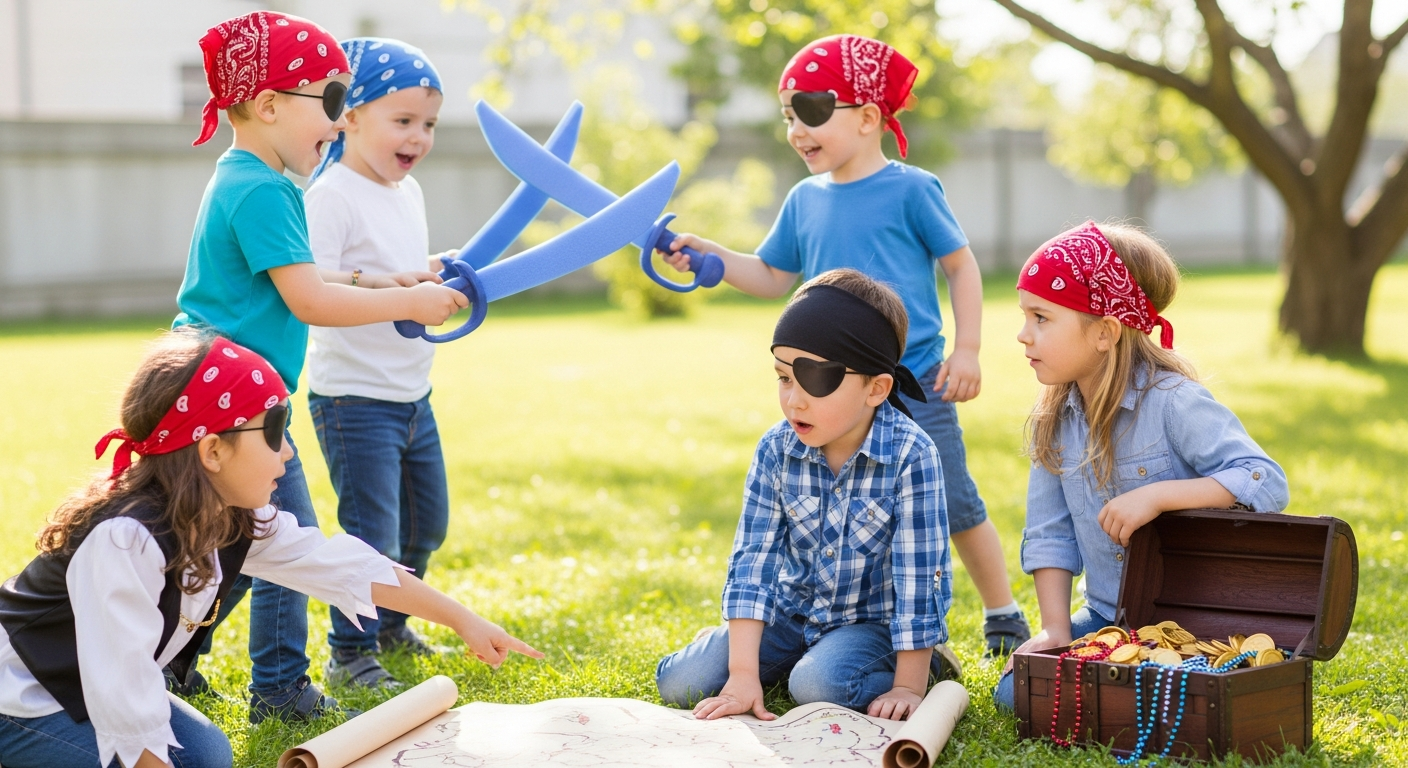
Table of Contents
- Introduction
- Why Pirate Party Games Are More Than Just Fun: A Developmental Treasure
- Setting Sail: Planning Your Epic Pirate Adventure
- Swashbuckling Speech Builders: Our Favorite Pirate Party Games for Kids
- Beyond the Party: Nurturing Communication Every Day with Speech Blubs
- Unlock Your Child’s Potential: Start Your Speech Blubs Journey Today
- Conclusion: Set Sail Towards Confident Communication
- Frequently Asked Questions about Pirate Party Games and Child Development
Introduction
Ever noticed how a simple game of "pretend" can transform a quiet room into a bustling adventure? For children, play isn't just about having fun; it's the primary way they explore the world, build relationships, and, crucially, develop essential communication skills. When we organize themed parties, like a swashbuckling pirate bash, we're not just creating memories; we're crafting rich, immersive learning environments. Pirate party games for kids offer a unique opportunity to combine exhilarating fun with powerful developmental benefits. Imagine your child not just searching for treasure, but practicing descriptive language, following multi-step directions, and engaging in imaginative dialogue, all while having the time of their life!
At Speech Blubs, we believe that empowering children to "speak their minds and hearts" begins with joyful, engaging experiences. Our own founders grew up facing speech challenges, and they created Speech Blubs to be the immediate, effective, and joyful solution they wished they had—blending scientific principles with play into one-of-a-kind "smart screen time." This post isn't just about throwing an unforgettable pirate party; it's about uncovering the hidden developmental treasures within each game and showing you how you can boost your child's speech and language skills while they're having a blast. Get ready to set sail on an adventure that's as educational as it is exciting, transforming your living room or backyard into a vibrant playground for communication and creativity.

Why Pirate Party Games Are More Than Just Fun: A Developmental Treasure
The magic of a pirate theme lies in its inherent narrative. Kids aren costumes, embody characters, and instantly tap into a world of imagination. This isn't superficial play; it's a deep dive into cognitive and social development. When children pretend to be pirates, they're not just running around; they're navigating complex social scenarios, understanding roles, and experimenting with language in new and exciting ways.
The Power of Play in Language Development
Imaginative play, like a pirate adventure, is a goldmine for language development. It encourages children to:
- Expand Vocabulary: Words like "treasure," "map," "compass," "captain," "deck," "sails," "plank," "shipwreck," and "matey" become active parts of their lexicon.
- Develop Narrative Skills: Children create stories, describe events, and sequence actions ("First, we found the map, then we followed the clues, and finally, we dug up the treasure!").
- Practice Social Communication: Taking turns, negotiating roles, expressing desires, and understanding emotions are all at play. They learn to listen and respond in context.
- Enhance Auditory Processing: Listening to instructions, following rhyming clues, and responding to sound cues ("Ahoy!") sharpens their auditory skills.
- Boost Problem-Solving: Deciphering clues, strategizing treasure hunts, and overcoming "obstacles" within the game encourage critical thinking and verbalizing solutions.
For a parent whose 3-year-old "late talker" loves animals but struggles with expressive language, the idea of a pirate party might seem daunting. However, integrating familiar elements with new themes can be incredibly motivating. Imagine an "Animal Kingdom" section within Speech Blubs, where your child can practice "moo" and "baa" sounds by imitating peers, then apply that to a pirate game where they have to make animal sounds to "find" the next clue or "talk" to a parrot. This bridging of familiar sounds to new, exciting contexts makes learning engaging and effective. If you're wondering how to seamlessly integrate these playful strategies, download Speech Blubs on the App Store or Google Play to explore activities that complement your party planning.

Setting Sail: Planning Your Epic Pirate Adventure
A successful pirate party starts long before the first "Arrr!" It begins with careful planning, transforming your space into a high-seas adventure.
Crafting Your Crew's Journey: Invitations & Decorations
Setting the scene is crucial for immersive play. Even the planning itself can be a language-rich activity.
- Invitations: Design "treasure map" invitations that require a few simple "X marks the spot" clues to decipher the party details. This introduces the theme and gets kids excited about following instructions.
- Decorations:
- Jolly Roger Flags: Simple black and white flags with skull and crossbones instantly set the mood.
- Shipwreck Decor: Drape old sheets or brown paper to create a "ship's hull" or "tattered sails." Use blue fabric or streamers on the floor to represent the "ocean."
- Cannonballs: Black balloons can be scattered as cannonballs. Counting them can be a simple early math and language activity.
- "Shark-Infested Waters": Pool noodles or stuffed animal sharks scattered on blue blankets can define dangerous zones for games like "Walk the Plank."
- Treasure Chests: Collect old boxes, paint them brown, and add gold accents. These will be central to many games.
Discussing these decorations with your child provides excellent opportunities for descriptive language ("We need long, blue streamers for the sparkly water!") and decision-making.
Swashbuckling Speech Builders: Our Favorite Pirate Party Games for Kids
Now for the main event! Here are our top pirate party games, specifically designed to spark joy and foster robust communication skills. Each game is a chance to practice listening, speaking, and interacting, making learning an unforgettable adventure.
1. The Grand Treasure Hunt: Clues, Maps, and Discoveries
No pirate party is complete without a thrilling treasure hunt! This classic game is a powerhouse for cognitive and linguistic development.
- Game Description: Create a series of rhyming clues or simple picture clues that lead children from one location to the next, ultimately revealing the hidden treasure chest. For younger children, use visual cues (e.g., a picture of a tree for "Look by the tall green tree"). For older kids, riddles or simple codes can add a layer of challenge. Roll up your "treasure map" and clues, perhaps even singeing the edges slightly with adult supervision for an authentic look. Hide chocolate gold coins or small pirate toys at each clue stop as mini-treasures. The grand prize can be a larger chest filled with party favors. For a smoother experience with many kids, consider splitting them into two teams with separate clue paths.
- Speech & Developmental Benefits:
- Following Multi-Step Directions: "Go under the table, then look behind the red chair." This strengthens receptive language.
- Spatial Concepts: Practicing prepositions like "under," "over," "behind," "next to," "inside," "on top of."
- Vocabulary Expansion: Introducing and reinforcing words like "clue," "map," "X marks the spot," "dig," "hidden," "reveal," "treasure," "chest," "gold," "coins."
- Problem-Solving & Reasoning: Deciphering clues and planning their next move.
- Turn-Taking & Collaboration: Kids learn to wait for their turn to read a clue or lead the group, and to work together to find the next hint.
- Joint Attention: All eyes on the clue, all minds focused on the same goal.
- Speech Blubs Connection: This game directly mirrors the skills children build using Speech Blubs. Our "Around the House" or "Outdoor Fun" categories can help reinforce locational prepositions, while various "Words" and "Sentences" sections introduce and practice the vocabulary needed to describe a treasure hunt. For a child who might struggle to articulate their discoveries, Speech Blubs' video modeling methodology allows them to watch and imitate peers, building confidence in expressing themselves. Explore our research-backed methodology to understand how this peer imitation fosters natural language acquisition.
- Relatable Scenario: For a child who struggles with "where" questions or using prepositions, a treasure hunt provides a high-motivation context. Instead of just asking "Where is the ball?", you're guiding them to "Find the clue under the blue blanket" or "Look behind the big cushion." The tangible reward reinforces their understanding and encourages verbalization.
2. Walk the Plank: Balance, Bravery, and Bold Language
A classic test of pirate courage that's also fantastic for gross motor and expressive language.
- Game Description: Lay a narrow balance beam, a wooden plank, or even a long strip of tape on the ground. This is your "plank." Below it, on a blue blanket or rug, scatter some stuffed animals or pool noodles to represent "shark-infested waters." Challenge your little pirates to walk across without "falling in." Add a fun twist: have them say a pirate phrase like "Arrr, matey!" or "Shiver me timbers!" as they cross. For older kids, make it a relay race or have them carry a "treasure" (a lightweight beanbag) while walking.
- Speech & Developmental Benefits:
- Gross Motor Skills: Enhances balance, coordination, and body awareness.
- Descriptive Language: Encourages words like "wobbly," "careful," "steady," "splash," "brave."
- Expressive Sounds & Phrases: Practicing pirate growls ("Arrr!"), cheers, and themed exclamations.
- Following Simple Instructions: "Walk slowly," "Don't look down," "Put one foot in front of the other."
- Emotional Regulation: Managing excitement or slight apprehension in a safe, fun environment.
- Speech Blubs Connection: This game offers a fantastic opportunity to practice action verbs and descriptive adjectives. Speech Blubs has categories rich in these concepts, helping children build a robust vocabulary for describing movement and sensation. For a child learning to articulate new sounds, practicing repetitive pirate phrases can be a fun, low-pressure way to build oral motor skills and confidence.
- Relatable Scenario: If your child is just starting to string together two-word phrases, encouraging "Walk slow!" or "Sharks! Splash!" while on the plank can be a powerful motivator. The physical action provides a concrete meaning for the words, aiding comprehension and expression.
3. Musical Islands: Hopping, Listening, and Responding
A pirate twist on musical chairs, perfect for auditory processing and quick reactions.
- Game Description: Cut out large paper or cardboard "islands" and lay them on the floor, one fewer than the number of children playing. Play some rousing pirate music or sea shanties. As the music plays, the "pirates" dance or walk around the islands. When the music stops, everyone must quickly find an island to stand on. The child left without an island is "out" (or can go "feed the sharks" as a fun, gentle exit). Remove an island each round until only one pirate remains.
- Speech & Developmental Benefits:
- Auditory Processing: Listening carefully for the music to stop and responding quickly.
- Following Rules: Understanding and adhering to game mechanics.
- Turn-Taking: Participating in a group activity with clear turns.
- Quick Responses: Enhancing reaction time and motor planning.
- Emotional Regulation: Learning to manage the feeling of being "out" in a playful context.
- Counting: Counting the islands and the players.
- Speech Blubs Connection: The ability to listen and respond to auditory cues is fundamental to speech and language development. Our app's interactive games and exercises encourage focused listening, helping children to discriminate between sounds and respond appropriately. This "smart screen time" provides a screen-free alternative to passive viewing, promoting active engagement.
4. Cannonball Chaos: Aiming, Counting, and Cheering
Whether it's bowling or a water balloon fight, cannonball games are always a hit.
- Game Description:
- Cannonball Bowling: Decorate tin cans or paper cups with pirate motifs (skulls, anchors) and stack them like bowling pins. Use a soft ball or beanbag as the "cannonball" to knock them over. Kids take turns rolling or throwing.
- Water Balloon Attack (Summer Only): In a safe outdoor space, divide kids into two "ships" (marked areas). Give each team a bucket of black water balloons ("cannonballs"). The goal is to "sink" the other ship by hitting opponents with balloons. (Be prepared for a full-on water fight!)
- Speech & Developmental Benefits:
- Counting: Counting how many pins they knock down, or how many "cannonballs" they have left.
- Size Concepts: Discussing "big" or "small" cannonballs.
- Action Verbs: "Throw," "roll," "hit," "knock down," "splash."
- Expressing Excitement: "I hit it!" "Wow!" "Splash!"
- Cause-and-Effect: Understanding that throwing the ball causes the pins to fall.
- Simple Instructions: "Aim for the middle," "Throw it harder."
- Speech Blubs Connection: Repetition is key for language acquisition. Playing games that involve repetitive actions and associated sounds (e.g., the "thud" of a hit, the "splash" of water) helps children connect sounds to meaning. Speech Blubs uses playful repetition to build foundational sounds and words, making learning fun and engaging. Ready to get started? Create your account and begin your 7-day free trial today!
5. Decorate Your Pirate Gear: Creative Expression and Fine Motor Skills
A calmer activity that allows for individual creativity and fine motor development.
- Game Description: Set up a craft station with plain wooden swords, black construction paper for eye patches and hats, paper towel rolls for spyglasses, and various decorating supplies: paints, markers, glitter glue, stickers, gems, and feathers. Let each child personalize their pirate accessories. They can take these home as unique party favors.
- Speech & Developmental Benefits:
- Following Multi-Step Instructions: "First, draw a skull, then add glitter."
- Naming Colors & Shapes: "I'm using the blue marker for the round eye patch."
- Describing Creations: Encouraging children to talk about what they're making, using adjectives and verbs ("My sword is sparkly and sharp!").
- Fine Motor Development: Cutting, gluing, coloring, and holding small objects prepares hands for writing.
- Pre-Writing Skills: Practicing grasp and control.
- Speech Blubs Connection: Describing objects and actions is a core part of expressive language. Speech Blubs offers many opportunities for children to learn and practice descriptive vocabulary, which they can then apply to explaining their pirate crafts. For example, our "Colors" and "Shapes" activities help build this foundational knowledge.
6. Pin the X on the Treasure Map (or Patch on Pirate): Spatial Reasoning and Body Awareness
A classic party game with a pirate twist, great for directional language.
- Game Description: Draw a large pirate figure (without an eye patch) or a treasure map (without an "X") on a poster board and hang it on the wall. Cut out separate paper eye patches or "X" shapes. Blindfold each child, gently spin them around a few times, and then have them try to pin (or tape) the eye patch onto the pirate's eye or the "X" onto the treasure map. Mark each attempt with their name. The closest one wins!
- Speech & Developmental Benefits:
- Directional Words: "Go left," "move up," "a little to the right," "straight ahead."
- Body Part Vocabulary: If pinning the patch: "eye," "nose," "ear."
- Spatial Reasoning: Developing an understanding of position and direction.
- Anticipation & Social Laughter: The silliness of being blindfolded often leads to joyful interactions and shared humor.
- Speech Blubs Connection: This game reinforces spatial language, which is crucial for both receptive and expressive communication. Speech Blubs includes activities that help children understand and use prepositions and directional terms in a fun, interactive way, preparing them for more complex instructions and descriptions.
7. Hot Crab (or Parrot): Passing, Predicting, and Patience
A pirate take on "Hot Potato" to practice listening and emotional regulation.
- Game Description: Find a soft toy crab or a stuffed parrot. Have the children sit in a circle. Play pirate music and have them quickly pass the "hot crab" (or "hot parrot") around the circle. When the music stops, the child holding the toy is "out" (or has to "walk the mini plank" as a fun consequence). Continue until one pirate remains.
- Speech & Developmental Benefits:
- Turn-Taking: Practicing the flow of group interaction.
- Emotional Regulation: Learning to handle winning and losing gracefully.
- Listening for Cues: Attending to the start and stop of the music.
- Naming Objects: Reinforcing the names "crab" or "parrot."
- Pre-Reading Skills: If you use a song with lyrics, they can predict what words are coming next.
- Speech Blubs Connection: The quick pace of this game challenges a child's auditory attention and ability to follow verbal cues, skills highly relevant to language acquisition. Speech Blubs offers engaging audio-visual experiences that help children focus and respond, building a strong foundation for understanding and producing speech.
8. Pirate Ship Construction Contest: Collaboration and Communication
This activity encourages teamwork, creativity, and complex language use.
- Game Description: Gather a variety of large cardboard boxes, cardboard tubes, fabric scraps, glue, tape, and safe cutting tools (with adult supervision). Divide the children into teams and challenge them to build the most magnificent pirate ship. Provide "blueprints" (simple drawing examples) or let their imaginations run wild. Give them a time limit. Once the ships are built, have each team present their ship, explaining its features and chosen name.
- Speech & Developmental Benefits:
- Collaborative Problem-Solving: Working together to achieve a common goal, negotiating roles and ideas.
- Expressing Ideas & Negotiation: Children must articulate their vision for the ship and listen to others. "I think the mast should go here!" "No, let's put the flag up high."
- Complex Vocabulary: Introducing terms like "mast," "sails," "rudder," "hull," "anchor," "bow," "stern."
- Sentence Formation: Describing the building process and their finished product using full sentences.
- Presentation Skills: Explaining their creation to others, building confidence in public speaking (even to a small group).
- Speech Blubs Connection: This activity is fantastic for encouraging the use of longer sentences and complex ideas. Speech Blubs' "Sentences" category is designed to help children move beyond single words, building confidence in structuring their thoughts into full expressions. Our video modeling methodology, where children observe peers performing actions and speaking, is particularly effective for learning how to narrate and describe, which is essential for this kind of collaborative play.
Beyond the Party: Nurturing Communication Every Day with Speech Blubs
While pirate party games for kids are fantastic for special occasions, nurturing communication is an ongoing journey. At Speech Blubs, we are dedicated to supporting this journey every single day.
Our Mission: Empowering Every Child to Speak Their Minds and Hearts
Our company was born from a very personal place: our founders all grew up with speech problems. They created the tool they wished they had—an immediate, effective, and joyful solution for the 1 in 4 children who need speech support. We are committed to blending scientific principles with play, transforming screen time into "smart screen time" that actively engages children, rather than passive viewing like cartoons. Speech Blubs provides a powerful tool for family connection, encouraging parents and children to learn and play together.
Our unique approach hinges on "video modeling," where children learn complex communication skills by watching and imitating their peers. This method taps into mirror neurons in the brain, making learning intuitive and natural. We prioritize genuine engagement over flashy distractions, focusing on activities that foster real speech development.
The Speech Blubs Difference: Playful Learning, Real Progress
We understand that every child's journey is unique. That's why Speech Blubs is designed to be a powerful supplement to your child's overall development plan and, when applicable, professional therapy. We don't promise guaranteed outcomes in a month; instead, we focus on fostering a love for communication, building confidence, reducing frustration, developing key foundational skills, and creating joyful family learning moments. Whether your child is working on early sounds, expanding their vocabulary, or building longer sentences, our app provides a supportive and fun environment.
For instance, after a pirate party, your child might be excited about "treasure." You can then explore "Words" or "Stories" sections in Speech Blubs that feature related concepts, allowing them to reinforce newly learned vocabulary and build upon their party experiences. We encourage adult co-play and support, turning screen time into an interactive, bonding experience where parents are actively involved in their child's learning. See what other parents are saying about their child's success with Speech Blubs!
Unlock Your Child’s Potential: Start Your Speech Blubs Journey Today
Ready to continue the adventure of communication and watch your child thrive? Speech Blubs is here to support you every step of the way.
Choosing Your Plan: Maximize Value with the Yearly Subscription
We offer flexible subscription plans to fit your family’s needs, but for the best value and access to our full suite of features, we highly recommend our Yearly plan.
- Monthly Plan: For $14.99 per month, you get access to our core app features.
- Yearly Plan: At just $59.99 per year, this plan breaks down to an incredible value of only $4.99 per month, allowing you to save 66% compared to the monthly subscription!
The Yearly plan isn't just cheaper; it also includes exclusive, high-value features designed to give your child the most comprehensive support:
- A 7-day free trial: Experience the full power of Speech Blubs before committing.
- The extra Reading Blubs app: Further boost literacy skills alongside speech development.
- Early access to new updates: Be the first to enjoy new features and content.
- 24-hour support response time: Get prompt assistance whenever you need it.
The Monthly plan does not include these valuable benefits, making the Yearly plan the clear best choice for dedicated parents.
Why wait to set your child on a path to confident communication? Get started with Speech Blubs now! Choose the Yearly plan to unlock the 7-day free trial and enjoy the full suite of features that empower children to speak their minds and hearts.
Conclusion: Set Sail Towards Confident Communication
Organizing pirate party games for kids is more than just throwing a memorable event; it's a strategic way to foster essential developmental skills through the joy of play. From the thrill of a treasure hunt to the creative expression of decorating pirate gear, each activity offers a rich environment for expanding vocabulary, practicing social communication, and building confidence.
At Speech Blubs, we are committed to extending this playful learning into your everyday life. Our scientifically-backed "smart screen time" provides a supportive and engaging platform for children to develop their speech and language skills by imitating their peers. We are here to empower your child, turning potential frustration into joyful communication and helping them truly speak their minds and hearts.
Don't let your child miss out on the incredible journey of confident communication. Ready to continue the adventure? Start your 7-day free trial today by downloading Speech Blubs on the Apple App Store or Google Play Store. Remember to choose the Yearly plan to unlock your free trial, the Reading Blubs app, and exclusive features for the best value and most comprehensive support. Ahoy, a world of confident communication awaits!
Frequently Asked Questions about Pirate Party Games and Child Development
Q1: How do pirate party games specifically help with speech and language development?
Pirate party games are rich in opportunities for language acquisition because they involve imagination, role-playing, and following rules. Children naturally expand their vocabulary with pirate-themed words (e.g., "treasure," "map," "ship," "captain"), practice narrative skills by creating stories about their adventures, and develop social communication by negotiating roles and taking turns. Games like treasure hunts also reinforce listening skills and the ability to follow multi-step directions, which are foundational for understanding and producing language.
Q2: What age ranges are these pirate games suitable for?
Many pirate party games are highly adaptable for various age groups. For toddlers and preschoolers (2-5 years), simplify rules, use visual cues for treasure hunts, and focus on basic vocabulary and gross motor skills. For elementary-aged children (6-10 years), you can introduce more complex clues, strategy into games like "Walk the Plank" relays, and encourage collaborative building activities. The key is to adjust the complexity of instructions and the required skill level to match the developmental stage of the children playing.
Q3: How can I adapt pirate games for a child who has a speech delay or communication challenge?
Adaptation is key! For children with speech delays, focus on creating opportunities for specific target sounds, words, or sentence structures. For example, during a treasure hunt, make the clues simple and repetitive ("Find the red clue," "Look under the box") to practice colors or prepositions. For a child working on consonant sounds, you might emphasize words like "ssss-hark" or "t-t-treasure." Encourage participation through gestures, non-verbal sounds, or single-word responses, building up to more complex communication as they gain confidence. Tools like Speech Blubs can also be integrated; for instance, practice animal sounds in the app before a game involving a "parrot" character.
Q4: How does Speech Blubs fit into a child's overall development plan alongside playful activities like pirate parties?
Speech Blubs acts as a powerful, engaging supplement to a child's overall development. While pirate parties provide hands-on, immersive experiences, Speech Blubs offers structured, targeted practice of specific sounds, words, and sentences through its unique video modeling methodology. This "smart screen time" reinforces skills learned in real-world play, builds confidence through peer imitation, and provides consistent support for language acquisition. It empowers parents with a tool to continue developmental practice daily, turning learning into a joyful, interactive experience that complements activities like pirate party games and professional therapy, helping children bridge the gap between play and confident communication. Unsure if your child could benefit? Take our quick 3-minute preliminary screener to get a simple assessment and a free 7-day trial.
About the author