
Awesome Christmas Party Games for Little Ones
 By Speech Blubs Team•Dec 23, 2025•19 min.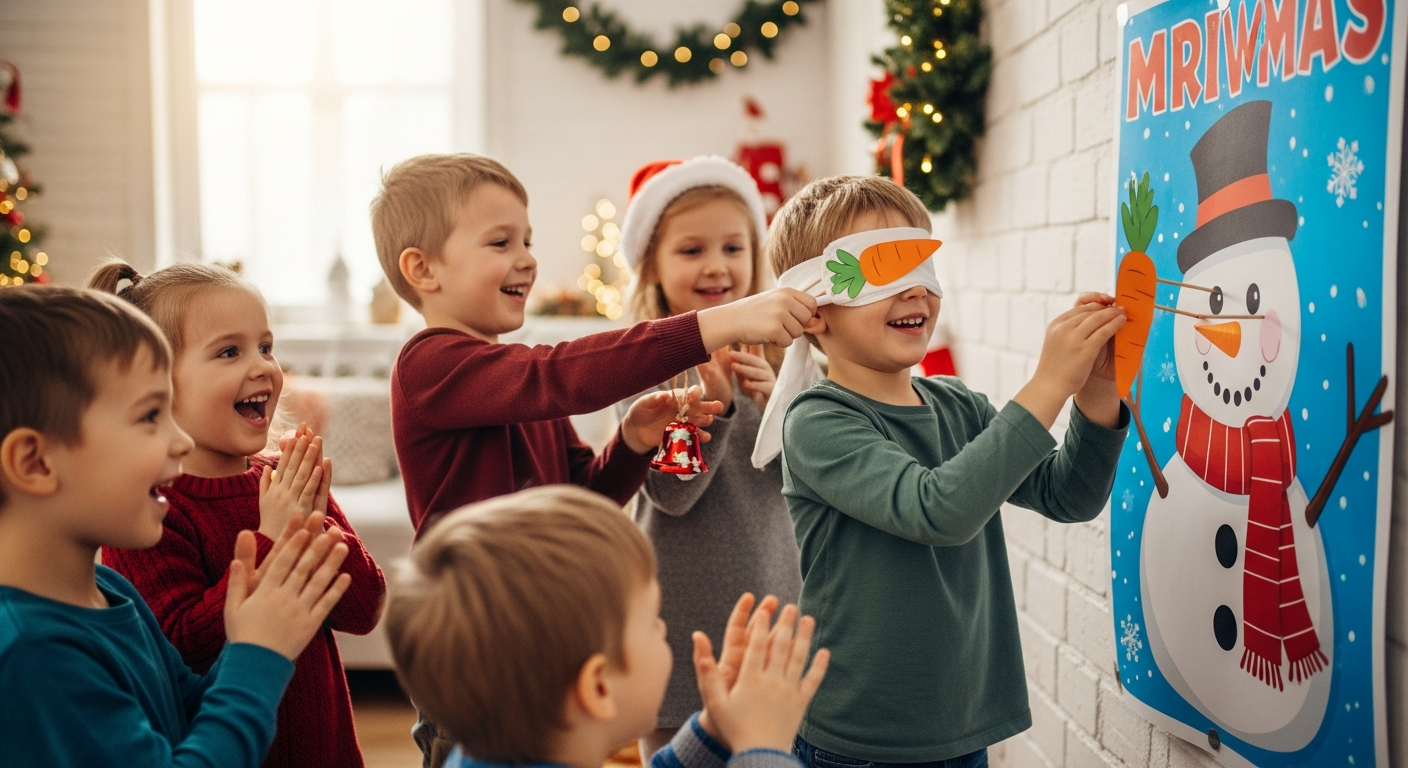
Table of Contents
- Introduction
- Why Christmas Games Are More Than Just Fun
- No-Prep & Low-Prep Christmas Party Games for Instant Fun
- Interactive & Collaborative Christmas Games for Groups
- Creative & Sensory Christmas Activities
- Fostering Communication and Connection Through Play
- Speech Blubs: Your Partner in Joyful Communication
- Choosing the Right Speech Blubs Plan: Maximize Your Child's Potential
- Conclusion
- FAQ
Introduction
The air is crisp, the lights are twinkling, and the scent of gingerbread fills every home. Christmas is undeniably a magical time, but for parents hosting a festive gathering, it can also bring the challenge of keeping energetic kids engaged and entertained. How do you create an atmosphere where laughter rings freely, memories are forged, and every child feels part of the holiday cheer? The answer often lies in the power of play. Thoughtfully chosen games can transform a simple Christmas party into a dynamic, interactive experience that not only delights children but also subtly supports their developmental milestones, including crucial speech and language skills. This post will share a sleigh-full of engaging, laughter-inducing games perfect for any kids' Christmas party, designed to create cherished memories and foster a love for communication.

Why Christmas Games Are More Than Just Fun
While the primary goal of any party game is enjoyment, Christmas activities offer a unique opportunity to weave in elements that benefit a child's overall development. Beyond the pure fun, these games provide a rich environment for learning and growth.
Creating Lasting Memories and Traditions
Christmas is built on traditions, and games quickly become cherished rituals children look forward to year after year. These shared experiences form the bedrock of family bonds, offering predictable joy and a sense of belonging. The laughter, the friendly competition, the collaborative effort – these are the moments that truly stick, far more than any fleeting gift.
Encouraging Interaction and Social Skills
For many children, navigating social situations can be a learning curve. Party games provide a structured yet playful setting to practice essential social skills like turn-taking, sharing, negotiating, and understanding different emotions (winning, losing, cheering on teammates). They encourage children to interact with peers and adults outside of their immediate family, fostering empathy and cooperation.
Boosting Communication and Language Development
Every game, from the simplest to the most complex, inherently promotes communication. Children need to listen to instructions, ask questions, explain rules, describe actions, and express their excitement or frustration. This active engagement with language, often in a low-pressure, high-fun environment, is invaluable for speech development. Whether it’s practicing new vocabulary, forming sentences, or understanding non-verbal cues, games are a natural classroom for communication.
Physical Activity and Energy Release
Let's face it: kids have boundless energy, especially during the excitement of the holidays. Structured games offer a fantastic outlet for this energy, promoting gross motor skills, coordination, and healthy movement. A well-placed physical game can help children burn off steam, leading to more focused and calm participation in quieter activities later.

No-Prep & Low-Prep Christmas Party Games for Instant Fun
Sometimes, you need a game that can be pulled together in minutes with minimal supplies. These "Minute-to-Win-It" style challenges and classic games with a festive twist are perfect for spontaneous fun and encouraging quick thinking and action.
Minute-to-Win-It Style Challenges
These games are characterized by their simple rules, use of common household items (often Christmas-themed!), and a one-minute time limit, making them fast-paced and exciting for kids.
- Gingerbread Shuffle: Each player places a small gingerbread cookie on their forehead. On "Go!", they must try to move the cookie from their forehead to their mouth using only facial muscles, no hands allowed! This game is fantastic for developing fine motor control and concentration. For a child working on muscle control for articulation, this playful exercise can be surprisingly beneficial in an indirect way.
- Candy Cane Slide: Players hold a candy cane in their mouth, with the hook facing down. The challenge is to hook as many other candy canes as possible onto the one in their mouth within one minute. This requires immense focus, hand-eye coordination (even without hands!), and patience. It's a great exercise in precision and problem-solving.
- Bell Stack: Provide each child with a handful of small, bell-shaped candies. In one minute, they must stack them as high as possible, any design counts! The player with the tallest freestanding tower wins. This activity enhances fine motor skills, spatial reasoning, and delicate touch. It can also encourage descriptive language as children explain their stacking strategies.
- Oh, Christmas Tree: Give each player a paper plate and a can of whipped cream. In one minute, they must spray the whipped cream onto the plate to create the tallest "Christmas tree" they can. You can judge by height or by the most creative design. This messy, fun game promotes creativity, quick decision-making, and imaginative play.
- Tannenbaum Avalanche (Cup Stacking): Each player gets a stack of small red plastic cups. On cue, they have one minute to build the tallest possible "Christmas tree" tower. This is a classic challenge that builds spatial awareness, planning skills, and fine motor speed.
Relatable Scenario: For a child who might be a "late talker" and loves visual, hands-on activities, a game like "Oh, Christmas Tree" with whipped cream provides a sensory rich experience that naturally elicits exclamations ("Wow!," "Big!"), requests ("More!"), and descriptive words ("Tall," "Messy," "White"). Parents can model these words as their child plays, turning a fun game into a rich, spontaneous language lesson. This aligns with our mission at Speech Blubs to provide immediate, effective, and joyful solutions for children's communication needs, blending scientific principles with play. We are committed to fostering a love for communication in every child.
Classic Games with a Christmas Twist
These familiar games get a festive makeover, making them feel fresh and exciting for the holiday season.
- Pin the Nose on Rudolph: A twist on the classic "Pin the Tail on the Donkey." Draw or print a large picture of Rudolph without his nose. Blindfold players, spin them around gently, and have them try to stick a red, sticky-back gift bow (Rudolph's nose) in the correct spot. This game encourages spatial awareness, following directions, and listening skills as others give (or mislead with!) instructions.
- Holiday Tic-Tac-Toe: Create a tic-tac-toe grid on a large surface using festive washi tape or ribbons. Use small holiday-themed objects as markers, such as mini candy canes and small ornaments, instead of X's and O's. This game is excellent for strategic thinking, pattern recognition, and turn-taking.
- Christmas Memory Game: Cut out nine 3-inch squares from cardboard and attach holiday stickers to one side, ensuring there are three sets of two matching stickers. Lay them face down. Players take turns flipping two cards to find a match. This boosts cognitive skills, memory recall, and concentration.
- Guess Who Christmas Character?: Have an adult write various Christmas characters (e.g., Santa, Elf, Reindeer, Snowman) on sticky notes. Each player chooses one without looking and places it on their forehead. Players then take turns asking "yes" or "no" questions about their character until they guess who they are. This game is fantastic for developing questioning skills, descriptive language, and deductive reasoning.
- Christmas Scavenger Hunt: Create a list of holiday-themed items for children to find around the party area (e.g., a red ornament, something striped, a jingle bell, a picture of Santa). Provide clues or pictures for younger children. This encourages problem-solving, reading comprehension (or picture recognition), and vocabulary related to Christmas items.
Relatable Scenario: For a child who is shy about speaking up in larger groups, a game like "Guess Who Christmas Character?" can provide a low-pressure, engaging way to practice asking 'yes' or 'no' questions and using descriptive words. As they gather clues and make guesses, they build confidence in their expressive language, one question at a time. This mirrors how Speech Blubs offers playful, interactive prompts that gently encourage verbal participation, helping children "speak their minds and hearts."
Interactive & Collaborative Christmas Games for Groups
These games encourage teamwork, communication, and often a healthy dose of friendly competition, making them ideal for larger gatherings.
Team Challenges
- Family Christmas Mistletoe Kissing Toss Game: Divide players into teams of two. One teammate tosses, the other catches. A pile of wrapped Hershey's Kisses is placed in front of the tosser. On "Go!", the tosser must unwrap a Kiss and toss it into their teammate's mouth. The team with the most catches in one minute wins. This game is hilarious and fantastic for teamwork, hand-eye coordination, and precise motor skills.
- Gift Wrapping Race: Set up a table with wrapping paper, scissors, tape, and a few awkwardly shaped items (e.g., a stuffed animal, a ball, a remote control). Challenge teams or individual players to wrap as many items as neatly as possible within a time limit. This game fosters fine motor skills, spatial reasoning, and teamwork under pressure. Judges can award points for speed, neatness, and creativity in tackling tricky shapes.
- Candy Cane Relay: Divide participants into two teams. The first person on each team is given a candy cane to hold in their mouth (hook facing forward). At the opposite end of the room, there's a bowl of more candy canes. The player must run to the bowl and, using only their mouth, hook another candy cane. They then carefully transport it back and pass it (mouth-to-mouth!) to the next team member. The first team to complete the relay wins. This is a wonderfully silly game that promotes coordination, patience, and team spirit.
Relatable Scenario: Imagine a family with a child who struggles with expressive language but thrives on physical challenges. Playing "Candy Cane Relay" allows them to participate actively in a team, focusing on the physical task while observing and reacting to their teammates. Parents can verbally narrate the actions ("Go!," "Almost!," "Careful!," "Next!"), providing rich language models that the child absorbs and might begin to imitate in their own playful speech. This kind of interactive play is a powerful supplement to a child's overall development plan and is perfectly aligned with the screen-free alternatives and family connection that Speech Blubs champions.
Bingo & Trivia Fun
These games are perfect for winding down a bit, encouraging listening, observation, and recall.
- Christmas Movie Bingo: Create bingo cards with images or names of common characters, objects, or phrases from popular Christmas movies (e.g., Santa, reindeer, "Ho ho ho," gingerbread man, sleigh, snowman). As you watch a family-friendly Christmas movie, players mark off items as they appear. First to bingo wins! This enhances observation skills, matching, and listening comprehension.
- Christmas Movie Trivia: Prepare a list of trivia questions based on favorite holiday films. Divide into teams or play individually. This tests memory recall, general knowledge of holiday culture, and encourages verbal expression as children share answers and explanations.
- Snowman Bingo: Similar to movie bingo, but themed specifically around snowmen and winter elements. Use mini marshmallows as markers for an extra sweet touch. This is great for matching, number or shape recognition (if using numbers/shapes on the card), and fine motor skills (placing marshmallows).
Creative & Sensory Christmas Activities
Engaging multiple senses can create a richer, more memorable play experience, especially beneficial for young children who learn through exploration.
Crafts & Edible Fun
- Letters to Santa: Set up a cozy station with festive paper, crayons, markers, stickers, and envelopes. Children can write or draw their letters to Santa. Having a "North Pole Express" mailbox to drop them into adds to the magic. This encourages pre-writing or writing skills, imaginative play, and the communication of desires. For children learning to express themselves, drawing pictures of what they want can be a powerful alternative to words.
- Holiday Coloring Pages & DIY Christmas Cards: Provide printable coloring pages featuring Christmas, Hanukkah, Kwanzaa, or winter themes. Offer glitter, stickers, and other craft supplies for extra flair. These finished masterpieces can be transformed into DIY cards for family and friends. This activity boosts fine motor skills, creativity, and can spark descriptive language about colors, shapes, and feelings ("This is a happy Santa!").
- Holiday Candy Crafts: Use various candies (e.g., gumdrops, pretzels, M&Ms, Hershey's Kisses) to create edible art. Think gingerbread house decorating, building candy trains, or making marshmallow snowmen. These activities are fantastic for following instructions, fine motor control, sensory exploration (taste, texture, smell), and vocabulary related to food and shapes.
- Christmas Scent Game: Gather small, opaque containers filled with iconic Christmas scents (e.g., cinnamon sticks, peppermint extract on cotton balls, pine needles, orange peel). Children close their eyes and try to guess the scent. This enhances sensory discrimination and expands vocabulary related to smells ("spicy," "sweet," "fresh," "minty").
- Holiday Cookie Exchange & Hot Cocoa Bar: While not strictly a game, a cookie decorating station encourages creativity and fine motor skills. Invite guests to bring a batch of cookies, or provide plain sugar cookies with various frostings, sprinkles, and candies. Pair this with a self-serve hot cocoa bar with marshmallows, whipped cream, and candy cane stirrers. These activities promote social interaction, following directions (for decorating), and rich descriptive language for tastes, textures, and appearances.
Relatable Scenario: For parents of a child who is just beginning to explore sounds and words, the "Holiday Candy Crafts" provide an ideal opportunity. As they decorate a gingerbread cookie, a parent can model words like "red," "sweet," "sticky," "sprinkle," and "eat!" The child is motivated by the delicious outcome and the sensory experience, making them more likely to imitate sounds or simple words. This immersive, play-based learning is at the heart of our unique "video modeling" methodology at Speech Blubs, where children learn by watching and imitating their peers. You can read more about the scientific backing of our methods on our research page.
Fostering Communication and Connection Through Play
The true magic of these Christmas games lies in their ability to deepen connections and naturally support a child's communicative journey.
The Power of Play in Development
Play is not just downtime; it's how children learn about the world, test boundaries, and develop crucial skills. Interactive games provide a safe and stimulating environment for children to experiment with language, social rules, and emotional regulation. When children are having fun, they are more open to learning and engaging.
The Importance of Parental Involvement
While some games can be self-directed, the greatest benefits come when parents and caregivers play with their children. This involvement models enthusiasm, demonstrates turn-taking, and provides immediate feedback and encouragement. It's about being present, sharing laughter, and co-creating joyful memories.
Modeling Language Naturally
During games, parents have countless opportunities to model correct language, expand on a child's utterances, and introduce new vocabulary. If a child points to a snowman in a game, a parent can say, "Yes, that's a big, white snowman!" This natural expansion helps children internalize new words and sentence structures without feeling like they are being "taught."
Turn-Taking: A Foundational Skill
Almost every game involves turn-taking, a fundamental social-communication skill. It teaches patience, understanding of others' needs, and the rhythm of conversation. For children who struggle with back-and-forth interaction, games offer a playful, concrete way to practice this skill.
Reducing Frustration and Building Confidence
Play provides a low-stakes environment for children to try new things. When a child succeeds in a game, even a small victory, it boosts their confidence. For children facing communication challenges, successful participation in games can reduce frustration by providing alternative ways to interact and express joy, encouraging them to attempt more verbal communication over time. Observing your child during these games can also provide valuable insights into their current developmental stage. Do they understand multi-step instructions? Are they attempting to mimic sounds or words spontaneously? This natural observation, coupled with tools like our quick 3-minute preliminary screener, can help parents identify areas where their child might benefit from targeted support and receive a personalized assessment and next-steps plan.
Speech Blubs: Your Partner in Joyful Communication
At Speech Blubs, we believe every child deserves to "speak their minds and hearts." Our company was born from the personal experiences of our founders, who all grew up with speech problems and created the tool they wished they had. We are committed to providing an immediate, effective, and joyful solution for the 1 in 4 children who need speech support. We achieve this by blending scientific principles with play into one-of-a-kind "smart screen time" experiences.
While Christmas games are fantastic for fostering direct interaction, Speech Blubs offers a powerful supplementary tool for consistent, targeted speech and language development. Our unique approach utilizes "video modeling," where children learn by watching and imitating their peers. This active engagement stands in stark contrast to passive viewing, like cartoons, and transforms screen time into a productive learning opportunity. For example, if your child enjoys the "Holiday Candy Crafts," they might also love the "Yummy Time" section within Speech Blubs, where they can practice saying words related to food by watching and imitating their peers, reinforcing those early sounds and concepts in a playful, engaging way.
Parents often share stories of how Speech Blubs has transformed their child's communication journey. These successes, shared on our testimonials page, are a testament to our commitment to making speech development accessible and fun. Our app becomes a powerful tool for family connection, offering structured activities that parents can do with their child, guiding them through the imitation process and celebrating every new sound and word.
Choosing the Right Speech Blubs Plan: Maximize Your Child's Potential
When you're ready to integrate Speech Blubs into your child's communication journey, we offer two flexible plans to suit your family's needs. We believe in transparency and want you to make the best choice to support your child.
Our Monthly Plan is available for $14.99 per month. This plan provides access to our core features and a fantastic start to improving your child's speech.
However, for the best value and a comprehensive experience, we highly recommend our Yearly Plan at just $59.99 per year. This breaks down to an incredible value of just $4.99 per month, allowing you to save 66% compared to the monthly subscription!
The Yearly Plan isn't just cheaper; it also includes exclusive, high-value features designed to give your child every advantage:
- A 7-day free trial: Experience the full app and its benefits before committing, allowing you to see firsthand how your child engages with our unique video modeling.
- The extra Reading Blubs app: Extend the learning beyond speech with our companion app, focusing on early literacy skills.
- Early access to new updates: Be the first to enjoy new content and features as we continuously enhance the app.
- 24-hour support response time: Get prompt assistance whenever you need it from our dedicated support team.
The Monthly Plan, while a good starting point, does not include these valuable benefits. To unlock the full suite of features and embark on the most effective and comprehensive communication journey with Speech Blubs, the Yearly Plan is the clear best choice.
Ready to see the difference Speech Blubs can make? Create your Speech Blubs account today and make sure to select the Yearly Plan to get your free trial and all the exclusive features!
Conclusion
Christmas parties are more than just gatherings; they are opportunities to create cherished memories, strengthen family bonds, and foster crucial developmental skills in children. The array of games we've explored, from energetic Minute-to-Win-It challenges to creative sensory activities, provides a rich tapestry of engagement that goes far beyond simple entertainment. They are natural environments for children to practice listening, speaking, social interaction, and problem-solving, all while basking in the festive spirit.
As you plan your next holiday celebration, remember that joyful play is a powerful catalyst for growth. And for those moments when you're looking for targeted, playful support for your child's communication journey, Speech Blubs is here to help. Our app complements these fun party games by offering structured, engaging "smart screen time" that uses video modeling to build foundational speech and language skills.
This Christmas, empower your child to find their voice and connect with the world around them. Download Speech Blubs on the App Store or Google Play today to start your 7-day free trial with the Yearly Plan. Unlock all the exclusive features, including the Reading Blubs app and priority support, and set the stage for a brighter communicative future for your child.
FAQ
Q1: How can Christmas games help with a child's speech development?
Christmas games provide a natural and fun environment for speech development. They encourage children to listen to instructions, vocalize excitement, use descriptive language, ask and answer questions, and practice turn-taking. These interactive experiences are crucial for building vocabulary, improving sentence structure, and developing social communication skills in a low-pressure setting.
Q2: What age range are these games suitable for?
Many of the games listed can be adapted for a wide range of ages. For toddlers and preschoolers, focus on simpler games with clear instructions, lots of sensory input, and opportunities for imitation. Older children will enjoy the competitive and strategic elements of more complex games. The key is to adapt rules and expectations to the developmental level of the children participating.
Q3: How does Speech Blubs fit in with these games?
Speech Blubs complements these real-world games by offering structured "smart screen time" that supports speech and language development through its unique video modeling approach. While party games foster spontaneous interaction, Speech Blubs provides targeted practice for specific sounds, words, and concepts. It's a powerful tool for reinforcing skills learned in play and introducing new ones in an engaging, child-friendly format, acting as a screen-free alternative to passive viewing.
Q4: What's the best way to get started with Speech Blubs?
The best way to get started with Speech Blubs and experience all its benefits is by choosing the Yearly Plan. This plan offers a 7-day free trial, full access to the Speech Blubs app, the Reading Blubs companion app, early access to new updates, and 24-hour support. You can download Speech Blubs on the App Store or Google Play and select the Yearly Plan to begin your free trial and unlock all features today.
About the author