
Awesome Summer Camp Activities for Kids
 By Speech Blubs Team•Jan 13, 2026•21 min.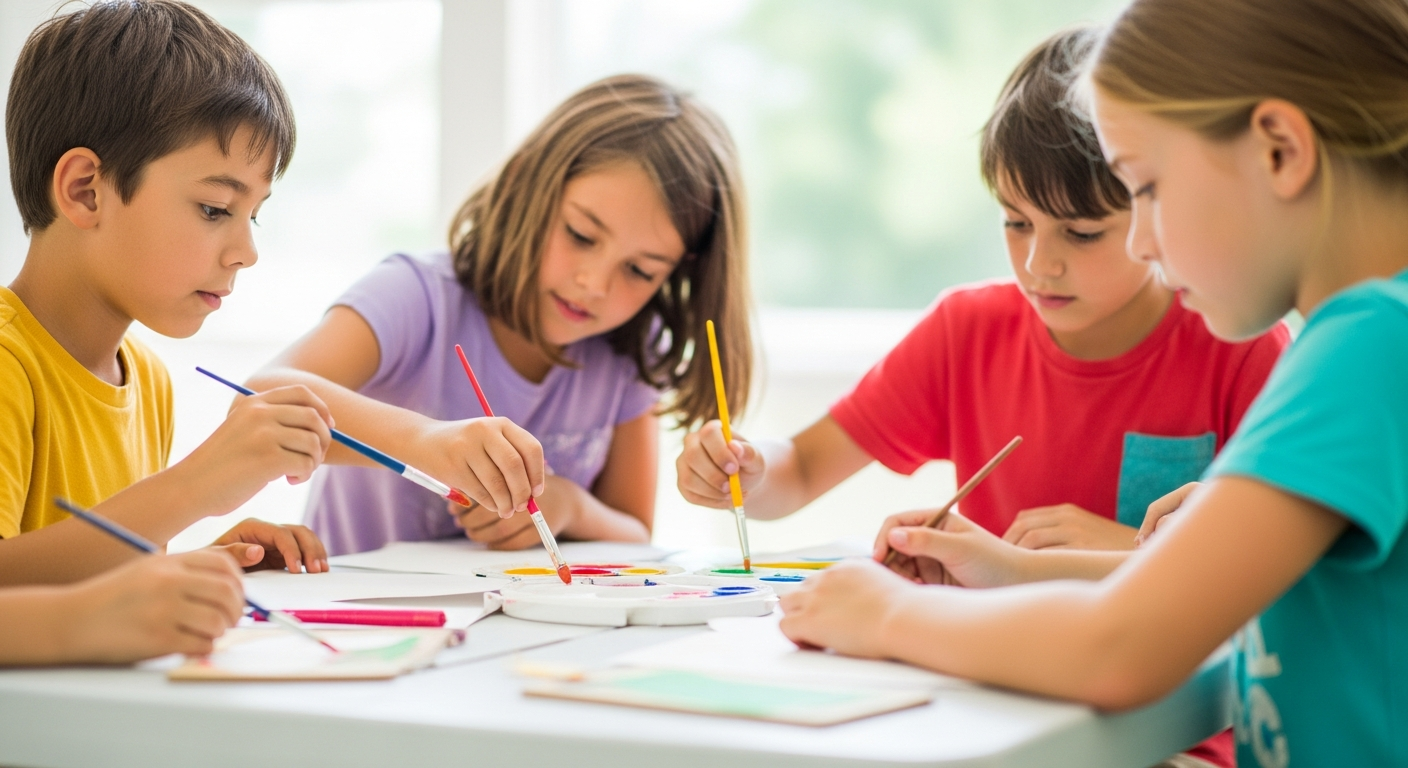
Table of Contents
- Introduction to Summer Fun and Growth
- The Magic of Summer Camp at Home: Why It Matters for Development
- Outdoor Adventures: Connecting with Nature and Peers
- Creative Camps: Unleashing Imagination and Expression
- Brain Booster Bonanza: STEM & Learning through Play
- Teamwork & Trust: Building Social Bonds
- Seamlessly Integrating Speech Blubs into Your Summer Fun
- Unlocking the Full Potential: Speech Blubs Pricing and Value
- Conclusion
- FAQ
The sun is shining, the days are long, and the promise of summer fun fills the air! Yet, for many parents, the shift from school routines to endless summer days can feel like a daunting juggling act. You want your children to have memorable experiences, to laugh, learn, and grow, but how do you fill those weeks with enriching activities that go beyond passive screen time? How do you foster their development, especially their communication skills, while still embracing the carefree spirit of summer?
The good news is, you don't need a formal summer camp to create an environment rich with discovery, creativity, and connection. You can bring the magic of camp right into your home, backyard, and neighborhood, transforming ordinary moments into extraordinary adventures. This comprehensive guide will equip you with a treasure trove of fun activities for kids summer camp – ideas that are not only entertaining but also thoughtfully designed to nurture your child's social, emotional, and communication development. We'll explore a variety of engaging options, from thrilling outdoor quests to imaginative indoor projects and brain-boosting challenges, all while highlighting how these experiences, alongside supportive tools like Speech Blubs, can empower your child to truly speak their minds and hearts.

Introduction to Summer Fun and Growth
Summer offers a unique opportunity for children to explore new interests, develop independence, and strengthen critical skills in a relaxed setting. It’s a time for fewer schedules and more spontaneous joy, for digging in the dirt, telling silly stories, and building magnificent forts. While many traditional summer camps provide these experiences, the philosophy behind them – focused on engagement, exploration, and peer interaction – can be easily replicated and even enhanced at home.
At Speech Blubs, we believe every child deserves the chance to express themselves fully, to "speak their minds and hearts." This belief is deeply personal to us, as our founders all navigated childhood speech challenges and built the very tool they wished they had. We understand that effective communication is the cornerstone of connection, learning, and self-confidence. That's why we champion activities that are not only fun but also naturally encourage language development, active listening, and social interaction. We are committed to providing an immediate, effective, and joyful solution for the 1 in 4 children who need speech support, blending scientific principles with play into one-of-a-kind "smart screen time" experiences that act as a powerful tool for family connection, complementing the very activities we'll discuss here.
Throughout this post, we'll dive into diverse categories of fun activities for kids summer camp that you can easily adapt for your family. From muddy outdoor escapades to quiet indoor crafts, each idea is designed to spark imagination and provide countless opportunities for verbal engagement. Get ready to transform your summer into a season of growth, laughter, and powerful communication, preparing your child to confidently share their unique voice with the world.
The Magic of Summer Camp at Home: Why It Matters for Development
Summer camp, whether in a dedicated facility or your own backyard, is more than just a way to fill time; it's a powerful catalyst for development. Beyond the immediate entertainment, these activities build a foundation for lifelong skills.

Fostering Holistic Development
- Social-Emotional Growth: Camp activities often involve teamwork, negotiation, and sharing. Children learn empathy, how to navigate group dynamics, and how to express their feelings appropriately. For a child who might be shy, participating in a group game or a collaborative craft can be a gentle way to build social confidence.
- Cognitive Skills: Problem-solving, critical thinking, and creativity are at the heart of many camp-style challenges. Building a fort, deciphering clues for a scavenger hunt, or concocting a science experiment all engage different parts of the brain, encouraging children to think flexibly and innovate.
- Physical Activity: From running through obstacle courses to splashing in water games, active play is crucial for physical health, coordination, and energy release. It’s also a fantastic way to develop body awareness and gross motor skills.
- Communication Mastery: Perhaps most importantly, these experiences are ripe with communication opportunities. Children explain rules, tell stories, describe their creations, ask questions, and vocalize their excitement or frustration. This active verbal exchange is fundamental for language acquisition and refinement. At Speech Blubs, we've seen firsthand how blending these real-world interactions with targeted speech practice can make a profound difference. Our unique approach of teaching complex communication skills through "video modeling," where children learn by watching and imitating their peers, provides a powerful complement to active, hands-on play. It offers a screen-free alternative to passive viewing, transforming screen time into "smart screen time" that builds essential communication skills.
Connection Over Consumption
In an age where passive screen time can easily dominate a child's day, creating active, engaging summer experiences is more vital than ever. Instead of children silently consuming content, these activities encourage them to actively participate, create, and connect. This doesn't mean screens are off-limits, but rather that they are used purposefully. For instance, after a nature scavenger hunt, a child might use Speech Blubs to practice animal sounds or descriptive words they encountered, turning their digital interaction into an extension of their real-world learning. This balanced approach helps children develop a love for communication, build confidence, reduce frustration, and foster joyful family learning moments.
Unsure if your child could benefit from a little extra communication support? Take our quick 3-minute preliminary screener to get a simple assessment and a free 7-day trial.
Outdoor Adventures: Connecting with Nature and Peers
Summer is synonymous with sunshine and the great outdoors. These activities tap into children's natural curiosity about the world around them while promoting physical activity and rich communication.
Nature Scavenger Hunts
A classic camp activity, nature scavenger hunts encourage observation and descriptive language. Create a list of items for children to find: "something soft," "something rough," "a feather," "a smooth stone," "a leaf with jagged edges," or "something red."
- Communication Focus: As children find items, encourage them to describe them using adjectives (bumpy bark, tiny bug, vibrant flower). Discuss where they found each item and why they picked it. This builds vocabulary and descriptive skills.
- Speech Blubs Connection: For a parent whose 3-year-old 'late talker' loves animals, our 'Animal Kingdom' section offers a fun, motivating way to practice 'moo' and 'baa' sounds by imitating real kids, building confidence to use those sounds during a backyard nature walk. Afterward, children can identify and verbally describe the animals they might have seen or heard, reinforcing their learning. Ready to explore? Download Speech Blubs on the App Store or Google Play to begin!
DIY Obstacle Courses
Transform your backyard into an "American Ninja Warrior" course! Use hula hoops, pillows, jump ropes, pool noodles, buckets, and even small slides.
- Communication Focus: Children can help design the course, verbally explaining their ideas and problem-solving. During the course, use action verbs ("Jump over!", "Crawl under!", "Balance on!"), and encourage children to describe their movements and challenges. Timing races adds a layer of competitive (but fun!) communication.
- Relatable Scenario: If your child struggles with following multi-step directions, creating an obstacle course together provides a visual and kinesthetic way to practice. You can break down each step verbally, "First, jump over the rope. Next, crawl through the tunnel." This helps reinforce sequencing and understanding of instructions, critical for both physical and verbal development.
Water Games Extravaganza
On hot summer days, water games are a must! From water balloon dodgeball to a simple "fireman's relay" (passing water in cups down a line), these activities offer refreshing fun.
- Communication Focus: Water games naturally elicit squeals of delight, laughter, and excited exclamations. Encourage children to describe the sensation of the water ("It's cold!", "Splash!"), talk about strategies for winning, and cheer for their teammates.
- Tips: Provide different colored water balloons to encourage color identification and team names.
Backyard Gardening Projects
Kids naturally love playing in the dirt! Plant fast-growing seeds like beans or sunflowers.
- Communication Focus: Discuss the planting process: "First, dig a hole. Next, put the seed in. Then, cover it with dirt." Use descriptive words for plants ("tall," "green leaves," "colorful flowers") and talk about the sequence of growth.
- Speech Blubs Connection: Our app's 'Food' or 'Nature' sections can introduce new vocabulary related to gardening, helping children describe their plants and the food they grow. This can reduce frustration when they want to talk about their green beans or sunflowers but lack the words. Ready for more? Create your account and begin your 7-day free trial today!
Star Gazing and Cloud Gazing
Lay a blanket on the grass and look up at the sky.
- Communication Focus: This is a fantastic opportunity for descriptive language and imaginative storytelling. "What shapes do you see in the clouds?" "Does that cloud look like an animal?" At night, identify constellations and tell stories about them, encouraging children to create their own narratives.
- Tips: Read books about stars or clouds beforehand to inspire their imagination and expand their vocabulary.
Creative Camps: Unleashing Imagination and Expression
Ignite your child's inner artist and storyteller with activities that encourage self-expression and imaginative play.
Storytelling and Puppet Shows
No props needed for a collaborative storytelling circle! Start a story ("Once upon a time, a friendly dragon lived in our backyard..."), and have each child add a sentence. Or, create simple sock puppets and put on a show.
- Communication Focus: Storytelling builds narrative skills, sequencing, character development, and imaginative language. Puppet shows encourage different voices, emotional expression, and turn-taking in dialogue.
- Relatable Scenario: If your child is struggling with expressive language, using puppets can provide a playful buffer. They might feel more comfortable experimenting with words and voices through a puppet than directly. Our app's "video modeling" method, where children learn by imitating peers, can help build this comfort with new sounds and words.
Arts and Crafts Wonderland
From painting rocks to making friendship bracelets or tie-dying old t-shirts, arts and crafts are endless sources of fun.
- Communication Focus: Discuss colors, shapes, textures, and the steps of the craft. "What color are you using?" "How does that glitter feel?" "What are we doing next?" Encourage children to describe their finished creations and perhaps even tell a story about them.
- Tips: Provide open-ended materials (paper, crayons, glue, fabric scraps, natural items) and let their creativity lead.
Music and Movement Mash-Up
Put on some music and have a dance party, or make homemade instruments from recycled materials (rice in bottles for shakers, rubber bands on tissue boxes for guitars).
- Communication Focus: Sing songs together (especially those with repetitive lines or actions), describe different instruments and their sounds, and use action words while dancing ("spin," "jump," "wiggle"). Create new lyrics to familiar tunes.
- Speech Blubs Connection: Music and rhythm are deeply connected to speech development. Our app provides rhythmic and engaging activities that make practicing sounds and words feel like play, fostering an early love for communication.
DIY Tie-Dye or Stone Painting
These classic camp crafts are always a hit. Tie-dying old white shirts or socks, or painting smooth river stones into "pet rocks" or garden decorations.
- Communication Focus: Talk through the steps of the process ("First we tie, then we dye!"). Discuss color choices, patterns, and the finished look. Encourage children to describe their unique creations.
- Relatable Scenario: For a child who might find it hard to initiate conversation, a finished craft provides a wonderful talking point. "Tell me about your tie-dye shirt! What's your favorite color on it?" This low-pressure prompt encourages descriptive language.
Brain Booster Bonanza: STEM & Learning through Play
Summer is the perfect time to explore science, technology, engineering, and math (STEM) in a fun, hands-on way, preventing the dreaded "summer slide" while developing crucial communication skills.
Simple Science Experiments
Baking soda volcanoes, making slime, or building a solar oven from a pizza box to melt S'mores are all exciting ways to explore scientific principles.
- Communication Focus: Encourage children to make predictions ("What do you think will happen?"), describe their observations ("It's bubbling!", "Look, the chocolate is melting!"), and explain the cause-and-effect. This builds scientific vocabulary and logical reasoning skills.
- Speech Blubs Connection: For a child who gets frustrated because they can't express their ideas during a craft project, our app's sections on 'Food' or 'Shapes' can introduce new vocabulary in a low-pressure, engaging way, helping them describe their artwork or snack later. This foundational vocabulary translates directly into explaining scientific observations. Download Speech Blubs on the App Store or Google Play to explore.
Building Challenges
Provide materials like LEGOs, cardboard boxes, popsicle sticks, or even natural items, and challenge children to build a specific structure (e.g., "a bridge that can hold a toy car," "a house for a small animal," "the tallest tower").
- Communication Focus: Children will naturally communicate as they plan, problem-solve, and collaborate. They'll describe their designs, explain their choices ("I used this block because it's strong"), and ask for help or materials.
- Tips: Encourage teamwork by assigning different roles or having them brainstorm together before building.
Riddle and Puzzle Time
Introduce a book of riddles, play "I Spy," or work on jigsaw puzzles together.
- Communication Focus: Riddles enhance deductive reasoning and descriptive language. "I Spy" helps with object identification and attribute description. Jigsaw puzzles encourage spatial reasoning and communication about strategies ("Where does this piece go?").
- Speech Blubs Connection: Our app, which is rated highly on the MARS scale, provides a scientifically-backed approach to building foundational vocabulary and cognitive skills, making activities like riddles more accessible and enjoyable for children. You can learn more about our methodology and research here.
Collaborative Story Writing
Fold a piece of paper into sections. Each person writes a sentence or two, folds the paper to hide their contribution (except the last sentence), and passes it on. Read the hilarious results at the end!
- Communication Focus: This activity fosters creativity, sequencing, and the ability to build upon others' ideas. It’s also a great way to practice reading aloud and listening.
- Relatable Scenario: For children developing their narrative skills, this game provides a structured way to practice creating a cohesive story, reducing the pressure of coming up with an entire plot on their own.
Teamwork & Trust: Building Social Bonds
Summer camp is famous for fostering friendships and teamwork. These activities bring those valuable social lessons home, encouraging cooperation and connection.
Cooperative Games
Instead of competitive games, try cooperative ones where everyone works together towards a common goal. "Magic Carpet" (where everyone stands on a blanket and tries to fold it smaller without touching the ground) or "People Machine" (where a group creates a machine with sounds and movements using their bodies) are great examples.
- Communication Focus: These games demand clear communication, negotiation, and active listening. Children must express their ideas, listen to others, and compromise to succeed.
- Speech Blubs Connection: For a child who struggles with social cues or taking turns during group games, our app's focus on imitation and interactive prompts helps them practice those foundational social communication skills in a supportive environment, getting them ready to 'speak their minds and hearts' with friends. Begin your journey of connection by visiting our main homepage.
Talent Show Prep and Performance
Give children time to plan and rehearse acts – singing, dancing, telling jokes, magic tricks, or reciting poetry. Then, gather the family for the "big show."
- Communication Focus: Planning an act involves discussing ideas, practicing delivery, and expressing creativity. Performing builds confidence, public speaking skills, and the ability to receive applause (and perhaps constructive feedback).
- Tips: Supply a box of props (scarves, hats, old clothes) to spark inspiration. Encourage group acts to support shy campers.
Blindfolded Trust Walks
In pairs, one person is blindfolded, and the other guides them verbally through a simple obstacle course (indoors or outdoors). The guide cannot touch the blindfolded person, only use words.
- Communication Focus: This activity is a powerful lesson in clear, precise verbal directions and active listening. The guide must use descriptive language and location words ("Take two steps forward," "Turn left at the tree," "Step over the log"). The blindfolded person must listen carefully and communicate any uncertainty.
- Relatable Scenario: This is particularly valuable for children who struggle with giving clear instructions or understanding verbal cues. It highlights the importance of precise language in a fun, engaging way.
Seamlessly Integrating Speech Blubs into Your Summer Fun
While hands-on activities are paramount, Speech Blubs can serve as a powerful, complementary tool, ensuring that your child’s communication development continues to flourish throughout the summer. Our mission is to empower children to "speak their minds and hearts," and we achieve this by blending scientific principles with joyful play.
Our company was born from the personal experiences of our founders, who all grew up with speech problems and created the tool they wished they had. We are committed to providing an immediate, effective, and joyful solution for the 1 in 4 children who need speech support. We achieve this by providing a screen-free alternative to passive viewing (like cartoons), offering one-of-a-kind "smart screen time" experiences, and a powerful tool for family connection.
Our unique approach of teaching complex communication skills through our "video modeling" methodology, where children learn by watching and imitating their peers, is backed by extensive research. We’re proud of our high MARS scale rating, which reflects our commitment to scientific efficacy and engaging content. See what other parents are saying about their child's success with Speech Blubs by checking out our testimonials.
How Speech Blubs Enhances Summer Learning: Practical Scenarios
- Building Foundational Vocabulary for Explorers: Imagine you've just completed a backyard nature hunt. For a parent whose 3-year-old 'late talker' loves animals, our 'Animal Kingdom' section offers a fun, motivating way to practice 'moo' and 'baa' sounds by imitating real kids, building confidence to use those sounds during a backyard nature walk. They can then come inside and use Speech Blubs to reinforce the names and sounds of creatures they might have spotted, linking real-world experience with targeted speech practice.
- Expressing Ideas During Creative Play: If your child gets frustrated because they can't express their ideas during a craft project, our app's sections on 'Food' or 'Shapes' can introduce new vocabulary in a low-pressure, engaging way, helping them describe their artwork or snack later. This can significantly reduce communication breakdowns and boost self-esteem.
- Practicing Social Communication Skills: For a child who struggles with social cues or taking turns during group games, our app's focus on imitation and interactive prompts helps them practice those foundational social communication skills in a supportive environment, getting them ready to confidently 'speak their minds and hearts' with friends during a talent show or cooperative game. Our engaging activities prepare them for real-life interactions.
Unlocking the Full Potential: Speech Blubs Pricing and Value
We believe that every child deserves the opportunity to communicate effectively, and we've designed our app to be an accessible and valuable resource for families. To give you the best experience and value, we offer different subscription plans:
- Monthly Plan: For $14.99 per month, you get access to our core speech therapy content.
- Yearly Plan: This is by far our best value at just $59.99 per year. This breaks down to an incredible $4.99 per month, allowing you to save 66% compared to the monthly plan!
Choosing the Yearly plan isn't just about saving money; it unlocks a richer, more comprehensive experience designed to support your child's journey to clearer communication:
- 7-Day Free Trial: Only with the Yearly plan can you kickstart your experience with a full 7-day free trial, allowing you and your child to explore all the fantastic features without commitment.
- Extra Reading Blubs App: Gain exclusive access to our companion Reading Blubs app, fostering early literacy skills alongside speech development.
- Early Access to New Updates: Be among the first to enjoy exciting new features and content as soon as they're released.
- 24-Hour Support Response Time: Receive priority support with a guaranteed 24-hour response time for any questions or assistance you might need.
The Monthly plan does not include these exclusive benefits, making the Yearly plan the clear best choice for families committed to long-term progress and maximum value.
Ready to embark on a summer of speech growth and joyful learning? We encourage you to choose the Yearly plan to get your free trial and the full suite of features! Create your account and begin your 7-day free trial today or Download Speech Blubs on the App Store or Google Play and select the Yearly option.
Conclusion
Summer is a precious time for children to learn, grow, and make lasting memories. By embracing the spirit of summer camp at home, you can provide your children with a wealth of fun activities for kids summer camp that not only entertain but also significantly contribute to their development, particularly their communication skills. From adventurous outdoor explorations and imaginative creative projects to brain-boosting challenges and essential teamwork experiences, each activity is an opportunity for laughter, learning, and connection.
Remember, the goal isn't perfection, but progress. Focus on fostering a love for communication, building confidence, reducing frustration, and creating joyful family learning moments. By engaging actively with your children and providing them with opportunities to speak, listen, and express themselves, you are laying a strong foundation for their future.
And as you embark on these summer adventures, know that Speech Blubs is here to support you every step of the way. Our app is a powerful supplement to your child's overall development plan, offering a scientifically-backed, engaging, and joyful solution that makes "smart screen time" truly impactful. We are committed to empowering your child to "speak their minds and hearts," helping them connect with the world around them.
Don't let this summer pass by without igniting your child's potential. Start your journey with Speech Blubs today! Download Speech Blubs on the App Store or Google Play and begin your 7-day free trial by selecting the Yearly plan to unlock all features, including the extra Reading Blubs app, early access, and priority support. Create your account and begin your 7-day free trial today and experience the Speech Blubs difference!
FAQ
Q1: How can I make these summer activities more accessible for children with varying abilities?
A1: Adaptations are key! For instance, modify an obstacle course by focusing on sensory exploration (e.g., different textures to feel) or by including tasks that can be completed seated. During a scavenger hunt, bring items indoors or use pictures for non-readers. For storytelling, use visual aids or allow children to express themselves through drawing or gestures. The most important thing is focusing on participation and joy, adjusting expectations to meet individual needs.
Q2: How much screen time is appropriate for kids during the summer, and how does Speech Blubs fit in?
A2: The American Academy of Pediatrics recommends balancing screen time with other activities. Instead of focusing solely on duration, consider the quality of screen time. Speech Blubs offers "smart screen time" because it's interactive, educational, and encourages active participation rather than passive viewing. We recommend using the app in short, focused sessions, always with an adult to guide and reinforce the learning, integrating it seamlessly with the hands-on activities discussed here.
Q3: What if my child is shy or hesitant to participate in group activities?
A3: Start small and make it optional. For a shy child, a one-on-one "trust walk" with a parent or a small group craft might be less intimidating than a large group game. Offer choices and encourage them without pressure. Sometimes, observing others first helps them feel more comfortable joining in later. Speech Blubs' video modeling, where children imitate their peers, can also be a gentle way to build confidence in a controlled environment, preparing them for real-world interactions.
Q4: How can I ensure these activities genuinely support my child's speech and language development?
A4: The best way is to actively engage with your child during these activities. Ask open-ended questions, encourage them to describe what they are doing and seeing, model correct language, and expand on their utterances. For example, if they say "dirty," you can say, "Yes, the dirt is brown and muddy!" Provide a rich language environment. Tools like Speech Blubs offer targeted practice, reinforcing sounds, words, and sentences in a fun, engaging way, complementing your real-world interactions.
About the author