
Best Educational Apps for Speech Delayed Toddlers
 By Speech Blubs Team•Mar 12, 2026•13 min.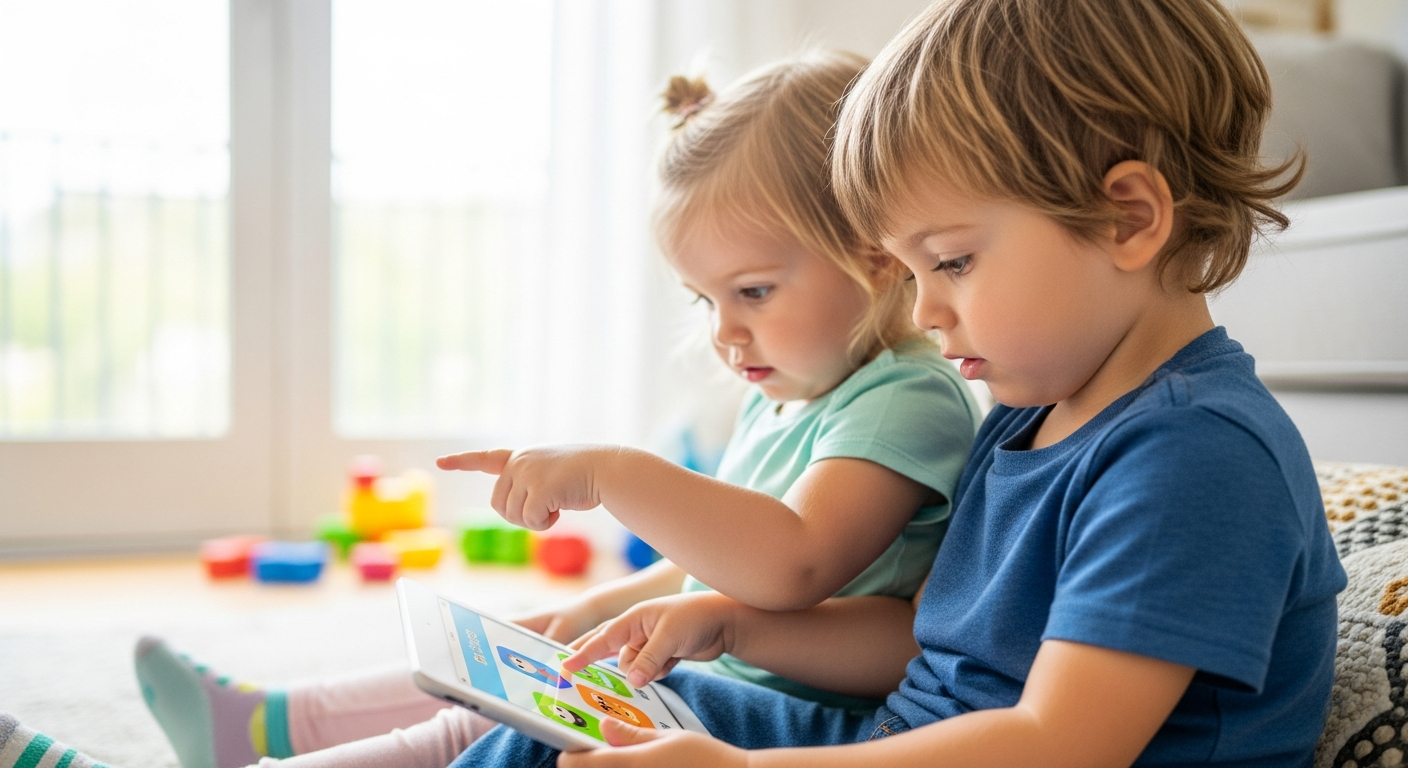
Table of Contents
- Introduction
- The Shift from Passive to Active Screen Time
- Why Video Modeling is a Game Changer
- Comprehensive Review: Apps for Speech Delayed Toddlers
- Practical Scenarios: Integrating Apps into Daily Life
- Understanding the Investment: Monthly vs. Yearly Plans
- Building Confidence and Reducing Frustration
- The Role of Professional Therapy
- Choosing the Right Features for Your Toddler
- Creating Joyful Family Learning Moments
- Conclusion
- Frequently Asked Questions
Introduction
Did you know that approximately one in four children will experience some form of speech or language delay during their early development? For many parents, realizing their toddler isn't hitting those expected milestones—like saying their first words or following simple directions—can be an isolating and overwhelming experience. We often find ourselves scrolling through endless forums, wondering if we’re doing enough or if there’s a secret tool we’ve missed. The journey toward helping a child find their voice is paved with patience, but it’s also one that can be filled with joy and connection when you have the right resources.
The purpose of this blog post is to provide you with a comprehensive look at how technology, when used intentionally, can support your child’s communication journey. We will explore the science behind effective digital learning, discuss the difference between passive and active screen time, and review the most effective apps for speech delayed toddlers. From articulation practice to vocabulary building, we want to empower you with tools that turn "screen time" into "smart time."

At Speech Blubs, we believe that every child deserves the chance to speak their minds and hearts. Our approach is rooted in the belief that learning should be a joyful, family-centered experience rather than a clinical chore. By the end of this article, you will have a clear roadmap of which apps to choose and how to use them to foster a deep love for communication in your little one.
The Shift from Passive to Active Screen Time
In the world of early childhood development, "screen time" is often a dirty word. We’ve all seen the warnings about the dangers of "passive viewing"—letting a child sit trance-like in front of bright, fast-paced cartoons for hours. This kind of interaction provides very little cognitive benefit because the child is simply a spectator. However, there is a massive difference between a child watching a cartoon and a child interacting with an educational tool designed to elicit a response.
We advocate for what we call "smart screen time." This is an active, two-way street where the app prompts the child, and the child responds with a sound, a touch, or a word. For parents of speech-delayed toddlers, this distinction is everything. When you use Speech Blubs, for instance, the experience is built around interaction. We don’t want your child to just watch; we want them to imitate, play, and engage with you.
The key to success with any app for speech delayed toddlers is "co-play." Think of a tablet not as a digital babysitter, but as an interactive storybook. When you sit with your child and explore these digital worlds together, you are modeling the very back-and-forth nature of human conversation. You are there to cheer for their successes, help them through frustrations, and bridge the gap between the digital world and real-life objects.
Why Video Modeling is a Game Changer
One of the most powerful scientific principles we use at Speech Blubs is "video modeling." This is a method where children learn by watching their peers. Research, including a notable UCLA study published by the American Speech-Language-Hearing Association, has shown that children are far more likely to imitate other children than they are to imitate adults.

This happens because of "mirror neurons" in the brain. When a toddler sees another child on a screen making a "b-b-b" sound or saying "apple," their own brain fires as if they were making the sound themselves. It creates a natural, low-pressure environment for imitation. This is why our methodology features real kids as "teachers." It reduces the anxiety a child might feel in a clinical setting and replaces it with the simple desire to play along with a friend. Our research page offers a deeper dive into how these scientific principles form the foundation of our work.
Comprehensive Review: Apps for Speech Delayed Toddlers
Choosing the right app can feel like a daunting task given the thousands of options in the app stores. To help you navigate this, we’ve categorized some of the best tools based on their specific developmental focus.
1. Speech Blubs: The All-in-One Communication Tool
Speech Blubs is designed to be more than just an app; it’s a comprehensive support system for your child’s speech journey. Our founders grew up with speech problems themselves and created the tool they wished they had—one that turns therapy into a game.
- Animal Kingdom: For a parent whose 3-year-old "late talker" loves animals, this section is a goldmine. It offers a fun, motivating way to practice "moo" and "baa" sounds. By watching a peer make the animal sound and then using a fun face filter to become that animal, children feel encouraged to participate.
- Mouth Gym: This section focuses on oral-motor skills. If your child struggles with the physical placement of their tongue or lips, the Mouth Gym provides peer-led exercises like blowing kisses or sticking out their tongue in a way that feels like play rather than a drill.
- Sing-Along: Music is a powerful vehicle for language. Our sing-along sections use familiar melodies to help children practice rhythm and simple word repetitions.
To get started, we recommend taking our quick 3-minute preliminary screener. It involves 9 simple questions about your child's current abilities and provides an assessment and next-steps plan tailored to their needs.
2. TallyTots: Verbs and Counting
TallyTots is an excellent choice for toddlers who are just beginning to understand the relationship between numbers and actions. It features 20 mini-games that focus on verbs and two-word combinations. For example, a child might "feed" a character or "turn on" a light. These small, repetitive actions are perfect for building the foundational vocabulary that speech-delayed toddlers often need.
3. My PlayHome: Daily Routines and Prepositions
This app acts as a digital dollhouse. It’s incredibly useful for working on "receptive language"—the ability to understand what others are saying. A parent can give instructions like, "Put the boy on the bed," or "Give the apple to the girl." Because the environment is a house, it uses familiar, everyday objects that a child sees in their own home, helping to bridge the gap between the app and the real world.
4. Peek-a-Boo Barn: Spatial Concepts and Vocabulary
Peek-a-Boo Barn is a classic for a reason. It is simple, high-contrast, and focuses on the "cause and effect" of communication. It helps children learn animal names and spatial concepts like "inside" or "behind." The repetitive nature of the barn door opening helps children predict what’s coming next, which is a key skill for developing the confidence to speak.
5. Articulation Station: Targeted Sound Practice
If your child’s delay is specifically related to articulation (how they form sounds), Articulation Station is a professional-grade tool used by many therapists. It focuses on specific phonemes (sounds) and provides hundreds of images for practice. While it is more structured and "academic" than Speech Blubs, it serves as a great supplement for children who are ready for targeted drills.
Practical Scenarios: Integrating Apps into Daily Life
The true value of any app for speech delayed toddlers is revealed when the skills learned on the screen translate to real-life interactions. Here are a few ways to ensure that happens:
- The Grocery Store Game: If your child has been playing with the "Yummy Time" section in our app, bring that learning to the supermarket. When you see an apple, remind them of the peer in the video saying "apple." Use the same enthusiasm and see if they’ll mimic the word in the aisle.
- Bath Time Mouth Gym: Use the concepts from the "Mouth Gym" while your child is in the bath. Practice blowing bubbles or making funny faces in the bathroom mirror together. This reinforces the physical movements they’ve seen on the screen in a fun, sensory environment.
- Morning Routine Modeling: Use apps like My PlayHome to talk through your child's morning routine. If the character in the app is brushing their teeth, talk about how "we brush our teeth, too!" This helps children understand that language is a tool for describing their own life and actions.
Understanding the Investment: Monthly vs. Yearly Plans
We want to be transparent about how you can access our tools so you can make the best choice for your family. We offer two main ways to join the Speech Blubs community:
- Monthly Plan: For $14.99 per month, you get full access to the Speech Blubs app and its library of over 1,500 activities.
- Yearly Plan: This is our most popular and high-value option. At $59.99 per year, the cost breaks down to just $4.99 per month.
Choosing the Yearly Plan offers several exclusive benefits that are not available with the monthly subscription:
- 7-Day Free Trial: You can explore everything we have to offer for a full week before you are charged.
- Reading Blubs App: You get full access to our companion app, Reading Blubs, designed with over 200 teachers to help your child transition from speaking to reading.
- Priority Support: You’ll receive a 24-hour support response time and early access to all new updates and features.
We encourage families to choose the Yearly plan to ensure they have the full suite of tools needed for a long-term, successful communication journey.
Building Confidence and Reducing Frustration
A speech delay is often frustrating for both the child and the parent. When a child can't express their needs—like being hungry, tired, or wanting a specific toy—it often leads to tantrums. Our goal is to reduce this frustration by giving children the "building blocks" of communication.
We don't promise that your child will be giving public speeches in a month. Every child’s timeline is unique. Instead, we focus on fostering a love for communication. When a child realizes that making a certain sound gets a reaction from their parent or makes a fun filter appear on the screen, their confidence grows. They begin to see communication as a "power" they have, rather than a task they are failing at.
See what other parents are saying about their child's success and how their frustration levels dropped by visiting our testimonials page. These real-world stories from families like yours are what drive us to keep improving our "smart screen time" experiences.
The Role of Professional Therapy
It is important to note that while apps for speech delayed toddlers are powerful supplements, they are not a replacement for professional speech-language pathology (SLP) services. If you have concerns about your child’s development, we always recommend consulting with a professional.
However, many therapists now recommend Speech Blubs as a way for parents to continue the work at home. Consistency is key in speech development. Having a 15-to-20-minute session every day with an interactive app can be more effective than a single one-hour therapy session once a week. Our app provides the "homework" that feels like play, ensuring that your child stays engaged and motivated between professional appointments.
Choosing the Right Features for Your Toddler
When looking for an app, consider the following checklist to ensure it’s a high-quality tool:
- Positive Reinforcement: Does the app reward the child for trying? At Speech Blubs, we use ABA-inspired positive reinforcement, giving kids stickers and fun mini-games when they complete an exercise.
- No Ad Disruptions: Children with speech delays need focus. Avoid apps with "flashy" features or third-party ads that take the child away from the learning task.
- Personalization: Does the app adapt to your child? We provide a personalized report with tips and tricks based on how your child interacts with our exercises.
- Multi-Language Support: For bilingual households, it is vital to have an app that supports multiple languages. We offer versions in US and UK English, Spanish, French, and Portuguese.
Creating Joyful Family Learning Moments
At the heart of everything we do is the desire to create moments of connection. The journey of a speech-delayed toddler can be stressful, but it doesn't have to be joyless. When you use these apps, you are creating a shared experience. You are laughing at the silly face filters, you are clapping when they say a new word, and you are showing them that you are their biggest supporter.
We invite you to join our community of over 10 million parents who have trusted us to help their children find their voices. Our mission is to empower children to speak their minds and hearts, one word at a time. Whether it's through our video modeling videos or our "Parents’ Academy" articles, we are here to support you every step of the way.
Conclusion
Navigating the world of apps for speech delayed toddlers is about finding the right balance between technology and human interaction. By choosing science-backed tools like Speech Blubs and engaging in co-play, you can turn a tablet into a powerful engine for development. Remember that the goal is not perfection; it's progress, confidence, and connection.
We’ve seen firsthand how the right tools can transform a child’s life, helping them move from frustration to expression. By focusing on imitation, repetition, and joy, you are giving your child the greatest gift possible: the ability to share their world with you.
Ready to take the first step? Download Speech Blubs on the App Store or Google Play Store today. To get the best value and access to our 7-day free trial, plus the Reading Blubs app and priority support, be sure to select the Yearly plan. You can also create your account on our website to get started immediately. Let's help your little one speak their mind and heart together!
Frequently Asked Questions
1. How long should my toddler use a speech app each day?
We recommend "smart screen time" sessions of about 15 to 20 minutes per day. The key is consistency and quality of interaction rather than length of time. It’s much more effective to have a short, highly interactive session where you are playing alongside your child than to let them use the app alone for an hour.
2. Can an app really help a child with a significant speech delay?
Apps are powerful supplements to an overall developmental plan. For many children, the "video modeling" method used in Speech Blubs triggers imitation in a way that other methods might not. While an app shouldn't be the only tool you use, it is a scientifically-proven way to build foundational skills, increase confidence, and encourage vocalization at home.
3. What is the difference between the Monthly and Yearly plans?
The Monthly plan ($14.99) provides basic access to the Speech Blubs app. The Yearly plan ($59.99/year) is our best value, breaking down to only $4.99/month. The Yearly plan also includes a 7-day free trial, the Reading Blubs app for literacy development, early access to new content, and 24-hour support response times.
4. Do I need to be with my child while they use the app?
Yes! We strongly advocate for "co-play." Interacting with your child while they use the app—repeating the sounds together, talking about the pictures, and cheering their efforts—is what turns digital play into real-world learning. This involvement helps bridge the gap between the screen and meaningful communication in daily life.
About the author