
Best Kids Dance Party Games for Joyful Movement
 By Speech Blubs Team•Jan 28, 2026•19 min.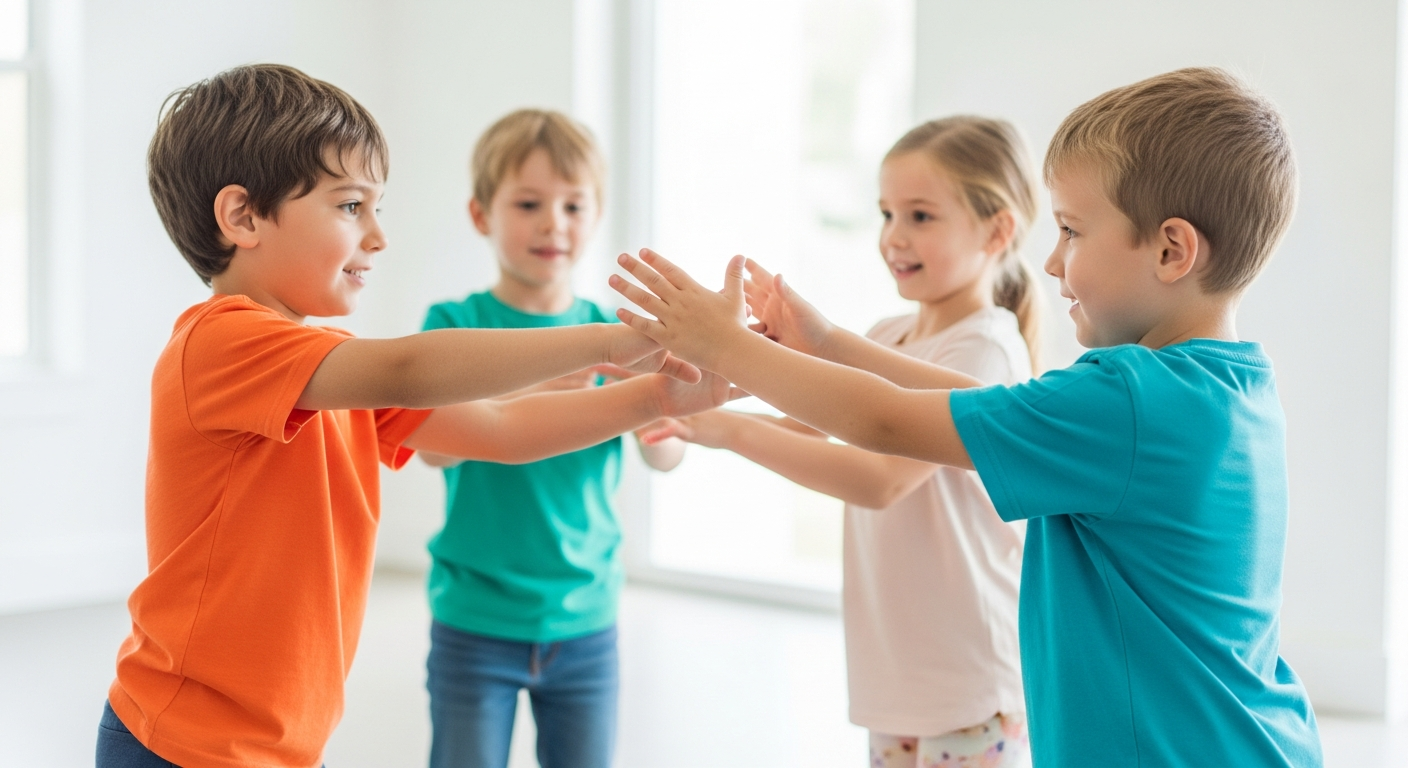
Table of Contents
- The Undeniable Benefits of Kids Dance Party Games
- Planning the Perfect Kids Dance Party
- Engaging Kids Dance Party Games for All Ages
- Beyond the Party: Integrating Dance into Daily Life
- How Speech Blubs Supports Your Child's Communication Journey
- Conclusion
- Frequently Asked Questions
Has your home ever felt like it was powered by a boundless, joyful energy, just waiting for the right rhythm to unleash it? For many parents, the answer is a resounding yes! Children, with their innate curiosity and zest for life, often express themselves most authentically through movement. And what better way to channel that incredible energy and foster a love for self-expression than through a fantastic kids' dance party? Dance games are more than just a way to burn off steam; they are powerful tools for development, connection, and pure, unadulterated fun.
In this comprehensive guide, we'll dive deep into the world of kids' dance party games, exploring their myriad benefits for your child's physical, social, emotional, and cognitive growth. We'll share a curated list of engaging activities perfect for any occasion – from an impromptu afternoon dance-off to a full-blown birthday bash – and offer practical tips to ensure your dance party is a smashing success. Beyond the immediate joy, we'll also explore how the foundational skills honed through dance, like imitation and rhythmic awareness, lay crucial groundwork for other developmental milestones, including speech and language. Get ready to turn up the music, because we're about to transform your space into the happiest dance floor around!

The Undeniable Benefits of Kids Dance Party Games
Before we even choose our first song, let's appreciate why dance games are such a valuable addition to a child's life. These activities are a fantastic blend of entertainment and education, contributing significantly to holistic development.
Physical Development
Dance is a full-body workout disguised as play! When children engage in dance games, they are:
- Improving Gross Motor Skills: Running, jumping, spinning, and bending all contribute to developing large muscle groups, essential for overall physical coordination.
- Enhancing Balance and Coordination: Following dance steps or freestyling requires children to control their bodies in space, refining their balance and eye-hand/eye-foot coordination.
- Building Stamina and Cardiovascular Health: Sustained movement during a dance party gets hearts pumping, strengthening the cardiovascular system and increasing endurance.
- Developing Body Awareness: Understanding how their bodies move, what they can do, and how much space they occupy is fundamental for physical literacy.
Social and Emotional Growth
Dance games are incredibly rich environments for nurturing vital social and emotional skills:
- Fostering Cooperation and Teamwork: Games like a "Dance Relay Race" teach children to work together, take turns, and cheer on their peers.
- Encouraging Communication and Listening: Following instructions, negotiating turns, and even non-verbal communication through dance moves sharpen listening skills and promote expressive abilities.
- Boosting Self-Confidence and Self-Esteem: Successfully mastering a new dance move or shining during a "Freestyle Dance-Off" provides a profound sense of accomplishment, building belief in their own capabilities.
- Promoting Emotional Expression: Dance offers a safe and creative outlet for children to express a wide range of emotions – joy, excitement, even frustration – through movement. The "Emoji Dance" is a perfect example of this.
- Cultivating Empathy: Observing and imitating others' movements in games like "Mirror Dance" can help children better understand different perspectives and feelings.
Cognitive Development
Beyond the physical and social, dance also offers a wealth of cognitive benefits:

- Sharpening Memory and Recall: Remembering sequences of steps in games like "Pass the Dance Move" significantly strengthens working memory.
- Improving Attention and Concentration: Staying engaged with the music, waiting for cues, and focusing on specific movements enhance concentration and sustained attention.
- Stimulating Creativity and Problem-Solving: Inventing new moves, adapting to changing rhythms, or using dance to act out a story fosters imaginative thinking and creative problem-solving skills.
- Enhancing Auditory Processing: Distinguishing between different musical tempos, rhythms, and lyrics helps children develop stronger auditory processing skills, which are critical for language acquisition.
At Speech Blubs, we deeply understand the interwoven nature of these developmental areas. We believe in empowering children to "speak their minds and hearts," and activities that build foundational skills like imitation, listening, and self-expression are invaluable. Our founders, all of whom experienced speech challenges as children, created Speech Blubs to provide an immediate, effective, and joyful solution for the 1 in 4 children who need speech support. We blend scientific principles with play, creating one-of-a-kind "smart screen time" experiences where children learn complex communication skills by watching and imitating their peers through our unique "video modeling" methodology. Just as children imitate dance moves, they imitate speech sounds and words within our app, transforming screen time into a powerful tool for family connection and growth.
Planning the Perfect Kids Dance Party
A great dance party doesn't just happen; it's orchestrated with a dash of planning and a sprinkle of spontaneity. Here’s how to set the stage for maximum fun.
Music Selection: The Heartbeat of Your Party
The right music is absolutely key. Consider:
- Age Appropriateness: Choose songs with child-friendly lyrics and themes.
- Variety of Genres: Mix up pop, classical, world music, instrumental, and even nursery rhymes for younger children. This exposes kids to different rhythms and cultures.
- Tempo Changes: Include songs with fast, slow, and moderate tempos to encourage diverse movements and keep energy levels dynamic.
- Interactive Songs: Look for songs with built-in actions or call-and-response elements.
Create a playlist beforehand to avoid awkward silences. Many streaming services offer kid-friendly playlists – you can even build your own!
Setting the Scene: Space and Safety
- Clear the Area: Move furniture, rugs, or anything that could be a tripping hazard. Ensure there's ample room for children to move freely without bumping into things or each other.
- Ambiance (Optional): Dim the lights, use fairy lights, or even a disco ball for a special touch. But remember, safety first – ensure pathways are still visible.
- Hydration Station: Have water bottles or a pitcher of water readily available. All that dancing will make them thirsty!
- Dress Code: While not strictly necessary, suggesting comfortable clothing or even a "dress-up" theme can add to the excitement.
Energy Management: Pacing the Fun
It’s easy for kids to get overstimulated or tired. Plan your games to include a mix of high-energy activities with calmer, more focused ones. This allows for natural breaks and helps manage the flow of the party, ensuring everyone has a good time without meltdowns.
Engaging Kids Dance Party Games for All Ages
Now for the fun part – the games! Here’s a selection of fantastic activities, from timeless classics to creative new twists, perfect for any gathering.
Classic Crowd-Pleasers
These games are universally loved and easy to explain, making them perfect for quickly getting everyone involved.
1. Freeze Dance (Musical Statues)
This is a go-to for a reason! Play music, and everyone dances. When the music stops, everyone must freeze in place like a statue. Anyone caught moving is out, or simply sits down until the next round for a non-elimination version.
- Variations:
- Musical Bobs: When the music stops, everyone must "bob" down to the floor as quickly as possible.
- Musical Buddies: When the music stops, call out a number. Children must quickly form groups of that number. Those not in a group are out or simply help judge the next round.
- Themed Freeze: "Freeze like an animal," "Freeze like a superhero," "Freeze like a tree."
2. Limbo
How low can you go? Two people hold a broomstick or a designated "limbo pole" horizontally. Children take turns dancing under the pole, bending backward without touching it. After everyone goes, lower the pole slightly.
- Tip: Play upbeat, rhythmic music to set the mood!
3. Hot Potato Dance
Instead of just passing a "hot potato," make it a dance! Children stand in a circle and pass a soft object (like a stuffed animal or a beanbag) around while music plays. When the music stops, whoever is holding the "hot potato" is out, or performs a silly dance move before rejoining the game.
- Relatable Scenario: For a child who tends to be a bit hesitant in group activities, the "Hot Potato Dance" can be less intimidating than a solo performance. The focus is on passing the object, making the movement secondary and reducing pressure, thus building confidence for more overt dancing later.
Creative & Expressive Games
These games encourage improvisation, imagination, and unique forms of self-expression through dance.
1. Mirror Dance
Pair children up. One child is the "leader," the other is the "mirror." As music plays, the leader performs dance moves, and the mirror tries to replicate them exactly. After a minute or so, switch roles.
- Developmental Connection: This game is fantastic for developing imitation skills, which are fundamental for speech and language development. Just as children learn to say "mama" or "ball" by mirroring the sounds and mouth movements of adults, this game strengthens their ability to observe and reproduce actions. This direct mimicry practice aligns perfectly with the "video modeling" approach we use in Speech Blubs, where children learn by watching and imitating their peers, fostering communication growth. You can learn more about our science-backed methodology on our research page.
2. Emoji Dance
Call out an emotion (e.g., happy, sad, angry, excited, silly) or hold up an emoji picture. Children must dance in a way that expresses that feeling. Change emotions every 30 seconds to keep it dynamic.
- Emotional Literacy: This game is brilliant for helping children connect movement with emotion, building their emotional vocabulary and understanding.
3. Dance Follow the Leader
One child starts as the leader, performing a series of dance moves. Everyone else copies. After a short time, a new leader is chosen. This gives everyone a chance to shine and encourages creative movement.
4. Dance Charades
Write various actions or objects on slips of paper (e.g., "jumping like a frog," "swimming," "baking a cake," "a robot"). Children pick a slip and "act out" the word or phrase through dance, while others guess.
5. Freestyle Dance-Off
Simply put on some favorite tunes and let kids take turns (or dance simultaneously) showing off their best freestyle moves. You can turn this into a friendly competition with informal "judges" (like parents) or simply celebrate everyone's unique style.
- Tip: Encourage positive encouragement from the "audience" to build confidence in the dancers.
Team & Group Games
For larger parties or to encourage more structured interaction, these games are perfect for getting everyone moving together.
1. Dance Relay Race
Divide children into teams. Create a simple dance routine (e.g., three specific moves). The first person on each team performs the routine, then tags the next person. The first team to have all members complete the routine wins.
2. Group Dance-Off / Dance Battle
Divide the group into two or more teams. Play music, and each team takes turns (or has individual representatives) showcasing their best dance moves. You can have the audience cheer for their favorite team, or a designated adult can judge. This encourages a bit of friendly competition and collective energy.
3. Rhythm Relay
Children sit in a circle. One person starts by creating a rhythmic sound or simple body percussion (e.g., clap-clap-stomp). The next person repeats it and adds their own sound/move. The sequence continues, getting longer and more complex, challenging memory and rhythm skills.
4. Disco Dress-Up Relay
Gather a pile of silly, oversized clothes and accessories (hats, scarves, big sunglasses, feather boas). Divide into teams. The first person races to the pile, puts on all the items, dances to a designated spot, takes them off, races back, and tags the next teammate. The first team to finish wins! This is always a riot.
Music-Focused Brain Games
Not all dance games have to be high-energy. These games blend music with cognitive challenges, perfect for a slight cool-down or a change of pace.
1. Name That Tune!
Play the first few seconds of popular children's songs or recognizable pop hits. Children (individually or in teams) guess the song title. You can add points for guessing the artist too!
2. Music Trivia
Prepare some simple music-related trivia questions (e.g., "What instrument does a drummer play?", "What's a fast tempo called?"). Divide children into teams and ask questions, awarding points for correct answers.
3. Lip Syncing Competition
Provide a "microphone" (a hairbrush works perfectly!) and let children choose a song to lip sync and perform. Encourage dramatic flair, dance moves, and facial expressions. This is a fantastic way to encourage stage presence and self-expression without the pressure of singing live.
- Relatable Scenario: For a child who might be a "late talker" and shy about using their voice, participating in a lip-syncing competition can be a breakthrough. The focus shifts from vocal production to performance and expression, building confidence in front of others. This experience can indirectly foster a greater willingness to use their voice in other contexts, much like how Speech Blubs offers a low-pressure environment for speech practice.
Beyond the Party: Integrating Dance into Daily Life
The joy and developmental benefits of dance don't have to be limited to special occasions. Incorporating movement and music into daily routines can have a lasting positive impact.
- Morning Dance-Off: Start the day with a favorite song to energize everyone.
- Transition Tunes: Use music to signal transitions (e.g., "clean-up song," "get ready for dinner song").
- Mood Booster: A quick dance break can instantly lift spirits or help release pent-up energy.
- Storytelling Through Movement: Encourage children to act out stories or emotions through dance.
These informal dance moments reinforce many of the same skills that are crucial for language development. Imitation, rhythmic awareness, active listening, and the ability to express oneself non-verbally all contribute to a child's overall communication foundation.
At Speech Blubs, we are passionate about making communication joyful and accessible. Our mission is to provide an immediate, effective, and joyful solution for children who need speech support. We know that play is a child's natural way of learning, and our app transforms passive screen time into "smart screen time" through interactive activities and our unique video modeling feature. Children learn by observing and imitating their peers, making the learning process engaging and effective. It's a powerful tool for family connection, offering a screen-free alternative to passive viewing and empowering children to confidently find their voices.
If you're noticing your child could use a little extra support in their communication journey, we invite you to explore Speech Blubs. Our app is designed to complement their natural development, providing structured practice in an incredibly fun format. You can easily download Speech Blubs on the App Store or Google Play Store to get started.
How Speech Blubs Supports Your Child's Communication Journey
We understand that every child's developmental path is unique, and sometimes, a little extra support can make all the difference. While dance games build foundational skills, Speech Blubs takes a targeted approach to communication development, making it an invaluable supplement to your child's learning journey.
Our award-winning app offers:
- Video Modeling: Children learn by watching real kids their age perform speech sounds, words, and phrases. This highly effective method, backed by science, engages mirror neurons in the brain, making imitation natural and fun. It's like a constant "Dance Follow the Leader" but for speech!
- Interactive Learning: Our app is anything but passive. Children actively participate, imitating sounds, practicing words, and engaging in stimulating activities that keep them focused and motivated.
- Curated Content: Developed by speech-language pathologists, our activities target specific speech sounds, vocabulary, and language concepts, ensuring comprehensive coverage.
- Boosted Confidence: As children successfully produce sounds and words, their confidence in communicating soars, reducing frustration and encouraging more interaction.
We're not just an app; we're a community dedicated to helping children "speak their minds and hearts." We are committed to providing an immediate, effective, and joyful solution for the 1 in 4 children who need speech support, blending scientific principles with play into one-of-a-kind "smart screen time" experiences. We provide a screen-free alternative to passive viewing (like cartoons) and a powerful tool for family connection.
Getting Started with Speech Blubs: Value and Features
We believe in transparency and providing the best value for your family. Our pricing structure is designed to be accessible, with our yearly plan offering significant savings and exclusive benefits.
You have two main options:
- Monthly Plan: Priced at $14.99 per month. This plan provides access to our core features but does not include the additional benefits of the Yearly plan.
- Yearly Plan: Our most popular and highly recommended option, priced at just $59.99 per year. This breaks down to an incredible $4.99 per month, allowing you to Save 66% compared to the monthly subscription!
The Yearly Plan isn't just about cost savings; it's about unlocking the full Speech Blubs experience:
- 7-Day Free Trial: The Yearly plan includes a generous 7-day free trial, allowing you to experience the full power of Speech Blubs before committing. The Monthly plan does not offer a free trial.
- Exclusive Reading Blubs App: Gain access to our companion Reading Blubs app, designed to further support literacy and early reading skills.
- Early Access to New Updates: Be among the first to explore exciting new features and content as we continuously enhance our app.
- 24-Hour Support Response Time: Enjoy priority support with a guaranteed 24-hour response time for any questions or assistance you might need.
Choosing the Yearly plan is the best way to empower your child's communication journey with the full suite of features and the most significant savings.
Ready to see the difference Speech Blubs can make? We encourage you to start your 7-day free trial today by choosing the Yearly plan. It's a powerful supplement to your child's overall development plan and, when applicable, professional therapy. You can get started by creating your account on our website or downloading the app directly from the Apple App Store or Google Play Store.
For parents who are uncertain if their child could benefit from speech support, we offer a quick 3-minute preliminary screener. It involves 9 simple questions and provides you with an assessment and a next-steps plan, including access to a free 7-day trial.
Conclusion
Kids' dance party games are truly more than just a momentary burst of energy; they are dynamic platforms for comprehensive child development. From honing gross motor skills and building physical stamina to fostering critical social competencies like teamwork and communication, and sharpening cognitive abilities such as memory and creative problem-solving, dance offers a holistic learning experience. These joyful activities empower children to express emotions, boost their confidence, and create unforgettable moments of connection and laughter. Whether you're hosting a grand celebration or simply looking for an engaging way to spend an afternoon, integrating music and movement into your child's life offers profound and lasting benefits.
As you encourage your child to explore the world through dance, remember that every step, every wiggle, and every imitation contributes to a larger developmental picture. Just as watching and mimicking dance moves builds coordination, the act of observing and imitating sounds and words builds foundational speech and language skills.
Ready to spark a love for communication and confident expression in your child? We invite you to experience the magic of Speech Blubs. Our app is designed to transform screen time into smart, engaging, and effective learning, empowering children to "speak their minds and hearts."
Don't wait to give your child the gift of clear and confident communication. Start your journey today! Download Speech Blubs on the App Store or Google Play Store and begin your 7-day free trial. Remember to select the Yearly Plan to unlock the free trial, save 66% on your subscription, and gain access to exclusive features like the Reading Blubs app and priority support. Create your account and start your trial today!
Frequently Asked Questions
Q1: What age group are these dance games best suited for?
A1: The beauty of dance games is their adaptability! Most of the games listed, like Freeze Dance or Follow the Leader, can be enjoyed by toddlers (with adult participation) all the way up through early teens. For younger children, simplify rules and focus on free movement. For older kids, you can introduce more complex routines, team challenges, or music-based trivia. The key is to choose music and adapt the rules to match the developmental stage and interests of the children playing.
Q2: Do I need a lot of space or special equipment for a kids' dance party?
A2: Not at all! While a clear, open space is ideal, many of these games can be played in a regular living room. The most important "equipment" is good music and enthusiasm. Items like balloons, scarves, or a broomstick for limbo are optional extras that can enhance the fun but aren't strictly necessary. The focus should be on movement and engagement, not elaborate setups.
Q3: How can I make sure all children, including shy ones, participate and have fun?
A3: Creating an inclusive atmosphere is key. Start with games that don't put anyone on the spot, like Freeze Dance, where everyone moves simultaneously. Offer non-elimination versions of games so no one feels "out." Encourage group activities like "Dance Follow the Leader" or "Mirror Dance" where children can feel supported. Sometimes, having adults participate enthusiastically can encourage hesitant children. Remember, the goal is joy and expression, not perfect choreography. Celebrating effort over outcome can make a huge difference.
Q4: How do dance games relate to overall communication development, including speech?
A4: Dance games play a significant role in laying foundational skills for communication. Activities that involve imitation (like Mirror Dance or Follow the Leader) strengthen a child's ability to observe and reproduce actions, a critical pre-cursor to imitating speech sounds and words. Rhythmic games improve auditory processing and a sense of timing, both essential for understanding and producing spoken language. Moreover, dance boosts self-confidence, reduces frustration, and provides a joyful outlet for emotional expression, all of which contribute to a child's willingness and ability to communicate effectively. Just as children learn to coordinate their bodies through dance, they learn to coordinate their mouth movements for speech, a process we actively support through the video modeling in our Speech Blubs app.
About the author