
Best Kids Games for a Magical Christmas Party
 By Speech Blubs Team•Dec 23, 2025•20 min.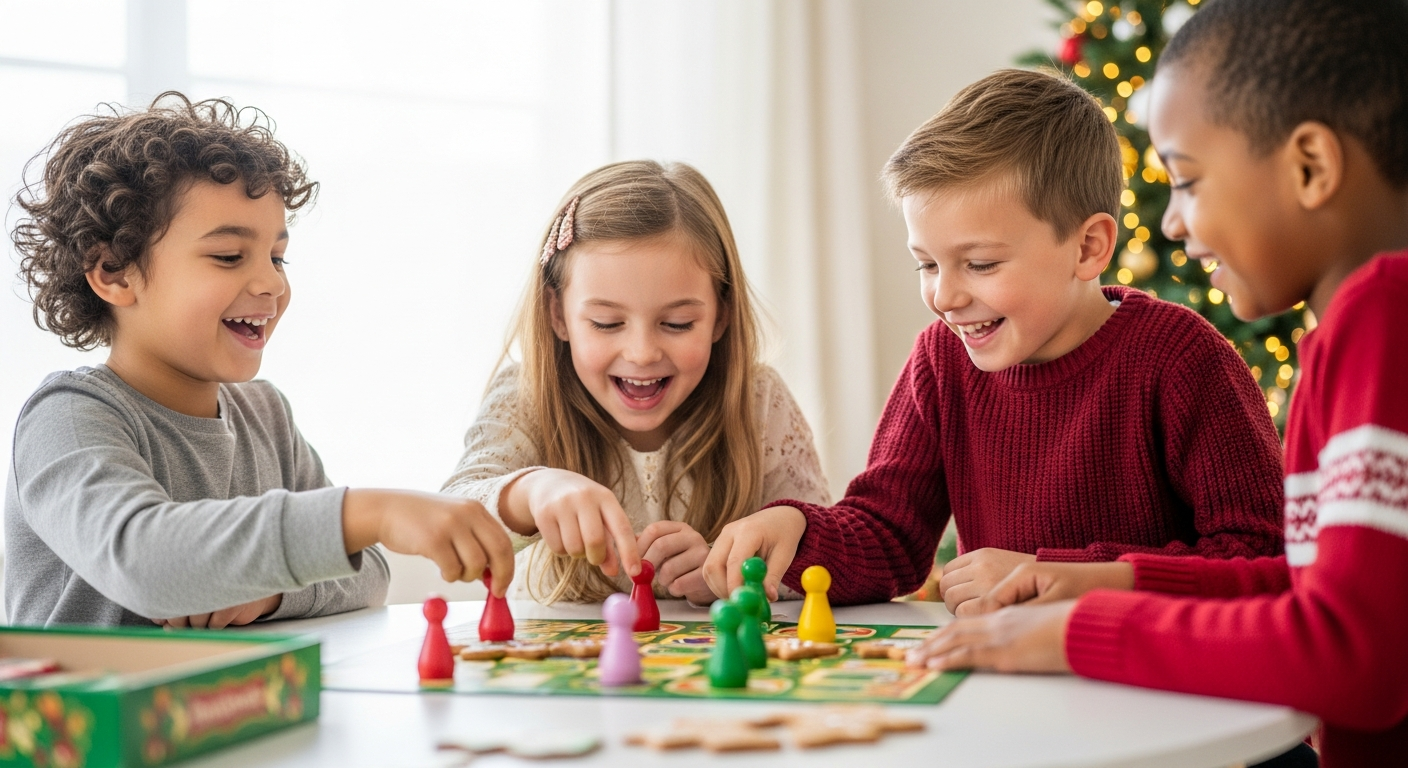
Table of Contents
- Introduction
- The Magic of Play: Why Christmas Games Matter
- Planning Your Festive Game Extravaganza
- Engaging Indoor Kids Games for Christmas Parties
- Outdoor Kids Games for Christmas Parties (If Weather Permits)
- The Speech Blubs Difference: Enhancing Communication Through Play
- Empowering Your Child's Voice: Start Your Journey with Speech Blubs
- Conclusion
- Frequently Asked Questions (FAQ)
Introduction
The holiday season bursts forth with a unique blend of joy and gentle chaos. Between the twinkling lights, festive carols, and delicious treats, there's a profound desire to make this time truly special for our children. Yet, amidst the hustle of gift wrapping and meal planning, it can sometimes feel challenging to carve out moments that truly connect us as a family. We want to do more than just experience the holidays; we want to create memories, spark laughter, and foster bonds that last long after the last ornament is packed away.
This blog post is your ultimate guide to transforming your Christmas party into an unforgettable celebration through engaging games and activities. We’ll explore a vibrant array of kids' games perfect for Christmas parties, from lively group challenges to quiet, creative endeavors, suitable for all ages and abilities. Our goal is to equip you with ideas that not only entertain but also subtly nurture essential developmental skills, making every moment count. By thoughtfully choosing games that encourage interaction, listening, and expression, you can turn a simple party into a powerful opportunity for growth, connection, and pure holiday magic.

The Magic of Play: Why Christmas Games Matter
At the heart of every successful holiday gathering is the shared experience of play. Games are more than just time-fillers; they are powerful catalysts for development, learning, and family connection. Especially during the festive season, when routines might be a little off-kilter and excitement runs high, structured play can provide a wonderful outlet for energy and a focal point for interaction.
Think about the sheer joy of a child laughing while attempting to balance a gingerbread man on their face, or the determined concentration as they try to stack candy bells. These moments are rich with learning opportunities:
- Fostering Communication: Many games inherently require children to listen to instructions, ask questions, explain rules, take turns speaking, and express their feelings (whether of triumph or playful frustration). This natural back-and-forth strengthens crucial conversational and expressive language skills.
- Building Confidence: Successfully completing a game, even a silly one, gives children a sense of accomplishment. Participating in a group setting, even if they don't win, helps them build social confidence and resilience.
- Developing Foundational Skills: From fine motor skills (like carefully placing a candy cane) to gross motor coordination (like a snowball race), problem-solving, strategic thinking, and emotional regulation, games are a holistic learning playground.
- Creating Family Connection: Laughter is a powerful unifier. When families play together, they create shared memories, inside jokes, and a sense of belonging. These are the moments that truly make the holidays magical and memorable.
At Speech Blubs, we deeply understand the power of play in a child's development. Our mission is to empower children to "speak their minds and hearts," recognizing that joyful engagement is the most effective path to learning. Just as festive games bring families together and encourage natural communication, our app provides a "smart screen time" experience that transforms passive viewing into active learning, helping children develop key speech and language skills.

Planning Your Festive Game Extravaganza
Successful party games aren't just about having a list of activities; they're about thoughtful preparation. A little planning goes a long way in ensuring everyone has a blast and the games flow smoothly.
Considering Age Groups and Abilities
One of the biggest challenges at a Christmas party is often a wide age range of children, from toddlers to teenagers. The key is adaptability:
- Preschoolers (Ages 2-5): Keep it simple and sensory. Focus on games with clear, easy-to-follow rules, lots of repetition, and opportunities for movement and basic recognition (colors, shapes, sounds). Think "Santa Says" or sorting colored ornaments.
- Elementary Kids (Ages 6-11): Introduce more complex rules, team challenges, and creative elements. Games like "Christmas Scavenger Hunt" or "Minute to Win It" challenges are perfect for this age group. They enjoy friendly competition but still need clear guidance.
- Middle & High Schoolers (Ages 12+): These older kids appreciate activities that encourage social interaction, strategy, and humor. "White Elephant" gift exchanges, "Christmas Movie Trivia," or elaborate "Holiday Charades" can be big hits. They often enjoy adapting rules to make games even funnier.
- Adaptability for Communication Needs: For children who might be working on specific speech or language goals, games can be wonderful practice grounds. For instance:
- For a child practicing articulation, use games like "Holiday I Spy" and encourage them to clearly pronounce the item they found.
- For a child developing turn-taking skills, any board game or structured activity with clear turns (like "Jingle Bell Mug Toss") offers excellent practice.
- For a child working on asking questions, "Guess Who Christmas Game" is tailor-made. Parents can model questions and provide sentence starters.
- For children who are "late talkers" or need a boost in expressive language, incorporating descriptive language into creative games like "Gingerbread House Contest" or "Snowman Building Competition" can be very effective. Encouraging them to describe their creation ("My snowman has a sparkly hat and a long carrot nose!") builds vocabulary and descriptive skills in a fun, natural way.
Setting the Scene: Ambiance and Rewards
The atmosphere you create can elevate any game.
- Music and Decorations: You likely already have your festive lights and Christmas tree up – use them! A playlist of upbeat holiday music can instantly set a cheerful tone.
- Simple Snacks: Popcorn, cookies, and hot chocolate are classic party fare that require minimal fuss.
- Non-Competitive "Prizes": While a little friendly competition can be fun, for younger children or mixed groups, sometimes the best "prizes" are just the joy of participation. Small, inexpensive holiday-themed stickers, pencils, or even just bragging rights can be enough. For team games, emphasize cooperation over winning.
Engaging Indoor Kids Games for Christmas Parties
When the weather outside is frightful, indoor games are delightful! Here's a selection of fantastic games, many inspired by popular classics, that promise laughter and learning.
Classic Twists and Holiday Favorites
1. Christmas Bingo
This timeless favorite is easily adaptable for all ages.
- How to Play: Create custom bingo cards with holiday symbols (candy canes, Santa, presents, reindeer) for younger children, or holiday words for older kids. Call out items, and players mark them on their cards. The first to get five in a row shouts "Bingo!"
- Communication Benefits: Excellent for vocabulary development, visual recognition, and listening skills. For a child working on new words, actively pointing to and naming the image as it's called out reinforces learning.
- Variations: Use small candies (like M&Ms or mini marshmallows) as markers for an extra sweet incentive.
2. Pin the Nose on Rudolph
A holiday twist on a classic party game.
- How to Play: Draw or print a large reindeer face on a poster board. Give each blindfolded player a red pompom (or a sticky red bow) and have them try to "pin" it on Rudolph's nose.
- Communication Benefits: Encourages following multi-step instructions ("Spin three times, walk straight, reach out"). It also sparks playful descriptive language as players try to guide the blindfolded person.
3. Holiday Memory Game
A game of concentration with a festive flair.
- How to Play: Cut out matching pairs of holiday-themed pictures (or use holiday stickers on cardboard squares). Place them face down and have players take turns flipping two over to find a match.
- Communication Benefits: Builds vocabulary (naming the objects), concentration, and turn-taking skills. Children learn to articulate "It's not a match" or "I found a pair!"
4. Christmas Movie Bingo / Trivia
Perfect for older children and families who love holiday films.
- How to Play: For Bingo, create cards with common movie tropes (e.g., "someone sings a carol," "a snowman appears," "Santa says 'Ho Ho Ho'"). For Trivia, create multiple-choice questions about popular holiday movies.
- Communication Benefits: Sparks discussion, memory recall, and critical thinking. Trivia encourages polite debate and justification of answers.
5. Holiday Tic-Tac-Toe
Simple, quick, and always fun.
- How to Play: Use washi tape to create a tic-tac-toe grid on a table. Use small holiday objects like red and green buttons, mini ornaments, or candy pieces as markers.
- Communication Benefits: Teaches strategy, turn-taking, and basic game rules. Children learn to verbally announce their move.
6. Guess Who Christmas Game / Christmas Character Guess Who?
A fantastic game for developing questioning and descriptive skills.
- How to Play: Write names of Christmas characters (Santa, Rudolph, Elf, Snowman) on sticky notes. Each player chooses one without looking and places it on their forehead. Players then take turns asking yes/no questions to guess who they are.
- Communication Benefits: This game is a powerhouse for practicing asking questions and using descriptive language. For a child who might be a "late talker" or struggling with formulating questions, this game provides a structured, motivating context. A parent can model good questions ("Am I wearing red?" "Do I have antlers?").
- Practical scenario: If your 5-year-old struggles to initiate conversations, this game provides an excellent framework for practicing direct, clear questions, building confidence in their verbal interactions. This mirrors the structured, yet playful, environment we create with our video modeling methodology at Speech Blubs, where children learn by observing and imitating their peers.
Active & Silly Indoor Fun
7. Jingle Bell Mug Toss
A simple game with a festive sound.
- How to Play: Set out a few mugs or small buckets at varying distances. Give players jingle bells and have them try to toss the bells into the mugs. Assign different points for different distances.
- Communication Benefits: Encourages counting, turn-taking, and expressing excitement or mild frustration.
8. Lump of Coal Saran Wrap Game
A high-energy, suspenseful game.
- How to Play: Before the party, wrap small prizes (candies, small toys) in layers of saran wrap, creating a large "ball." Interspersed throughout the layers, include "coal cards" with silly instructions (e.g., "Sing Jingle Bells!" "Do 5 jumping jacks!"). Players sit in a circle, and one unwraps while music plays. When the music stops, the ball passes to the next person. Whatever prize they uncover, they keep.
- Communication Benefits: Encourages listening to instructions, following directions, and expressing reactions. The "coal cards" can prompt verbal expression and movement.
9. Christmas Minute to Win It Games
These quick, challenging games are always a hit, fostering excitement and rapid problem-solving. Here are a few examples from the search results, enhanced with communication insights:
- Face the Gingerbread Man:
- How to Play: Place a small gingerbread man on each player's forehead. Players have one minute to get the cookie into their mouth using only facial movements, no hands allowed.
- Communication Benefits: Promotes non-verbal communication (facial expressions), laughter, and expressing attempts/successes.
- Snowman Stack:
- How to Play: Each player has one minute to stack six large marshmallows (to create two "snowmen") using only one hand.
- Communication Benefits: Encourages counting, following specific instructions, and expressing concentration or surprise. Simple enough for younger children to build confidence.
- Reindeer Nose Dive:
- How to Play: Attach a red pompom to a ribbon. Players put petroleum jelly on their nose and the free end of the ribbon in their mouth. They swing the ribbon to try and land the pompom on their nose within one minute, without using hands.
- Communication Benefits: Creates hilarious moments that encourage exclamations and playful self-commentary.
- Christmas Cliffhanger:
- How to Play: Place 10 Christmas cards in a row on a table, close to the edge, forming tents. Players gently blow the cards to move them across the table, trying to make one hang over the edge without falling, within one minute.
- Communication Benefits: Focuses on careful articulation (blowing) and describing their strategy.
- Candy Cane Catch:
- How to Play: String garland between two chairs. Players stand on a chair and drop candy canes, attempting to hook them onto the garland. Most hooks in one minute wins.
- Communication Benefits: Good for counting and expressing competitive spirit.
- Jingle Bell Clock:
- How to Play: Each challenger places a craft stick in their mouth and must line jingle bells across the stick in one minute.
- Communication Benefits: Develops fine motor skills, focus, and encourages verbal encouragement among teammates.
- Snow Shovel:
- How to Play: Using only their mouth and a plastic spoon, players transfer white pompoms ("snowballs") from one bowl to another in one minute.
- Communication Benefits: Practical scenario: For a child working on following multi-step instructions, this game provides a fun, low-pressure environment to practice. It also helps with motor planning and coordination.
10. Good Things Come in Small Packages
- How to Play: Wrap small, easy-to-open boxes or cans in holiday paper. Players put on oven mitts and try to unwrap as many gifts as possible in one minute.
- Communication Benefits: Generates laughter and requires players to articulate their challenges ("I can't grip it!"). It’s a great exercise in problem-solving and expressing frustration in a playful way.
Creative & Expressive Games
11. Gingerbread House Contest / Cookie Decorating Competition
These are fantastic for sparking creativity and collaboration.
- How to Play: Provide gingerbread house kits or plain Christmas cookies, along with various frostings, sprinkles, and candies. Set a time limit and let imaginations soar.
- Communication Benefits: Encourages descriptive language ("I'm making a sparkly roof!" "This is my peppermint forest!"), collaboration, and sharing ideas. Children can describe their design process and the finished product.
- Practical scenario: A group of children collaboratively building a gingerbread house must negotiate ideas, share materials, and describe their vision, building crucial social communication skills.
12. Christmas Mad Libs
Guaranteed giggles and a fun way to learn parts of speech.
- How to Play: Use holiday-themed Mad Libs (available online or create your own). Ask players for nouns, verbs, adjectives, etc., without revealing the story. Then read the hilarious, completed story aloud.
- Communication Benefits: This game is excellent for expanding vocabulary, understanding parts of speech, and fostering verbal creativity. Hearing their chosen words in a funny context reinforces meaning.
- Practical scenario: A child expanding their vocabulary can use new words in a Mad Lib, hearing them in a funny context that makes the learning memorable and enjoyable.
13. Christmas Scavenger Hunt
A classic that can be tailored to any age group.
- How to Play: Hide clues and small treats (like candy canes) around the house. Each clue leads to the next, eventually leading to a grand prize or a collection of small treasures.
- Communication Benefits: Builds problem-solving skills, following instructions, and spatial language (e.g., "It's under the tree," "Look behind the curtain"). Children must read or listen to clues and communicate discoveries.
Outdoor Kids Games for Christmas Parties (If Weather Permits)
If you're lucky enough to have a White Christmas, or just mild winter weather, take the festivities outside for some fresh air and energetic fun!
14. Snow Paint
- How to Play: Fill spray bottles with water mixed with a few drops of food coloring. Let kids "paint" colorful designs directly onto the snow.
- Communication Benefits: Encourages creative expression and descriptive language as children talk about their art ("Look at my blue and green snowflake!").
15. Snowman Building Competition
- How to Play: If there's snow, divide into teams and challenge them to build the most creative, tallest, or silliest snowman. Provide traditional accessories (carrots, scarves) and unexpected ones (sports gear, old hats).
- Communication Benefits: Fosters collaboration and negotiation within teams. Kids must communicate ideas, delegate tasks, and describe their vision for the snowman.
16. Christmas Obstacle Course
- How to Play: Set up a fun course with holiday-themed challenges: crawl through "Santa's tunnel" (cardboard box), toss "presents" into a "chimney" (laundry basket), or weave through candy cane poles (sticks with red and white tape).
- Communication Benefits: Excellent for gross motor skills, following multi-step directions, and understanding spatial concepts (over, under, through). Kids verbally encourage teammates and recount their run.
17. Reindeer Antler Ring Toss
- How to Play: Use inflatable reindeer antlers worn by a player (or set up on a stand). Players toss inflatable rings, trying to hook them onto the antlers.
- Communication Benefits: Encourages counting, friendly competition, and expressing aim and accuracy.
18. Snowman Slam Game / Hit the Grinch Game / Christmas Tree Bowling
- How to Play: For Snowman Slam, decorate white cups like snowmen and stack them. Players try to knock them down with a ball. Similarly, create targets with a Grinch face or decorate soda bottles as bowling pins.
- Communication Benefits: Develops hand-eye coordination, counting, and expressing success or strategy.
The Speech Blubs Difference: Enhancing Communication Through Play
At Speech Blubs, we are deeply passionate about the power of communication and the joy it brings to children and families. Our commitment stems from personal experience: our founders all grew up with speech problems and created the tool they wished they had. This personal connection fuels our mission to empower children to "speak their minds and hearts."
We believe that learning should be immediate, effective, and, most importantly, joyful. This is why we've meticulously blended scientific principles with play to create a one-of-a-kind "smart screen time" experience. Our app offers a powerful alternative to passive viewing (like cartoons), turning screen time into an active, engaging opportunity for growth and family connection.
Our unique approach is centered around video modeling. Children learn by watching and imitating their peers on screen. This method taps into natural learning processes, leveraging the brain's mirror neurons to help children develop complex communication skills like vocabulary, articulation, social skills, and early literacy. Just as children learn by observing and participating in games with their family and friends, Speech Blubs provides a supportive digital environment where they can learn and practice alongside other children. Our scientific methodology has been thoroughly researched, placing us in the top tier of speech apps worldwide with high ratings on the MARS scale, validating our commitment to efficacy and engagement. Discover the science behind our method here.
Empowering Your Child's Voice: Start Your Journey with Speech Blubs
At Speech Blubs, we believe every child deserves to "speak their minds and hearts." We are committed to providing an immediate, effective, and joyful solution for the 1 in 4 children who need speech support, blending scientific principles with play into one-of-a-kind "smart screen time" experiences. Our unique video modeling methodology, where children learn by watching and imitating their peers, provides a powerful tool for family connection and developing complex communication skills.
This holiday season, give the gift of confident communication. Whether your child is a "late talker," needs help with specific sounds, or could benefit from an overall language boost, Speech Blubs is here to help. Our app offers hundreds of engaging, therapist-approved activities that make learning fun.
- Take the first step: Unsure if your child could benefit? Take our quick 3-minute preliminary screener to get a simple assessment and a free 7-day trial. It's a quick way to understand your child's needs and receive a personalized next-steps plan.
- Hear from other parents: See what other parents are saying about their child's success and the incredible progress they've made with Speech Blubs. Their stories are our greatest inspiration.
Choosing the Right Plan for Your Family
We offer flexible subscription plans to suit your family's needs:
- Monthly Plan: Priced at $14.99 per month. This plan offers access to our core features, allowing you to try Speech Blubs month-to-month.
- Yearly Plan: Our best value, priced at just $59.99 per year. This breaks down to an incredible $4.99 per month, allowing you to save a significant 66% compared to the monthly option.
The Yearly Plan is designed to provide the most comprehensive and rewarding experience, including exclusive, high-value features not available with the Monthly plan:
- A 7-day free trial: Experience the full power of Speech Blubs before committing.
- The extra Reading Blubs app: Enhance your child's literacy journey with another fantastic educational tool.
- Early access to new updates: Be among the first to explore our latest features and improvements.
- 24-hour support response time: Get prompt assistance whenever you need it.
To unlock the full potential of Speech Blubs, including the free trial and all exclusive features, we highly recommend choosing the Yearly plan. It's the smart choice for long-term progress and maximum value.
Conclusion
This holiday season, let's go beyond just exchanging gifts and focus on creating priceless memories through the magic of play. The kids' games for Christmas parties we've explored are more than just entertainment; they are vibrant opportunities to foster communication, build confidence, and strengthen family bonds. Each game, whether silly or strategic, contributes to your child's holistic development, teaching them invaluable life skills through joyous interaction.
Remember, the greatest gift you can give your child is the power of their voice – the ability to express their thoughts, feelings, and dreams. By incorporating playful learning into your holiday celebrations, you're not only making wonderful memories but also investing in their future. For even more dedicated support in nurturing your child's speech and language skills, Speech Blubs offers an engaging, science-backed solution that complements your family's play-based learning.
Ready to start building those communication skills with fun, engaging activities and make this holiday truly unforgettable? Download Speech Blubs on the App Store or Google Play today! Alternatively, create your account on our website and begin your 7-day free trial, ensuring you select the Yearly plan for the best value and full access to our features, including the Reading Blubs app!
Frequently Asked Questions (FAQ)
1. How can I adapt Christmas games for children with different communication needs?
Many Christmas games are highly adaptable. For children with limited verbal output, focus on games that encourage non-verbal communication, gestures, or single-word responses, and use visual aids. For those practicing specific sounds, choose games where target words naturally appear (e.g., "star," "Santa"). For children working on listening or following instructions, break down commands into smaller steps. Always model clear language and provide plenty of positive reinforcement.
2. What if my child is shy about participating in party games?
It's common for some children to be hesitant. Never force participation. Instead, offer them a role as a helper (e.g., timer, scorekeeper, demonstrating a game), or suggest they observe for a while. You can also start with less competitive, cooperative games or one-on-one play with a trusted adult before joining a larger group. Gentle encouragement and celebrating small steps are key.
3. Are there games that specifically help with speech development?
Absolutely! Games that involve asking questions (like "Guess Who Christmas Game"), descriptive language (like explaining their gingerbread house), following multi-step instructions (like "Minute to Win It" challenges), turn-taking, and storytelling (even short, silly Mad Libs) are all excellent for speech and language development. The key is active participation and verbal interaction.
4. How can Speech Blubs complement our family's holiday play?
Speech Blubs offers a structured, engaging way to target specific speech and language goals through our unique video modeling methodology. While holiday party games provide spontaneous, social communication practice, Speech Blubs offers consistent, focused exercises. It's an ideal "smart screen time" tool that reinforces vocabulary, articulation, and social skills in a fun, interactive format, acting as a powerful supplement to your child's overall communication development, especially during a busy holiday season.
About the author