
Best St. Patrick's Day Toddler Crafts for Language Growth
 By Speech Blubs Team•Feb 20, 2026•15 min.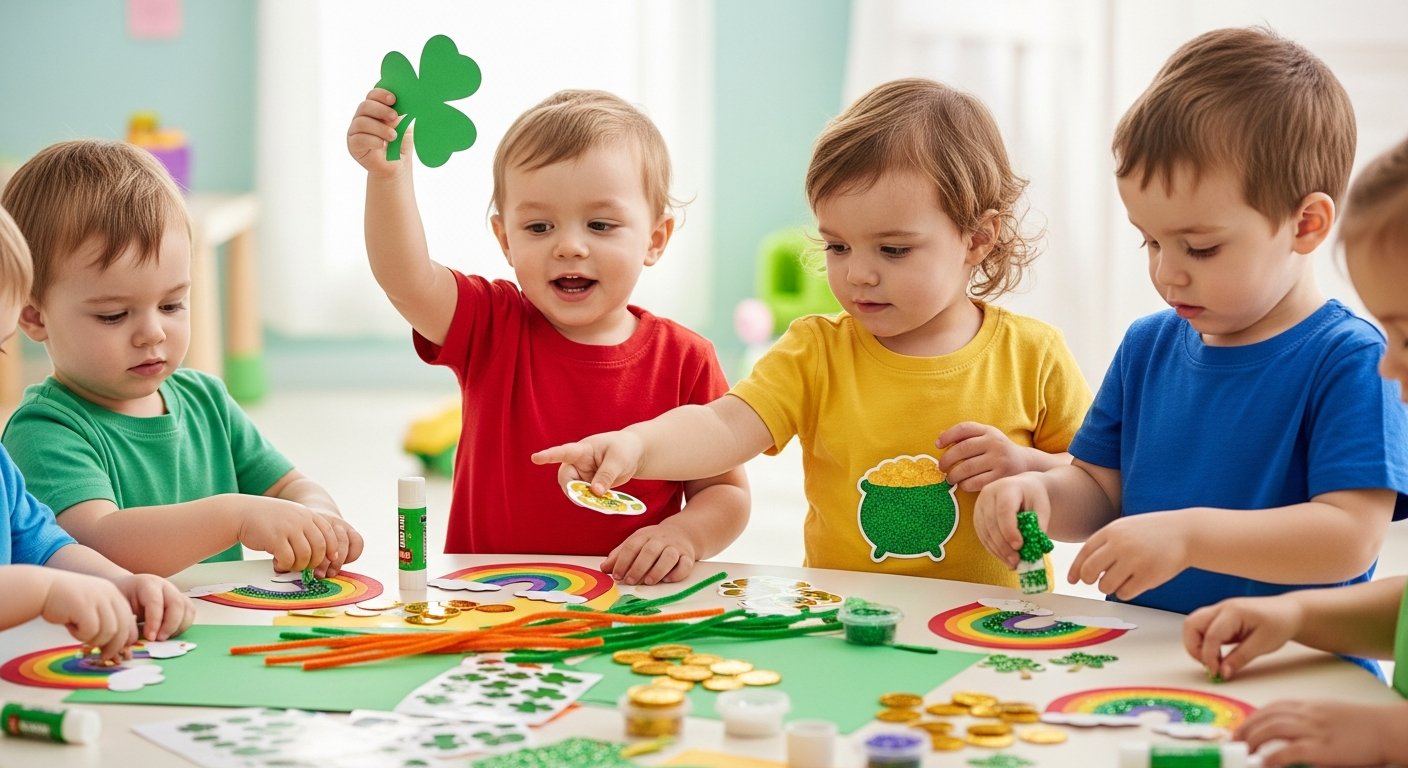
Table of Contents
- Introduction
- The Power of Sensory Play in St. Patrick’s Day Toddler Crafts
- Craft 1: The "Pot of Gold" Fingerprint Rainbow
- Craft 2: Mosaic Paper Shamrocks
- Craft 3: Leprechaun "Lookouts" (Binoculars)
- Craft 4: The "Luck of the Irish" Sensory Bag
- Why Peer Imitation Matters
- Craft 5: Handprint Four-Leaf Clovers
- Dealing with Realistic Expectations
- Planning Your St. Paddy's Day Crafting Week
- The Value of "Smart Screen Time"
- Choosing the Right Plan for Your Family
- Craft 6: The Cereal Rainbow
- More Than Just Crafts: The Speech Blubs Philosophy
- Craft 7: St. Patrick’s Day Painted Rocks
- Summary of Key Takeaways
- Frequently Asked Questions
- Ready to Start Your Lucky Journey?
Introduction
Do you remember the magic of waking up on St. Patrick’s Day as a child to find a trail of tiny green footprints leading to a hidden "pot of gold" (usually a bowl of chocolate coins)? That sense of wonder is what makes holidays so special for little ones. But beyond the glitter and the green paint, these moments offer an incredible window for something even more important: language development. When we engage in st patricks day toddler crafts, we aren’t just making decorations; we are building the foundational blocks of communication through play.
At Speech Blubs, our mission is to empower children to "speak their minds and hearts." We know that for many parents, finding ways to encourage a child who is struggling to meet speech milestones can feel overwhelming. Our founders grew up with speech problems themselves and created the tool they wished they had—a way to turn "screen time" into "smart screen time." In this post, we’re going to explore how you can use festive crafting to spark new words, boost confidence, and create joyful family memories. We will cover a variety of accessible crafts, the science of why they work, and how you can supplement these activities with our unique video modeling methodology.

By the end of this article, you’ll have a toolkit of activities designed to foster a love for communication and reduce the frustration that often comes with speech delays. Whether your child is a "late talker" or just starting to experiment with sounds, these activities are about the journey, not just the finished shamrock.
The Power of Sensory Play in St. Patrick’s Day Toddler Crafts
Before we dive into the specific crafts, let’s talk about why toddlers learn so well through their hands. Speech is a complex motor skill that is deeply connected to sensory input. When a child feels the sticky texture of glue or the cold sensation of green paint, their brain is firing on all cylinders. This "sensory-rich" environment is the perfect time to introduce new vocabulary.
Why Messy is Good for Speech
When things get a little messy, kids get excited. Excitement leads to vocalization! If a toddler accidentally gets green paint on their nose, it’s a perfect opportunity for "Oh no!" or "Green nose!" We always encourage parents to lean into these organic moments. Instead of worrying about the carpet, focus on the "Joint Attention" you are sharing with your child. This shared focus on a single object or activity is a primary precursor to language.
If you’re looking for a way to start this journey, we recommend taking our quick 3-minute preliminary screener. It consists of 9 simple questions and provides an assessment and a next-steps plan to help you understand your child’s current communication level before you begin your 7-day free trial.
Craft 1: The "Pot of Gold" Fingerprint Rainbow
This is a classic for a reason. It’s simple, colorful, and focuses on fine motor precision.
What You Need:
- White cardstock
- Washable paint in rainbow colors (Red, Orange, Yellow, Green, Blue, Purple)
- Black construction paper (for the pot)
- Yellow paint or gold glitter (for the gold)
The Language Strategy: As your child dips their finger into the red paint, say the word "Dip!" Repeat it every time. When they press it onto the paper, say "Pop!" or "Dot!" This is called "Parallel Talk"—you are narrating what the child is doing in real-time. For a child who is working on specific sounds, like the "P" sound, the word "Pop" is a fantastic, high-pressure consonant to practice.

Speech Blubs Tip: For a parent whose toddler is currently obsessed with colors, the "Color Me" section in our app is a perfect companion to this craft. Before you start painting, you can watch videos together of other children saying the names of colors. This uses our scientific methodology of video modeling, where children learn by watching and imitating their peers. Unlike passive cartoons, this is an active, "smart" way to use a screen to prepare for real-world play.
Craft 2: Mosaic Paper Shamrocks
Tearing paper is one of the best ways to build the hand strength needed for later writing, and it’s a very satisfying "st patricks day toddler craft" for kids who like to be active.
What You Need:
- A shamrock outline drawn on paper
- Scraps of green paper (different shades and textures)
- Glue stick
How to Play: Let your child tear the green paper into small pieces. While they do this, use action words: "Tear," "Rip," "Small," "Big." Once you have a pile, let them glue the pieces inside the shamrock.
Building Confidence: If your child gets frustrated because the paper sticks to their fingers, use that as a teaching moment for "Help." Instead of fixing it immediately, wait for them to make eye contact or a sound, then say, "Oh, you need help? Sticky fingers!" This reduces frustration by giving them a label for their feeling. We want to foster a love for communication, and that starts with showing them that their voice (or sign, or gesture) has the power to change their situation.
Craft 3: Leprechaun "Lookouts" (Binoculars)
This craft turns your toddler into an explorer, which is a great way to practice prepositions and "I see" sentences.
What You Need:
- Two toilet paper rolls
- Green paint or markers
- Tape or glue
- String (optional)
The Activity: Once the rolls are decorated and taped together, go on a "Leprechaun Hunt" around the house. Use the binoculars to look under the table, on the chair, and behind the curtain.
Practical Scenario: Imagine you are playing with your 3-year-old who is a "late talker." You look through the binoculars and say, "I see a... dog!" Then wait. Lean in with an expectant look. Give them 5 to 10 seconds of silence to try and fill in the blank or point. This "expectant pause" is a powerful tool we often discuss at Speech Blubs.
Craft 4: The "Luck of the Irish" Sensory Bag
For parents who want to avoid a massive cleanup, sensory bags are the ultimate solution. They provide all the tactile input without the paint on the walls.
What You Need:
- A gallon-sized Ziploc bag
- Clear hair gel or hand sanitizer
- Green food coloring
- Green sequins, plastic gold coins, or shamrock cutouts
- Packing tape
The Science of Connection: Fill the bag with gel, add the "treasures," and tape it shut. As your child pushes the coins through the gel, they are developing "visual tracking" skills. At Speech Blubs, we believe in creating joyful family learning moments. Sit on the floor with your child and the bag between you. This is a screen-free alternative to passive viewing that encourages you to talk with your child, not just at them.
"Our mission is to provide an immediate, effective, and joyful solution for the 1 in 4 children who need speech support, blending scientific principles with play."
Why Peer Imitation Matters
You might notice that in many of our suggestions, we emphasize watching your child’s reaction and mimicking their sounds. This is based on the concept of mirror neurons. When a child sees another person—especially another child—perform an action or make a sound, the neurons in their brain fire as if they were doing it themselves.
This is why the Speech Blubs app is so effective. We don't use animations; we use real children. When your child sees a "peer model" on the screen wearing a digital leprechaun hat and saying "Shamrock," they are significantly more likely to try and say it themselves than if a cartoon character said it. You can see what other parents are saying about this success on our testimonials page.
Craft 5: Handprint Four-Leaf Clovers
This is a beautiful keepsake and a great way to practice body part vocabulary.
What You Need:
- Green paint
- Paper
- A little hand!
The Process: Paint your child’s palm green. Place four handprints in a circle with the palms meeting in the middle to create the leaves of the clover.
Vocabulary Focus:
- Body Parts: Hand, fingers, palm, thumb.
- Adjectives: Cold, wet, sticky, green.
- Counting: 1, 2, 3, 4 leaves!
For a child whose interests lie in nature, the "Animal Kingdom" section of our app can be a great follow-up. After making a clover, you might look at "Green" animals like frogs or snakes, practicing the "G" and "S" sounds in a fun, motivating way. To get full access to these sections, you can download Speech Blubs on the App Store or Google Play.
Dealing with Realistic Expectations
It is important to remember that every child’s speech journey is unique. While we provide powerful tools, we want to set realistic expectations. You won't necessarily see your child giving public speeches in a month just because you did some st patricks day toddler crafts. However, what you will see is a building of foundational skills:
- Increased Confidence: They feel successful when they complete a task.
- Reduced Frustration: They have more ways to show you what they want.
- Foundational Skills: They are learning to follow directions and attend to a task.
Our app is designed as a powerful supplement to your child’s overall development plan and, when applicable, professional therapy. It’s about creating a "language-rich" lifestyle.
Planning Your St. Paddy's Day Crafting Week
If you want to make the most of the holiday, try to do one small activity each day leading up to March 17th.
- Monday: Take the Screener and set a baseline.
- Tuesday: Start with the Sensory Bag (Cleanest option!).
- Wednesday: Do the Fingerprint Rainbow while talking about colors.
- Thursday: Use the "Smart Screen Time" in Speech Blubs to watch peer models.
- Friday: Make the Leprechaun Lookouts and go on a house-wide hunt.
The Value of "Smart Screen Time"
We know that "screen time" is a controversial topic for parents. That’s why we differentiate between passive viewing and active learning. Watching a cartoon is a one-way street. Using Speech Blubs is a two-way conversation. Our app encourages the child to speak back to the screen, to imitate facial expressions, and to engage in digital "co-play" with the kids in the videos.
We are committed to being a powerful tool for family connection. When you use the app together, you can model the sounds along with the peer in the video. This turns a solo activity into a bonding experience.
Choosing the Right Plan for Your Family
We want to be transparent about our pricing so you can make the best choice for your family's needs. We offer two main paths:
- Monthly Plan: $14.99 per month. This is a great way to test the waters and see how your child responds to the video modeling.
- Yearly Plan: $59.99 per year. This is our clear best-value choice, breaking down to just $4.99 per month—a savings of 66% compared to the monthly rate.
Why the Yearly Plan is Superior: The Yearly plan isn't just more affordable; it's a comprehensive package for your child's development. It includes:
- A 7-day free trial so you can explore everything risk-free.
- The extra Reading Blubs app, which helps transition those speech skills into early literacy.
- Early access to all our newest updates and features.
- 24-hour support response time to ensure you always have help when you need it.
The Monthly plan does not include the free trial, the Reading Blubs app, or the priority support. To give your child the full suite of communication tools, we highly recommend the Yearly plan. You can start your journey and create your account here.
Craft 6: The Cereal Rainbow
This craft is excellent for "pincer grasp" development and learning to categorize by color.
What You Need:
- Fruit-flavored ring cereal (like Froot Loops)
- Glue
- Paper with a rainbow outline
- Marshmallows (for clouds)
How to Play: Have your child sort the cereal by color first. This is a great time to use the words "Same" and "Different." As they glue the cereal onto the rainbow, they are working those tiny hand muscles.
Pro-Tip for Speech: If your child wants to eat a piece of cereal, use it as a "Communication Temptation." Hold the cereal near your mouth, say the color name, and wait for them to attempt the sound or use a gesture before giving it to them. This teaches them that communication is the key to getting what they want!
More Than Just Crafts: The Speech Blubs Philosophy
Our company was born from a place of empathy. We know the worry that keeps parents up at night when their child isn't talking yet. That’s why we’ve worked with speech-language pathologists to ensure our app is grounded in proven techniques like video modeling.
We don't just want kids to talk; we want them to connect. Whether it's through st patricks day toddler crafts or our digital activities, the goal is always the same: helping your child "speak their mind and heart." By focusing on play, we remove the "work" of therapy and replace it with the "joy" of learning.
Craft 7: St. Patrick’s Day Painted Rocks
If you have an older toddler who loves the outdoors, painting "lucky stones" is a fantastic activity.
What You Need:
- Smooth stones from the garden
- Green and gold acrylic paint (with adult supervision)
- Paintbrushes
Vocabulary Extension: Talk about the rocks. Are they "Hard"? Are they "Heavy"? Are they "Smooth"? Using contrasting words (Hard vs. Soft, Heavy vs. Light) helps children understand the world around them and expands their descriptive vocabulary.
Summary of Key Takeaways
Creating st patricks day toddler crafts is a wonderful way to celebrate the holiday while supporting your child's growth. Remember to:
- Embrace the Mess: Sensory input is fuel for the brain.
- Use Parallel Talk: Narrate what your child is doing to give them the words they need.
- Pause and Wait: Give your child the space to try and speak.
- Use Video Modeling: Let your child learn from other kids through "smart screen time."
- Focus on the Process: The joy of creating is more important than the final product.
Frequently Asked Questions
1. My toddler won't sit still for crafts. Can I still help their speech?
Absolutely! Crafting is just one tool. If your child is high-energy, try "Action-Based Speech." Use the Leprechaun Binoculars to run to different parts of the house. Use the Speech Blubs app for 5-10 minutes a day to engage them with peer models. The app is designed to be fast-paced and engaging for short attention spans.
2. Is Speech Blubs a replacement for speech therapy?
No, we see our app as a powerful supplement. If your child is in therapy, Speech Blubs is a great way to practice the skills they are learning in a fun, low-pressure environment at home. If you are waiting for a therapy appointment, the app provides an immediate, effective way to start working on communication today.
3. How do I know if my child has a speech delay?
Every child develops at their own pace, but there are certain milestones to look out for. We recommend taking our quick 3-minute preliminary screener. It can help you identify if your child is on track or if they might benefit from extra support.
4. Why is the Yearly plan better than the Monthly plan?
The Yearly plan is designed for long-term success. It offers a 66% discount, making it only $59.99 for the whole year. Most importantly, it includes the 7-day free trial, the Reading Blubs app for literacy, and priority support—features that help you and your child get the most out of the experience.
Ready to Start Your Lucky Journey?
This St. Patrick's Day, give your child the gift of confidence. Whether you’re painting rainbows, tearing green paper, or looking for leprechauns, remember that every sound and every word is a win. We are here to support you every step of the way with tools that make learning feel like play.
Start your 7-day free trial by signing up on our website today. Don't forget to choose the Yearly plan to get the best value, including early updates and our Reading Blubs app. You can also download Speech Blubs on the App Store or Google Play to begin your "smart screen time" adventure. Let's help your little one find their voice this spring!
About the author