
Best Yard Games for Kids' Birthday Parties
 By Speech Blubs Team•Jan 28, 2026•23 min.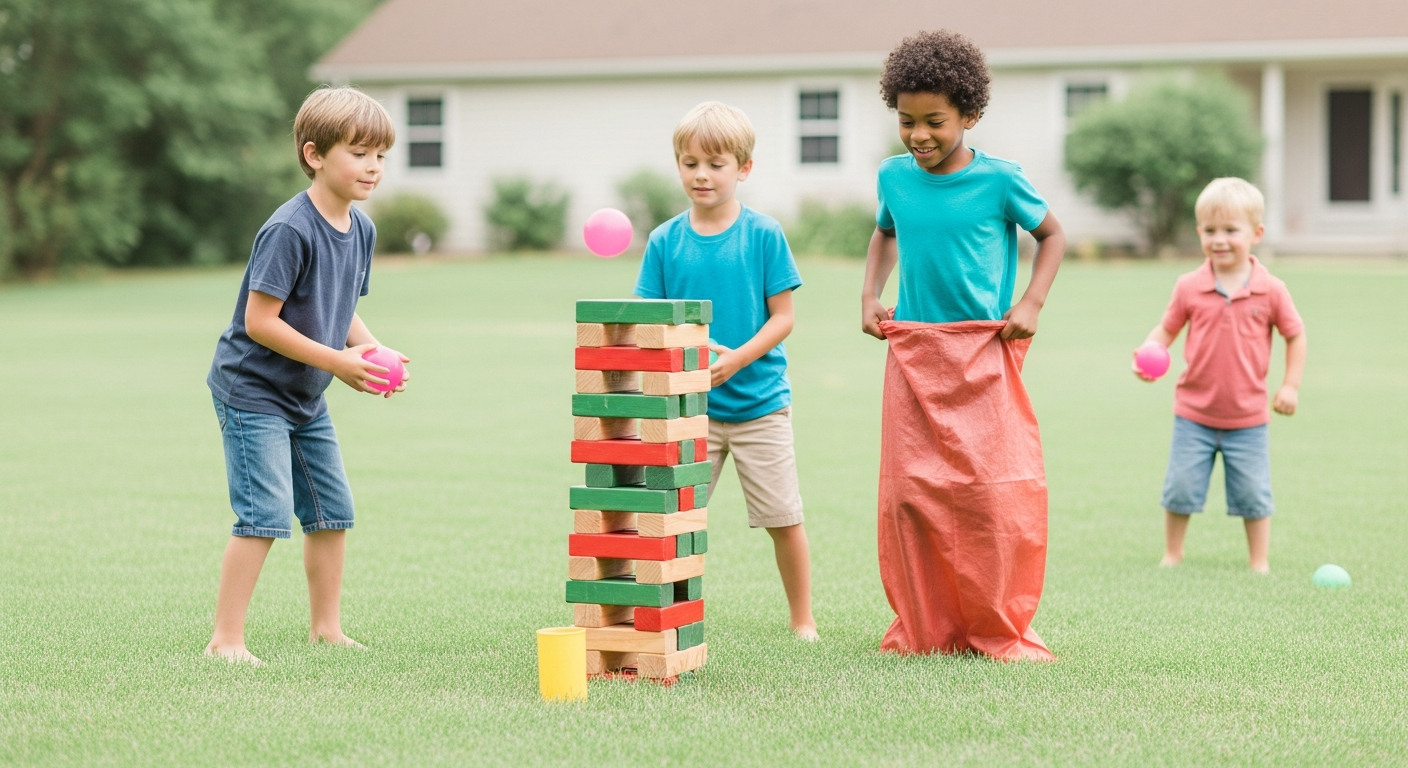
Table of Contents
- Introduction
- Why Yard Games Are Party Gold
- Crafting Unforgettable Moments: DIY Yard Games for Every Party
- Timeless Favorites: Classic Yard Games with a Playful Twist
- Sparking Imagination: Printable & Low-Prep Yard Games
- Hosting a Stellar Birthday Bash: Essential Tips for Success
- Nurturing Communication Through Play: The Speech Blubs Difference
- Ready to Spark More Joyful Communication? Choose Speech Blubs!
- Conclusion
- Frequently Asked Questions (FAQs)
Introduction
Picture this: Laughter echoes across the lawn, tiny feet pound through the grass, and the air crackles with excitement as children chase, build, and strategize under the warm sun. This isn't just a fantasy; it's the magic of an outdoor birthday party transformed by the simple joy of yard games. While planning a child's special day can sometimes feel overwhelming, shifting the focus to active, engaging play outdoors can turn a good party into an unforgettable celebration. The challenge often lies in finding activities that capture every child's imagination, encourage interaction, and keep the energy levels high in a fun, safe, and meaningful way.
This blog post is your ultimate guide to crafting that perfect outdoor birthday experience. We'll dive deep into a treasure trove of yard game ideas, from creative DIY projects that add a personal touch to beloved classics reimagined for open-air fun, and even low-prep options that spark imagination without demanding hours of setup. We'll explore how these games not only provide endless entertainment but also secretly nurture crucial developmental skills, from social interaction and problem-solving to, most importantly, communication. Our aim is to equip you with practical advice and inspiration, ensuring your child's next birthday party is filled with vibrant activity, shared joy, and memories that last long after the last piece of cake is eaten. Get ready to transform your backyard into the ultimate party playground, fostering connections and growth with every game.

Why Yard Games Are Party Gold
Yard games are more than just fillers for a party schedule; they are powerful tools for creating dynamic, engaging, and memorable experiences for children. In an age where passive entertainment often dominates, getting kids outside and actively involved in play is invaluable. The benefits extend far beyond simply burning off energy.
Firstly, physical activity is a cornerstone of healthy child development. Running, jumping, throwing, and balancing during yard games strengthen gross motor skills, improve coordination, and promote overall physical well-being. This active engagement is a natural antidote to too much screen time, encouraging children to connect with their bodies and their environment.
Secondly, yard games are fertile ground for social interaction and cooperation. Unlike individual activities, most yard games require children to communicate, negotiate, take turns, and work together towards a common goal or friendly competition. These interactions are vital for developing social-emotional intelligence, empathy, and the ability to navigate group dynamics. They learn to celebrate successes, cope with losses, and understand fair play.
Thirdly, many games inherently involve problem-solving and strategic thinking. Whether it's figuring out the best way to aim a bean bag, planning a route through an obstacle course, or deciding on a team strategy, children are constantly flexing their cognitive muscles. This spontaneous learning is often more effective and enjoyable than structured lessons, as it happens within a context of fun and self-motivation.
Finally, the joy and shared experiences of yard games forge lasting memories. These are the stories children will recount for years – the epic water balloon fight, the nail-biting finish of a relay race, or the hilarity of a giant Jenga tower tumbling down. Such moments contribute significantly to a child's sense of belonging and happiness.
At Speech Blubs, we understand that vibrant, active play directly feeds into a child's communication journey. When children are engaged, excited, and interacting, they are naturally motivated to verbalize their thoughts, express their feelings, and understand instructions. These real-world contexts provide rich opportunities for language development, reinforcing the foundational skills we help children build.

Crafting Unforgettable Moments: DIY Yard Games for Every Party
DIY yard games bring a unique, personal touch to any birthday celebration, often at a fraction of the cost of store-bought alternatives. They also offer the fantastic opportunity to involve your child in the creation process, building anticipation for the big day.
Giant Jenga & Dominoes
Imagine the thrill as a tower of oversized wooden blocks teeters precariously, or the satisfaction of completing a long chain of hand-painted dominoes. These classic table games translate beautifully to a giant outdoor scale.
- Giant Jenga: This game involves stacking large wooden blocks (cut from 2x4s) into a tower, with players taking turns carefully removing one block at a time from the bottom or middle and placing it on top. The goal is to keep the tower from falling.
- Benefits: Giant Jenga is excellent for developing fine motor skills and hand-eye coordination as children carefully extract and place blocks. It also fosters strategic thinking and patience, as players must consider which block to remove to maintain stability. Turn-taking is a natural part of the game, encouraging children to wait patiently and observe others.
- Relatable Scenario: For a child who might be a "late talker," the suspense of Giant Jenga offers ample opportunities for simple vocalizations and phrases. "My turn!" or "Uh oh!" as the tower wobbles, or "Your turn!" to prompt a peer, naturally emerge from the excitement. These exclamations are crucial steps in building expressive language.
- Giant Dominoes: Crafting oversized dominoes from wood or even sturdy cardboard pieces allows for classic domino games or creative constructions.
- Benefits: Beyond traditional gameplay, giant dominoes encourage counting, pattern recognition, and sequencing. Setting them up to fall in a chain (the domino effect) promotes problem-solving and spatial reasoning.
- Relatable Scenario: As children connect the dots, they can practice counting aloud, identifying numbers, and verbally describing their moves, like "I put five next to five." This visual and tactile game reinforces numerical concepts and provides clear opportunities for verbal repetition and description.
DIY Chalkboard Cornhole
Cornhole is a perennial favorite, and making a chalkboard version adds an interactive twist. Build simple plywood boards with a hole, then paint them with chalkboard paint.
- Benefits: This game is fantastic for developing hand-eye coordination and aiming skills. When you add chalk, players can keep score directly on the board, reinforcing number recognition and basic addition. Team play also encourages cooperation and friendly competition.
- Relatable Scenario: Children can practice calling out their scores (e.g., "Three points!" or "One in the hole!"), counting the bean bags thrown, and cheering for their teammates. The visible scorekeeping makes numbers concrete and provides a clear reason to verbalize them.
Wooden Ladder Ball
While plastic versions are available, a DIY wooden ladder ball set is more durable and satisfying. Players toss bolas (two golf balls connected by a string) aiming to wrap them around the rungs of a ladder-like structure for points.
- Benefits: Ladder ball enhances precision, aiming, and distance judgment. It involves strategic thinking about where to aim for the most points and requires patience and turn-taking.
- Relatable Scenario: Children can use descriptive words for their throws ("high," "low," "fast," "slow") and verbally express excitement or disappointment. Discussing strategy, like "I'm aiming for the top rung," encourages complex sentence structures and planning.
The Ultimate Obstacle Course
An obstacle course is the epitome of imaginative and active play, and it can be as simple or elaborate as your resources allow. Use household items like pool noodles, blankets, cushions, cardboard boxes, ropes, and even patio furniture.
- Benefits: Obstacle courses are incredible for gross motor skills, balance, coordination, and following multi-step directions. They foster creativity as children help design the course and problem-solve how to navigate each "challenge."
- Relatable Scenario: Encouraging children to narrate their journey through the course ("I'm crawling under the tunnel," "Now I'm jumping over the river") builds narrative skills and descriptive language. For parents who notice their child struggling with multi-step commands or spatial prepositions, this active play is invaluable. If you're wondering if your child could benefit from more targeted support in these areas, take our quick 3-minute preliminary screener to get a simple assessment and a free 7-day trial.
Timeless Favorites: Classic Yard Games with a Playful Twist
Sometimes, the best games are the ones that have stood the test of time, easily adaptable for a birthday party crowd in the great outdoors.
Bean Bag Toss
A classic for a reason, the bean bag toss can be elevated beyond a simple board.
- Description: Players throw bean bags at targets of varying distances or values. Instead of just a single hole, use buckets, hula hoops laid on the ground, or even different sized cardboard boxes with points written on them.
- Benefits: This game is fantastic for hand-eye coordination, understanding cause and effect, and basic counting skills. Adding different point values introduces simple math.
- Relatable Scenario: Children naturally vocalize their throws ("I'm going for the blue bucket!") and count their points aloud. Encouraging them to articulate why they chose a certain target or how they're aiming ("I need to throw it harder") strengthens their reasoning and expressive language.
Hula Hoop Challenges
Hula hoops are incredibly versatile and inexpensive, offering a wealth of creative games beyond just waist-hooping.
- Description: Use hula hoops as targets for bean bags or balls, create an agility course by laying them on the ground for kids to jump in and out of, or have "hula hoop races" where kids have to propel the hoop with a stick.
- Benefits: Hula hooping improves balance, rhythm, and gross motor coordination. Using them as targets or obstacles enhances problem-solving and following instructions.
- Relatable Scenario: Give simple instructions like "Jump in the red hoop!" or "Spin the hoop on your arm!" This helps children practice auditory processing and executing commands, vital for both play and learning environments.
Croquet and Bocce Ball
These vintage lawn games are surprisingly engaging for kids and teach valuable lessons.
- Description:
- Croquet: Players use mallets to hit wooden or plastic balls through a series of wickets embedded in the ground.
- Bocce Ball: Players take turns throwing or rolling heavy balls as close as possible to a smaller target ball (the pallino).
- Benefits: Both games develop precision, aim, and strategic thinking. They encourage patience, turn-taking, and understanding of rules. They are less about speed and more about calculated moves, promoting a calmer form of engagement.
- Relatable Scenario: These games are perfect for practicing phrases like "My turn," "Your turn," "It's close!" or "Too far." Children can verbally strategize their shots or explain their reasoning, building complex communication skills in a low-pressure, focused setting.
Four Square Fun
All you need is chalk and a bouncy ball for this high-energy game.
- Description: Draw four squares on a hard, flat surface. Players stand in each square, bouncing a ball between them. The goal is to eliminate opponents by making them commit an error (e.g., hitting the ball out of bounds, failing to bounce it correctly).
- Benefits: Four Square is excellent for quick reflexes, hand-eye coordination, and understanding a defined set of rules. It fosters healthy competition and teaches children to react quickly.
- Relatable Scenario: The game provides constant opportunities for verbal cues like "Out!" or "Mine!" and for negotiating minor rule disputes, strengthening social communication and assertion skills.
Simon Says, Untangle & Kick the Can
These games are perfect for a larger group and emphasize listening, cooperation, and strategic movement.
- Description:
- Simon Says: A leader gives commands, but players only follow if the command is preceded by "Simon Says." It's a classic for listening skills.
- Untangle: Players stand in a circle, grab two different hands, and then work together to untangle themselves into a single circle without letting go.
- Kick the Can: A hybrid of tag and hide-and-seek, where one person is "It" and tries to tag hiders. Hiders can free "jailed" teammates by kicking a designated can.
- Benefits: These games are exceptional for developing active listening skills, following multi-step instructions, and promoting teamwork and problem-solving through communication. Untangle, in particular, demands clear verbal coordination to succeed.
- Relatable Scenario: "Simon Says" directly targets auditory processing and compliance. "Untangle" requires children to articulate directions and suggestions to each other ("Turn left," "Duck under here"). "Kick the Can" encourages whispered communication and planning. These games really highlight the importance of understanding and executing verbal directions, a skill we deeply nurture at Speech Blubs. You can see how our research-backed methods enhance these very skills, helping children not just hear, but truly comprehend and respond to the world around them.
Sparking Imagination: Printable & Low-Prep Yard Games
Not every fantastic yard game requires extensive DIY projects or bulky equipment. Sometimes, the simplest ideas, especially those you can print, spark the most creativity and fun.
Outdoor Scavenger Hunts
A scavenger hunt can be easily adapted for any backyard space and any age group.
- Description: Create a list of items for children to find (e.g., "something red," "a smooth stone," "a feather," "something that starts with the letter 'B'"). For older kids, clues can be riddles or a map.
- Benefits: Scavenger hunts are excellent for observation skills, vocabulary expansion (especially for descriptive words like "rough," "tiny," "shiny"), and problem-solving. They encourage exploration and critical thinking.
- Relatable Scenario: As children find items, encourage them to name what they've found and describe its characteristics. For example, "I found a rough, brown stick" or "This leaf is crinkly and green." This practice boosts descriptive language and categorization skills.
Conversation Starter Jars
While not a "game" in the traditional sense, conversation starters can be a wonderful, low-key activity, especially for older children or during cool-down periods.
- Description: Write various open-ended questions or prompts on small slips of paper and place them in a jar. Kids can take turns drawing a prompt and answering. Questions could be "What's your favorite animal and why?" or "If you could have any superpower, what would it be?"
- Benefits: This activity promotes verbal expression, active listening, and social bonding. It helps children practice formulating thoughts into coherent sentences and sharing ideas. It's particularly useful for children who might be shy or need prompting to initiate conversations.
- Relatable Scenario: This is where Speech Blubs’ mission to empower children to "speak their minds and hearts" truly comes to life. By practicing expressing their thoughts and feelings in a low-pressure environment, children build confidence that translates to real-world conversations. These prompts provide a structured way for children to use the communication skills they're developing, articulating their unique perspectives. This is a perfect way to foster family connection, one of our core values at Speech Blubs.
Pinata Power
A piñata is a universally loved party activity that works even better outdoors.
- Description: Hang a store-bought or DIY piñata from a sturdy tree branch. Blindfold the children (one at a time), spin them gently, and give them a stick to hit the piñata until it breaks, releasing candy and small toys.
- Benefits: This game generates immense anticipation and excitement. It helps with gross motor coordination and following a sequence of instructions (blindfold, spin, hit).
- Relatable Scenario: The build-up and payoff of a piñata offer abundant opportunities for expressing emotions: "Wow!", "Faster!", "It's going to break!", and collective cheers. This shared excitement encourages spontaneous vocalizations and joyful communication.
Hosting a Stellar Birthday Bash: Essential Tips for Success
Beyond choosing the right games, a few key considerations will ensure your outdoor birthday party is a resounding success for all.
Planning for All Ages
Birthday parties often have a mix of age groups. To keep everyone engaged:
- Offer Variety: Have a few game stations suitable for different skill levels. A quieter craft area might complement active games.
- Modify Games: Simplify rules for younger children or add extra challenges for older ones. For example, make the bean bag toss target larger for toddlers and smaller for tweens.
- Team Up: Pair older children with younger ones for cooperative games, encouraging mentoring and peer support.
Safety First, Always
Outdoor play is wonderful, but safety must be paramount.
- Clear the Space: Before the party, inspect your yard for any hazards like sharp objects, uneven ground, or poisonous plants.
- Supervision: Ensure adequate adult supervision, especially during active games or near water features.
- Weather Wise: Check the forecast. Have a backup indoor plan or shade options, plenty of water, and sunscreen for sunny days. Be prepared for sudden changes in weather.
Fueling the Fun: Hydration & Snacks
Active children need energy and hydration to keep the fun going.
- Easy Access: Set up a hydration station with water bottles or a large dispenser, clearly visible and accessible.
- Nutritious & Easy Snacks: Offer quick, mess-free snacks like fruit slices, veggie sticks, crackers, or small sandwiches. Avoid overly sugary treats right before active games.
Fostering Teamwork and Sportsmanship
Games are not just about winning; they are about participating and learning.
- Emphasize Fun: Remind children that the goal is to have fun and play together, not just to win.
- Teach Fair Play: Discuss rules clearly and encourage honest play. Intervene gently to resolve conflicts, using them as teachable moments for negotiation and empathy.
- Celebrate Participation: Acknowledge effort and good sportsmanship as much as (or more than) winning. Small prizes or verbal praise for effort can go a long way. This promotes a positive communication environment, where children feel safe to express themselves, whether in victory or defeat.
The Power of Co-Play: Adult Involvement
One of the most impactful things you can do is to participate!
- Model Enthusiasm: Your active involvement shows children that play is valuable and fun, encouraging their engagement.
- Guide and Support: Help facilitate games, explain rules, and offer encouragement. Your presence makes children feel supported and seen.
- Connect and Communicate: Use playtime as an opportunity to talk with your child, ask open-ended questions, and listen to their ideas. These shared experiences deepen family bonds and create natural contexts for communication. This direct involvement makes screen time, when it is appropriate, even more valuable, as it builds on real-world interaction. Our "smart screen time" approach at Speech Blubs emphasizes this very connection between active, engaged play and focused, educational digital experiences, ensuring that every moment contributes to your child's growth.
Nurturing Communication Through Play: The Speech Blubs Difference
As parents, we instinctively know that play is fundamental to a child's development. What might be less obvious is the profound connection between active, imaginative play—like the yard games we've explored—and the development of robust speech and language skills. Every instruction followed, every shared laugh, every negotiation, and every descriptive word used during a game is a building block for communication.
Yard games inherently encourage:
- Active Listening: Following game rules and instructions, like in Simon Says or an obstacle course.
- Expressive Language: Naming objects in a scavenger hunt, calling out scores in cornhole, or narrating actions.
- Social Communication: Taking turns, negotiating roles, asking questions, and expressing emotions in a group setting.
- Problem-Solving Language: Articulating strategies, suggesting solutions, and explaining decisions.
At Speech Blubs, we are deeply committed to empowering children to "speak their minds and hearts," a mission born from the personal experiences of our founders, who created the tool they wished they had for their own childhood speech challenges. We recognize that while active outdoor play is crucial, some children need an extra boost to unlock their full communication potential. This is where our app seamlessly integrates into your child's developmental journey.
Our unique approach blends scientific principles with play, creating one-of-a-kind "smart screen time" experiences. We stand as a powerful, screen-free alternative to passive viewing (like cartoons), turning focused digital interaction into a vibrant learning opportunity. Our core "video modeling" methodology is particularly powerful: children learn by watching and imitating their peers, a natural and highly effective way to acquire new sounds, words, and conversational skills. This peer-to-peer learning taps into mirror neurons in the brain, making the learning process intuitive and engaging.
When you see a child struggling to articulate their feelings during a game, or hesitant to join in due to difficulty understanding instructions, Speech Blubs provides a supportive environment to practice these very skills. From mastering basic sounds and words in our "Animal Kingdom" or "Yummy Time" sections, to building sentences and understanding complex directions, our app is designed to build confidence and reduce frustration. We offer an immediate, effective, and joyful solution for the 1 in 4 children who need speech support, acting as a powerful supplement to a child's overall development plan and, when applicable, professional therapy.
Don't just take our word for it; countless parents have seen remarkable progress. Read some of their inspiring stories and testimonials here and discover how Speech Blubs has helped their children find their voice.
Ready to Spark More Joyful Communication? Choose Speech Blubs!
We know that planning a birthday party is just one part of nurturing your child's growth. Supporting their speech and language development is another, and that's where we come in. Imagine the confidence your child will gain, not just on the playground, but in every conversation, every interaction, and every opportunity to express themselves.
At Speech Blubs, we believe every child deserves the chance to communicate clearly and joyfully. We are committed to making this journey accessible and engaging for families everywhere.
Why choose Speech Blubs for your child's communication journey?
Our scientifically-backed approach, engaging video modeling, and focus on peer-to-peer learning make us a leader in speech and language development apps. We turn screen time into a truly productive, joyful, and connected family experience.
Ready to get started? We offer flexible plans to fit your family's needs:
- Monthly Plan: For just $14.99 per month, you get access to our core features and a wealth of engaging content.
- Yearly Plan: The Best Value! Save big with our Yearly plan at $59.99 per year. That breaks down to an incredible $4.99 per month, saving you a fantastic 66% compared to the monthly plan!
But the value doesn't stop there. Our Yearly plan includes exclusive, high-value features:
- 7-Day Free Trial: Experience the full power of Speech Blubs before committing.
- Extra Reading Blubs App: Unlock an additional app designed to boost early literacy skills.
- Early Access to New Updates: Be the first to enjoy new games, activities, and features.
- 24-Hour Support Response Time: Get priority assistance whenever you need it.
The Monthly plan does not include these additional benefits. To unlock the full suite of features, enjoy the 7-day free trial, and get the most value for your investment, the Yearly plan is the clear best choice for your child's communication journey.
Ready to transform your child's birthday into an unforgettable celebration of play and communication, and empower their voice every day?
Download Speech Blubs on the App Store or get it on Google Play to begin your 7-day free trial today! You can also create your account on our website to get started immediately.
Conclusion
Creating a memorable birthday party for your child doesn't require elaborate themes or expensive venues. With a thoughtful selection of yard games, you can transform your backyard into a dynamic playground brimming with laughter, activity, and genuine connection. From the strategic challenges of giant Jenga to the cooperative fun of an obstacle course, each game offers unique opportunities for physical development, social interaction, and cognitive growth. These moments of joyful, active play are invaluable for nurturing a child's natural inclination to communicate, express, and connect.
Just as these games foster real-world communication, tools like Speech Blubs further empower your child's voice. By providing engaging, scientifically-backed "smart screen time" that complements active play, we help children build the confidence to "speak their minds and hearts" in every situation. Together, vibrant yard games and targeted speech support create a holistic environment where children can thrive, developing essential skills while creating cherished memories.
So, as you plan your child's next celebration, remember the power of outdoor play. Embrace the fun, encourage the chatter, and watch as your child blossoms. For an even greater impact on their communication journey, we encourage you to choose the Speech Blubs Yearly plan today. It offers the most comprehensive support, including a 7-day free trial and additional features, ensuring your child has every opportunity to develop their voice with joy and confidence. Download Speech Blubs now on the App Store or Google Play to get started, or sign up on our website and begin their exciting journey toward clearer, more confident communication.
Frequently Asked Questions (FAQs)
Q1: How do I choose the best yard games for different age groups at a birthday party?
A1: The key is variety and adaptability. Offer a mix of high-energy games for older kids and simpler, less competitive options for younger ones. Many games, like a bean bag toss or obstacle course, can be modified by adjusting difficulty (e.g., target size, distance, complexity of instructions). Consider having a few "stations" so children can rotate based on interest and energy levels. Pairing older children with younger ones for team games can also foster mentoring and ensure everyone feels included.
Q2: What's the easiest way to make DIY yard games for a birthday party?
A2: Start with simple materials you might already have or can easily acquire. Cardboard boxes can become targets for a bean bag toss or tunnels for an obstacle course. Old sheets or tarps can be turned into fort-building materials. PVC pipes can make a simple ladder toss frame. For games like giant dominoes, you can use sturdy cardboard cutouts and paint them, rather than cutting wood. Focus on games that require minimal tools and construction, prioritizing fun and safety.
Q3: How can I encourage shy children to participate in yard games?
A3: Gentle encouragement and low-pressure activities are crucial. Avoid forcing participation. Start with games that don't put a single child in the spotlight, like a scavenger hunt or a collaborative fort-building project. Pairing a shy child with a friendly, outgoing peer or an adult for a team game can also help. Emphasize cooperation over competition, and ensure there's a mix of activities so they can choose what feels comfortable. Sometimes, observing for a while allows them to build confidence before joining in.
Q4: How does Speech Blubs connect with active outdoor play?
A4: Active outdoor play, especially with yard games, provides a rich, natural environment for communication. Children practice following instructions, expressing excitement, negotiating, and describing actions—all foundational language skills. Speech Blubs complements this by offering a supportive digital space to strengthen these skills further. Our "video modeling" method, where children imitate peers, builds confidence in producing sounds and words, which then translates to more articulate and joyful participation in real-world games and conversations. We bridge the gap between structured learning and spontaneous interaction, ensuring every child can "speak their minds and hearts" both on and off the screen.
About the author